



















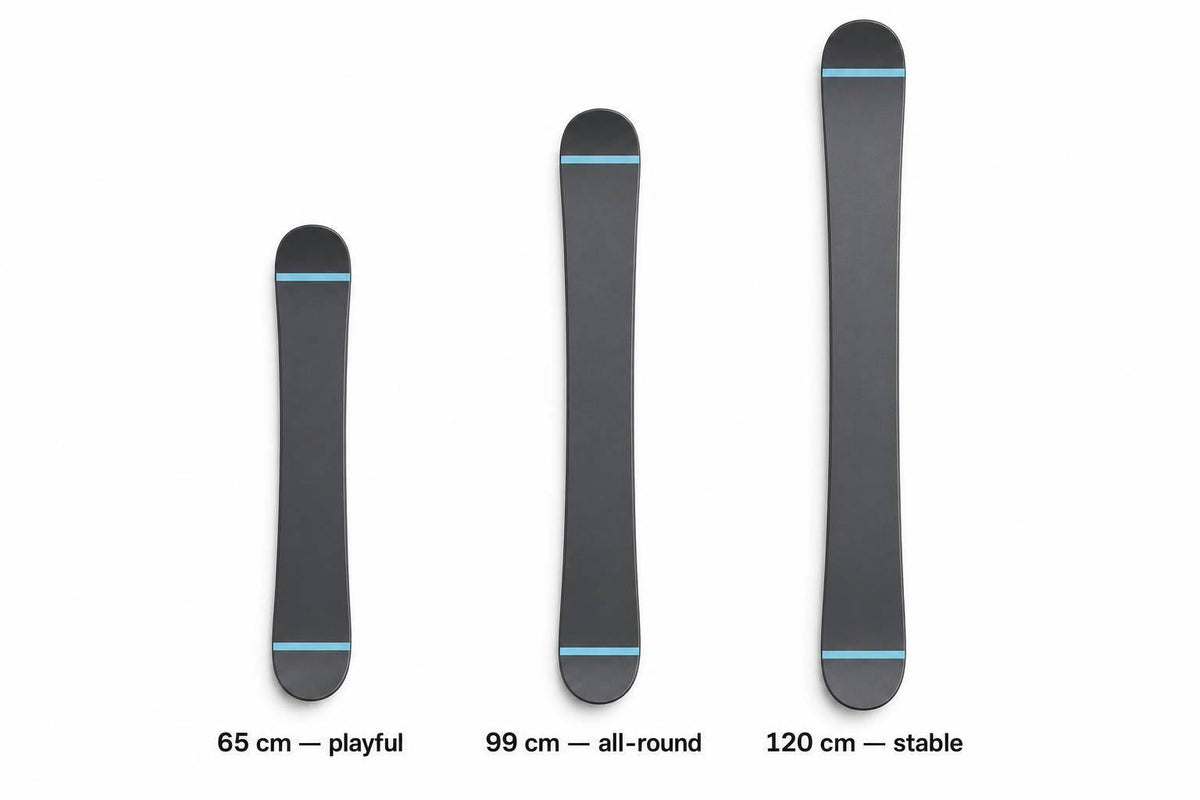
Short answer: in the U.S., skiblades and skiboards usually mean the same thing. Most of the time, the name is just store language. What changes the ride is length, shape, width, and bindings.
If I had to boil the whole article down, it’s this:
- 65 cm (26 in.) = most portable, most playful, least stable
- 99 cm (39 in.) = best middle ground for most riders
- 120 cm (47 in.) = most stable, closest feel to full-size skis
- Narrower shapes feel more ski-like
- More width + twin tips feel more board-like
- Non-release bindings are more common on very short models, so check that before you buy
So, don’t get hung up on the label. Shop the specs. That’s what tells you if a pair will feel loose, planted, twitchy, or smooth on snow.
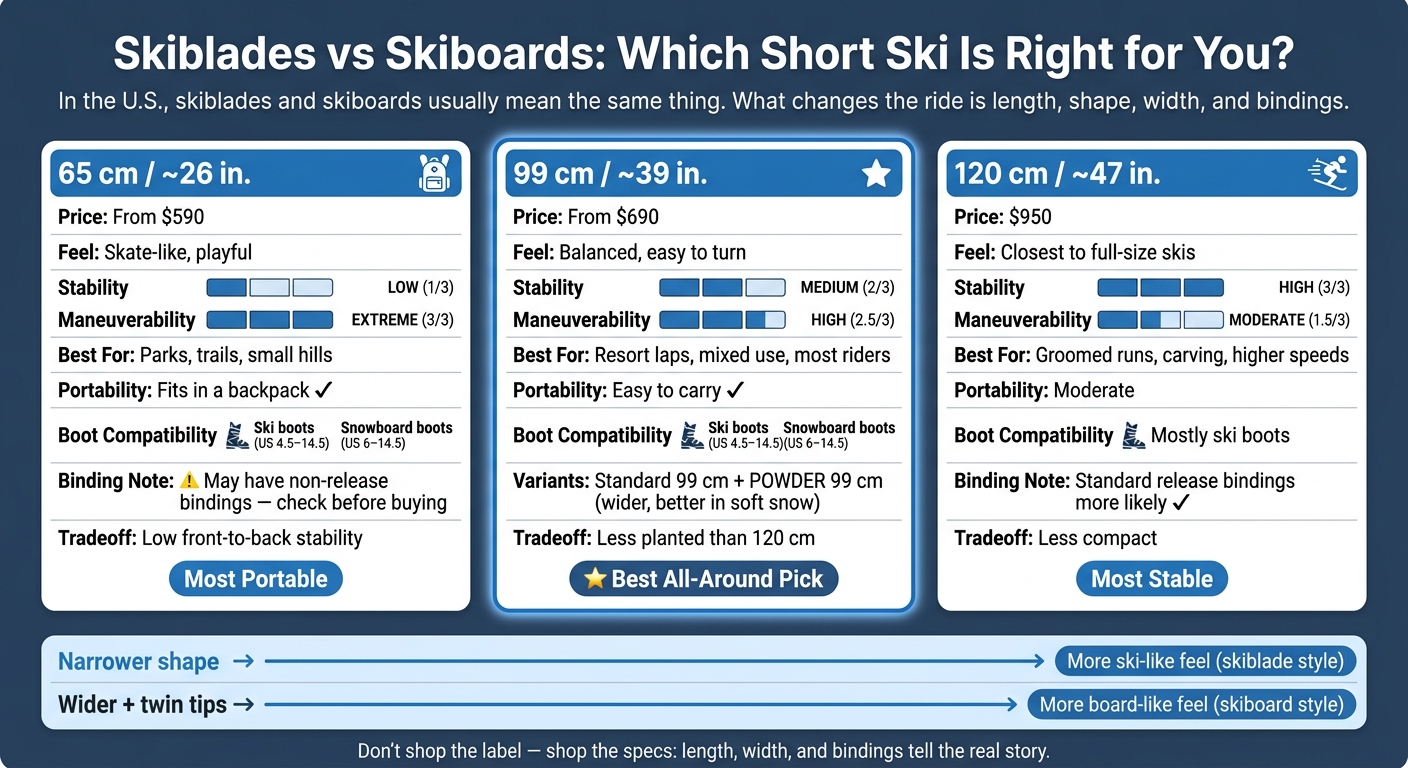
Skiblades vs Skiboards: Size, Feel & Price Comparison Chart
Snowboarder tries Snowfeet* | Which Snowfeet* Short Ski is the Best? | Snowblades 44, 65, 99 Review
Quick Comparison
| Type/Size | Usual Feel | Best For | Main Tradeoff |
|---|---|---|---|
| 65 cm / 26 in. | Skate-like, playful | Parks, trails, small hills | Low front-to-back stability |
| 99 cm / 39 in. | Balanced, easy to turn | Resort laps, mixed use, most riders | Less planted than 120 cm |
| 120 cm / 47 in. | More like full-size skis | Groomers, carving, more speed | Less compact |
A few hard facts from the article help make the point:
- Most short skis in this category fall around 65 to 120 cm (26 to 47 in.)
- Snowfeet* offers three main lengths: 65 cm, 99 cm, and 120 cm
- Prices listed in the article start at $590, $690, and $950
- The 65 cm and 99 cm models can work with ski boots or snowboard boots, depending on setup
If you want the simple buying answer:
- Pick 65 cm if you want backpack-friendly gear and a loose, fun feel
- Pick 99 cm if you want the safest bet for all-around use
- Pick 120 cm if you want more calm at speed and more grip on groomed runs
I’d say this is one of those cases where the product title can send you in circles. The build tells the story. The name? Not so much :)
If you want a fast visual before buying, these videos can help:
- Short skis / skiblades overview on YouTube
- Skiboard riding examples on YouTube
- Snowfeet short skis videos on YouTube
So, if you’re stuck between “skiblades” and “skiboards,” I’d keep it simple: same category, different builds, different ride feel.
Skiblades vs Skiboards: What Each Name Usually Means
Skiboards are often wider and more board-like. Skiblades are often narrower and more ski-like. The key point is simple: that feel comes from the build, not the label.
How the Terminology Developed
Skiboard showed up in the late 1990s, while Snowblade became the best-known product name and later turned into a generic label. That backstory is good to know, but on snow, the shape matters more than the name on the topsheet.
When the Difference Is Real and When It Is Just Marketing
This only matters when the shape changes how the ski rides. Wide, twin-tip skiboard models tend to feel more stable and forgiving. Narrower directional models tend to feel closer to regular skis.
Past that, things get fuzzy fast. A product called a "skiblade" on one site might show up as a "skiboard" or "short ski" on another, even when the specs are the same.
Next, the comparison gets concrete: length, width, and bindings.
sbb-itb-17ade95
The Real Differences: Length, Width, Bindings, and Ride Feel
Three specs shape how a short ski feels on snow: length, width, and binding setup.
Size Ranges from 65 cm to 120 cm Explained
It helps to think of short skis in three simple buckets.
At 65 cm (about 26 in.), you get the most portability. These are small enough to fit in a backpack, and they work well for skating-style movement. They’re best for parks, trails, and small hills. The tradeoff? Front-to-back stability is low.
At 99 cm (about 39 in.), you hit the sweet spot between mini skis and full-length skis. They’re stable enough for downhill runs, but still short enough to feel easy to turn, spin, and mess around on.
At 120 cm (about 47 in.), the ride feels closest to standard skis. You get the most stability at speed, plus better carving on groomed slopes.
| Feature | 65 cm (~26 in.) | 99 cm (~39 in.) | 120 cm (~47 in.) |
|---|---|---|---|
| Stability | Low | Moderate | High |
| Maneuverability | Extreme | High | Moderate |
| Best Terrain | Parks, small hills, trails | All-mountain, groomed slopes | Groomed runs, carving |
| Binding Options | Ski or snowboard boots | Ski or snowboard boots | Mostly ski boots |
| Beginner Ease | Moderate | High | High |
How Width and Binding Type Change the Ride
Length gets most of the attention, but width and bindings have a big say in the ride too. Width changes the feel more than many buyers expect.
A wider ski gives you more support and more stability. That’s a big help if you’re new, and it can also help with float in soft snow. Wider, twin-tip skiboard-style builds tend to feel more stable and forgiving. In plain English, they feel more like skiboards.
Narrower, directional snowblade-style models feel closer to standard skis. They’re better for fast, short turns on groomed runs. So if you want that quick edge-to-edge feel, a narrower shape will feel more like a skiblade.
Bindings change things too:
- Ski boot bindings give you a firm, precise connection.
- Snowboard boot bindings give up some precision, but they’re more comfortable and easier to walk in.
"Skiboards are amazing skis for beginners and even for skiers with knee injuries, since it doesn't take too much of strength to carve or take turns." - Snowfeet Team
One safety point is worth your attention. Very short models like the 65 cm often come with non-release bindings. Longer short skis in the 99–120 cm range are more likely to use standard release bindings. If you plan to ski faster on groomed runs, that’s something you’ll want to check before you buy.
Next, see how Snowfeet* maps these specs to 65 cm, 99 cm, and 120 cm models.
Snowfeet* Models at 65 cm, 99 cm, and 120 cm: What You Are Actually Buying
Snowfeet* keeps things simple: three lengths, three ride styles. These aren’t separate product worlds. They’re short skis with different builds and a different feel on snow. Here’s what that means in the actual Snowfeet* lineup.
Snowfeet* Skiblades 65 cm: Most Compact, Most Portable
At 65 cm, or about 26 inches, the main ride difference comes from the ski’s length and width, not the name on the box. This model feels closer to snow skating than standard skiing. You get fast turns, easy pivots, and a playful ride that doesn’t ask much from you.
It’s also small enough to fit in a backpack, which is a big plus if you hate lugging gear around. And the 65 cm model comes with bindings for both ski boots (EU 36–49 / US 4.5–14.5) and snowboard boots (EU 38–49 / US 6–14.5). So, you’re not boxed into one boot setup.
If you want a bit more stability but still want that quick, nimble feel, the 99 cm option is the next step.
Snowfeet* Skiblades 99 cm and POWDER 99 cm: Best Balance for Most Riders
At 99 cm, Snowfeet* lands in the sweet spot for most riders. This is where short skis start to feel more balanced without losing the fun part.
The label matters less than the build. The standard Skiblades 99 cm sits right between compact, playful riding and more planted downhill use. The POWDER 99 cm keeps the same length but adds more width, which helps it float better and feel looser in soft snow.
So whether you call it a skiblade or a skiboard, the 99 cm size is the best all-around pick for most riders. It’s kind of the “grab this and go have fun” length.
If you want the feel to lean more toward a standard ski, then 120 cm is the move.
Snowfeet* Short Skis 120 cm: Closest to Full-Length Skis
The 120 cm model works best for riders who want short-ski agility with a more traditional ski feel. It’s the shortest Snowfeet* option that still comes closest to what most people think of as a normal ski.
You still skip the bulk of full-length skis, but you keep more of that familiar on-snow feel. That means more control at speed and better performance on groomed runs.
So the next choice is pretty simple: pick based on terrain and how you like to ride, not the label.
Which One Should You Buy? A Direct Buying Guide
Choose by Use Case, Not by Label
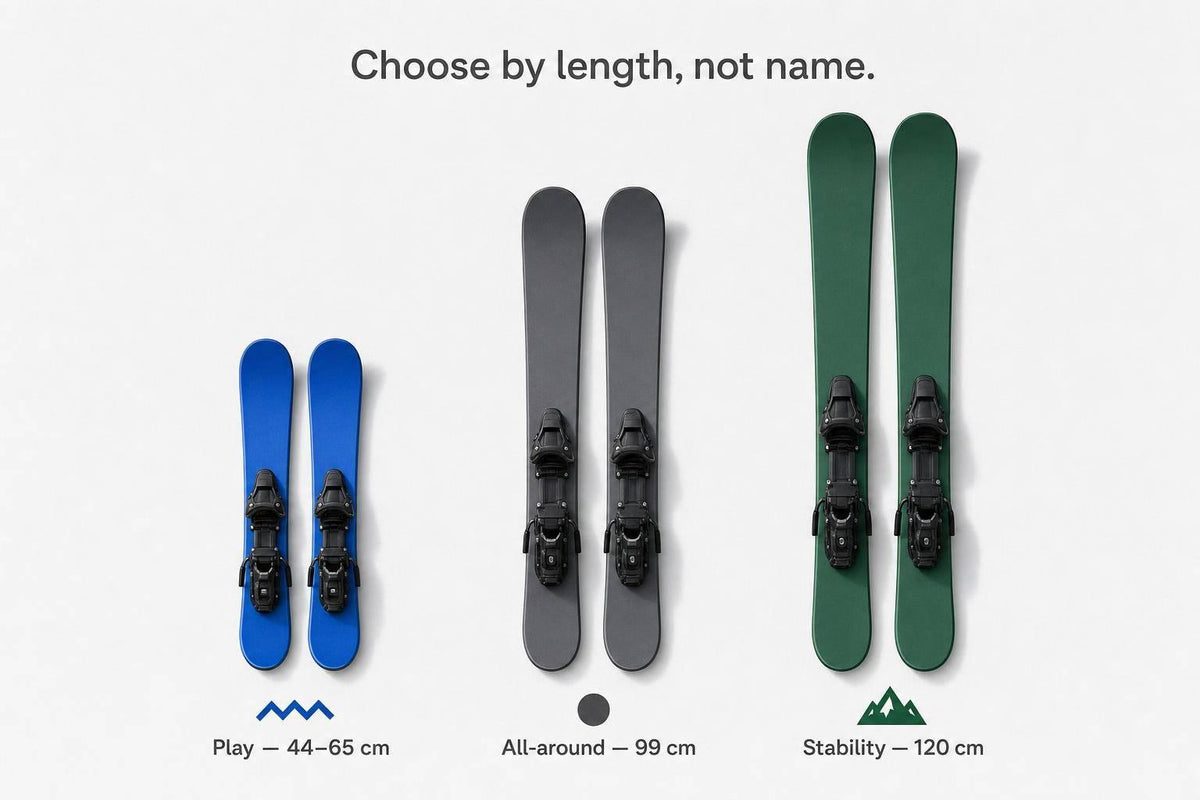
Now that the label debate is out of the way, let’s keep this simple. Don’t shop by name alone. Shop by length, width, bindings, and the terrain you plan to ride.
| Length | Price | Best For | Portability | Stability |
|---|---|---|---|---|
| 65 cm (~26 in) | From $590 | Playful skating feel, parks, casual hills | Fits in a backpack | Low - quick turns, not high speed |
| 99 cm (~39 in) | From $690 | All-around resort riding, most skill levels; POWDER 99 for softer snow | Easy to carry | Medium - balanced and fun |
| 120 cm (~47 in) | $950 | Carving, groomed runs, transitioning from long skis | Moderate | High - closest to traditional skis |
Here’s the short version:
- 65 cm if you care most about portability
- 99 cm if you want the best all-around pick
- 120 cm if you want more stability and a feel closer to regular skis
Put another way, the 65 cm model is the toss-it-in-your-backpack option. The 99 cm model is the one most people will get along with. And the 120 cm model is for riders who want more confidence at speed and a ride that feels more like standard skis.
One nice bonus: both the 65 cm and 99 cm models work with ski boots (US 4.5–14.5) and snowboard boots (US 6–14.5). So if you already own boots, there’s a good chance you won’t need to buy another pair. Nice, right? :)
FAQs
Are skiblades and skiboards the same thing?
Yes - Skiblades, skiboards, and snowblades usually mean the same thing: short skis.
Most models are about 26 to 47 inches (65 to 120 cm) long.
The names may point to small design differences here and there, but these days, they’re mostly marketing labels. So, for most riders, the name matters less than the actual specs.
What should you look at instead?
- Length
- Width
- Binding compatibility
That’s the stuff that changes how they ride on snow, not the word printed on the top sheet.
Which length is best for beginners?
For beginners, the best length comes down to one thing: do you want easy turning or a steadier ride?
The 65 cm Snowfeet models are light and easy to move around. That makes them great for learning how to turn and stop without feeling like the skis are fighting you. If you're just starting out, that quick, nimble feel can help a lot.
The 120 cm models lean more toward stability. They give you a bit more support and a smoother, more forgiving ride, while still being much easier to handle than long, standard skis. Think of them as a nice middle ground: more steady than the 65 cm option, but not a huge handful :)
Do I need ski boots or snowboard boots?
Not always. A lot of Snowfeet* models work with snowboard boots, and some even work with sturdy winter shoes.
- 65 cm and 99 cm models usually fit snowboard boots or ski boots.
- 120 cm models need ski boots for support, safety, and control.
If you want sharper, more precise carving, ski boots are still the better pick. Just make sure to check your model’s binding setup so the fit is safe and snug.
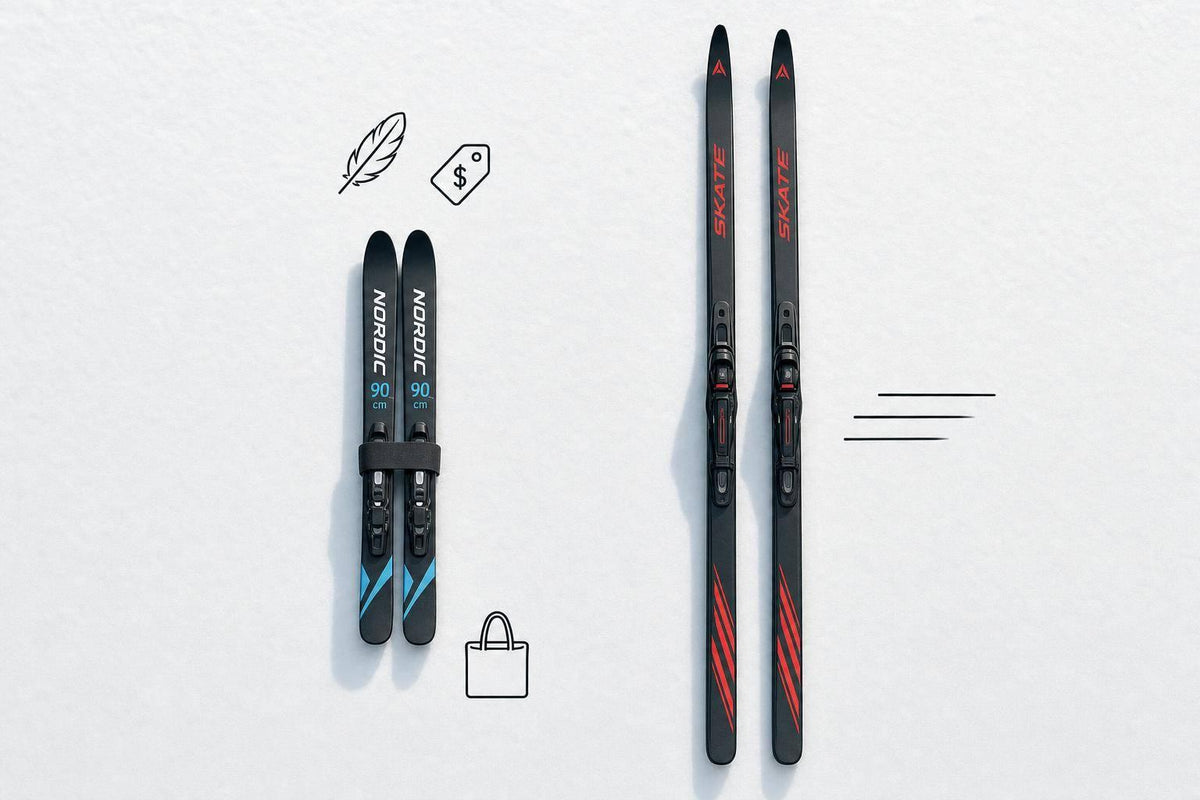











Lascia un commento
Questo sito è protetto da hCaptcha e applica le Norme sulla privacy e i Termini di servizio di hCaptcha.