



















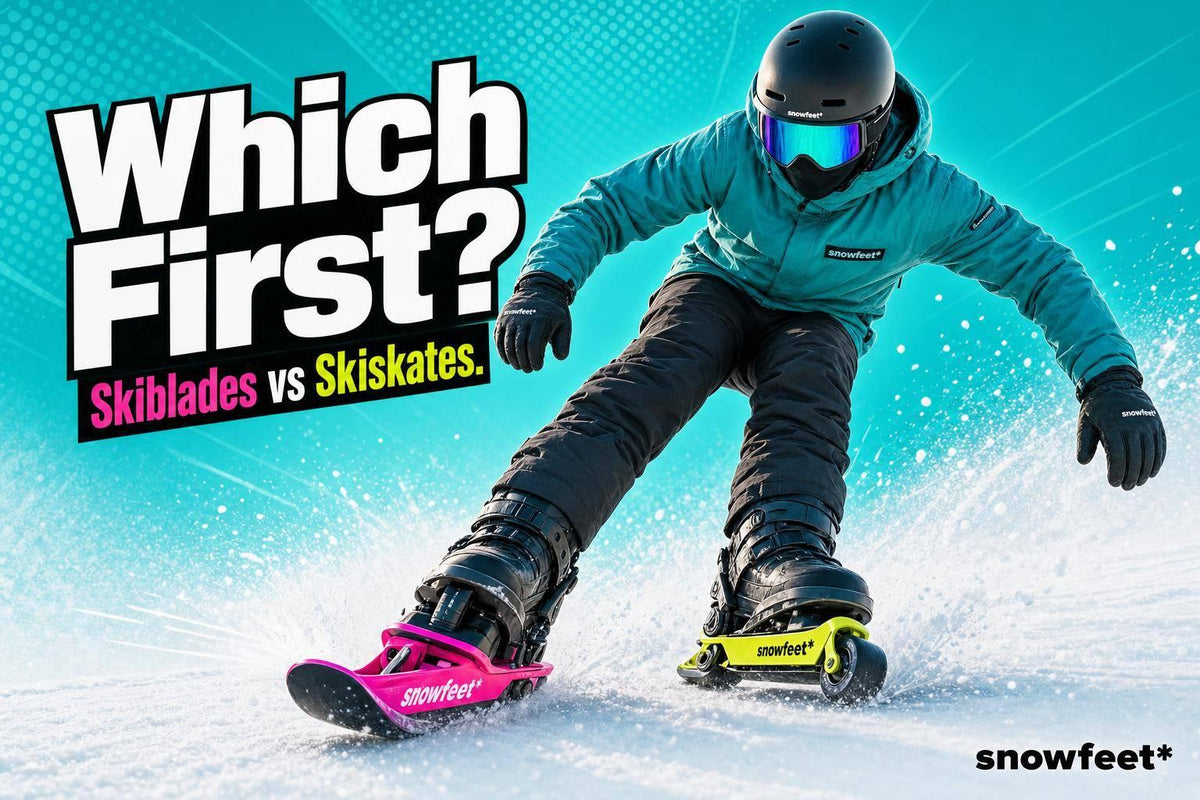
If you're buying your first short-ski setup, I'd start with skiblades. For most people, they feel more stable, turn in a way that makes sense fast, and work better on groomed resort runs. Mini ski skates are more playful and much smaller, but they ask for better balance from day one.
Here’s the short answer:
- Buy skiblades first if you want the easiest learning curve
- Pick 65 cm skiblades if you want the most beginner-friendly option
- Pick 99 cm skiblades if you want more stability and room to improve
- Pick 44 cm skiskates if you want a skate-like feel and easy packability
- Skip 120 cm first unless you already ski and want a more ski-like ride
The biggest difference is length.
A 44 cm skiskate is about 17 inches long.
Skiblades come in 65 cm, 99 cm, and 120 cm - about 25.5, 39, and 47 inches.
That extra length gives you:
- more balance front to back
- better grip on groomers
- easier stops and turns
- more comfort as speed builds
Mini ski skates win in two spots:
- Portability - they can fit in a backpack
- Playful feel - they ride more like skating than skiing
So, if I had to make the call in one line: skiblades are the safer first buy for most riders, while skiskates are the fun niche pick for people who want a skate-on-snow feel.
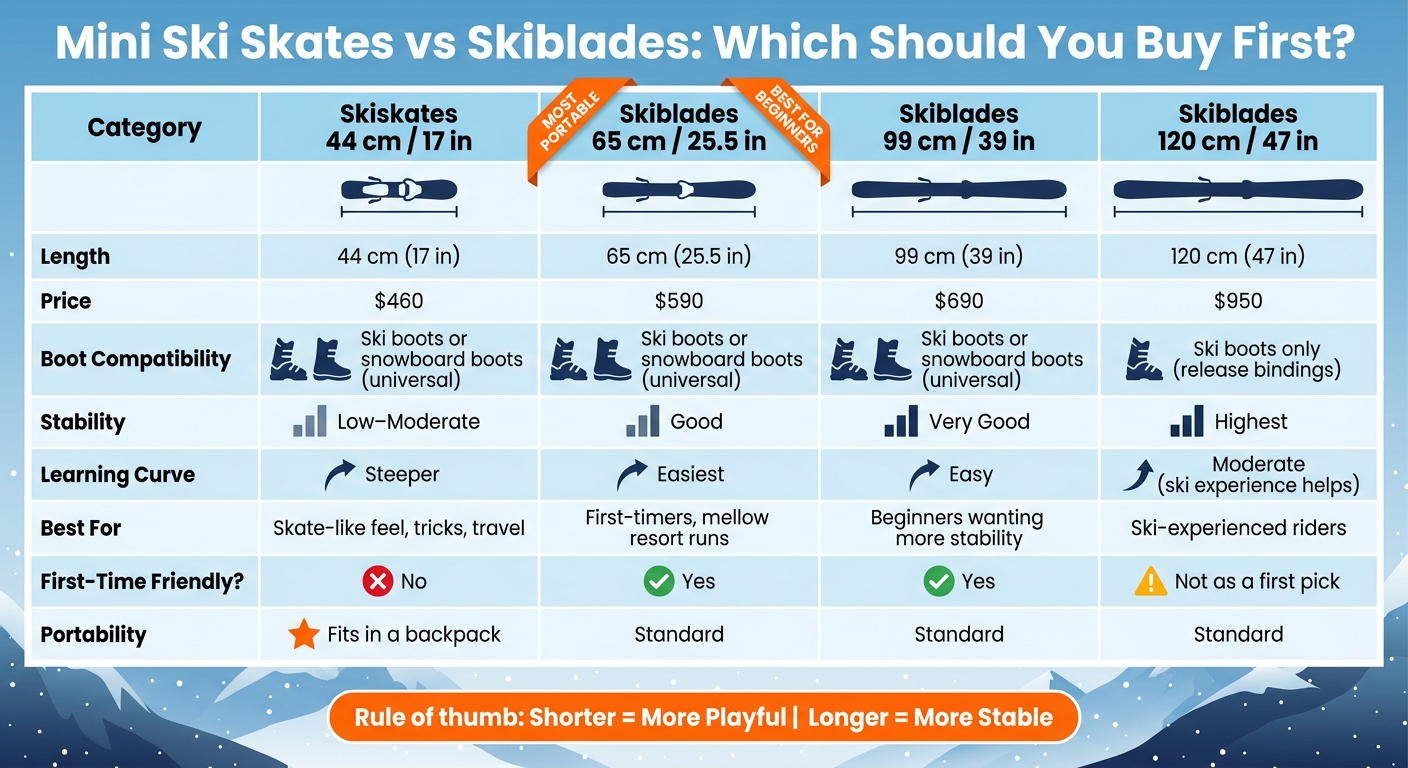
Mini Ski Skates vs Skiblades: Quick Comparison Guide
These Guys Tried Snowfeet* Skiblades | Watch Their Reaction | Skiblades | Skiboards | Short Ski
Quick Comparison
| Option | Length | Best For | Boots | First-Time Friendly? |
|---|---|---|---|---|
| Skiskates | 44 cm / 17 in | Skate-like riding, tricks, travel | Ski boots or some snowboard/winter boot setups | No, not for most people |
| Skiblades | 65 cm / 25.5 in | First-timers, mellow resort runs | Ski boots or snowboard boots | Yes |
| Skiblades | 99 cm / 39 in | Beginners who want more stability | Ski boots or snowboard boots | Yes |
| Skiblades | 120 cm / 47 in | Riders with ski experience | Ski boots | Not as a first pick |
A simple way to think about it: shorter = more playful, longer = more stable. And for a first buy, stable usually wins :)
If you want a quick visual before you buy, these YouTube searches can help:
What each option is: Snowfeet* Skiskates 44 cm vs Skiblades 65 cm, 99 cm, and 120 cm
Here’s the quick breakdown of what each setup actually is. Each one fits a different riding style. The best pick comes down to three simple things: what boots you already own, where you plan to ride, and how much stability you want on day one.
Mini ski skates: the skating feel on snow
Snowfeet* Skiskates 44 cm are the smallest option in the lineup at about 17 in long. They come in ski-boot and universal binding versions, and some universal models work with snowboard boots too. On snow, they feel much closer to ice skating than to standard skiing. Think quick turns, small hits, short strides, and fast pivots. If you’ve played hockey or spent time on ice skates, this setup often feels familiar right away. That short length also has a big effect on stability once you get moving.
Choose Skiskates if you want the most skate-like feel.
Skiblades: short skis with more support underfoot
Snowfeet* Skiblades come in three lengths, and each one has a clear role:
- 65 cm (about 25.5 in): easiest to handle, best for beginners
- 99 cm (about 39 in): balanced ride, still beginner-friendly
- 120 cm (about 47 in): most stable and ski-like, best for riders who want more speed and support
The 65 cm and 99 cm models are sold with ski boot or snowboard boot bindings. They give you more support and a more predictable ride than Skiskates, which is why they’re the most beginner-friendly choices in the group. The 120 cm model uses standard ski boot release bindings and is built for stronger riders who want more stability at speed on blue and black runs.
Choose Skiblades if you want the easiest first step into short skis.
| Model | Length | Boot Compatibility |
|---|---|---|
| Skiskates | 44 cm / about 17 in | Ski boots or snowboard boots (universal versions) |
| Skiblades | 65 cm / about 25.5 in | Ski boots or snowboard boots |
| Skiblades | 99 cm / about 39 in | Ski boots or snowboard boots |
| Skiblades | 120 cm / about 47 in | Ski boots (release bindings) |
With the formats clear, the next question is how they ride on snow.
sbb-itb-17ade95
How they ride: stability, control, speed, and learning curve compared
The big difference comes down to what’s under your feet. More length gives you more stability. Less length gives you more agility, but it also asks more from your balance.
That changes how each option feels on snow, from edge hold to speed to how easy it is to learn.
| Model | Stability on Groomers | Edge Control | Speed Range | Learning Curve |
|---|---|---|---|---|
| Skiskates 44 cm | Low–moderate; very agile | Quick edge engagement; less forgiving if you get out of balance | Best at low–moderate speeds | Steeper curve; favors skating background |
| Skiblades 65 cm | Good; forgiving platform | Easy, intuitive turn initiation | Comfortable at beginner resort speeds | Easiest for first-timers |
| Skiblades 99 cm | Very good; balanced feel | Strong edge hold; supports progression | Stable at medium speeds | Easy start with room to grow |
| Skiblades 120 cm | Highest; ski-like feel | Most secure carving at speed | Best at faster cruising | Familiar to ski-experienced riders |
So, what does that mean in plain English? If you want the easiest first day, go longer. If you want a more playful, skate-like ride, go shorter.
Why skiblades are usually easier to learn on first
The 65 cm and 99 cm Skiblades give new riders more space to balance front to back. That extra length makes snowplow stops and step turns less punishing than on 44 cm Skiskates.
The 65 cm model is the easiest place to start. It feels friendly right away and works well at beginner resort speeds. The 99 cm length adds more comfort as speed picks up, plus better edge grip, which makes it a smart pick if you want something you can keep growing into.
The 120 cm model leans more ski-like. It uses standard ski boot release bindings and is built for stronger riders who want more stability at speed on blue and black runs.
Where mini ski skates are more fun
Skiskates 44 cm shine on mellow groomers where quick turns and skate-style movement matter more than a planted feel. Their ultra-short platform - just 17.3 in - makes them a good fit for slalom turns, spins, and skate-style movement near the side of a run.
If you’ve played ice hockey or spent time on inline skates or freestyle skates, there’s a good chance you’ll click with them faster. The movement feels more familiar.
There is one catch. The 44 cm model can feel slower than regular skis on gentle terrain and takes more effort to keep speed, so it works best on well-groomed, hard-packed slopes.
In the end, this choice comes down to three simple things:
- Your boots
- The terrain you ride most
- How much stability you want
Next: matching each setup to the boots, terrain, and rider type.
Boots, terrain, and rider type: matching each option to your situation
For most buyers, the pick comes down to three things: boots, terrain, and how planted you want to feel. The table below gives the fast answer. After that, the notes explain the trade-offs in plain English.
| Rider Type | Best Pick | Why It Fits | Trade-off |
|---|---|---|---|
| First-time riders | Skiblades 65 cm | Easiest to learn; most forgiving for day-one balance | Less playful than Skiskates |
| Snowboarders | Skiblades 65 cm or 99 cm | Fits snowboard boots directly, so you can ride in the boots you already know | Soft boots offer less ankle support than hard-shell ski boots |
| Kids | Snowfeet* MINI KIDS ($250) | Attaches to winter shoes; fits up to US youth size 6 | Kids will outgrow the size range |
| Casual resort riders | Skiblades 65 cm | Good stability on groomed runs; easy to manage at beginner speeds | Not built for deep powder or backcountry terrain |
| Travelers | Skiskates 44 cm | Compact enough to fit in a backpack | Best for riders who already have some skating background |
| Trick-focused riders | Skiskates 44 cm | Ultra-short platform allows spins, quick pivots, and skate-style movement | Less stable at speed; harder on landings |
Best pick for first-timers, snowboarders, kids, and travelers
For most first-time riders, the 65 cm Skiblades are the easiest way in. They’re more forgiving, less twitchy, and simpler to handle on day one. If you want more stability and a bit more room to grow, go with the 99 cm version instead.
For snowboarders, this is where things get fun. Many Skiblades models work with snowboard boots right out of the gate, so you can skip the ski boot rental and ride in boots you already know. That’s a nice little win, especially if you hate stiff rental boots. The trade-off is simple: soft snowboard boots give you less ankle support than hard-shell ski boots.
The Snowfeet* MINI KIDS ($250) are the easy call for kids. They attach to regular winter shoes, so there’s no need for ski boots, and they fit up to US youth size 6. That makes them a good match for sled hills, backyard snow, and mellow beginner terrain. The catch? Kids grow fast. If you’ve ever bought winter gear for a kid, you already know how that story goes :)
For travelers, the Skiskates 44 cm make the most sense. They’re light, compact, and small enough to fit in a standard backpack. That’s hard to beat if you want to pack light. They work best for riders who already have some skating background, so they’re not always the easiest first step for a total beginner.
Where full-length skis and older snowblades still do better
Short skis cover most resort use well, but full-length skis still have the edge in deep snow and steep terrain. They also do better in powder and on steep black runs at higher speed.
Final verdict: Start with Snowfeet* Skiblades for most riders
For most beginners, Snowfeet* Skiblades are the best place to start. They strike the best balance between control, comfort, and ease on day one.
If stability is your top goal, go with the 99 cm Skiblades ($690). They’re the easiest option for a first day on snow. If you want something lighter and more playful, the 65 cm Skiblades ($590) make sense. But there’s a catch: choose the 65 cm model only if you want a looser, faster-turning feel.
The 44 cm Skiskates ($460) are more of a special pick. They make sense if you care most about a skate-like feel or want the most portable setup. That said, they’re not the easiest way to learn, so they’re not the best first step for most people.
As for the 120 cm Skiblades ($950), skip them as your first buy. They fit better once you’ve got the basics down and want more ski-like performance.
FAQs
Should I start with 65 cm or 99 cm skiblades?
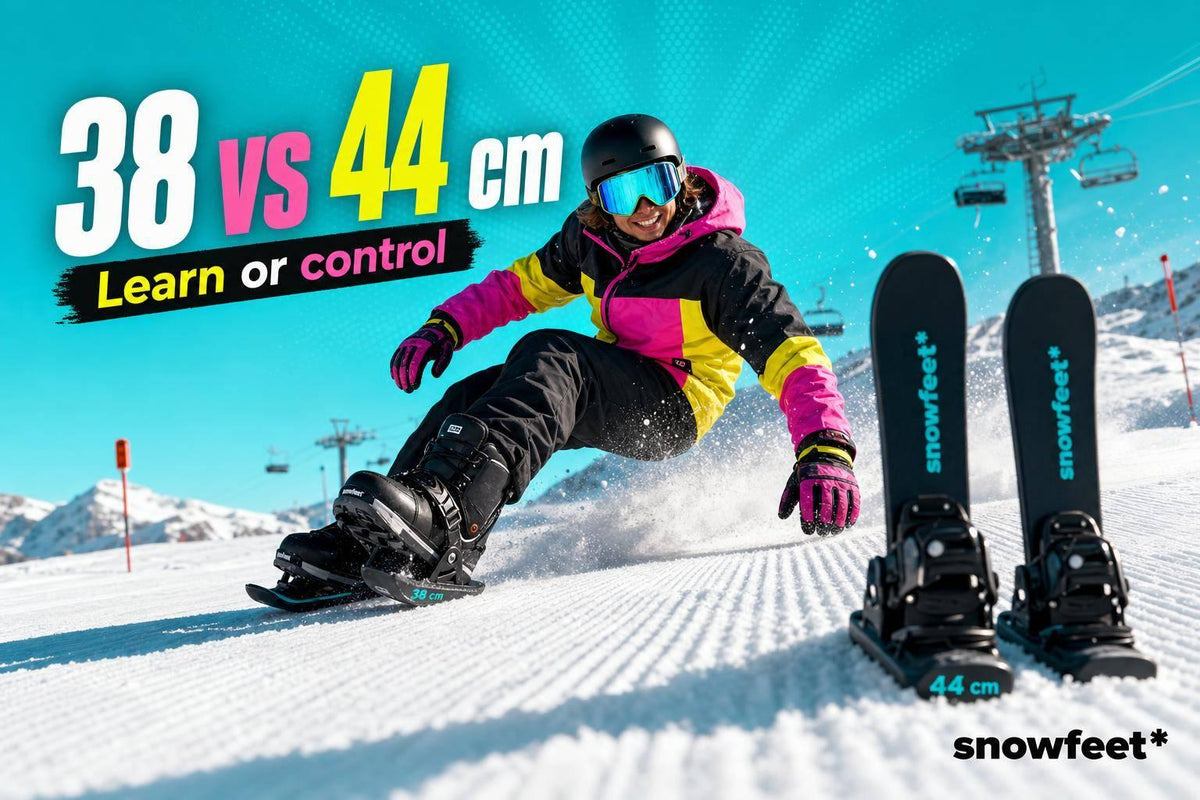
It depends on your goals. The 65 cm Skiblades hit the sweet spot for new riders who want fast, nimble turns and an easier path into tricks.
Go with the 99 cm model if you want more stability and better control at higher speeds or on mixed resort terrain. Both Snowfeet options give you more control than long skis, while still being compact enough to toss in a bag and travel with.
Can I use snowboard boots with Snowfeet* skiblades or skiskates?
Yes. Snowfeet* skiblades and skiskates work with snowboard boots thanks to custom-engineered bindings that give you a secure, comfortable fit.
Compared with a standard ski setup, snowboard boots give you more freedom with footwear. They’re softer, easier to walk in, and feel more natural on snow. That skating-like feel is a big plus if you want to turn fast, play around with tricks, or just move with less stiffness.
In plain English: you get a setup that feels less clunky and more fun :)
Are 44 cm skiskates too hard for a total beginner?
No. 44 cm Skiskates are not too hard for a total beginner.
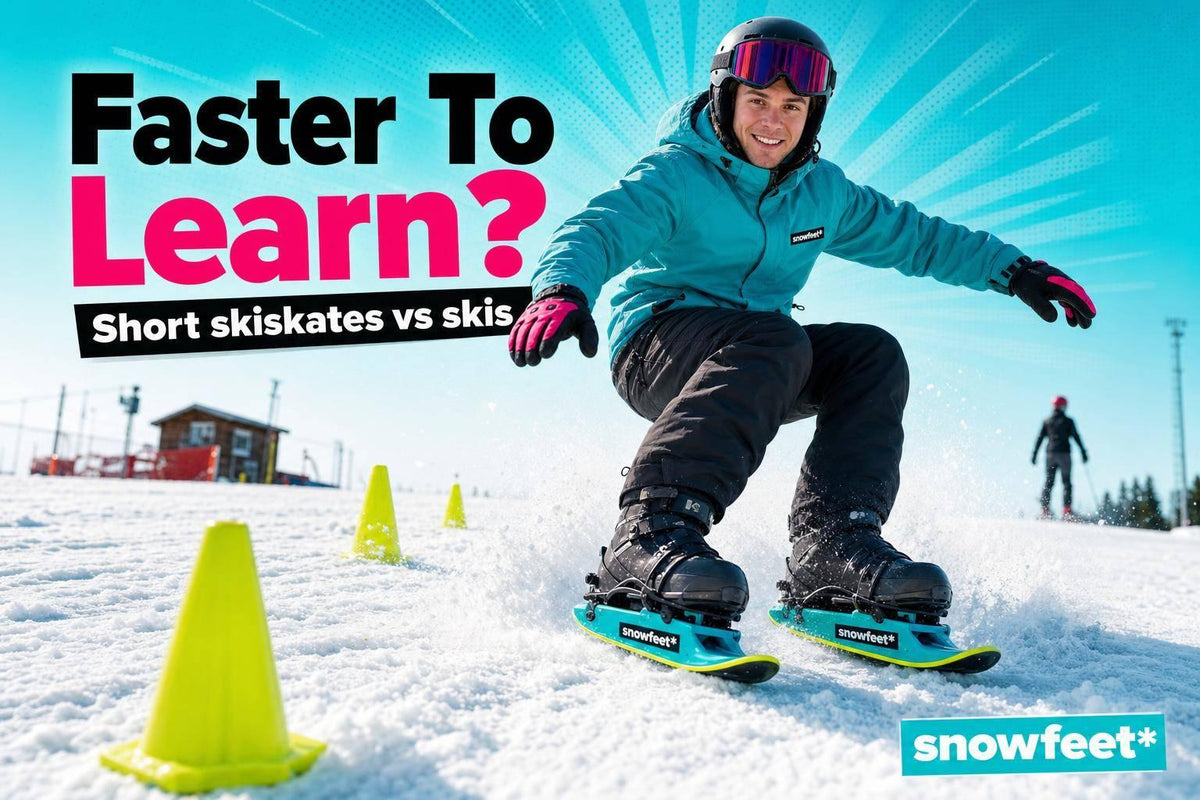
Their short, light design makes them easier to control and less intimidating than long skis. They also help you avoid common beginner problems, like crossing ski tips. And a lot of people pick up the basics in a day, or even in a few minutes, because the movement feels natural, a bit like ice skating or rollerblading.











Lascia un commento
Questo sito è protetto da hCaptcha e applica le Norme sulla privacy e i Termini di servizio di hCaptcha.