




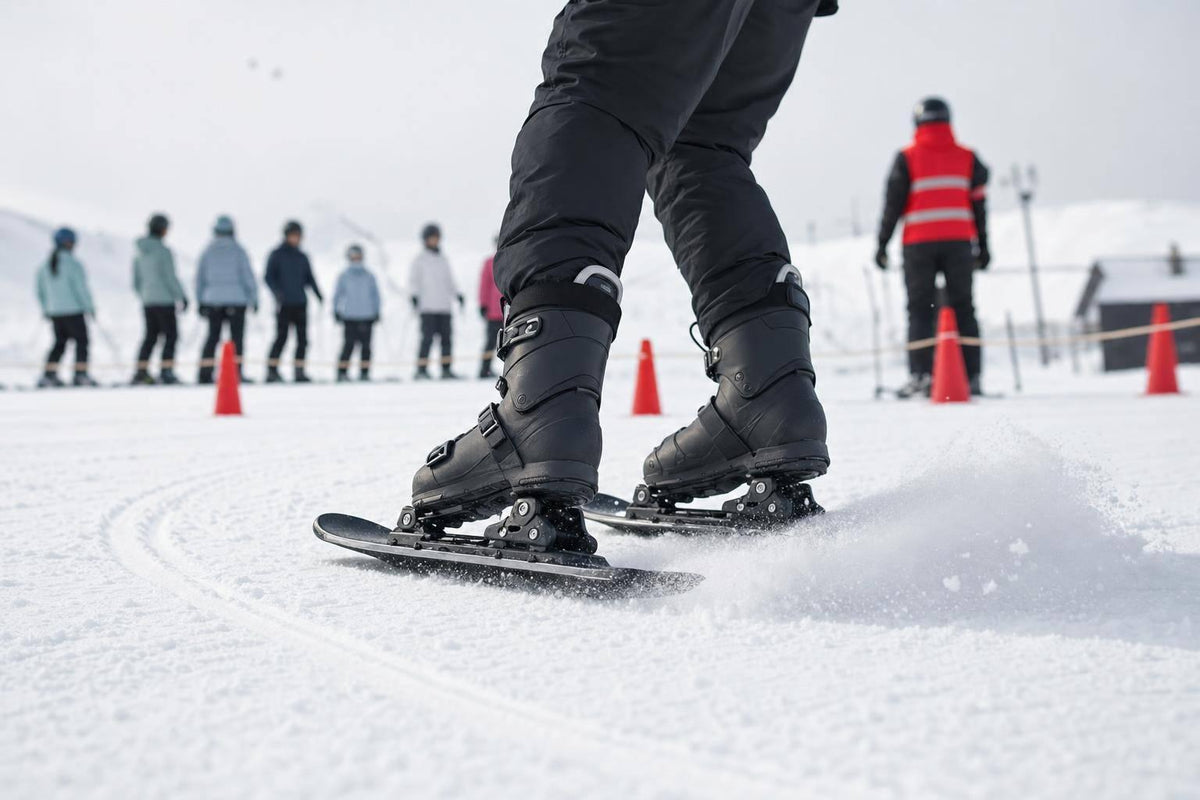
Bottom line: I’d only pick the 44 cm Skiskates for a crowded beginner slope if I already had solid balance and liked a skate-like feel. On a busy green run with 20–30 people, 5–10 minute lift lines, and hard-packed snow at 28°F, they felt fun and easy to turn, but they gave me less room for mistakes than longer options.
If you want the short version, here it is:
- 44 cm Skiskates: best for tight turns and small spaces
- PRO 50 cm: better if you want more balance without going too long
- 65 cm Skiblades: best if you want the calmest ride and easier stopping
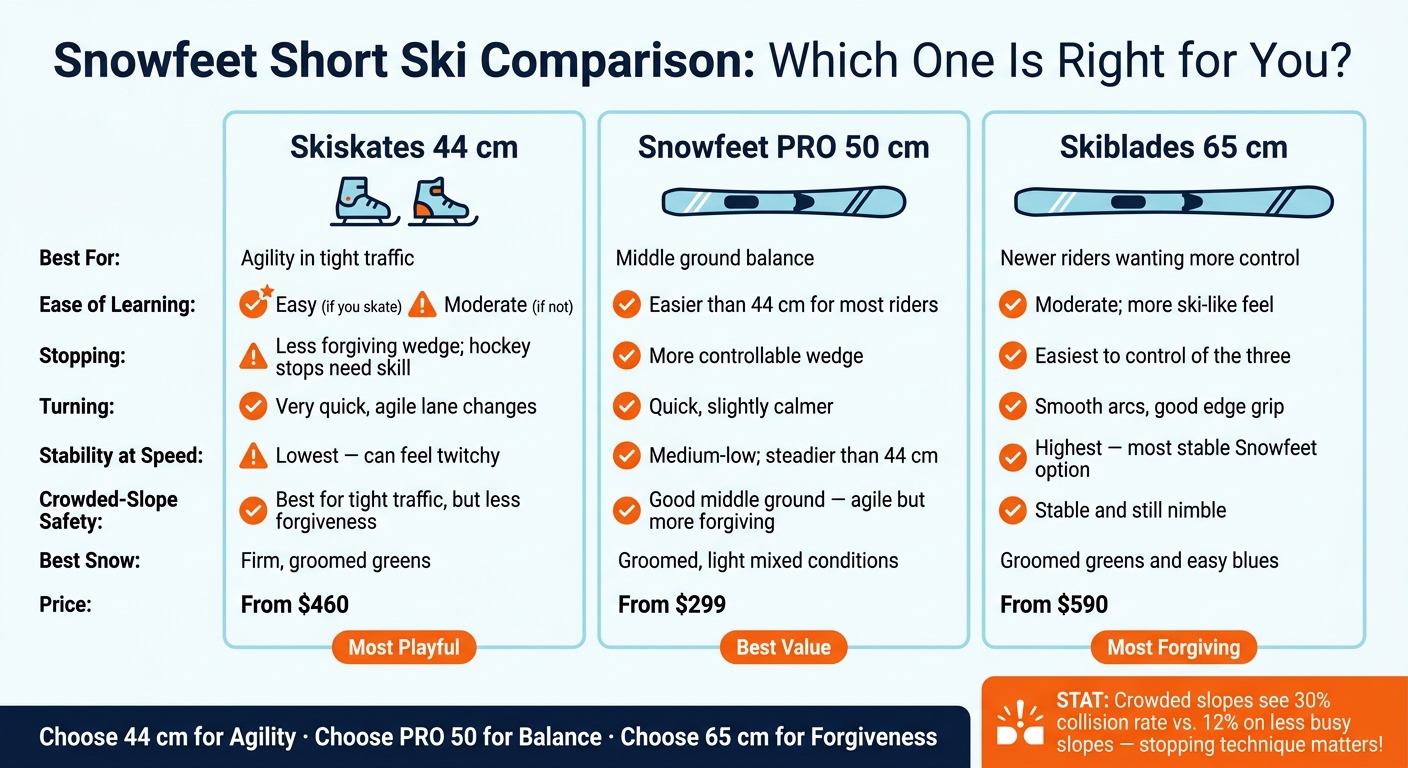
- Crowded green runs are no joke: one study cited in the article linked busier slopes to more collisions, with 30% vs. 12%
- Stopping is the main issue: the wedge works for scrubbing speed, but it’s not the move I’d trust for a last-second stop
So, yes, the 44 cm model can work on a packed beginner slope. But I wouldn’t call it the first pick for most new riders. It suits people who want sharp turns, low-speed line changes, and don’t mind a setup that gets twitchy if they lean back.
Quick comparison:
| Gear | Best for | Main upside | Main downside | Price |
|---|---|---|---|---|
| Skiskates 44 cm | Agility in tight traffic | Fast turns, small footprint | Less forgiving, harder stops | From $460 |
| PRO 50 cm | Middle ground | More balance than 44 cm | Less playful than 44 cm | From $299 |
| Skiblades 65 cm | Newer riders who want more control | Better stability, easier speed control | Less nimble in tight spots | From $590 |
If I had to give one simple recommendation, it’d be this: pick 44 cm for play, 50 cm for balance, and 65 cm for more forgiveness. That’s the whole story, without the ski-brochure fluff :)
Snowfeet Skiskates vs PRO 50 vs Skiblades 65: Which Is Best for You?
How Snowfeet* Skiskates 44 cm Actually Performed
Learning Curve: First Runs, Stance, and Basic Confidence
On a crowded slope, the first test was pretty simple: did they feel steady from the start?
The first run felt less awkward than expected. Since there were no long ski tips crossing in front or tails dragging behind, standing up and sliding felt manageable almost right away. The rider settled into a wider, slightly upright stance, with bent knees and weight centered over the bindings. It felt closer to inline skates than rental skis.
By the second run, gentle S-turns were already showing up. Edge engagement came on much faster than with a typical rental ski, but there was a catch. It asked for more active ankle control, or else the skiskates could turn too hard, too soon. By the third run, basic confidence was there. Past skating experience helped because steering felt driven by the ankles and knees, not the hips. Lean back or lock your knees, and yeah, the skiskates punish that fast.
Turning and Balance at Beginner-Slope Speeds
At green-run speeds, the Skiskates felt agile. Short turns and edge changes came faster than on rental skis. That made it easier to weave around slower learners without feeling like a bus trying to make a U-turn.
The trade-off was balance. Lateral balance demands were higher, and small mistakes showed up right away. If the knees dropped inward or the weight drifted to the heels, the result was quick vibration or a slip. Compared with a snowboard, the separate foot platforms let the rider make much tighter turn arcs and pick lines with more freedom. That helped a lot in cramped sections. The fix was simple: stay bent, centered, and compact.
Speed Control When Traffic Gets Tight
On a busy green run, the short length helped with speed control because it pushed the rider into making frequent direction changes. The main move was chaining short S-turns across the hill instead of waiting and trying to brake late.
When traffic suddenly got messy, like a kid cutting across or a group bunching up near the lift unload area, the rider added more edge angle and worked to finish each turn across the slope to scrub speed before the opening disappeared. With weight centered or a bit forward, they handled traffic well. Lean back, and things got twitchy fast. That mattered most when a quick stop was needed.
Stopping and Staying Safe Around Unpredictable Learners
How Stopping Felt: Wedge Braking vs. Hockey Stop
Once the slope got busier, stopping became the part that mattered most.
The wedge worked, but it asked for cleaner balance than full-length skis. Even small weight shifts showed up right away. A firm wedge scrubbed speed fast, and a strong edge finish brought the stop home. Snowfeet* says stopping can be less easy on short products than on regular skis because of their size and weight.
That’s the key point: the wedge is for slowing down, not for panic stops.
The hockey stop is faster. But it only starts to feel good once edge control is there. On a short platform, it feels snappier and more rotational than on longer skis. You’ve got less lever arm, so the pivot happens fast. Fun when you’re ready for it. A little spicy when you’re not.
Until that skill is locked in, the safer move is to brake early with a series of tight check turns. That lets you scrub speed before you need a full stop. And around learners, that gap matters a lot, because kids and new skiers can change direction with almost zero warning.
Dodging Sudden Cuts, Falls, and Lift-Line Crowds
Three crowded-slope moments made the upside of the short platform plain.
When a child cut diagonally across the slope without looking, changing into a new line took about half the width it would on long skis. At the lift unload zone, where you get choppy snow, fallen skiers, and riders stacking up near the top, the small footprint made quick sidesteps easy. But there was a catch: staying centered was not optional. Any weight shift toward the heels on that rough surface led to an instant loss of edge grip.
In busy spots, a few habits helped:
- Enter only at a speed that lets you stop before the next group downhill.
- Keep scanning ahead every few seconds.
- Brake early instead of waiting for a last-second stop.
Skiskates reward clean technique and punish late braking. That’s the trade-off. You get fast recovery in tight spaces, but only if you stay ahead of the stop.
Snowboarder tries Snowfeet* | Which Snowfeet* Short Ski is the Best? | Snowblades 44, 65, 99 Review
sbb-itb-17ade95
Pros, Cons, and the Best Snowfeet* Option for This Use Case
That agility is the big plus. The catch? You give up some margin for error.
Where Skiskates Beat Long Skis and Snowboards
Skiskates 44 cm shine on crowded green runs because they’re small, easy to carry, and quick to move when traffic gets messy. At about 17 inches long, they fit in a backpack and don’t turn lift lines into a full-body puzzle like standard rentals often do.
They also switch edges fast. So if someone drifts into your path, you can change direction in a snap. Riders with a skating background tend to get the hang of them fastest.
Trade-Offs You Notice Right Away
You feel the downside pretty fast in a crowded green-run test: less forgiveness.
The short platform gives you less room to recover when your balance slips. And the wedge isn’t as forgiving as it is on long skis, which give new riders more room to sort things out when speed control starts to wobble. On firm corduroy, they feel controlled. In slush and chopped snow, though, grip fades sooner.
When Skiblades 65 cm or PRO 50 cm Make More Sense
If your top goal is smooth, confident carving on busy greens and easy blues, Skiblades 65 cm are the stronger choice. That extra length helps with fore-aft stability, and the wood core, metal edges, graphite base, and deep sidecut give them a smoother carving feel and a more planted ride than the 44 cm Skiskates.
You still get the short-ski agility edge over standard rentals, but with more room for mistakes. That’s a pretty nice deal.
PRO 50 cm lands right in the middle. It’s more forgiving than the 44 cm Skiskates for riders who don’t come from skating, and the lower price makes it an easier way in. The 44 cm Skiskates are still the most playful and portable pick, but they reward people who already have solid edge-control instincts.
| Gear | Ease of Learning | Stopping | Turning | Stability at Speed | Crowded-Slope Safety | Best Snow | Approx. Price |
|---|---|---|---|---|---|---|---|
| Skiskates 44 cm | Easy if you skate; moderate if not | Less forgiving wedge; hockey stops need skill | Very quick, agile lane changes | Lowest; can feel twitchy | Best for tight traffic, but less forgiveness | Firm, groomed greens | From $460 |
| Snowfeet PRO 50 cm | Easier than 44 cm for most riders | More controllable wedge | Quick, slightly calmer | Medium-low; steadier than 44 cm | Good middle ground: agile but more forgiving | Groomed, light mixed conditions | From $299 |
| Skiblades 65 cm | Moderate; more ski-like feel | Easier to control than 44 cm | Smooth arcs, good edge grip | High; most stable Snowfeet option | Stable and still nimble | Groomed greens and easy blues | From $590 |
So, the best pick comes down to what you care about most:
- Skiskates 44 cm if you want the fastest, most playful ride
- PRO 50 cm if you want a safer middle ground
- Skiblades 65 cm if stability matters more than playfulness
For this use case, 44 cm is the most agile option, PRO 50 is the safer middle ground, and 65 cm is the best call if you want more stability under you.
Conclusion: Who Should Buy Snowfeet* Skiskates 44 cm
After testing them on a crowded beginner slope, the takeaway is pretty simple: Snowfeet* Skiskates 44 cm are the top pick if you want max agility on groomed terrain. They shine when you want tight control, quick turns, and that playful skatelike feel. People with skating or snowboarding experience, or just strong balance, will get the hang of them the fastest.
If you're new and want a bit more room for error, though, the short length stops making as much sense. Skiblades 65 cm are the better fit for more stability and an easier learning curve. PRO 50 cm sits nicely in the middle. It gives you a more compact setup than the 65 cm option, but with more balance than the 44 cm Skiskates, starting at $299.
So, the 44 cm Skiskates are a niche win, not the go-to pick for every beginner. They work best on groomed slopes at moderate speeds. On crowded beginner runs, control matters a lot, and the longer options give you more margin for mistakes.
Here’s the quick version:
- Choose 44 cm for agility
- Choose PRO 50 for balance
- Choose 65 cm for forgiveness
FAQs
Are 44 cm Skiskates good for true beginners?
Yes. 44 cm Snowfeet Skiskates are a solid pick for true first-timers.
Their short length makes them easier to turn than regular skis. That also helps stop one of the classic beginner headaches: crossed tips. Less tangling, less stress, more “okay, I can do this” energy :)
Most people start to feel comfortable in a few hours, or even during their first session. If you already have skating experience, the learning curve often feels even smoother.
Another nice part? You can use winter boots or snowboard boots. That setup feels less intimidating than full ski gear, and for many beginners, it’s less physically demanding too.
How hard is it to stop quickly on a crowded green run?
With 44 cm Skiskates, you can stop fast once the technique clicks. The big thing is staying centered. If you drift into the backseat, control can disappear in a hurry.
Your main options are:
- A skidded, hockey-style stop with strong edge pressure on the downhill foot
- Short zig-zag turns across the fall line to scrub speed
They work well at low to moderate speeds. But compared with longer gear, they’re less forgiving if you lean back.
Should I choose 44 cm, PRO 50, or 65 cm?
It comes down to what you want and how comfortable you are on snow.
- 44 cm: the most nimble and easy to carry. Fun, but it asks more from your balance and can feel a bit twitchy on steeper or harder-packed runs.
- PRO 50: the sweet spot for most people. It gives you a nice mix of control, stability, and ease.
- 65 cm: the most stable and the closest feel to regular skis. That makes it the safest pick for total beginners or anyone who wants an easier move from standard ski gear.












Lascia un commento
Questo sito è protetto da hCaptcha e applica le Norme sulla privacy e i Termini di servizio di hCaptcha.