



















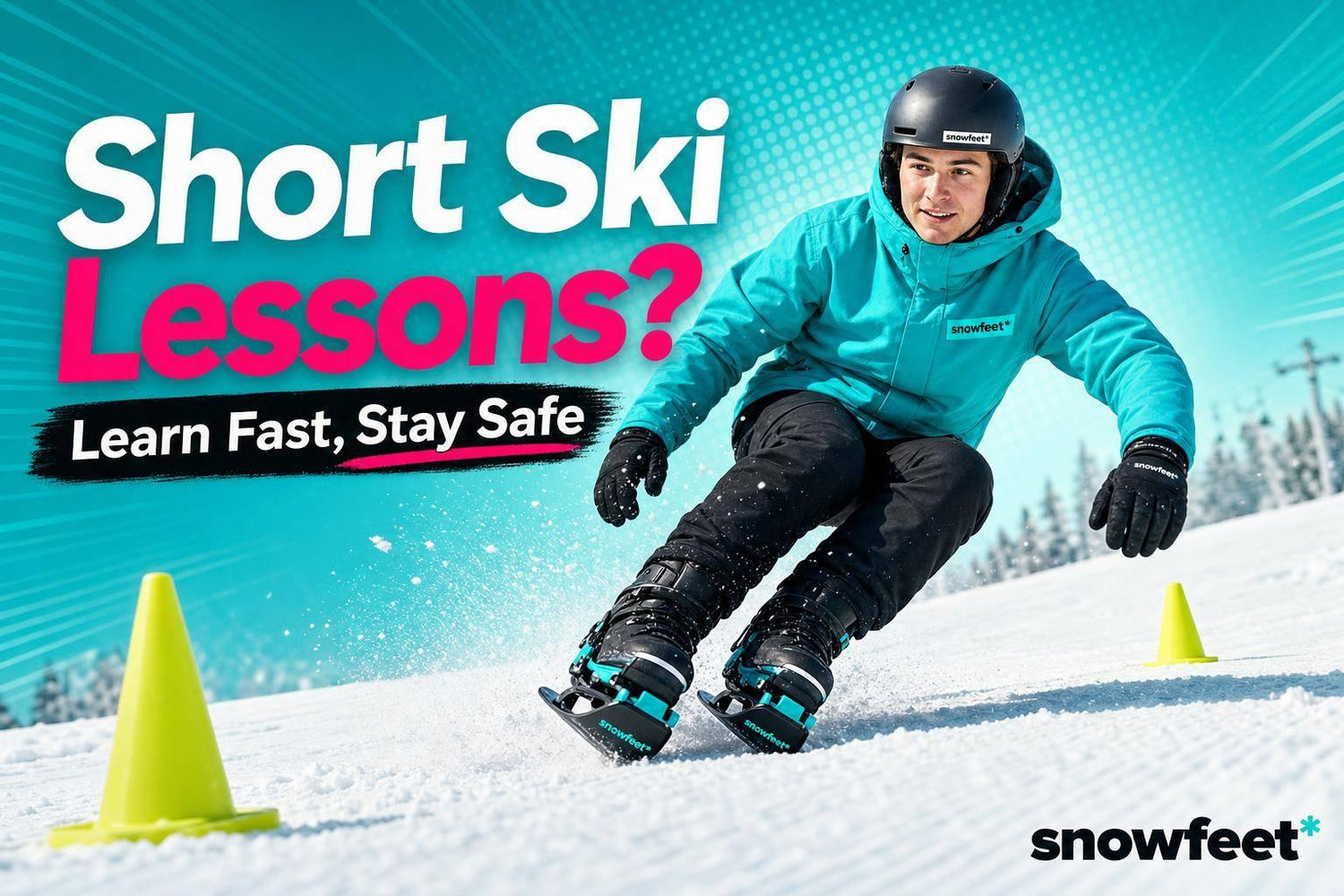
Most people don’t need a formal lesson to start on short skis - but some people should get one. If you already ski, snowboard, skate, or rollerblade, you can often start on a mellow green run with a short video and 30 to 60 minutes of practice. If you’re a total beginner, a kid, a nervous adult, or you’ve never used a chairlift, I’d book a lesson.
Here’s the fast answer:
- Short skis (about 40–100 cm / 16–39 in) are often easier to learn than standard skis
- 44 cm skiskates feel closest to skates and work best for skaters and snowboarders
- 65 cm skiblades are the best middle-ground pick for most casual riders
- 99 cm skiblades feel more like skis and give more stability
- A 60–90 minute lesson helps with stopping, turning, lift use, and slope rules
- Beginners face a much higher injury risk - one source in the article says about 3x higher than expert skiers
So, if you want the simple version: skill from other sports can carry over, but mountain safety doesn’t. That’s the big split.
Quick comparison:
| Rider or Gear | Lesson? | Why |
|---|---|---|
| Total beginner | Yes | You need help with stance, stopping, and resort basics |
| Kid | Yes | More support, more safety, less parent stress :) |
| Cautious adult | Usually yes | A short lesson builds confidence fast |
| Skater / snowboarder | Optional | Balance and edge control often transfer well |
| 44 cm skiskates | Optional for experienced riders | Fast to learn if you already skate |
| 65 cm skiblades | Often optional | Easy to turn, easy to start |
| 99 cm skiblades | Optional for skiers | More stable, more ski-like feel |
If I were giving shop-floor advice, I’d say this: short skis make day one less awkward, but they don’t replace basic instruction if you’re brand new.
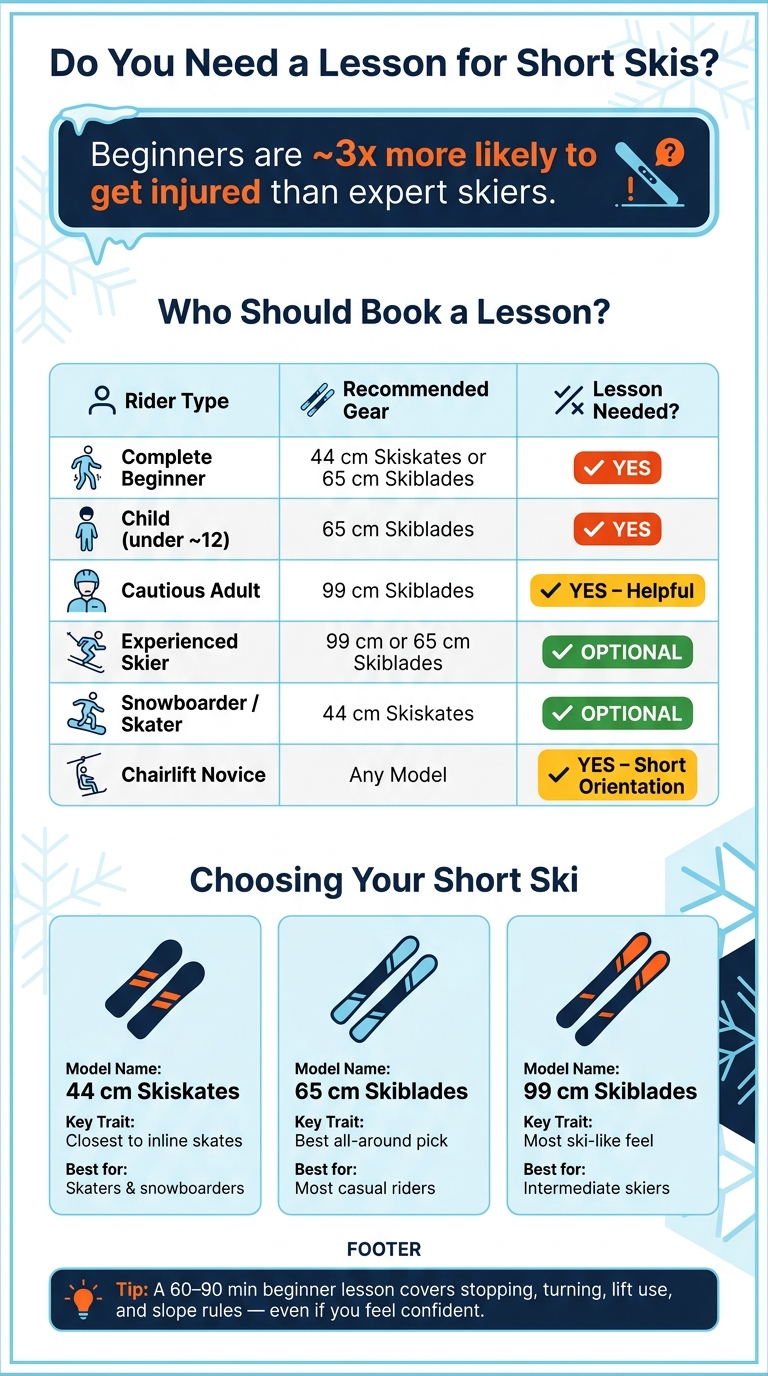
Do You Need Lessons for Short Skis? Quick Decision Guide
Why Short Skis Are Often Easier to Learn
Easier Turning and Control on Beginner Slopes
A lot of riders can get started on short skis without a formal lesson. The big reason is simple: short skis turn with less effort. They need less body movement, and they react faster when you steer.
With long skis, beginners often run into the same annoying issues fast. Tips cross. Edges catch. Balance gets shaky. On a 44 cm or 65 cm blade, those problems are much less common.
Slowing down also feels more natural. You can use a simple pivot, which tends to click right away for skaters and hockey players. And that’s not just trail-side talk. A dedicated short-ski teaching study found that beginners on short skis can move easier, feel safer, and change direction more easily, and that teaching on short skis is more effective than on conventional-length skis.
There’s also a mental side to it. Short skis look less intimidating than full-size skis, so people usually practice with more confidence and less pressure. That makes it easier to shake off small mistakes and keep going instead of freezing up.
Here’s the quick breakdown:
- 44 cm skiskates are the easiest pick for skaters
- 65 cm skiblades are the best all-around option
- 99 cm skiblades give you more stability without making the learning curve tough
Where Long Skis Still Have the Edge
Long skis still win in a few clear cases. They work best for high-speed carving, deep powder, and aggressive terrain. A longer ski holds a steadier arc at speed, floats better in soft snow, and stays calmer over mixed terrain in ways short blades just can’t match.
For most casual resort riders, Snowfeet* stays the easier, lighter, and more practical choice. That trade-off is a big part of why some riders can teach themselves, while others still do better with a lesson.
Snowfeet* Unveiled: Is Skiboarding Hard To Learn? | Skiboards | Snowblades | Short Ski | Skiblades
Who Needs Lessons and Who Can Skip Them
Your background tells you a lot here. If you're a total beginner, a kid, or a careful adult who wants a smoother first day, lessons help a ton. If you already ski, snowboard, skate, or rollerblade, you can often jump in with much less hand-holding.
Use this chart to find the best starting point.
| Rider Type | Likely Starting Gear | Lesson Needed? | Main Reason |
|---|---|---|---|
| Complete beginner | Snowfeet* Skiskates 44 cm or Snowfeet* Skiblades 65 cm | Yes - strongly | Needs stance, stopping, turning, and lift basics |
| Kids | Snowfeet* Skiblades 65 cm | Yes - strongly | Coordination, safety habits, and supervision |
| Cautious adult | Snowfeet* Skiblades 99 cm | Yes - helpful | A lesson builds confidence faster |
| Experienced skier | Snowfeet* Skiblades 99 cm or 65 cm | Optional | Already understands edge control and body position |
| Snowboarder / skater | Snowfeet* Skiskates 44 cm | Optional | Balance and edge instincts transfer quickly |
| Lift novice | Any model | Yes - short orientation | Chairlift safety, trail ratings, and resort etiquette |
Complete Beginners, Kids, and Cautious Adults
If you've never skied before, a lesson will save you time and cut down on bad habits. Short skis can make balance easier, sure, but they won't teach you how to stop, ride a chairlift, or follow trail rules. And that part matters. Beginner skiers are about three times more likely to get injured than experts.
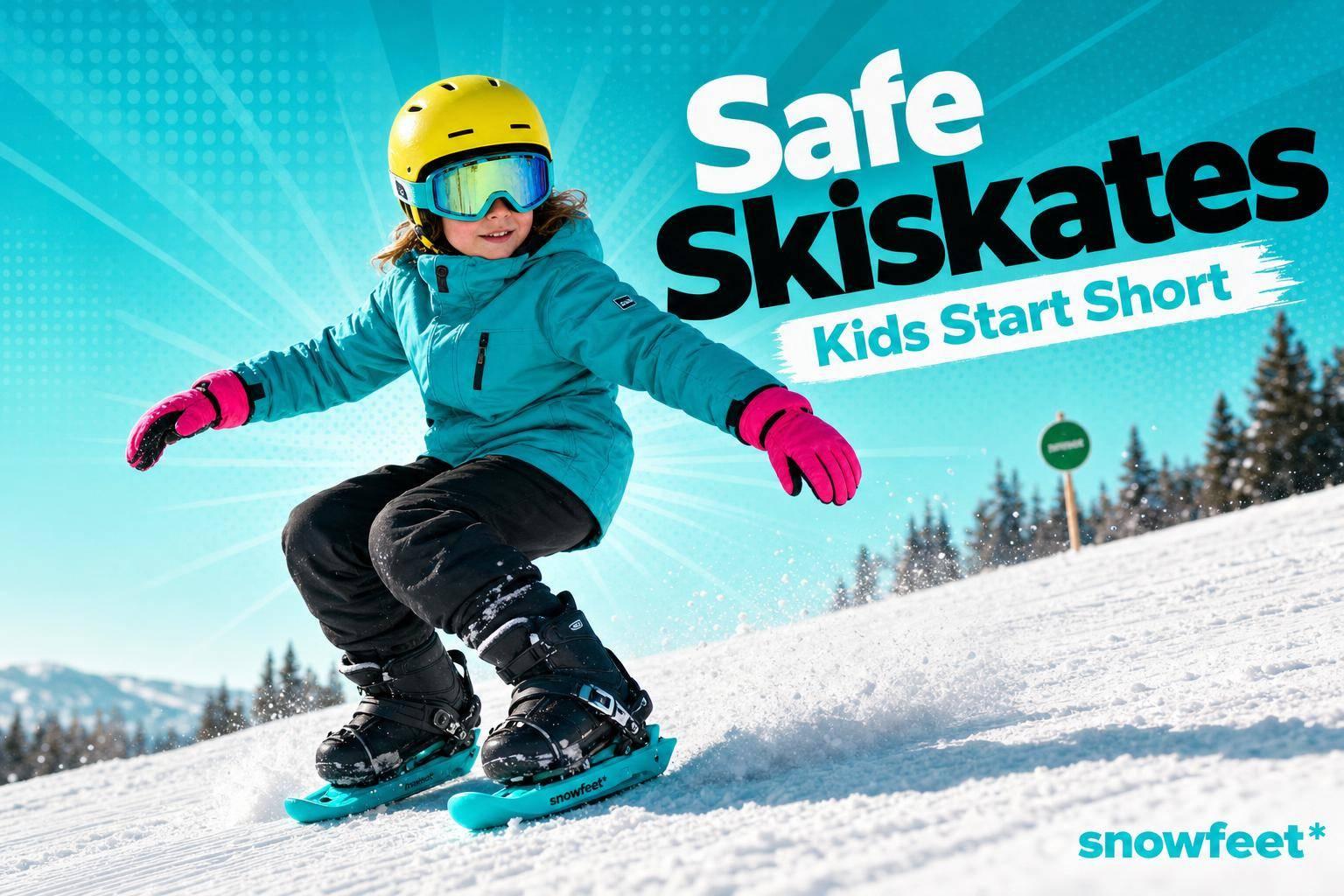
Kids get a lot out of ski school too. Good instructors keep things age-appropriate, fun, and safe. It also takes a lot of pressure off parents, which, let's be honest, is no small thing :)
For cautious adults, even one lesson on a mellow beginner slope can trim hours of trial-and-error. That first bit of guidance often makes the whole day feel less tense and a lot more fun.
Experienced Skiers, Snowboarders, and Skaters
If you already ski, snowboard, skate, or rollerblade, you can often skip a beginner lesson. Your balance and edge-control skills usually carry over fast. Snowboarders and skaters, in particular, tend to get comfortable on the Snowfeet* Skiskates 44 cm pretty quickly because independent foot control and lateral balance already feel normal to them.
That said, a short clinic can still pay off. Not for the ABCs, but for small stance fixes. Short skis tend to work better with a more upright position than long skis. Make that tweak early, and things can feel a lot smoother once you pick up speed or hit mixed snow.
Resort Newcomers Who Know the Sport but Not the Mountain
Even strong riders can get tripped up by resort basics. If you've never loaded a chairlift or had to read trail signs on the fly, you still need a short orientation. This isn't about learning to ride. It's about learning the mountain.
If you haven't used a chairlift before or don't know how U.S. trail ratings and resort etiquette work, a quick resort intro is enough.
sbb-itb-17ade95
How Much Instruction Each Snowfeet* Model Typically Needs
Once you know who can skip lessons, the next step is simple: how much help does each Snowfeet* model need?
The short version? It depends on the length, the feel, and what kind of rider you are.
Snowfeet* Skiskates 44 cm: Best for Skaters and Casual Riders Who Want Quick Turns
The Skiskates 44 cm are super short, easy to whip around, and feel closer to inline skates than full skis. That matters a lot.
Skaters and snowboarders often pick them up fast because their balance and edge control already carry over. In many cases, they can start with a short tutorial and begin riding on a green slope without a formal lesson.
True beginners should still get a focused lesson on stance and braking. That small bit of coaching can save a lot of awkward falls. The biggest mistake on this model is leaning too far back. Keep your weight centered.
If you want a bit more stability but still want easy turning, the 65 cm model is the next step.
Snowfeet* Skiblades 65 cm: A Good Middle Ground for Most Casual Riders
The Skiblades 65 cm are easy to start on, stable enough for green runs, and still quick to turn. For most casual riders, they hit the sweet spot between ease and control.
They’re forgiving on groomed terrain and make a strong first pick for adults and teens who want to get moving without a big learning curve. Not everyone wants to spend half the day fighting their gear, right? This model usually keeps things simple.
Most true beginners learn faster with one or two short lessons.
If you want the easiest move toward more of a ski-like feel, the 99 cm model is the next stop.
Snowfeet* Skiblades 99 cm: More Stability, Still Easier Than Long Skis
The Skiblades 99 cm feel the most like skis out of the Snowfeet* lineup. That extra length gives you more front-to-back stability and better edge grip, so many intermediate skiers can switch to them on easy terrain with little or no instruction.
Lessons start to matter more on blue runs, steeper slopes, or mixed snow. That’s where things can get a little less plug-and-play. The shorter platform changes how fast you pivot and how you apply edge pressure. Habits from full-length skis don’t always carry over cleanly.
A short lesson on carving, speed control, and line choice can help riders get more from the 99 cm blades while staying in control on tougher terrain.
How to Start Safely Without Overcomplicating It
A Simple Plan for Your First Day Out
If you skip a lesson, keep day one simple. No need to make it a whole production :)
Before you click in, do a quick gear check. Make sure your bindings are set, your helmet is on, and you’ve got goggles, gloves, and waterproof layers. Your boots should feel snug, not sloppy. Then test everything on flat snow first. Stand, find your balance, glide a bit, and practice a gentle stop.
After that, head to a green (beginner) run. A run with a magic carpet or slow lift is your best friend here. Keep a slight bend in your knees, glide a few feet, and stop with control. Stick with short glides until you can start, turn, and stop without guessing. That’s your checkpoint. If you can do those three things with control, you’re in a good place.
Follow the NSAA Responsibility Code too. Stay in control, yield to downhill skiers, and obey posted signs. Those rules still apply on short skis. Snow doesn’t care what length your skis are.
When to Book a Lesson and When to Skip It
This call comes down to two things: your background and how sure you feel.
Use this quick guide:
| Your Situation | Recommendation |
|---|---|
| Complete beginner, no snow or skating experience | Book a lesson |
| Nervous adult or cautious first-timer | Book a lesson |
| Child, especially under about 12 years old | Book a lesson |
| Unfamiliar with chairlifts or resort traffic | Book a lesson |
| Skier, snowboarder, skater, or rollerblader | Skip formal lessons; start on easy terrain |
| Confident adult on Skiblades 65 cm or 99 cm, green runs | Skip formal lessons; start on easy terrain |
A 60–90 minute beginner lesson can cover the stuff most first-timers don’t think about at first: lift use, stopping, falling safely, and reading the mountain. Short skis can help make movement feel easier, but they don’t teach judgment on their own. If any of those parts feel shaky, book the lesson.
If you already ski, snowboard, skate, inline skate, or rollerblade, you can start on 65 cm or 99 cm Skiblades on a mellow green run. That’s a fair starting point. But if you finish your first session and stopping still feels uncertain, don’t tough it out. Book a lesson.
FAQs
Can I teach myself short skis in one day?
Yes. Most people can learn the basics of short skis or skiskates in just one day.
Snowfeet products are shorter and lighter than standard skis, so they tend to feel more natural right away. A lot of users get the hang of the basics in as little as five minutes, especially if they’ve done ice skating, inline skating, or hockey.
If you’re brand new, you can still start strong on gentle, groomed slopes. The 65 cm and 99 cm models are often a good fit for beginners, and many people won’t need lessons to get started.
Which short ski length is best for a beginner?
For complete beginners, the best place to start comes down to two things: how comfortable you feel and how much stability you want.
The Snowfeet PRO (50 cm) is a popular pick because it gives you a slower, more controlled, forgiving ride. That makes it a nice middle ground when you're still getting your legs under you.
If you want more stability, 65 cm Skiblades are a great learning option. They give you a bit more platform under your feet, which can help things feel less twitchy.
The ultra-compact 38 cm Mini Ski Skates are more about fun and portability. They’re better suited to riders who already have strong balance or some skating experience.
What should a first short-ski lesson cover?
Start with a stable, athletic stance: feet about shoulder-width apart, knees slightly bent, and one foot a bit ahead. Before you move, work on your balance with your arms and do a few basic ankle and leg stretches.
On gentle, groomed slopes, focus on speed control with the snowplow (pizza), then learn how to turn and stop. Keep your weight centered so you stay in control.











Hagyj egy hozzászólást
Ezt a webhelyet a hCaptcha rendszer védi, és a hCaptcha adatvédelmi szabályzata, valamint szolgáltatási feltételei vonatkoznak rá.