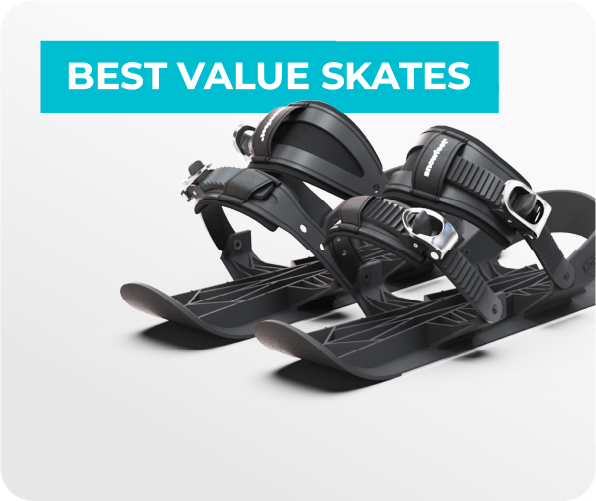
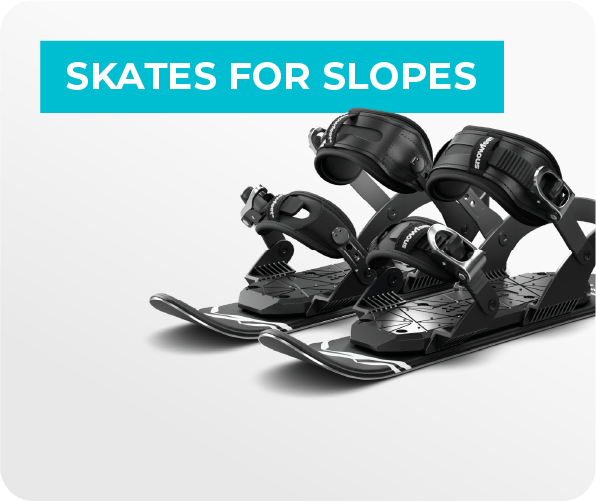
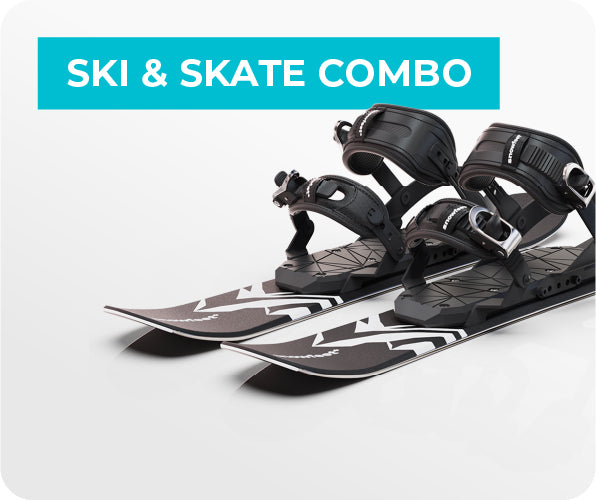
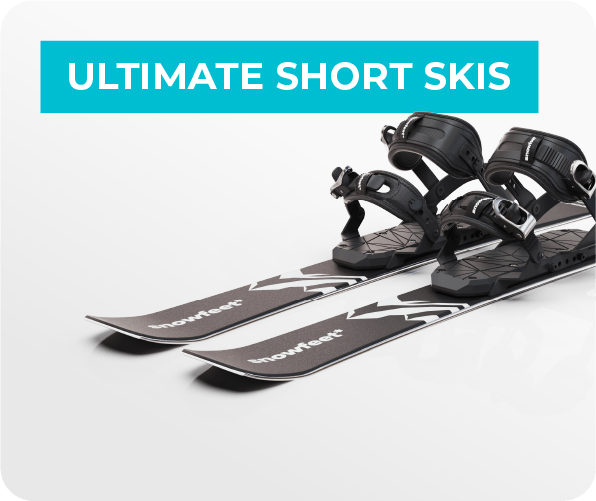
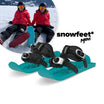
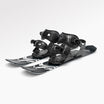
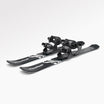
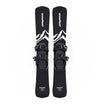
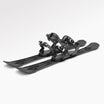
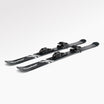
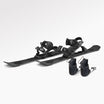
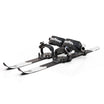
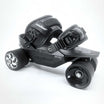
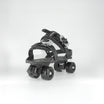
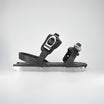
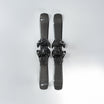

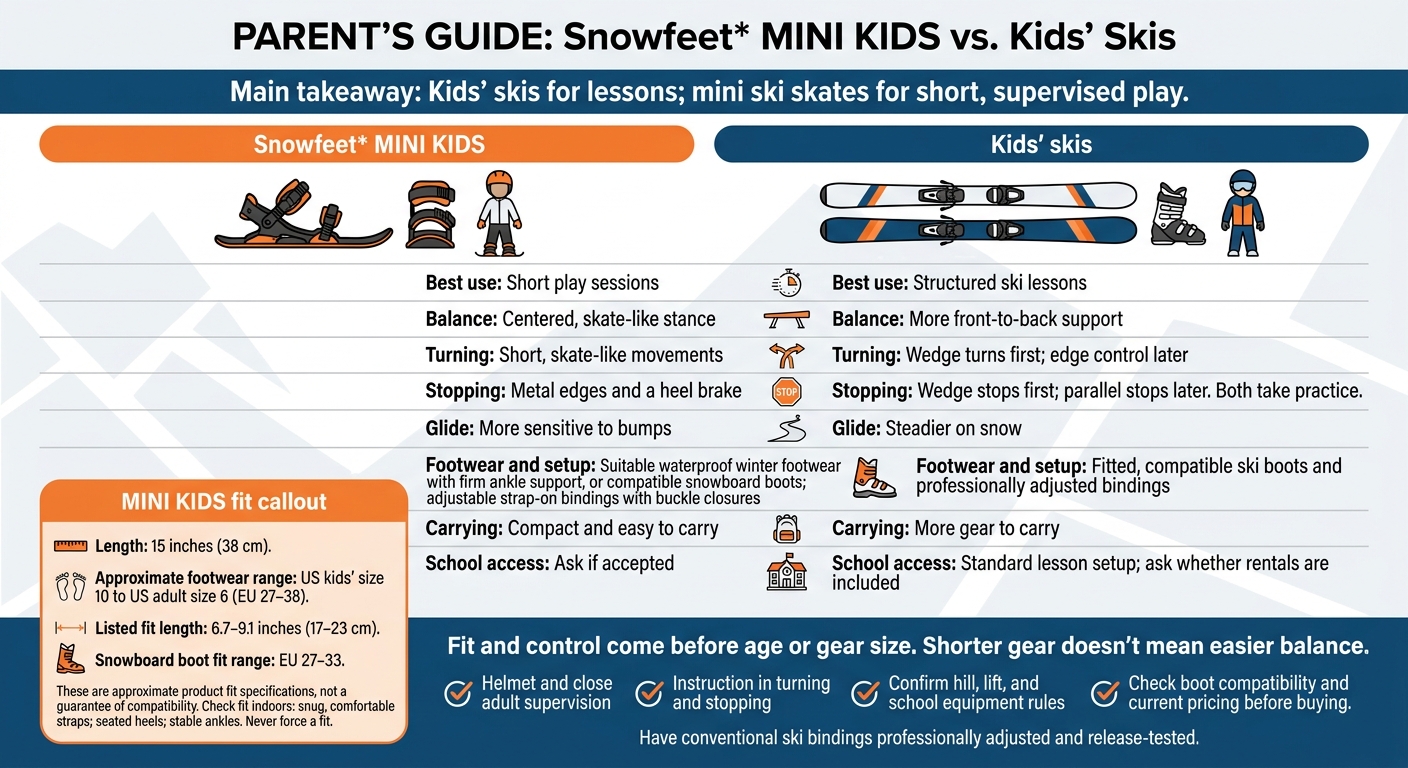
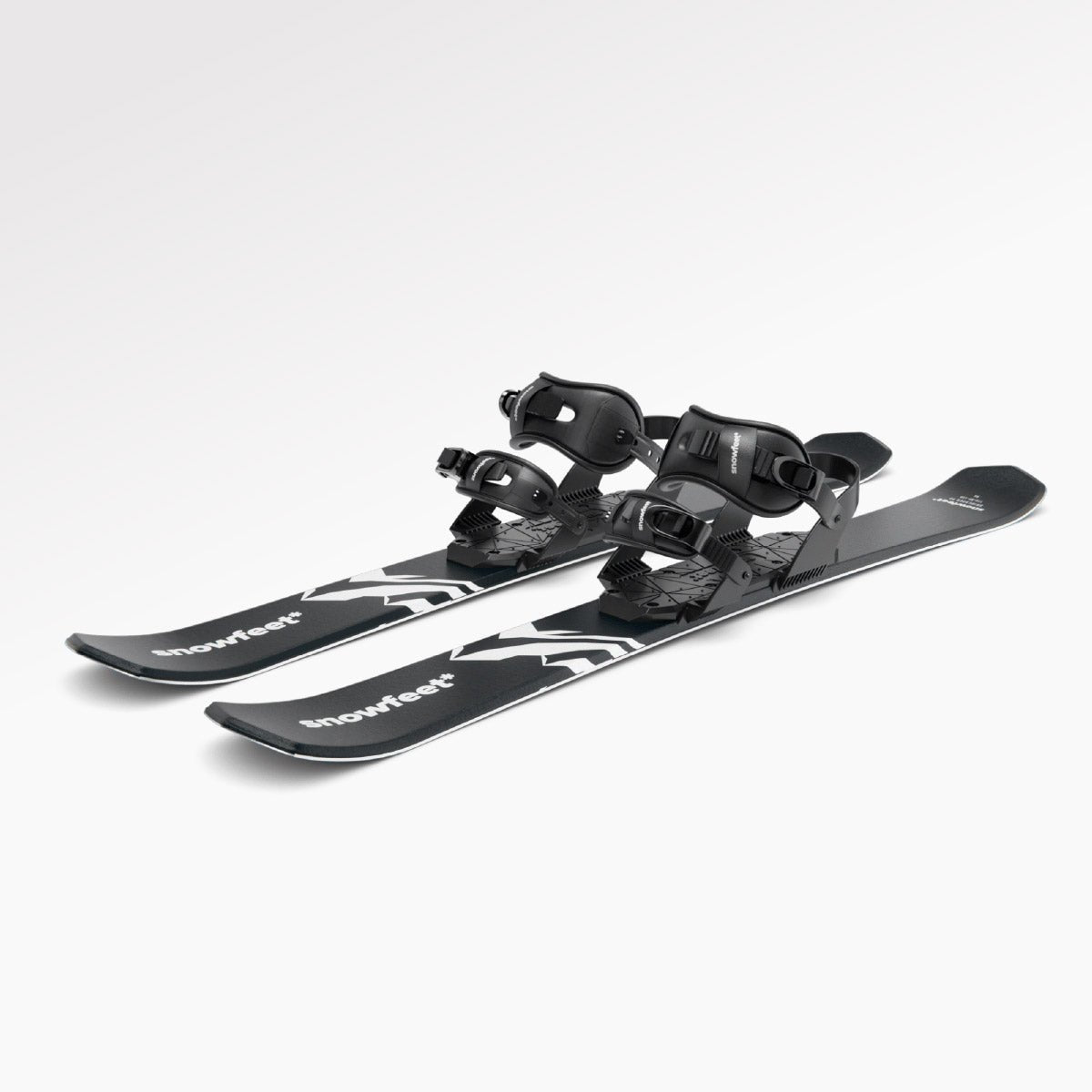
I’d pick kids’ skis for lessons and consider mini ski skates for short, supervised play. Snowfeet* MINI KIDS measure 15 inches (38 cm), so they’re easy to carry - but shorter gear doesn’t mean easier balance. Before buying, check your child’s boot fit and the hill’s equipment rules.
Here’s how I’d weigh the choice:
- Balance and turns: MINI KIDS use a centered, skate-like stance. Kids’ skis give more front-to-back support and suit wedge-turn lessons.
- Stopping: MINI KIDS have metal edges and a heel brake. Kids’ skis use wedge stops first. Both take practice.
- Boots and fit: MINI KIDS strap onto suitable winter footwear or snowboard boots. Kids’ skis need ski boots and professionally adjusted bindings.
- Cost and lessons: I’d check the current product price and ask whether lessons include rentals before buying.
Quick Comparison
| What matters | Snowfeet* MINI KIDS | Kids’ skis |
|---|---|---|
| Best use | Short play sessions | Structured ski lessons |
| Glide | More sensitive to bumps | Steadier on snow |
| Carrying | Compact and easy to carry | More gear to carry |
| Footwear | Secure fit and firm ankle support | Fitted ski boots |
| School access | Ask if accepted | Standard lesson setup |
My rule: <u>fit and control come before age or gear size</u>. Whichever you choose, use a helmet, close adult supervision, and instruction in turning and stopping.
Mini Ski Skates vs Kids’ Skis: Bunny Hill Gear Guide
All you need to know - Snowfeet* | Skiskates | Skiboards | Snowblades | Skiblades FAQ
Mini Ski Skates vs Kids’ Skis: Key Differences
On bunny hills, MINI KIDS are lighter and easier to handle. Kids’ skis feel steadier and are a better match for ski-school lessons.
Here’s how the two setups compare:
| Feature | Snowfeet* MINI KIDS | Kids’ skis |
|---|---|---|
| Stance | Upright, skate-like stance with centered balance | Forward-leaning, athletic stance with a stable base |
| Turning | Short, skate-like movements that make tight turns easier | Snowplow turns first, edge control later |
| Stopping | Metal edges and a heel brake | Snowplow stops, then parallel stops |
| Glide stability | Easy to maneuver, but more sensitive to bumps | Steadier glide thanks to greater length and surface area |
| Boot compatibility | Waterproof winter shoes with firm ankle support, or snowboard boots | Dedicated ski boots |
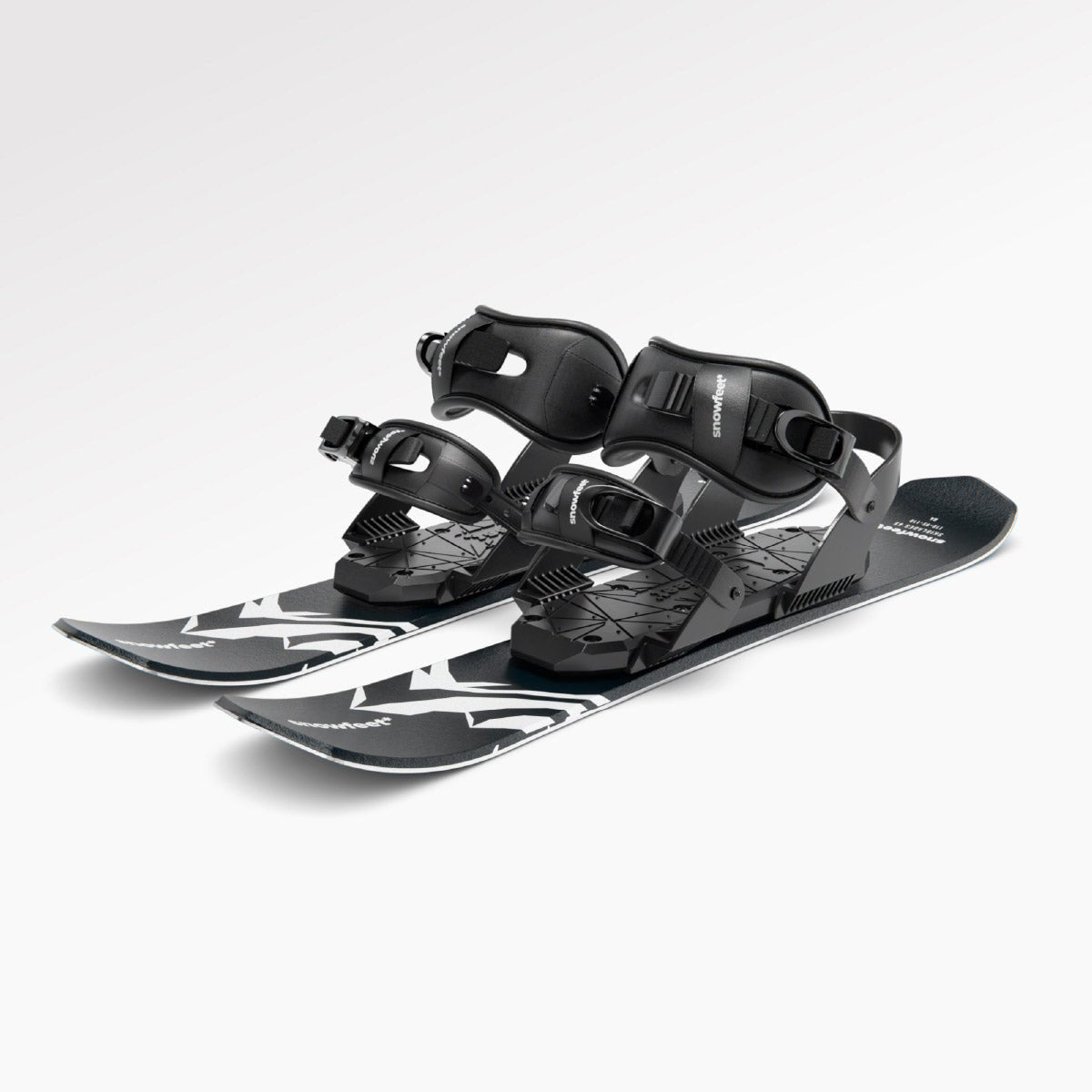
| Fit | Adjustable strap-on bindings with buckle closures | Sized skis, fitted boots, and properly adjusted bindings |
| Handling & carry | Less to carry and easier to reposition | Bulkier boots and skis to handle |
| Lesson suitability | Check that the ski school accepts ski-skate gear | Familiar setup for ski-school lessons |
Snowfeet* MINI KIDS: Fit, Length, and Price
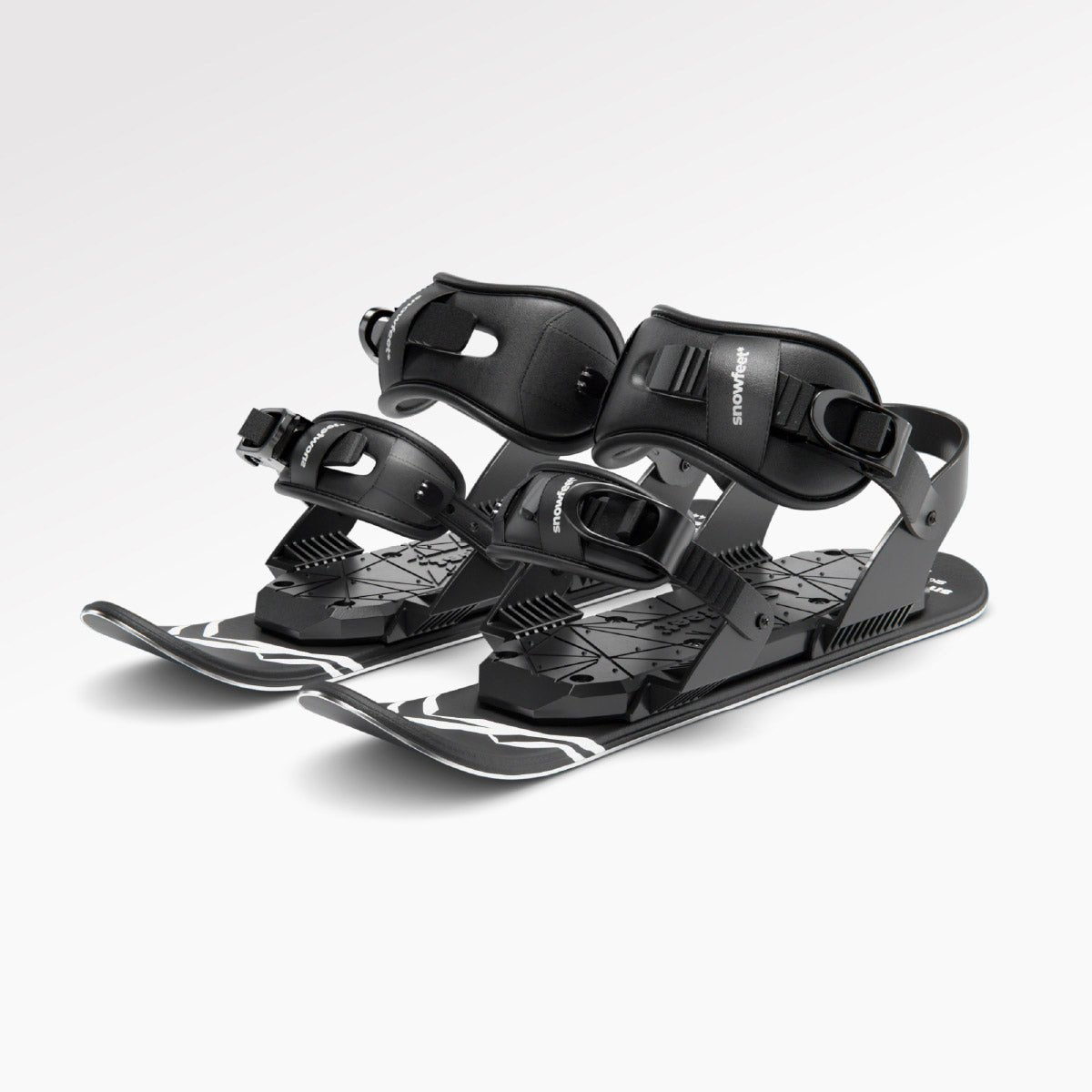
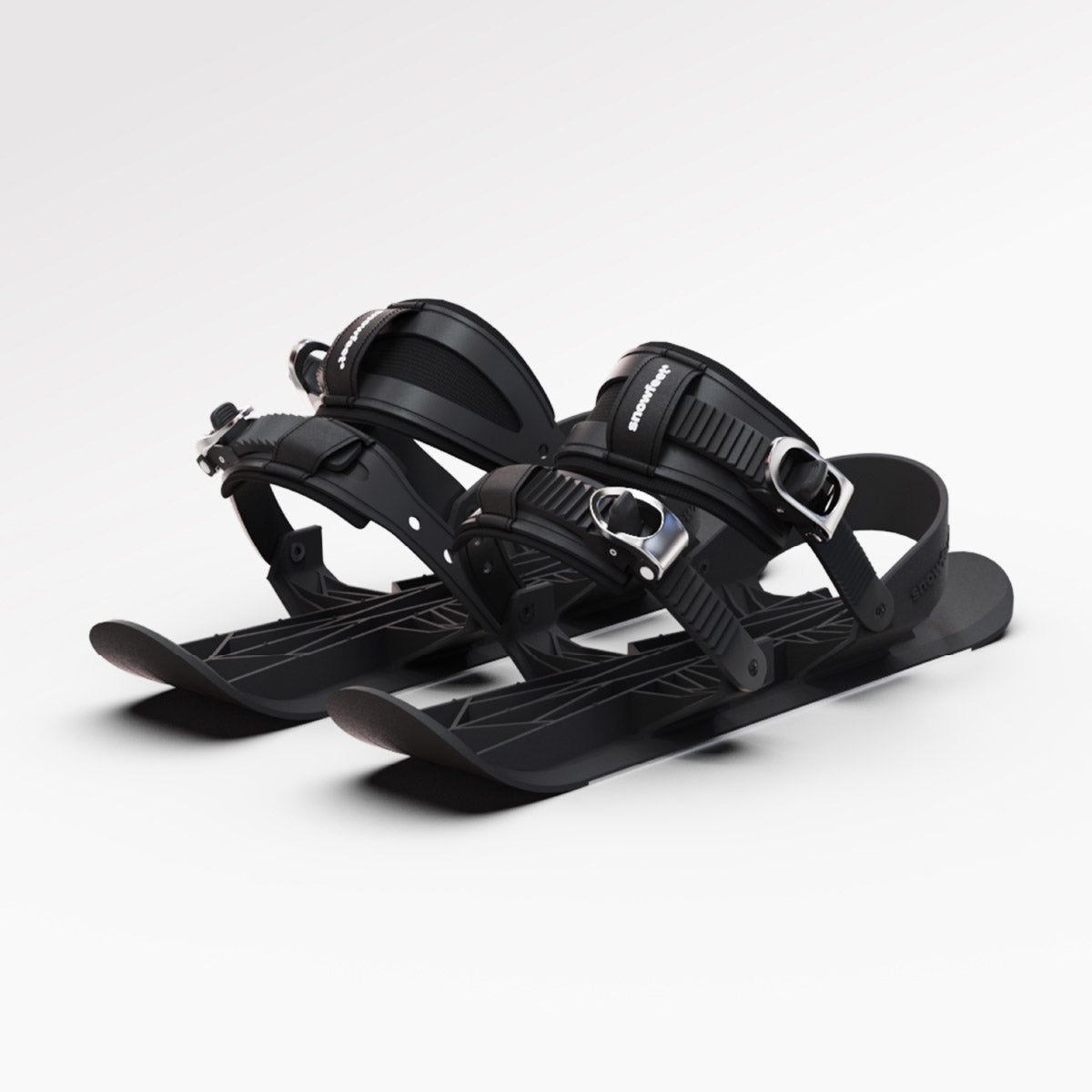
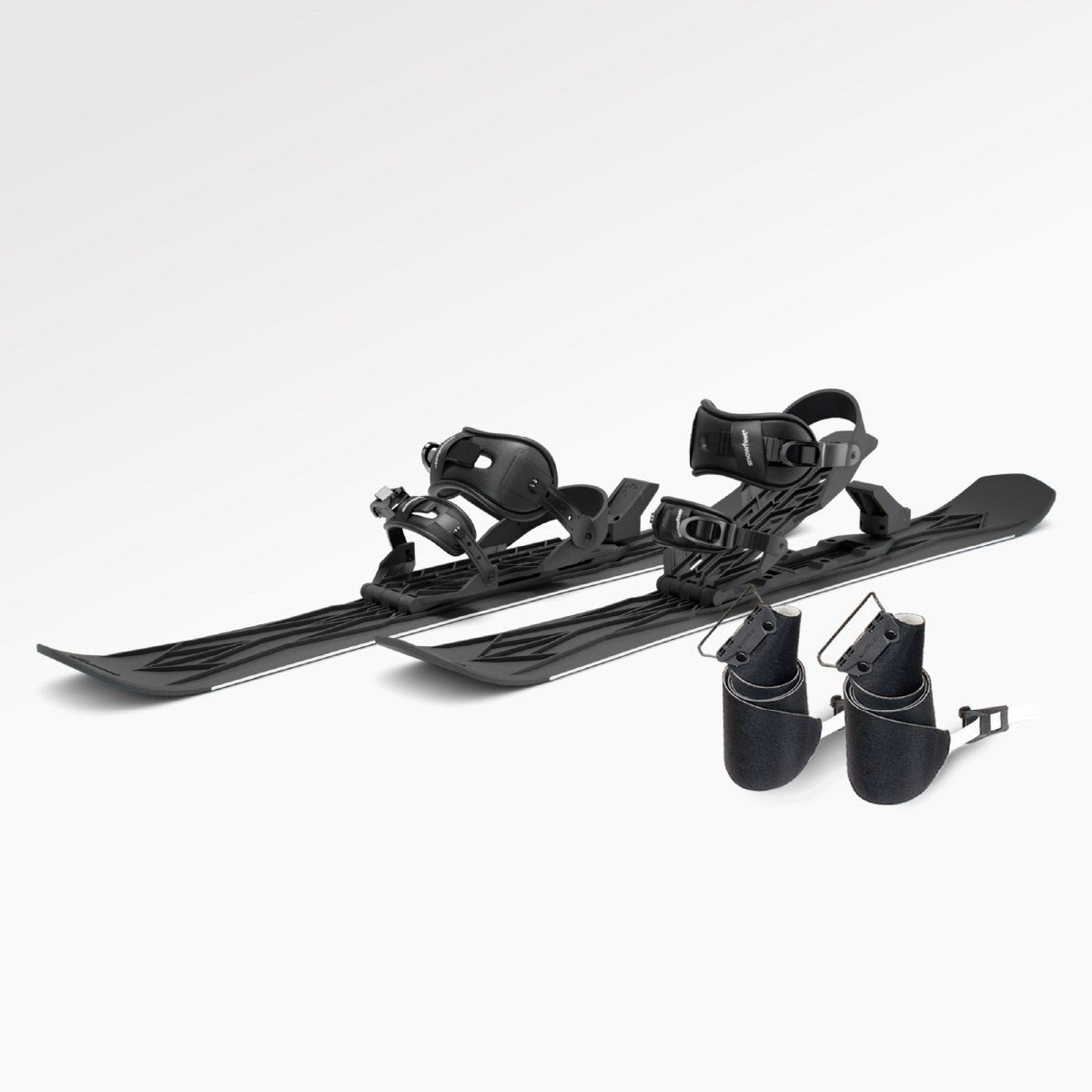
Snowfeet* MINI KIDS measure 15 inches (38 cm) and have adjustable strap-on bindings with buckle closures. Choose waterproof footwear with firm ankle support - not just shoes that fit inside the straps.
They fit roughly US kids’ size 10 to US adult size 6 (EU 27–38), or 6.7–9.1 inches (17–23 cm). The snowboard boot fit range is smaller: EU 27–33. Check the official product page for the current price in USD; a live price could not be verified.
Kids’ Skis: Boots, Bindings, and Lesson Fit
Kids’ skis need compatible ski boots and properly adjusted bindings. Pick the ski length based on your child’s height, weight, ability, and lesson requirements.
The longer platform suits kids who want a steadier glide or plan to take ski-school lessons. The trade-off? Fitting and carrying the gear takes more effort.
Before buying, ask the school which equipment it accepts. Then compare how each setup affects balance, turning, and stopping on a bunny hill.
Learning Skills and Helping Your Child
Use this guide to match gear to the skills your child needs to learn first.
| Practice task | Snowfeet* MINI KIDS | Traditional kids’ skis |
|---|---|---|
| Balance | Practice a centered stance | Practice gliding with more front-to-back support |
| Turning | Practice short turns and foot adjustments | Follow the wedge-turn steps used in many lessons |
| Stopping | Learn edge control and heel-brake use | Learn wedge stops and edge control |
Balance and Turning on Gentle Slopes
On bunny hills, think about what your child needs: playful movement or the stability of a lesson-style setup. Shorter gear doesn’t always make balance easier. MINI KIDS encourage centered balance and short, skate-like turns. Kids’ skis offer more front-to-back support. Let your child’s confidence set the pace.
Stopping and Building Control
Practice on gentle, controlled terrain with direct adult supervision. MINI KIDS won’t stop for your child, and the heel brake doesn’t replace learning control. Stopping skill matters more than gear length.
For parents helping on and off the slope, ease of carrying gear can also affect how often a child gets to practice.
Carrying Gear and Repositioning Feet
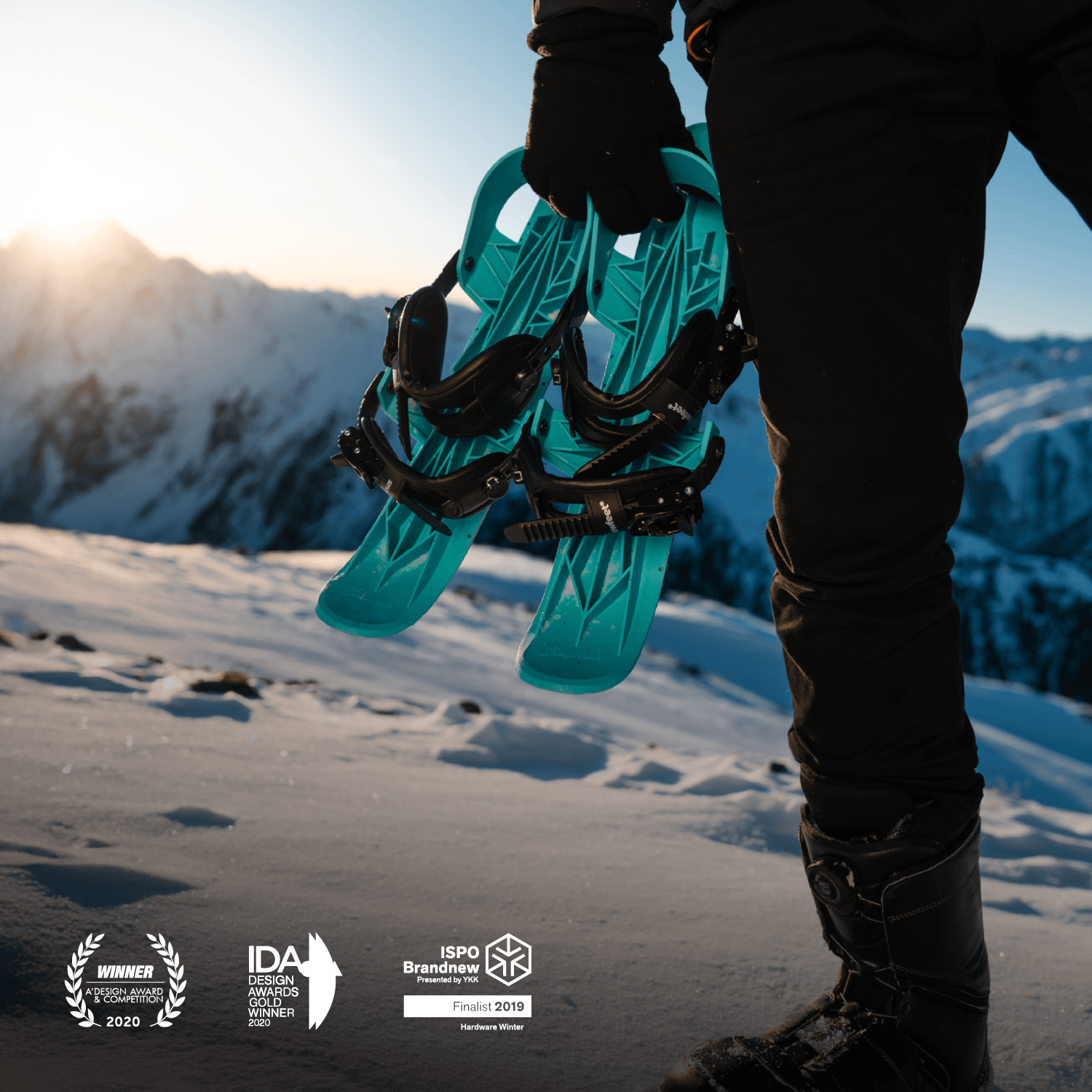
Snowfeet* MINI KIDS’ compact shape makes them easier to carry. It also makes it easier to help your child adjust their feet while standing.
sbb-itb-17ade95
Choose by Fit, Confidence, and Goals
Once you’ve considered handling, let fit and lesson goals guide your choice. Choose by fit and learning goals, not age. Think about the support your child needs to practice balance, turns, and stops.
Use this table to match the gear to your child’s needs.
| Child profile or goal | Best match | Check before purchase |
|---|---|---|
| Short, playful sessions in supportive boots | Snowfeet* MINI KIDS | Check for a secure footwear fit and review local equipment rules. |
| Needs more lower-leg support | Kids’ skis with ski boots | Have a fitter check support and comfort. |
| Plans regular lessons or wedge-to-parallel progress | Conventional kids’ skis | Ask whether lessons include rentals. |
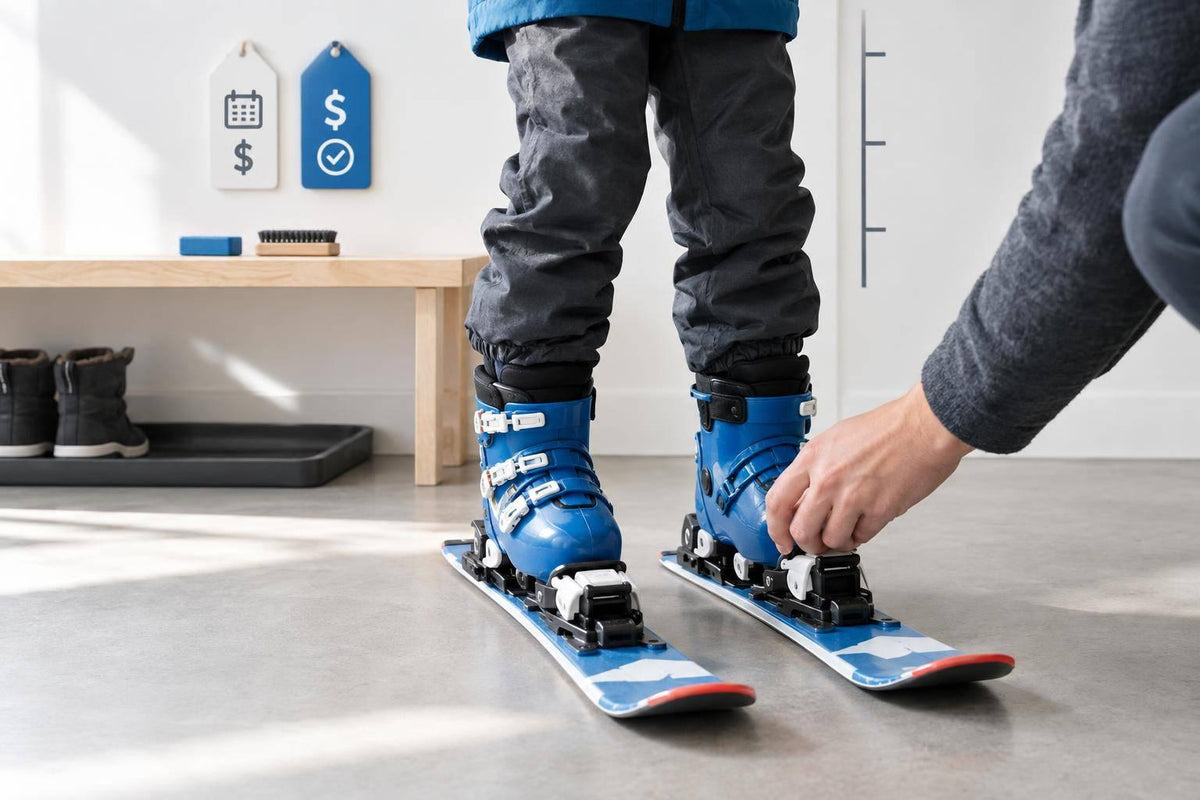
| Doesn’t fit MINI KIDS safely | Properly sized kids’ skis or rentals | Check boot compatibility; never force a fit. |
Choose MINI KIDS for Short Play Sessions
Snowfeet* MINI KIDS suit short, playful bunny-hill sessions and offer easy handling. Less gear can help a hesitant child get started.
Check the boots indoors first: straps should feel snug but comfortable, heels should stay seated, and ankles should stay stable. Check the current price on Snowfeet’s product page before ordering.
Choose Kids’ Skis for Ski-School Lessons
Conventional kids’ skis offer a steadier glide and suit structured lessons that move from wedge turns to parallel turns. Ask the school which equipment it accepts before buying. Your lesson package may already include professionally fitted rentals.
Have a professional adjust the bindings and test their release - even on hand-me-down skis.
Conclusion: Snowfeet* for Play, Kids’ Skis for Lessons
Snowfeet* MINI KIDS are the better pick for short, playful bunny-hill sessions, as long as your child’s boots fit safely and the gear is fitted right. They’re compact, easy to carry, and built for quick, skate-like moves. Kids’ skis work better for a steadier glide and standard ski-school lessons. Neither option replaces lessons in turning and stopping.
Before buying, confirm the current $250 price on the MINI KIDS product page. Check boot compatibility, hill and lift rules, and whether the gear suits your child’s lessons.
FAQs
How can I tell if my child is ready for mini ski skates?
Your child is likely ready if they can walk with ease on uneven ground, follow a simple two-step instruction, and stand on one leg for a moment.
Snowfeet MINI KIDS are ideal for ages 2–6. They’re light, fit winter boots, and let kids move in a natural, low-stress way.
Consider longer models, such as 38 cm (about 15 in) or 44 cm (about 17.3 in) Skiskates, once your child can balance well, shift their weight from side to side, and move with control on flat ground.
How can I help my child practice stopping safely?
Start on gentle slopes so your child can practice simple pivots and learn to control speed with the heel brake. Snowfeet MINI KIDS have metal ski edges and a heel brake to help kids slow down and stay in control.
The short, lightweight design lets kids focus on movement instead of bulky gear. Make sure your child wears supportive, snug-fitting winter boots or snowboard boots for responsive braking.
Will Snowfeet* skills transfer to traditional skis?
Yes - some skills carry over, especially basic edging and weight shifts used to turn, slow down, and stop. Snowfeet* encourages quick, controlled movements that help kids build alpine technique as they grow.
Snowfeet* is easier to learn for low-speed control on gentle slopes. But it can’t fully match what standard skis offer: stiffer alpine boots, more stability from longer skis, and ski-school lessons that take kids from snowplow to parallel turns.


Hagyj egy hozzászólást
Ezt a webhelyet a hCaptcha rendszer védi, és a hCaptcha adatvédelmi szabályzata, valamint szolgáltatási feltételei vonatkoznak rá.