



















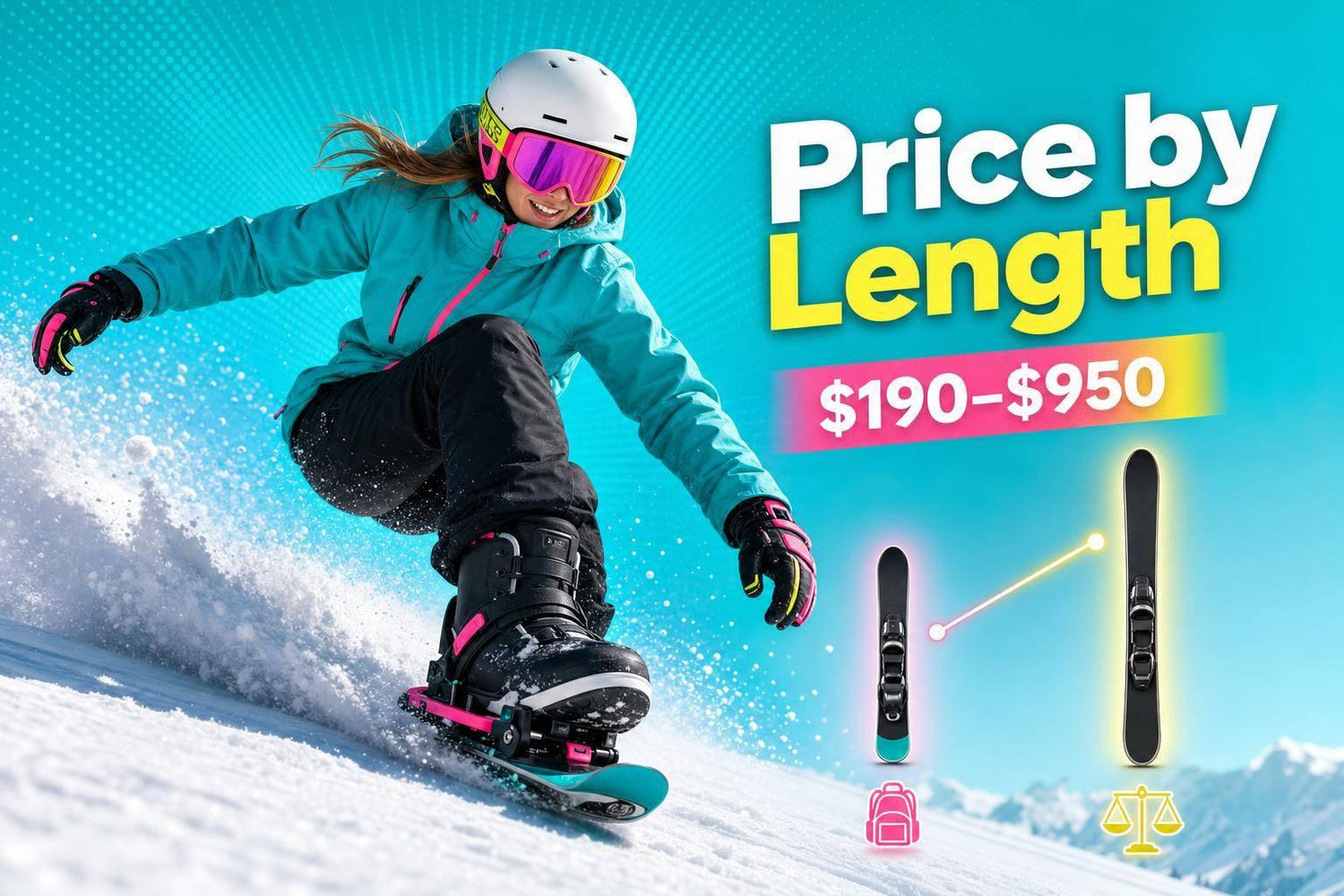
Short answer: short skis usually cost about $190 to $950 in the U.S., and length is the main thing that moves the price.
If you want the fast version, here it is:
- 38–50 cm: about $190–$299
- 44 cm: about $460–$690
- 65 cm: about $590
- 99 cm: about $690
- 120 cm: about $790 to $900+
So, if you want the lowest entry price, go short. If you want more calm at speed and a more ski-like feel, go longer. Simple.
A few things stood out to me:
- Mini models are the cheapest and easiest to pack
- 65 cm is where control starts to feel much better
- 99 cm is the sweet spot for many resort riders
- 120 cm costs the most, but feels closest to a full ski
- Some short models work with winter boots or snowboard boots, which can cut your total gear cost
That last point matters. A ski that costs $299 but works with boots you already own can be a much lower buy-in than a setup that needs ski boots and alpine bindings. That’s why sticker price only tells part of the story.
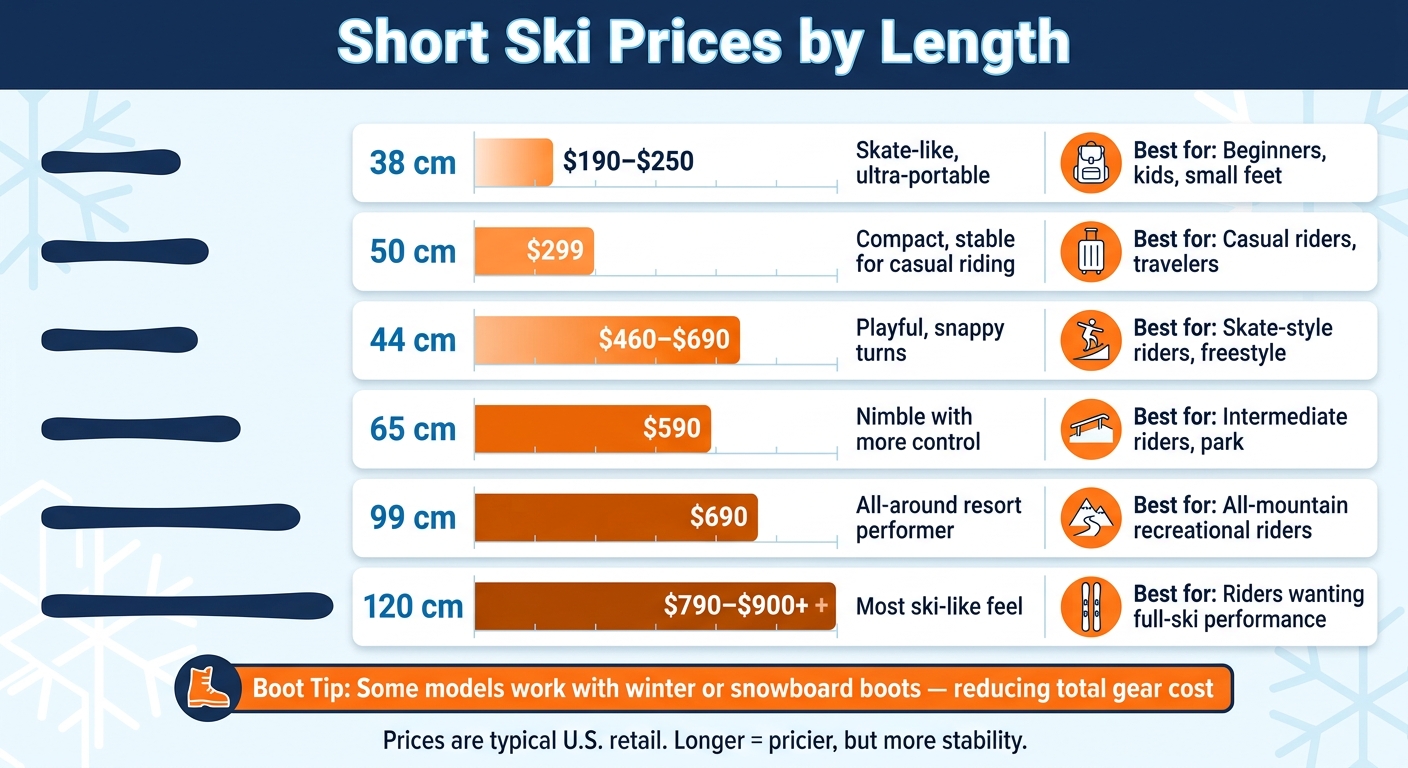
Short Ski Prices by Length: Which Size Is Right for You?
Snowboarder tries Snowfeet* | Which Snowfeet* Short Ski is the Best? | Snowblades 44, 65, 99 Review
Quick comparison
| Length | Typical U.S. Price | Best Match |
|---|---|---|
| 38 cm | $190–$250 | Small feet, kids, low-cost entry |
| 50 cm | $299 | Casual riders, travel, backpack carry |
| 44 cm | $460–$690 | Skate-like riding, playful turns |
| 65 cm | $590 | Groomers, park, more control |
| 99 cm | $690 | Resort laps, all-around use |
| 120 cm | $790–$900+ | More speed, more stability |
My quick take? If you’re new or casual, the best value sits in the 38–65 cm range. If you want one short ski that feels less nervous on groomers, 99 cm is often the safer bet. And if you want the closest thing to a full ski without going full-length, 120 cm is where the price tops out.
If you want a quick visual before you buy, these may help:
Now let’s break down what you get at each length - and where your money goes :)
1. Snowfeet* Mini Ski Skates 38 cm
The 38 cm Mini Ski Skates are Snowfeet*’s smallest and lowest-priced model. In the U.S., they usually sell for about $190 to $250, though sale prices can dip lower. So if you want the cheapest way into the Snowfeet* lineup, this is it.
On snow, they feel a lot like skates. They’re quick, easy to turn, and simple to pivot when you want to change direction fast. That makes them a fun pick for groomed runs and small park features. Deep powder, though? Not their happy place.
Fit is pretty simple too. The 38 cm Mini model works for US kids’ size 10 up to US adult size 6 (EU 27–38) and pairs with regular winter boots or snowboard boots. That makes this size a good match for younger riders, adults with smaller feet, and anyone who wants the most portable Snowfeet* option for mellow slopes or sledding hills.
Next up is the 50 cm model, which gives you more room and comes with a small bump in price.
2. Snowfeet* Mini Ski Skates 50 cm
If you want a bit more stability without moving out of the lower price range, the 50 cm Mini Ski Skates are the next step up. In the U.S., they start at $299. That’s the first price jump from the 38 cm model. At 50 cm (20 in), they still fit in a backpack.
That extra length makes a clear difference on snow. You get more stability and a bit more confidence when you pick up speed, but the ride still keeps that quick, skate-like feel. On groomed slopes and during easy carving, they feel smoother and more forgiving than the 38 cm version. So you get more control than the shortest option, while still keeping more portability than longer Skiblades.
Setup stays simple too. They work with winter boots or snowboard boots, which is nice if you don’t want to mess with a complicated gear setup.
If the 38 cm model feels a little too twitchy, this 50 cm version is the easier pick. Next up, the 44 cm Skiskates sit between this model and the shorter mini skates.
3. Snowfeet* Skiskates 44 cm
The 44 cm Skiskates start at $460 in the U.S. Another official listing shows $690 for the same 44 cm model. So, this sits right in the middle of the Snowfeet* lineup on both size and price.
On snow, they feel much more like skates than short skis. You get quick pivots, fast edge-to-edge moves, and a playful feel that’s a lot of fun when you want tight, snappy turns. At 44 cm (17.3 in), they’re still less stable at higher speeds than the 65 cm and 99 cm Skiblades.
One thing you’ll want to check before buying: boot compatibility. The 44 cm model comes in two versions:
- one for ski boots
- one for snowboard boots
That matters. If you already own snowboard boots, you may be able to skip buying extra gear, which is always nice on the wallet.
Compared with the 38 cm model, the 44 cm feels more planted. Compared with the 50 cm model, it feels more playful. In plain English, it lands in that sweet spot between the lowest-cost mini skates and the more stable 65 cm Skiblades.
Next, the 65 cm Skiblades move into a more stable, more versatile price tier.
4. Snowfeet* Skiblades 65 cm
The 65 cm Skiblades start at $590 in the U.S. That puts them above the 44 cm Skiskates on price, but you do get more stability when you pick up speed. So, if you want a short ski that still feels quick and fun, but not quite as twitchy, this is the first step up.
At 65 cm (about 25.6 in), they keep a tight ~4 m turning radius, which helps them stay playful in turns. In plain English: they’re short enough to feel nimble, but long enough to give you more control than the 44 cm model. That’s why $590 feels like the first clear mid-tier price point in the Snowfeet* lineup.
The bindings fit EU 36–49 ski boots, which is about US 4.5–14.5.
After this, the next jump is the 99 cm category. It costs more, but it also adds a clear bump in stability.
sbb-itb-17ade95
5. Snowfeet* Skiblades 99 cm
The 99 cm Skiblades start at $690 in the U.S. That's about $100 more than the 65 cm model, and you can feel where that money goes. This is the first step up where stability takes a clear leap from the 65 cm tier.
At 99 cm, these skiblades still feel compact and easy to handle. But they also feel smoother and more settled on groomed runs, especially once you pick up speed. Compared with the 65 cm version, the 99 cm is less twitchy and more planted. It lands in a nice middle ground: playful, but not so short that it feels nervous.
That makes it a smart all-around choice for riders who spend most of their time at the resort and want fun, quick handling without moving to a full-size ski.
The adjustable bindings fit standard ski boots US 4.5–14.5 and snowboard boots US 6–14.5. That's a big plus if you already own either pair and don't want to buy extra gear.
This model works well for:
- Intermediate resort riders
- Park riders
- Travelers
If most of your day is spent on groomed runs, taking quick laps, doing spins, and carving, the 99 cm hits a sweet spot. If you're chasing top speed or deep powder, this probably isn't your lane.
If your riding stays on groomed runs, the standard 99 cm is the better all-around pick. Next up is the POWDER 99 cm, which keeps the same length but uses a wider platform for soft snow.
6. Snowfeet* POWDER 99 cm
The POWDER 99 cm also starts at $690, but this one leans more toward soft snow. Same price. Different shape. Different feel on snow.
What makes it stand out is the wider platform and hourglass shape. That extra width in the tip and tail gives you more surface area, which helps the ski stay up in powder instead of sinking. You still get grip on groomers, but the design is more tuned for soft snow and mixed conditions.
Compared with the regular 99 cm Skiblades, the POWDER version feels more stable and floaty in soft snow, but less quick side-to-side on hardpack. That’s the trade-off. If your days often include powder, chopped-up snow, or a bit of everything, this shape makes more sense. If you spend most of your time on firm groomers, the regular 99 cm will feel sharper.
You can use ski boots or snowboard boots.
And if you want even more stability with a ride that feels closer to a standard ski, 120 cm is the next move.
7. Snowfeet* Short Skis 120 cm
For the biggest jump in stability without leaving the short-ski lane, 120 cm is the move. At about $790, the 120 cm Snowfeet* Short Skis are the priciest Snowfeet option in this guide. But you can see where that extra money goes.
The added length gives you more stability and a feel that’s closer to a standard ski. You still get Snowfeet*’s compact vibe, but the ride feels calmer when you pick up speed. That’s the big draw here: more control on faster runs, without jumping all the way to full-length skis.
If the shorter Snowfeet* models feel a bit too twitchy for your style, this one makes a lot of sense. It’s the strongest pick in this lineup for riders who want the most performance from Snowfeet* while still staying in the short-ski category.
There’s one setup change to note. This model uses ski boots and standard alpine bindings. It does not share the shorter Snowfeet* models’ boot flexibility, where some also work with snowboard boots. That more ski-like setup helps make it the best Snowfeet* fit for faster runs and for riders who want a more standard on-snow feel.
Next, compare 120–130 cm short skis from other brands.
8. Short Skis 120–130 cm from Other Brands
In the 120–130 cm range, the market splits fast. You’re usually looking at either adult skiboards or junior skis.
Adult skiboards from names like Elan and Summit usually land between about $475 and $800, based on the binding setup. That puts Snowfeet* near the top end on price, but still in the small, easy-to-travel short-ski class.
At the same time, not every ski in this size range is built for adults. Some 120–130 cm options from brands like Elan and Atomic are junior skis, usually priced around $180 to $300. These tend to have a softer flex and are made for kids who are getting better on groomed runs.
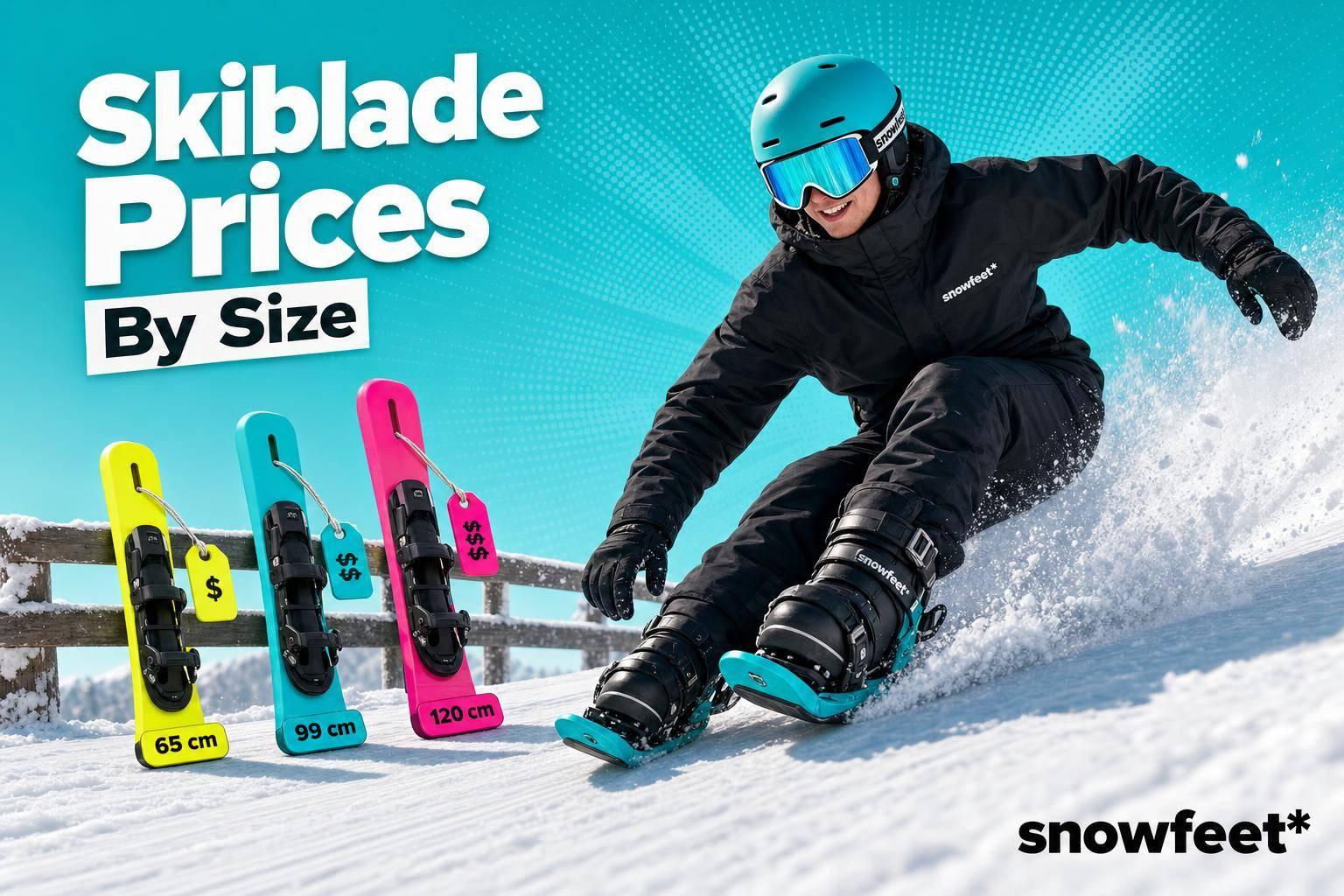
Here’s the price picture at a glance:
| Product | Length | Price | Target Rider |
|---|---|---|---|
| Elan Skiboards | 125 cm | $525 | Adult skiers/carvers |
| Summit Marauder BX | 125 cm | $475–$795 | Adult skiers/carvers |
| Elan / Atomic junior skis | 120–130 cm | $180–$300 | Kids / juniors |
| Snowfeet* Short Skis | 120 cm | About $790 | Casual riders and travelers |
For casual riders, Snowfeet* costs more. But that higher price comes with a lighter, simpler setup that’s easier to carry and pack. Think of it like this: other brands lean more toward a classic ski feel and carve, while Snowfeet* leans toward low hassle and travel ease.
Next, weigh the pros and cons of each length.
Pros and Cons by Length
Here’s the simple trade-off: as skis get longer, you usually get more stability and more ski-like control. But you also get more bulk, less portability, and a higher price tag. Shorter models are easier to carry and easier to buy, but they give up some speed control and edge hold.
This chart makes that trade clear fast.
| Length Bracket | Main Pros | Main Cons | Typical U.S. Price | Best-Fit Rider |
|---|---|---|---|---|
| Mini Ski Skates (38–50 cm) | Lightest, most portable, easy to pack, and many models work with regular winter or snowboard boots | Least stable at speed and limited edge grip | About $190–$299 | Beginners, travelers, and casual riders |
| Skiskates (44 cm) | Playful, skate-like feel; compact; available in ski- or snowboard-boot versions | Less stable than longer short skis | From $460 | Riders who want a playful, skate-like feel |
| Mid-short (65 cm) | More stable than minis, quick turning, good for parks and easy groomers | Less stable than longer models; less effective in ungroomed snow | From $590 | Intermediate riders and weekend travelers |
| All-around (99–100 cm) | More ski-like, versatile on groomers and light powder; less quick than shorter models | Still shorter than full skis, so it gives up some stability | From $690 | All-around riders who want one compact ski for most terrain |
| Long short skis (120–130 cm) | Most ski-like and stable in this lineup, with strong edge hold | Higher price and less packable | About $790 for Snowfeet* 120 cm; $475–$800 for similar adult skiboards | Riders who want the most stable Snowfeet* option without moving to full-length skis |
That’s why Snowfeet*’s shorter models often feel like the easy buy for casual riders. They cost less, take up less space, and don’t ask for much setup. The biggest jump in control shows up at 65 cm. And 99 cm feels closest to a regular ski while still staying compact.
Conclusion
Short skis usually start in the low $200s and can go past $900. In most cases, the longer the ski, the more you’ll pay. Pretty simple, and honestly, that makes shopping a lot easier :)
Here’s the Snowfeet* lineup from shortest to longest.
The 38 cm Mini Ski Skates start at about $190–$199. The 50 cm Mini Ski Skates cost around $299. The 44 cm Skiskates start near $460, while the 65 cm Skiblades start at $590. Both 99 cm models - the standard version and the POWDER version - start around $690. At the top of the Snowfeet* range, the 120 cm Short Skis come in at about $900+.
So, if you want the fastest way to sort your options, look at length first. It gives you a good read on both price and ride feel.
For a quick budget guide, here’s a simple match-up:
| Rider type | Recommended length | Example model | Expected U.S. budget |
|---|---|---|---|
| Beginner / casual rider | 38–50 cm | Snowfeet* Mini Ski Skates 38 cm / 50 cm | ~$200–$300 |
| Park & freestyle rider | 44–65 cm | Skiskates 44 cm / Skiblades 65 cm | ~$460–$590 |
| All-mountain recreational | 65–99 cm | Skiblades 65 cm / 99 cm | ~$590–$690 |
| Powder-focused rider | 99 cm | Snowfeet* POWDER 99 cm | ~$690 |
| Traditional ski feel | 120 cm | Snowfeet* Short Skis 120 cm | ~$900+ |
For most casual riders, the 38–65 cm range is the sweet spot. It costs less, travels easily, and feels less intimidating on day one. The 99–120 cm models cost more, but they get closer to that full-ski feel while still staying compact.
FAQs
What’s the best short ski length for beginners?
For complete beginners, the 50 cm Snowfeet PRO is the best place to start. The extra length gives you a more stable, forgiving ride, which helps cut down that shaky, wobbly feeling most first-timers get.
If you want something that feels easy to handle and simple to learn on, 65 cm Skiblades are also a great pick. And if you want an ultra-compact entry-level option, 38 cm Mini Ski Skates work well for learning basic balance and control.
Do I need ski boots for all short skis?
No. Most Snowfeet models, including the 38 cm to 50 cm Mini Ski Skates, work with regular winter boots or snowboard boots. That’s a big plus, since those boots are often more comfortable and much easier to walk in than ski boots.
Some models, like the 44 cm Skiskates and 65 cm to 99 cm Skiblades, work with both ski boots and snowboard boots.
The 120 cm Skiblades are the one exception. They require ski boots.
Are longer short skis worth the higher price?
Yes - if you want more stability, better carving, and all-mountain use, the higher price makes sense.
Shorter picks like the 44 cm Skiskates are easier to pack and carry. They also feel more like skating, which a lot of riders love.
The 99 cm and 120 cm models give you more surface area and more edge contact. That helps on steeper terrain, bigger jumps, and deeper snow.
If you want a more standard carving feel without dragging around full-size skis, the 120 cm Short Skis hit the sweet spot.











Hagyj egy hozzászólást
Ezt a webhelyet a hCaptcha rendszer védi, és a hCaptcha adatvédelmi szabályzata, valamint szolgáltatási feltételei vonatkoznak rá.