



















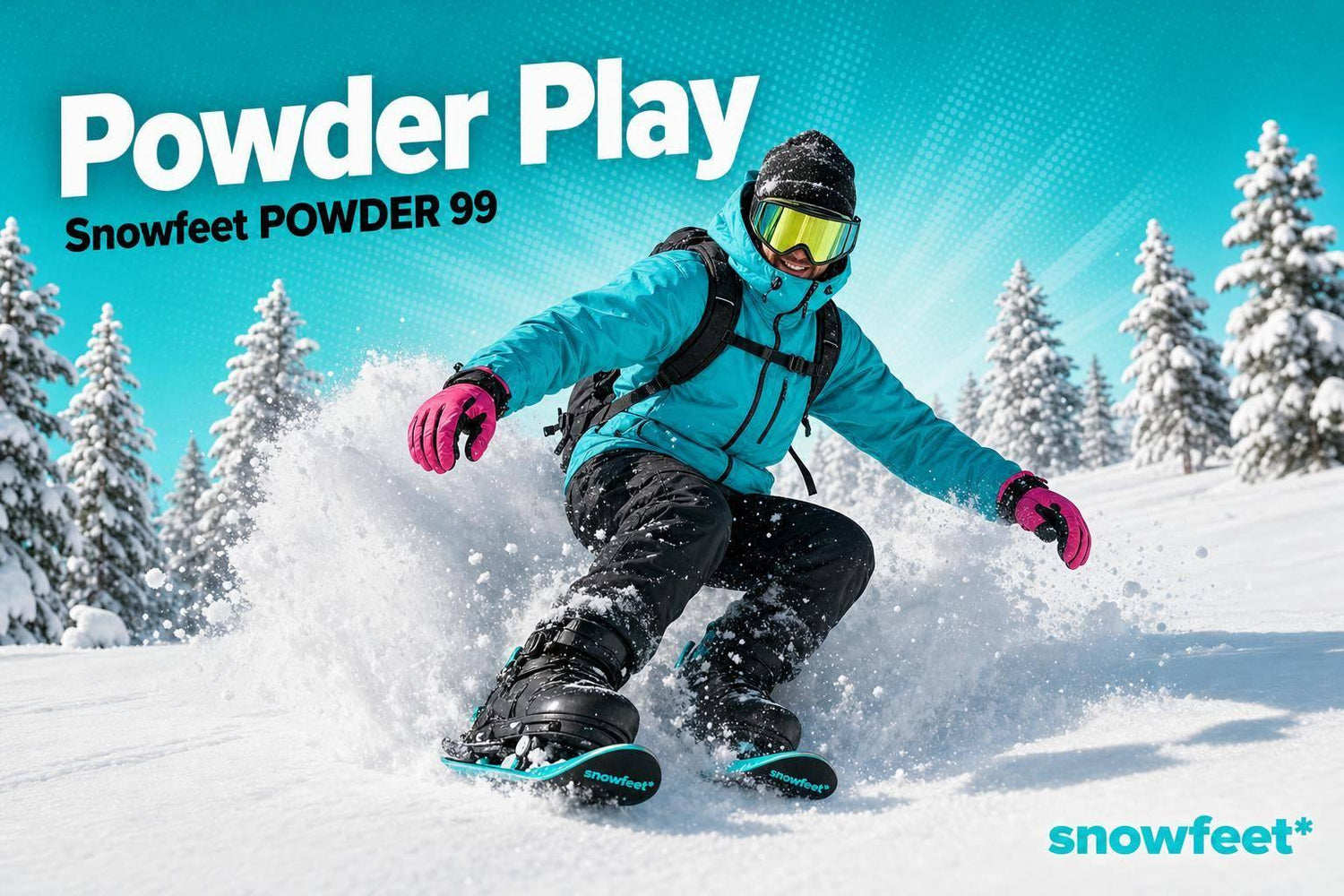
Short answer: I’d buy the Snowfeet POWDER 99 cm if I wanted a playful powder setup for resort days, trees, and short runs - but not if my goal was deep, fast, open terrain.
Here’s the whole thing in plain English:
- Best snow depth: about 6 to 10 inches of powder
- Price: $690
- Best for: resort riders, snowboarders, and travelers
- Main strength: tight turns, easy speed checks, small-space fun
- Main limit: less calm in chop, drifted snow, and at higher speeds
So, if you want powder gear that’s short, easy to pack, and works with snowboard boots, this one makes sense. If you want to charge bowls in 12+ inches and ski fast all day, I’d still go with full-size powder skis.
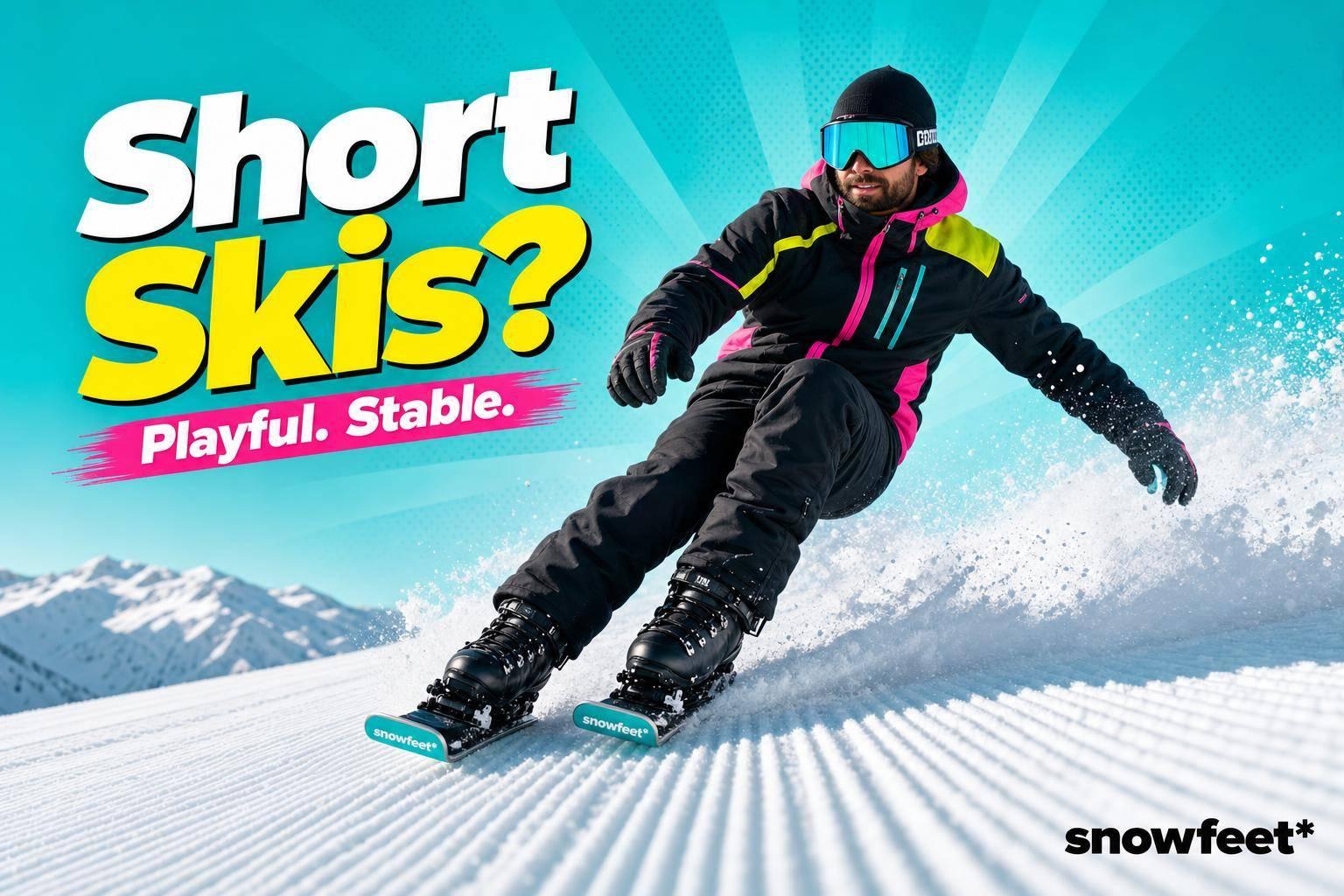
Ultimate Short Skis 🎿 Snowfeet* Skiblades 99 CM
Quick Comparison
| Option | Soft Snow Float | Tight Turns | Speed in Chop | Boot Options | Travel Ease | Price |
|---|---|---|---|---|---|---|
| Snowfeet POWDER 99 cm | Good in resort powder | Very good | Mid | Snowboard or winter boots | Very easy | $690 |
| Standard Snowfeet 99 cm | OK in shallow powder | Very good | Low | Snowboard or winter boots | Very easy | About $690 |
| Full-size powder skis | Best in deep snow | Good, with more room | Best | Ski boots | Harder to pack | $1,000+ |
| Generic snowblades | Weak in powder | Good at slower speeds | Low | Usually ski boots | Easy to pack | Often less |
What stood out to me most? The 99 cm length is both the magic and the catch. It makes the ski fun in trees and side hits, but it also means you have to stay more centered once the snow gets deeper or heavier. That’s the trade.
If you’re the kind of rider who says, “I want powder days to feel fun, not like work,” this ski has a clear place. If you care most about speed, long turns, and stomped landings, uh, this probably isn’t your tool :)
Test Setup, Snow Conditions, and the 99 cm Design
Rider Setup: Weight, Skill Level, and Boots
In this review, the 99 cm felt easiest in lighter powder. Once the snow got deeper and heavier, it asked for more fore-aft control. That’s the big shift.
Boot choice also changes the feel. Snowboard boots are more forgiving and a bit easier on the body. Ski boots give you more precision, which helps in heavier, tracked-out snow. Those setup choices matter most when the snow starts getting deep and chopped up.
Snow Conditions Tested: Light Powder vs. Deep Snow
Testing focused on resort powder and side stashes off groomers. Boot-top powder is where the POWDER 99 feels most at home. Turns come easy, the tips stay up, and the ride feels much softer than it does on groomers.
In deeper drifted pockets off groomed runs, the 99 cm length gets pushed harder. Flotation still holds up, but you need to ride it more actively to stay on top. Tracked-out soft snow, with mini-moguls and denser piles mixed in, shifts the job. At that point, edge hold and stability matter more than pure flotation. That’s where the POWDER 99's width and camber start to show their value.
What Sets the POWDER 99 Apart from Standard Short Skis
Compared with Snowfeet*'s standard skiblades, the POWDER 99 is wider through the tip and tail for better flotation and uses a deep sidecut that makes turn initiation easier without needing long edge engagement. It also has traditional camber underfoot, which gives it real edge hold on firmer snow between powder pockets.
Those three design choices do most of the heavy lifting:
- Wider tip and tail help the ski plane better in soft snow
- Deep sidecut makes it easier to start turns
- Camber adds grip when the snow gets firmer
That combo explains why the POWDER 99 handled soft snow the way it did in testing, and where it eventually hit its ceiling.
Next: how it actually performs in flotation, turning, stability, and speed control.
sbb-itb-17ade95
On-Snow Results in Deep Snow
Flotation and Feel in Soft Snow
In about 6 to 10 inches of fresh powder, the POWDER 99 feels more buoyant than most standard short skis. That shows up right away. The ride feels surfy, loose, and playful, which is where this ski makes its best first impression.
Once the snow gets deeper, or you move into denser drifted pockets, things get a bit more demanding. Lighter riders will stay on top with less effort. Heavier riders will need a more centered stance and a bit more fore-aft input to keep the ski working well. That’s the plain limit of the 99 cm format: it floats well enough for most resort powder, but it won’t feel as easy as a long, wide powder ski.
The upside is clear. That short 99 cm length makes the ski fast to turn in tight spots.
Turning, Trees, and Tight Terrain
This is where the POWDER 99 shines.
The short platform makes quick pivots and fast direction changes easy in trees, side stashes, and those “well, that wasn’t the line” moments. For casual riders picking through tight terrain, popping off small mounds, or fixing a missed turn at the last second, the playful feel is a big plus.
A small weight shift is enough to start the turn. You feel that response right away on snow. It’s one of those skis that doesn’t ask for much before it reacts, which can feel pretty fun in tighter terrain :)
Stability, Speed Control, and Mixed Snow
At low to mid speeds in soft snow, the skis feel controlled and easy to trust. Scrubbing speed is simple. A quick skid or short turn shape sheds speed without much fuss, which fits resort riders and snowboarders who like a more nimble, stop-and-go style instead of straight-lining big faces.
Start skiing faster, or hit tracked chop and refrozen patches, and the POWDER 99 feels more reactive. It doesn’t smooth out chatter as well as a longer ski, and it tracks with less predictability in rough, mixed snow. Long powder skis are still the better pick for open bowls, fast descents, and heavy variable conditions.
That trade-off leads to the main buying question: who this ski fits best.
Who Should Buy the Snowfeet* POWDER 99 cm
Best For: Resort Riders, Snowboarders, and Travelers
The on-snow feel points to a pretty specific rider. The POWDER 99 is for people who want good float in powder without dealing with a full-length ski.
Occasional resort skiers are a strong fit. In testing, it turned fast and felt easy to handle, which makes it a nice pick for powder days when you don’t want the bulk of a longer ski.
Snowboarders have an easy path in too. You can use it with snowboard boots, so the switch feels simple.
Travelers and road-trippers get one of the biggest perks: size. At 99 cm, it’s easy to pack, easy to carry, and a lot less annoying to move around than full-size skis. That matters more than people think, especially when you’re stuffing gear into a car at 6:00 a.m. :)
That brings us to the trade-offs.
When Full-Length Powder Skis Still Make More Sense
If you care most about backcountry touring or big-mountain charging, full-length powder skis still win. Same story if you like to ski fast, make long-radius turns, and keep speed checks to a minimum on steep, open terrain.
Full-length powder skis are also the better call if you want:
- strong edge hold at speed
- more stable landings off drops
- a calmer ride when things get fast and rough
The last thing to weigh is whether the price lines up with what you get on snow.
Price, Trade-Offs, and Final Verdict
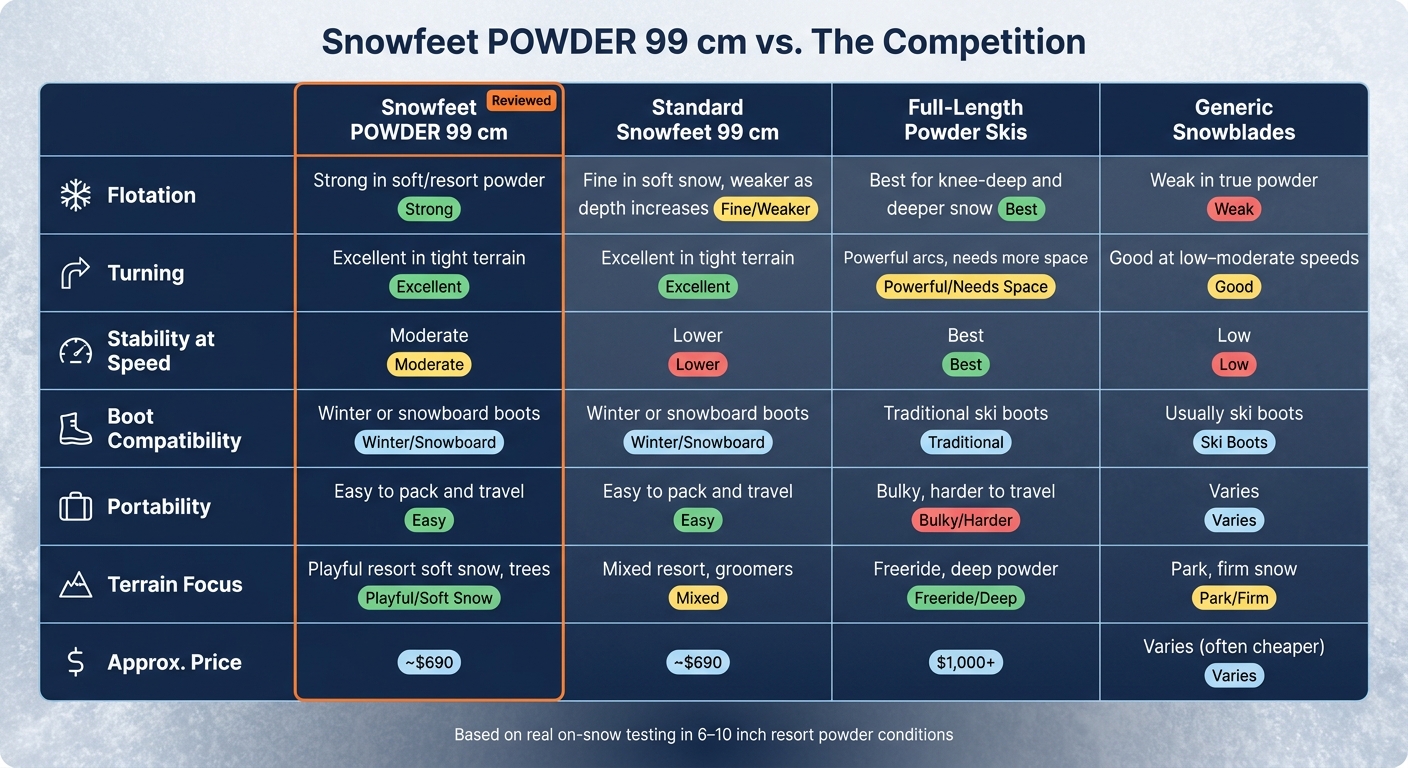
Snowfeet POWDER 99 cm vs. Alternatives: Full Ski Comparison
What You Gain and What You Give Up
The POWDER 99 is a short powder tool for riders who want more float than standard short skis, but don’t want to haul around a full powder setup. That’s the sweet spot.
You get better float than the standard Snowfeet* 99 cm and most generic snowblades, plus a setup that works with winter boots or snowboard boots. It’s also easy to pack, easy to travel with, and way less of a hassle than lugging full-length skis through an airport. On the flip side, full-length powder skis still do better in knee-deep snow and when you start going fast.
Here’s the whole picture at a glance.
| Snowfeet* POWDER 99 cm | Standard Snowfeet* 99 cm | Full-Length Powder Skis | Generic Snowblades | |
|---|---|---|---|---|
| Flotation | Strong in soft powder and resort snow | Fine in soft snow, weaker as depth increases | Best for knee-deep and deeper snow | Weak in true powder |
| Turning | Excellent in tight terrain | Excellent in tight terrain | Powerful arcs, needs more space | Good at low–moderate speeds |
| Stability at Speed | Moderate | Lower | Best | Low |
| Boot Compatibility | Winter or snowboard boots | Winter or snowboard boots | Traditional ski boots and bindings | Usually ski boots |
| Portability | Easy to pack and travel with | Easy to pack and travel with | Bulky, harder to travel with | Varies |
| Terrain Focus | Playful resort soft snow, trees | Mixed resort, groomers | Freeride, deep powder | Park, firm snow |
| Approx. Price | Around $690 | Around $690 | $1,000+ with skis, bindings, and boots | Varies, often cheaper than a modern specialized short-ski system |
That’s why the price matters so much. You’re not just paying for a ski. You’re paying for a certain kind of trade: more float and more freedom, with some limits once snow gets deep or speeds climb.
Is It Worth $690?
For the right rider, yes.
A full powder setup with skis, bindings, and boots will usually cost more than $1,000. So if you only get a few powder days each season, $690 starts to make a lot of sense. That’s even more true if you already own snowboard boots or winter boots that work with Snowfeet*.
In plain English: if you want powder fun without buying a whole extra kit, this is a much easier buy.
Final Takeaway
The Snowfeet* POWDER 99 cm is a fun powder pick for resort riders, snowboarders, and travelers chasing soft snow on shorter runs. It gives you real float without the size, weight, or cost of a full powder ski setup.
Its wider shape gives it a clear edge over generic snowblades and standard short skis in soft snow. For most casual powder days at the resort, the POWDER 99 feels like the smart pick - and, yeah, the more fun one too :)
FAQs
Will 99 cm feel too short in powder?
No. On the Snowfeet POWDER 99 cm, 99 cm doesn’t feel too short in powder.
Why? Its wider, parabolic shape helps it float with ease in soft, deep snow, without the bulk of old-school powder skis.
So you get a setup that feels:
- Stable
- Nimble
- Lightweight
That makes it a strong pick for ungroomed terrain and snow deeper than 10 cm, while also helping cut fatigue on long days.
Are these good for beginners in deep snow?
Yes - The Snowfeet POWDER 99 cm is a solid pick for beginners who want to get into deep snow.
It’s light, easy to turn, and less work in soft, ungroomed terrain than many powder skis, which can feel big, heavy, and kind of like too much ski at once.
That shorter length helps in a few ways:
- It encourages a more centered stance
- It can cut down on fatigue
- It works with comfy snowboard boots
For a lot of beginners, the learning curve is short. In many cases, it takes just a few runs to start feeling at ease.
Which boots work best with the POWDER 99?
The Snowfeet* POWDER 99 cm works with both snowboard boots and standard ski boots, but snowboard boots are the best pick for most riders.
Why? They hit the sweet spot between comfort, ankle movement, and control. You get a more natural feel on snow, and walking around the resort is a lot less clunky. That matters more than people think.
Snowfeet* bindings are also built to hold your current snowboard boots snug and secure, so setup feels simple and familiar.











Hagyj egy hozzászólást
Ezt a webhelyet a hCaptcha rendszer védi, és a hCaptcha adatvédelmi szabályzata, valamint szolgáltatási feltételei vonatkoznak rá.