



















Si je veux du matériel de ski qui reste dans ma voiture, je choisirais presque toujours des skis courts plutôt que des skis pleine longueur. La raison est simple : les skis de 44–99 cm tiennent dans un coffre, prennent moins de place et sont moins encombrants pour les arrêts rapides que les skis standards de 160–180 cm.
Voici la réponse courte :
-
Idéal pour une portabilité maximale : Snowfeet PRO 50 cm
S’utilisent avec des bottes d’hiver ou des bottes de snowboard et sont proposés à partir de 299 $. -
Idéal pour un format ultra-compact : Snowfeet Skiskates 44 cm
Ultra-compacts avec leurs 17 po, mais moins stables à grande vitesse. -
Meilleur compromis : Snowfeet Skiblades 65 cm
Des sensations plus proches de celles du ski sans transformer la banquette arrière en placard à matériel. -
Idéal pour plus de contrôle : Snowfeet Skiblades 99 cm
Des sensations proches de celles des skis de taille standard, tout en tenant dans la plupart des voitures. -
Idéal pour les séjours principalement en station : skis all-mountain standards
Plus performants à grande vitesse, dans la poudreuse et sur les pistes raides, mais encombrants. -
Idéal pour les montées : skis courts de randonnée avec fixations universelles
Mieux si je prévois d’abord de faire une randonnée ou de monter en peaux.
Donc, si l’objectif est de skier spontanément, je resterais simple :
- choisissez des skis de 44–50 cm pour la configuration la plus compacte
- choisissez des skis de 65–99 cm pour plus de contrôle
- choisissez les skis de taille standard uniquement si le séjour est consacré au ski toute la journée
Le principal compromis est simple : un équipement plus petit est plus facile à transporter, tandis qu’un équipement plus long offre davantage de stabilité sur la neige.
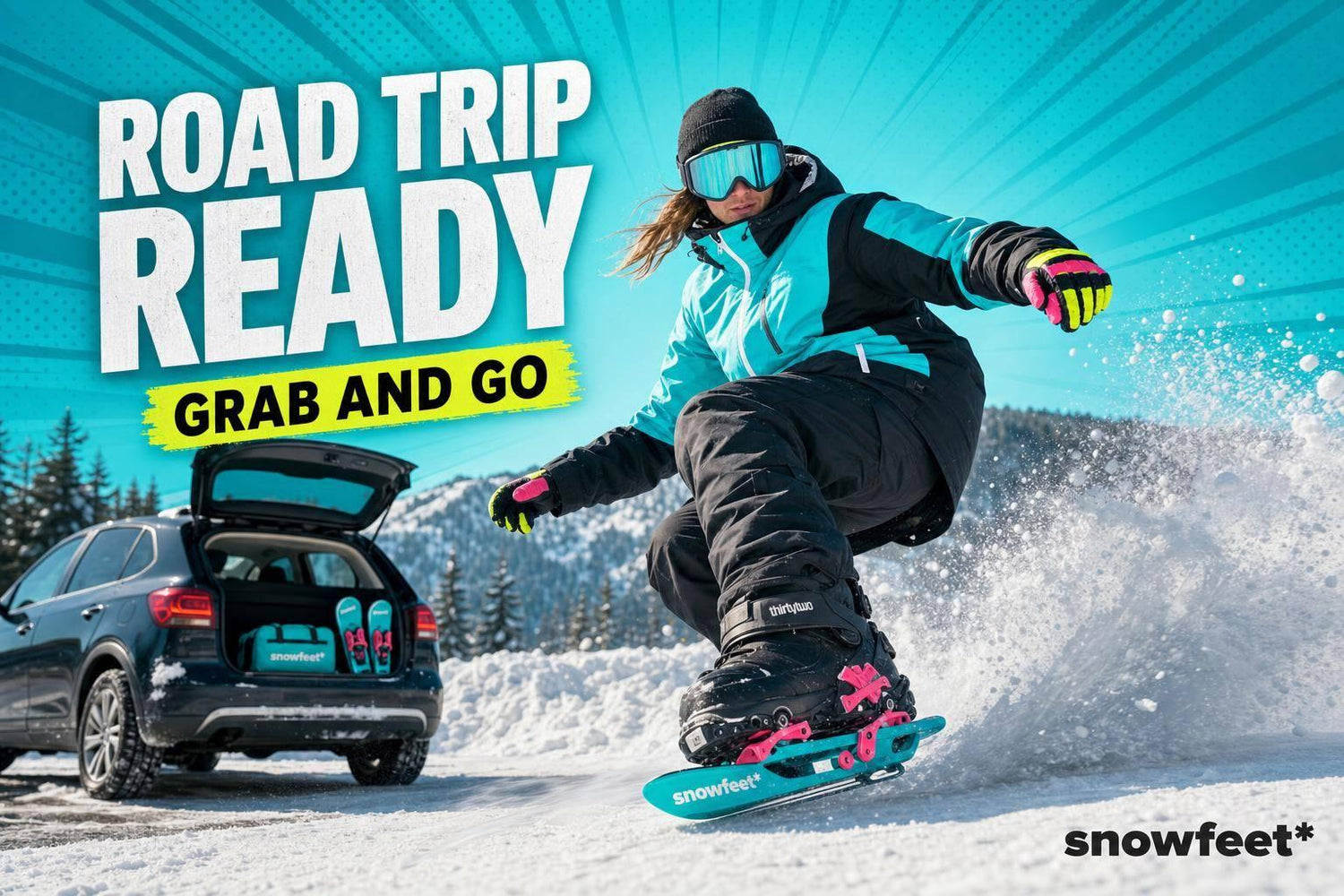
Un snowboarder essaie les Snowfeet* | Quel ski court Snowfeet* est le meilleur ? | Avis sur les snowblades 44, 65 et 99
Comparaison rapide
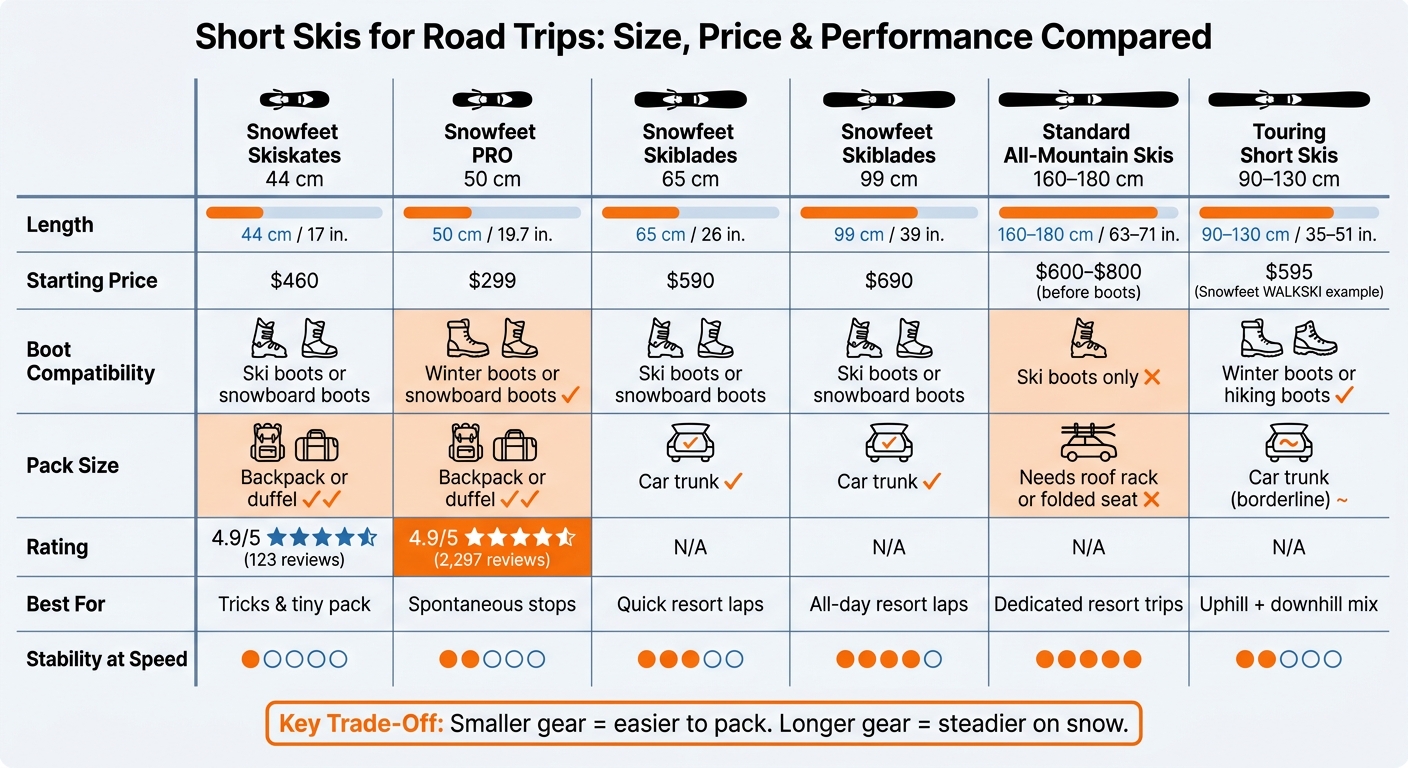
Skis courts pour les voyages en voiture : comparaison de la taille, du prix et des performances
| Équipement | Longueur | Utilisation idéale | Chaussures | Principal compromis |
|---|---|---|---|---|
| Snowfeet Skiskates | 44 cm / 17 po | Format ultra-compact, petites descentes amusantes | Chaussures de ski ou de snowboard | Les moins stables à grande vitesse |
| Snowfeet PRO Ski Skates | 50 cm / 19,7 po | Voyages en voiture, arrêts rapides | Chaussures d’hiver ou de snowboard | Moins de contrôle que les skis plus longs |
| Snowfeet Skiblades | 65 cm / 26 po | Petites stations, pistes damées, bosses | Chaussures de ski ou de snowboard | Moins de portance dans la neige profonde |
| Snowfeet Skiblades | 99 cm / 39 po | Plus de contrôle, descentes plus longues | Chaussures de ski ou de snowboard | Plus grands que les skiskates |
| Skis all-mountain standards | 160–180 cm / 63–71 po | Journées en station, vitesse, poudreuse | Chaussures de ski uniquement | Plus difficiles à transporter |
| Skis courts de randonnée | 90–130 cm et plus | Mélange de montées et de descentes | Bottes d’hiver ou de randonnée | Moins de contrôle en descente |
Quelques chiffres ressortent :
- PRO 50 cm : 4,9/5 sur 2 297 avis
- Skiskates 44 cm : 4,9/5 sur 123 avis
- Configuration de ski standard : souvent 600–800 $, sans les chaussures
- Skiskates de 44 cm : suffisamment petits pour tenir dans un sac de sport ou un sac à dos
- Skiblades de 99 cm : environ la moitié de la longueur d’un ski de 170 cm
Si je prépare un road trip hivernal, je ne veux ni galerie de toit, ni longs sacs à skis, ni chaussures rigides qui roulent dans le coffre comme des briques en plastique furieuses. Je veux du matériel que je peux attraper rapidement, utiliser rapidement et remettre dans la voiture. C’est là que les skis courts font la différence :)
Si vous le souhaitez, je peux aussi transformer ce texte en guide d’achat, en introduction de comparatif de produits ou en introduction optimisée pour le SEO avec des mots-clés ciblés.
1. Snowfeet* Skiskates de 44 cm
Snowfeet* Skiskates de 44 cm - à partir de 460 $
Avec leurs 44 cm (17 pouces), ils sont minuscules, dans le meilleur sens du terme. Vous pouvez les glisser dans un sac de sport, un coffre ou la banquette arrière sans avoir besoin d’un sac à skis ni d’une galerie de toit. À lui seul, cet avantage en fait un choix évident pour les journées improvisées à la montagne ou les escapades de dernière minute :)
Les Skiskates de 44 cm existent en deux versions de fixations : une pour les chaussures de ski (hommes, pointures US 4,5 à 14,5) et une pour les chaussures de snowboard (pointures US 6 à 14,5). Si vous voulez la configuration la plus simple à prendre et à utiliser, la version pour chaussures de snowboard est le choix le plus facile.
Sur la neige, ils donnent davantage l’impression de faire du patinage que du ski. Ils tournent rapidement. Les rotations et les petits sauts semblent naturels. Et leur faible longueur les rend particulièrement amusants sur les petits modules. Imaginez-les comme la version mini du matériel de glisse : petits, faciles à transporter et difficiles à ne pas apprécier.
Cette même sensation ludique facilite aussi l’apprentissage. Beaucoup de pratiquants assimilent rapidement les bases sur un terrain facile. Ils sont idéaux sur les pistes vertes ou les pistes bleues faciles et, oui, portez un casque.
Ils sont conçus avec un noyau en bois, des carres métalliques et une semelle en graphite. Sur les pistes damées, où l’agilité compte davantage que la stabilité à grande vitesse, cette configuration fonctionne très bien. Ils ne sont pas conçus pour la poudreuse ni les pentes verglacées et raides : ce n’est donc pas l’équipement idéal pour les prouesses en haute montagne. En revanche, pour des sessions rapides et décontractées sur un terrain facile, ils font très bien le travail.
Les Skiskates de 44 cm sont notés 4,9 étoiles sur 5 d’après 123 avis.
Si vous voulez un peu plus de stabilité sans trop sacrifier la facilité de transport, le PRO de 50 cm est le modèle suivant.
2. Snowfeet PRO Skiskates de 50 cm
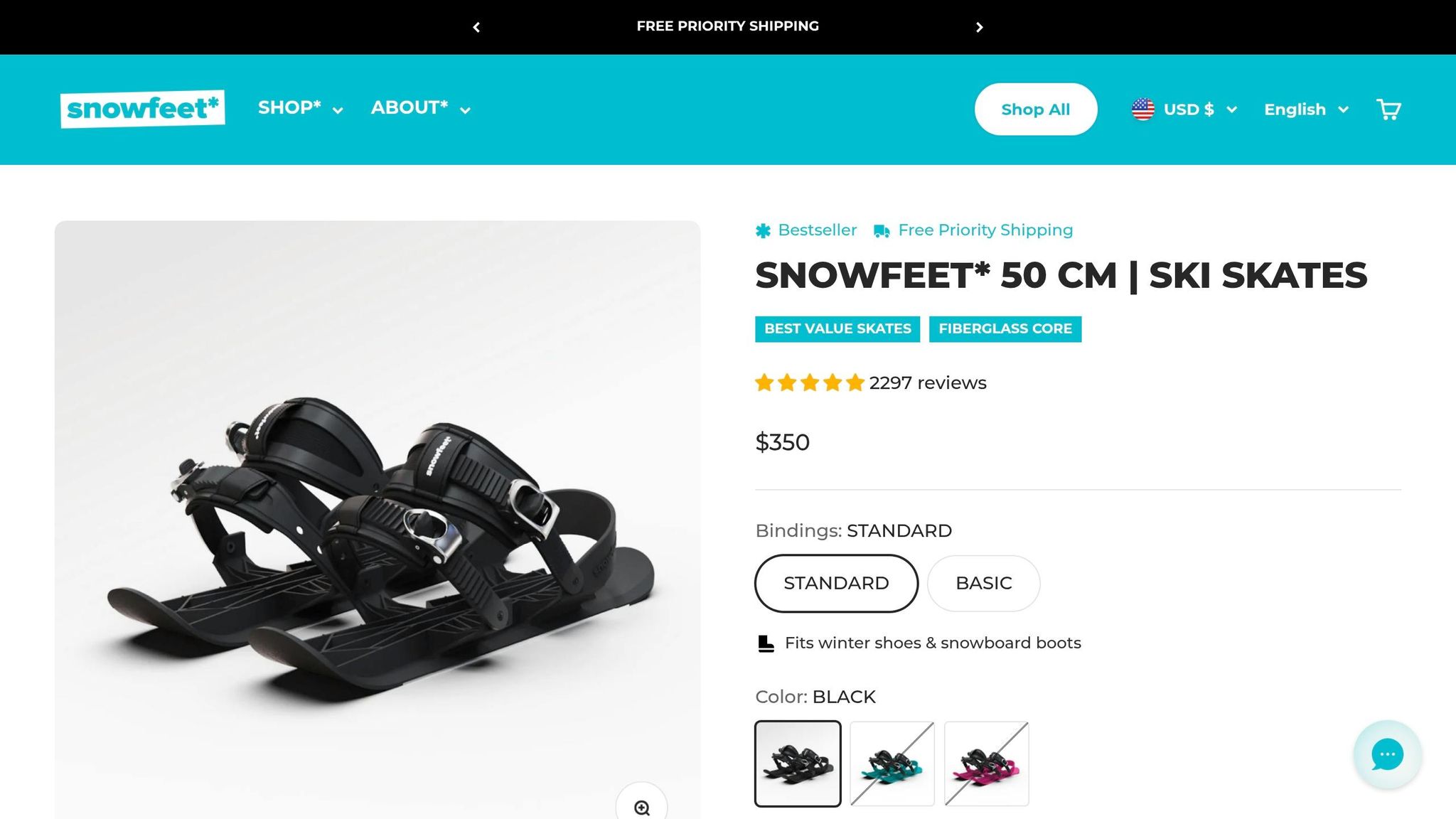
Skiskates Snowfeet PRO de 50 cm - à partir de 299 $
Si le modèle de 44 cm vous semble un peu trop nerveux, le PRO de 50 cm est l’étape suivante logique. Avec ses 50 cm (19,7 pouces), il offre davantage de contact avec les carres, ce qui le rend plus stable à vitesse élevée que les Skiskates de 44 cm. En même temps, il se range toujours à plat dans un coffre ou sous un siège arrière. Une combinaison idéale pour les road trips.
Les fixations universelles sont compatibles avec les chaussures d’hiver ou de snowboard en pointures États-Unis 6–13 / UE 38–47, ce qui vous permet de marcher et de glisser avec la même paire de chaussures. Pas besoin de tout un attirail supplémentaire. Il suffit de les lacer et de partir.
La plupart des pratiquants les prennent rapidement en main, surtout s’ils savent déjà faire du patin à glace ou du roller. C’est plus facile que le snowboard, car vous évitez la position de côté et les changements de carre. Cela suffit à rendre l’apprentissage moins difficile. Ils fonctionnent le mieux sur la neige damée ou tassée des pistes locales, des sites équipés de téléskis à câble ou des haltes enneigées en bord de route. En d’autres termes, ils sont parfaits pour ces arrêts improvisés qui surviennent souvent lors d’un trajet hivernal.
Le talon et la spatule plus relevés aident également le PRO à paraître plus stable que le modèle de 44 cm. Les avis le confirment : le PRO de 50 cm a obtenu 4,9 étoiles sur 5 auprès de 2 297 avis, dont 90 % sont des évaluations de 5 étoiles. Cela indique une chose simple : les pratiquants occasionnels semblent en être satisfaits.
Si vous recherchez davantage de stabilité tout en souhaitant un équipement compact, le PRO se situe exactement dans le juste milieu entre les Skiskates ultra-compacts de 44 cm et les Skiblades plus longs. Si vous recherchez plus de vitesse et des virages plus longs, les Skiblades de 65 cm constituent l’étape suivante.
3. Skiblades Snowfeet* 65 cm
Skiblades Snowfeet* 65 cm - $750.00
Avec leurs 65 cm, soit environ 66 cm, ces skiblades se glissent facilement dans un coffre ou sur la banquette arrière. Cette longueur supplémentaire leur donne une sensation plus stable que les modèles compacts. Vous profitez donc toujours d’un équipement facile à ranger, mais avec davantage de sensations de ski et moins de sensations de patin.
Ils ont un rayon de virage de 4 mètres, ce qui les rend rapides et réactifs dans les virages. Sur les petites pistes locales, les pistes damées des stations, les bosses et les snowparks, cela permet des changements de carre rapides et une glisse ski-skate qui convient parfaitement aux petites descentes et aux terrains très fréquentés. C’est idéal pour les arrêts improvisés en montagne qu’un road trip peut réserver.
Vous pouvez les choisir avec des fixations pour chaussures de ski ou des fixations pour chaussures de snowboard :
- Fixations pour chaussures de ski : UE 36–49 / États-Unis 4,5–14,5
- Fixations pour chaussures de snowboard : UE 38–49 / États-Unis 6–14,5
Pour de nombreux pratiquants occasionnels, la version avec fixations pour chaussures de snowboard est plus agréable en dehors de la neige. Elle est plus facile pour marcher, ce qui peut être un vrai avantage lorsque vous montez et descendez de la voiture, allez au chalet ou traversez le parking.
La construction est également robuste : noyau en bois, carres en acier et semelle en graphite. Ils sont bien plus faciles à transporter que des skis pleine longueur, ce qui est important lorsque vous préparez un voyage et essayez d’éviter de jouer à Tetris avec votre équipement dans le coffre. Ils sont toutefois conçus pour les pistes, pas pour flotter dans la poudreuse profonde.
Ils fonctionnent le mieux sur les pistes damées, les bosses et dans les snowparks, et ils sont déconseillés dans la poudreuse profonde de plus d’environ 10 cm. Comparé aux modèles de 44 à 50 cm, le modèle de 65 cm paraît plus stable, tout en étant bien plus facile à transporter que des skis classiques. Il se situe ainsi dans un juste milieu idéal pour les amateurs de road trips.
4. Snowfeet* Skiblades 99 cm
Snowfeet* Skiblades 99 cm - à partir de 690,00 $
Avec leurs 99 cm (39 po), ce sont les skis courts les plus longs de la gamme Snowfeet*. Ils mesurent toujours environ la moitié de la longueur d’un ski classique de 170 cm, ce qui permet de les mettre dans le coffre ou sur la banquette arrière sans jouer à Tetris avec la voiture. Cette longueur supplémentaire donne au modèle de 99 cm une sensation plus proche de celle d’un ski classique.
Comparés à la version de 65 cm, ils offrent une meilleure stabilité et une meilleure accroche des carres. Leur rayon de virage de 7–9 m et leur construction tout aussi robuste que celle des modèles plus courts leur permettent de tailler les virages avec assurance sur les pistes damées et d’enchaîner tranquillement les descentes sur de petites collines, sans cette sensation nerveuse et imprévisible. Ce mélange de contrôle et de facilité de transport explique en grande partie pourquoi ce modèle convient aux escapades routières décontractées.
Ils sont également plus faciles à prendre en main que des skis grandeur nature. Les virages et les arrêts semblent plus naturels, ce qui peut réduire le stress du premier jour. Vous devrez bien sûr maîtriser une position de base et les techniques de freinage, mais les 99 cm sont plus stables que les modèles Snowfeet* plus courts tout en restant beaucoup plus faciles à manier que des skis classiques. Les utilisateurs les décrivent comme faciles à contrôler, rapides dans les virages et plus indulgents que des skis pleine longueur.
Les fixations existent en versions pour chaussures de ski et pour chaussures de snowboard, et leur réglage sans outil simplifie grandement la préparation du voyage.
Ensuite : les skis all-mountain classiques, pour les skieurs prêts à sacrifier la facilité de transport au profit de la vitesse et de la stabilité.
sbb-itb-17ade95
5. Skis all-mountain classiques (160–180 cm)
Comparés à la gamme compacte Snowfeet*, les skis classiques sont l’option axée sur la performance. Ils sont stables, rapides et conçus pour passer des journées entières en station. Mais pour un road trip ? Ils sont difficiles à transporter. Un ensemble skis et fixations coûte généralement environ 600–800 $, avant même d’ajouter de volumineuses chaussures de ski alpin.
Ils sont surtout adaptés lorsque votre séjour est axé sur plusieurs jours de ski en station. Les skis grandeur nature offrent une meilleure accroche des carres, restent plus stables à grande vitesse et permettent d’aborder les pentes plus raides avec davantage d’assurance. Mais pour une courte halte au bord de la route, ces avantages s’accompagnent de trop de contraintes logistiques.
Une paire de 170 cm avec fixations pèse environ 10–13 lb et mesure environ 5,5–6 pieds de long. En clair, cela signifie souvent :
- rabattre un siège arrière
- faire passer les skis dans l’habitacle selon un angle peu pratique
- ou en les attachant à une galerie de toit
Et puis il y a les chaussures. Il vous faut des chaussures de ski alpin dédiées et, oui, elles sont encombrantes, peu pratiques pour marcher et occupent beaucoup d’espace dans le coffre. Les skis longs restent plus stables dès qu’on prend de la vitesse, mais cela implique davantage d’encombrement et une installation moins agréable à gérer.
Pour une colline enneigée au bord de la route ou une descente rapide l’après-midi, des skis pleine longueur sont surdimensionnés. Ce qui devrait être un arrêt décontracté donne vite l’impression de devoir décharger la moitié de la voiture. Les Skiblades Snowfeet* de 99 cm sont bien plus faciles à transporter et offrent des options de chaussures plus simples, avec seulement un léger compromis en matière de stabilité. Les skis classiques restent supérieurs en stabilité à haute vitesse, mais pour la plupart des skieurs en road trip, ce compromis ne vaut tout simplement pas le coup.
Si vous cherchez un compromis entre les performances en station et la facilité de transport lors des road trips, les skis de randonnée courts sont l’étape suivante.
6. Skis de randonnée courts à fixations universelles
Les skis de randonnée courts à fixations universelles se situent dans une agréable zone intermédiaire. La plupart mesurent environ 90 à 130 cm, même si certains vont jusqu’à environ 149 cm. Vous trouverez des options comme les skis de randonnée Altai Hok et OAC. Snowfeet* propose également les WALKSKI Backcountry Touring de 100 cm, à partir de 595 $. Cette configuration convient aux road trips avec départs de sentiers, routes forestières ou approches en montée.
Le principal atout est simple : la liberté au niveau des chaussures. Les fixations universelles utilisent des sangles ou des cages réglables qui s’adaptent aux chaussures d’hiver ou de randonnée. Pas besoin de chaussures de ski dédiées. Vous pouvez donc conduire, marcher et skier avec la même paire. Si votre arrêt comprend une courte marche d’approche ou une montée avec des peaux avant la descente, c’est une solution vraiment pratique.
Ces skis sont particulièrement adaptés aux petites collines et aux terrains peu pentus. De nombreux modèles sont équipés de peaux d’ascension intégrées ou de semelles conçues pour accueillir des peaux, ce qui facilite la montée. Ils sont également plus faciles à prendre en main pour les randonneurs. Le compromis ? Ils sont moins stables sur les pentes raides et glacées, ou lorsque vous commencez à aller vite.
C’est l’essentiel : les fixations universelles vous offrent davantage de choix de chaussures, mais vous perdez un peu en maintien de la cheville et en contrôle des carres. Pour des descentes tranquilles et une balade facile, ce n’est pas vraiment un problème. En revanche, pour des descentes rapides près de la route, les skis de randonnée n’ont de sens que si vous prévoyez d’abord de monter. Si l’objectif est simplement de profiter rapidement d’une descente depuis le bord de la route, les modèles Snowfeet* plus courts sont bien plus faciles à transporter.
Si l’idée de fixations universelles vous plaît, mais que vous ne voulez pas l’encombrement des skis de randonnée, les Snowfeet* PRO 50 cm sont proposés à partir de 299 $. Ils sont bien plus faciles à ranger que des skis de randonnée de 90 à 140 cm.
Comparaison pour les road trips : performances sur neige et rangement dans la voiture
Voici la comparaison rapide côte à côte : ce qui tient dans la voiture, les chaussures dont vous avez besoin et les sensations de chaque configuration sur la neige. Ce sont les quatre éléments qui comptent généralement le plus.
Taille du chargement
Avec leurs 44 cm (environ 17 po), les Skiskates Snowfeet* se glissent dans un sac à dos ou dans un coin du coffre. Les PRO de 50 cm (environ 20 po) sont presque aussi compacts. Les Skiblades de 65 cm (environ 26 po) et de 99 cm (environ 39 po) tiennent encore dans la plupart des voitures sans rabattre les sièges. Les skis all-mountain classiques de 160 à 180 cm (63 à 71 po) nécessitent généralement de rabattre la banquette arrière, d’utiliser une trappe à skis ou un porte-skis de toit. Les skis courts restent dans la voiture. Les skis grand format, généralement non.
La taille du chargement compte. Mais lorsqu’on se change sur un parking froid, la configuration des chaussures peut être encore plus importante.
Compatibilité des chaussures
Les chaussures départagent rapidement ces options. Les Snowfeet* PRO de 50 cm et les skis courts de randonnée fonctionnent avec des chaussures d’hiver classiques, ce qui permet de se passer de chaussures de ski. Les skis all-mountain classiques nécessitent des chaussures de ski alpines dédiées. Impossible d’y échapper.
| Équipement | Fixation | Chaussures |
|---|---|---|
| Skiskates de 44 cm | Chaussures de ski ou de snowboard | Chaussures de ski ou de snowboard |
| PRO de 50 cm | Universelle | Chaussures d’hiver ou de snowboard |
| Skiblades de 65 cm | Chaussures de ski ou de snowboard | Chaussures de ski ou de snowboard |
| Skiblades de 99 cm | Chaussures de ski ou de snowboard | Chaussures de ski ou de snowboard |
| Skis courts de randonnée | Universelle | Chaussures d’hiver ou chaussures de randonnée |
| Skis all-mountain classiques de 160 à 180 cm | Fixation alpine avec déclenchement | Chaussures de ski uniquement |
Une fois la question des chaussures réglée, la principale différence concerne la sensation procurée par chaque configuration sur les courtes pistes.
Performances sur les petites pistes
Sur les courtes pistes, les modèles de 44 à 50 cm sont les plus agiles. Les Skiblades de 99 cm offrent davantage de stabilité. Les skis all-mountain classiques restent supérieurs à toutes les options courtes sur les longues pistes damées rapides, les pentes verglacées et la neige profonde. Les skis courts de randonnée sont également plus performants que l’équipement Snowfeet* en matière de portance et d’efficacité à la montée lorsqu’on progresse avec des peaux sur un terrain vierge. Pour un arrêt rapide au bord de la route, toutefois, cette performance supplémentaire n’a généralement pas beaucoup d’importance.
Les compromis sont donc assez simples : vitesse, stabilité et transportabilité.
Prise en main
Les skis courts sont moins intimidants, tout simplement. Snowfeet* indique qu’il faut 5 minutes pour les prendre en main, aussi bien pour les Skiskates de 44 cm que pour les PRO de 50 cm. Pour les débutants, ce sont les options les plus faciles de ce groupe pour se lancer et essayer.
"Le seul compromis concerne les vitesses élevées, où les skis plus longs restent plus stables ; mais pour le plaisir général et la maniabilité, ils sont difficiles à battre."
Voyons maintenant les principaux compromis, afin que vous puissiez choisir la configuration adaptée au type de voyages que vous faites.
Avantages et inconvénients
Voici le compromis pour un road trip, en termes simples : un équipement plus court est plus facile à ranger, tandis qu’un équipement plus long semble plus stable sur la neige.
| Article | Principaux avantages | Principaux inconvénients | Meilleur scénario pour un road trip |
|---|---|---|---|
| Snowfeet* Skiskates 44 cm (à partir de 460 $) | Se glisse dans un sac à dos ; agilité maximale ; idéal pour les figures | Moins stable à grande vitesse ; aucune portance dans la poudreuse | Arrêts rapides sur les pistes locales ou dans les snowparks |
| Snowfeet PRO Ski Skates 50 cm (à partir de 299 $) | Se glisse dans un sac à dos ; fonctionne avec des chaussures d’hiver ou de snowboard ; facile à apprendre | Ne conviennent pas à la poudreuse profonde ; moins stables que les 99 cm à grande vitesse | Arrêts spontanés dans de petites stations ou sur de petites pentes |
| Skiblades Snowfeet* de 65 cm (à partir de 590 $) | Faciles à faire tourner et à carver ; se comportent bien dans les bosses ; se rangent facilement dans le coffre | Nécessite des chaussures de ski ou des fixations pour bottes de snowboard ; moins stable que les 99 cm à grande vitesse | Descentes rapides en station |
| Skiblades Snowfeet* de 99 cm (à partir de 690 $) | Stabilité à grande vitesse ; sensations les plus proches de celles des skis traditionnels ; se range facilement dans le coffre | Nécessite des chaussures de ski ou des fixations pour bottes de snowboard ; moins agile pour les figures | Des descentes toute la journée en station avec moins d’encombrement |
| Skis all-mountain classiques (160–180 cm) | Meilleure portance dans la poudreuse ; stabilité maximale à grande vitesse | Volumineux ; nécessite un porte-skis de toit ou un passage intérieur ; chaussures de ski requises | Séjours de plusieurs jours dans une station |
Au final, tout se résume à une question simple : jusqu’à quel point êtes-vous prêt à sacrifier la facilité de transport pour une glisse plus proche de celle des skis classiques ?
Si vous voulez un équipement à glisser dans un sac à dos ou dans le coffre d’une voiture, les options Snowfeet les plus courtes vous facilitent la vie. Si vous privilégiez la stabilité à grande vitesse et des sensations plus proches de celles des skis classiques, les modèles plus longs deviennent plus intéressants.
C’est un peu comme préparer ses bagages pour un week-end. Vous pouvez voyager léger et vous déplacer rapidement, ou emporter un équipement plus imposant pour gagner en confort sur la montagne. Les deux options fonctionnent. Tout dépend simplement de votre façon de skier :)
Conclusion
Le meilleur ski court dépend de quelques éléments simples : votre façon de voyager, l’espace dont vous disposez et la fréquence à laquelle vous aimez vous arrêter pour faire quelques descentes rapides. Le choix dépend donc surtout de la facilité de transport, du type de chaussures et du niveau de stabilité souhaité sur les courtes descentes.
Si vous êtes du genre à vous arrêter dès que vous apercevez une pente enneigée, gardez les Snowfeet PRO de 50 cm ou les Skiskates de 44 cm dans votre coffre tout l’hiver. Ils sont suffisamment compacts pour être rangés dans un sac ou un sac à dos, et conviennent parfaitement aux sessions improvisées au bord de la route. Le PRO se fixe sur des bottes d’hiver classiques ou des bottes de snowboard : vous n’avez donc pas besoin de chaussures de ski dédiées. C’est un gros avantage pour voyager sans prise de tête. Vous perdez certes un peu en vitesse maximale, mais vous gagnez en plaisir spontané et facile.
Vous voulez un peu plus de contrôle sans transformer votre voiture en navette à skis ? Passez à la taille supérieure. Pour les débutants, les Skiblades de 65 cm offrent le meilleur équilibre entre contrôle et sensations plus proches de celles de skis classiques. C’est le meilleur choix pour débuter en tant que pratiquant occasionnel qui souhaite davantage de sensations de ski qu’avec des Skiskates.
Si vous vous arrêtez dans de petites stations ou sur des pistes locales, les Skiblades de 65 cm ou 99 cm sont le choix pratique. Les 99 cm offrent davantage de stabilité à grande vitesse et une meilleure sensation d’ancrage sur les pistes damées. Ils tiennent toujours dans la voiture sans trop de difficulté. En comparaison, les skis all-mountain classiques de 160 à 180 cm restent plus adaptés aux séjours dans de grandes stations, aux vitesses élevées et aux skieurs qui privilégient les performances en descente, l’accroche des carres et la portance. Ils sont simplement moins pratiques pour ces moments où l’on se dit : « Arrêtons-nous pour skier là ! »
Si votre voyage comprend une montée avant la descente, les skis courts de randonnée répondent à un besoin différent. Les skis courts de randonnée dotés de fixations universelles conviennent aux itinéraires en montée, à la montée avec peaux et aux approches depuis le départ des sentiers. Ils sont adaptés aux randonneurs et aux voyageurs en hors-piste, mais sont plus spécialisés que ce dont la plupart des skieurs occasionnels en voyage ont besoin. En clair : c’est l’exception, pas l’équipement de référence à garder dans le coffre.
Pour la plupart des voyageurs en voiture, les Snowfeet restent la solution la plus simple. Avec le bon modèle de Snowfeet* dans votre coffre, un arrêt imprévu sur une aire enneigée peut se transformer en une petite pause ski :)
FAQ
Quelle longueur de skis courts convient le mieux aux débutants ?
Pour les débutants, le meilleur choix de Snowfeet dépend du confort et de votre niveau d’expérience en ski.
Les modèles de 38 cm et 50 cm sont parfaits pour les débutants complets. Ils offrent une maniabilité maximale et procurent une sensation plus naturelle, presque comme si vous patiniez sur la neige. Cela les rend moins intimidants lorsque vous débutez.
Si vous souhaitez davantage de stabilité tout en conservant une courbe d’apprentissage facile, les Skiblades de 65 cm sont un excellent choix. Ils conviennent bien aux pistes damées et vous aident à apprendre à faire des virages coupés sans avoir la sensation de skis pleine longueur.
En règle générale, les skis qui mesurent 10 à 15 cm de moins que votre taille offrent un bon compromis.
Puis-je utiliser mes chaussures d’hiver classiques avec les Snowfeet* ?
Oui, les Snowfeet* sont équipés d’une fixation universelle, ce qui signifie que vous pouvez utiliser des chaussures d’hiver classiques au lieu de chaussures de ski lourdes.
Votre meilleur choix est :
- Chaussures de randonnée d’hiver imperméables
- Chaussures de snowboard
L’essentiel est de bénéficier d’un bon maintien ferme de la cheville. Cela vous aide à rester plus stable et à garder le contrôle.
Ils conviennent à de nombreuses pointures de chaussures, mais il y a une petite réserve : les chaussures de snowboard plus volumineuses en pointures 12 à 13 US peuvent être plus serrées.
Les skis courts sont-ils suffisamment performants pour le ski en station ?
Oui. Les skis courts conviennent parfaitement au ski en station, et les modèles Snowfeet sont équipés de carres métalliques : ils fonctionnent donc dans la plupart des stations de ski.
Ils sont particulièrement performants sur les pistes damées, les bosses et les snowparks. Leur faible longueur rend les virages plus faciles et naturels qu’avec des skis longs. Vous pouvez passer rapidement d’une carre à l’autre, effectuer des virages serrés et gérer les changements de direction rapides sans difficulté.
Les skis longs restent imbattables pour les descentes à grande vitesse et la poudreuse profonde. Mais pour la plupart des journées tranquilles en station, les Snowfeet sont plus faciles à prendre en main, à transporter et tout simplement très amusants à utiliser.











Laisser un commentaire
Ce site est protégé par hCaptcha, et la Politique de confidentialité et les Conditions de service de hCaptcha s’appliquent.