



















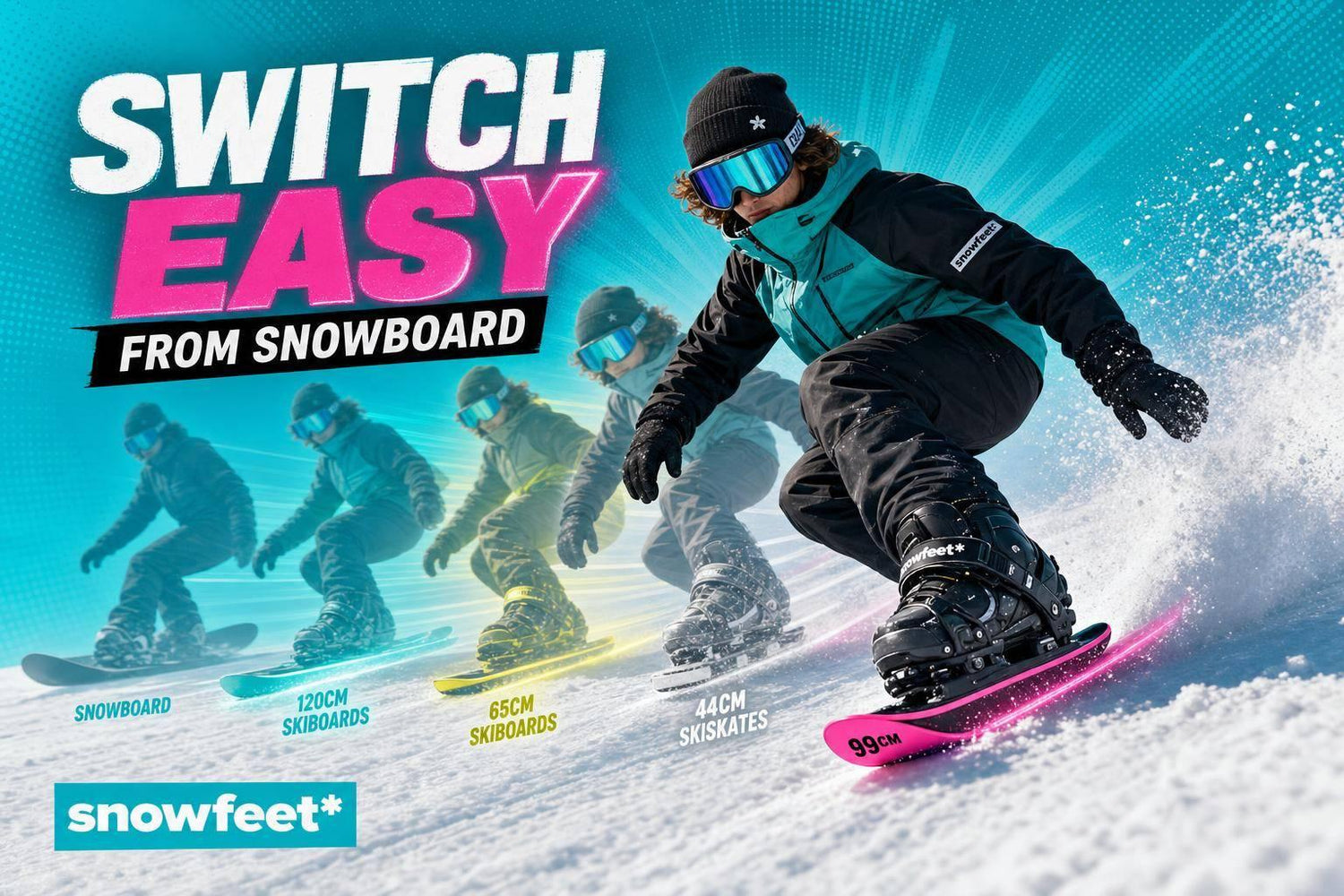
If I were helping a snowboarder switch today, I’d point most people to the 99 cm skiblades first. They give you the best mix of easy turning, better control on groomers, and a feel that won’t seem too far from what you already know.
Here’s the short version:
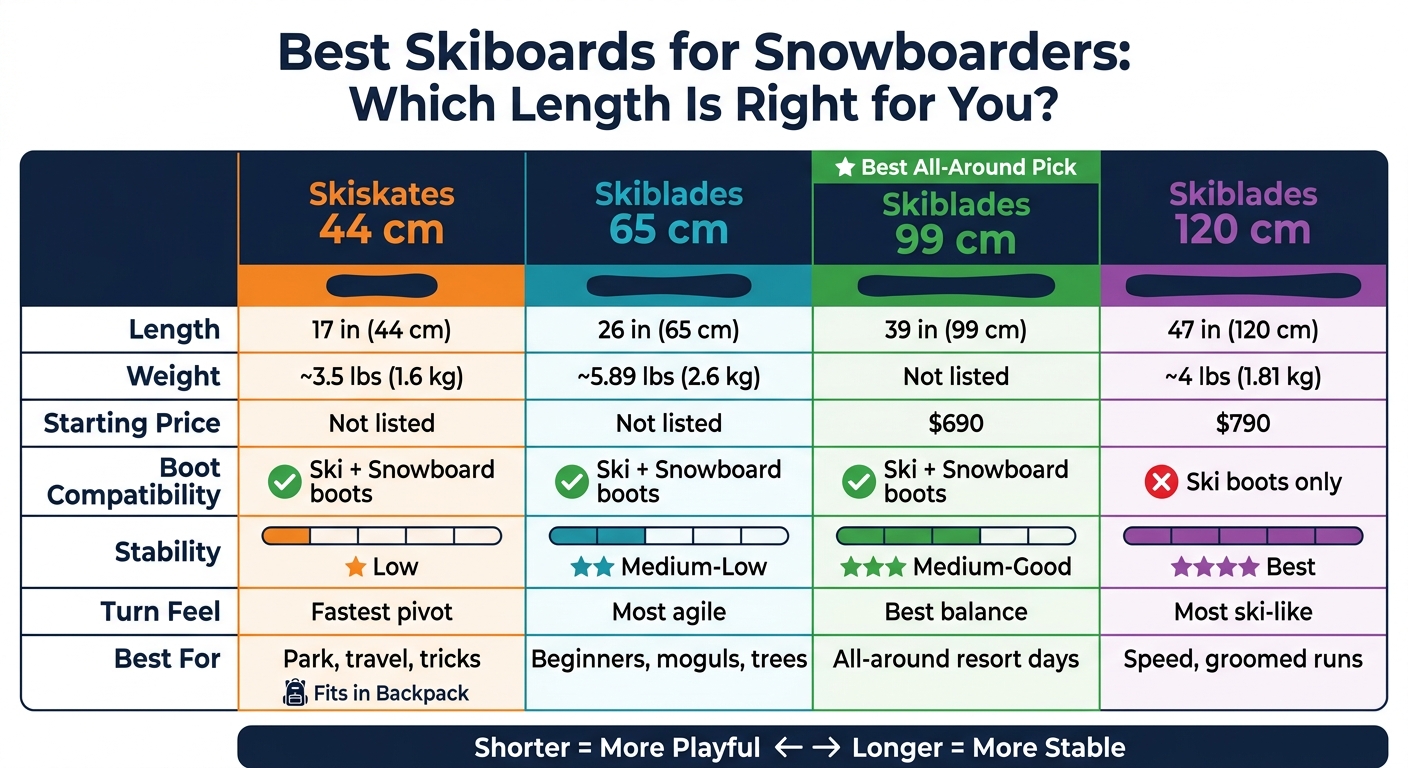
- 44 cm Skiskates: most playful, tiny, backpack-friendly, but least stable
- 65 cm Skiblades: easiest for many new switchers, fun in park and tight spots
- 99 cm Skiblades: best all-around pick for most riders
- 120 cm Skiblades: closest to skis, best for more speed and groomer laps
The big split is simple: shorter = easier, looser, more playful. Longer = calmer, more stable, better at speed. Also, 3 of the 4 models work with snowboard boots, which can cut cost and make the switch less awkward.
If you want the fast answer, here it is:
go 99 cm for all-around use, 65 cm if you want park and tight turns, 120 cm if you care most about stability, and 44 cm if you want a fun niche toy for short laps and travel.
Quick Comparison
| Model | Best For | Boot Option | Stability | Feel |
|---|---|---|---|---|
| 44 cm | Park, short laps, travel | Snowboard boots | Low | Most board-like |
| 65 cm | Learning, moguls, trees, park | Snowboard or ski boots | Medium-low | Playful and loose |
| 99 cm | Groomers, mixed resort days | Snowboard or ski boots | Medium-good | Best middle ground |
| 120 cm | Faster groomer runs | Ski boots | Best of the four | Most ski-like |
A few numbers stand out. The 44 cm model is about 17 in long and around 3.5 lb per pair. The 65 cm comes in at 26 in with a 4 m turn radius. The 99 cm starts at $690, and the 120 cm starts at $790. So, yeah, there’s a clear ladder here from playful little chaos sticks to mini skis with more backbone :)
If you’re coming from snowboarding, I’d keep one thing in mind: these won’t match full skis in deep powder or all-out carving. But for groomers, park laps, and fun resort days, they can make skiing feel a lot less weird and a lot more fun.
Skiboards for Snowboarders: 44cm vs 65cm vs 99cm vs 120cm Compared
Snowboarder tries Snowfeet* | Which Snowfeet* Short Ski is the Best? | Snowblades 44, 65, 99 Review
1. Snowfeet* Skiskates 44 cm
The 44 cm Skiskates are the smallest, fastest-turning pick for riders who want a playful, snowboard-friendly way to learn skiing. They shine on short runs, side hits, and park laps. They’re not made for high-speed carving or long, steep descents. If you want snowboard-like quickness without jumping straight to long skis, this is the closest fit.
Turn Feel
Thanks to the short, curved shape, edge changes happen fast. So this model leans toward quick pivots, slashy turns, and playful moves instead of long carves. For snowboarders, the big shift is simple: you’ll need to move each leg on its own. That said, the motion still feels familiar, which helps keep the learning curve short.
Speed Stability
Let’s keep it honest: these aren’t built for speed. The 44 cm length gets less stable as velocity climbs, so they work best on groomers at a moderate pace. They can manage light powder up to about 4 inches (10 cm), but deep snow and steep, fast runs are outside their lane.
Boot Compatibility
The snowboard-boot binding version fits US sizes 6–14.5 (EU 38–49). The adjustable, tool-free bindings mean you can use your snowboard boots, which is a nice perk if you don’t want extra gear.
Portability
At about 3.5 lbs (1.6 kg) per pair and only 17 inches (44 cm) long, they’ll fit in a backpack. That makes them easy to travel with and much easier to pack than full-size skis.
If you want a bit more stability but still want that short, snowboard-friendly feel, the 65 cm Skiblades are the next step up.
2. Snowfeet* Skiblades 65 cm
The 65 cm Skiblades are the best middle-ground pick for snowboarders. They’re easy to learn, but they feel steadier and faster than the 44 cm Skiskates. You get more stability without giving up that quick, board-like feel.
Turn Feel
At 26 inches (65 cm) with a 4-meter turning radius and a slim 9.5 cm waist, these turn fast and react fast when you tip them on edge. The parabolic shape and twin tips make quick linked turns feel smooth, and you can ride regular or switch without a fuss.
"65 cm is the sweet spot - quick to learn, fast on groomers and super agile even between trees." - Jan, Snowfeet*
Speed Stability
These are faster than the 44 cm Skiskates, and the graphite base helps them feel quick on groomers. That said, they’re not built for bombing steep runs at high speed. The 99 cm and 120 cm models do a better job there.
For resort cruising, park laps, and weaving through trees, the 65 cm length hits a nice balance between speed and easy handling.
Boot Compatibility
One nice part here: you can use the boots you already own. The snowboard bindings fit US sizes 6–14.5 (EU 38–49). If you want a more ski-like setup with extra stability, there’s also a ski boot version for US sizes 4.5–14.5.
Portability
At 5.89 lbs (2,638 g) per pair with snowboard bindings and just 26 inches long, they’re easy to pack and easy to travel with. Toss them in a backpack, head to the hill, and you’re good to go.
If you want more stability and a bit more top-end speed, the 99 cm Skiblades are the next step.
3. Snowfeet* Skiblades 99 cm
The 99 cm Skiblades sit right in the sweet spot. They’re steadier than the 65 cm blades, but they still keep that playful, easygoing feel. For groomers, park laps, and laid-back resort days, they make a lot of sense. Starting at $690, they give snowboarders more ski-style control without pushing them all the way to full-length skis.
If the 65 cm version feels a bit twitchy, this is the next step up. You get more calm underfoot, but you don’t lose that short-ski vibe.
Turn Feel
At 39 inches (99 cm), these blades still turn fast and feel forgiving from the first few runs. The sidecut and softer flex help a lot here. Snowboarders can steer them with body movement that already feels familiar. You can smear, pivot, and link short-radius turns without dealing with long tails getting in the way.
The twin-tip design also helps. Riding switch and spinning off side hits feels natural, not awkward.
That extra length pays off most on groomers. The skis feel more settled, but they still snap into quick turns when you want them to.
Speed Stability
On groomed runs at moderate speeds, the 99 cm length tracks better than the 65 cm model. There’s enough edge contact to keep things composed on blues and moderate steeps. The wood core, metal edges, and graphite base help with grip and keep the skis moving well on hardpack.
Push to very high speeds, though, and the 120 cm model feels steadier.
Boot Compatibility
Snowfeet* offers binding options for both ski boots and snowboard boots on the 99 cm Skiblades.
- The snowboard-boot version fits about US sizes 6–14.5 (EU 38–49)
- The ski-boot version fits about US sizes 4.5–14.5 (EU 36–49)
Portability
At 39 inches, they’re easier to carry than full-length skis. They also fit better in smaller cars and luggage, which is nice if you’d rather spend less time wrestling gear in the parking lot.
If you want more stability and a feel that’s closer to regular skis at speed, the 120 cm Skiblades are the next move.
sbb-itb-17ade95
4. Snowfeet* Skiblades 120 cm
The 120 cm Skiblades are the most ski-like pick in the Snowfeet lineup. At $790, they make sense for snowboarders who’ve moved past the super-short, playful models and want more edge hold and more calm when things speed up, without jumping straight to full-length skis.
Turn Feel
At 47 inches (120 cm), the 120 cm Skiblades come with a deep parabolic sidecut, a 7.8 cm waist, and asymmetrical high twin tips. That combo helps them carve more like downhill skis than any other Snowfeet model.
On snow, the turn feel shifts a bit. Instead of that easy pivot you get from the shorter models, this one leans more toward a proper carve. For snowboarders, that means more ski-style edging and less “just swivel and go.” Still, they don’t feel as big or as demanding as full-length skis. And the twin-tip shape keeps the door open for tricks and quick direction changes.
That added length starts to pay off once you pick up speed or hit rougher snow.
Speed Stability
This is where the 120 cm model starts to shine. On steep groomers and chopped-up afternoon runs, it feels more settled than the shorter options. The wood core, metal edges, and graphite base all help with grip and stability at speed.
It still doesn’t match full-length skis when you’re flat-out hauling, but it gets a lot closer than the 65 cm or 99 cm versions. You can feel that gap narrow, which is kind of the whole point of this model.
That said, the tradeoff is clear: this setup leans more toward skiing.
Boot Compatibility
This model works best with ski boots. If you’re going for the 120 cm length, it should be because you want a more ski-like setup, not because you want to ride in snowboard boots.
Portability
Even at 47 inches and about 4 lbs (1.81 kg), they’re still far easier to travel with than standard skis. They’re not pocket-sized, obviously :) but compared with full-length skis, they’re a lot less of a hassle in the car, on a trip, or when carrying gear through the lodge.
The side-by-side comparison below shows where the 120 cm model lands next to the shorter options.
Side-by-Side Comparison and Pros & Cons
This table turns the four model breakdowns into a quick decision guide. The focus here is simple: which option keeps that familiar, board-like feel while giving you more ski control.
| Model | Boot Compatibility | Turn Feel | Speed Stability | Portability | Park Use | Ideal For |
|---|---|---|---|---|---|---|
| Skiskates 44 cm | Ski and snowboard boots | Fastest pivot | Low | Fits in a backpack | Excellent | Travel, park tricks, skating feel |
| Skiblades 65 cm | Ski and snowboard boots | Most agile | Moderate | Very easy to carry | Excellent | Beginners, narrow trails, moguls |
| Skiblades 99 cm | Ski and snowboard boots | Best balance | Good | Easy to carry | Good | Weekend cruising, mixed resort runs |
| Skiblades 120 cm | Ski boot bindings | Most ski-like | Best in lineup | Less compact, but still more portable than full skis | Moderate | Speed, groomed runs, resort laps |
So, what’s the big picture?
If you want the loosest, quickest ride, Skiskates 44 cm are the fun little chaos machines. They pivot fast, stash in a backpack, and shine in the park. The trade-off is low stability once you start pushing the pace.
Skiblades 65 cm are the easygoing middle ground for people who want quick turns without feeling too twitchy. They work well for beginners, moguls, and tighter trails. Think nimble, not planted.
Skiblades 99 cm hit the sweet spot for a lot of riders. You still get easy handling, but with better calm at speed than the shorter models. If your day looks like a mix of groomers, side hits, and casual resort laps, this one makes a lot of sense.
Skiblades 120 cm lean closest to normal skis. They give you the best stability in this lineup and feel more settled on groomed runs, but you give up some of that compact, playful feel. They’re still easier to carry than full skis, just not quite as toss-in-the-bag simple.
Across the board, all four give up some high-speed stability, float, and all-mountain range compared with full-length skis. That’s the deal. They’re not trying to do every job long skis do. They’re made to make skiing feel less intimidating, easier to carry, and a lot more fun for riders who already know how to move on snow.
The conclusion below names the best overall fit for most snowboarders.
Conclusion
After stacking up the four Snowfeet* options, the pick comes down to one simple tradeoff: more stability or more of that board-like feel.
Snowfeet* short skis make the jump a lot easier. They’re lighter, easier to turn, and way less intimidating than long skis. Put plainly: short skis cut down the learning curve.
Here’s the quick match-up for your riding style:
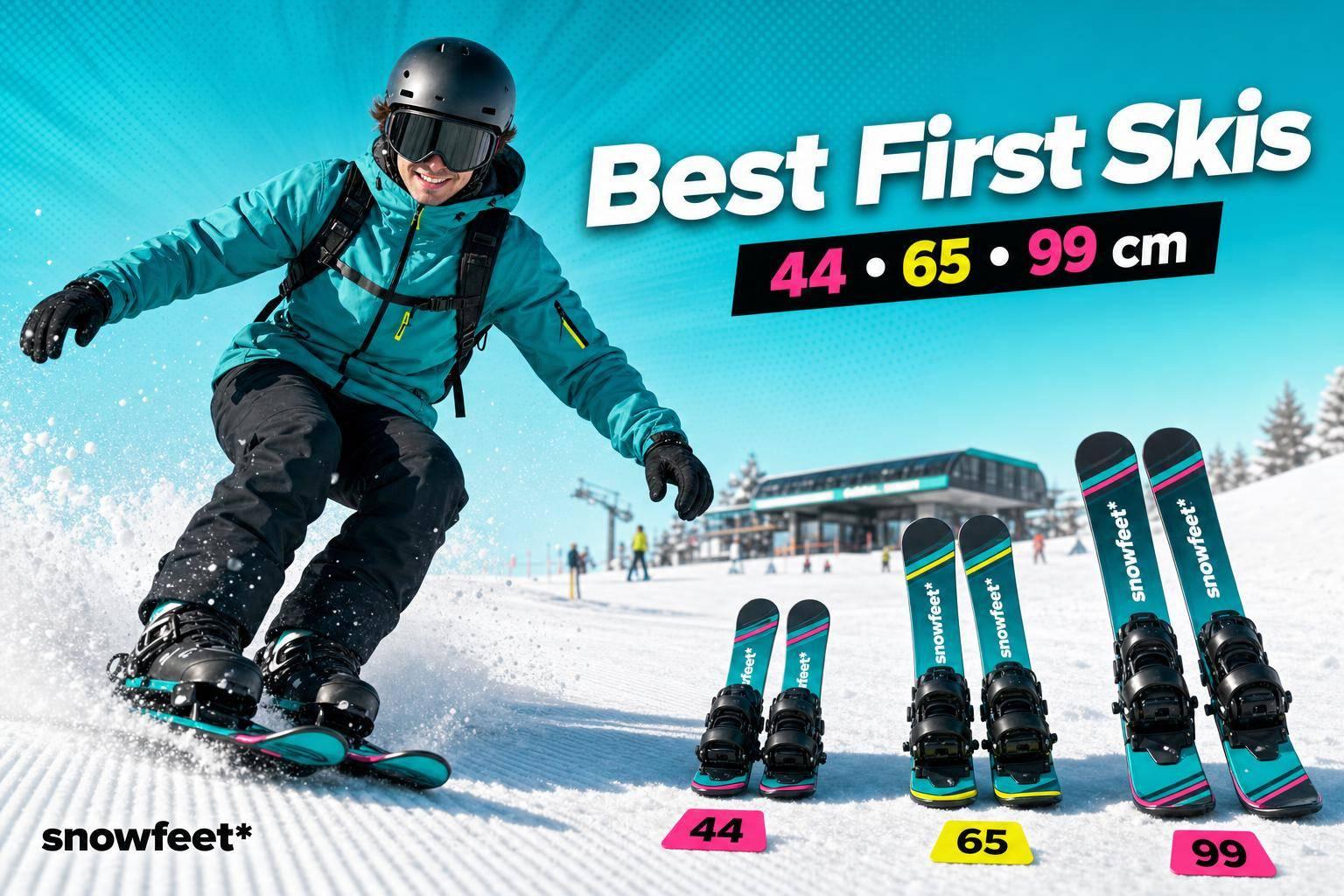
- Start with 99 cm. This is the best all-around pick. It has enough stability for groomed runs and easy resort laps, but it still feels agile and fun. It works with snowboard boots.
- Want playful, trick-friendly riding? Go 65 cm. This one shines on park features, tight turns, and for riders who care more about agility than speed. It works with snowboard boots.
- Want more stability at speed? Go 120 cm. This is the closest thing here to the feel of standard skis, with better edge hold on groomers.
- Want ultra-compact, specialty fun? Go 44 cm Skiskates. They fit in a backpack, which is pretty wild, and they’re great for short sessions and travel. Best as a niche play option, not your all-day ski.
Full-length skis still come out on top in deep powder and hard, high-speed carving. But for most casual riders spending time on groomers, taking park laps, and squeezing in short resort days, Snowfeet* are the better fit.
FAQs
Can I really use my snowboard boots?
Yes - most Snowfeet* models work with snowboard boots. That makes the move from snowboarding feel a lot easier and, for many riders, a lot more comfortable than dealing with stiff ski boots.
The main exception is the 120 cm Skiblades, which need standard ski boots. One small but important detail: make sure your model comes set up for snowboard bindings when you buy it, because boot and binding types can’t be mixed.
Which length feels closest to snowboarding?
The 44 cm Snowfeet Skiskates feel the closest to snowboarding. They’re short, quick, and playful, so the ride feels loose and skate-like. You get that fast pivot and surfy feel that a lot of snowboarders love.
If you want some of that same agility but with a bit more stability, the 65 cm Skiblades are your next best bet.
Are skiboards good enough for a full resort day?
Yes. Skiboards can handle a full day at the resort, no problem - especially on groomers, in terrain parks, and through moguls.
Why? They’re quick, easy to turn, and super nimble. That makes them a fun switch from regular skis, not just a novelty you try for one run and ditch by lunch.
That said, old-school skis still have the edge when you’re charging at high speed or riding deep powder. But Snowfeet gear works well across a lot of resort terrain. It’s light, easy on the legs, and comfy for all-day use - most of all when you pair it with snowboard boots instead of stiff ski boots.











Jätä kommentti
Tämä sivu on suojattu hCaptcha-tunnistuksella, ja hCaptchan tietosuojakäytäntöjä ja käyttöehtoja sovelletaan.