




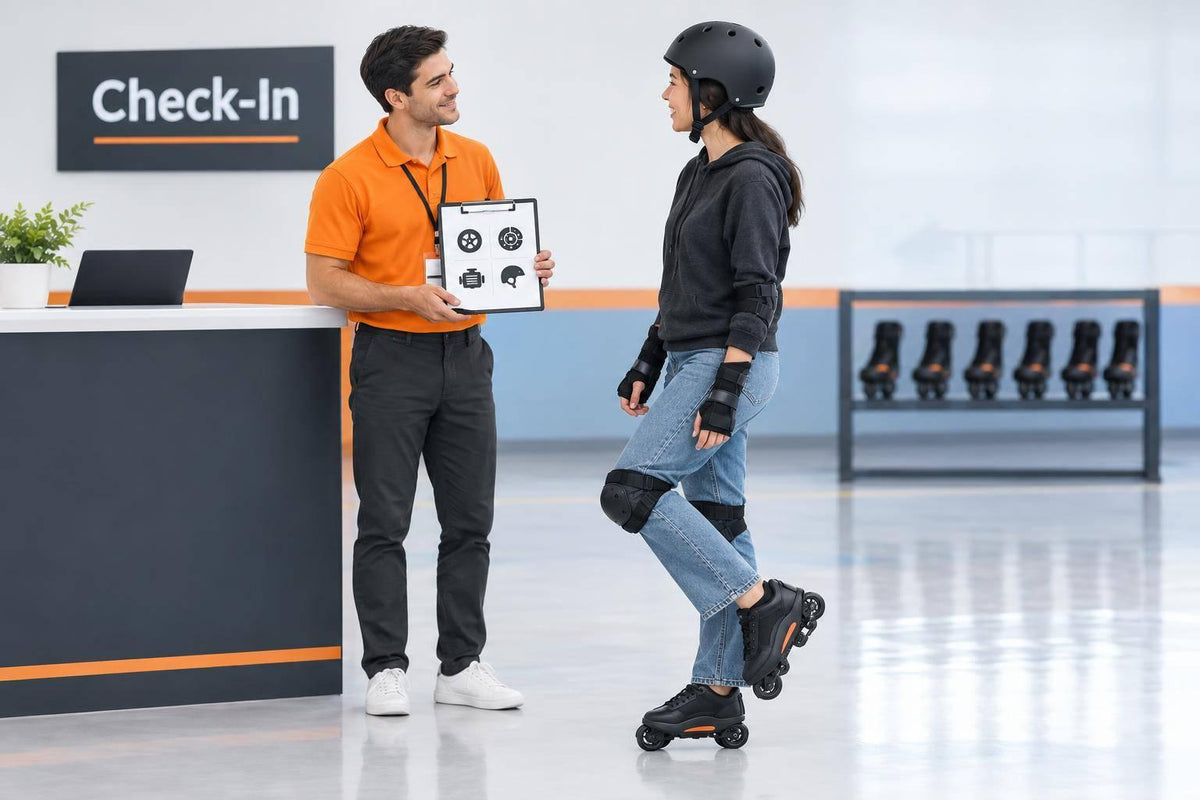
Yes - if the rink approves your exact Wheelfeet model and setup. I’d call before going and confirm permission for the session you plan to attend. <u>A personal-skate policy isn’t a green light for every skate.</u>
Here’s my short checklist:
- Get approval: Explain the straps, wheel layout, and heel brake. If your model is electric, say so - even if you’ll keep the motor off.
- Check floor rules: Ask about wheel size, material, cleaning, and exposed hardware. Some rinks may require 1/8 inch of clearance.
- Pack protection: I recommend a helmet, wrist guards, knee pads, and elbow pads. Check your straps, wheels, and brakes, too.
- Have a backup: Wheelfeet are compact and attach to your shoes. Rentals mean no gear to carry and no doubt about which skates the rink permits.
My rule? No clear approval, no Wheelfeet on the floor. Choose rentals if anything is unresolved. Once approved, test your stops and turns in a staff-approved area before joining traffic.
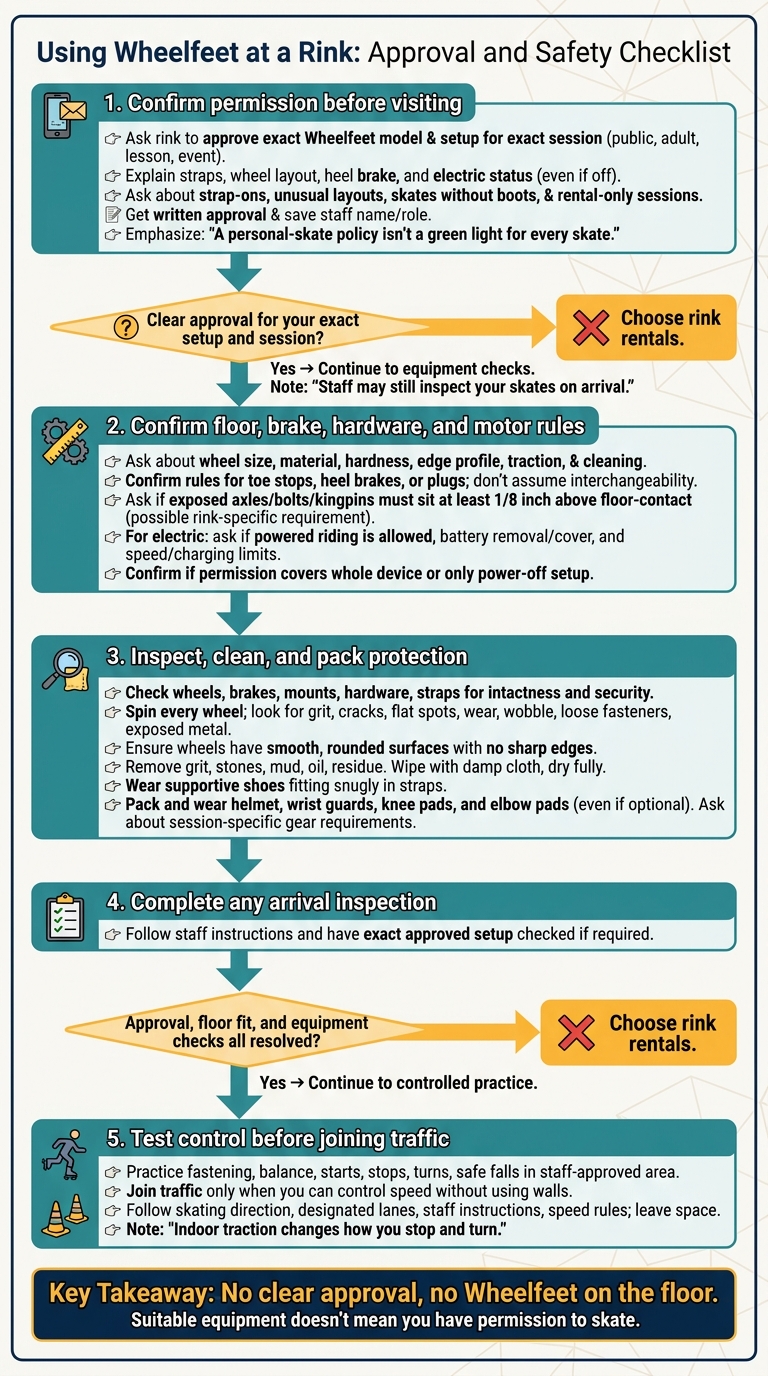
Using Wheelfeet at a Rink: Approval and Safety Checklist
Wearable Skates | Roller Blades | Skate on Shoes | Wheelfeet | Non-electric
What to Ask the Rink Before Visiting
If a rink may allow Wheelfeet, confirm the rules for the exact session you plan to attend - public skate, adult night, a lesson, or a special event. Contact that rink and explain how your Wheelfeet attach, how the wheels are arranged, how you stop, and whether they’re electric. Get written approval and save the staff member’s name or role. Staff may still inspect your skates when you arrive.
Personal Skates and Rental Rules
Ask whether the rink allows strap-on skates, unusual wheel layouts, or skates without built-in boots. A general policy for personal skates may not cover these designs. Check whether your session requires rentals and whether you can rent a pair if your Wheelfeet don’t pass inspection. Having rentals available doesn’t mean your own skates are approved.
Check for banned wheel sizes or materials, plus any wheel-cleaning rules. Ask whether your age group or session requires a helmet, wrist guards, knee pads, or elbow pads - and whether the rink provides them. Then check the floor and hardware limits.
Brake, Hardware, and Motor Rules
Confirm that your stopping system meets the rink’s rules for toe stops, heel brakes, or plugs. Don’t assume one can take the place of another. Ask whether exposed axles, bolts, or kingpins must sit at least 1/8 inch above the floor-contact point.
For an electric model, get clear answers on whether:
- Powered riding is allowed and the battery must be removed or covered.
- The rink sets limits on speed, acceleration, charging, or use.
Ask whether approval covers the whole device or only a setup with the power off. If staff can’t confirm permission, use rental skates.
Check Wheels and Safety Gear
After checking the brakes and motor, inspect the wheels and protective gear that touch the floor. Make sure your Wheelfeet wheel material, size, hardness, and edge profile suit the rink floor. Get staff approval for that exact setup. If you’re unsure it fits the floor’s requirements, don’t skate.
Wheel Fit and Floor Protection
Wheel size and hardness affect grip, turns, speed, and braking. The rolling surface should be smooth and rounded, with no sharp edges or exposed metal. Outdoor wheels may use a softer, grippier compound that behaves differently indoors.
Check these three things:
- Condition: Wheels, brakes, mounts, and hardware are intact and made for the intended use.
- Floor compatibility: Wheel material, size, hardness, and traction meet the floor’s requirements.
- Cleanliness: Wheels are free of grit, stones, mud, oil, and residue.
Before each session, spin every wheel. Look for grit, cracks, flat spots, wear, wobble, loose fasteners, and exposed metal. Wipe the wheels with a slightly damp cloth, then dry them fully.
Protective Gear and Safe Skating
Wear a helmet, wrist guards, knee pads, and elbow pads, even if the rink makes them optional.
The American Academy of Orthopaedic Surgeons recommends a helmet, wrist guards, knee pads, and elbow pads for inline skating.
Practice fastening, balance, starts, stops, turns, and safe falls in a staff-approved area. Join traffic only when you can control your speed without using the walls.
Follow the skating direction, designated lanes, staff instructions, and speed rules. Leave space between skaters. Indoor traction changes how you stop and turn, so the risk of falling stays high.
If any wheel or gear check fails, rentals are the safer fallback.
sbb-itb-17ade95
Bring Wheelfeet or Rent Skates?
Once you’ve confirmed approval and floor rules, you can choose between Wheelfeet and rentals. Snowfeet* Wheelfeet suit casual riders who want compact gear of their own - at a rink that has approved them. Rentals make sense if you’d rather show up without equipment and use the rink’s skates.
| Factor | Snowfeet* Wheelfeet | Rink rentals |
|---|---|---|
| Portability | Compact strap-on design fits in a backpack. | No skates to carry. |
| Footwear | Attach to compatible personal shoes. | Built-in boots replace your personal shoes. |
| Rink approval | The rink must approve the exact model. | Supplied for use at the rink. |
| Brake style | Heel brake similar to inline skates. | Brake style varies by rental skate. |
For Wheelfeet, wear supportive shoes that fit snugly in the straps. Before leaving home, check that the straps hold your shoes in place.
Choose rentals if approval or floor fit is unclear. Before bringing Wheelfeet, confirm that the rink allows your exact setup.
Conclusion: Get Approval Before Bringing Wheelfeet
Once you’ve checked the wheels, brakes, and gear, you still need the rink’s approval. Suitable equipment doesn’t mean you have permission to skate. Before you go, ask the rink to approve your exact setup, including any motor. Confirm its wheel, brake, and inspection rules, too.
Clean off outdoor grit and check for damage or loose hardware. Pack a helmet, wrist guards, knee pads, and elbow pads.
If the rink approves your setup, Snowfeet* Wheelfeet offer casual riders a compact, easy-to-carry option. Test your stops and turns in an open area before joining other skaters. If anything is still unresolved, use the rink’s rentals instead.
FAQs
How can I tell if my Wheelfeet wheels suit a rink floor?
Check the wheel durometer (hardness rating) if it’s listed. Indoor rink wheels typically range from 88A–103A, while outdoor wheels are often softer at 74A–84A. Wheelfeet are made mainly for smooth, dry outdoor pavement. They don’t offer the specialized wheel hardness or ankle support of dedicated indoor skates.
Ask the rink before you visit whether it allows Wheelfeet and their wheels. Check its rules for clean wheels and protective gear, too. Even if your equipment suits the surface, the rink may not permit it.
Do I need new rink approval if I change my wheels?
Yes, always check with rink management when you change your wheels. Staff must approve your equipment to make sure the wheels work with the rink’s floor and won’t damage it.
You’re responsible for keeping your equipment in good shape. That includes rotating your wheels and keeping them clean and free of debris. Before each session, check the rink’s current rules for allowed skate types and wheel requirements.
Are Wheelfeet a good choice for first-time rink skaters?
Generally, no. Wheelfeet are easy to carry and handy for casual city cruising. But they lack the ankle support, stability, and dedicated brakes found on standard roller skates. Their strap-on frame doesn’t provide the same control as a skate boot for the technical moves and steady handling that rink skating often demands.
For first-time rink skaters, standard boot-based skates are the safer choice. They offer more stability and more reliable control as you learn basic skills.











Deja un comentario
Este sitio está protegido por hCaptcha y se aplican la Política de privacidad de hCaptcha y los Términos del servicio.