



















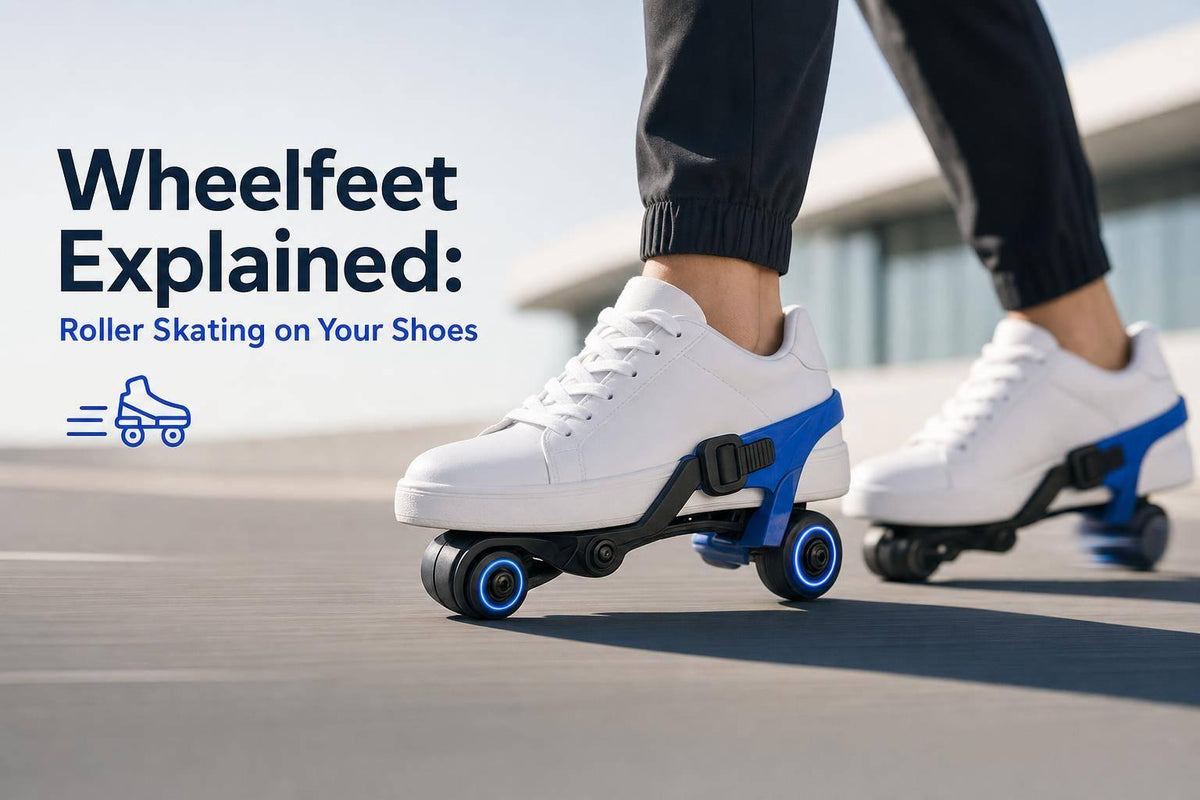
Yes - Wheelfeet let you skate in your own shoes. If I had to sum them up fast: they’re small skate frames that strap onto your footwear, work best on smooth dry pavement, and make the most sense for casual rides, short commutes, and easy fun.
Here’s the short version:
- What they are: shoe-mounted skates with 4 inline wheels
- Best for: casual cruising, family rides, short campus or neighborhood trips
- Fit range: about U.S. men’s/women’s sizes 6–13
- Main trade-off: less support than full inline or quad skates
- Best surface: smooth, dry pavement
- Price: about $199 for non-electric and $674 for electric
- Top electric speed: 16 mph (25 km/h)
If you want skate-like movement without carrying full boots, Wheelfeet make sense. If you want max support, hard training, or rough-surface use, full skates are still the better call. Think of Wheelfeet as the “throw them in a bag and roll for a bit” option. Simple, fun, and not magic :)
A quick video if you want to see the style in motion:
- YouTube: https://www.youtube.com/results?search_query=wheelfeet+review
My take: Wheelfeet are about convenience first. You keep your shoes on, strap in, and roll. That’s the whole pitch, and for the right rider, it works.
Wearable Skates | Roller Blades | Skate on Shoes | Wheelfeet | Non-electric
Quick comparison
| Option | Best use | Support | Portability | Price |
|---|---|---|---|---|
| Wheelfeet (non-electric) | Casual rides, short trips | Lower than full skates | High | $199 |
| Wheelfeet (electric) | Short paved commutes | Lower than full skates | High | $674 |
| Inline skates | Fitness, longer rides | High | Low | Varies |
| Quad skates | Rink skating, dance, some tricks | High | Low | Varies |
What I’d want to know before buying
1. They’re not a full skate replacement.
They trade boot support for portability. That’s the deal.
2. Your shoes matter a lot.
A snug sneaker or casual boot with firm ankle hold will feel better than soft, loose shoes.
3. Surface choice matters even more.
Dry, smooth paths are your friend. Wet pavement, gravel, steep hills, and rough streets? Hard pass.
4. The electric version changes the ride.
At 16 mph, it’s not a toy-speed setup. A helmet and pads aren’t optional in my book.
Should you get them?
I’d say yes if you want:
- easy carry
- fast on/off use
- light cruising
- short paved trips
- something more skate-like than heel-wheel shoes
I’d say no if you want:
- hard carving
- rough-road use
- downhill riding
- high-speed training
- the locked-in feel of full skate boots
So, that’s the core idea: Wheelfeet are portable skates for casual riders, not a do-everything skate setup. If that matches how you ride, they can be a fun fit.
sbb-itb-17ade95
How Wheelfeet Work
A Wheelfeet frame uses four wheels and a rubberized footbed to help with grip and stability. Straps secure your shoe into the frame, so your foot and the frame move together as one. Wheelfeet fit most adult shoe sizes from US 6 to US 13, and a snug sneaker with firm ankle support helps keep things steady.
That’s a big part of the appeal. Wheelfeet are easy to carry, quick to put on, and simple to stash when you’re done. So, this is more of a grab-and-go rolling setup than a full skate boot.
Non-Electric Wheelfeet: Push, Glide, and Pack Away
The non-electric model runs on plain old leg power. You push off the ground, glide forward, and use front brakes to stop. The four-wheel setup feels stable and is easier to learn than inline skates.
They work best on smooth pavement, like:
- Park paths
- Boardwalks
- Sidewalks
- Courts
The non-electric Snowfeet* Wheelfeet cost about $199 and are light enough to fit in a backpack.
If you want less pushing and more coasting, the electric version changes the feel quite a bit.
Electric Wheelfeet: Powered Rolling for Short Trips
Electric Wheelfeet add a motor and a handheld remote. You use your thumb to speed up and brake. The preset top speed is 16 mph (25 km/h).
The setup stays pretty much the same: shoes on, strap in, roll, then pack them away when you’re done. They work best on smooth bike paths, flat campus routes, and quiet paved streets. The electric model costs about $674.
Next comes the part most people care about: how Wheelfeet feel once you’re moving, and who they make sense for.
What Riding Wheelfeet Feels Like and Who They Suit
Riding Wheelfeet feels stable and smooth once you get moving. The 4-wheel frame and thick footbed help keep your shoe in place over small cracks and rough pavement.
Most riders get used to them fast, but turning and braking need a bit of practice. Wheelfeet use front brakes, so inline skaters usually need a short adjustment period. Once you get the hang of that, they’re best for easy, laid-back rides, not hard training.
So, think casual fun, not race mode. Wheelfeet fit best for short commutes, family rides, easy cruising, and light trick practice on smooth pavement. They’re not the right pick for aggressive skating, off-road use, wet pavement, or high-speed training.
Best Uses: Cruising, Family Outings, Commuting, and Light Tricks
Wheelfeet shine in low-pressure situations where you just want to roll and enjoy the ride. They work well for:
- Casual cruising
- Short commutes
- Family outings
- Light trick practice on smooth pavement
Skip them for aggressive skating, off-road terrain, wet pavement, and high-speed training.
Why Snowfeet* Work Well for Casual Riders
Snowfeet* keeps things simple: strap in, roll, then pack them away. That easy setup makes Wheelfeet a good match for casual riders who want portable fun without needing a separate skate boot.
Next: the main pros, limits, and safety basics.
Pros, Limits, and Safety Basics
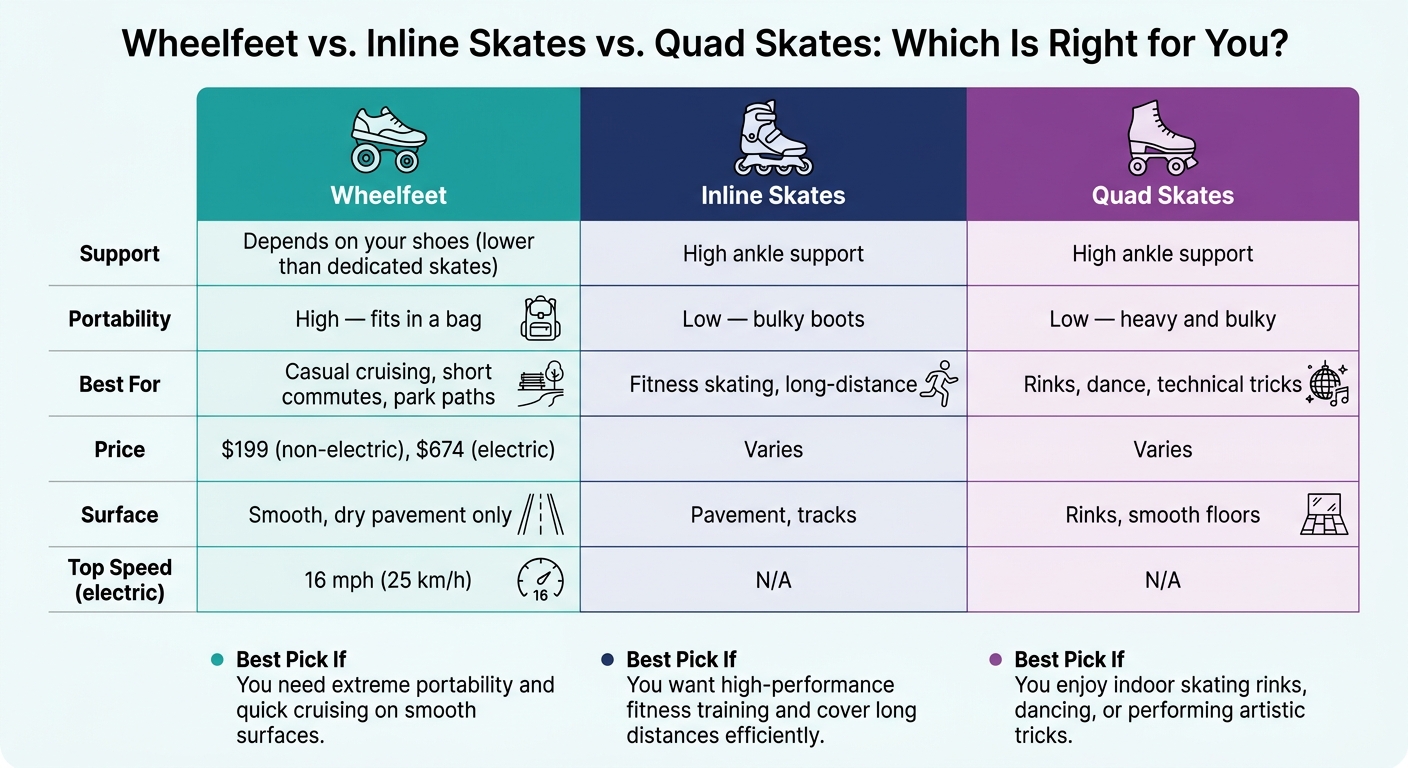
Wheelfeet vs. Inline Skates vs. Quad Skates: Which Is Right for You?
Wheelfeet are made for portability. You strap them onto your shoes, toss them in a bag, and take them off in seconds. No full skate boots. No bulky setup. That’s the big draw.
They make the most sense if you want something light and easy to carry. Kind of like the difference between packing flip-flops and packing ski boots :) Same idea. Less gear, less hassle.
There is a trade-off, though. Since the support comes from your shoes, not a built-in skate boot, braking and turning can take some practice. You don’t just clip in and become a parking-lot pro.
Wheelfeet vs. Inline Skates and Quad Skates: A Direct Comparison
Wheelfeet are for riders who want skate-like movement without dedicated skate boots. So, the choice is pretty simple: go with Wheelfeet if portability is the main thing, or pick dedicated skates if you want more support and speed.
| Option | Support | Portability | Best For |
|---|---|---|---|
| Wheelfeet (Snowfeet*) | Depends on your shoes | High - fits in a bag | Casual cruising, short commutes, park paths |
| Inline Skates | High ankle support | Low - bulky boots | Fitness skating, long-distance |
| Quad Skates | High ankle support | Low - heavy and bulky | Rinks, dance, technical tricks |
Inline skates and quad skates give you more built-in support, which helps with control. But they’re also bigger, heavier, and less fun to carry around once you’re off the pavement. Wheelfeet flip that equation.
Safety Rules and Surface Limits
Wheelfeet do best on smooth, dry pavement. That’s the sweet spot. If the ground gets wet, loose, or steep, things can go sideways fast.
A helmet and pads are a smart pick for every rider. Even on short rides. Even if you “used to skate.” Yep, gravity still works.
| Condition | Use / Avoid | Recommended Action |
|---|---|---|
| Smooth Pavement | Use | Primary surface for riding |
| Wet Surfaces | Avoid | Wait until the surface is fully dry |
| Gravel / Rocks | Avoid | Walk through or avoid entirely |
| Steep Hills | Avoid | Stick to flat or gently sloped paths |
Before you buy, line up those limits with what you care about most: fit, surface, and how easy they are to carry.
How to Pick the Right Wheelfeet and Final Takeaway
What to Check Before Buying: Fit, Use, Budget, and Portability
Start with fit. If the fit is off, the rest doesn’t matter much.
Snowfeet* Wheelfeet fit US sizes 6–13, though the lower end of that range may feel a bit roomy. A simple fix? Wear supportive sneakers or casual boots and tighten the bindings snugly. That helps keep things stable and more comfortable.
Then look at how you plan to ride.
If you want the simplest and lowest-cost option, go with the non-electric model. It starts at $199 and works well for casual cruising. No motor, no remote, no extra fuss.
If you want help on short commutes, the electric model is the better match. It reaches up to 16 mph and uses a thumb remote for speed control and braking. That version costs $674.
Here’s the side-by-side view:
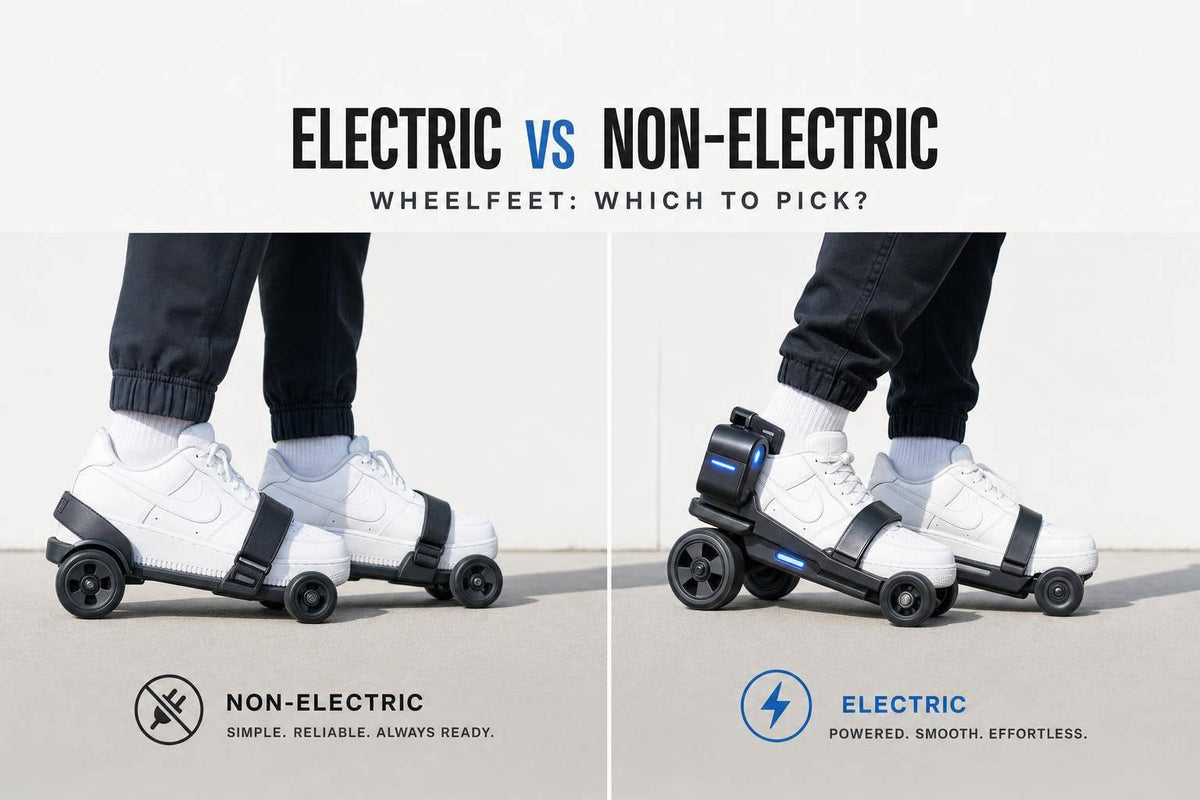
| Feature | Non-Electric | Electric |
|---|---|---|
| Price | $199 | $674 |
| Power | Human-powered | Motorized |
| Braking | Manual front brakes | Thumb remote |
| Portability | Ultra-lightweight | Slightly heavier |
Conclusion: Key Points to Remember
Wheelfeet make sense if you want that skate-like feel without hauling around full skates. Dedicated inline or quad skates still give you better support for advanced tricks. But Snowfeet* Wheelfeet are the stronger choice when portability and everyday convenience matter most.
For most casual riders, Snowfeet* is the better fit for portability and everyday convenience.
FAQs
Are Wheelfeet good for beginners?
Not usually. Wheelfeet are more of a niche pick than a first choice for beginners.
They strap onto your own shoes, which sounds convenient. But there’s a catch: they give you less stability and less ankle support than standard booted skates. So they can feel less secure and tougher to control.
If you’re set on trying them, the manual version is the better place to start. It’s usually easier for beginners than the electric model, which calls for better balance and faster reactions.
What shoes work best with Wheelfeet?
Wheelfeet work with the shoes you already own, so there’s no need to buy special skate boots.
For the best ride, wear snug sneakers, trainers, or casual shoes with sturdy soles and good ankle support. Athletic-style shoes tend to feel best because they help you stay comfortable, balanced, and in control on paved surfaces.
Can you use Wheelfeet on hills or rough roads?
No. Wheelfeet are made for smooth, flat, well-kept paved surfaces like city sidewalks, park paths, and quiet parking lots.
Stay away from hills, rough asphalt, gravel, and debris. The short frame can catch on uneven ground, which can cut control and lead to wobbling, falls, or damage.











Deja un comentario
Este sitio está protegido por hCaptcha y se aplican la Política de privacidad de hCaptcha y los Términos del servicio.