



















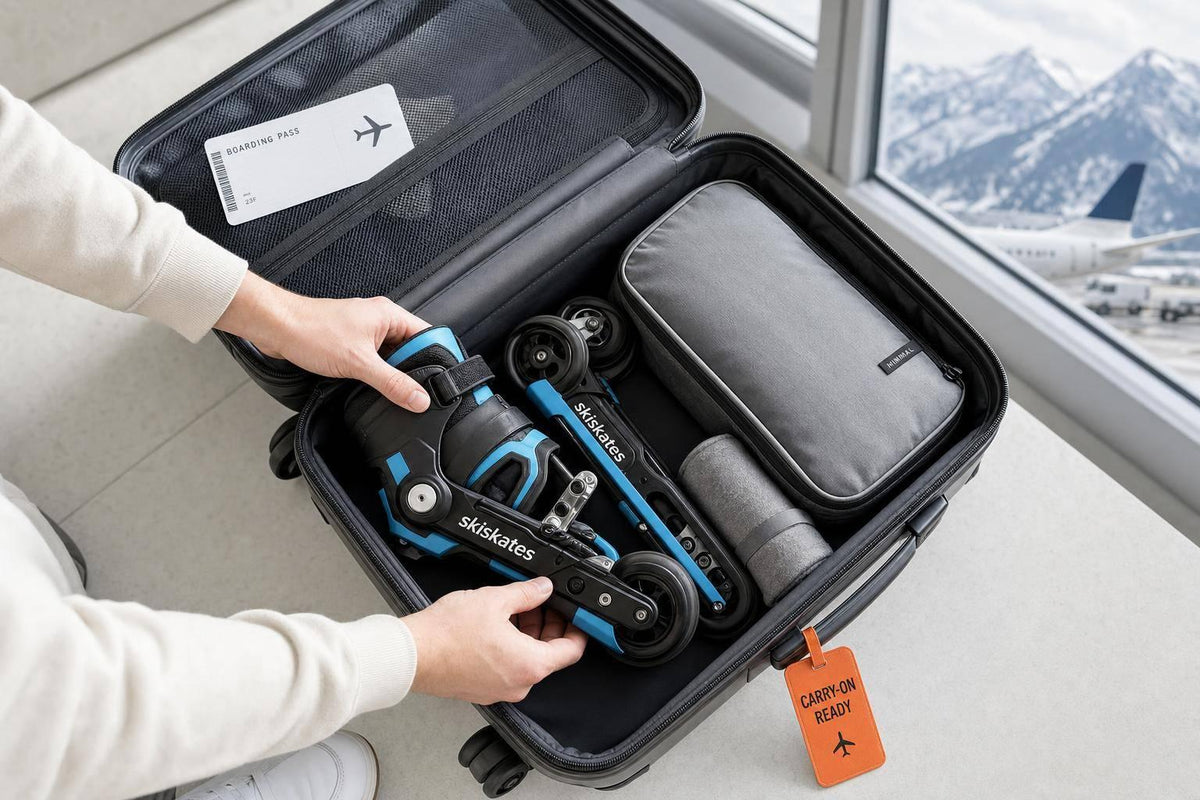
Yes - if your goal is to fly with one bag, skip rental lines, and stick to groomed runs. That’s the whole story in one sentence.
Here’s the short version:
- Best for carry-on: Snowfeet 38 cm, Snowfeet 50 cm, and Skiskates 44 cm
- Borderline for carry-on: 65 cm skiblades
- Best trips for this gear: weekend trips, 3–5 day resort visits, city + mountain combos
- Best snow: groomers and mellow resort runs
- Not a good pick for: deep powder, steep terrain, or high-speed skiing
- Big deciding factor: your boots, not just the skis
If I were packing for a short flight and wanted to avoid checked-bag fees that can run $35 to $75 each way on many U.S. airlines, I’d look hard at the smaller Snowfeet options. The 38 cm model is the lightest travel setup because it can work with winter boots you may already own. That means fewer bags, less drag, and less airport misery. Nice.
But here’s the catch: shorter gear gives up stability and float. So if I wanted hard carving, deep snow, or a full ski-week feel, I’d still rent or check full-size skis. No shame in that. Different tool, different day.
| Gear | Carry-on fit | Boot issue | Best use |
|---|---|---|---|
| Snowfeet 38 cm | High | Works with winter or hiking boots | Short trips, one-bag travel |
| Snowfeet 50 cm | High | Can work with winter or snowboard boots | Resort days with a bit more control |
| Skiskates 44 cm | Medium to high | Needs ski or snowboard boots, based on version | Short resort trips if you pack tight |
| Skiblades 65 cm | Medium | Ski boots add bulk fast | One-destination trips |
So, are skiskates worth it? For carry-on travelers, often yes. Just don’t expect them to replace full skis in every snow condition. Think of them as the light-trip option, not the whole mountain answer :)
If you want a quick look at how they ride before buying, these YouTube searches can help:
Bottom line: if you fly often, pack light, and ski groomers, skiskates can save space, time, and money. If you chase powder or ski fast all day, I’d pass.
Skiskates vs Full Skis: Carry-On Travel Comparison Guide
Snowfeet* Review: Are Skiskates Worth It? | Mini Ski | Skates for Snow | Skating Ski | Short Ski
Carry-on rules: what fits on a flight and what does not
Here’s the plain truth: full-size skis and snowboards almost always get checked, not carried on. Standard carry-on size limits work for a roller bag, but not for long skis.
That’s where Snowfeet* gear has a clear edge. Its small size means it can fit in a normal suitcase instead of a bulky ski bag. And that helps long before you hit the slopes.
Why Snowfeet* gear is easier to fly with than skis or a snowboard
Small gear just makes travel less of a pain. It’s easier to walk through the airport with, easier to fit in a rideshare, easier to stash on a shuttle, and a lot easier to deal with in a hotel room.
If your gear packs like normal luggage, the whole trip gets simpler. Often, it gets cheaper too.
When carry-on works and when you need a backup plan
The smallest Snowfeet* models are the best fit for carry-on. The 65 cm Skiblades may take a bit more care when packing.
A few things can still slow you down:
- Metal edges or bindings can lead to extra screening
- Tight packing can make inspection more likely
- Overhead bins can fill up, which may lead to gate-checking
A simple fix helps. Use a sleeve or edge guards, then pad the gear with clothing. It’s a small step, but it can save hassle at security.
Also, check your airline’s carry-on rules before you fly. Even if your setup should fit, gate agents can still check bags at the last minute when bin space runs short.
Next, the exact model size determines which Snowfeet* option fits your bag best.
Packing comparison: which Snowfeet* model fits your bag?
The main thing is simple: how much space do these take once your jacket, gloves, socks, and random trip stuff are in the bag too?
Here’s the practical fit breakdown by model.
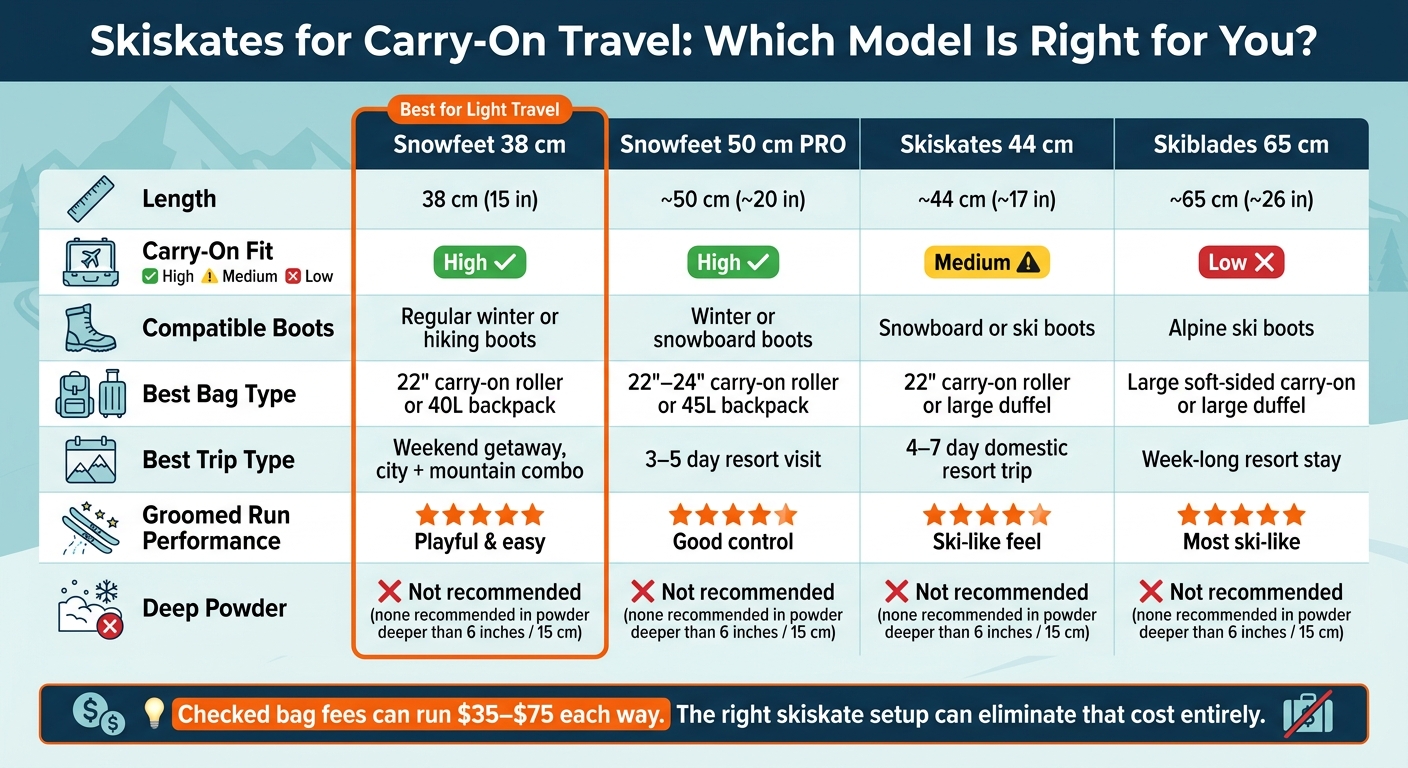
| Product | Length | Portability | Best Bag Type | Best Use Case |
|---|---|---|---|---|
| Snowfeet 38 cm | 15 in | Most packable - shoe-sized | 22" carry-on roller or 40L backpack | Weekend getaway, multi-stop city + mountain trip |
| Snowfeet 50 cm | ~20 in | Very high | 22"–24" carry-on roller or 45L backpack | 3–5 day resort visit |
| Skiskates 44 cm | ~17 in | High | 22" carry-on roller or large duffel | 4–7 day domestic resort trip |
| Skiblades 65 cm | ~26 in | Moderate | Large soft-sided carry-on or large duffel | Week-long resort stay, one destination |
Snowfeet 38 cm and 50 cm: the smallest, lightest packing options
The 38 cm Snowfeet are about as easy to pack as a pair of bulky hiking boots. They can lie flat at the bottom of a 22" carry-on or slide along the back panel of a 40L backpack. That still leaves room for winter layers, gloves, and casual shoes in one carry-on. Nice setup if you hate juggling extra bags at the airport.
The 50 cm model hits a nice middle ground for a lot of travelers. It’s still small enough for most standard carry-ons, fits well along the long side of a 45L backpack, and gives you a bit more stability on groomed runs without eating up much clothing space.
Skiskates 44 cm and Skiblades 65 cm: more slope feel with a bit more bulk
The 44 cm Skiskates fit well along the center of a carry-on or duffel. Packing cubes around the bindings help keep them snug and stop things from sliding around. You can still pack several days of winter layers next to them, though it may be smarter to bring one solid midweight jacket instead of two bulky coats. That’s the kind of packing choice that saves a trip from turning into suitcase Tetris.
The 65 cm Skiblades take a bit more planning. They fit best along one side of a larger upright roller, with rolled clothing on both sides to hold them in place. That extra length can push your bag close to the top end of standard carry-on size, so a soft-sided duffel that bends around the blades is a smart pick. Pack them with rolled clothing to keep the bag steady. The tradeoff is clear: more of a ski-like ride, without the checked-bag hassle.
Packing is only half the call; the next piece is whether the ride feels worth the space.
sbb-itb-17ade95
Riding experience: is the fun worth skipping a ski rental?
If it fits in your bag, the next step is simple: is it fun enough to skip the rental shop?
For most casual resort trips, yes. That’s the short version.
Verified buyer ratings are strong, which backs up the travel angle. People rate Snowfeet* gear well for travel and laid-back resort use. But there’s a catch: it works best when buyers know what it can do - and what it can’t.
| Factor | Snowfeet* Short Gear | Full-Size Skis / Snowboard |
|---|---|---|
| Fun on groomed runs | ✅ High - quick turns, playful feel | ✅ High - smooth, confident carving |
| Stability at speed | ⚠️ Lower - better at moderate pace | ✅ Strong - built for speed |
| Learning curve | ✅ Gentle | ⚠️ Steeper for beginners |
| Deep powder performance | ❌ Not recommended in powder deeper than 6 inches (15 cm) | ✅ Much better float |
On groomed runs, you’ll notice that tradeoff right away.
What beginners and casual riders can expect on groomed runs
For beginners and casual riders, Snowfeet* gear tends to feel easier and less intimidating than full-size skis or a snowboard. There’s less gear under your feet, so turns come faster and the ride feels more playful on groomed terrain.
The 65 cm Skiblades feel the most like skis. The shorter models feel faster to turn and a bit more playful - almost like the gear is saying, “let’s mess around a little.”
That shorter length also means less to manage. For many people, that makes the first few runs feel less awkward.
Where full-size skis still have the edge
Full-size skis still win when speed goes up, slopes get steeper, or carving gets more aggressive. And powder is the big one. In snow deeper than 6 inches (15 cm), the smaller surface area gives you less float, which is why safety guidance says not to use skis shorter than 50 cm in those conditions.
So, no, this isn’t the setup for a deep powder day or a hard-charging expert run.
But that’s not what most carry-on travelers want anyway. Most are heading out for short resort trips on groomed runs. They want to skip the rental line, avoid checked-bag fees, and get on the snow without hauling a ton of gear.
For that kind of trip, Snowfeet* makes a lot of sense. The ride won’t match full-size skis in every condition, but for casual resort days, the trade can be worth it. The last piece is boot compatibility, because that’s what decides which setup stays the lightest.
Boot compatibility and the final call for carry-on travelers
Ride feel matters. But for carry-on travel, boot fit is the dealbreaker.
Here’s the plain truth: boot choice is the last test. If the boots don’t fit in your bag, the trip stops being carry-on-only. End of story.
Which Snowfeet* setup works best for the lightest travel kit
Snowfeet 38 cm is the easiest setup for light travel. It works with regular winter boots or sturdy hiking boots, so you don’t need a second pair just for the slopes. That’s a big win when you’re trying to travel with one bag.
The 50 cm PRO also stays small and works with winter boots or snowboard boots. You get a bit more length and a bit more control, but you can still avoid dragging along a separate boot bag. For travelers who want one bag and one pair of boots, this is a very solid pick. It can also help you avoid checked-bag fees.
Skiskates 44 cm sits in the middle. It comes in ski-boot or snowboard-boot versions, so you still need dedicated boots. That’s the catch. Snowboard boots are bulky and can eat up most of a standard carry-on by themselves.
Then there’s the Skiblades 65 cm. These use alpine ski boots, and those are big. At that point, checked baggage usually makes more sense.
Once you’ve sorted out boot compatibility, the last question gets pretty simple: is the ride good enough to skip a rental?
| Product | Compatible boots | Carry-on fit |
|---|---|---|
| Snowfeet 38 cm | Regular winter boots or sturdy hiking boots | High - boots double as daily footwear |
| Snowfeet 50 cm PRO | Winter boots or snowboard boots | High - still compact, especially with winter boots |
| Skiskates 44 cm | Snowboard boots or ski boots, depending on version | Medium - boots are bulky, but manageable with careful packing |
| Skiblades 65 cm | Ski boots (alpine) | Low - combined bulk usually requires checked bag |
Bottom line: who should buy skiskates and who should not
Snowfeet* products make the most sense if you fly carry-on a lot, take short resort trips on groomed runs, and want to skip both the rental line and the baggage carousel. The 38 cm model is the clearest match if you want one pair of regular winter boots for the whole trip. The 50 cm PRO is also a smart option if you want a bit more length and control without giving up portability. And the Skiskates 44 cm can work well if you already own snowboard boots and know how to pack tight.
On the other hand, if you’re planning a full-week mountain trip, skiing steep terrain, hunting deep powder, or you already own good ski gear, renting on-site or checking a bag is still the smarter move. The performance gap on tougher terrain is real. Clever packing won’t change that.
FAQs
Can I really bring skiskates through airport security?
Yes. Snowfeet skiskates can usually go through airport security as carry-on because they count as sporting equipment, not sharp items.
The 38 cm and 44 cm models are the best pick for carry-on. They can often fit diagonally inside a backpack or duffel, with clothes around them for padding. Nice and simple.
The bigger options, like the 65 cm Skiblades, are usually too long for overhead bin space or cabin storage. Those should go in checked baggage.
Still, don’t wing it. Always check your airline’s rules before you fly 🙂.
Which Snowfeet* model is best if I only want to pack one pair of boots?
If you want to pack just one pair of boots, Snowfeet Skiskates 44 cm* and the 38 cm Mini Ski Skates are your best bets. Both work with snowboard boots or regular waterproof winter boots, so you can skip the bulky ski boots. That’s a nice win when you’re trying to keep your bag light :)
The 38 cm model is the most compact. But for most travelers, the 44 cm Skiskates are the best all-around pick because they’re still easy to pack and give you more stability on the slopes.
Are skiskates still worth it if I plan to ski beyond groomed runs?
Usually, no.
Skiskates shine on groomed runs and in terrain parks. That’s where they feel playful and easy to throw around. But once you get into deep powder, choppy snow, or steep, high-speed terrain, they can feel twitchy and less stable.
If you want to ski in a bigger mix of conditions, longer options like 99 cm Skiblades or 120 cm Short Skis are often a better bet. They give you more float and a steadier ride, while still being much easier to handle than full-length skis.











Efterlad en kommentar
Denne side er beskyttet af hCaptcha, og hCaptchas Politik om beskyttelse af persondata og Servicevilkår er gældende.