



















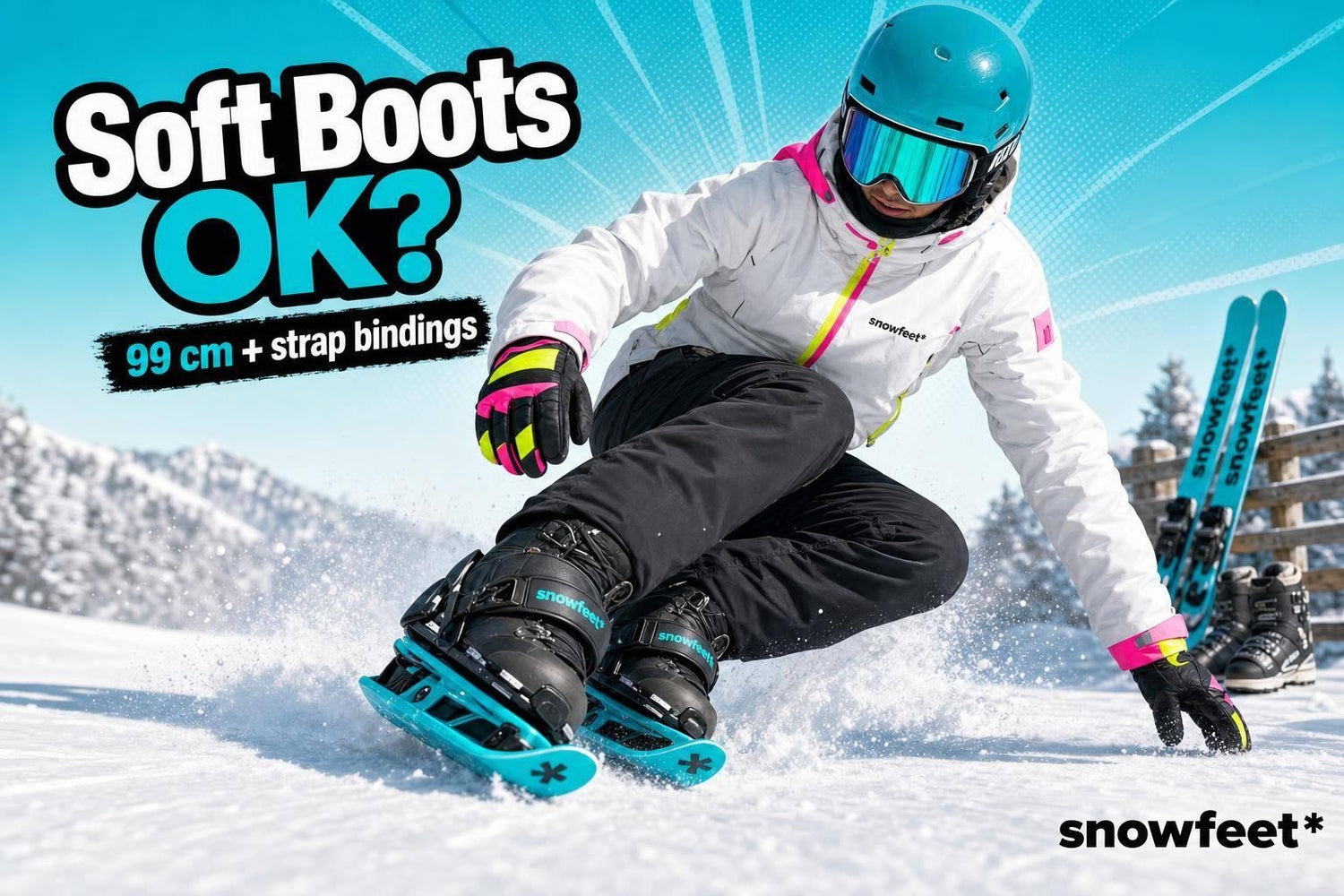
Yes - but only with the right bindings. If the skiblades have snowboard-boot bindings, soft snowboard boots can work fine. If they have ski-boot-only alpine bindings, don’t do it.
Here’s the short version:
- 44 cm Snowfeet* Skiskates: work with snowboard boots, best for park laps and low-speed fun
- 65 cm Snowfeet* Skiblades: work with snowboard boots, good for playful groomer turns
- 99 cm Snowfeet* Skiblades: work with snowboard boots, best all-around pick for most resort riders
- 120 cm Snowfeet* Short Skis: ski boots only, better for more speed and more support
So, if you already own snowboard boots, your choice comes down to one thing: binding type first, length second.
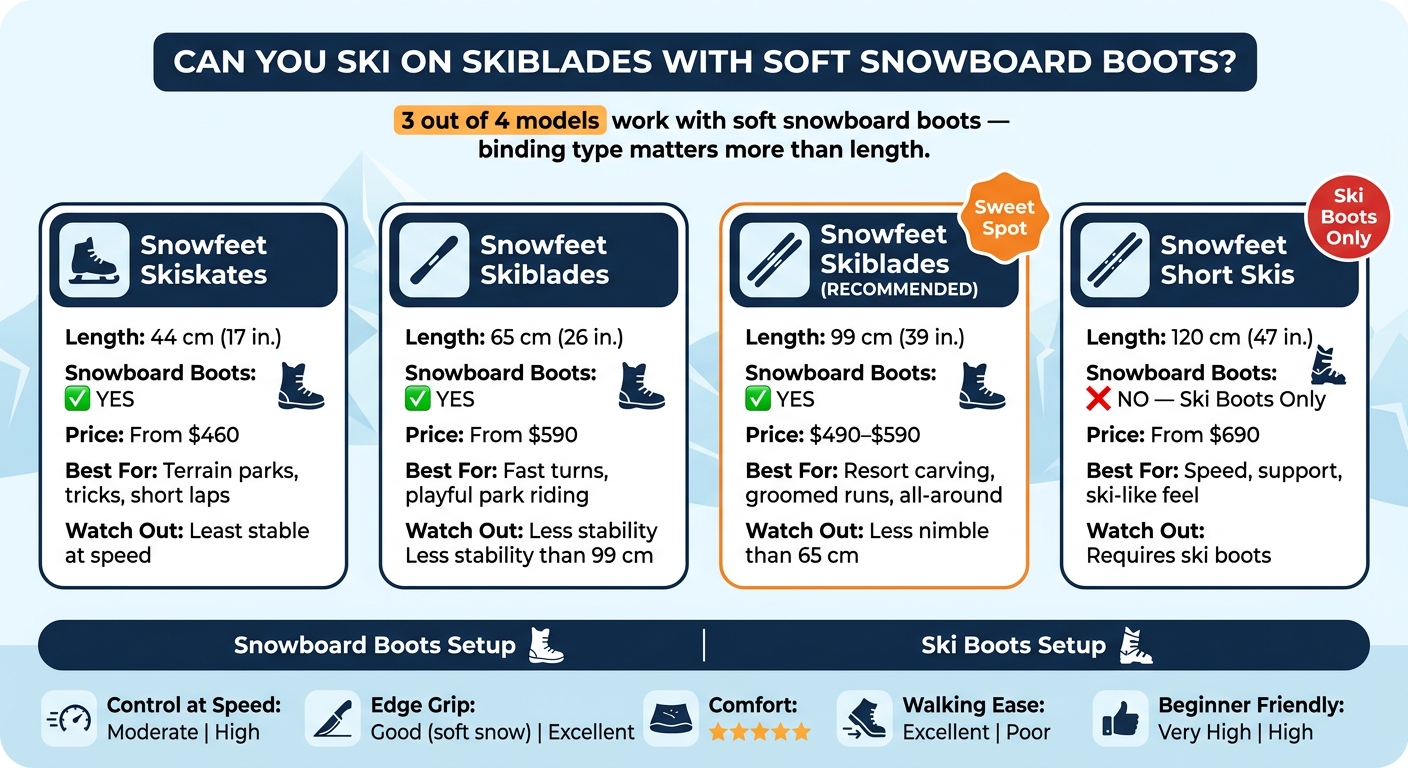
About 3 out of 4 models covered here can be used with soft boots. The one that can’t? The 120 cm ski-boot-only model. That makes the 99 cm option the safest middle ground for many riders who want comfort, easier walking, and a ski-like feel without changing boots.
Skiblades with Snowboard Boots vs Ski Boots: Which Model Fits You?
Short Skis with Snowboard Bindings | Must-Have of This Winter
Quick Comparison
| Model | Length | Soft Snowboard Boots? | Best For | Watch Out For | Starting Price |
|---|---|---|---|---|---|
| Snowfeet* Skiskates | 17 in. / 44 cm | Yes | Park, tricks, short laps | Least stable at speed | $460 |
| Snowfeet* Skiblades | 26 in. / 65 cm | Yes | Fast turns, playful riding | Shorter edge, less support | $590 |
| Snowfeet* Skiblades | 39 in. / 99 cm | Yes | Groomers, all-around resort use | Not as nimble as shorter pairs | $490–$590 |
| Snowfeet* Short Skis | 47 in. / 120 cm | No, ski boots only | More speed, more support | Needs ski boots | $690 |
My take? If you want the simple answer, it’s this: soft boots on skiblades are fine when the binding is made for them. For most people, the 99 cm model is the sweet spot. The 44 cm and 65 cm are more playful. The 120 cm is for riders who are okay using ski boots.
If you want to see short skis and skiskates in action, these YouTube links can help:
Let’s get into what matters most: fit, control, comfort, and which setup makes sense for your riding style.
Binding Compatibility: Why Soft Snowboard Boots Fit Some Skiblades but Not Others
Soft snowboard boots work only with bindings made for them. Not standard ski bindings. So the main issue isn’t the boot by itself - it’s the binding. That’s what decides which model will work.
Ski boots are stiff and click into alpine bindings. Soft snowboard boots need strap-style bindings with heel support. Their soles are flat rubber, and they don’t have the hard toe and heel lugs that alpine bindings need. So they can’t connect to alpine bindings in a safe way. If you try to force it, you risk two bad outcomes: the boot can pop out when you don’t want it to, or fail to release during a fall.
Snowfeet* uses strap-and-heel bindings on the Skiskates 44 cm, Skiblades 65 cm, and Skiblades 99 cm, with fit ranges that cover U.S. sizes 6–14.5. That’s the setup built for soft snowboard boots.
Users of Snowfeet* often point to the same upsides: more comfort, easy control, and less fatigue with soft snowboard boots. And yeah, that makes sense. A soft boot feels less like a cast on your foot and more like gear you can move in.
Here’s how that plays out across Snowfeet*’s 44 cm, 65 cm, 99 cm, and 120 cm models.
sbb-itb-17ade95
Snowfeet* Models That Work With Soft Snowboard Boots vs. Ski-Boot-Only Options
Now that the binding piece is sorted, the lineup gets pretty simple: 44 cm, 65 cm, and 99 cm can work with snowboard-boot bindings, while the 120 cm model is ski-boot-only. So the next step is picking the length that fits how you like to ride.
Snowfeet* Skiskates 44 cm and Skiblades 65 cm
The 44 cm Skiskates and 65 cm Skiblades are the smallest options in the bunch. The 44 cm Skiskates start at $460, and they’re small enough to fit in a backpack. That’s a fun little perk if you hate hauling gear around. The 65 cm Skiblades start at $590.
The 44 cm model fits riders who want a super quick, nimble ride that feels closer to skating. The 65 cm model makes a lot of sense for snowboarders who want fast turns on groomers or some park laps without dealing with a full ski setup.
As one verified customer noted, longer skis feel steadier at speed, but these are hard to beat for maneuverability.
If you want a bit more stability and still want to keep your soft boots, the 99 cm model is the next move.
Snowfeet* Skiblades 99 cm and Short Skis 120 cm
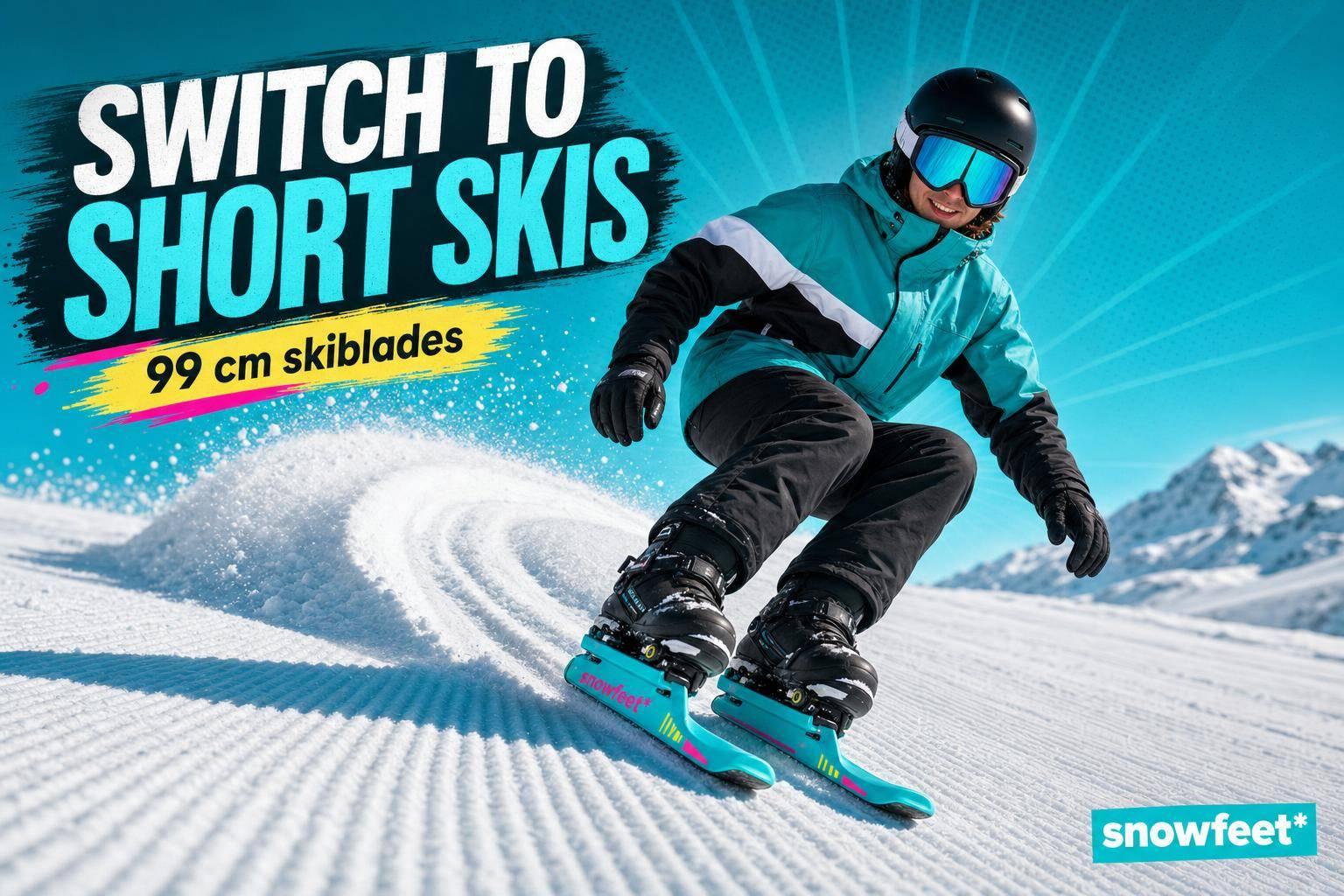
The 99 cm Skiblades feel more like skiing, but without forcing you into stiff ski boots. For snowboarders, this is often the sweet spot if you want more edge contact and better stability on groomed runs. They start at about $490–$590, based on the package, and they come with snowboard-boot binding options.
The 120 cm Short Skis bring more speed and support. They cost about $690 with bindings. But there’s a catch: they use ski-boot-only bindings. So, for most casual riders who want to stay in soft boots, the 99 cm model usually lands in the better middle ground.
How Snowfeet* Compares to Salomon Snowblades and Other Short-Ski Brands
This soft-boot option is where Snowfeet* stands out from older short-ski brands. Brands like Salomon snowblades usually need ski boots. Snowfeet* keeps that short-ski style, but adds snowboard-boot bindings on its most popular models. That means you can try short skis without buying new boots or squeezing into stiff ski boots. Pretty nice, honestly.
Here’s the quick side-by-side view:
| Model | Length | Boot Compatibility | Starting Price (USD) | Best Use | Main Trade-off |
|---|---|---|---|---|---|
| Skiskates | 44 cm | Snowboard-boot binding available | From $460 | Terrain parks, skating-style tricks | Least stable at high speeds |
| Skiblades | 65 cm | Snowboard-boot binding available | From $590 | Quick turns, playful park riding | Less stability than 99 cm models |
| Skiblades | 99 cm | Snowboard-boot binding available | About $490–$590 | Resort carving, groomed runs | Less maneuverable than 65 cm |
| Short Skis | 120 cm | Ski boots only | About $690 | Speed, support, ski-like feel | Requires more technique and edge control |
Next comes the part that matters on snow: control, comfort, and how each length actually feels under your feet.
Soft Snowboard Boots vs. Ski Boots on Skiblades: Control, Comfort, and Learning Curve
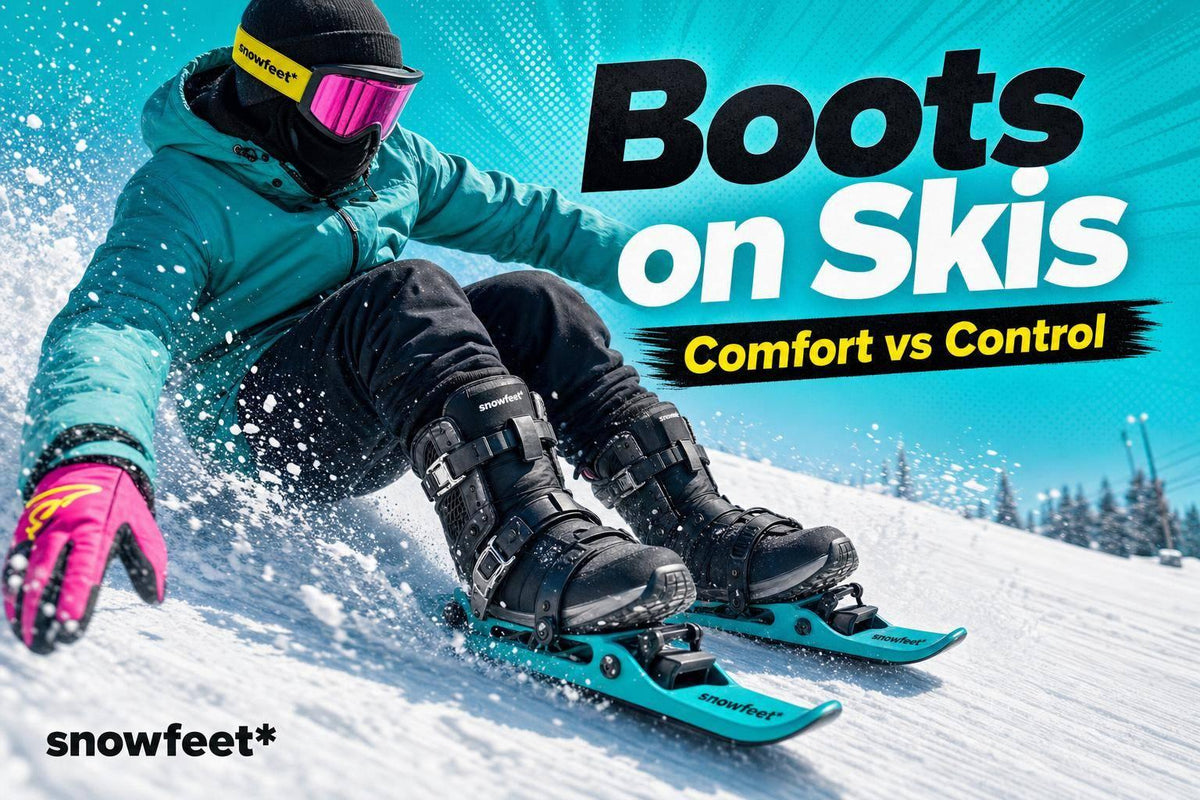
With compatible Snowfeet* bindings, your boot choice changes how the ride feels. It’s not just about comfort. It changes how the skiblades respond under your feet.
Control and Stability on Groomers, Ice, and Steeper Runs
Once the binding fits, the next trade-off is pretty simple: control vs. comfort.
Ski boots give you sharper control. The stiff cuff moves your leg input straight to the ski. You’ll notice that most on firm snow, icy patches, and steeper runs. It matters even more on the 99 cm and 120 cm models, where speed goes up and edge hold starts to matter a lot more.
Soft snowboard boots have more flex. That flex feels great on mellow groomers and slower laps. But it also adds a small delay when you tip into an edge, mainly at higher speeds. On the 44 cm and 65 cm models, that trade-off usually matters less because you’re often riding at more moderate speeds.
So, if you want more precision on firm or steeper terrain, ski boots still have the edge. Plain and simple.
Comfort and Off-Slope Practicality
If ski boots win on control, soft boots win on comfort. By a mile :)
Off snow, soft boots are just easier to live with. Walking to the lift, standing in line, heading inside for lunch - all of that feels normal. Ski boots, on the other hand, are stiff plastic shells. They do the job on snow, but walking in them can feel like you borrowed robot legs.
One verified customer summed it up well:
"I got the snowboard binding version, so super comfortable in my snowboard boots. A lot easier to haul around the hills & on vacation than traditional skis!" - heyjerz, Verified Customer
Soft boots can also ease shin and calf fatigue during a full resort day. That’s a big reason they fit casual resort laps better than long, fast, all-day sessions.
Why Snowboarders and Beginners Prefer This Setup
For snowboarders, this setup feels familiar right away.
If you already own soft snowboard boots, you can use them on compatible Snowfeet* skiblades without changing footwear. That lowers the barrier to trying something new. And because these are short skis, they’re easier to pick up than full-length skis. That’s a big reason Snowfeet* works so well for snowboarders and first-time short-ski riders.
Soft boots tend to work best at moderate speeds on easier runs. Once you move into steeper terrain or start pushing speed, ski boots start to matter more for support, control, and edge grip.
| Snowfeet* + Snowboard Boots | Snowfeet* + Ski Boots | Traditional Skis + Ski Boots | |
|---|---|---|---|
| Control at Speed | Moderate; looser feel | High; sharper power transfer | Maximum; most stable at speed |
| Edge Grip | Good on soft snow; less precise on ice | Excellent; direct edge engagement | Maximum; long edge contact |
| Comfort | High; soft and flexible | Low; stiff and heavy | Low; stiff and heavy |
| Walking Ease | Excellent; natural gait | Poor; awkward and stiff | Poor; plus carrying long skis |
| Park Feel | Playful; great for small jumps and spins | Stable; better for landings | Heavy; less nimble |
| Beginner Friendly | Very high; familiar for snowboarders | High; short skis still easy to turn | Moderate; tips can cross |
Best Use Cases and Final Verdict
Best Setups for Resorts, Terrain Parks, and Casual Laps
Once fit and control are dialed in, the next step is simple: where does each setup shine?
For resort groomers, the 99 cm Snowfeet* Skiblades are the top all-around pick if you want to ride in soft snowboard boots. If you want more support at speed, go with the 120 cm and pair it with ski boots.
For terrain parks and playful short runs, the 44 cm Skiskates and 65 cm Skiblades are the fastest-turning, most nimble choices. They feel snappy and fun, kind of like the difference between a compact car and a long truck. One just zips around with less effort.
| Setup | Resort Groomers | Terrain Parks | Casual Laps | Steep/High-Speed |
|---|---|---|---|---|
| Skiskates 44 cm + Snowboard Boots | Works | Best | Best | Not recommended |
| Skiblades 65 cm + Snowboard Boots | Works | Best | Best | Not recommended |
| Skiblades 99 cm + Snowboard Boots | Best | Works | Best | Works |
| Short Skis 120 cm + Ski Boots | Best | Works | Best | Works |
Who Should Still Choose Ski Boots or Full-Length Skis
This kind of setup does have limits. If your main goal is high-speed carving, icy conditions, or steep all-mountain terrain, ski boots and full-length skis are still the better move.
Why? They give you:
- more support
- better leverage over the edges
- steadier control when the mountain gets tough
So, if you like to charge hard, ski boots and longer skis still make more sense.
Final Takeaway
Bottom line: soft snowboard boots work only on Snowfeet* models made for them. The 99 cm is the best all-around resort pick in soft boots. The 44 cm and 65 cm make the most sense for parks and fun, easy laps. And the 120 cm should be used with ski boots if you want more support at speed.
FAQs
How do I know if my bindings fit snowboard boots?
Check the binding type and size range before you head out. Snowfeet* products are grouped by binding type, so when you order, pick the snowboard-compatible option. Most Snowfeet* snowboard bindings fit US sizes 6–14.5.
After setup, your boots should feel snug and centered, with no side-to-side movement. Make sure the straps close all the way. Then do a firm forward-flex test to check that your heel stays planted and the setup feels secure.
Are soft snowboard boots safe for skiblades?
Yes - soft snowboard boots are safe for skiblades only on Snowfeet models made with snowboard-style bindings. Those straps keep your boots locked in, which helps you stay in control.
Don’t use snowboard boots with traditional alpine release bindings. They’re not made to work together. For better stability and ride feel, make sure your boots sit centered in the binding, fit snug, and that every strap is tightened all the way.
Which Snowfeet* length is best for beginners?
For beginners, the best Snowfeet* length comes down to what kind of ride you want.
- 50 cm Snowfeet PRO: the best all-around pick. They feel balanced, forgiving, and easy to control on groomed runs.
- 44 cm Skiskates: the best choice if you want the easiest start and the fastest learning curve.
- 65 cm Skiblades: a good fit if you want something closer to skiing, but still easy to handle.











Efterlad en kommentar
Denne side er beskyttet af hCaptcha, og hCaptchas Politik om beskyttelse af persondata og Servicevilkår er gældende.