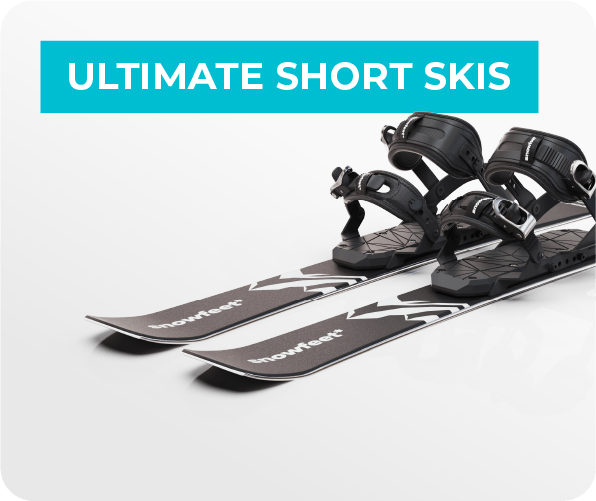
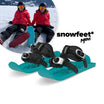
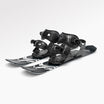
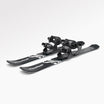
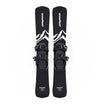
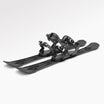
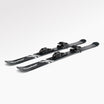
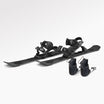
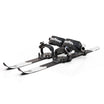
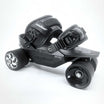
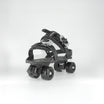
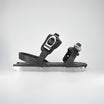
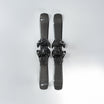
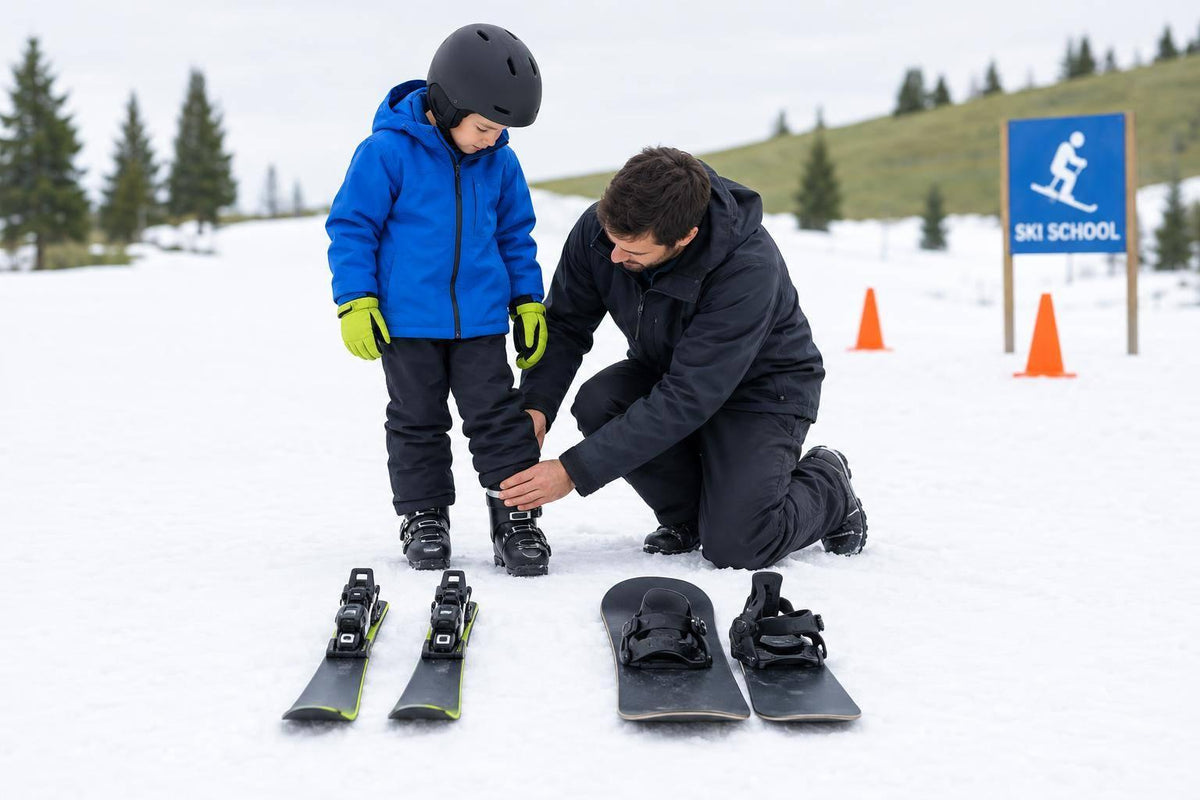
Short skis are often easier for kids on day one - but I’d check fit and lesson access before choosing. Separate feet can help with balance, and a snowplow wedge gives kids a way to brake. A snowboard takes more practice at first, but it may suit your child’s interests better.
Here’s what I’d check:
- Control: Can your child stop, get up after a fall, and follow lift instructions?
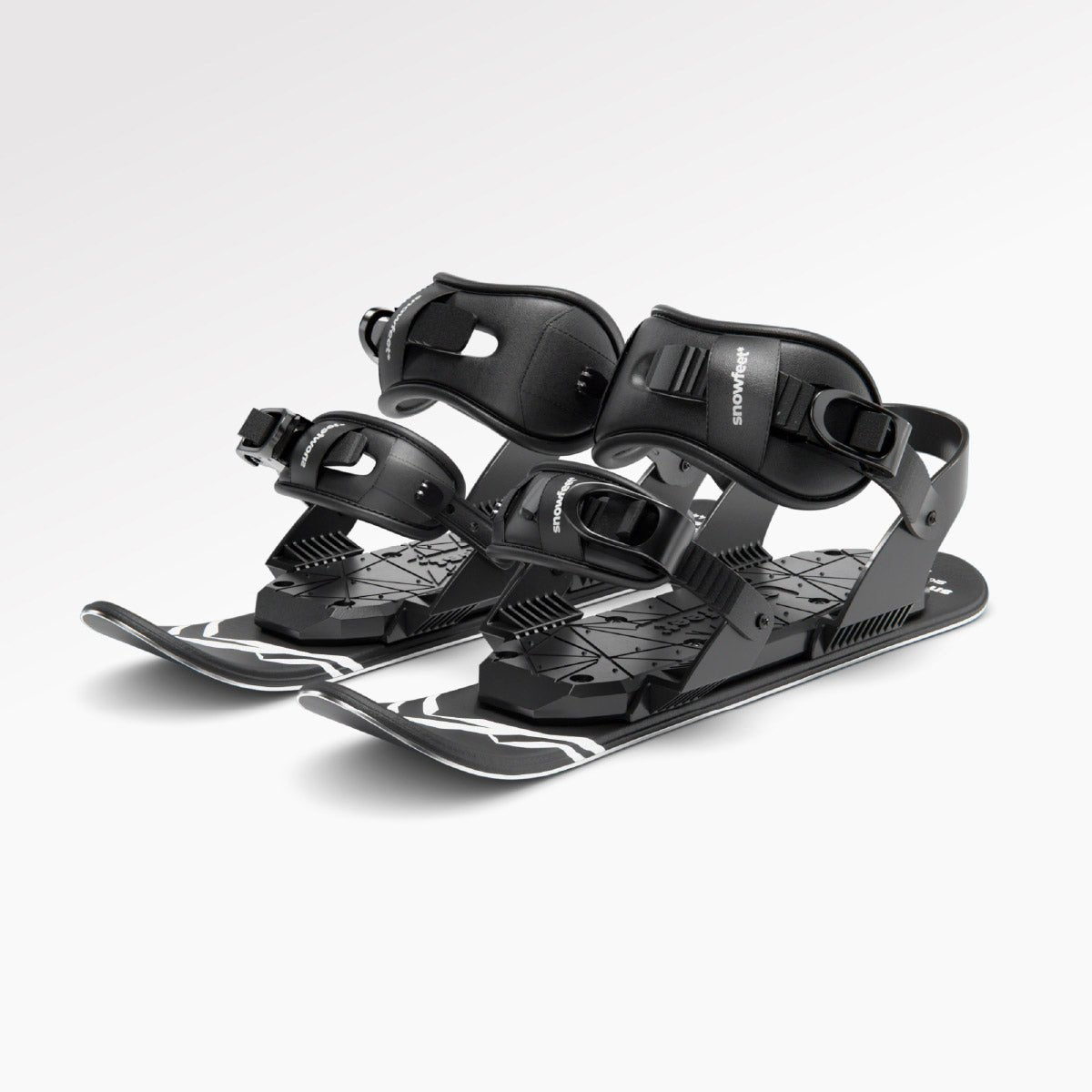
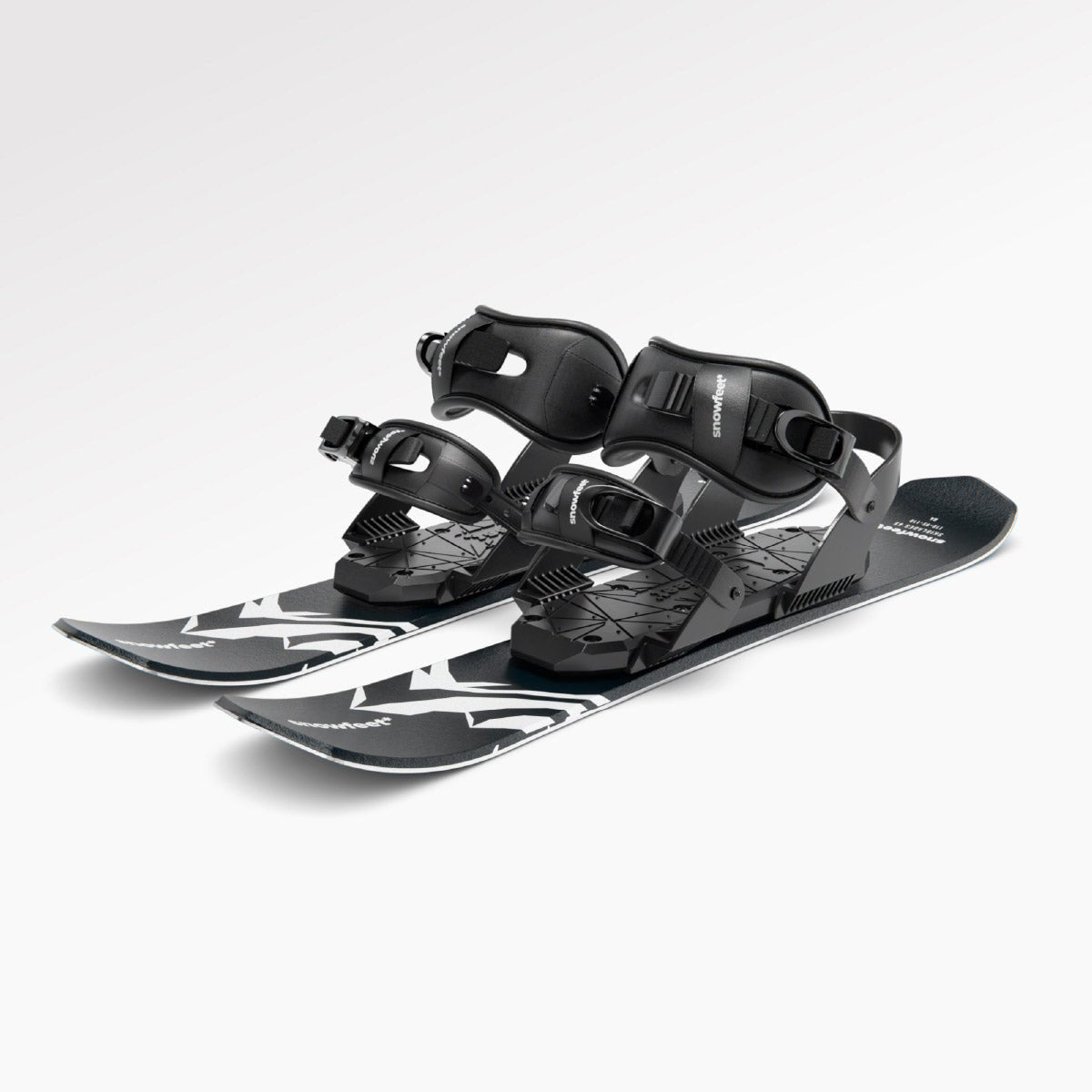
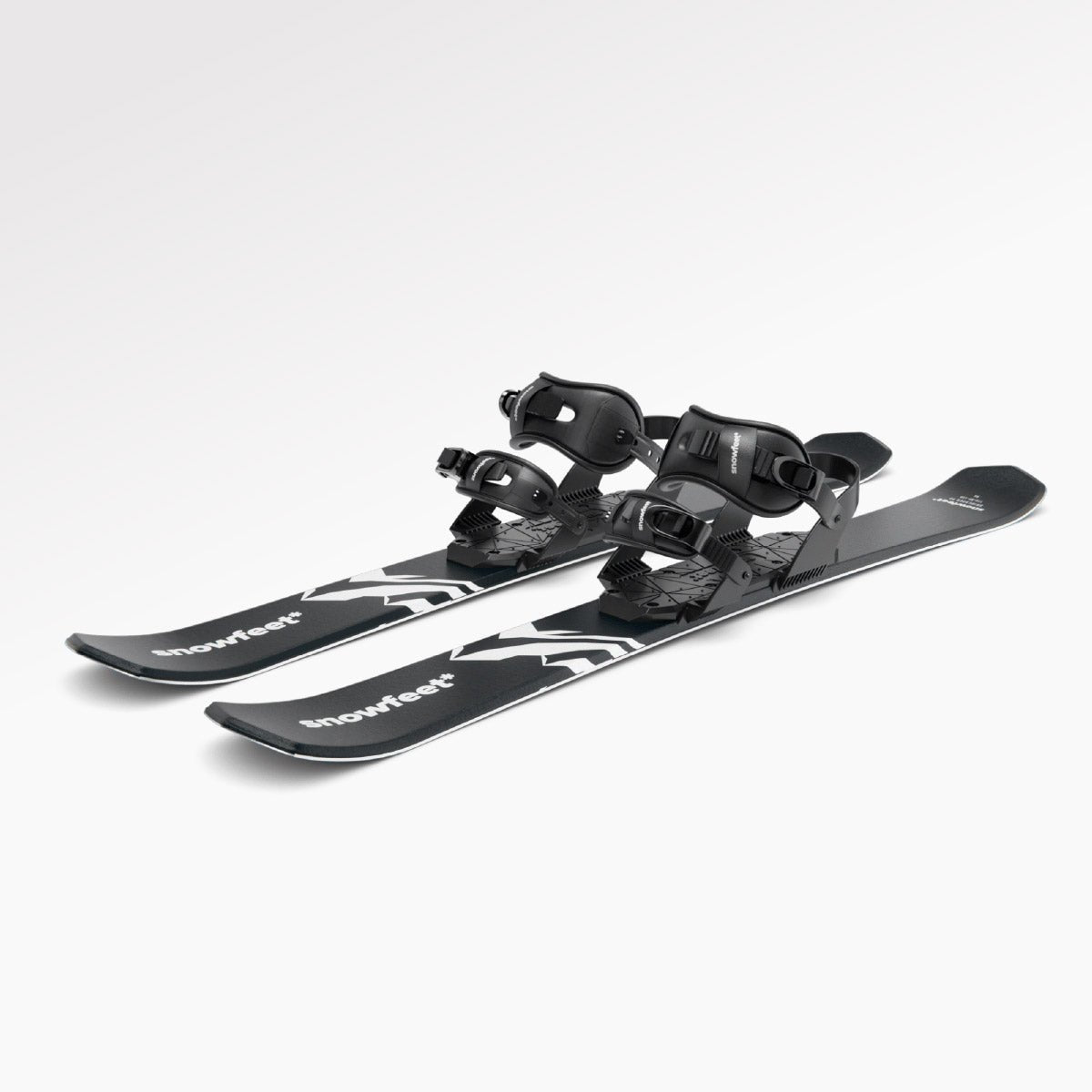
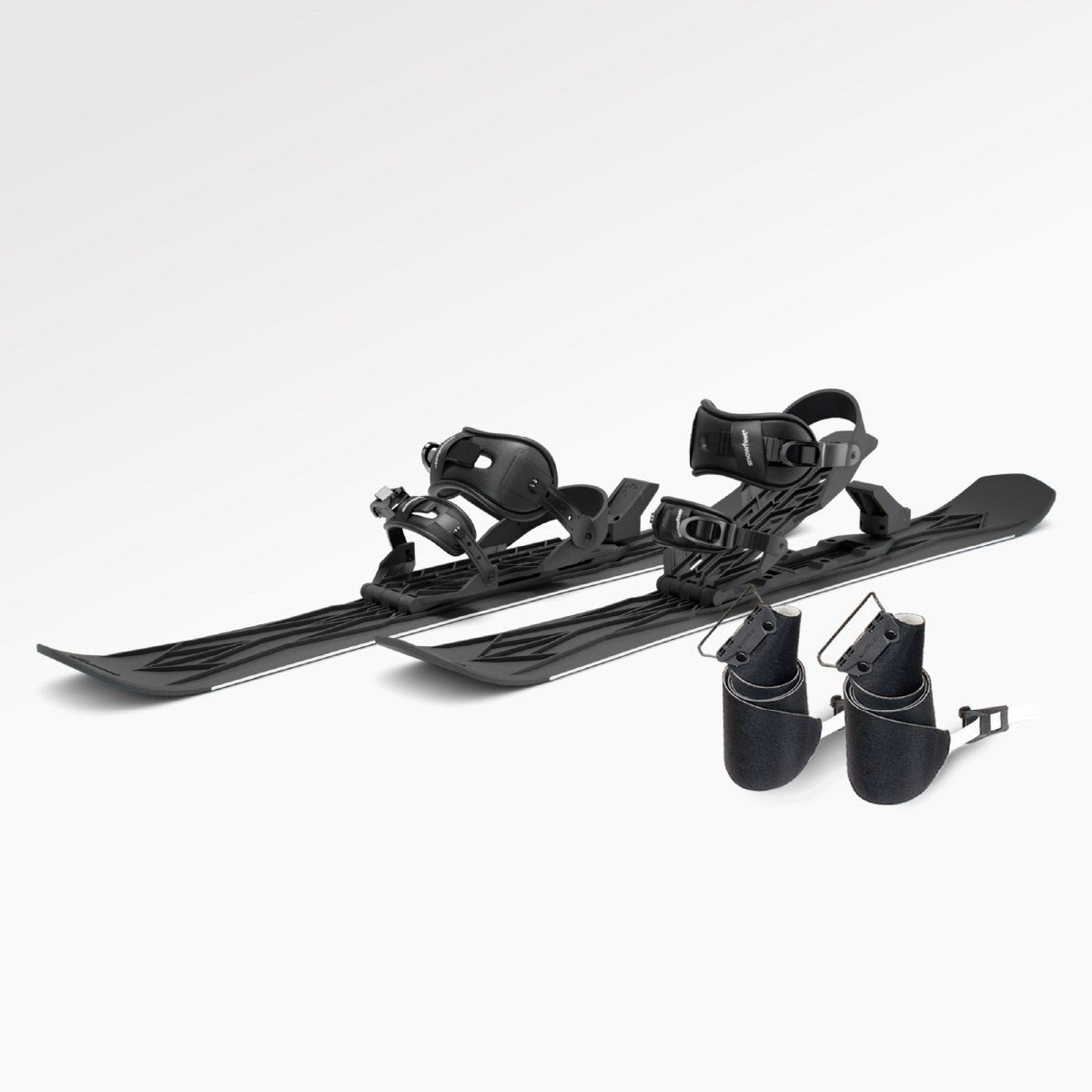
- Fit: Snowfeet* Skiblades measure 65 cm (about 26 inches). Check the exact boot and binding limits; short doesn’t mean child-sized.
- Readiness: Skating skills may help. Your child’s interest and the ski school’s age rules matter, too.
- Safety: Book a lesson, use a fitted snow-sports helmet, and start on gentle terrain with a magic carpet.
Quick Comparison
| First-day task | Short skis | Snowboard |
|---|---|---|
| Balance | Move each foot on its own | Balance with both feet attached |
| Braking | Learn a snowplow wedge | Learn heel-side and toe-side braking |
| Turning | Steer two skis | Shift between edges |
| Getting up | Keep ski tips from crossing | Set the board across the slope |
| Lifts | Shuffle with skis on | Skate with the back foot free |
My rule: <u>fit and control come before brand</u>. Confirm resort and lesson approval for Snowfeet*, have a professional check the gear, and keep the first session short. Aim for safe stops and smiles, not a full run. :)
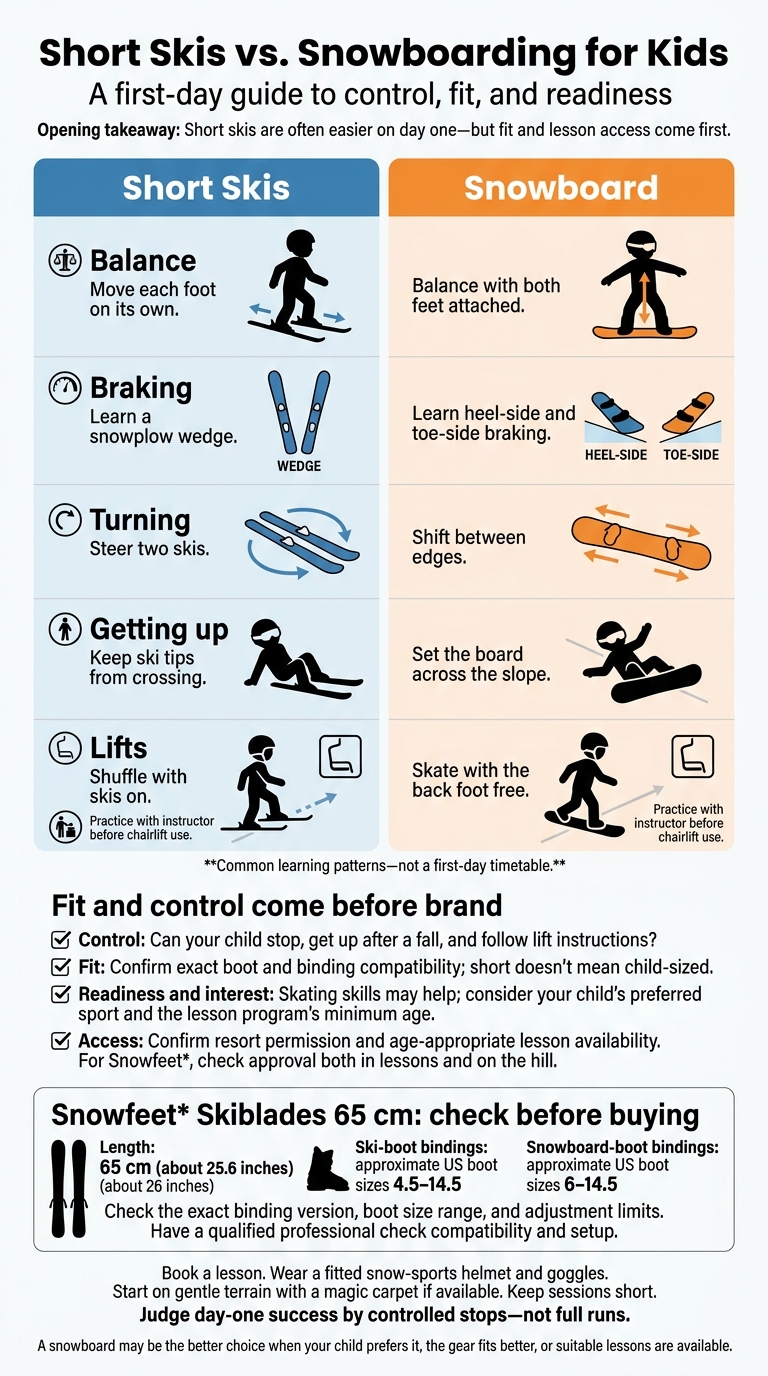
Short Skis vs. Snowboarding for Kids: First-Day Guide
How to Choose the Best Skis for Kids
Short Skis vs. Snowboarding: The First Day
| Skill | Short skis | Snowboard |
|---|---|---|
| Balance | Step to regain balance | Regain balance with both feet attached |
| Stopping | Use a braking wedge | Brake on heel-side and toe-side edges |
| Turning | Turn one ski more than the other | Switch between edges |
| Getting up | Move legs apart; tips may cross | Set the board across the slope |
| Lifts | Shuffle with skis attached | Skate with the back foot free |
These are common learning patterns, not a first-day timetable.
Learning to Balance, Stop, and Turn
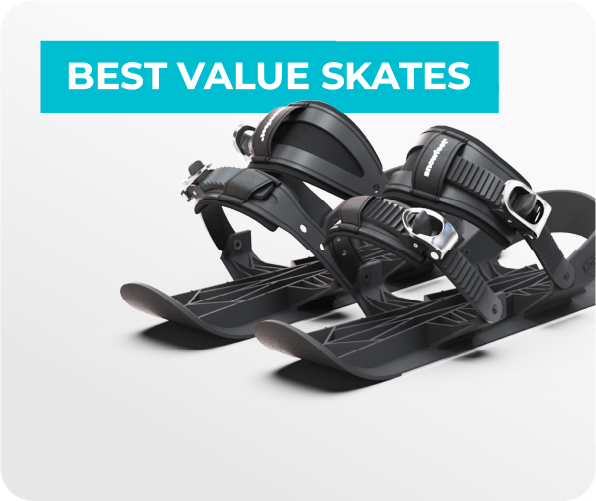
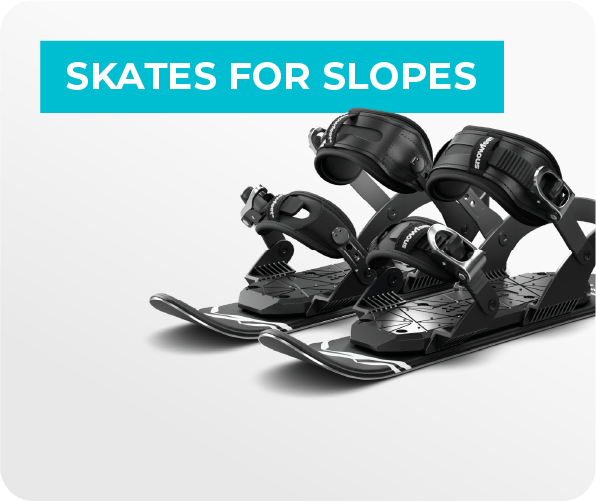
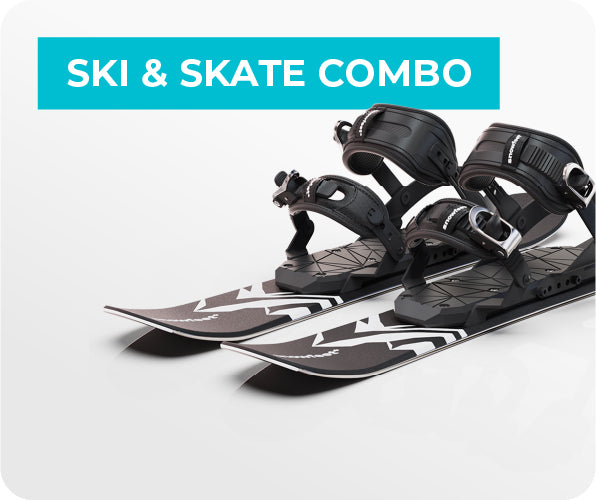
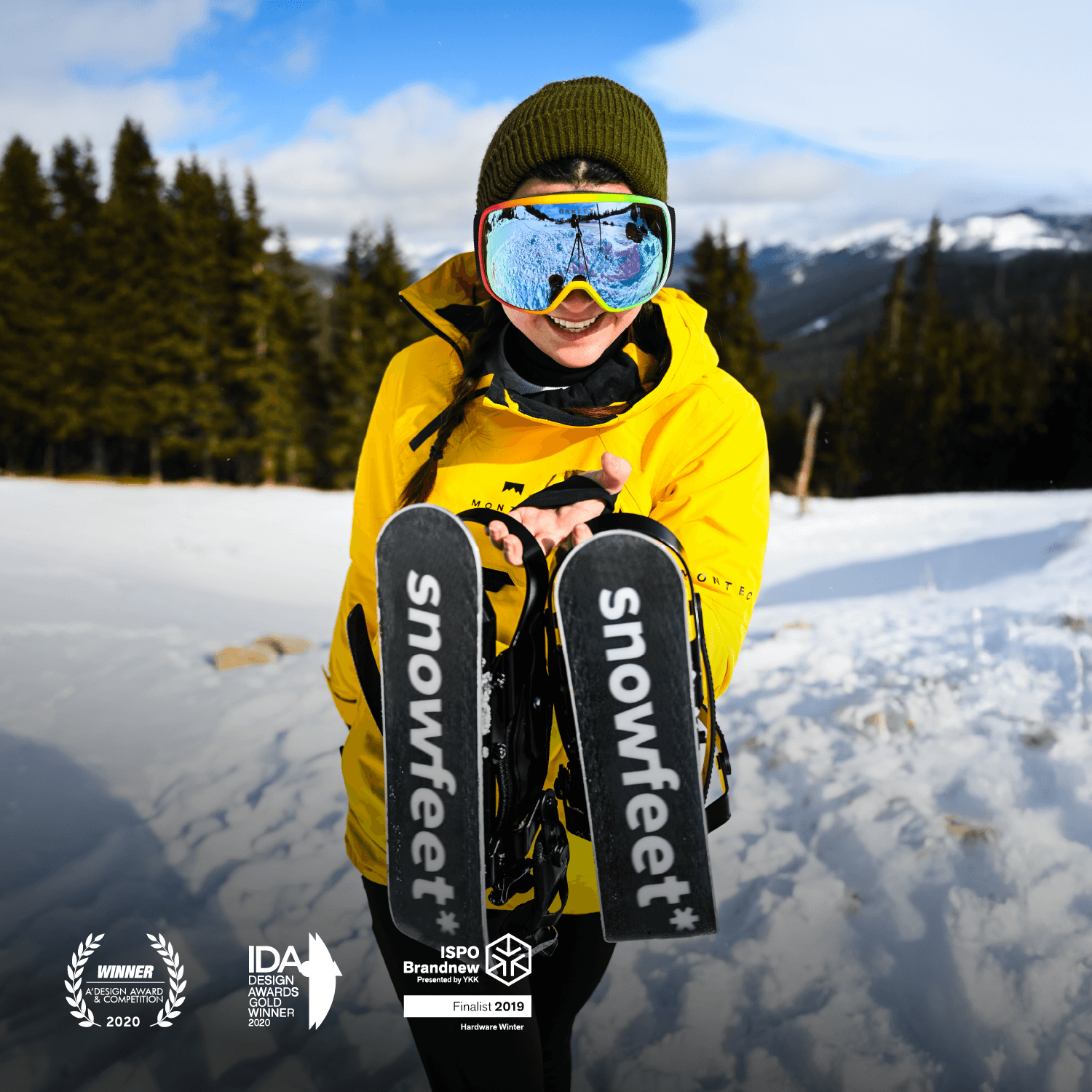
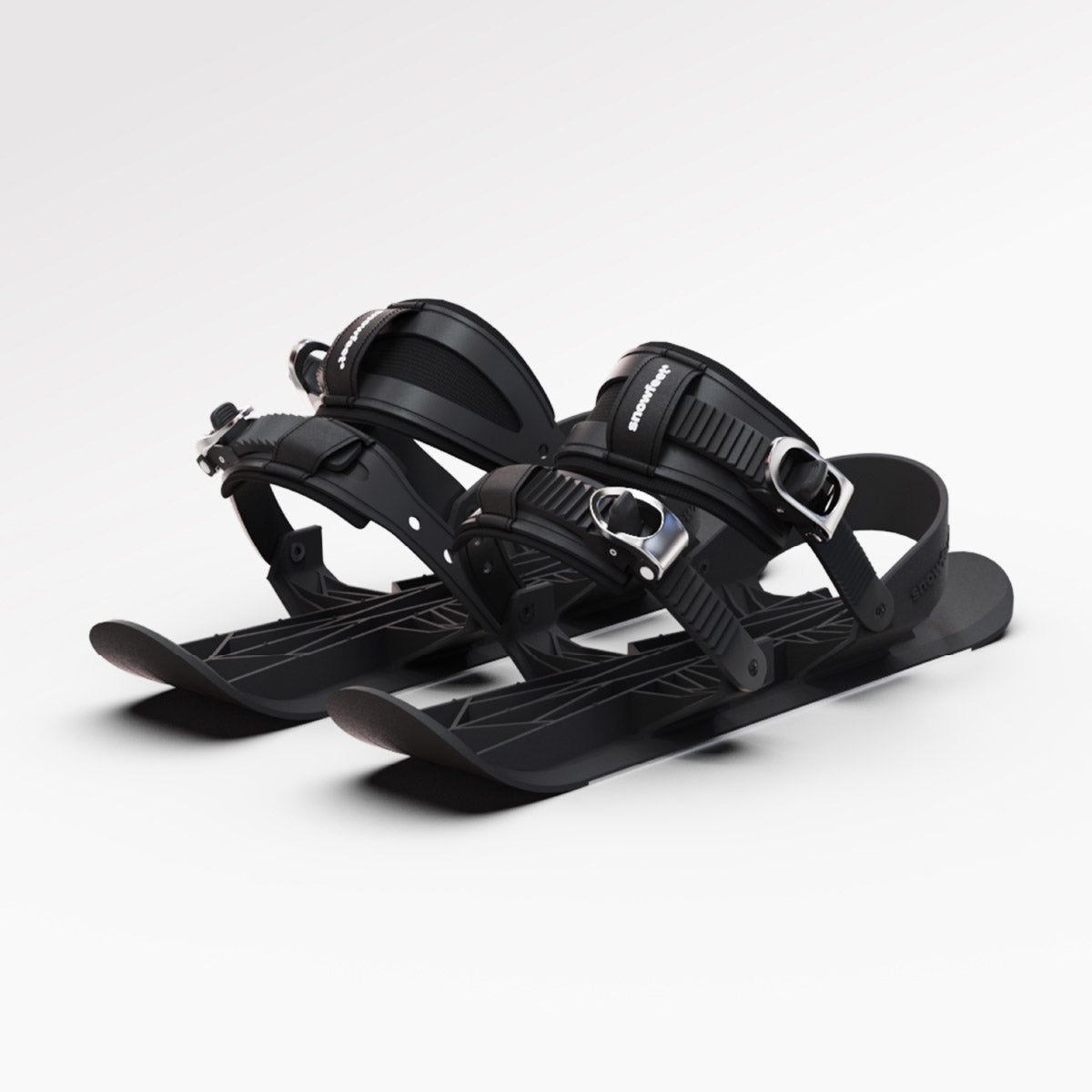
On short skis, kids can shuffle and reset their stance without moving both feet together. An instructor can use that movement to teach a braking wedge, then wedge turns. Short skis are easy to steer, but they feel less stable at speed than longer skis. Snowfeet* Skiblades 65 cm add a playful feel to that easy steering when the sizing and bindings match.
Snowboard lessons start with controlled sliding and braking on the heel-side and toe-side edges. Linking turns comes next. Edge control takes practice, but progress often picks up once both edges click.
Judge day-one success by controlled stops, not full runs. The difference in how kids learn to stop matters most when the goal is to gain control on the first day.
Getting Up After Falls and Using Lifts
Crossed ski tips can make getting up frustrating. On a snowboard, kids need to learn to set the board across the slope before standing.
Start on a magic carpet. Before riding a chairlift, snowboarders should practice skating with the back foot free and the front foot clipped in. Skiers need supervised practice loading and unloading, too.
Parents can weigh these first-day handling differences alongside fit and readiness.
Choosing Between Snowfeet* Skiblades 65 cm and a Snowboard
Beyond first-day handling, the choice comes down to fit, resort access, and your child’s comfort with the riding style.
| Decision point | Snowfeet* Skiblades 65 cm (about 25.6 inches) | Properly sized junior snowboard |
|---|---|---|
| Fit and readiness | Your child must fit the gear and follow instructions. Separate feet make it easier to reset after slips. | Your child must fit junior gear and meet the program’s minimum age. |
| Riding style and interest | Suits kids who can move each foot on its own and want playful control in beginner areas. | Suits kids ready to learn a sideways stance who want to snowboard. |
| Fit and compatibility | Boots must meet the exact binding version’s size and compatibility limits. | Junior snowboard boots must match the bindings’ size and compatibility requirements. |
| Resort acceptance | Check resort and lesson approval before buying. | Check snowboard access and find an age-appropriate lesson. |
Age matters less than how well your child can handle the stance and gear.
Age, Coordination, and Your Child's Interest
Many ski programs accept younger kids than snowboard programs. But a program’s age limit is a booking rule - not a test of whether your child is ready.
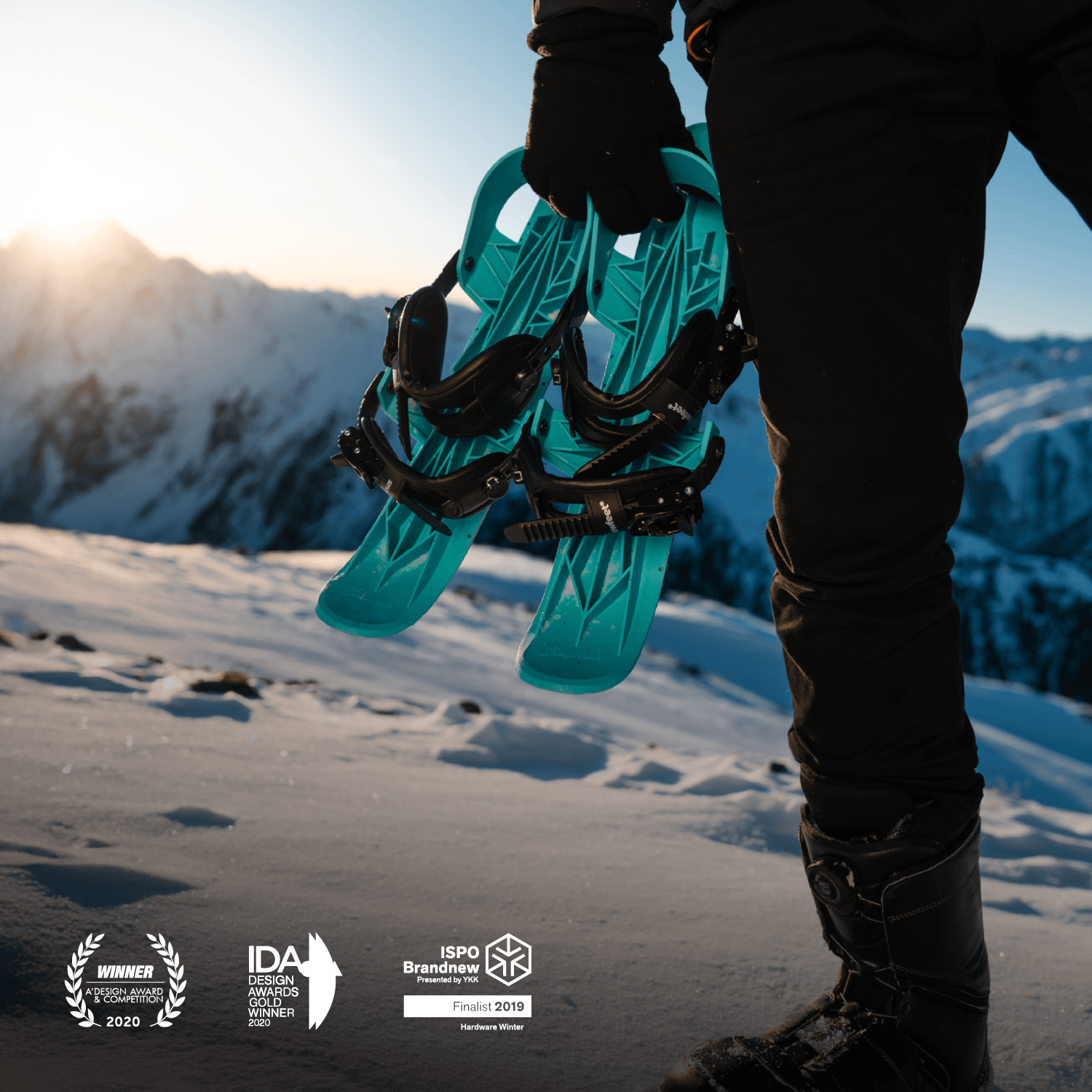
Kids who skate may feel more at home on Snowfeet* because each foot moves on its own.
Checking Boot Fit, Bindings, and Resort Rules
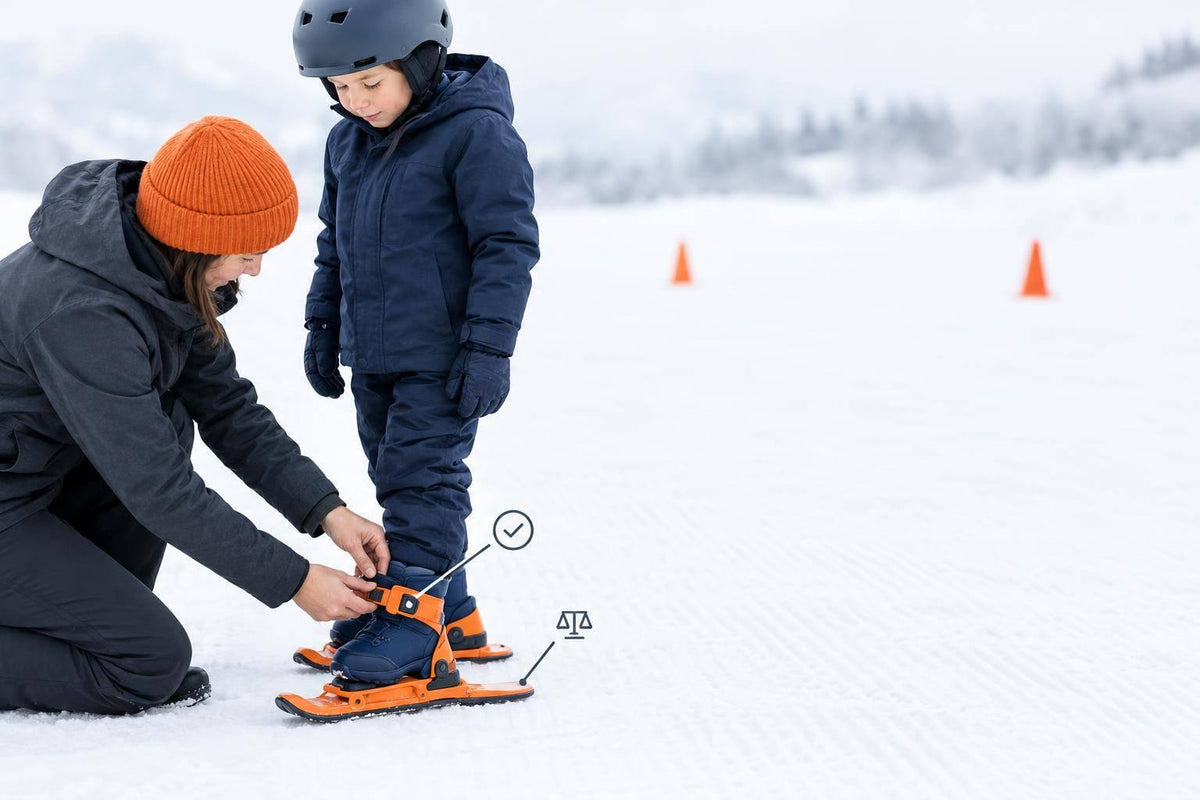
The 65-cm model fits approximate US boot sizes 4.5–14.5 with ski-boot bindings and 6–14.5 with snowboard-boot bindings. Check the exact binding version, boot size range, and adjustment limits before buying.
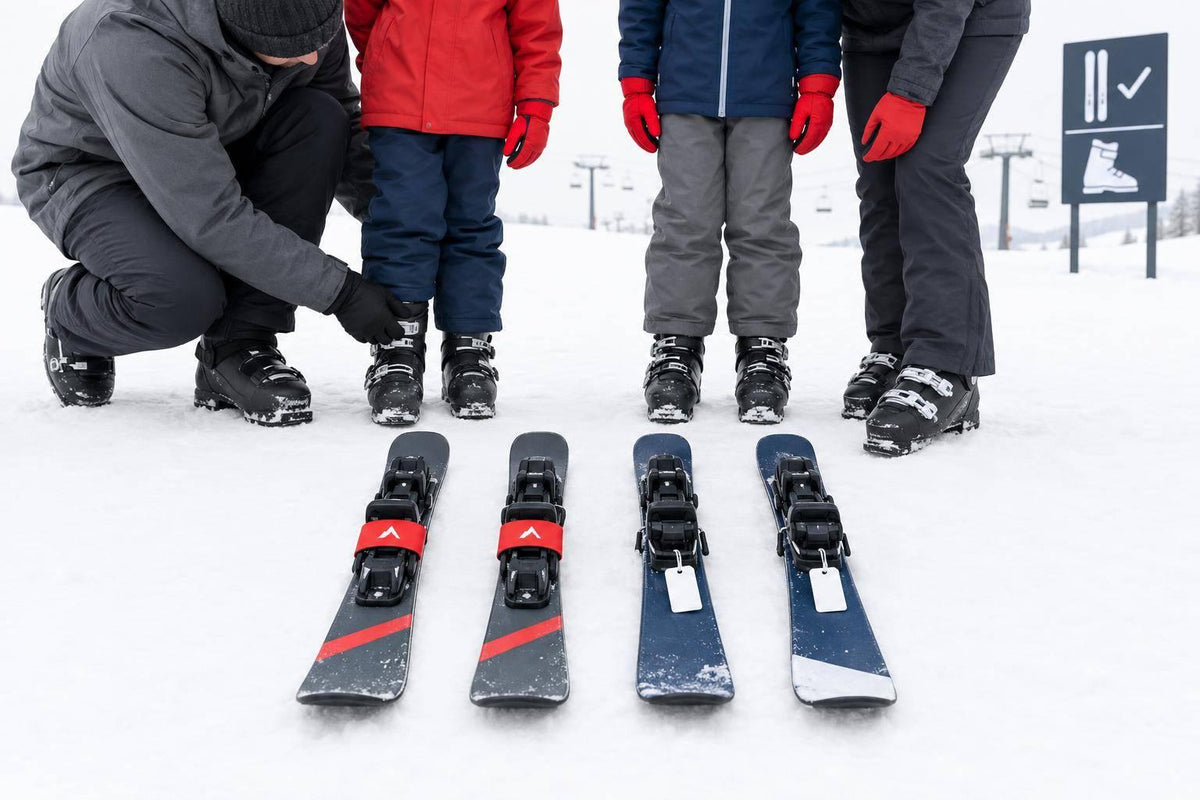
Have a qualified professional check that the boots and bindings work together and set up the bindings.
Then ask the resort and ski school whether they allow Snowfeet* Skiblades 65 cm both in lessons and on the hill. Approval for one doesn’t answer both questions.
With boot fit, binding setup, and resort approval checked, Snowfeet* can offer a simpler, more playful option for beginner terrain.
When Snowfeet* Is a Good Fit
For a child who already skates and wants playful control, Snowfeet* can be easier than snowboarding on day one - as long as the gear fits and the resort allows it.
Longer skis generally offer better stability, glide, and flotation on more demanding terrain. For beginner-area riding, Snowfeet* is the better fit when the boots, bindings, and resort rules line up.
sbb-itb-17ade95
Planning a Safe First Day
Once you’ve picked the gear, focus on control and lift readiness. The safer choice is the one your child can stop on, get up with, and handle around lifts.
Check Equipment and Learn to Stop
Before the first lesson, check boot fit, binding setup, and resort approval. Let your child try the boots at home.
Use a snow-sports helmet that fits well and goggles. Have a professional check the binding settings and, for bindings that release, test the release function.
Start with an instructor on flat snow or a gentle slope. Your child should learn to stand, glide, stop, and fall safely before adding turns. Short skis let each foot move on its own, which can make small balance corrections easier.
Stopping comes first. Getting up and preparing for lifts come next.
Practice Getting Up and Riding Lifts
Have the instructor teach your child how to get up and clear the run when it’s safe. Moving each foot on its own can help a child get up on short skis. Snowboarders need to position the board across the slope before standing.
Start with a magic carpet if one is available. Practice chairlift loading with the instructor only when your child can balance and follow lift instructions.
Keep sessions short. Stop when your child shows signs of fatigue, frustration, or loss of control. Avoid strong wind, heavy snowfall, or extreme cold.
Conclusion: Choose Short Skis When Fit and Readiness Align
Short skis are often easier than snowboarding on a child’s first day, when balance, stopping, and getting back up matter most.
Snowfeet* Skiblades 65 cm are a good choice for kids who already skate, fit the binding version, and have proper instruction - provided the resort allows them.
A snowboard is the better choice if your child prefers it, the gear fits better, or age-appropriate snowboard lessons are available. Fit comes before brand. When fit, readiness, and interest line up, Snowfeet* is the stronger starter option for most casual young riders.
FAQs
How can I tell if my child is ready for short skis?
Readiness matters more than age. Look for steady balance, the ability to stop when asked, and sliding 20–30 yards without looking stiff or nervous. Your child should also follow simple instructions. Wanting to ski and handling gear on their own are good signs, too.
Snowfeet* Skiblades 65 cm are lightweight and let each foot move on its own, which can help build confidence. Just make sure the size and bindings suit your child.
Should my child try Snowfeet* before we buy?
Yes. Trying Snowfeet short skis first* can help you decide if their light, compact design fits your child’s needs. Models like MINI KIDS or Skiskates let kids move naturally, help keep tips from tangling, and make it easier to get up after a fall. Their playful feel can also help kids build confidence and independence.
Professional lessons and proper safety gear still matter for a safe start.
Can short-ski skills help my child learn snowboarding later?
Yes. Short skis can help your child build balance, coordination, and confidence on snow. Those skills can make snowboarding easier to learn later.
Snowfeet short skis use a natural, forward-facing stance. This can help kids learn to glide, turn, and stop with less frustration than on a snowboard. Practicing weight shifts and speed control can also help when they switch to a snowboard’s sideways stance.


Efterlad en kommentar
Denne side er beskyttet af hCaptcha, og hCaptchas Politik om beskyttelse af persondata og Servicevilkår er gældende.