




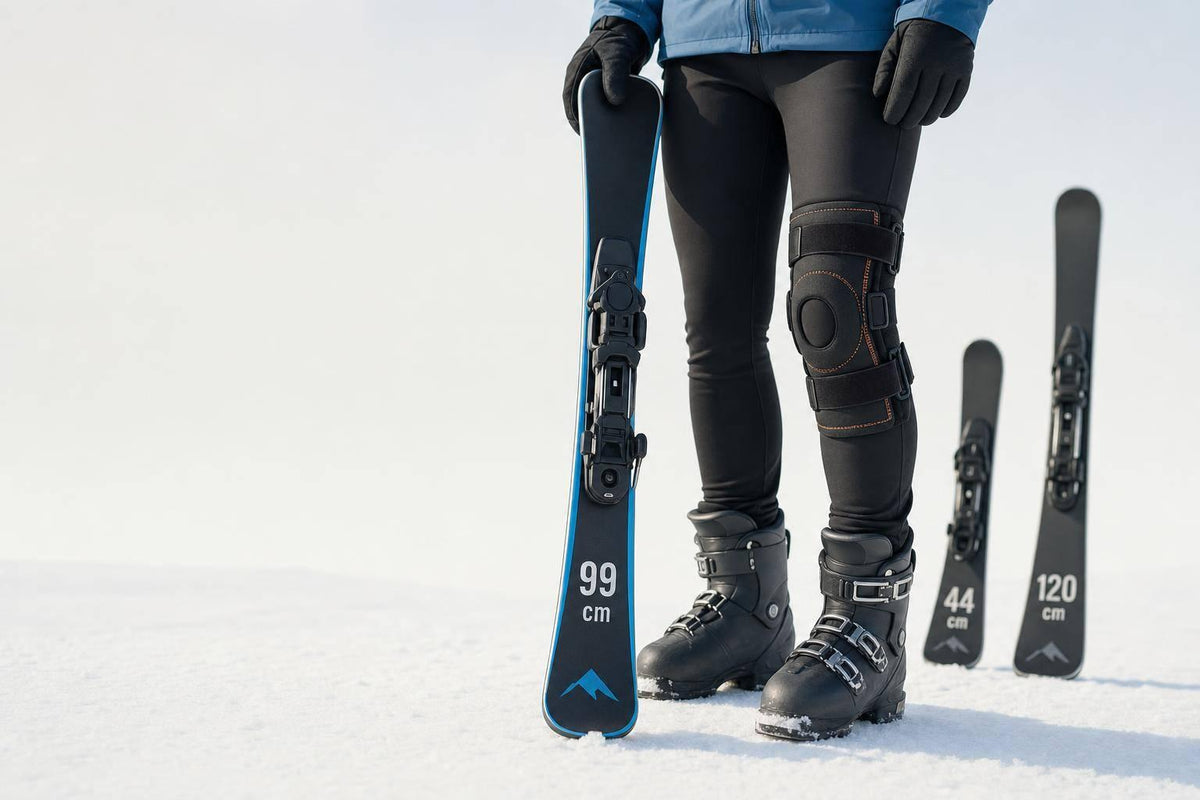
If I had to keep it simple: most riders coming back after a knee injury should start by looking at the 99 cm Skiblades first. They strike the best balance of control, stability, and ease on groomed runs. If you want the steadiest short-ski feel, I’d point you to the 120 cm. If you want the smallest setup, the 65 cm and 44 cm Skiskates are more nimble, but they ask more from your balance.
Before any gear talk, I’d put this front and center: get medical clearance first. No ski setup fixes swelling, buckling, sharp pain, or poor leg strength. And no, shorter skis don’t automatically mean less stress on your knee. They can feel less scary at slow speed, but the shortest options can also feel more twitchy.
Here’s the short version:
- Best all-around pick: 99 cm Skiblades
- Best for the most stable short-ski ride: 120 cm Skiblades
- Best for tight, low-speed turns: 65 cm Skiblades
- Best for compact, casual laps only: 44 cm Skiskates
- Best terrain for all four: groomed green runs and easy blue runs
- First-day target: 30 to 60 minutes, then stop and see how your knee feels the next morning
Snowfeet* Snowblades | Skiboards | Skiblades | Short Skis - Complete Guide | All you need to know
Quick Comparison
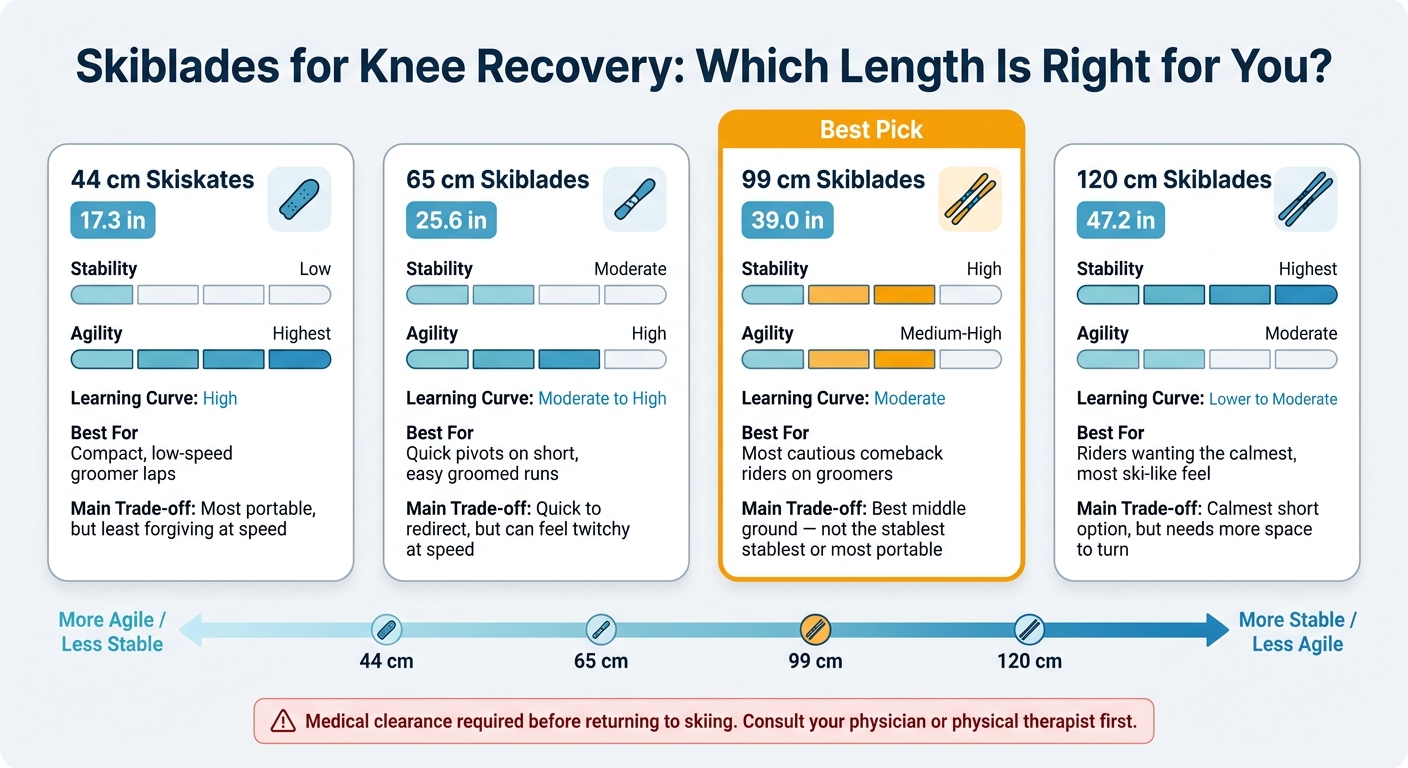
Skiblades for Knee Recovery: Side-by-Side Comparison Guide
| Model | Best for | Stability | Agility | My take |
|---|---|---|---|---|
| 44 cm Skiskates | Very short, casual groomer laps | Low | High | Fun, tiny, but least forgiving |
| 65 cm Skiblades | Short, easy runs and fast direction changes | Medium | High | Less intimidating, but can feel twitchy |
| 99 cm Skiblades | Most comeback riders | High | Medium-High | Best middle ground |
| 120 cm Skiblades | Riders who want the calmest feel | Highest | Medium | Closest feel to a regular ski |
A few things matter more than length alone:
- Binding setup matters a lot. Some short-ski setups don’t release like standard alpine bindings.
- Smooth snow matters. Firm groomers are a much better call than chopped-up snow, bumps, or powder.
- Your body matters most. If you can’t do single-leg balance, squats, and step-downs without pain, I wouldn’t rush it.
So, if you’re cleared to ski and want the safest feel in this group, I’d start with the 99 cm or 120 cm. They track better, feel calmer, and give you more room for small mistakes. That’s a nice thing to have when your knee is saying, “Hey, let’s not do anything dumb today.” :)
1. Snowfeet* Skiblades 65 cm
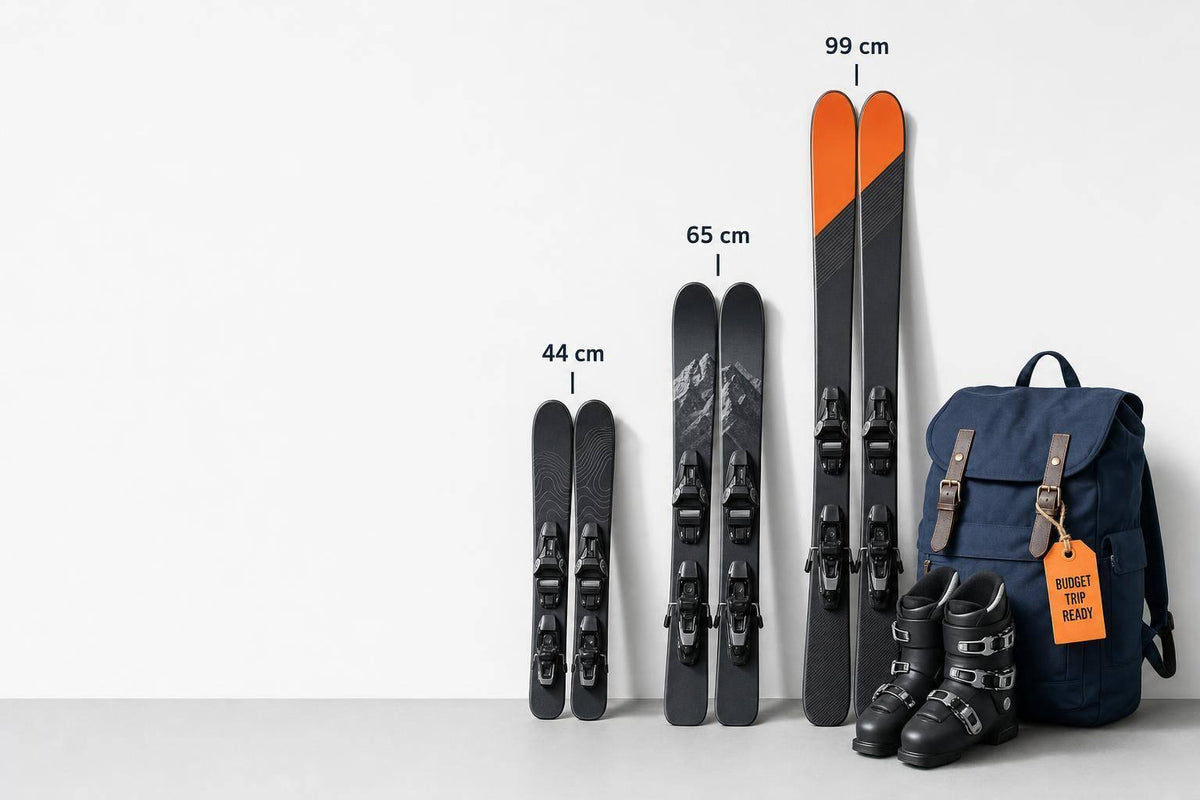
At 65 cm, these are the shortest skiblades in the lineup. That gives them a compact feel that's easy to manage at slow speeds and in tight turns. There’s less ski in front of your boot and less behind it, so direction changes feel quick and snappy. The 4 m turning radius helps a lot here too, with fast turns that need very little rotation.
The shape is pretty compact across the board. The tip and tail are about 4.3 inches wide, and the waist is 3.7 inches. The raised twin tips let you ride forward or backward. You can get bindings for:
- Ski boots: US sizes 4.5–14.5
- Snowboard boots: US sizes 6–14.5
One thing to watch: some setups do not release like standard alpine bindings. That matters, big time. Have a ski shop check the setup before your first day on snow. Weight depends on the binding setup. The pair comes in at about 3.8 pounds with ski bindings or 5.9 pounds with snowboard bindings, so it’s smart to confirm the exact build before you buy.
For early comeback laps, keep it simple. Stick to groomed green runs or easy blue runs, ski at low speed, and skip bumps, ice, deep snow, jumps, and steep terrain. If pain, swelling, or instability picks up, stop and get checked by a clinician.
There is a trade-off here. The short length makes these skiblades quick, but it can also make them feel twitchy if your movements get abrupt. They work best with smooth edging and calm speed control, not sudden twisting or hard pivots. Think steady hands, light touch. A rider coming back after injury needs good balance and enough control to handle a very reactive ski.
They’re also not automatically easier on the knee than a longer ski. The give-and-take is less fore-aft stability and less flotation. So, while the short size can feel less intimidating, it doesn’t mean it’s the safe button.
If you like the easy-turn feel but want more fore-aft stability, the 99 cm model is the next step up. The 65 cm version fits medically cleared riders who can already walk, climb stairs, and balance without pain or instability, but want the most compact option for short resort laps.
2. Snowfeet* Skiblades 99 cm
The 99 cm Skiblades make sense for experienced skiers coming back after a knee injury who want more stability than the 65 cm, but don’t want the size and feel of a full-length ski. Think of them as the middle ground: less twitchy, more settled, and still way easier to handle than a standard ski.
On snow, that usually means more calmness at speed and a bit more confidence when the trail opens up.
The standard model measures about 11.5 cm at the tip, 8.5 cm at the waist, and 11 cm at the tail, with a 6 m turning radius and about 5 cm of tip and tail rise. It also uses a camber profile that helps with control and carving.
Before you order, check your boot setup. The 99 cm comes in both ski-boot and snowboard-boot versions, so the binding needs to match your boots.
This model still asks for decent fundamentals. It’s not a free ride if your legs and timing are rusty. For the first few runs, stick to short, wide groomed greens or easy blues. That gives you room to feel how the skiblades respond without getting in over your head.
Who should choose a different model: If you want the smallest, easiest option for very low speeds, the 65 cm or 44 cm Skiskates are simpler to handle. If you want more stability at moderate speed and longer, smoother arcs, the 120 cm is a better fit. The 99 cm sits right in the middle. It blends quick handling with steadier tracking, which makes it a good pick for an experienced returnee who wants less ski than a standard setup without giving up too much directional stability.
Next comes the 120 cm, which gives up some agility for a steadier, more ski-like ride.
sbb-itb-17ade95
3. Snowfeet* Skiblades 120 cm
At 120 cm (about 47 inches), this is the longest model in this group. It feels the most stable and the most like a regular ski in the Snowfeet* lineup, but it’s still shorter and easier to handle than full-length skis. That said, more length doesn’t automatically make it safer. Your strength, balance, and ability to stop matter a lot more. If you want a familiar ski-like feel without going all the way back to full-length skis, the 120 cm is the most forgiving short-ski option in the lineup.
The shape helps too. With dimensions of about 10.9 cm tip, 7.8 cm waist, and 9.9 cm tail, it gives you a solid platform underfoot. The 8 m turning radius and camber-rocker profile help it carve more smoothly on groomed runs. So, if the 99 cm feels a bit too twitchy and you want more calm on snow, this is the next step up without leaving short skis behind.
Still, this model asks more from the rider than the 65 cm or 99 cm. It’s built for carving and more speed, which can nudge you into skiing faster than a healing knee may want early on. That’s where people get in trouble. You need clean technique, steady stopping, and actual leg strength, not just confidence on a good day. Before using these, you should already be able to do the following without pain:
- Single-leg balance
- Squats
- Step-downs
- Lateral movements
The binding system uses release ski bindings for ski boots in Mondo 26–36.1. So yes, this is a ski-boot setup. Have a ski shop set the release values based on your height, weight, age, boot sole length, and ability. After a knee injury, those settings can make a big difference in a fall.
Who should pick a different model: If you’re still working on basic balance, prefer very low speeds, or want the least demanding option, the 65 cm or 99 cm will likely feel easier. The 120 cm makes the most sense for a medically cleared intermediate skier who wants the most stable short-ski feel without going back to full-length skis. If you want something even smaller and more playful, the 44 cm Skiskates come next.
4. Snowfeet* Skiskates 44 cm
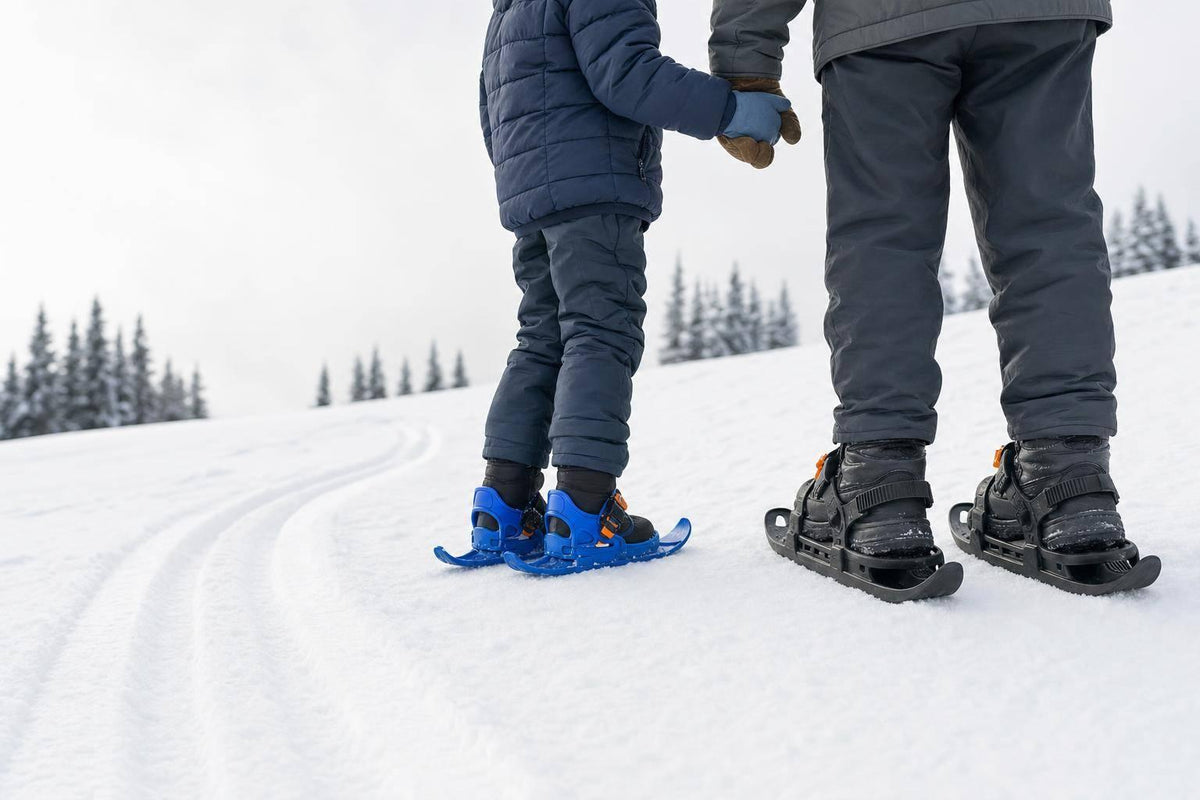
Compared with the 65 cm and 99 cm skiblades, the 44 cm Skiskates give up some stability for one big win: portability. At 44 cm (17.3 inches), they’re the shortest option in this comparison. They’re small enough to fit in many backpacks and weigh about 3.5 lb (1.6 kg). If you’re getting back on snow and feeling a little hesitant, that easy-to-carry setup can make the whole thing feel less intimidating. In this lineup, they’re the most compact, the least ski-like, and the most focused on agility.
For such a small platform, the build is solid: wood core, steel edges, a sintered base, and a durable topsheet. The bindings are adjustable and tool-free, and a safety leash is included. You can get them in:
- A ski-boot version for US sizes 4.5–14.5
- A snowboard-boot version for US sizes 6–14.5
If you already ride in snowboard boots, the snowboard-boot version can save you from buying new boots. Just double-check your boot type and size before you order, because the two binding versions are not interchangeable.
On snow, these feel more like skating than skiing. That’s the whole point. User feedback points to secure attachment, easy adjustment, and that skate-like ride feel. One reviewer said the Skiskates worked well on firm snow but were harder to control in soft snow or deep powder. So, for someone returning after knee rehab, they make the most sense on firm, groomed green runs.
There is a catch, though. The very short platform asks a lot from your balance. A sudden edge catch or awkward twist can still happen fast. That means a careful start matters:
- Stick to short laps on groomers
- Stop right away if you feel pain, swelling, or instability
Who should pick a different model: If your top goal is stability, easy speed control, or more confidence when snow conditions change, the 65 cm or 99 cm Skiblades will probably feel more steady underfoot. The 44 cm Skiskates fit best for a medically cleared rider who already feels okay with balance-heavy movement and wants a compact, low-speed option for casual groomer laps. Current listings put them at about $460 to $490, depending on the binding setup and seller. Smallest and easiest to carry, but also the least forgiving once you’re moving.
Trade-Offs and Pros & Cons for All Four Models
This table looks at on-snow feel only. It does not cover medical safety. So use it to compare how each model rides, and let medical clearance come first.
Here’s the fastest side-by-side view.
| Model | Length | Best for | Stability | Agility | Learning curve | Main trade-off |
|---|---|---|---|---|---|---|
| Skiblades 65 cm | 25.6 in | Quick pivots on groomers | Moderate | High | Moderate to high | Quick to redirect, but less stable at speed |
| Skiblades 99 cm | 39.0 in | Cautious comeback riders on groomers | High | Moderate–High | Moderate | Best middle ground, but not the stablest or most portable |
| Skiblades 120 cm | 47.2 in | Most stable short-ski feel | Highest | Moderate | Lower to moderate | Calmest short option, but needs more space to turn |
| Skiskates 44 cm | 17.3 in | Compact, low-speed groomer laps | Lower | Highest | High | Most portable and quickest to pivot, but least forgiving at speed |
The pattern is simple: shorter models pivot faster, while longer models track better and feel calmer as speed climbs or snow gets rough.
Now let’s break it down.
65 cm Skiblades - These are the quickest to redirect. Fun, snappy, and easy to whip around on groomers. The catch? They can feel twitchy underfoot once speed starts to build.
99 cm Skiblades - This is the best middle ground for a cautious comeback rider. You get a nice blend of tracking and maneuverability without going too far in either direction.
120 cm Skiblades - These feel the calmest of the short-ski options. If stability matters most, this model gives the most confident feel on groomers and asks for less adjustment from the rider.
44 cm Skiskates - These are the most compact and the easiest to carry. They pivot in a blink, which is fun at low speed. But they also take the most adjustment and feel the least forgiving once you’re moving.
Where long skis still win: On steep, icy, or chopped-up terrain, traditional long skis outperform all four models with better damping, flotation, and directional stability at speed. For groomer-focused, low-speed comeback days, all four Snowfeet* options are the more practical choice.
The verdict below narrows the choice by rider confidence, terrain, and recovery stage.
Final Verdict and Return-to-Snow Checklist
Medical clearance comes first. After that, skiblade length changes the way the ski feels on snow.
Here’s the simple version:
- Shorter skis pivot with less effort
- Longer skis track in a steadier way
- Short skis often feel less intimidating
- They also make slow-speed turns easier
With those trade-offs in mind, here’s the plain-English model pick:
- Most cautious comeback riders: Start with the Snowfeet Skiblades 99 cm. This is the best default for most cautious comeback riders.
- Riders who want calm, predictable tracking: Go with the 120 cm Skiblades. They’re the best pick if you want the calmest short-ski feel.
- Experienced riders wanting quick pivots on short, easy runs: Choose the 65 cm Skiblades. Best for quick pivots on short, easy runs.
- Low-speed recreational use only: Pick the 44 cm Skiskates. Best only for casual, low-speed use.
A prescribed brace can help during rehab. But it doesn’t replace strength, balance, range of motion, or medical clearance. That part still matters most.
Once you’ve picked a model, run through this checklist before your first lap:
- ✅ Medical clearance confirmed with your physician or physical therapist
- ✅ No active symptoms - no swelling, sharp pain, instability, locking, or difficulty bearing weight
- ✅ Function restored - near-full range of motion, adequate leg strength, single-leg balance, and controlled squats and step-downs; for ligament injuries, your clinician may check for roughly 90% side-to-side strength symmetry
- ✅ Equipment inspected - bindings professionally adjusted for your current height, weight, boot, and ability; properly fitted boots and a certified helmet
- ✅ Easy terrain only - wide, groomed beginner runs with low traffic; no ice, moguls, or steep pitches
- ✅ Short first session - 30–60 minutes with breaks, not a full ski day
- 🛑 Stop immediately if pain, swelling, buckling, locking, or movement changes return
If swelling or soreness shows up the next morning, that session was too much. Back off, rest, and check in with your clinician before heading out again.
FAQs
How do I know whether 99 cm or 120 cm is better for my knee recovery?
It depends on your recovery goals and how you plan to ski. The good news: both options are easier on the knees than old-school 150–180 cm skis, because they cut down on leverage and twisting force.
99 cm is the best all-around pick for most riders. It gives you a nice mix of stability and agility.
120 cm is a better fit if you want more support, more stability, and a feel that’s closer to traditional skis.
Are skiblades safer than regular skis after a knee injury?
Often, yes. For cautious comeback riders, skiblades can feel safer than long skis.
Why? They put less leverage and twisting force on the knees. They’re also lighter and easier to control. That can help cut down on hard impacts and lower your fall risk, which is a big deal when you’re getting back out there.
Snowfeet* generally recommends:
- 99 cm or 120 cm for steadier comeback days
- 44 cm for maximum joint relief, but with less stability at speed
Get medical clearance first.
What bindings should I choose for the best knee protection?
For the best knee protection, go with a setup that cuts down on leverage and twisting. For a lot of riders, Snowfeet 120 cm Skiblades* are the safest pick because their standard alpine release bindings are built to release during twisting falls.
If you like snowboard boots, that setup gives you more natural ankle movement and a softer, lower-stress feel. But when we’re talking about fall-specific protection, release bindings on the 120 cm model have the clear edge.











Efterlad en kommentar
Denne side er beskyttet af hCaptcha, og hCaptchas Politik om beskyttelse af persondata og Servicevilkår er gældende.