




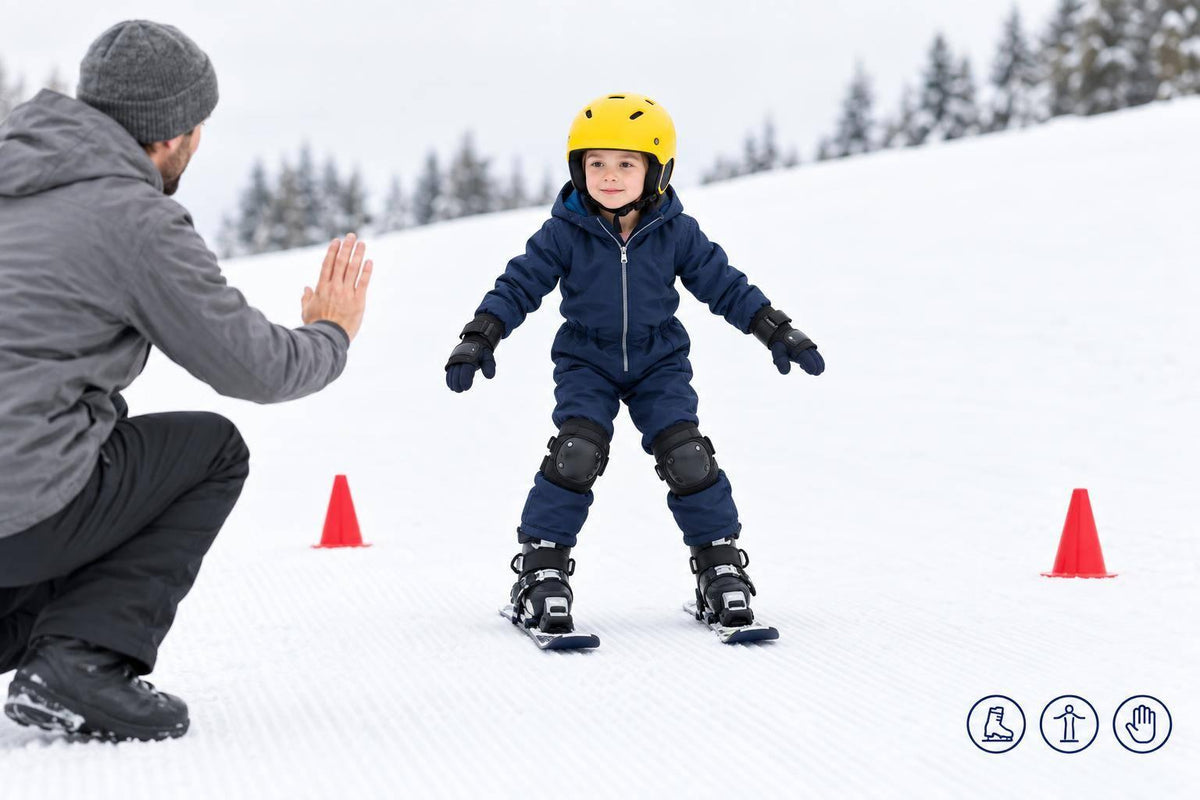
Mini ski skates can get too fast for little kids - but short skis don’t set the speed. My advice: start on flat, groomed snow and hold off on downhill runs until your child can balance, turn, and stop.
Here’s what I’d check before that first glide:
- Control: Short skates can turn with ease, but stopping takes practice. Small doesn’t mean slow.
- Fit: The 15-inch Snowfeet* MINI KIDS fits U.S. kids’ shoe size 10 through adult size 6. Check the current model’s boot and brake details before buying.
- Terrain: Choose clear, quiet snow with a long, flat runout. Skip steep slopes and powder deeper than about 4 inches.
- Safety: Use a well-fitted snow-sport helmet, check the straps, and keep an adult close.
- Equipment: I’d check MINI KIDS first for small feet and snow play. Skiskates and PRO need their own fit checks. Longer kids’ skis are a better choice for lessons and steadier glides.
My rule: <u>stopping comes before speed</u>. If your child can’t stay in control - or feels tired, cold, or scared - it’s time for a break.
Mini Ski Skates vs. Kids’ Skis: Fit and Control
How Kids Control Speed on Mini Ski Skates
Why Mini Ski Skates Can Feel Fast
Kids can control their speed once they learn how these short skis respond. Mini ski skates call for active front-to-back balance, much like ice skating or inline skating. Their short length can make stopping harder at first.
Metal edges help kids carve through packed or icy snow, but they still need braking skills to slow down. So, beginners should practice balance and stops before picking up speed.
Practice Balance, Turns, and Stops First
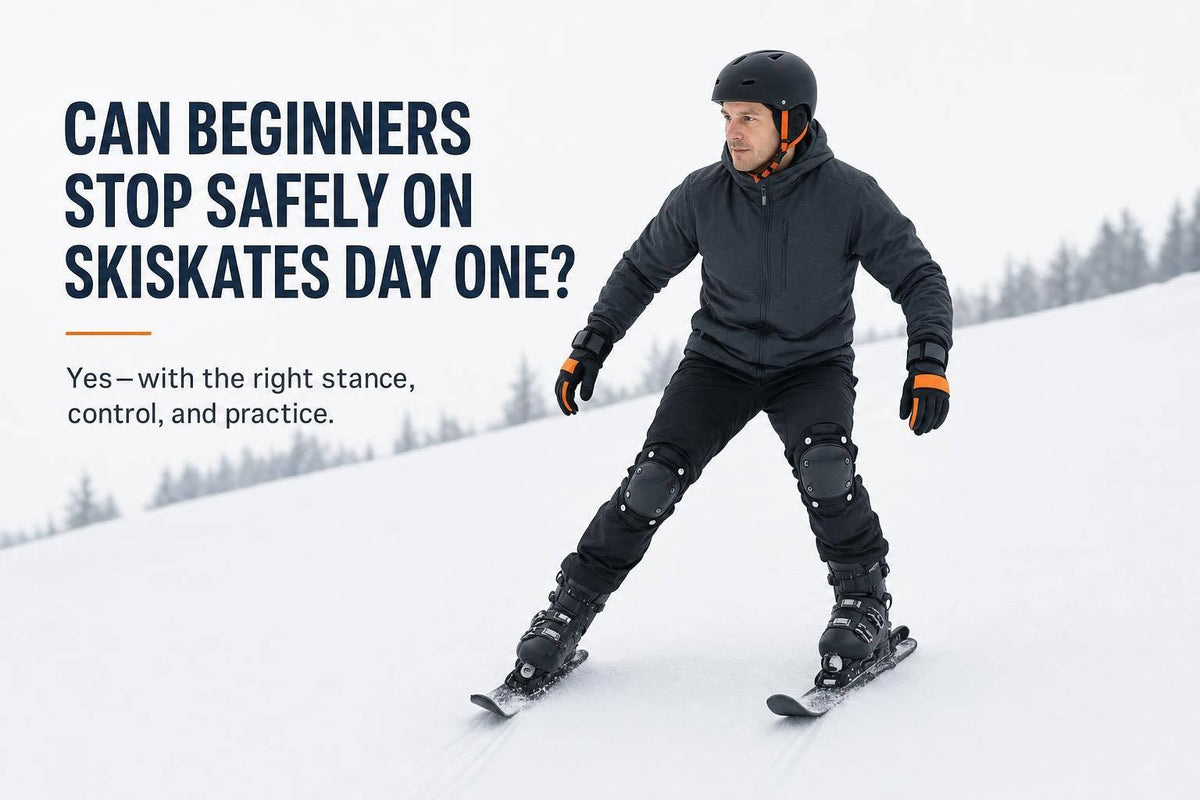
Start on flat or nearly flat groomed snow. Practice standing balance, gentle turns, and stopping. Follow the instructions for the specific Snowfeet* model. Kids should learn a hockey stop with their weight centered over both skates.
The MINI KIDS model helps make those first steps easier. It includes a built-in heel brake for beginners who need easier speed control.
Choose Gentle Terrain and Close Supervision
Start on Flat Snow or a Gentle Beginner Slope
Mini ski skates aren’t too fast by default. But the slope can let your child pick up more speed than they can control. Start on flat, groomed snow or a very gentle beginner slope with clear views, light traffic, and a long, flat runout. Stay away from deep powder, trees, jumps, blind crests, and slopes that end near roads, ponds, or other hazards.
If your child can’t stay in control, move to flatter snow. Stop for the day if the slope gets icy, crowded, or hard to read. If a slope is too difficult, the American Academy of Pediatrics advises:
Remove the equipment and side-step down rather than attempt an uncontrolled descent.
Once your child can stay in control on gentle snow, you can match the right Snowfeet* model to their size.
Check Fit, Helmet, and Adult Supervision
Safe terrain is the starting point. Proper fit and close adult supervision matter, too.
Use a ski or snowboard helmet that fits your child well. Seattle Children’s recommends:
Recognized snow-sport standards such as ASTM F2040.
Before each session, check that the footwear is compatible. Inspect straps, bindings, fasteners, and edges, following the manufacturer’s instructions.
Keep an adult close enough to step in right away, before your child loses control. Practice stopping where others can see you, never below a blind crest. Check uphill before entering a trail.
End the session if your child is cold, tired, scared, or having trouble with their equipment. With these checks in place, you can choose the Snowfeet* model that fits your child best.
Snowfeet* & Skiskates Tutorial - How to Become a PRO Skiskater
sbb-itb-17ade95
Compare Snowfeet* Options and Longer Kids' Skis
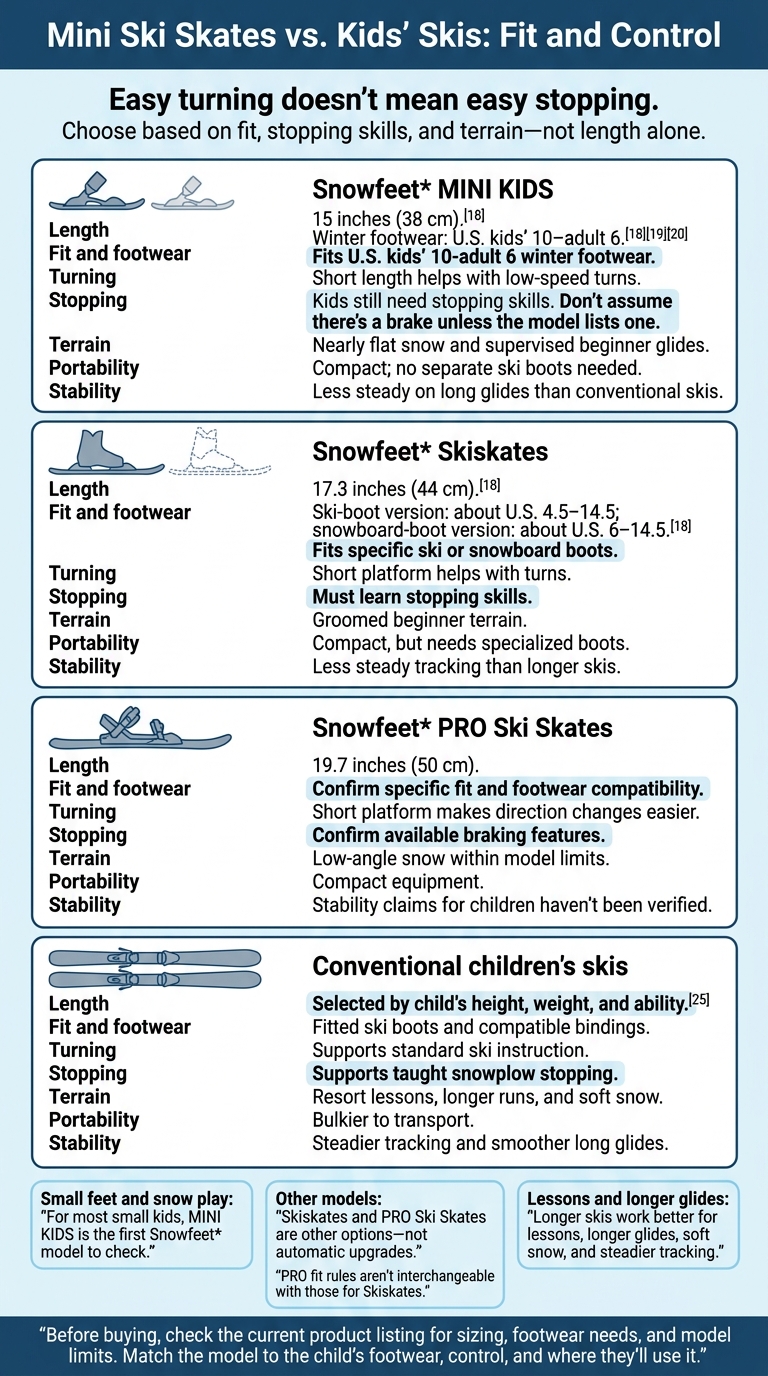
Easy turning doesn’t mean easy stopping. Choose based on fit, stopping skills, and terrain - not length alone. Before buying, check the current product listing for sizing, footwear needs, and model limits. Match the model to the child’s footwear, control, and where they’ll use it.
| Option | Length | Fit and footwear | Turning | Stopping | Terrain | Portability | Stability |
|---|---|---|---|---|---|---|---|
| Snowfeet* MINI KIDS | 15 inches (38 cm). | Winter footwear: U.S. kids’ 10–adult 6. | Short length helps with low-speed turns. | Kids still need stopping skills. Don’t assume there’s a brake unless the model lists one. | Nearly flat snow and supervised beginner glides. | Compact; no separate ski boots needed. | Less steady on long glides than conventional skis. |
| Snowfeet* Skiskates | 17.3 inches (44 cm). | Ski-boot version: about U.S. 4.5–14.5; snowboard-boot version: about U.S. 6–14.5. | Short platform helps with turns. | Kids must learn stopping skills. | Groomed beginner terrain. | Compact, but needs specialized boots. | Less steady tracking than longer skis. |
| Snowfeet* PRO Ski Skates | 19.7 inches (50 cm). | Confirm the size range and which footwear fits. | Short platform makes direction changes easier. | Confirm braking features. | Low-angle snow within model limits. | Compact equipment. | Stability claims for children haven’t been verified. |
| Conventional children's skis | Selected by height, weight, and ability. | Fitted ski boots and compatible bindings. | Supports standard ski instruction. | Supports taught snowplow stopping. | Resort lessons, longer runs, and soft snow. | Bulkier to transport. | Steadier tracking and smoother long glides. |
For most small kids, MINI KIDS is the first Snowfeet* model to check.
Snowfeet* MINI KIDS for Small Feet and Snow Play
MINI KIDS suits children with small feet who are starting with supervised snow play. It attaches to ordinary winter shoes or boots, so there’s no need for specialized ski boots.
Other Snowfeet* Models for Kids Who Meet Fit Requirements
Skiskates and PRO Ski Skates are other options - not automatic upgrades. Skiskates suit children who fit the ski-boot or snowboard-boot version. Consider PRO only if the child meets that model’s footwear and sizing requirements. Its fit rules aren’t interchangeable with those for Skiskates.
When Longer Children's Skis Are a Better Fit
Snowfeet* fits casual, low-speed use. Longer skis work better for lessons, longer glides, soft snow, and steadier tracking.
Conclusion: A Parent's Go-or-Wait Checklist
Mini ski skates aren’t too fast by default. Fit, terrain, and control come first. Use this checklist to decide whether your child is ready or needs more time.
- Go: Check the fit at home using the boots your child will wear. Start on flat snow if the fit is secure.
- Wait: Hold off on downhill runs until your child can balance, turn, and stop reliably. Focus on control, not speed. Avoid deep powder and steep, ungroomed slopes.
- Choose: If your child can balance, turn, and stop, check Snowfeet* MINI KIDS first for casual, low-speed learning. For higher-speed resort use, choose longer kids’ skis for the stability that ski boots and a longer base provide.
FAQs
How can I tell if my child is ready for mini ski skates?
Readiness comes down to balance and control - not age. They should be able to stand on one foot for 5–10 seconds, squat and stand back up with ease, and follow instructions to stop. On gentle, groomed slopes, look for consistent stops, confident turns, and comfortable gliding over 20–30 yards.
If they seem stiff, nervous, or unsteady, choose simpler, shorter options like Snowfeet MINI KIDS. Check that their boots fit snugly, their bindings are secure, and they wear a certified snow sports helmet.
Does skating experience help kids learn mini ski skates?
Yes, skating, inline skating, or hockey experience can help kids learn mini ski skates much faster. Snowfeet* products use similar movements and balance skills, so kids who know these sports often have an easier time shifting their weight, controlling their edges, and staying centered without stiffening up.
That skate-like feel can make learning on snow less intimidating - and more like a fun activity they already know.
How can I safely teach my child to stop?
Start on flat ground, then move to a gentle bunny hill. Match the stop to the gear:
- Snowfeet MINI KIDS and 44 cm (about 17.3-inch) Skiskates are too short for a wedge stop. Teach a gentle skid stop: turn the feet across the slope and press into the downhill edges.
- 65 cm (about 25.6-inch) Skiblades: Teach a wedge with the tips together.
Once your child masters that stop, move on to hockey stops. Keep sessions short and stay within arm’s reach. Use this cue:
“look where you want to go.”











Zanechte komentář
Tento web je chráněn službou hCaptcha a vztahují se na něj Zásady ochrany osobních údajů a Podmínky služby společnosti hCaptcha.