



















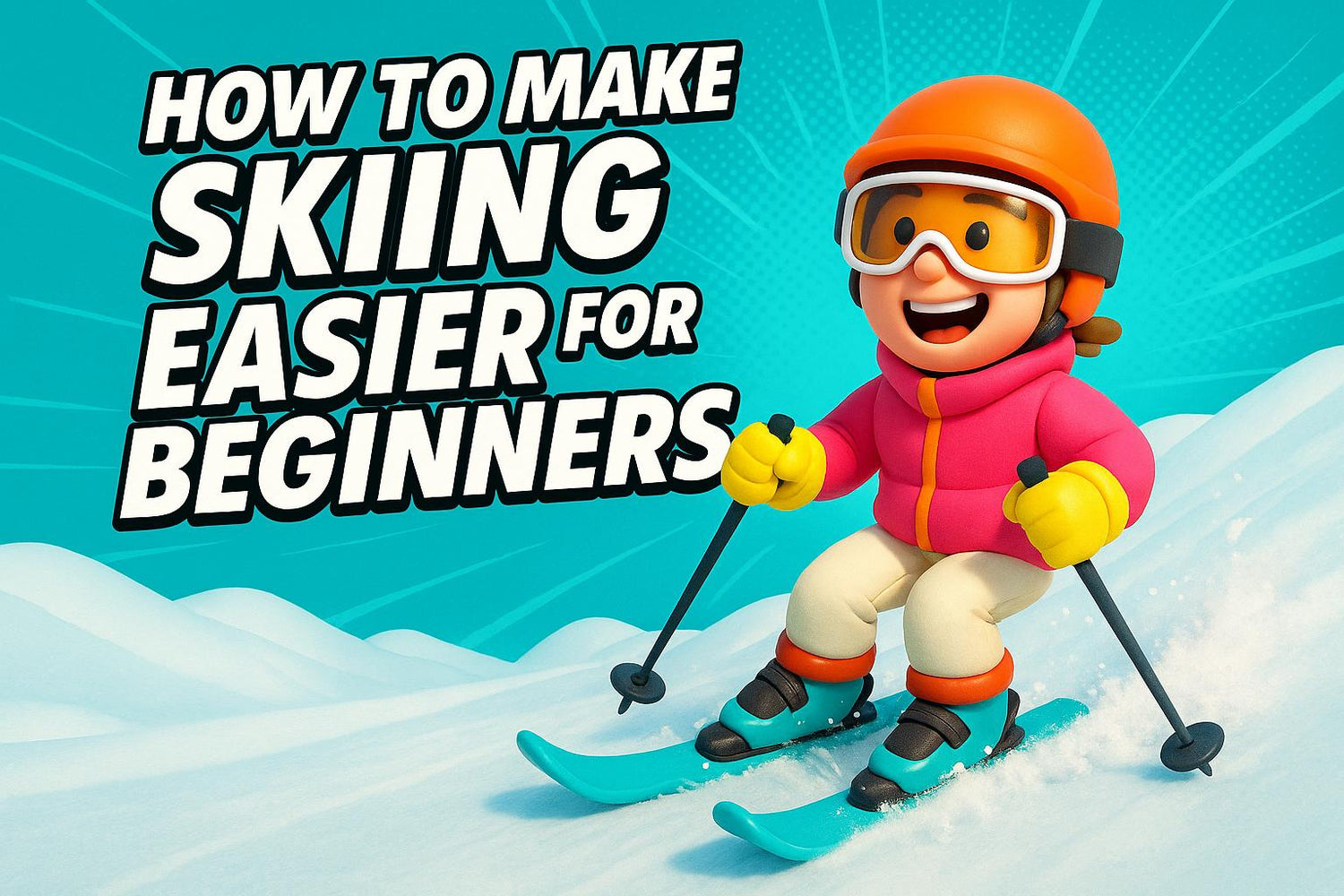
Skiing for the first time? It can be tricky, but the right gear makes a huge difference. Shorter skis, like Snowfeet products, can help you feel more in control and confident. They’re lightweight, easy to carry, and work with your regular winter boots - no bulky equipment or expensive rentals needed. Plus, they’re perfect for beginner slopes and learning the basics like turning and stopping.
Here’s a quick breakdown to get started:
- Shorter Skis = Better Control: Options like Snowfeet Skiskates (17") or Skiblades (26") are easier to handle than long skis.
- Comfortable Boots: Use your own winter boots - no need for stiff, pricey ski boots.
- Lightweight & Portable: Fits in a backpack, making them easy to transport.
- Beginner-Friendly: Perfect for gentle slopes and quick learning.
Want to make skiing fun from day one? Start with gear that works for you, not against you. Let’s dive into how Snowfeet can simplify your first days on the slopes. :)
How to Start Skiing | 15 Beginner Questions Answered
Pick the Right Gear for Beginners
Starting out with the right gear can make or break your skiing experience. The right setup helps you focus on learning instead of struggling with clunky equipment. Let’s dive into how smart gear choices can set you up for a smoother ride on the slopes.
Use Shorter Skis for Better Control
Shorter skis are a game-changer for beginners. They’re easier to handle and more responsive, giving you better control as you learn. While traditional skis typically range from 59 inches (150 cm) to over 79 inches (200 cm), Snowfeet* offers much shorter options - between 17 inches (44 cm) and 47 inches (120 cm).
For your first runs, Snowfeet* Skiskates (17 inches/44 cm) are a fantastic choice. They feel a bit like ice skates on snow, giving you immediate feedback with every move. You can pivot, stop, and turn easily without worrying about a long tail catching in the snow. As you gain confidence, Snowfeet* Skiblades (26 inches/65 cm) strike a nice balance between stability and agility. For those ready to tackle more varied terrain, the 39-inch (99 cm) and 47-inch (120 cm) Skiblades offer more versatility while still being much shorter than traditional skis.
Another bonus? Shorter skis are lighter, so you’ll spend less energy wrestling with your gear and more time focusing on improving your skills.
Choose Comfortable Boots
Let’s talk boots. Comfortable footwear is a must for beginners. Renting ski boots can cost $30–$50 a day, while buying traditional boots can set you back anywhere from $200 to $600. But here’s the good news: Snowfeet* gear works with your regular winter boots, saving you both money and hassle.
If you already own warm, insulated boots with solid ankle support, you’re good to go. Snowfeet* gear comes with adjustable bindings that fit various boot types, ensuring a snug and secure fit. This means no stiff, uncomfortable ski boots or lengthy break-in periods - just comfort and convenience from the start.
Carry Your Gear Easily
Traditional skis can be a pain to transport. They’re long, heavy, and often don’t fit in a car trunk without folding down a seat. Plus, lugging them from the parking lot to the lodge can feel like a workout before you even hit the slopes.
Snowfeet* products solve this problem with their compact, lightweight design. The 17-inch Skiskates fit easily into a standard backpack, and even the 47-inch Skiblades are light enough to carry under your arm. Their portability means you can take public transport, store them in a locker without fuss, or even hike to remote spots that would be a nightmare with full-length skis. Less hassle, more fun.
With these beginner-friendly gear choices, you’ll skip the headaches and enjoy a smooth start to your skiing adventure.
Learn Basic Skills with Snowfeet* Products
Getting the hang of basic skills can turn those first shaky moments on the slopes into a fun and rewarding experience. The great news? Snowfeet* products are built to make learning faster and way less intimidating than traditional skis. Thanks to their compact design, you’ll feel set up for success right from the start. Their responsive and user-friendly nature explains why so many beginners swear by Snowfeet*.
Now that you’ve picked gear that makes control easier, it’s time to focus on the skills that’ll boost your confidence on the slopes.
Start on Easy Slopes
Stick to gentle, beginner-friendly slopes marked for learners. These areas are perfect for practicing without worrying about steep drops or picking up too much speed. Many resorts even have dedicated learning zones near the base that are ideal for getting comfortable with your gear.
This is where Snowfeet* products shine. Unlike bulky traditional skis, the shorter length of Snowfeet* gear keeps your stance natural - similar to how you walk. Plus, the compact design means there’s less leverage working against you. With long skis, catching an edge can quickly turn into a big mistake. Snowfeet* makes it easier to recover from small errors, helping you stay balanced and in control.
Practice Turning and Stopping
The basics - gliding, turning, and stopping - are essential for navigating beginner slopes safely. Start by gliding straight down a gentle section. Keep your knees slightly bent and your weight centered to get a feel for how the snow reacts beneath you.
When you’re ready to turn, shift your weight to one side and angle your edges into the snow. Traditional skis can feel clunky during turns because of their length. Snowfeet* products, on the other hand, respond quickly to even small weight shifts. If you’re using the 26-inch Skiblades, you’ll also notice the added stability they provide as you carve.
Stopping is another area where Snowfeet* makes life easier. While stopping with traditional skis can be tricky, Snowfeet* allows for smoother, more controlled stops. Many beginners find themselves gaining confidence in stopping much faster with Snowfeet* than with standard skis.
Try Simple Drills to Build Confidence
Snowfeet* gear makes drills not just effective but also more enjoyable. Start with side-stepping to practice edge control. Point your Skiskates or Skiblades perpendicular to the slope and step uphill sideways. Traditional skis can feel heavy and make this drill tiring, but the lightweight Snowfeet* design lets you practice longer without wearing yourself out.
Next, work on linked S-turns to improve your flow. Turn left, then smoothly shift and turn right as you head downhill. The goal is to focus on fluid transitions, not speed. With traditional skis, beginners often have to pause between turns to adjust to the length. Snowfeet* Skiblades, however, let you connect turns effortlessly, creating a more natural rhythm.
Finally, alternate between gliding and stopping to fine-tune your stopping skills. Glide straight for about 50 feet, then execute a controlled stop. Repeat the process to build muscle memory and learn how much edge pressure is needed. The instant feedback you get from Snowfeet* products helps you adjust and improve quickly.
Keep your practice sessions short - about 15–20 minutes - and take breaks when needed. Since Snowfeet* gear is lightweight and responsive, you’ll be able to fit in multiple runs throughout the day. Before you know it, you’ll go from feeling unsure to gliding down the slopes with confidence.
sbb-itb-17ade95
Make Your First Days on the Slopes Easier
Your first few days on the slopes can set the tone for your skiing journey. With some smart preparation and the right gear, you can skip the frustration and dive straight into the fun. Snowfeet* products are designed to make those early days easier and more enjoyable compared to traditional skis.
Plan Your Trip
Before you head out, take a minute to check the weather and snow conditions. Snowfeet* gear works best on hard-packed snow rather than deep powder. Look for resorts with groomed runs and firm surfaces for the best experience.
When it comes to clothing, layering is key. Start with insulating thermals as your base, add a fleece or lightweight down jacket for warmth, and finish with waterproof, breathable outerwear. Look for ski jackets and pants with features like adjustable cuffs, gaiters, or snow skirts to keep the snow out.
One of the perks of Snowfeet* gear is that it’s compact and pairs with the winter boots or snowboard boots you already own - no need to rent specialized ski boots. Don’t forget the essentials: SPF lip balm, sunscreen, goggles, gloves, water, and snacks. The lightweight design of Snowfeet* means you won’t feel bogged down by heavy equipment, leaving you free to enjoy more runs and longer practice sessions.
With your gear packed and your trip planned, you’re ready to focus on staying safe and having fun.
Stay Safe While Learning
Safety first! Always wear a helmet - it’s non-negotiable on the slopes. If you’re using Skiskates, consider wrist guards since the motion is similar to skating, and it’s natural to reach out if you lose balance.
Snowfeet* products are great for keeping a comfortable pace on gentle slopes. Unlike traditional skis that can pick up speed quickly, the shorter lengths of Skiskates and Skiblades make it easier to control your speed. Their responsive design also helps you steer around obstacles and other skiers, which can build your confidence as you learn.
Pay attention to your posture. With Snowfeet* gear, stand upright and shift your weight over the middle and back of your feet - similar to how you’d walk or skate. This natural stance helps with balance and reduces your chances of falling.
And remember, take breaks when you’re tired. Even though Snowfeet* gear is lightweight and lets you enjoy more runs, skiing while fatigued can lead to mistakes.
Once you’ve nailed the basics of safety, you’ll be ready to take on more challenging terrain.
Move Up Gradually
Learning to ski should feel smooth and stress-free. Start in beginner-friendly areas like bunny hills or flat learning zones near the base lodge. These spots are perfect for getting comfortable with your gear and practicing the essentials without pressure.
Begin with Snowfeet* Skiskates (17 inches) at $575. Their compact size offers a skating-like feel, making them ideal for flat terrain and gentle slopes. Once you’re confident with gliding, stopping, and making simple turns, you can move on to green runs (beginner trails).
For green runs, try Snowfeet* Skiblades (65 cm, about 26 inches), priced at $635. They provide added stability while staying easy to maneuver, helping you build confidence on slightly steeper terrain.
After about 3–5 days on green runs, you might feel ready to tackle longer green trails or even easy blue (intermediate) runs. This is where the 39-inch Skiblades (99 cm) at $675 come in. They offer just enough length to handle varied terrain while keeping the beginner-friendly feel. For comparison, beginner traditional skis are typically 63–71 inches long, which can be a big leap in difficulty.
If you’re aiming for advanced terrain or powder, the Snowfeet* Short Skis (120 cm, roughly 47 inches) at $775 are a solid choice. However, many skiers find the 39-inch Skiblades hit the sweet spot - they’re long enough for most resort runs but still easy to control.
This step-by-step progression avoids the overwhelming jump from 17-inch Skiskates to 63-inch traditional skis. Instead, you can gradually add length as your skills grow, ensuring steady, confidence-boosting progress at your own pace.
Why Snowfeet* Beats Traditional Skis and Snowboards
Choosing the right gear can make or break your first skiing experience. Traditional skis and snowboards often feel intimidating for beginners, while Snowfeet* gear is built with simplicity and ease in mind. Beyond the comfort and control advantages already mentioned, Snowfeet* stands out for its practicality and versatility.
Easier Control and Faster Learning
One of the biggest perks of Snowfeet* gear is how easy it is to control. Traditional skis, with their long and bulky design, can make learning to turn or stop a frustrating process. Snowfeet* flips this script. Thanks to their compact design, you can make quick, precise turns and stop smoothly. This agility is a game-changer, especially on crowded slopes where quick reactions are a must.
Here’s how Snowfeet* compares to traditional gear:
| Feature | Snowfeet* Products | Traditional Skis and Snowboards |
|---|---|---|
| Length | Compact for better control | Long, built for speed rather than agility |
| Weight | Lightweight and easy to carry | Heavy and harder to manage |
| Learning Curve | Quick and beginner-friendly | Steeper, often requiring lessons |
| Maneuverability | Perfect for tight, sharp turns | Requires more space to turn |
| Boot Compatibility | Works with standard winter or snowboard boots | Needs specific boots |
| Portability | Fits in a backpack or small car trunk | Bulky and harder to transport |
| Chairlift Handling | Simple and stress-free | Awkward and tricky to manage |
With Snowfeet*, beginners can skip the struggle of managing oversized equipment and focus on building confidence. The manageable size and design make it easier to explore and enjoy the slopes right from the start.
But Snowfeet* isn’t just about performance - it’s also a smart choice for your wallet.
Greater Value and Versatility
Traditional ski setups often come with a hefty price tag, especially when you factor in the cost of specialized boots, bindings, and other gear. Snowfeet* offers a much more budget-friendly solution. For instance, Snowfeet* Skiskates start at about $575, and Snowfeet* Skiblades are priced around $635. That’s quality gear without the need for extra expenses like dedicated ski boots.
What’s more, Snowfeet* products are incredibly versatile. While traditional skis are mostly limited to groomed resort runs, Snowfeet* gear is designed to handle a variety of snowy settings. Whether you’re gliding down gentle slopes, exploring local parks, hiking snowy trails, or even playing in your backyard, their compact, portable design makes it all hassle-free. Built to last for multiple seasons, Snowfeet* gear is a solid long-term investment for anyone who wants to enjoy winter sports without the bulk and complexity of traditional equipment.
Conclusion
Snowfeet* products make skiing easier for beginners. By opting for compact and lightweight options like Snowfeet* Skiskates or Skiblades instead of traditional long skis, you're giving yourself a smoother and more enjoyable start to winter sports.
Here's why Snowfeet* changes the game on the slopes: their shorter, more natural design gives you better control right away. Plus, they work with your regular boots - no special gear needed. And forget about lugging around heavy equipment; these fit neatly in your car or even your backpack.
But it’s not just about convenience - Snowfeet* gear ramps up the fun. With a quicker learning curve, you’ll go from basic turns to tackling new terrain in no time. Whether you’re cruising down resort trails, messing around in a park, or enjoying a snowy backyard, Snowfeet* keeps the good times rolling all winter.
FAQs
Why are Snowfeet products easier for beginners compared to traditional skis?
Snowfeet gear is crafted to make skiing easier and more fun for beginners. With shorter lengths - like 44 cm, 65 cm, 99 cm, and 120 cm - these skis are much simpler to control and maneuver compared to traditional ones. This shorter design helps new skiers gain confidence faster and tackle the slopes with ease.
What’s more, Snowfeet products are lightweight and easy to carry around. They’re designed to offer smoother, quicker turns and improved balance - two things that often trip up beginners. Unlike the bulkiness of traditional skis, Snowfeet gear feels approachable and less intimidating, making it a great way to dive into skiing while keeping the fun factor high from the very start.
What kind of boots work with Snowfeet gear, and do I need to make any adjustments?
Snowfeet gear works seamlessly with different types of boots - whether you've got winter boots, snowboard boots, or ski boots. This means you don’t need to splurge on special footwear to enjoy the ride, making it super beginner-friendly.
Just a quick tip: pick boots that are sturdy and offer solid ankle support for the best experience. While you usually won’t need to make any special tweaks, always double-check that the bindings are snug and secure before you hit the slopes. Safety first, fun second!
Are Snowfeet products suitable for all snow conditions, or do they work better in specific ones?
Snowfeet gear is built to handle a mix of snow conditions, making it a great fit for most recreational skiing and snowboarding spots. Thanks to their lightweight and compact design, they’re easy to control on groomed runs, packed snow, and mellow terrain. That said, they might not be your best bet for deep powder or super icy slopes - traditional skis or snowboards tend to perform better in those tougher conditions.
For beginners, Snowfeet products are a game-changer. They’re forgiving, easy to maneuver, and perfect for typical resort settings. If you’re after a fun, laid-back way to hit the slopes, Snowfeet gear could be just what you need!











Leave a comment
This site is protected by hCaptcha and the hCaptcha Privacy Policy and Terms of Service apply.