




















The USA and Canada are home to some of the highest ski resorts in North America, where thin air means longer seasons, drier snow, and epic views. Resorts like Silverton Mountain in Colorado (13,487 ft) and Banff Sunshine in Alberta (8,957 ft) offer incredible skiing conditions, but the altitude can be tough on your body - and your gear. That’s why lightweight, compact equipment like Snowfeet's skiblades and skiskates are gaining popularity for their energy-saving design and easy handling on steep, technical slopes.
Quick Highlights:
- Silverton Mountain, CO: Backcountry expert terrain at 13,487 ft.
- Telluride, CO: Stunning runs with a 4,425 ft vertical drop.
- Breckenridge, CO: Five peaks of varied terrain at 12,998 ft.
- Banff Sunshine, AB: Canada’s highest resort with 67 miles of trails.
- Arapahoe Basin, CO: Ski into summer at 13,050 ft.
The right gear makes all the difference at these altitudes. Snowfeet’s compact skiblades and skiskates offer better control and less fatigue, making them a smart choice for high-elevation skiing. Whether you’re tackling steep chutes or cruising through tree runs, these resorts - and the gear you bring - can make or break your trip.
Ready to dive deeper? Let’s explore what each resort has to offer.
1. Silverton Mountain, Colorado
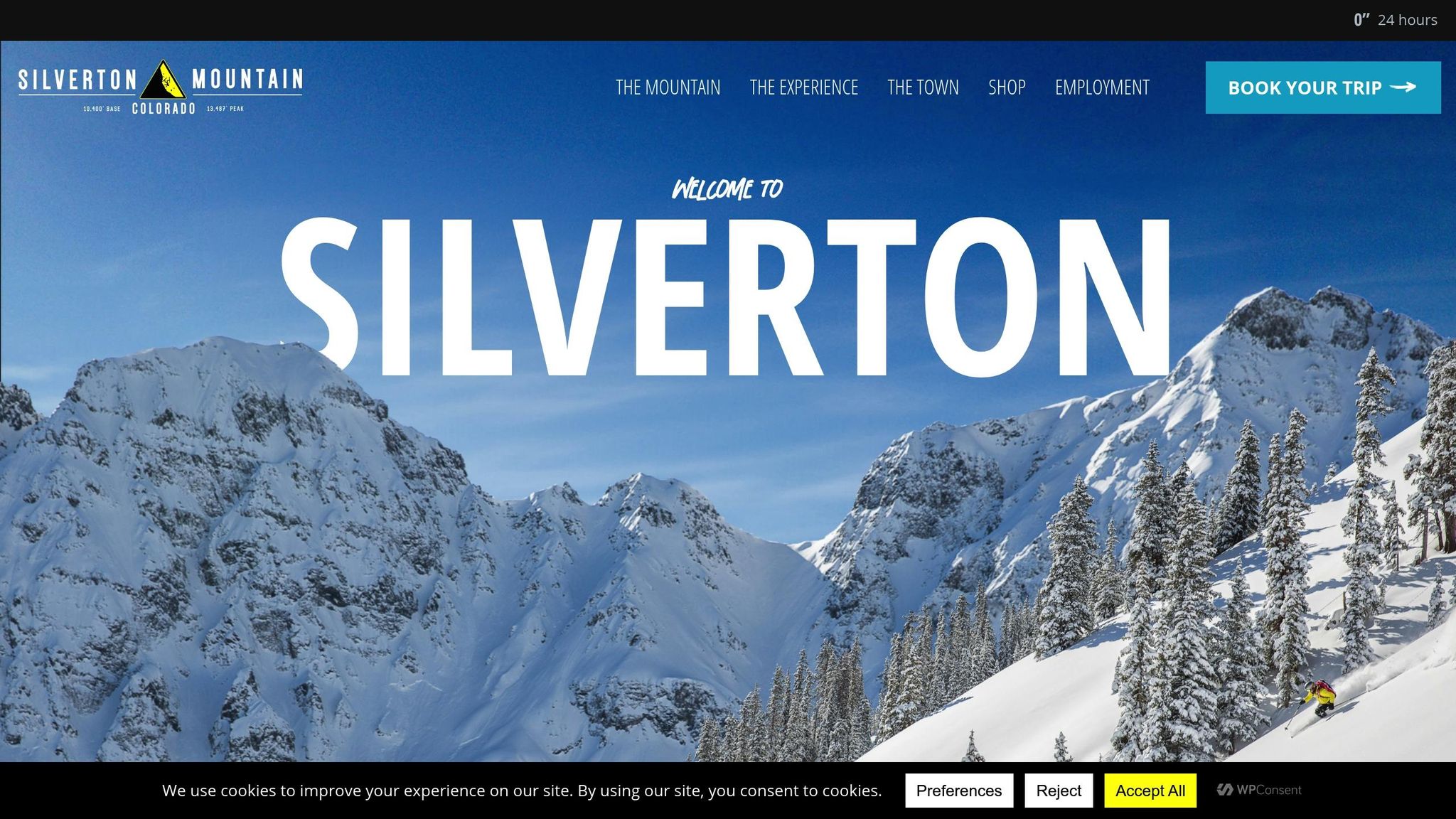
Maximum Elevation (13,487 ft / 4,111 m)
Silverton Mountain isn’t just high - it’s one of the highest ski areas in North America, with a summit towering at 13,487 feet. Even the base elevation, at about 10,400 feet, is higher than the peaks of many other resorts. At these altitudes, the air is thinner, making every movement more demanding, even for seasoned skiers. This is where lightweight gear becomes a game-changer, helping you conserve energy while tackling the mountain's challenges.
Terrain Characteristics
Silverton Mountain is all about raw, untouched backcountry skiing. It’s not your typical resort - this is an adventure for experts only. The terrain is wild and untracked, with steep slopes, cliff bands, tight chutes, and deep powder bowls that demand sharp skills and quick thinking. To navigate this rugged landscape, guided groups are required, along with avalanche gear, ensuring safety in these unpredictable conditions.
But the adventure doesn’t start at the top. Many runs require a tough hike through deep snow just to get to the skiing area. Combine that with unpredictable weather, and you’ve got a test of endurance and skill. This is where having the right gear isn’t just helpful - it’s essential.
Relevance to Snowfeet Gear
Silverton’s extreme conditions are the perfect proving ground for Snowfeet gear. Unlike traditional skis from brands like Völkl, Dynastar, or Atomic, which are longer and heavier, Snowfeet’s compact skiblades and skiskates offer a lightweight alternative. When you’re pushing through high-altitude terrain, saving energy wherever possible is a big deal - and that’s where Snowfeet shines.
The shorter length of Snowfeet products isn’t just about weight; it’s about agility. On narrow, technical slopes or steep couloirs, the ability to pivot quickly and make precise turns can be the difference between a smooth ride and a tricky situation. Snowfeet’s design makes navigating these challenges easier, giving you control when it matters most.
Another standout feature? Portability. Snowfeet gear straps easily to your backpack, leaving your hands free for those long, uphill hikes to find untouched powder. Compare that to hauling traditional 170–180 cm skis through deep snow - it’s no contest. Plus, Snowfeet’s compatibility with most winter boots means you’re not lugging around extra heavy footwear. When every ounce counts, this kind of versatility and convenience makes a huge difference on a mountain like Silverton.
2. Telluride Ski Resort, Colorado
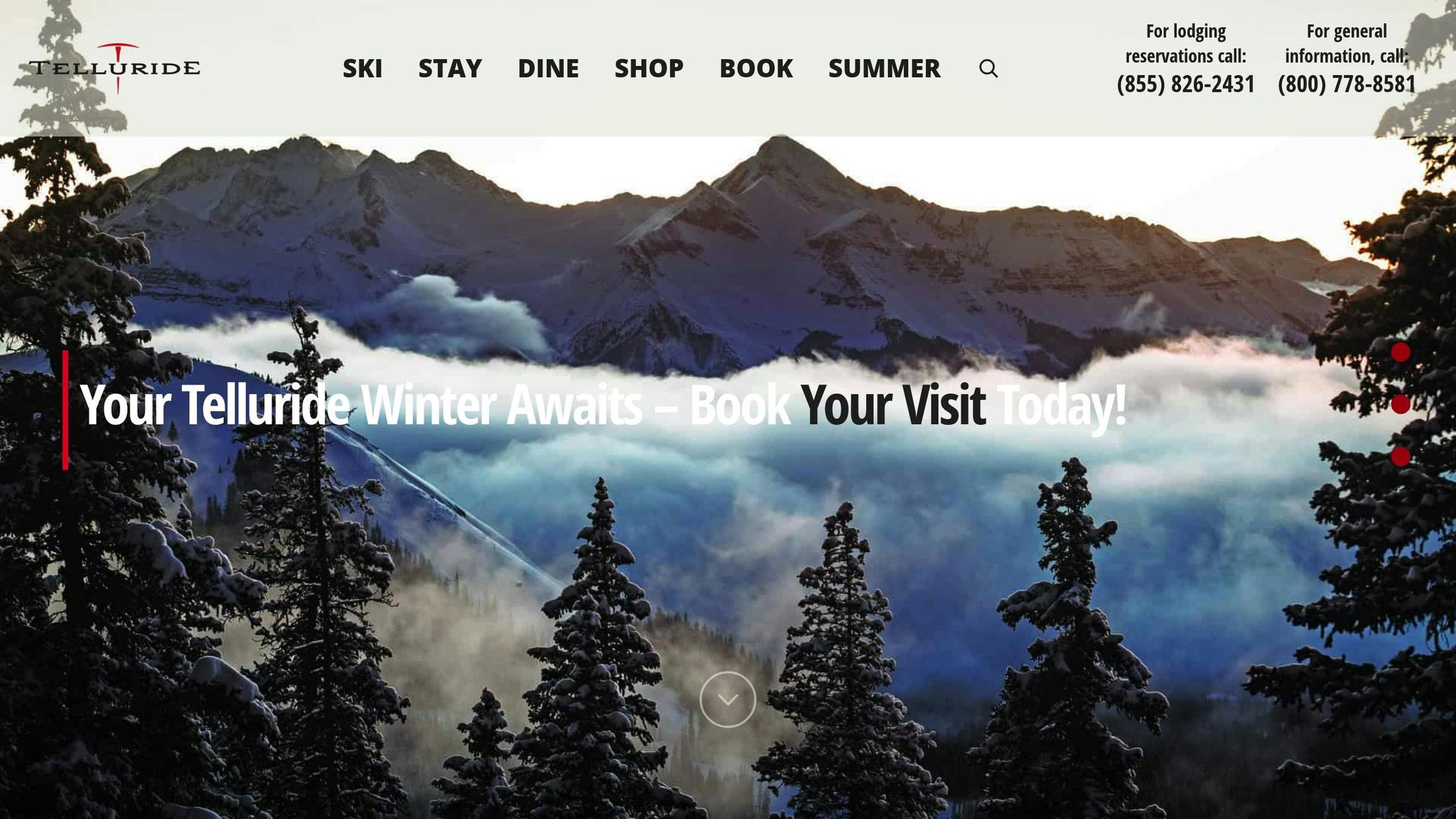
Maximum Elevation (13,150 ft / 4,008 m)
Telluride Ski Resort in Colorado boasts a peak elevation of 13,150 feet (4,008 m) and a lift-served high point of 12,515 feet (3,815 m). This makes it the second-highest ski area in the United States and the third-highest in North America. Starting at a base elevation of 8,725 feet (2,660 m), the resort offers a jaw-dropping vertical drop of 4,425 feet, delivering some of the most dramatic elevation changes you’ll find anywhere.
Terrain Characteristics
Ranked #1 by OnTheSnow.com, Telluride is famous for its tree skiing and iconic "Plunge" run. Covering 54.8 miles of trails, the resort caters to all skill levels with a mix of beginner, intermediate, and expert runs, supported by nineteen lifts. The upper mountain is dominated by wide-open bowls with smooth, rolling pitches, while the lower sections feature technical tree runs and steep chutes. Whether you’re carving down groomed slopes or hunting for hidden powder stashes among the aspens and spruces, the terrain here is as diverse as it gets. This variety demands gear that can handle everything from smooth cruisers to challenging off-piste conditions.
Relevance to Snowfeet Gear
Telluride's mix of terrain and high altitude makes it a perfect playground for Snowfeet products. With a 4,425-foot vertical drop, you’ll encounter everything from icy, early-morning groomers to soft, powdery runs in the afternoon - ideal for testing Snowfeet's adaptability.
In the narrow aspen glades, Snowfeet’s compact design shines, allowing for quick, precise turns. Unlike traditional skis from brands like Rossignol or K2, which can feel bulky in tight spaces, Snowfeet’s shorter length makes it easier to navigate through obstacles, especially in Telluride's renowned tree runs.
The high altitude also highlights the importance of lightweight gear. Every extra pound can take a toll, and Snowfeet’s boot-compatible, lightweight design reduces fatigue on longer runs. Whether you’re tackling the wide-open Revelation Bowl or the steep Gold Hill Chutes, Snowfeet delivers the quick edge-to-edge responsiveness needed to handle changing snow conditions. From perfectly groomed trails to untouched off-piste terrain, Snowfeet gives you the confidence to explore everything Telluride has to offer.
3. Breckenridge, Colorado
Maximum Elevation (12,998 ft / 3,962 m)
Breckenridge is a standout when it comes to high-altitude skiing. With its summit reaching a breathtaking 12,998 feet (3,962 m), it ranks as one of the highest ski resorts in North America. Starting at a base elevation of 9,600 feet (2,926 m), the resort offers a vertical drop of 3,398 feet. The thinner air at this altitude adds an extra layer of challenge, while also contributing to consistent, high-quality snow conditions.
The resort spans multiple peaks - Peak 6, 7, 8, 9, and 10 - with Peak 10 boasting the highest lift-accessible terrain. Many of the runs are above the tree line, exposing skiers to wind-packed snow and unpredictable weather, which can test even the most seasoned riders. The altitude also puts your gear to the test, making the right equipment crucial.
Terrain Characteristics
Breckenridge covers an impressive 2,908 acres across its five peaks, offering something for every skill level. With 187 trails serviced by 35 lifts, including high-speed quads, getting to the summit is quick and easy.
Each peak has its own personality. Peak 6 is famous for its wide-open bowls and steep chutes. Peak 8, on the other hand, is home to some of the resort's toughest terrain, with runs like "The Burn" and "Horseshoe Bowl" pushing skiers to their limits. For tree skiing enthusiasts, the lower slopes feature dense aspen and pine forests, while Peak 9 is a paradise for intermediate skiers, offering smooth, long cruising runs.
The Imperial Express SuperChair, one of the highest lifts in North America, takes riders up to 12,840 feet. From there, runs like "Imperial Bowl" and "Lake Chutes" serve up a mix of wind-crusted snow, icy patches, and ever-changing conditions. This diverse terrain demands gear that can handle anything thrown its way.
Relevance to Snowfeet Gear
Breckenridge is a perfect playground to showcase the benefits of Snowfeet products. Traditional ski gear from brands like Salomon or Atomic can feel heavy and cumbersome, especially at high altitudes. Snowfeet’s lightweight design, however, minimizes physical fatigue and maximizes performance.
In Breckenridge’s constantly shifting snow conditions - icy in the morning, softer in the afternoon - Snowfeet's compact design shines. For example, the 44 cm Skiskates are a game-changer on Peak 9’s tight tree runs, where longer skis from brands like Völkl or Head can feel bulky and hard to maneuver.
When tackling the wide-open bowls of Peaks 6 and 8, Snowfeet Mini Ski Skates offer quick turns and precise control, while the 99 cm Skiblades deliver the stability needed for steep, powder-filled descents without sacrificing agility.
Breckenridge’s untouched powder often requires a bit of trekking to reach, and Snowfeet’s portable design makes that trek a breeze. Unlike traditional skis, which can be awkward to carry, Snowfeet gear is compact and easy to transport, giving you access to those hidden stashes of pristine snow that others might miss.
4. Banff Sunshine, Alberta
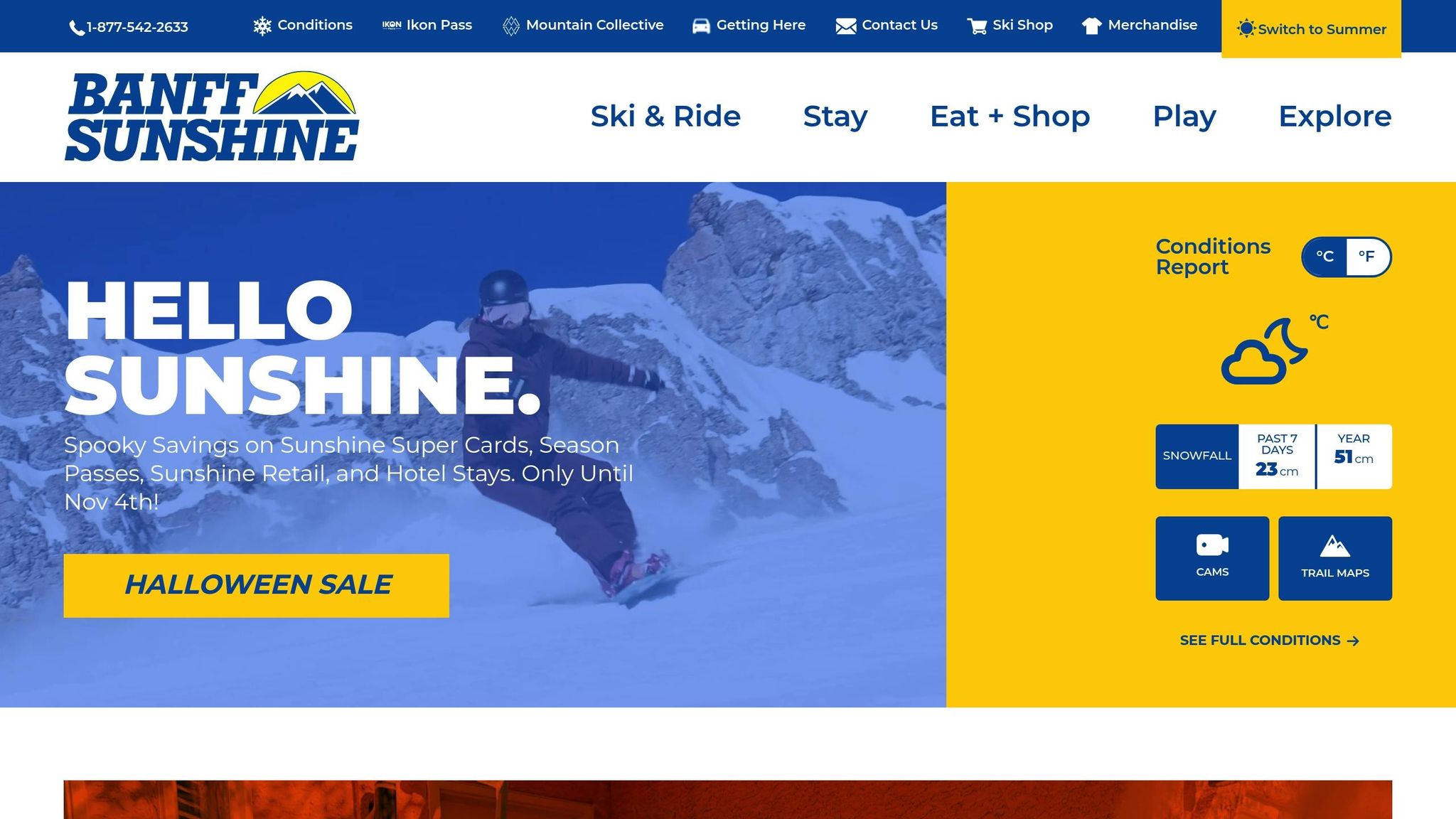
Maximum Elevation (8,957 ft / 2,730 m)
Banff Sunshine holds the title of Canada's highest ski resort, with its summit soaring to 8,957 feet (2,730 m). The base starts at 5,446 feet (1,660 m), creating a solid vertical drop of about 3,511 feet. This impressive elevation means you can count on consistent powder, but if you're not used to the thinner air, take it slow and give yourself time to adjust. The altitude also creates the perfect playground for a variety of terrain.
Terrain Characteristics
Covering 109 km (67.7 miles) of skiable terrain, Banff Sunshine has something for everyone: 23% of the runs are beginner-friendly, 46% cater to intermediate skiers, and 31% will challenge even the most experienced riders. It's a well-balanced mix that suits all skill levels.
Relevance to Snowfeet Gear
Banff Sunshine's high-altitude slopes are a fantastic match for Snowfeet gear. Unlike bulky traditional skis, Snowfeet's compact and lightweight design makes them perfect for navigating the diverse snow conditions here. On the expansive intermediate runs, the 99 cm Skiblades provide a great mix of stability and maneuverability. For tackling steeper terrain, the 65 cm Skiblades offer precise control, making those tricky descents feel much more manageable. And with a day lift ticket priced at C$174 (around $128 USD), the ease of learning and reduced fatigue with Snowfeet gear means you can make the most of every minute on the mountain.
America's Largest Vertical Drop Ski Run
5. Whistler Blackcomb, British Columbia
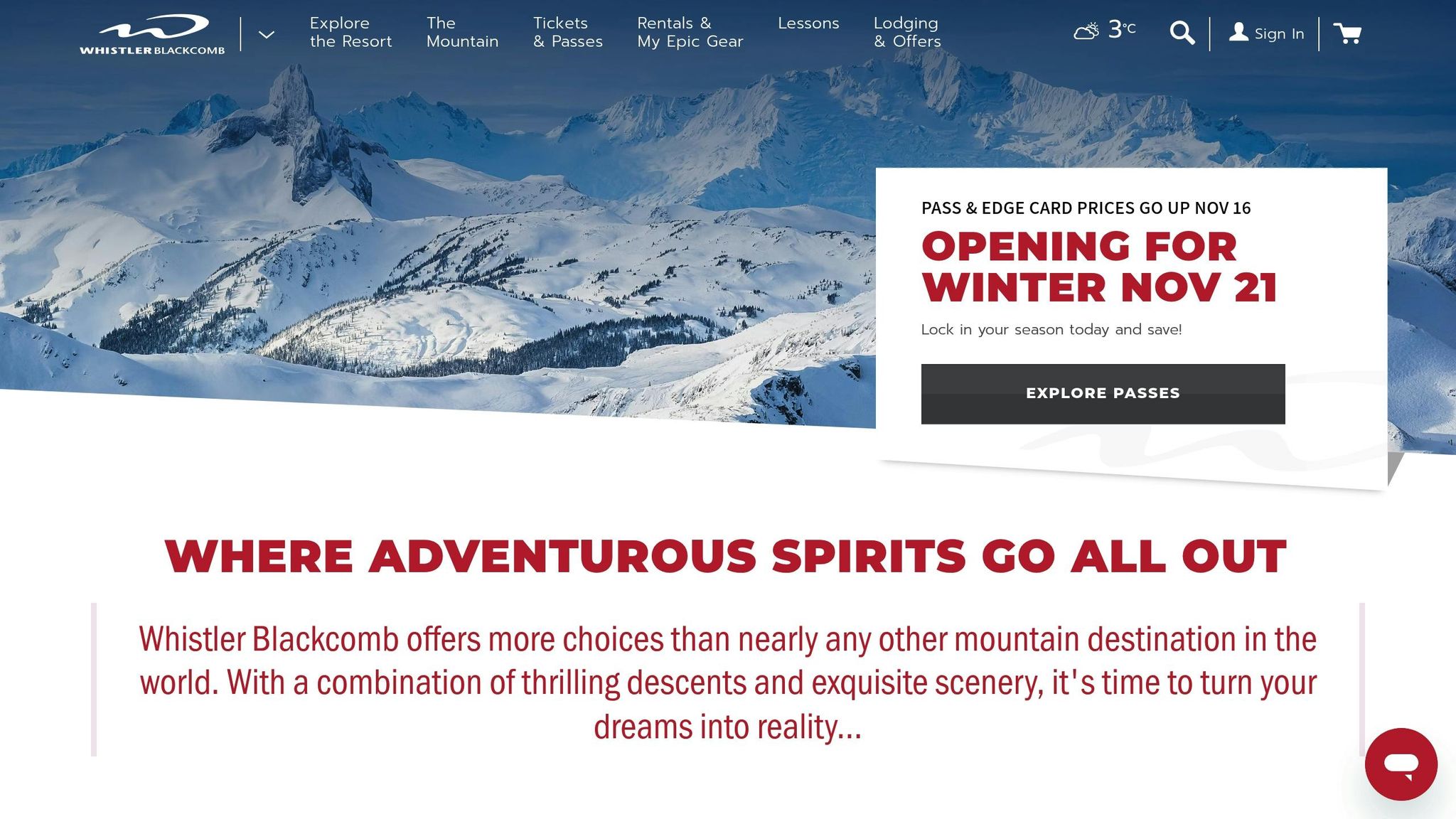
Whistler Blackcomb is another standout when it comes to high-altitude resorts, offering the perfect playground for Snowfeet enthusiasts.
Maximum Elevation (7,493 ft / 2,284 m)
Reaching a peak of 7,493 ft (2,284 m) and starting at a base elevation of 2,215 ft (675 m), Whistler Blackcomb boasts an impressive vertical drop of 5,279 ft (1,609 m).
Terrain Characteristics
The resort offers a massive 200 km (124 miles) of skiable terrain, catering to all skill levels. Here’s the breakdown:
- Beginners: 40 km (25 miles) of gentle, easy slopes
- Intermediate skiers: 110 km (68 miles) of runs perfect for honing skills
- Experts: 50 km (31 miles) of challenging pistes
With 27 ski lifts, access to the slopes is a breeze. Plus, for the thrill-seekers, advanced options like heli-skiing and cat-skiing provide access to untouched backcountry terrain.
This variety of terrain makes Whistler Blackcomb a dream spot for testing gear that thrives in diverse conditions.
Why Snowfeet Gear Shines Here
Whistler Blackcomb’s 150 km (93 miles) of groomed easy and intermediate slopes are practically made for Snowfeet gear. Traditional long skis can feel clunky on these runs, but Snowfeet offers a sleek alternative.
- 99 cm Skiblades: These are perfect for intermediate terrain, blending stability with quick turns and smooth control.
- 65 cm Skiblades: Lightweight and super portable, these shine on the gentler slopes, helping new riders build confidence while staying comfortable all day.
With Snowfeet, you’re not just skiing - you’re gliding with ease and agility, making the most of every run.
sbb-itb-17ade95
6. Arapahoe Basin, Colorado
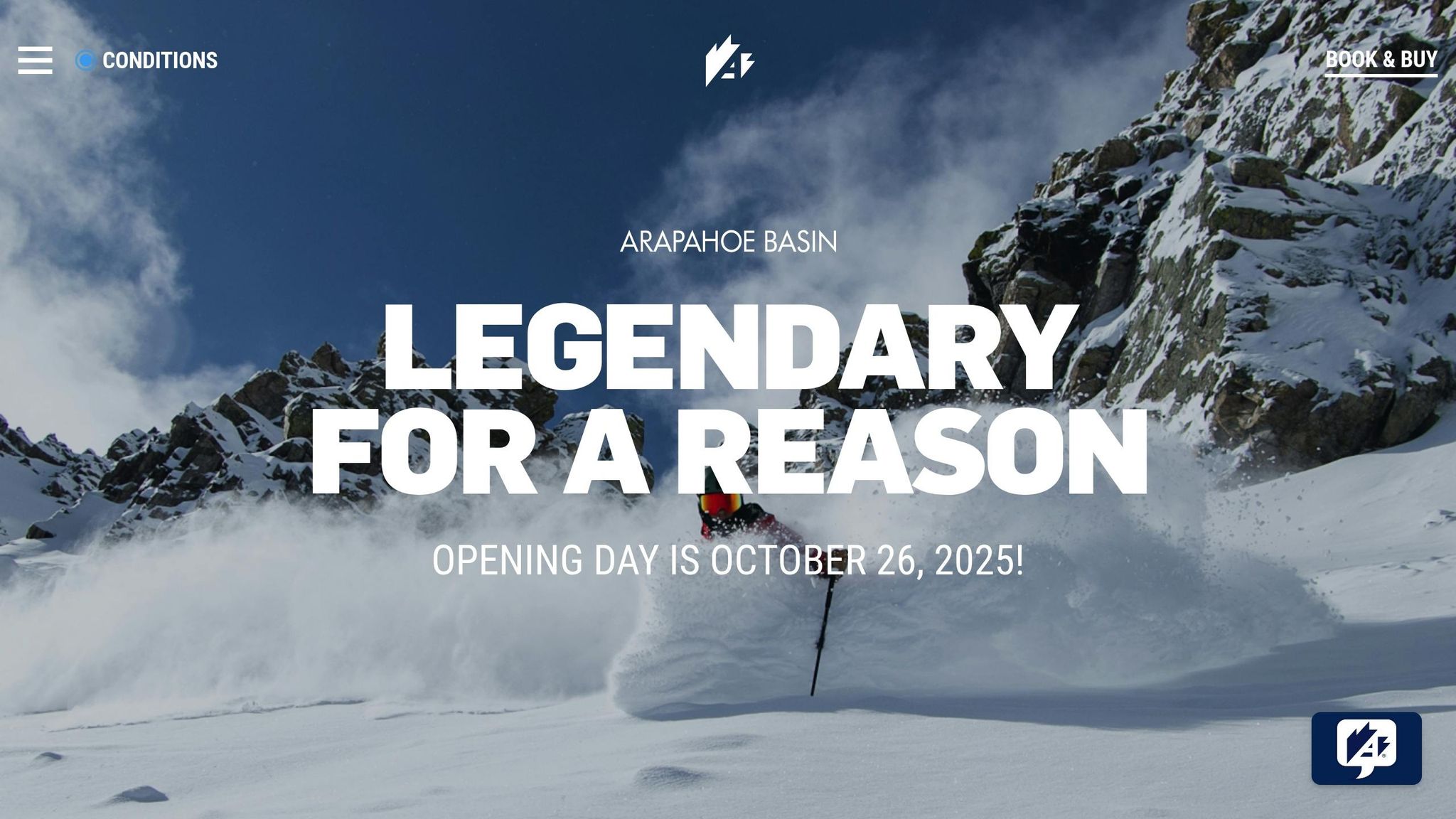
Arapahoe Basin is famous for its sky-high elevation and impressively long ski season.
Maximum Elevation (13,050 ft / 3,978 m)
Sitting at a jaw-dropping 13,050 feet (3,978 meters), Arapahoe Basin is North America’s third-highest ski area. Tucked beneath Colorado’s iconic 14ers, this elevation not only offers stunning alpine views but also allows skiing well into the summer - sometimes even up to July 4th.
Terrain Characteristics
Arapahoe Basin is a haven for expert skiers. The terrain is steep, technical, and raw - perfect for those who thrive on a challenge. However, it’s not for the faint-hearted. With a day pass priced at $189, this spot clearly appeals to thrill-seekers who want a premium mountain adventure. The rugged conditions here demand gear that can handle every twist, turn, and icy patch.
Why Snowfeet Gear Shines Here
Arapahoe Basin’s tough slopes call for equipment that’s responsive and easy to handle. That’s where Snowfeet gear steps in. Their 99 cm Skiblades are built for sharp, accurate turns - just what you need for navigating tight, steep runs. For intermediate skiers, the 65 cm Skiblades provide the control and precision to tackle technical descents with confidence. Plus, Snowfeet’s lightweight and portable design means no bulky gear slowing you down, so you can focus entirely on the thrill of the ride.
7. Loveland, Colorado

Loveland keeps the high-altitude theme alive, much like Silverton and Breckenridge, by offering dependable snow and a mix of terrain that appeals to skiers and snowboarders of all levels.
Maximum Elevation
Loveland's Golden Bear Peak tops out at an impressive 13,010 ft (3,965 m), accessible by hiking or the Ridge Cat service. The highest lift-served point is at 12,700 ft (3,871 m) via Lift 9, with the base elevation starting at 10,800 ft (3,292 m). These heights mean plenty of fresh powder and consistent conditions throughout the season. It’s a perfect setup for the variety of terrain that Loveland has to offer.
Terrain Characteristics
With 58 miles (93 km) of trails, Loveland has something for everyone. Beginners and intermediate skiers will find plenty of runs to enjoy, while advanced riders can tackle more challenging slopes that keep things exciting. The mix of terrain ensures no one is left out.
Relevance to Snowfeet Gear
Loveland’s diverse slopes are a great match for Snowfeet gear. The Snowfeet Mini Ski Skates (38 CM) are ideal for the resort’s gentler runs, giving skiers a chance to build confidence and fine-tune their skills. On steeper terrain, the 65 CM Skiblades shine, offering the control and quick response needed to handle more demanding sections. Plus, at these high altitudes, where conditions can shift quickly, the lightweight design of Snowfeet gear makes it easier to adapt and enjoy a dynamic ride.
8. Winter Park Resort, Colorado
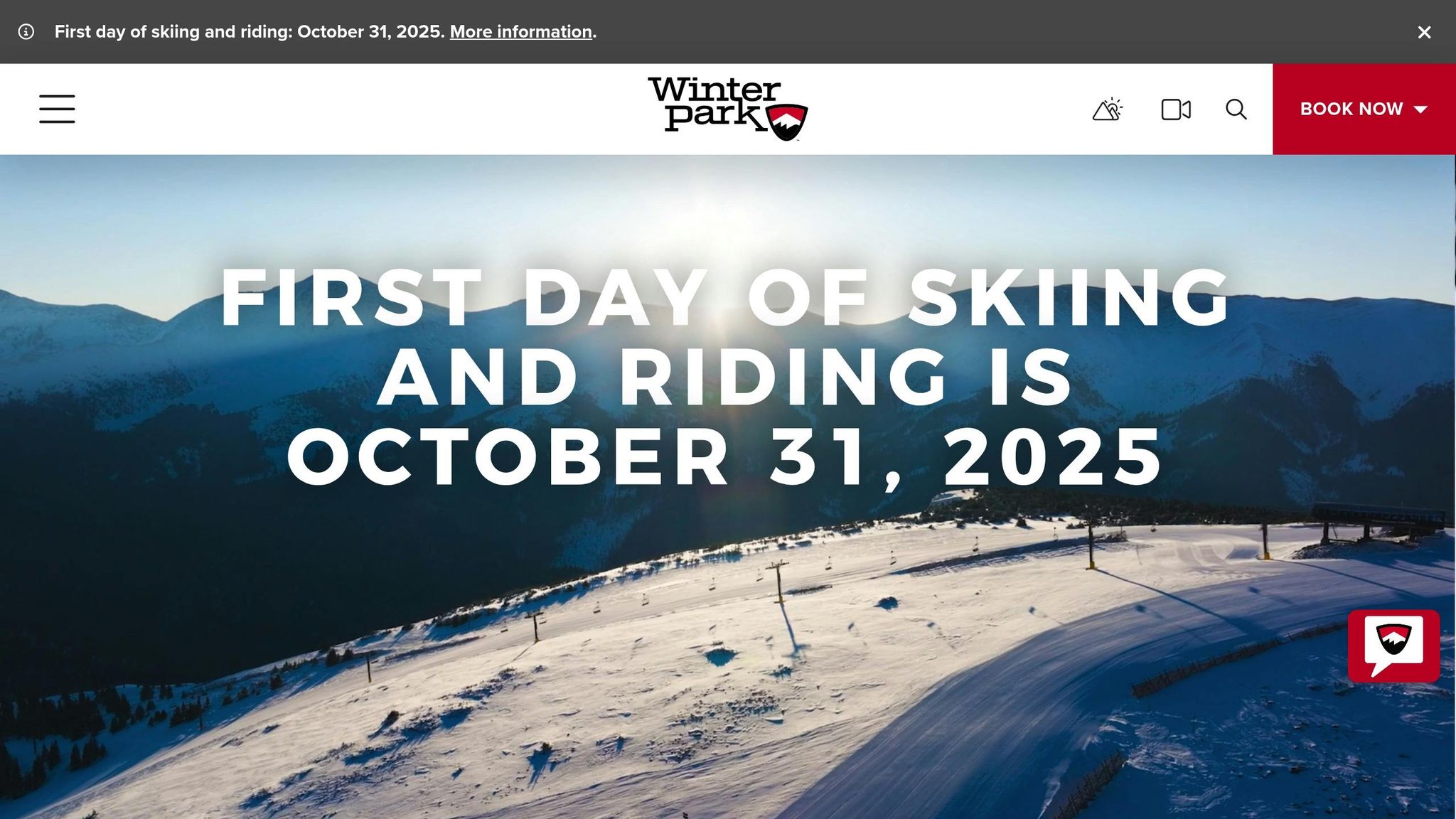
Winter Park Resort is a gem in Colorado's high-altitude ski scene and is just a 1.5-hour drive from Denver. Even better, you can hop on the Ski Train from Denver's Union Station, making it super convenient to get there. This easy access, paired with its diverse terrain, makes Winter Park a prime spot to test out lightweight gear like Snowfeet.
Maximum Elevation
Sitting at a base elevation of 9,000 ft (2,743 m) and climbing up to a peak of 12,060 ft (3,676 m), Winter Park boasts a vertical drop of 3,060 ft (933 m). This puts it in the top tier, ranking as the 11th highest ski resort in North America.
Terrain Characteristics
Winter Park spreads across 143 km of interconnected trails, divided into five distinct areas. Here’s the breakdown:
- 11 km of easy runs
- 53 km of intermediate slopes
- 79 km of challenging terrain
All of this is supported by 25 ski lifts, making it easy to explore the resort. It's no surprise that Winter Park earned high praise from OnTheSnow.com readers.
"Whether you're looking for easy blues or deep powder, Winter Park is suited for everyone." - Ski Solutions
The resort's layout makes it simple to move between runs of varying difficulty, so there’s something for everyone, whether you’re just starting out or chasing adrenaline.
Why Snowfeet Shines at Winter Park
Winter Park's mix of slopes and high-altitude demands make it an ideal proving ground for Snowfeet gear. The lightweight, portable design of Snowfeet is perfect for navigating the resort's varied terrain and interconnected trails.
- Snowfeet Mini Ski Skates (38 CM): Great for beginners, helping build confidence on easy runs.
- Snowfeet PRO (50 CM): Designed for intermediate skiers, offering better handling.
- Skiblades (65 CM and 99 CM): Deliver precision and control on those steeper, more technical slopes.
Plus, the compact size of Snowfeet gear means you can easily carry it around the resort or hop back on the Ski Train without any hassle. Whether you're tackling mellow blues or testing your skills on more challenging terrain, Snowfeet gear keeps up with you every step - or glide - of the way.
Advantages and Disadvantages
Skiing at high-altitude resorts is a mix of perks and challenges. Knowing what to expect can help you decide on the best destination and gear for your adventure.
Why High Altitude Rocks
The biggest draw of skiing at higher elevations is the snow. Colder temperatures and longer snow retention mean pristine powder that lasts. Resorts like Silverton Mountain and Arapahoe Basin often stay open well into late spring, long after lower-elevation spots have packed it in for the season.
Then there’s the variety of terrain. Whether it’s the beginner-friendly slopes at Winter Park (base elevation: 9,000 ft) or the intense backcountry at Silverton, these resorts offer something for everyone. They’re also perfect for Snowfeet gear, which handles all kinds of terrain with ease. Of course, these perks come with a few hurdles.
What Makes It Tough
First, there’s the altitude itself. Less oxygen at higher elevations means you’ll tire out faster and might even deal with altitude sickness. That first day on the slopes can be a wake-up call for your body.
Then there’s the weather. Higher altitudes mean unpredictable conditions - think sudden storms, high winds, and quick temperature drops. Visibility can go from crystal clear to whiteout in minutes, which makes navigating unfamiliar terrain tricky. This is where Snowfeet gear’s responsive, energy-saving design can really shine.
Snowfeet vs. Traditional Gear
Snowfeet gear has a clear edge in high-altitude conditions. Its compact size - like the Snowfeet Mini Ski Skates (38 CM) and Snowfeet PRO (50 CM) - makes it easier to handle when the terrain gets tricky or visibility tanks. Shorter skis mean better control and less fatigue, especially in tight spaces or on uneven ground.
Traditional long skis, on the other hand, can be a hassle in these conditions. They’re harder to manage in narrow spots and can wear you out faster. Snowfeet’s design not only makes technical turns easier but also has a faster learning curve, so you’re ready to adapt to changing conditions in no time.
| Resort | Peak Elevation | Best Snowfeet Model | Key Advantage | Main Challenge |
|---|---|---|---|---|
| Silverton Mountain | 13,487 ft | Skiblades (99 CM) | Expert terrain variety | Extreme conditions only |
| Telluride | 13,150 ft | Snowfeet PRO (50 CM) | Diverse skill levels | High cost, crowds |
| Arapahoe Basin | 13,050 ft | Skiblades (65 CM) | Extended season | Limited beginner terrain |
| Breckenridge | 12,998 ft | Mini Ski Skates (38 CM) | Beginner-friendly | Altitude adjustment needed |
| Winter Park | 12,060 ft | All models | Easy Denver access | Variable weather |
| Whistler Blackcomb | 7,494 ft | Snowfeet PRO (50 CM) | Reliable conditions | Distance from major cities |
| Banff Sunshine | 8,954 ft | Skiblades (65 CM) | Stunning scenery | Border crossing required |
Things to Keep in Mind
Snowfeet gear’s portability is a game-changer. It fits easily into backpacks, so if the weather forces you to head back to the lodge, packing up is a breeze.
Cost is another factor. Resorts like Telluride and Whistler can be pricey, while places like Loveland are more budget-friendly. The versatility of Snowfeet gear means you’re getting great bang for your buck - one set works across all types of terrain and conditions.
When planning your trip, think about the logistics. Winter Park’s train connection from Denver is super convenient, especially for Snowfeet users who can easily carry their compact gear. On the flip side, remote spots like Silverton Mountain require more effort to reach but offer a wild, backcountry experience.
Ultimately, it’s all about matching your skills and goals with the right resort and Snowfeet model. Whether you’re easing into skiing on Breckenridge’s gentle slopes with Mini Ski Skates or conquering Silverton’s rugged terrain with 99 CM Skiblades, the mix of high-altitude thrills and Snowfeet’s innovative design makes for an unforgettable winter adventure.
Conclusion
Skiing at high-altitude resorts across the USA and Canada is an exhilarating experience, made even better with Snowfeet's lightweight, compact gear. These resorts, known for their towering peaks and untouched powder, offer incredible skiing conditions. The higher elevations mean fresher, longer-lasting snow and extended seasons that stretch well into spring.
Pairing these conditions with Snowfeet's sleek design creates a game-changing combo. Unlike traditional long skis from brands like Rossignol or Salomon - which can feel bulky on steep, technical terrain - Snowfeet's skiblades and skiskates bring portability, control, and reduced fatigue to the table. Whether you're braving the challenging backcountry of Silverton with 99 cm Skiblades or mastering Winter Park's varied slopes with Mini Ski Skates, Snowfeet's responsive gear keeps you in control and energized for every run.
Get the most out of high-altitude skiing with Snowfeet - designed to keep you nimble and ready for anything the mountain throws your way.
FAQs
How does skiing at high altitudes affect performance, and how can skiers prepare for it?
Skiing at high altitudes can take a toll on your body. The thinner air means less oxygen, which might leave you feeling tired, out of breath, and not quite as strong on the slopes. Beginners or folks who aren’t used to higher elevations tend to notice these effects even more.
To make the transition smoother, ease into things. Start slow, give your body time to adjust, and don’t overdo it on day one. Staying hydrated is key, so keep sipping water throughout the day. Taking breaks and munching on light, energy-packed snacks can also keep you going strong. And if you’re using portable, lightweight gear like Snowfeet, you’ll move through the terrain with less effort, making those mountain adventures a whole lot more fun.
What makes Snowfeet gear better than traditional skis for high-altitude ski resorts?
Snowfeet gear has become a favorite at high-altitude ski resorts, thanks to its compact size and incredible agility. Unlike traditional skis, their shorter length makes quick, precise turns a breeze. Whether you're weaving through moguls or navigating tight tree runs, Snowfeet helps you stay in control, even on steep or unpredictable slopes.
Another big plus? They're lightweight and easy to carry. This means less fatigue during those long descents and no hassle lugging them around when you're off the slopes. If you're after a fun, dynamic alternative to traditional ski gear - especially in the challenging conditions often found at higher elevations - Snowfeet might just be your new go-to.
What safety tips should skiers follow when exploring high-altitude resorts like Silverton Mountain?
When skiing at high-altitude spots like Silverton Mountain, keeping safety front and center is a must. Adjusting to the altitude is a big part of that. If you're coming from a lower elevation, give yourself some time to acclimate. This can help you steer clear of altitude sickness. Drink plenty of water and pay attention to how your body feels - fatigue or dizziness can creep up on you fast at higher altitudes.
Silverton Mountain is famous for its tough backcountry terrain. Most of it requires a guide during the majority of the season, so be sure to check out the resort’s rules ahead of time. If you’re planning to explore unguided areas, make sure you’re equipped with avalanche safety gear and have the proper training to use it. And remember, the mountain’s conditions can be unpredictable, so always respect them and know your own limits.













Leave a comment
This site is protected by hCaptcha and the hCaptcha Privacy Policy and Terms of Service apply.