




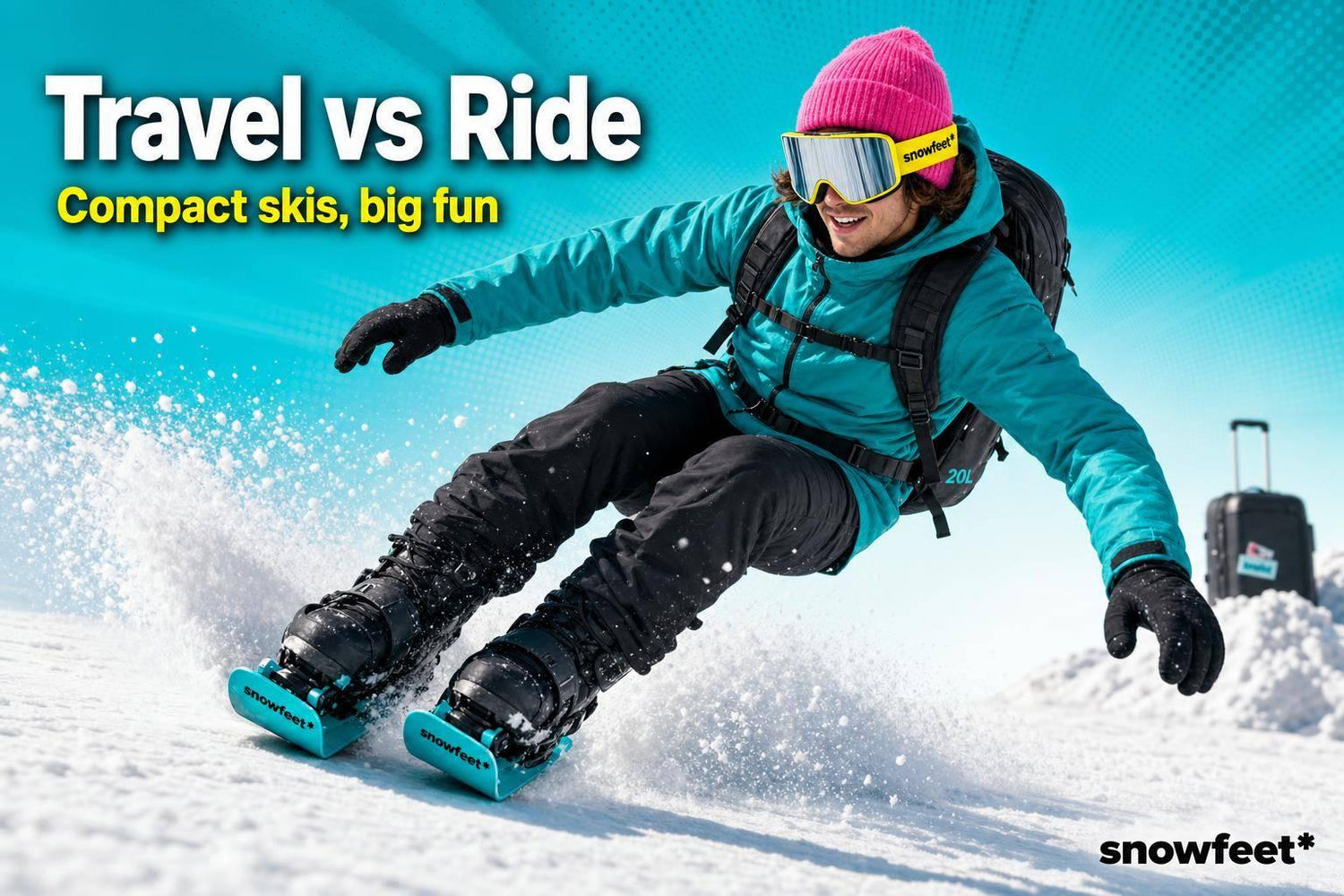
Yes - if your main goal is easier travel, compact ski gear can be worth it. From what I see, Snowfeet* makes the most sense for weekend trips, light packers, beginners, and families who care more about small size, simple packing, and no long ski bag than top downhill power.
Here’s the short version:
- _Snowfeet comes in 3 sizes:_* 44 cm, 50 cm, and 65 cm
- Full skis are often around 150–180 cm+
- The short length means Snowfeet* can fit in many suitcases, duffels, trunks, and closets
- Prices start at $299
- The trade-off is simple: you get easier travel, but give up some stability, speed, and powder float
- Best fit:
- 44 cm Skiskates: light packers, playful riding
- 50 cm PRO: first-timers, families, lower-cost entry
- 65 cm Skiblades: resort riders who want a feel closer to skis
If you fly a lot, hate roof racks, or don’t want to drag giant gear through an airport like you’re moving furniture, this type of setup is a smart option :) If your trips are all about deep powder, steep terrain, and high-speed carving, full-size skis or a snowboard still make more sense.
World's most versatile ski skates - Snowfeet* PRO
Quick Comparison
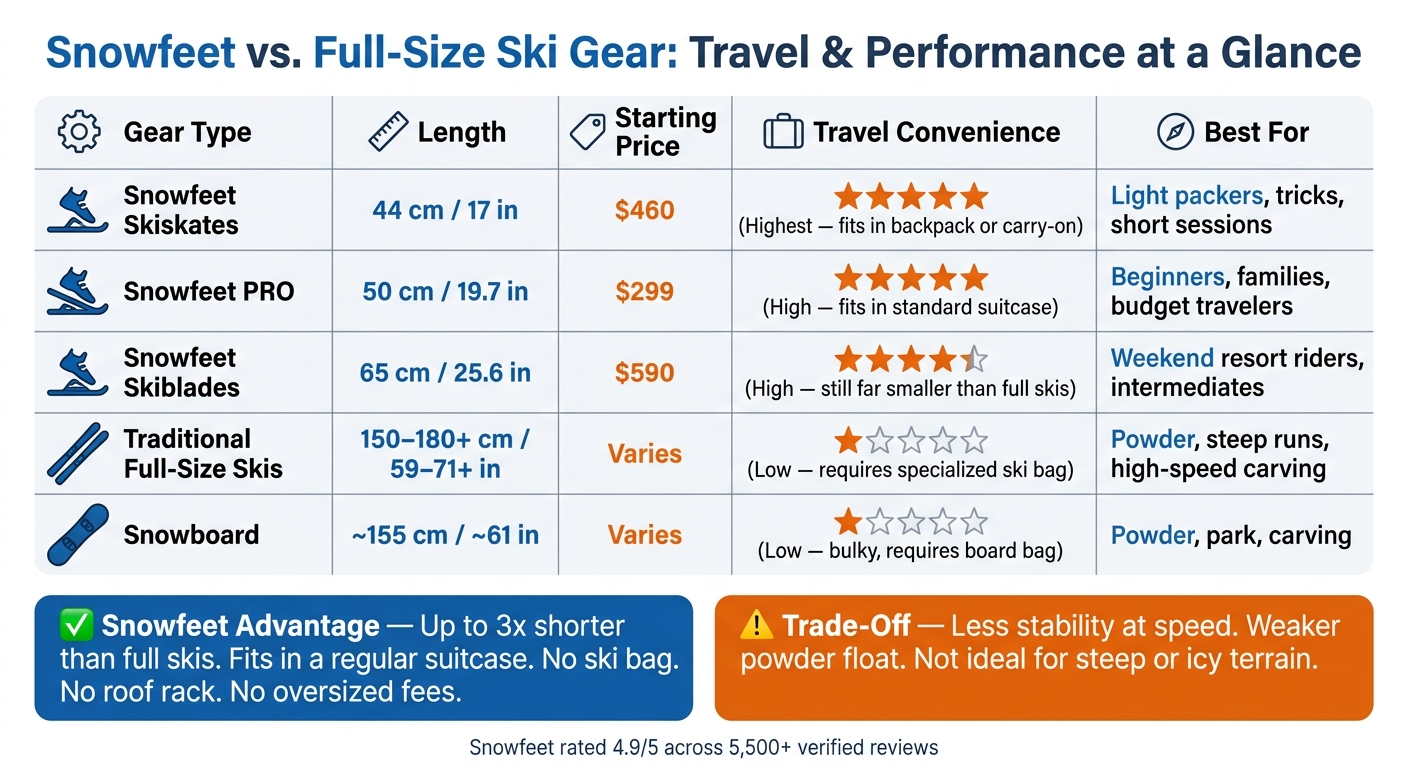
Snowfeet vs. Full-Size Ski Gear: Travel & Performance Comparison
| Gear | Length | Best For | Main Upside | Main Downside | Starting Price |
|---|---|---|---|---|---|
| Snowfeet Skiskates* | 44 cm / 17 in | Light packers, tricks, short sessions | Fits in many bags | Least stable at pace | $460 |
| Snowfeet PRO* | 50 cm / 19.7 in | Beginners, families, travel-first riders | Easiest price entry, simple to pack | Less edge hold on steep runs | $299 |
| Snowfeet Skiblades* | 65 cm / 25.6 in | Groomed resort days, intermediates | Closest feel to skis | Still weaker in deep snow | $590 |
| Full-size skis | 150–180+ cm / 59–71+ in | Fast groomers, powder, steep runs | More stable and planted | Hard to pack and carry | - |
| Snowboard | ~155 cm / 61 in | Powder, carving, park | Better float than short gear | Bulky for travel | - |
My take: compact ski gear is a travel-first choice, not a performance-first one. And if that’s the problem you’re trying to fix, Snowfeet* does a solid job.
How Snowfeet* Makes Trips Easier
This is where the travel perk stops sounding nice on paper and starts helping on actual trips.
How Short Gear Fits Into Checked Bags and Carry-On Luggage
Snowfeet* fixes the biggest travel hassle: length. Standard adult skis are around 170 cm, or about 67 inches. A snowboard is about 155 cm, or 61 inches. Both usually need a ski bag or board bag, which makes airport travel more awkward and can trigger oversized-item handling.
Snowfeet* comes in much shorter sizes: 44 cm (17 in), 50 cm (19.7 in), and 65 cm (25.6 in). That means these models can fit inside a standard checked suitcase or duffel bag. The 44 cm Skiskates are often small enough for many carry-ons or backpacks, depending on the airline’s size rules. So, yeah, no ski bag and no long case to drag through the terminal.
| Product | Length | Typical Bag Needed | Travel Convenience |
|---|---|---|---|
| Skiskates | 44 cm (17 in) | Backpack / carry-on | Highest - fits in most standard bags |
| Snowfeet PRO | 50 cm (19.7 in) | Standard suitcase / duffel | High - very easy to pack |
| Skiblades | 65 cm (25.6 in) | Standard suitcase / duffel | High - still far smaller than full-length skis |
| Traditional skis | ~170 cm (~67 in) | Specialized ski bag | Low - long and cumbersome to check |
| Snowboard | ~155 cm (~61 in) | Specialized board bag | Low - bulky and harder to handle |
How Compact Gear Fits in Cars, Trunks, and Storage at Home
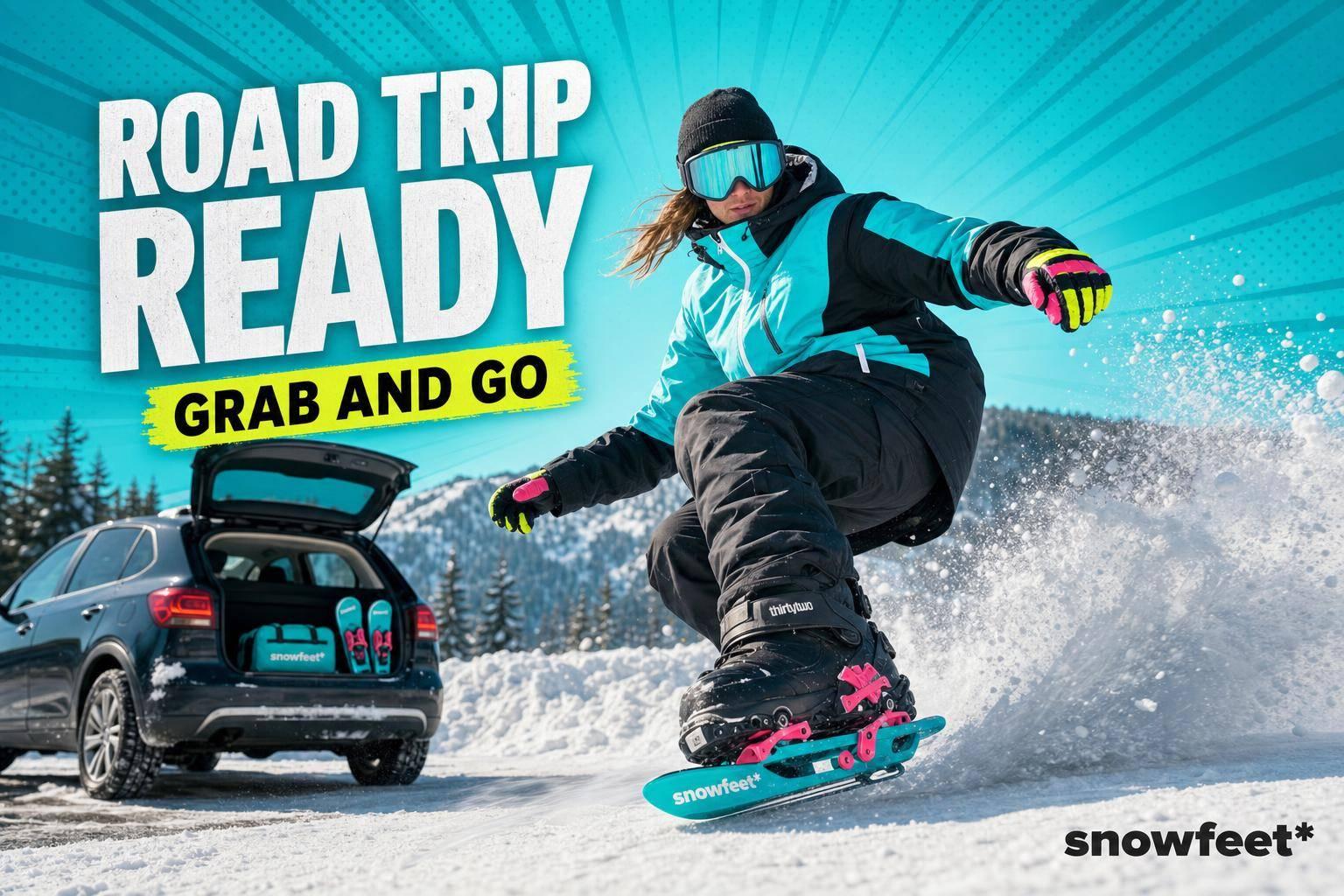
Road trips get easier too. One of the biggest ski-trip annoyances is the roof rack. Full-size skis often need one. Snowfeet* gear doesn’t. It fits in a compact car trunk, on a back seat, or even in a rideshare without turning the whole ride into a gear puzzle.
Snowfeet* is also lighter and easier to carry than full-size skis.
And this helps at home just as much as it helps on the road. Snowfeet* gear can sit on a shelf or in a closet corner, stay packed between trips, and be ready for a last-minute weekend run. No wall rack. No garage setup. Just grab it and go.
| Product Type | Fits in Compact Car Trunk | Needs Roof Rack | Home Storage Footprint |
|---|---|---|---|
| Snowfeet* (44–65 cm) | Yes | No | Minimal - shelf or closet corner |
| Traditional skis | Rarely | Usually yes | Large - wall rack or garage space |
| Snowboard | Rarely | Often yes | Moderate to large |
Boot Compatibility and What It Means for Packing Light
Many Snowfeet* models work with sturdy winter boots or snowboard boots, which means you can often skip packing a separate boot bag. The 50 cm Snowfeet PRO stands out here because it works with sturdy winter boots. Skiskates and Skiblades also come in versions made for snowboard boots, and some models are sold with ski-boot setups too.
For families, this can take a lot of friction out of a trip. If people can use the winter boots they already own, packing gets simpler, loading and unloading takes less effort, and there are fewer gear pieces to keep track of. The trade-off is less speed and stability than full-size skis.
That’s the upside on the travel side; the next part is what you give up once you’re on snow.
sbb-itb-17ade95
What You Give Up Compared With Full-Size Skis
Compact gear fixes a big travel headache. That part is easy. But it doesn’t do everything full-size skis or snowboards can do.
So the main thing to look at is simple: how much performance do you trade away once you’re on snow?
Speed, Stability, and Deep Snow Performance
Longer skis feel more stable when speed climbs. They keep more edge on the snow, and that matters a lot during hard carving, rough conditions, or fast runs down steep groomers.
Shorter gear has less edge contact. That means it can feel choppier, less planted, and a bit less sure of itself when you start pushing the pace.
Powder is another weak spot for compact gear. Short skis don’t float as well in deep snow as long skis do. If your trip is all about blower powder, big mountain laps, or fast downhill runs, full-size skis or a snowboard still come out on top.
Snowfeet* vs. Long Skis, Snowboards, and Other Short-Ski Brands
There are other short-ski options out there. But Snowfeet* stays the most travel-focused. It’s built around packing light first, which is exactly what a lot of travelers care about most.
| Model / Brand | Length | Best Use | Main Trade-Off |
|---|---|---|---|
| Snowfeet* Skiskates | 44 cm (17 in) | Skating, small hills, tricks | Less stability at speed |
| Snowfeet* PRO | 50 cm (19.7 in) | Groomed trails, versatile skating | Less edge hold on steep terrain |
| Snowfeet* Skiblades | 65 cm (25.6 in) | Carving, moderate speeds | Less float in soft snow |
| Full-size skis | 150+ cm (59+ in) | Deep powder, high speed, carving | Bulky to travel with |
| Snowboard | ~155 cm (~61 in) | Powder, park, carving | Bulky to travel with |
| Salomon Snowblades | 90–99 cm (35–39 in) | Short-ski carving | Less travel-friendly than Snowfeet* |
The next section matches each Snowfeet* model to the trip type and budget it fits best.
Which Snowfeet* Model Fits Your Trip and Budget
Skiskates 44 cm, PRO 50 cm, and Skiblades 65 cm Side by Side
Each model suits a different kind of trip. The big things to compare are packing, boot setup, and how each one feels on snow.
| Model | Length | Starting Price | Boot Options | On-Snow Feel | Best For |
|---|---|---|---|---|---|
| Snowfeet PRO | 50 cm (19.7 in) | $299 | Ski boots; select snowboard-boot versions | Forgiving, versatile | Beginners, families, budget travelers |
| Skiskates | 44 cm (17 in) | $460 | Ski boots; select versions fit snowboard or hard-sole winter boots | Agile, skate-like | Travelers who pack light, trick riders |
| Skiblades | 65 cm (25.6 in) | $590 | Ski boots | Stable, closest to traditional skis | Weekend resort riders, intermediates |
Snowfeet* has a 4.9/5 rating across 5,500+ verified reviews. A lot of users point to the same two perks: easy packing and no rental-line headache. That alone can make a ski day feel smoother :)
When Compact Gear Is Worth the Price
Once you line the models up, the next step is simple: which one gives you the best return for your trip?
The PRO at $299 is the easiest one to justify. It has the lowest starting price, works with some snowboard-boot versions, and feels forgiving for people trying compact ski gear for the first time. If you want the safest entry point, this is it.
The Skiskates at $460 are a good match for people who like to keep gear in the trunk all winter and jump into quick sessions when the chance shows up. They lean more playful and pack small, which is a big deal if you hate hauling extra stuff around.
The Skiblades at $590 fit riders who want a full resort day and a ride that feels closest to standard skis, just without dragging a ski bag through the parking lot. That’s the appeal in plain English.
Who Gets the Most Out of Portable Ski Gear
After price, it comes down to fit. Not boot fit - person fit.
Beginners and families will often get the most from the PRO 50 cm. It’s forgiving front to back, costs less, and hits a nice middle ground for travelers who want small gear without giving up too much control.
Travelers who pack light are the natural crowd for the Skiskates 44 cm. If your winter day might include skiing, hiking, snowshoeing, or just moving around a lot, these make sense fast. They fit into a standard backpack for hike-and-ride days, and Snowfeet* says the learning curve is about 5 minutes for people with skating experience.
Weekend resort riders who want a full day on groomed runs will likely lean toward the Skiblades 65 cm. They give you the most stability of the three compact choices, deal better with mixed resort conditions, and still fit in a checked bag without oversize fees.
Conclusion: Is Snowfeet* Worth Bringing on Trips?
The Short Answer for Most Travelers
Compact ski gear solves one job very well: it makes ski travel simpler.
Snowfeet* products are about half to one-third the length of standard skis, so they can fit inside a regular checked suitcase. That also makes them easier to stash in car trunks, closets, and weekend bags. For short trips, that’s the big win.
The trade-off is pretty simple. Full-size skis still come out ahead for speed, powder float, and stability on steep or icy terrain. So this is a travel-first pick, not a performance-first one.
For travelers, the best choice comes down to one thing: how much packability matters compared with on-snow performance. Boot compatibility helps keep packing light too, which is a nice bonus. For weekend riders, beginners, families, and people who like to travel light, that trade-off will usually point toward Snowfeet*.
If travel convenience matters more than top-end performance, Snowfeet* is the better pick.
FAQs
Can I use Snowfeet* instead of rentals on a weekend trip?
Yes - Snowfeet* products can be a smart swap for rentals on a weekend trip.
Their compact size makes them easy to pack in a backpack or even a standard suitcase. That means less hassle at the resort and less time dealing with the rental shop. Nice, right? :)
They also work with regular winter boots or snowboard boots, which makes travel a lot simpler and less bulky. You don’t have to lug around a pile of gear just to get on the snow.
Bringing your own setup can help you:
- save money on rental fees
- skip long rental lines
- use gear that already feels familiar the moment you arrive
For a short trip, that kind of convenience can make a big difference.
Will Snowfeet* work well for beginners on resort runs?
Yes - Snowfeet* products work very well for beginners on resort runs.
Their short, lightweight design feels a lot less intimidating than old-school 6-foot skis. That matters when you're starting out. Instead of wrestling with long skis, you can focus on balance, turning, and stopping. A lot of beginners start to feel comfortable after just a few runs.
They also feel more like ice skates or inline skates. So the learning curve can feel less steep. For many first-timers, that makes them easier to turn, stop, and control.
Another nice perk: they work with everyday winter boots. That means you can skip the stiff, rigid ski boots that often leave beginners feeling awkward and sore.
Do I need special boots to travel with Snowfeet*?
No. Snowfeet* gear uses adjustable bindings, so you may not need to buy special boots.
That means you can often use footwear you already own, like:
- sturdy winter hiking boots
- snowboard boots
When you buy Snowfeet*, just choose the binding type that fits the footwear you want to use.
If you want the most control, you can also choose ski-boot-compatible bindings.











留下評論
此網站已受到 hCaptcha 保護,且適用 hCaptcha 隱私政策以及服務條款。