




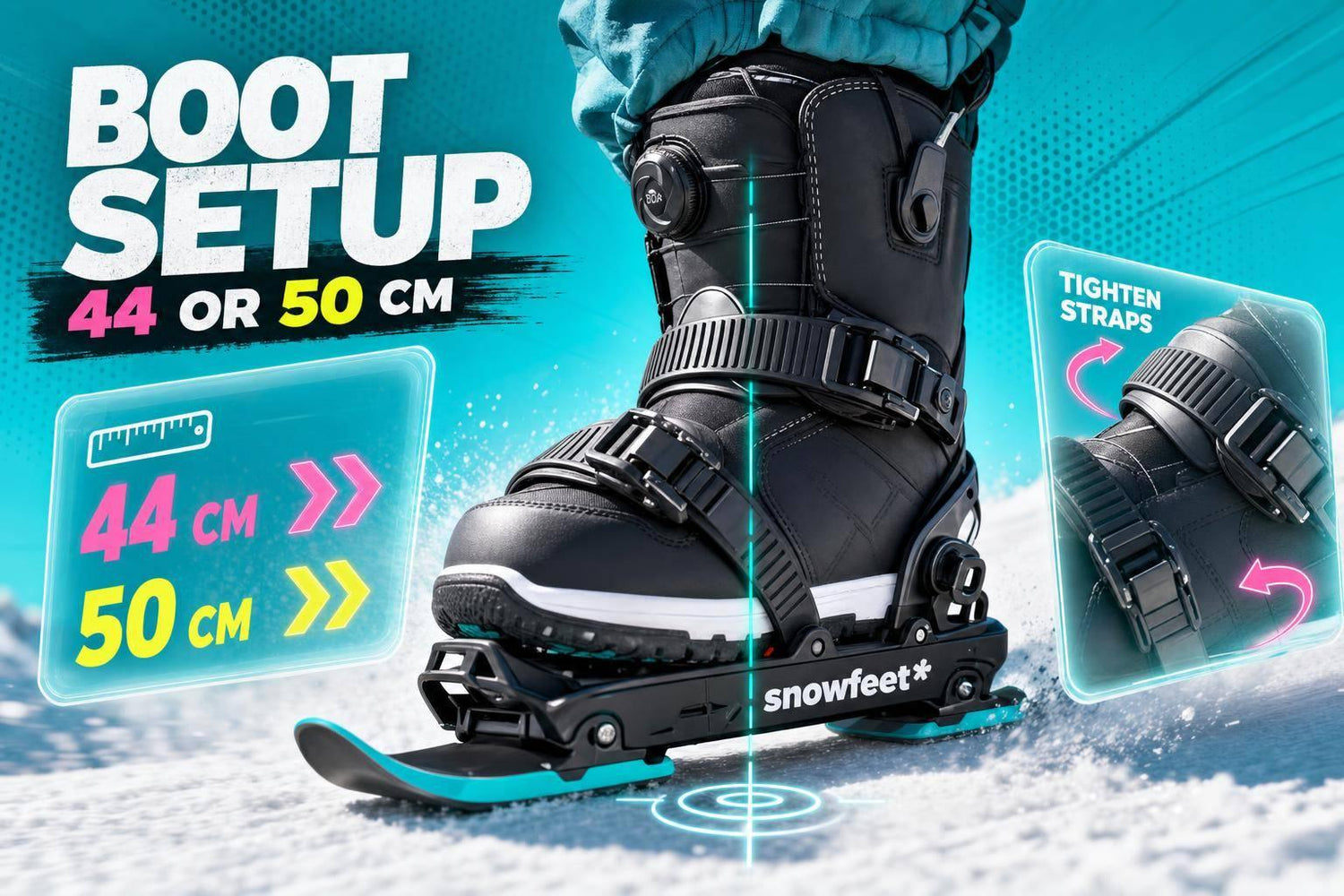
Yes - if you already own snowboard boots, you can use ski skates. The short answer is simple: pick 44 cm if you want tighter turns, pick 50 cm if you want more calm underfoot, and make sure your boot size matches the binding before you head out.
I’d boil the whole setup down to this:
- 44 cm = more nimble, more playful, less steady at speed
- 50 cm = more planted, better on firmer snow
- 44 cm fits snowboard boots in US 6–14.5
- 50 cm fits snowboard boots in US 6–13
- Your boot should feel snug, centered, and locked down
- Loose straps and off-center boots are the two big setup mistakes
If your snowboard boots are bulky, check strap reach before you ride. And if you’re going to a resort, check the hill’s rules first, because short skis are allowed at many places, but not all.
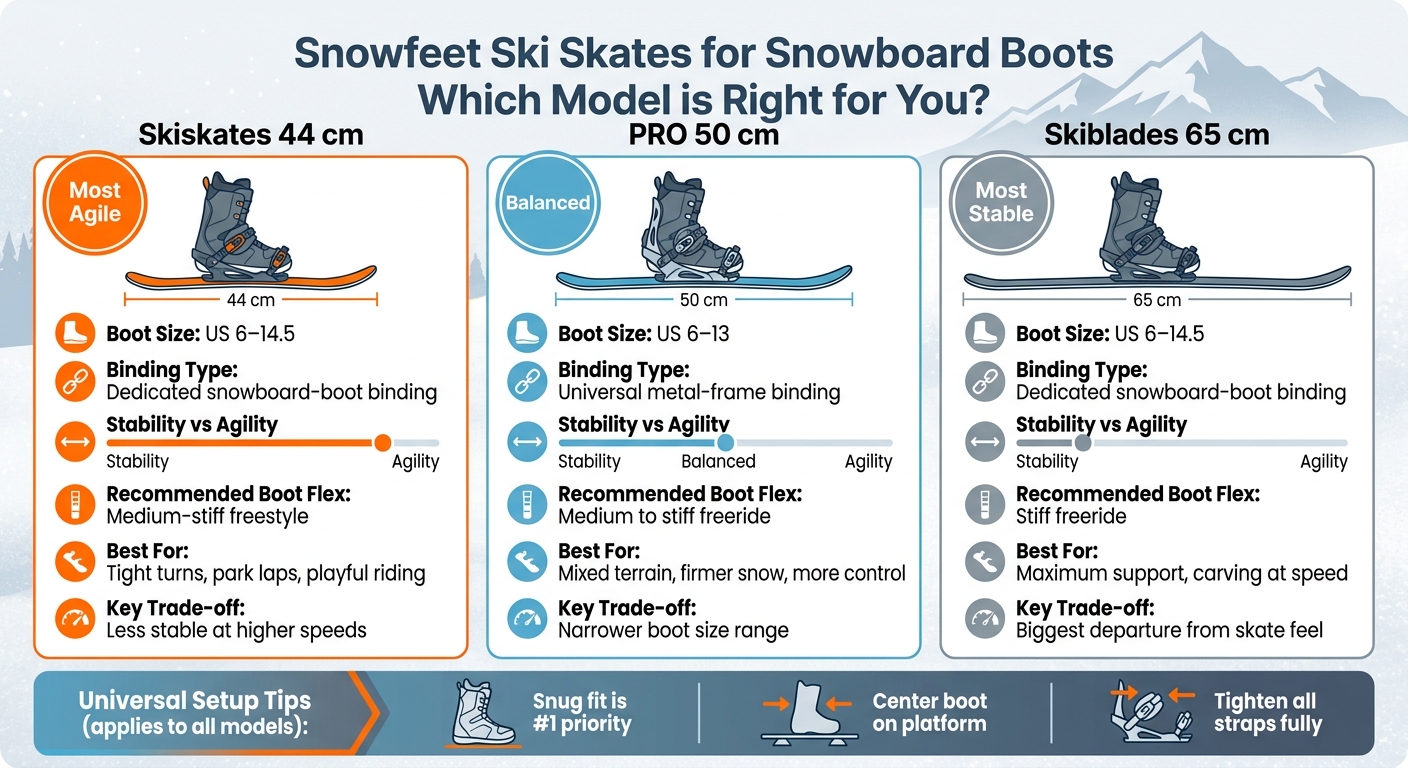
Snowfeet Ski Skates for Snowboard Boots: Model Comparison Guide
How to Use Snowfeet* Skiskates 44 CM | Skates for Snow | Mini Ski | Snowblades | Snowskates

Quick Comparison
| Model | Best for | Snowboard boot size | Ride feel | Main thing to know |
|---|---|---|---|---|
| Skiskates 44 cm | Tight turns, park laps, playful riding | US 6–14.5 | Most nimble | Less steady at higher speed |
| PRO 50 cm | Mixed terrain, firmer snow, more control | US 6–13 | More planted | Uses a metal-frame binding |
| Skiblades 65 cm | Riders who want the most support | US 6–14.5 | Most steady | Bigger jump from skate feel |
Here’s my short take: if you want the easiest path from snowboard boots to ski skates, focus on binding fit first, length second. That one check saves a lot of parking-lot messing around :)
If you want a visual before you set things up, these videos can help:
- Snowfeet official YouTube
- How snowboard boot bindings work on short skis
- Basic ski skate riding tips
So, if your boots fit the binding and the straps hold the boot flat with no side-to-side play, you’re in good shape to ride.
Choose the Right Snowfeet* Model for Snowboard Boots
Start by picking the model that fits your boot size and how you like to ride. The 44 cm model leans toward agility. The 50 cm model leans toward stability. The 65 cm Skiblades give you even more stability, but for snowboard boots, the 44 cm and 50 cm models are the main picks.
Here’s the key point: binding type and boot size matter more than length alone. So once you choose the model, the next move is simple - make sure the binding matches your boot.
Snowfeet* Skiskates 44 cm vs Snowfeet PRO 50 cm
The 44 cm model is the most agile of the bunch. It turns fast, feels lively, and suits quick laps, park riding, and anyone who likes an active setup. The trade-off? It’s less forgiving at speed.
The 50 cm PRO adds 2.4 in (6 cm) of length plus metal edges, which gives it a more stable feel on firm snow and mixed terrain. It still stays compact, but it calms things down a bit.
Use the 65 cm only if you want more stability than the 44 cm or 50 cm can give you.
After you settle on 44 cm or 50 cm, check the size range and strap adjustment before riding. That little check can save a lot of parking-lot fiddling later :)
Boot Compatibility, Binding Types, and US Sizing
Snowboard boots work well here because they already lock into strap-style bindings. If you already own snowboard boots, Snowfeet* makes for a simple setup.
The Skiskates 44 cm use a dedicated snowboard-boot binding sized for US 6–14.5. The PRO 50 cm uses a universal metal binding that fits snowboard boots in US 6–13.
Make sure the straps close all the way around your boot. That matters most if you ride bulky freeride boots or wear smaller sizes under US 6. Snowfeet* also recommends extra straps for larger boots.
Boot flex matters too. A medium-stiff freestyle boot works well with the Skiskates. A stiffer freeride boot is a better match for the PRO 50 cm or Skiblades 65 cm, mainly if you like carving at speed.
With the model and size locked in, the setup itself is pretty straightforward.
Comparison Table: 44 cm vs 50 cm vs 65 cm
| Feature | Skiskates 44 cm | PRO 50 cm | Skiblades 65 cm |
|---|---|---|---|
| Length | 44 cm / ~17 in | 50 cm / ~20 in | 65 cm / ~26 in |
| Binding type | Dedicated snowboard-boot | Universal metal | Dedicated snowboard-boot |
| Snowboard boot size (US) | US 6–14.5 | US 6–13 | US 6–14.5 |
| Stability vs. agility | Most agile | Balanced | Most stable |
| Recommended boot flex | Medium-stiff freestyle | Medium to stiff freeride | Stiff freeride |
sbb-itb-17ade95
How to Set Up Snowfeet* Skiskates 44 cm with Snowboard Boots
Once you've chosen the 44 cm model, get the boot fit sorted before your first run. With the 44 cm Skiskates, setup is pretty straightforward: fit the boot, center it, and test the hold. Snowboard boots make this easy because the straps are made for that boot style.
Pre-Ride Checks and Boot Preparation
Place the Skiskates on a flat, stable surface with the bindings facing up. Then check the screws, straps, buckles, edges, base, and deck for any damage or looseness. If you spot a damaged part, replace it or fix it before riding.
Before you step in, tighten your snowboard boots. Use the lacing system or BOA so your heel stays planted and doesn’t lift when you flex forward. That little heel pop might seem small, but on snow it can feel sketchy fast. Also check that the straps can close all the way around the boot.
Adjust Binding Length, Center the Boot, and Strap In
Once the boot is ready, adjust the binding length to match your boot size before stepping in. Then place the boot in the middle of the platform so pressure stays even and control feels steady. Strap in and do a firm forward-flex test.
If anything feels loose, stop and check the fit again. A small fix here can save you a rough first run :)
Final Safety Check Before Riding
If the boot shifts, reset the straps before you ride.
How to Set Up Snowfeet PRO 50 cm with Snowboard Boots
If you picked the PRO 50 cm because you want a more stable feel, you’ll start with the binding that has a metal frame underneath. That’s the big difference here, and it calls for its own setup.
How the Universal Metal Binding Works
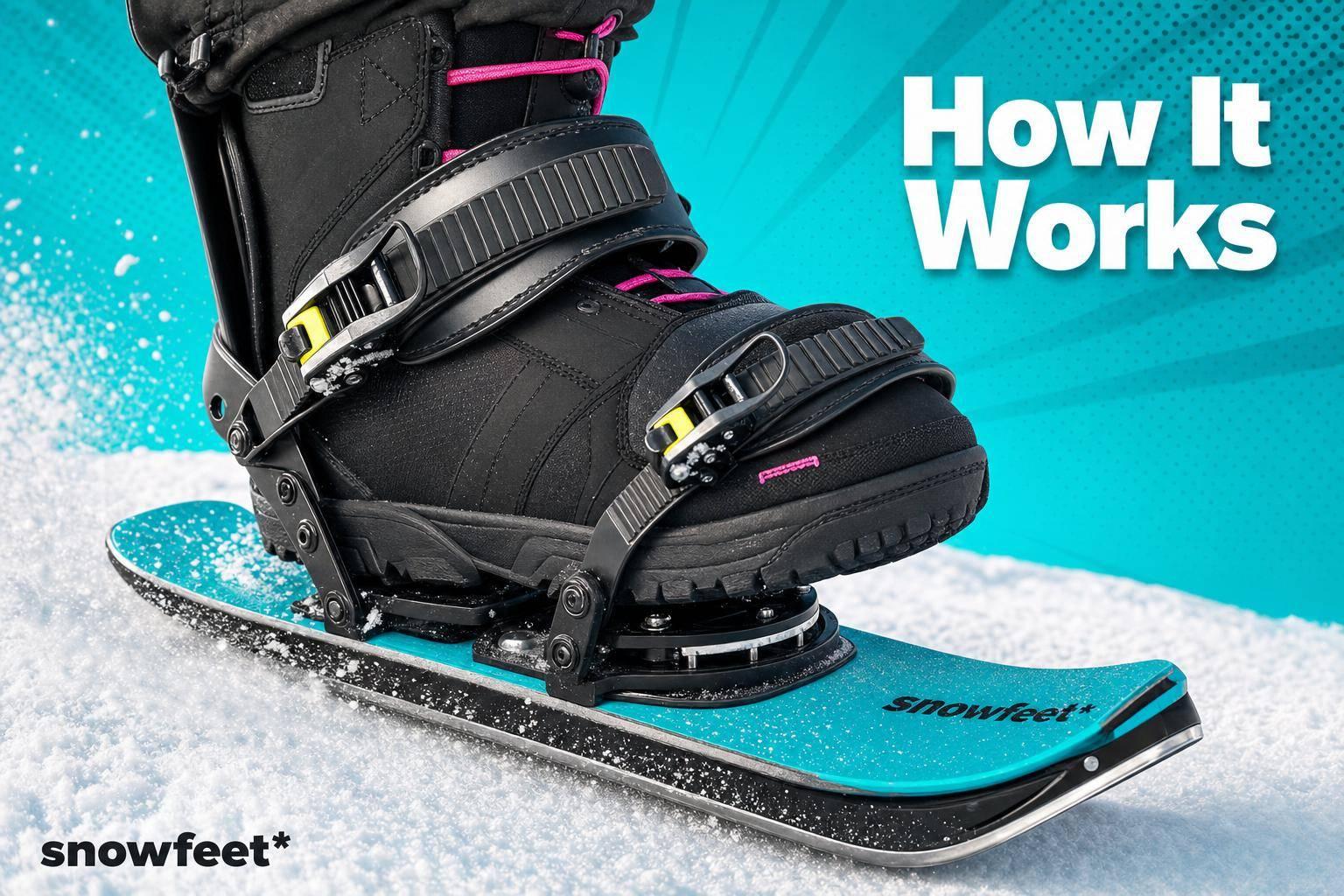
The Snowfeet PRO 50 cm uses an adjustable metal-frame binding with toe and ankle straps; there is no step-in system. It keeps the boot flat on the platform, which is a big reason it pairs so well with snowboard boots.
Snowboard boots are the best match here because the flat sole sits cleanly in the binding, and the supportive cuff helps keep things steady. So you get a small, controlled setup without needing separate ski boots.
Once the boot is in the right spot, the rest is pretty simple.
Step-by-Step PRO 50 cm Binding Adjustment
Start by loosening both straps - the toe strap and the ankle strap - so the boot slides in with less fuss, but leave the straps threaded through the buckles. Set the boot flat on the metal platform, line up the back of the boot with the heel plate, and check that the sole sits even without rocking.
Then tighten the ankle strap first. That pulls the heel back against the plate. After that, tighten the toe strap so the front of the foot feels snug, but not squeezed. Keep the buckles on the outside of each foot.
Before you ride, knock off any snow or ice from the sole and the binding platform. Even a little snow under the boot can change the fit once you start moving. Do a quick lift test at the heel and toe. If the boot pulls away from the plate, set it back in place and tighten the straps again.
First Test Run and Fine-Tuning
Once the binding feels secure, take one slow test run to check the fit on snow. Use that first lap to feel for stability and any odd pressure under your foot.
If you notice pressure points or numb toes, loosen the toe strap a bit. Small tweaks after that first run can make a big difference, especially before you head onto steeper terrain.
Common Setup Mistakes and Final Takeaways
Mistakes That Cause Poor Control
Once the boot is fitted, a few simple mistakes can wreck control fast.
Loose snowboard boots are the big one. If your foot moves inside the binding, control drops right away. You want snug snowboard boots with firm ankle support. That same fit rule applies to both the 44 cm Skiskates and the PRO 50 cm.
The next problem is loose straps. If you strap in and can still wiggle the boot side to side, the skate will feel unstable. And if the boot sits off-center, your balance gets thrown off too. That makes turning and stopping harder to control. Lay the straps flat and keep the buckles clear of your stance.
It also helps to set the right expectation. Snowfeet* ski skates are not built to feel like long skis. They’re made to be easy to learn, portable, and fun for casual riders. Long skis still do better in some conditions.
One nice thing here: Snowfeet* bindings adjust across different snowboard boot sizes, so setup is a lot less of a guessing game.
Troubleshooting Table: 44 cm and 50 cm Setups
Use this quick-fix table if the skate still feels unstable after setup.
| Common Mistake | On-Snow Symptom | Quick Fix |
|---|---|---|
| Bindings too loose | Skate feels unstable; boot slides | Re-tighten toe and ankle straps; confirm there is no movement |
| Boot off-center | Balance feels off; edge control suffers | Re-center the boot over the binding and re-tighten both straps |
| Oversized or loose-fitting boots | Constant wobble; poor response | Switch to a snug, supportive snowboard boot |
Setup Checklist Before You Ride
Run through these three checks before every ride. It takes about a minute, and yeah, it can save you from a sketchy first run :)
- Make sure the model fits your boot
- Check that the boot is centered
- Tighten the straps fully
If anything feels loose, stop and check the fit again before you keep going.
Snowboard boots are the right match for Snowfeet* when the fit is snug, centered, and locked in.
FAQs
Can I use any snowboard boots with ski skates?
No. Snowboard boots don’t work with all ski gear.
Regular long skis use release bindings, and those bindings need rigid ski boots. So if you try to use snowboard boots there, it won’t work.
That said, most Snowfeet* short-ski models do fit snowboard boots thanks to adjustable bindings. That includes:
- 38 cm Mini Ski Skates
- 44 cm Skiskates
- 50 cm Snowfeet PRO
- 65 cm Skiblades
One catch: always check the exact model. The 120 cm blades need ski boots.
How tight should the bindings feel?
Your Snowfeet bindings should feel snug and secure. You shouldn’t notice any awkward play or wobble between your boot and the binding. If the fit is loose, carving and stopping can feel less precise. Not fun.
If you need a tighter fit, use a screwdriver to move the strap to a different hole. If your boots need more room, use the extra-long straps included with Standard or Pro X models.
Are ski skates allowed at every resort?
Yes - modern ski skates and snowblades are allowed at nearly all ski resorts.
Older models did get turned away at some places. But current Snowfeet* products line up with resort rules because they include metal ski edges and safety leashes.
Their small size makes them easy to handle, and they work well on groomed runs. So, for most resorts, they’re a solid alternative to long skis.











留下評論
此網站已受到 hCaptcha 保護,且適用 hCaptcha 隱私政策以及服務條款。