




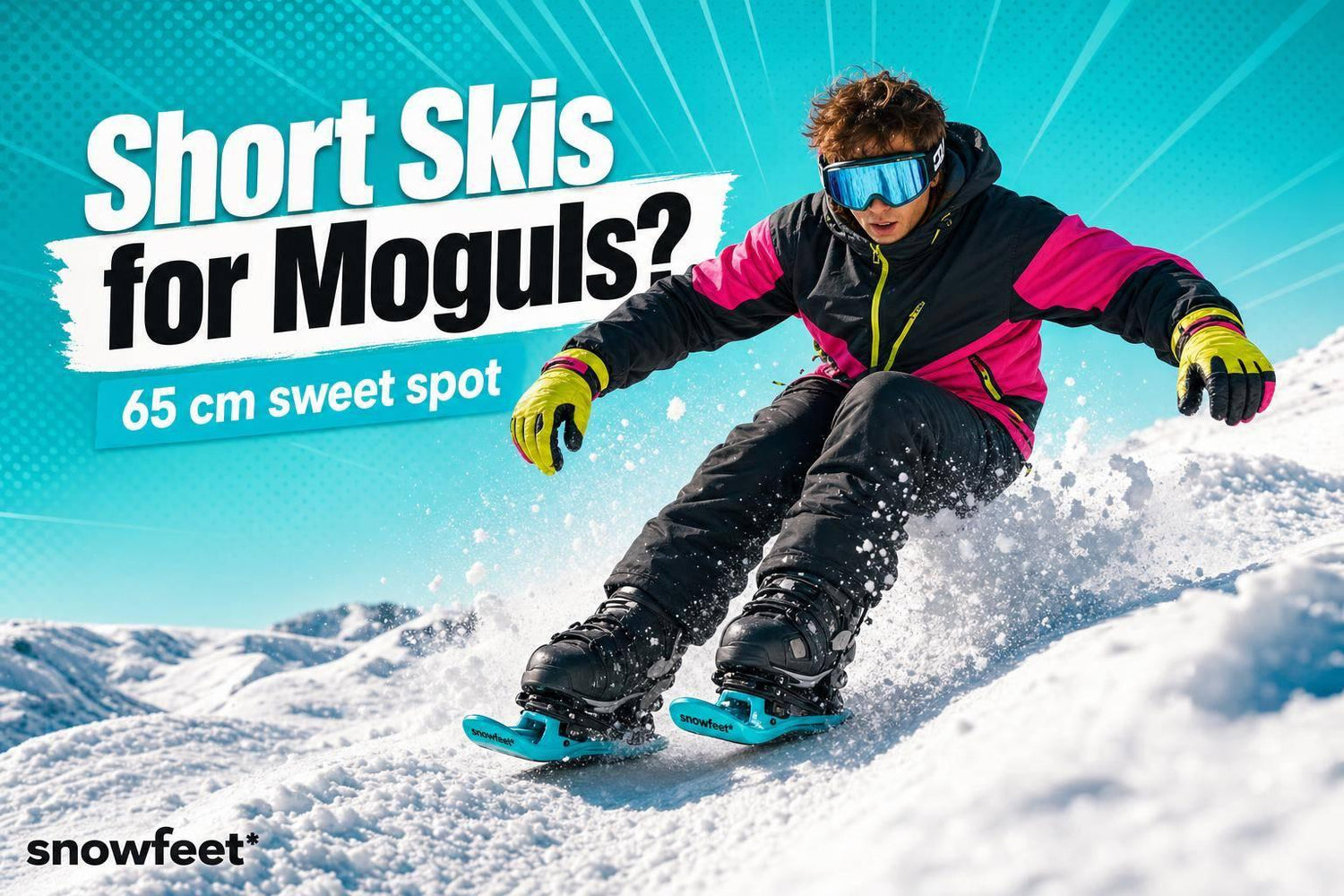
Yes - for most recreational skiers, short skis are a smart pick for moguls. If you ski blue or black bump runs at a moderate pace, shorter skis usually make turns easier, help with speed control, and take some stress out of tight lines.
Here’s the short answer:
- 44 cm works best for playful skiing in small bumps at lower speed
- 65 cm is the best starting point for most skiers
- 99 cm gives you more support when you ski faster or mix bumps with groomers
- Longer skis still make more sense for fast, hard-charging mogul skiing
Why? Because moguls punish slow turns. Short skis are easier to pivot, easier to pull back under you when you get off line, and less tiring on your legs. That matters a lot when your bump run turns into, uh, survival mode :)
The trade-off is simple: the shorter the ski, the less calm it feels as speed goes up. That’s why very short skis can feel shaky on icy bumps or in big moguls, while longer skis feel smoother when you ski fast.
Snowboarder tries Snowfeet* | Which Snowfeet* Short Ski is the Best? | Snowblades 44, 65, 99 Review
Quick Comparison
| Ski length | Best for | What to watch for |
|---|---|---|
| 44 cm | Small bumps, playful turns, low speed | Can feel nervous at speed |
| 65 cm | Most resort moguls, intermediate skiers | Less support when pace climbs |
| 99 cm | Mixed terrain, faster skiers, bigger bumps | Takes a bit more effort to pivot |
| 150–200+ cm | Fast moguls, strong skiers, open lines | Harder to turn in tight bumps |
So, if I had to keep it simple: start short, then add length only if your speed and terrain call for it. For most people, that sweet spot is 65 cm.
What Makes a Ski Good in Moguls
Moguls ask a lot from a ski. You need fast turn start, easy pivoting, steady speed control, and enough forgiveness to stay on your feet when your timing gets a little messy. And in bumps, ski length does a lot of the heavy lifting.
Turn Quickness and Tight-Line Control
The first big plus is turn quickness. In tight moguls, shorter skis pivot faster because there’s less mass to swing and less ski to move around. They also tend to have a shorter turning radius.
That means a shorter ski can cross the fall line faster. For intermediate skiers, that often leads to cleaner turns, less effort, and a tighter line through the bumps. Put simply: less wrestling, more steering.
Forgiveness, Speed Control, and Stability Limits
Short skis are also easier to forgive when things go a bit sideways. If you get late on a turn or drift out of balance, it’s easier to pull a shorter ski back under you. That matters a lot in moguls, where small mistakes happen all the time. It also helps cut down on fatigue, which your legs will thank you for :)
There is a trade-off, though. Short skis can feel twitchier at speed, and they pass more of that bump-to-bump movement up to you. Longer skis usually feel calmer and do a better job with bigger hits. So if a skier is charging hard down a steep mogul field, a longer ski may feel more settled, even if it takes more work to pivot.
So the best pick depends on how you ski in bumps. Your speed matters. Your line choice matters. Your style matters. That’s why short Snowfeet* models feel so manageable in moguls - those trade-offs are what separate short skis from longer skis in moguls.
Short Skis vs. Long Skis in Moguls
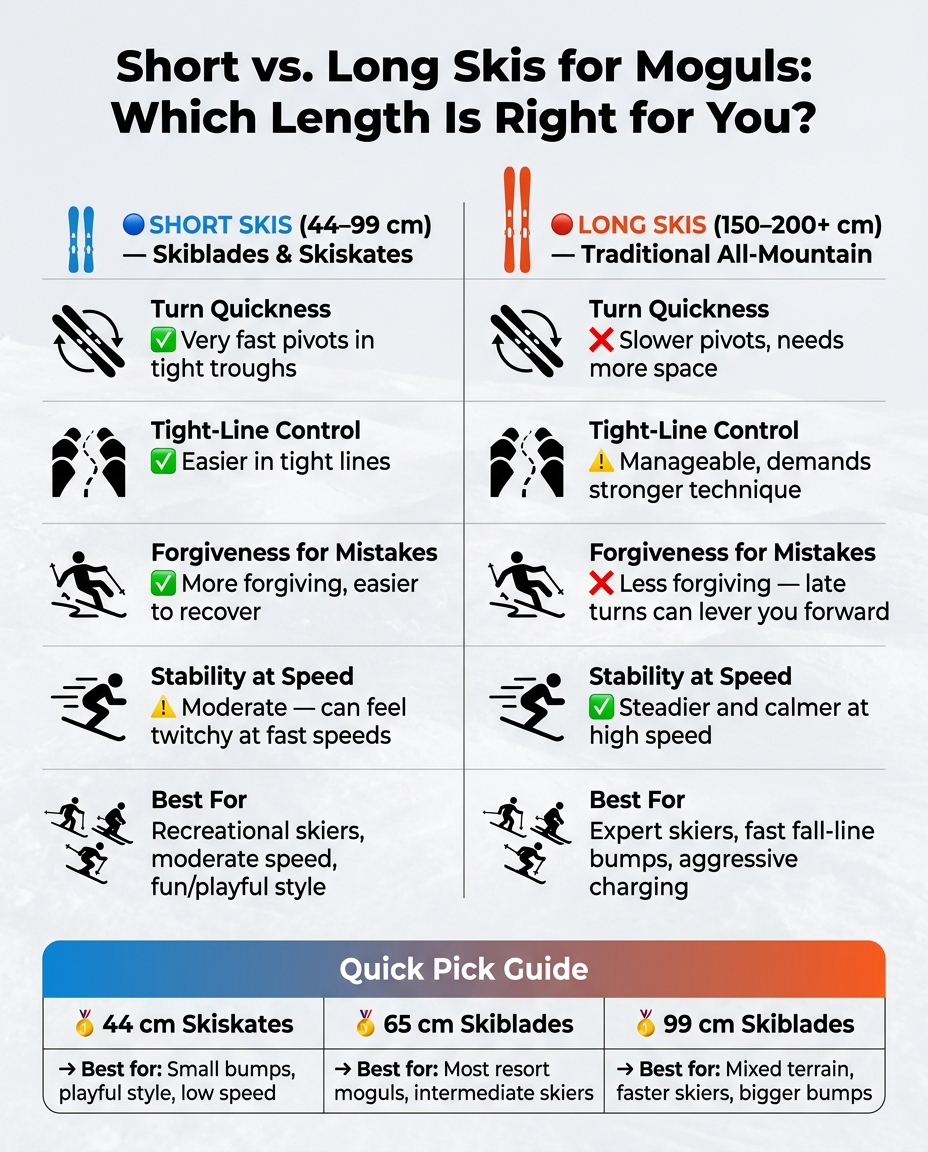
Short vs. Long Skis for Moguls: Which Length Is Right for You?
The trade-offs show up FAST in real moguls. This is where ski length stops being a theory thing and starts feeling very, very obvious on snow. And it’s also why short Snowfeet* models often feel easier in actual bump runs.
| Factor | Short Skis / Skiblades (44–99 cm) | Traditional all-mountain skis (around chin to head height) | Quick takeaway |
|---|---|---|---|
| Turn quickness | Very fast pivots in tight troughs | Slower pivots; needs more space | Short skis win for quick direction changes |
| Tight-line control | Easier in tight lines | Manageable, but demands stronger technique | Short skis make tight lines easier |
| Forgiveness for mistakes | More forgiving | Less forgiving - late turns can lever you forward | Short skis are more forgiving |
| Stability at speed | Moderate - can feel twitchy in fast lines | Steadier at speed | Long skis win when speed matters |
Where Short Skis Clearly Win
Short skis have a clear edge when the goal is control and fun at moderate speeds. They’re easy to pivot, so linking tight turns takes less work. And when you need to scrub speed, quick speed checks feel more natural.
They also tend to feel less intimidating. That’s a big deal in moguls, where hesitation can snowball fast. If you like playful lines, quick moves, and a more relaxed feel in the bumps, short skis just make life easier.
Snowfeet* Skiblades 65 cm and 99 cm hit a sweet spot for many bump skiers. They’re short enough to feel nimble in the moguls, but still long enough to stay composed between bumps.
For some skiers, though, more length still makes sense.
Where Longer Skis Still Work Better
Longer skis earn their keep when speed and aggression are the focus. In fast fall-line bumps - where you stay in the fall line and move quickly over the tops - a longer ski covers more of the terrain and spreads pressure more evenly. The ride feels smoother and more stable.
They also make more sense for expert skiers who want one setup to handle groomers, trees, and moguls without swapping gear. If you want a daily driver with a bigger platform and better calm at speed, a standard all-mountain ski still has a strong case.
That gap shows up most when you pick ski length based on how you like to ski.
sbb-itb-17ade95
Which Ski Length Works Best for Your Mogul Style
The best mogul length is the shortest ski that still fits your speed, bump size, and how often you ski moguls. That’s the sweet spot. Go too long, and bumps can feel like a wrestling match. Go too short, and you may give up stability once your speed picks up.
Here’s the short version by skill level and terrain, plus where short skis beat longer skis in moguls:
| Skier Level | Mogul Usage | Best Terrain | Length Category | Suggested Snowfeet* Model |
|---|---|---|---|---|
| Beginner | Learning bumps, small moguls | Mellow resort runs, groomers | Very short | Skiblades 65 cm |
| Intermediate | Regular bump runs, moderate speed | Mixed groomers and moguls | Short | Skiblades 65 cm or 99 cm |
| Advanced | Side hits, tight lines, tricks | Park, small-to-medium moguls | Very short | Skiskates 44 cm |
| Advanced | Mixed resort days, occasional bumps | Groomers and moguls | Slightly longer short | Skiblades 99 cm |
| Expert/Aggressive | Fast fall-line bumps, high speed | Steep moguls and open runs | Longer short or traditional skis | Skiblades 99 cm or longer traditional skis |
Beginner and Intermediate Riders: Go Shorter for Easier Bumps
If you’re still building your mogul rhythm, shorter is usually the smarter call. Short skis are easier to bring back when you get late in a turn. And in moguls, that matters a lot when your timing is still coming together.
The Snowfeet* Skiblades 65 cm make a lot of sense here. They’re short enough to feel nimble in small-to-medium resort moguls, but still long enough to stay steady when you slide onto a groomer between bump runs. That mix works well for most recreational bump skiers. For many new bump skiers, 65 cm is the easiest place to start.
Advanced Riders: Match Length to Speed and Terrain
For stronger skiers, it gets a bit more specific. Skill matters, sure, but speed, terrain, and line choice matter more here. This comes down to knowing when 44 cm is too short and when 99 cm is the safer all-around short ski.
If your style is playful - quick hops, zipper lines, and side hits - the Skiskates 44 cm work best for tight control at low speed in small-to-medium moguls.
If you split your day between bumps and groomers, go with the Skiblades 99 cm if you want one ski for both. Use longer skis only if you spend most of your time in fast fall-line bumps or on steep, open terrain.
Next, we’ll narrow those choices to the best Snowfeet* models for moguls.
Best Snowfeet* Options for Moguls
Snowfeet* has three mogul-friendly picks: Skiskates 44 cm ($460), Skiblades 65 cm ($590), and Skiblades 99 cm ($690). The right one comes down to three things: your speed, the size of the bumps, and how much stability you want.
This is the simple way to turn the ski length advice above into an actual Snowfeet* choice.
| Model | Best Mogul Use | Main Strength | Main Limit |
|---|---|---|---|
| Skiskates 44 cm | Small-to-medium bumps, playful style | Fastest pivots, most agile | Gets twitchy at speed and on icy bumps |
| Skiblades 65 cm | Most resort moguls | Most balanced for most riders | Less stable at higher speed |
| Skiblades 99 cm | Mixed terrain, faster transitions | Best composure at speed | Slower to pivot than 65 cm |
Start with the shortest ski that still fits your speed and the size of the bumps. That’s usually the sweet spot.
Snowfeet* Skiskates 44 cm: Best for Playful Small-to-Medium Bumps
The 44 cm Skiskates are the quickest, most nimble option in the lineup. They pivot in a flash, which makes them a blast for tight direction changes in small-to-medium moguls at low-to-medium speeds.
But here’s the trade-off: they can feel twitchy once you start moving faster, and icy bumps make that even more clear. In bigger moguls or faster bump lines, the short platform gives up too much stability. So, think of these as a fun freestyle tool for bumps, not the ski you’d grab for charging a fast zipper line.
Snowfeet* Skiblades 65 cm and 99 cm: Best for Most Mogul Riders
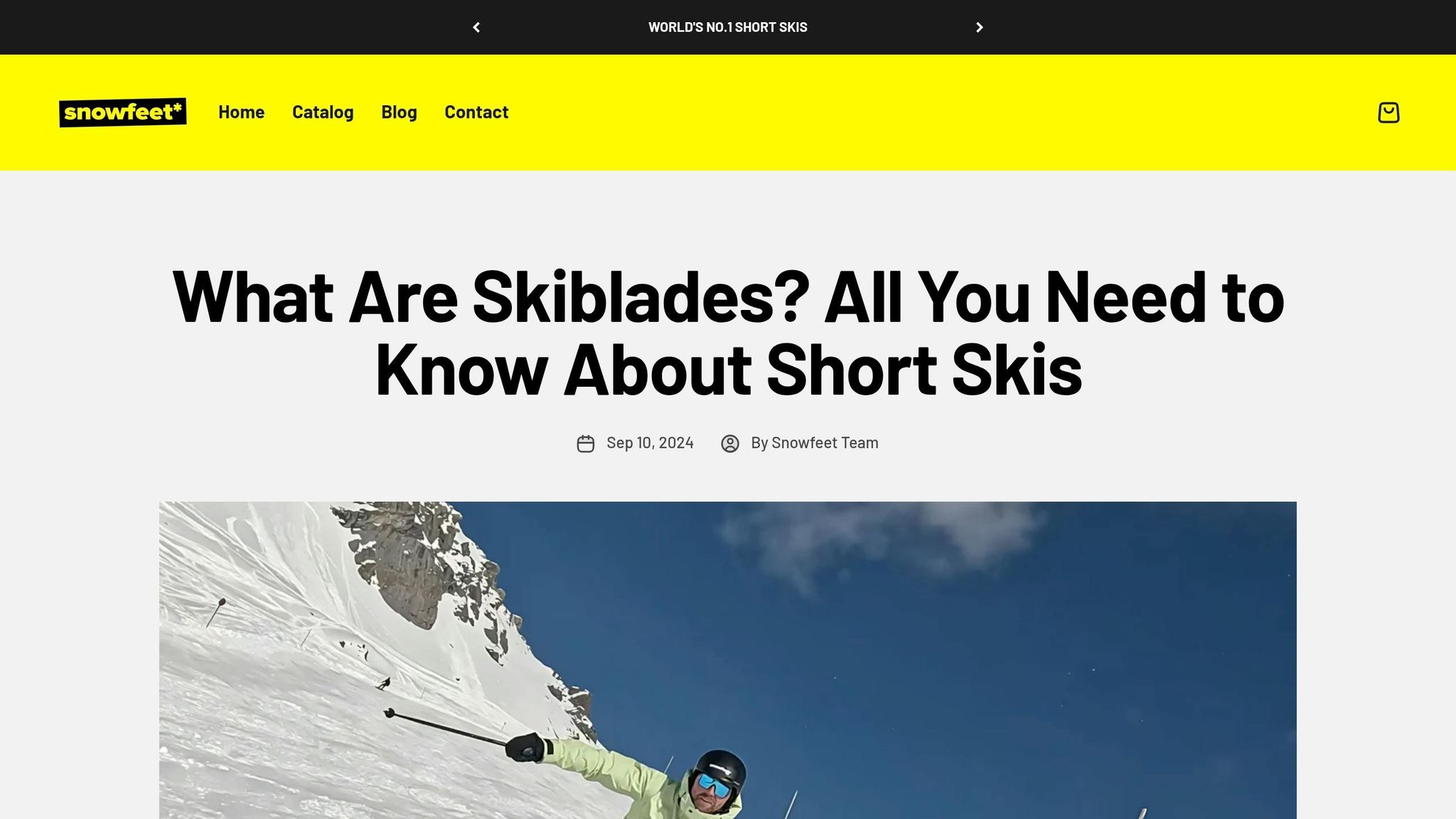
For most people, this is the best place to start. The 65 cm Skiblades are the most balanced pick for most mogul riders. They’re short enough to turn fast in bumps, but long enough to feel a bit more forgiving when your timing slips. And if you like to mix mogul runs with park laps, the 65 cm length does both without feeling sketchy.
Go longer only if you want more calm when speed picks up. The 99 cm Skiblades make more sense when you want extra support underfoot, especially in chopped-up snow, on faster groomer sections between mogul fields, or when you just ski with more pace. They feel more planted than the 65 cm version when the terrain gets rough or the speed climbs. If you’re a stronger skier and want short-ski agility without giving up that all-mountain feel, 99 cm is the better call.
Conclusion: Choose Short Skis for Control and Fun, Longer Skis for Speed and Power
Yes - short skis are good for moguls for most recreational skiers. They pivot faster, make speed control easier, and help you get back on track when your timing is off. If you want more control and more fun in bumps, going shorter is the simplest move.
Longer skis still do better at speed and power. If you ski fast in zipper lines, land bigger airs, or want one ski for bumps and groomers, a longer ski makes more sense. Short skis give up some high-speed stability in exchange for agility and forgiveness - and for most recreational mogul skiers, that’s a trade worth making.
That makes the Snowfeet* pick pretty simple:
- Skiskates 44 cm - best for small bumps and the most playful feel at lower speeds
- Skiblades 65 cm - the best all-around pick for most mogul skiers
- Skiblades 99 cm - better for more stability at speed and mixed terrain
In practice, pick by speed first. Start with the 65 cm Skiblades. Move to 99 cm if you want more calm when things speed up. Go with 44 cm if you want max agility and mostly ski at lower speeds.
Short skis aren’t the top pick for race-speed moguls. But for most recreational bump skiers, they make moguls a lot more fun and a lot less intimidating. :)
FAQs
Are short skis harder to use on icy moguls?
Yes. Short skis are usually harder to handle on icy moguls because they have less edge contact than longer skis.
Snowfeet Skiblades and Skiskates do have metal edges, so they can still grip pretty well. But their short length means you need to be more exact with your weight if you want to stay in control. On firm, icy snow, longer skis tend to do a better job.
If you’re choosing between Snowfeet options, the 99 cm Snowfeet model is the safer pick over the 65 cm version for icy moguls.
Can I use short skis for moguls and groomers?
Yes - short skis work GREAT for both moguls and groomers.
Their shorter length gives you a tighter turning radius, so turns feel faster, cleaner, and less tiring than with long skis. That’s a big deal when you’re weaving through bumps or making lots of turns on packed runs.
For moguls, _Snowfeet Skiskates (44 cm)_* and Skiblades (65 cm or 99 cm) shine because they’re easy to pivot and control. They let you react fast without feeling like you’re dragging around extra ski.
On groomers, they feel responsive, fun, and stable, while still being easier to handle than full-length skis. So if you want something playful that doesn’t fight you every turn, short skis are a solid pick :)
How do I know if 44 cm is too short for me?
It depends on what kind of skiing you want to do.
If your goal is fast turns in tight moguls and tree runs, 44 cm Skiskates are a strong pick. They pivot fast and react almost right away, which makes them a blast in narrow spaces.
That said, they can feel too short if you want more stability at higher speeds or more float in deep powder. If you’re after a bit more balance across different terrain, 99 cm Skiblades are the better next step.
So, think of it like this:
- 44 cm Skiskates: best for agility, tight turns, and quick response
- 99 cm Skiblades: better for all-mountain use, more balance, and more support in mixed conditions











留下評論
此網站已受到 hCaptcha 保護,且適用 hCaptcha 隱私政策以及服務條款。