




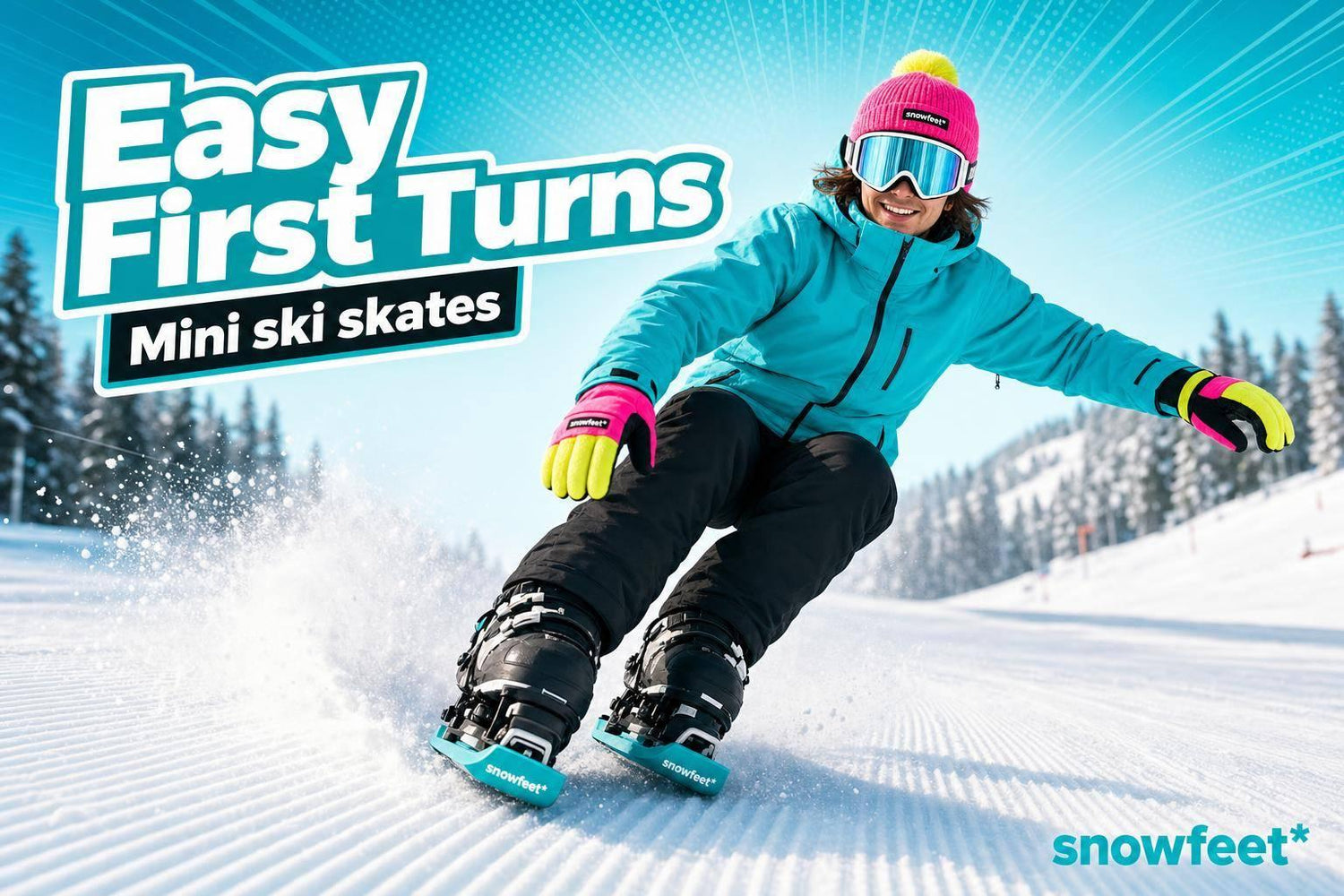
Yes - for many first-time riders, mini ski skates are worth it. If you want faster learning, less gear hassle, and more fun on easy groomed runs, they make a lot of sense. If you want high speed, deep powder, or big-mountain goals from the start, longer skis still make more sense.
Here’s the short version:
- Best for beginners who want easy control: mini ski skates
- Best Snowfeet pick for more balance: 65 cm Skiblades
- Best pick for simple fun and easy packing: 38 cm or 50 cm models
- Best pick for skaters: 44 cm Skiskates
- Best for speed and powder: longer skis
- Main trade-off: shorter gear is easier to turn, but less steady as speed climbs
That’s the whole story in plain English. Most new riders don’t need max speed on day one. They need gear that helps them turn, stop, and stay relaxed. And that’s where mini ski skates often win :)
A few numbers stand out:
- Snowfeet models in this article range from 38 cm to 65 cm
- Longer skis are often 150+ cm
- The 50 cm PRO starts at $299
- The 44 cm Skiskates start at $460
- The 65 cm Skiblades use a 4 m turn radius for easy carving
Snowfeet* Review: Are Skiskates Worth It? | Mini Ski | Skates for Snow | Skating Ski | Short Ski
Quick Comparison
| Option | Best For | Learning Feel | Stability | Portability | Main Downside |
|---|---|---|---|---|---|
| Mini ski skates (38–50 cm) | First-timers, casual fun, travel | Very easy | Lower at speed | High | Can feel loose on rough snow |
| Skiskates (44 cm) | Skaters, playful groomer laps, park | Easy | Medium | High | Lively feel may not suit every beginner |
| Skiblades (65 cm) | Beginners who want more balance | Easy to moderate | Best of the short options | Medium | Less compact than smaller models |
| Long skis (150+ cm) | Speed, powder, mountain progression | Moderate | High | Low | More gear, more effort to learn |
| Snowboard | Riders who want a sideways stance | Harder at first | Medium | Low | Edge control can take longer |
So, if I were helping a friend at the shop, I’d say this: buy mini ski skates if your goal is a low-stress first day on groomed snow. Go with the 65 cm Skiblades if you want the safest bet for balance. Go smaller if you care most about easy packing and playful laps.
If you want a quick visual before you buy, these YouTube links can help:
How Mini Ski Skates Change the First-Day Experience
Ease of Learning, Turning, and Stopping
For beginners, the big test isn’t speed. It’s simple stuff: Can I turn? Can I stop? Do I feel in control?
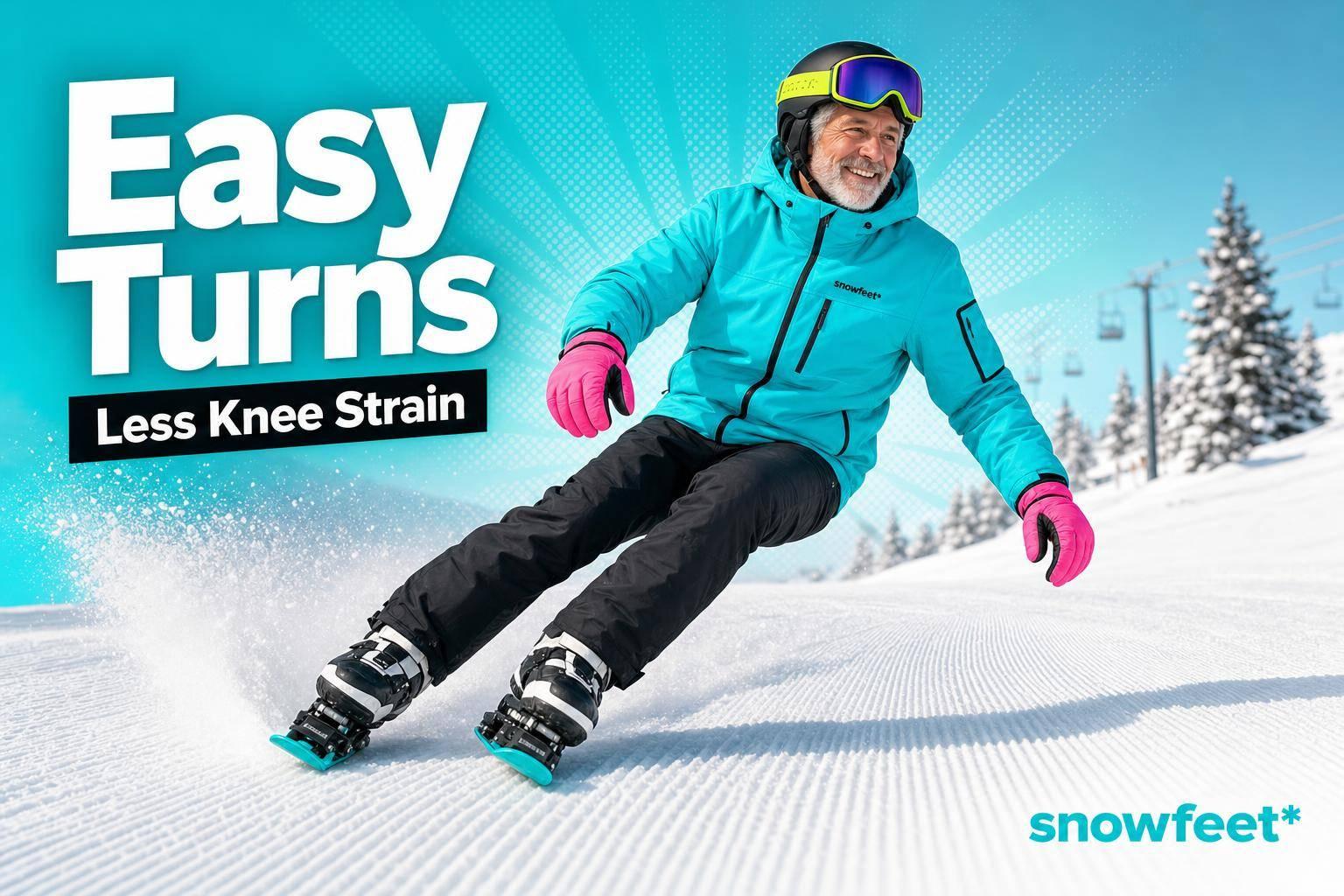
That’s where mini ski skates often feel easier than long skis. They react faster, so beginners can turn and stop with less effort. Traditional skis are much shorter, so turns happen faster with less effort. That gap shows up fast on a green run, when someone is trying to steer, slow down, and stay loose instead of stiff.
Snowfeet* says the Skiskates 44 cm give an inline-skating feel on groomed slopes and in snow parks. If you already skate, that side-to-side edge motion can feel familiar right away. You’ll still need balance and some practice, of course, but the learning curve is shorter.
Stability, Safety, and Comfort at Beginner Speeds
The 38 cm and 50 cm models are light and agile, but they get less stable as speed goes up. So, if you’ve never been on snow and don’t have a skating background, the Snowfeet* Skiblades 65 cm are a better place to start. They give you more stability and more edge support.
That’s the trade-off in plain English:
- Shorter models are easier to handle
- Longer models feel more steady at speed
For most first-time riders, easier handling matters more.
Verified customer Brad Tolin put it simply:
"These ski blades are a blast to use. Super easy to control, quick to turn, and way more forgiving than traditional skis."
Comfort matters too, and not just in a nice-to-have way. Snowfeet* models with snowboard boot bindings let you stand in a more flexible position, which can help cut fatigue. As customer Sunshine Straiges noted:
"I had no muscle soreness after using these because I can change my leg position, unlike the snowboard which is set."
Less fatigue means more runs. And on day one, more runs usually means more confidence.
Why Fun Matters More Than You Think on Day One
Most beginners don’t start by bombing steep terrain. They start in low-pressure spots: gentle groomed slopes, green runs, snow parks, and laid-back resort areas. Mini ski skates tend to fit those places well.
They’re light. They respond fast. And that means small wins can come sooner, like a clean turn or a stop that doesn’t feel chaotic. That playful feel is a big part of the appeal. It helps first-timers relax, and it’s one reason many of them keep riding mini ski skates after day one.
Next comes the buying question: where do mini ski skates beat traditional skis and snowboards, and where do they fall short?
sbb-itb-17ade95
Mini Ski Skates vs Traditional Skis and Snowboards for First-Timers
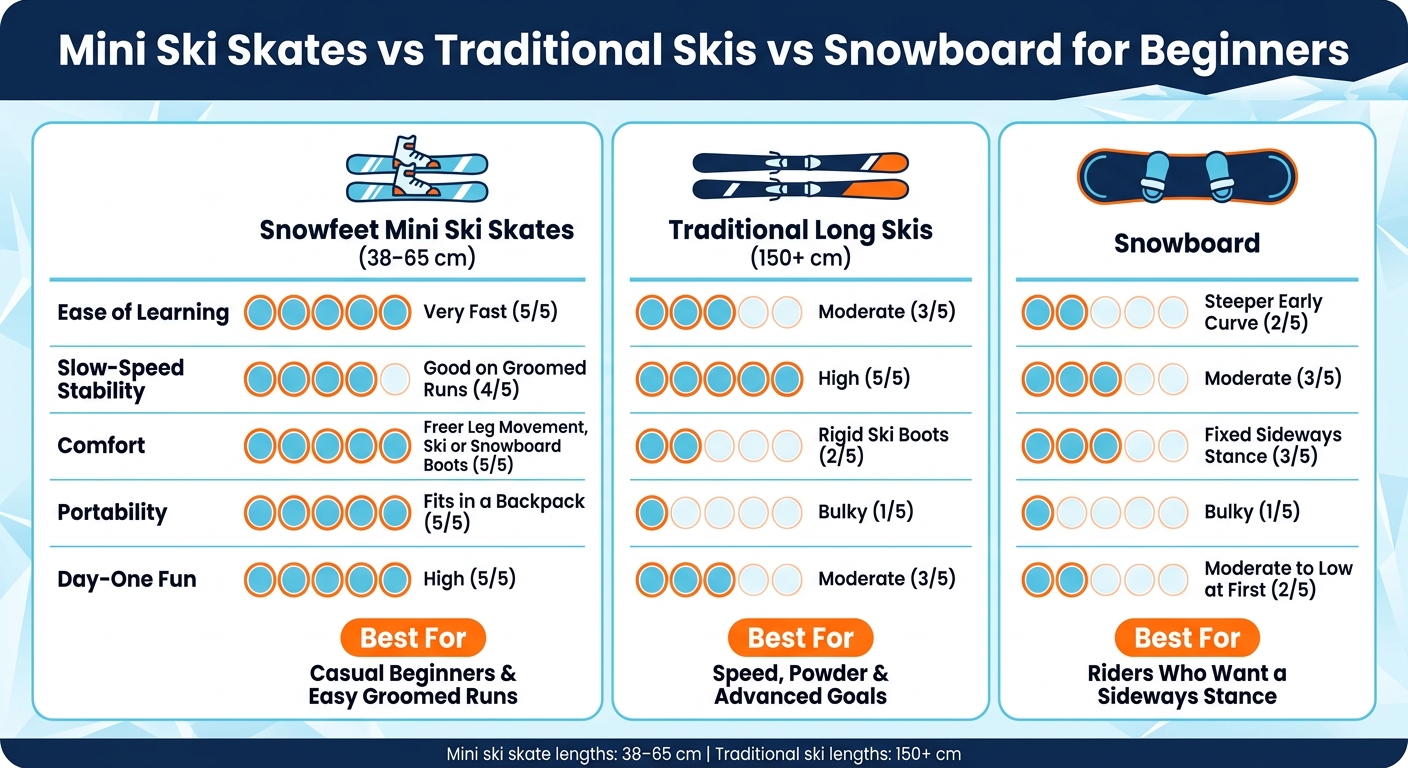
Mini Ski Skates vs Traditional Skis vs Snowboard: Beginner Comparison Guide
The main issue isn’t which option is more advanced. It’s which one helps a beginner turn and stop sooner.
Where Traditional Long Skis and Snowboards Still Have the Edge
Long skis still do better for speed, steep terrain, and racing because they stay more stable when you pick up pace. But for most beginners, speed isn’t the first problem. Control is.
Snowboards still make sense for riders who want a sideways stance and plan to spend time in the park. But on day one, they often feel tougher to get used to. For a casual first-timer, that can be a big deal. If something feels simpler right away, people tend to relax more and enjoy the day more.
Where Snowfeet* Shorter Products Win for Casual Beginners
For most casual U.S. beginners, the better starter pick often looks different. With Snowfeet* shorter products, you’re not locked into a sideways stance like you are on a snowboard. A lot of first-timers find that less awkward from the start.
They’re also small enough to toss in a backpack for a weekend trip. No dragging around big gear. No playing gear Tetris in the car trunk. That alone can make the whole trip feel easier :)
So, before someone commits to long skis or a snowboard, the smaller Snowfeet* models often make more sense.
Here’s how the options stack up on the stuff that matters most on day one:
| Factor | Snowfeet* Mini Ski Skates (38–65 cm) | Traditional Long Skis (150+ cm) | Snowboard |
|---|---|---|---|
| Ease of learning | Very fast | Moderate | Steeper early curve |
| Slow-speed stability | Good on groomed runs | High | Moderate |
| Comfort | Ski or snowboard boots; freer leg movement | Rigid ski boots | Fixed sideways stance |
| Portability | Fits in a backpack | Bulky | Bulky |
| Day-one fun | High | Moderate | Moderate to low at first |
That leads to one practical question: which Snowfeet* model fits a beginner best?
Which Snowfeet* Model Makes the Most Sense for a Beginner
The best Snowfeet* pick comes down to where you ride and how stable you want things to feel. For beginners, that usually means picking one of three paths: the easiest ride, the most control, or the smoothest way to improve without feeling like the gear is fighting back.
Snowfeet 38 cm and 50 cm: Best for Portability and Simple Fun
The 38 cm and 50 cm models are the most laid-back options. They’re built for simple fun, easy packing, and low-stress days on the snow.
The 50 cm PRO starts at $299 and works with regular winter footwear or snowboard boots. That’s a big plus for beginners because you can skip ski-boot rental and get moving with less hassle. Nice, right? :)
The trade-off is stability. On bumps, ruts, or rough patches, these shorter models can feel less planted. So they make the most sense on gentle groomed runs and easy resort days where you just want to cruise and have fun.
Snowfeet* Skiskates 44 cm and Skiblades 65 cm: More Control for Beginners
The Skiskates 44 cm are the most dynamic option. Snowfeet lists them from $460, and they come with a wood core, metal edges, and a graphite base made for a skate-like feel - quick turns and fast edge-to-edge movement.
If you already skate, whether that’s inline or ice, that motion tends to carry over well. The feel is playful and sharp. That said, they stay lively when speed picks up, so they work best for riders who already feel okay with dynamic balance.
The Skiblades 65 cm are the best beginner pick for riders who want the closest thing to a ski-like feel. Snowfeet lists them as its longest short-ski option, and the model has a 4 m turn radius built for easy control and carving.
That extra length helps a lot. You get more fore-aft stability and smoother carving than with the shorter models. For a beginner on groomed resort runs, that usually means more predictable turns and fewer “whoa, okay, that got loose fast” moments.
Verified customer Brad Tolin put it simply:
"These ski blades are a blast to use. Super easy to control, quick to turn, and way more forgiving than traditional skis."
How Snowfeet* Compares With Other Short-Ski Brands
Brands like Salomon snowblades, Bigfoot-style short skis, Figl boards, and ODR skis are often more tied to resort use and usually depend on standard ski boots and standard bindings.
Snowfeet* goes a different route with adjustable bindings. In its FAQ, the setup is described as one size fits most, with ski boots from 4.5–14.5 US and snowboard boots from 6–14.5 US.
Here’s the quick side-by-side view for the main beginner-friendly options:
| Model | Length | Boot Compatibility | Best Use Case | Learning Curve | Stability |
|---|---|---|---|---|---|
| Snowfeet 50 cm PRO | 50 cm | Regular winter footwear / snowboard boots | Local hills, gentle slopes | Very easy | Lower at speed |
| Skiskates 44 cm | 44 cm | Ski- or snowboard-boot bindings | Groomed runs, terrain parks | Easy | Dynamic, skate-like |
| Skiblades 65 cm | 65 cm | Ski- or snowboard-boot bindings | Groomed resort runs | Easy to moderate | Highest of the three |
If you want the short version, it’s this:
- Pick the 50 cm PRO if you want the easiest start and the least gear hassle.
- Pick the Skiskates 44 cm if you like a fast, skate-style feel.
- Pick the Skiblades 65 cm if you want the most stable beginner option of the three.
Next: which beginners should buy Snowfeet* first, and who should still choose a longer setup.
Final Verdict: Are Mini Ski Skates Worth It for Beginners?
Once you stack up the learning curve, control, comfort, and portability, the answer is pretty clear. For most casual beginners, yes - Snowfeet* mini ski skates are worth it. They make day one easier, lighter, and more fun. The trade-off? You give up some speed and deep-powder performance.
Who Should Buy Snowfeet* First
If that sounds like your first day on snow, Snowfeet* is a smart place to start. It works well for casual resort riders, families, and skaters who want quicker control with less setup hassle on groomed runs. That added comfort can help beginners stay out longer and squeeze in more runs without feeling wiped.
Who Should Start With Traditional Skis or a Longer Short Ski
There’s one clear exception. If your main goal from the start is speed or powder - not easy first-day progress - then Snowfeet* mini ski skates may not be the best fit.
Choose:
- Traditional long skis for speed, powder, and more advanced mountain goals
- Snowfeet* Skiblades 65 cm if you want the most stable beginner-friendly option in the lineup
Key Takeaways: Value and Trade-Offs at a Glance
- Mini ski skates: easiest to learn and most portable
- Traditional skis: best for speed, powder, and all-mountain progression
- Snowfeet* Skiblades 65 cm: best mix of control and beginner comfort
FAQs
Do I need lessons to start with mini ski skates?
No. You don’t need formal lessons to start with mini ski skates.
Unlike full-length skis, Snowfeet products feel simple and easy to get used to. A lot of first-time users get the hang of the basics in as little as five minutes. And if you’ve spent time on ice skates or inline skates, the movement can feel even more natural.
Can I use mini ski skates on any ski resort run?
Yes - on most ski resort runs.
Snowfeet products come with durable metal edges built for resort use, so ski areas generally allow them.
They do best on:
- Groomed slopes
- Terrain parks
- Beginner-friendly zones like green runs or magic carpets
That said, they’re not made for steep, icy black diamond runs or deep backcountry powder. In those spots, full-length skis give you better edge contact and more control at speed.
Which Snowfeet* size is best for my first day?
For your first day, go with a shorter Snowfeet* model. It’s easier to steer, easier to stop, and a lot less likely to make you feel like the hill is winning :)
- 38 cm Mini Ski Skates: best for total beginners on flat areas or mellow bunny slopes
- 44 cm Skiskates or 65 cm Skiblades: a nice middle ground for easy turning and better balance on groomed runs











留下評論
此網站已受到 hCaptcha 保護,且適用 hCaptcha 隱私政策以及服務條款。