
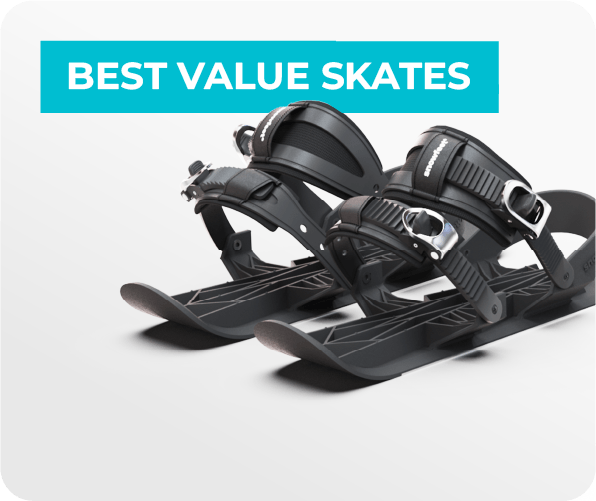
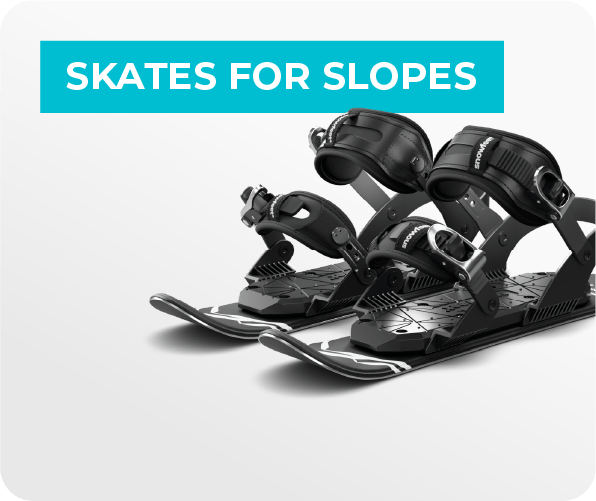
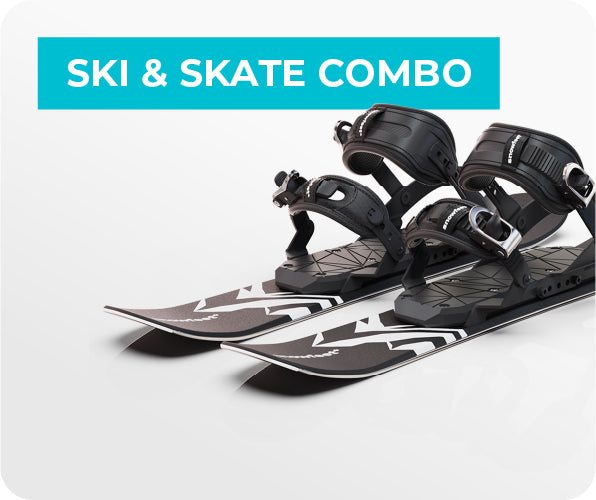
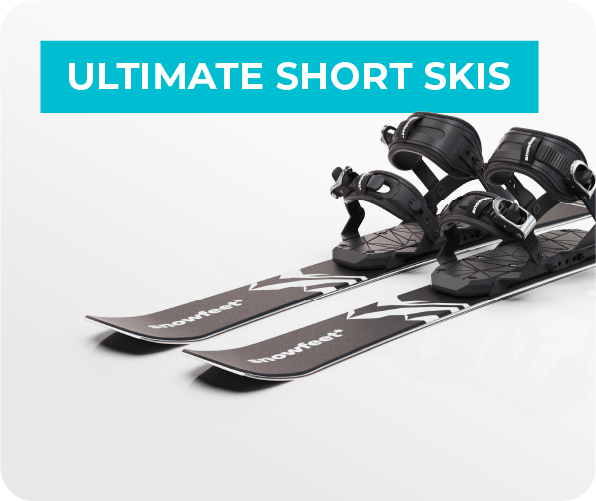
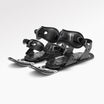
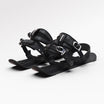
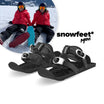
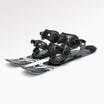
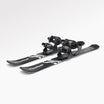
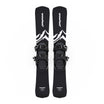
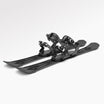
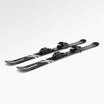
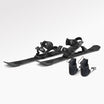
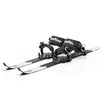
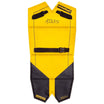
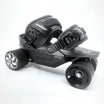
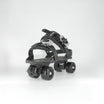
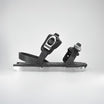
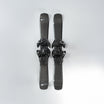

My pick is Snowfeet POWDER 99 cm for the most float on this shortlist. For soft resort snow around 6–10 inches deep, it’s the first model I’d check. But boot fit comes first: choose the snowboard-boot bindings, not alpine ski-boot bindings.
Here’s how I’d choose among the three:
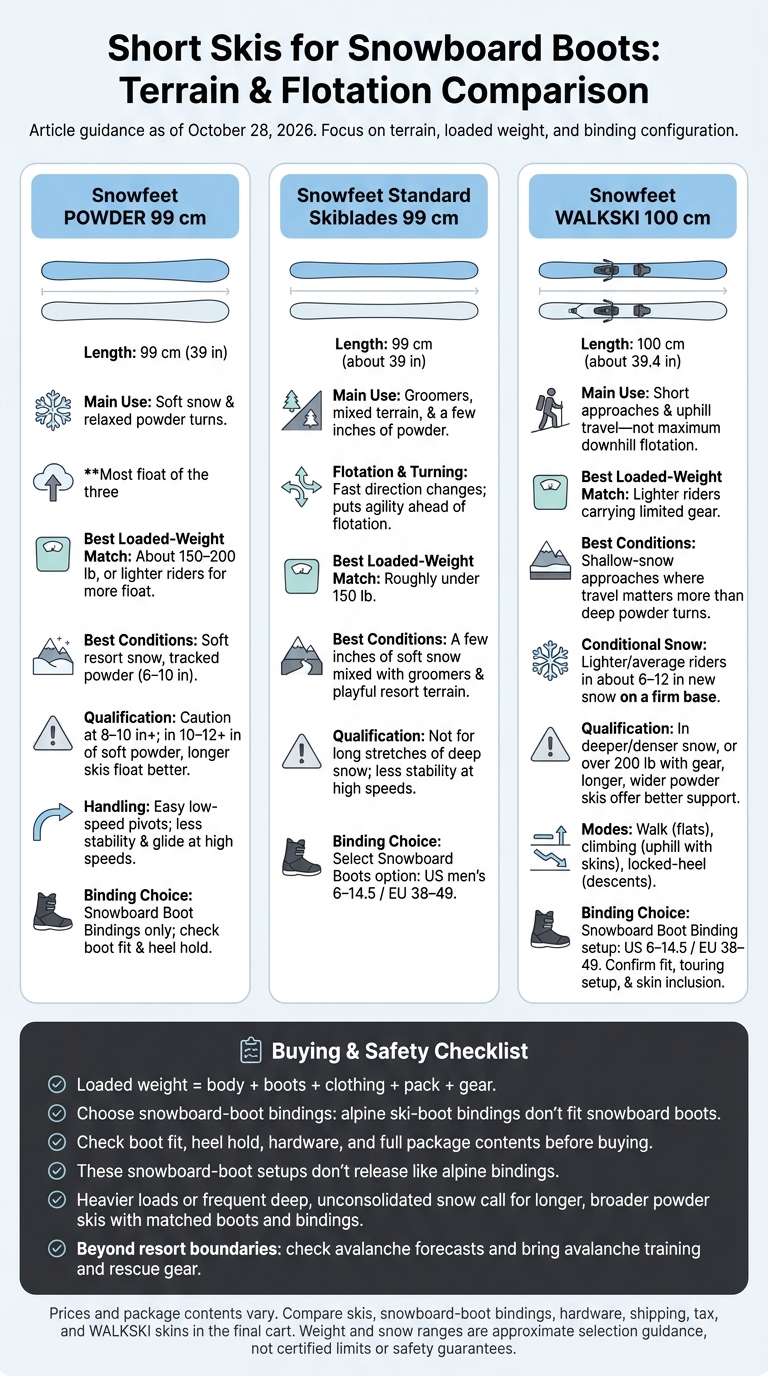
- POWDER 99 cm: Best for soft snow and relaxed powder turns.
- Standard Skiblades 99 cm: Best for groomers, mixed terrain, and a few inches of powder.
- WALKSKI 100 cm: Best for short approaches and uphill travel - not deep-powder turns. Confirm the boot and touring setup before buying.
Quick Comparison
| Model | Main use | Price notes from the article |
|---|---|---|
| POWDER 99 cm | Most float of the three | $895 quoted with snowboard-boot bindings; other listings vary |
| Standard Skiblades 99 cm | Fast turns on mixed snow | $890 quoted with snowboard-boot bindings |
| WALKSKI 100 cm | Short approaches and climbs | $890–$1,008; package contents need checking |
Prices listed as of October 28, 2026 aren’t consistent across packages. I’d check the cart for bindings, hardware, shipping, tax, and WALKSKI skins before comparing costs.
My last check? Your loaded weight and snow depth. More weight and deeper snow call for longer powder skis. And <u>these snowboard-boot setups don’t release like alpine bindings</u>, so fit and setup checks matter. Heading beyond resort boundaries? Check avalanche forecasts and bring the training and rescue gear.
Short Skis for Snowboard Boots: Compare 3 Options
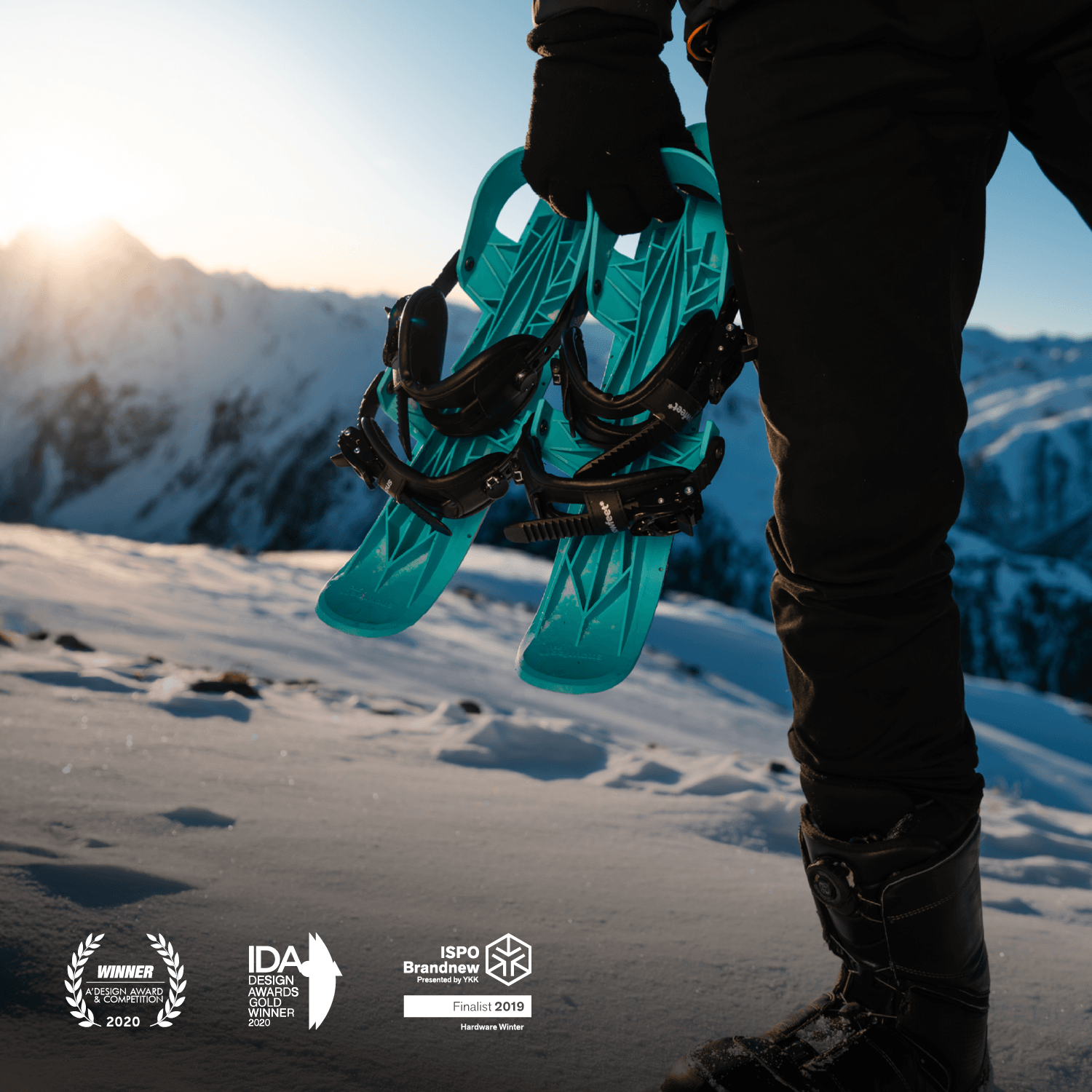
1. Snowfeet* Skiblades POWDER 99 cm
Flotation
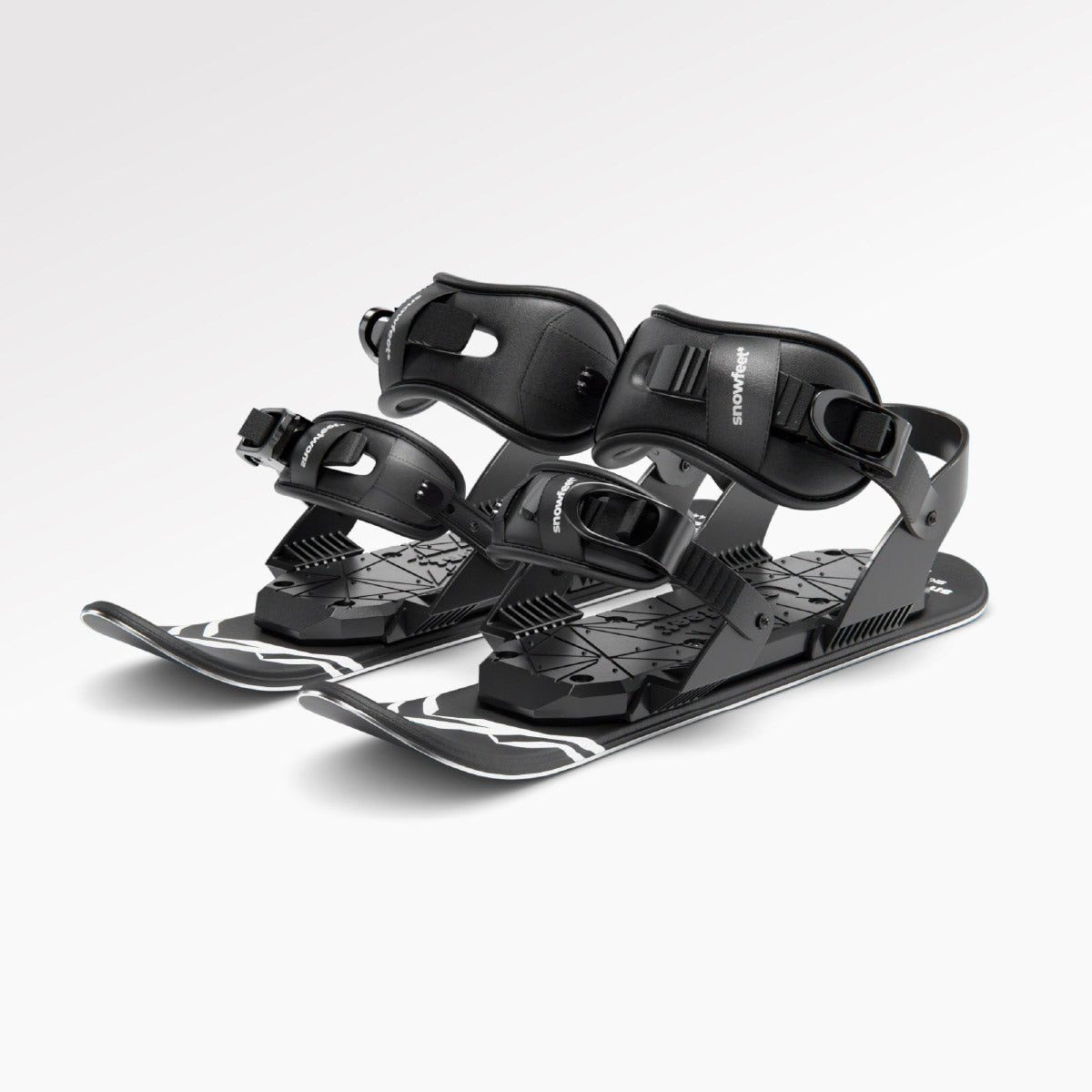
The POWDER 99 cm is Snowfeet’s strongest option for riders who want to use snowboard boots in deep powder. Its extra width provides more surface area than 44–65 cm (about 17–26 in) mini skis. Tips and tails that curve up 5 cm (about 2 in) help it float in soft snow.
It works best for average-weight riders. In 10–12+ inches of soft powder, though, longer skis still float better.
Maneuverability
The powder-focused shape still makes turns easy. At 99 cm (39 in), these skiblades are easy to pivot at low speeds. The snowboard-binding version weighs about 7.04 lb per pair, so it’s practical to carry around a resort.
The trade-off? Less stability and glide at high speeds. This setup suits relaxed soft-snow turns, not high-speed charging.
Snowboard-Boot Compatibility
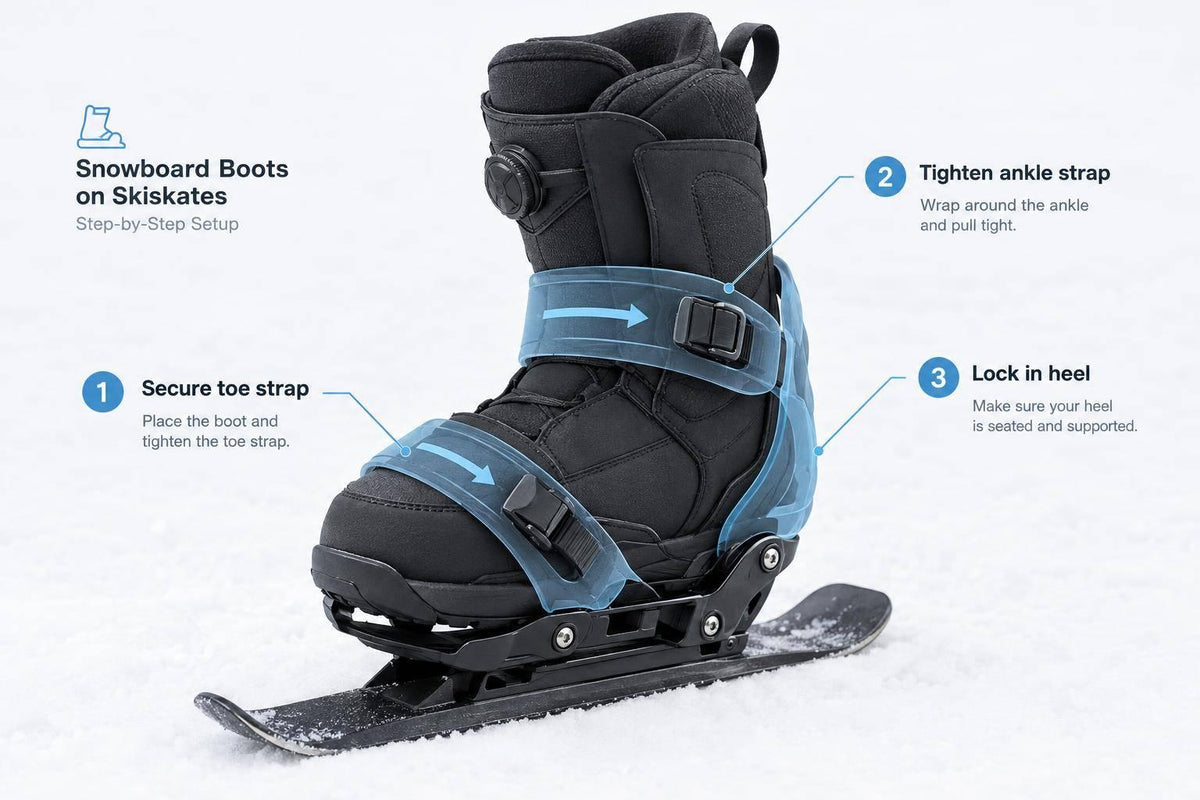
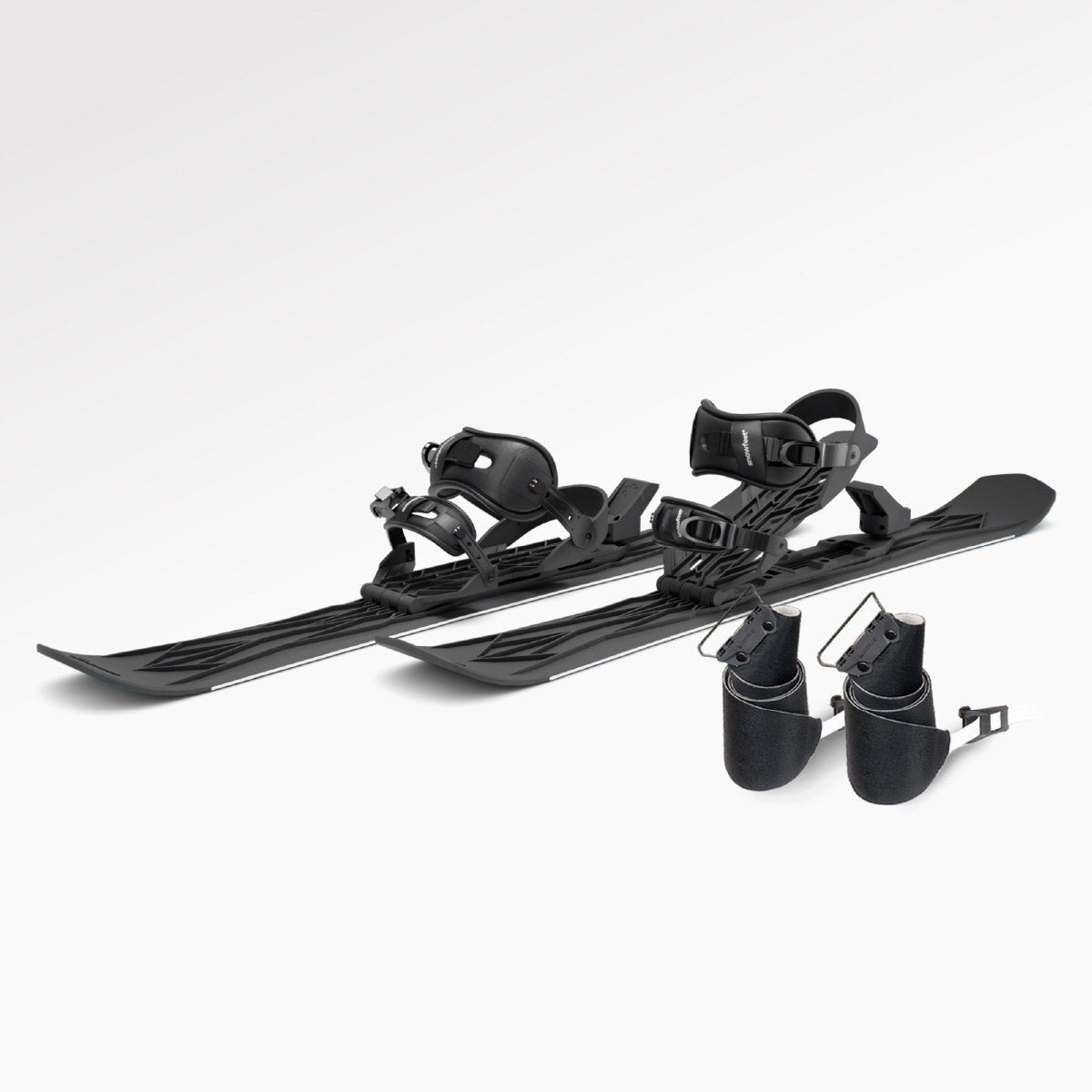
Use Snowboard Boot Bindings only, and check your boot fit and heel hold. These bindings may not release like certified alpine bindings. Follow Snowfeet’s mounting and adjustment instructions, and check your resort’s retention-leash rules.
Configured Price
The complete setup costs $895 with snowboard-boot bindings. Before you buy, confirm that the cart includes the skis, bindings, hardware, shipping, and tax.
All you need to know - Snowfeet* | Skiskates | Skiboards | Snowblades | Skiblades FAQ
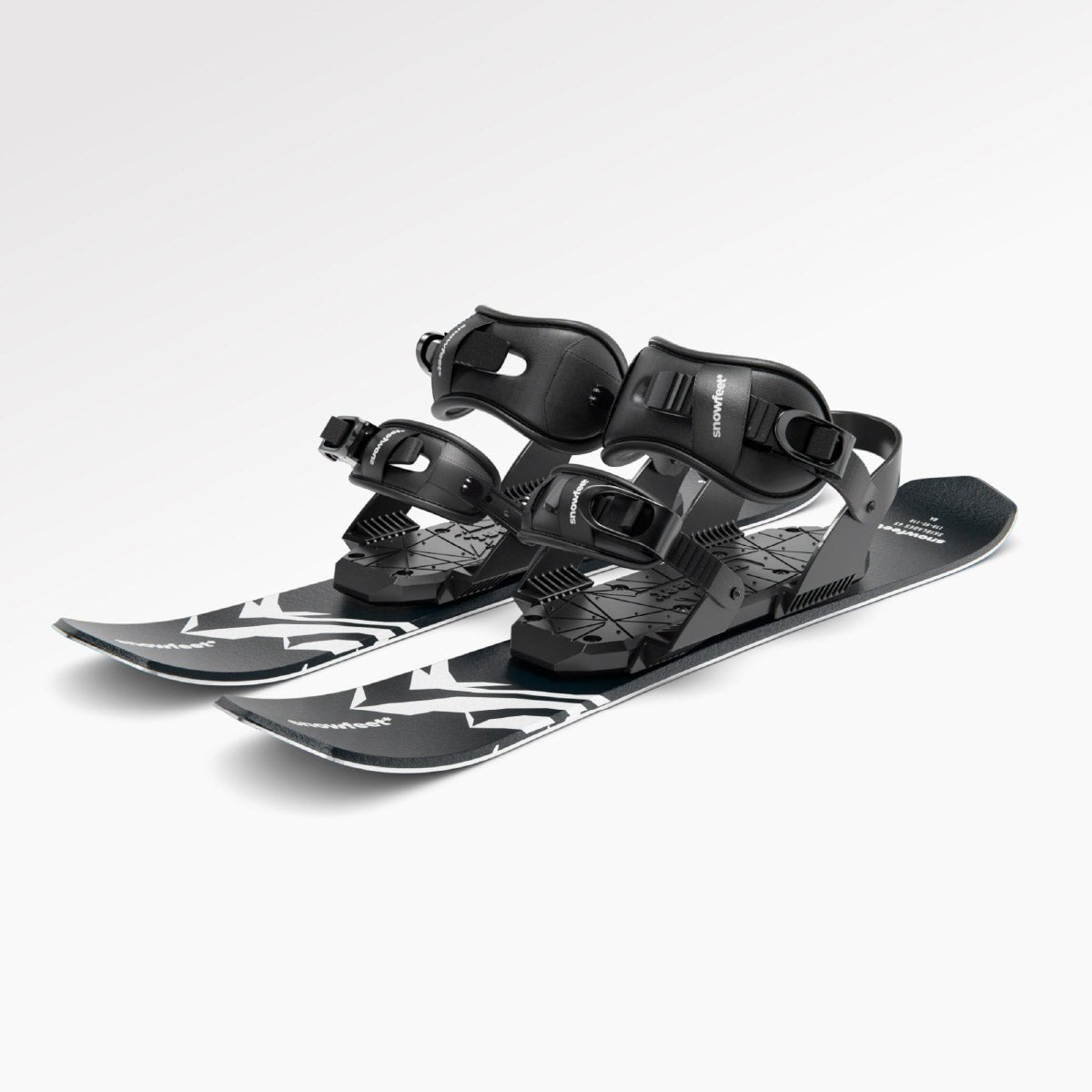
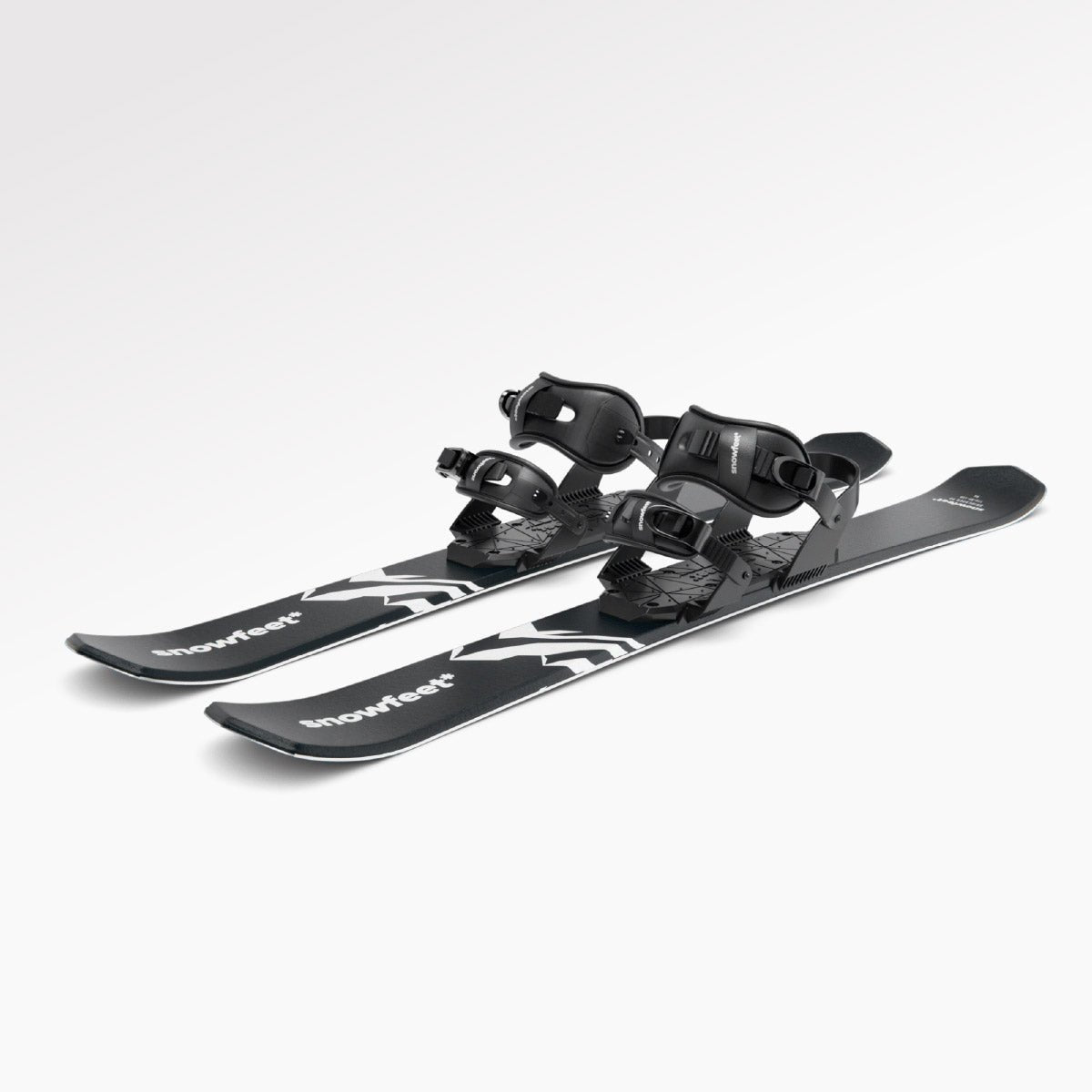
2. Snowfeet* Skiblades 99 cm
While POWDER is built for deep snow, the standard 99 cm model suits firmer snow and lighter powder.
Flotation
The standard 99 cm Skiblades work best on packed snow and in light powder - not long stretches of deep snow. Think a few inches of soft snow, not bottomless powder.
Maneuverability
For resort days with mixed snow, this Snowfeet* option covers more ground. The trade-off? Less powder support and less stability at high speeds.
Snowboard-Boot Compatibility
Choose ONLY the Snowboard Boots binding option (US men’s 6–14.5 / EU 38–49). Test the fit with your own boots. Your heels should stay secure, with no pressure points or excess movement. This setup does not provide alpine-binding release.
Configured Price
The verified price with the Snowboard Boots setup is $890.00. If ease of travel on approaches matters more to you than powder performance, the next option leans that way.
3. Snowfeet* WALKSKI 100 cm
Flotation
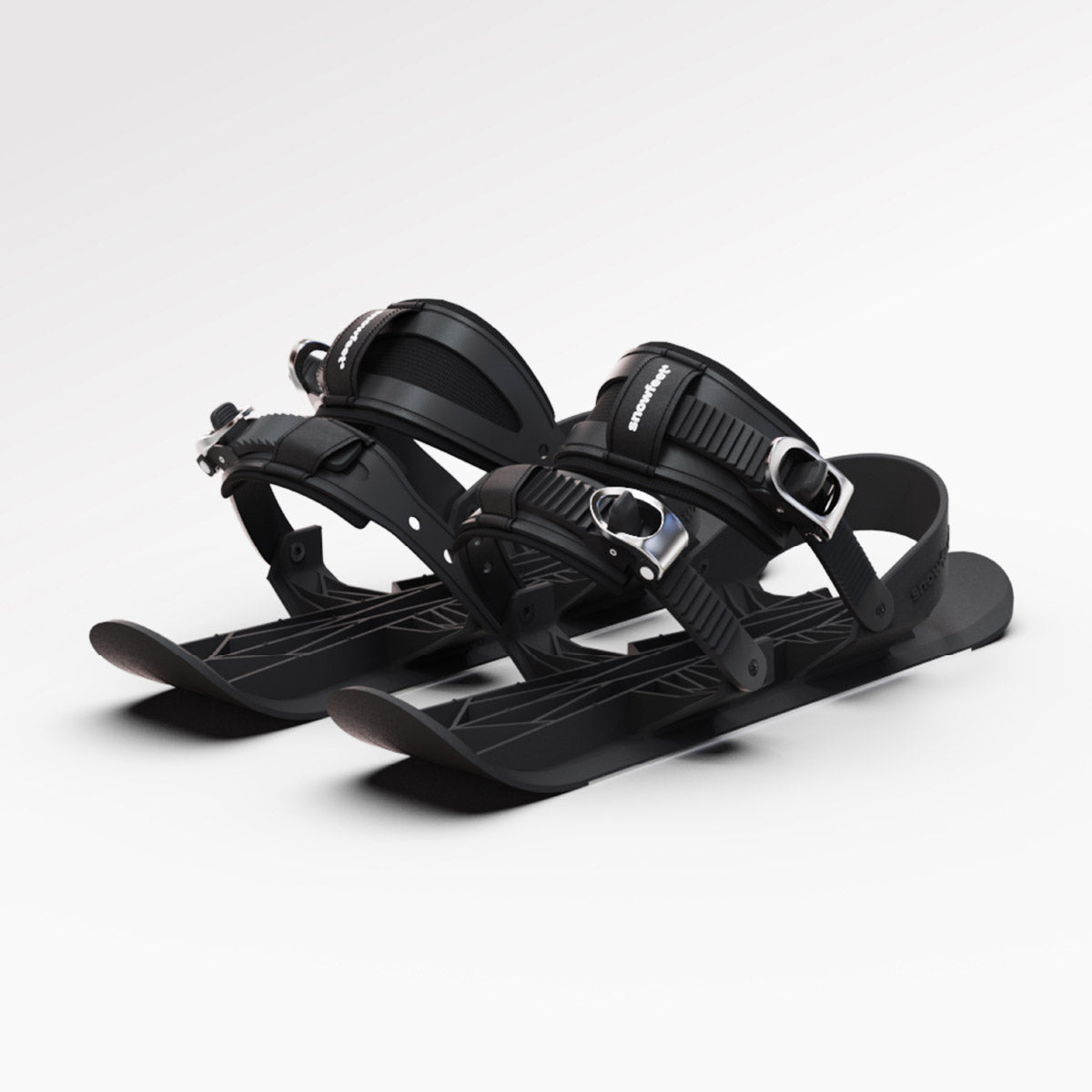
If POWDER is your pick for downhill powder and standard 99 cm Skiblades cover mixed snow, WALKSKI puts travel first. Choose it for short approaches and uphill travel - not maximum powder float. Lighter and average-weight riders can use it in about 6–12 inches of new snow on a firm base. In deeper or denser snow, or for riders over about 200 lb with equipment, longer powder skis with more width tend to offer better support.
Maneuverability
Use Walk mode on flats, climbing modes with skins for uphill travel, and locked-heel mode for descents. Keep your speed in check. This setup suits experienced users on short approaches, not long, steep tours. Check boot fit before choosing your setup.
Snowboard-Boot Compatibility
Choose the Snowboard Boot Binding setup (US sizes 6–14.5 / EU 38–49). Check that the binding fits your boot’s shape and volume. Also, confirm whether the package includes removable climbing skins.
Configured Price
Listings show $890 and $1,008. It’s not clear that both packages contain the same items. Price depends on whether skins are included, so check the full cost of skis, bindings, and skins before comparing WALKSKI with the other two models.
sbb-itb-17ade95
Match Flotation and Turning to Your Weight and Snow
Choose your short skis based on loaded weight: your body, boots, clothing, pack, and gear.
| Model | Flotation and turning | Best loaded-weight match | Best snow and terrain |
|---|---|---|---|
| Snowfeet* POWDER 99 cm | Best flotation on this shortlist; its broad shape is made for soft, deep snow. | About 150–200 lb, or lighter riders who want more flotation | Soft resort snow and tracked powder, especially around 6–10 inches. Use caution at 8–10 inches and deeper. |
| Snowfeet* Skiblades 99 cm | Fast direction changes; puts agility ahead of flotation | Roughly under 150 lb | A few inches of soft snow mixed with groomers and playful resort terrain |
| Snowfeet* WALKSKI 100 cm | Best for approach travel, not maximum downhill flotation | Lighter riders carrying limited gear | Shallow-snow approaches where travel matters more than deep powder turns |
Once you’ve matched your weight and snow depth, check the snowboard-boot binding configuration and the price of the full setup.
Check Snowboard-Boot Bindings and Complete Setup Prices
Once you’ve picked a model, check the binding package and final cart total before you order.
For POWDER 99 cm and Skiblades 99 cm, select Snowfeet’s adjustable snowboard-boot bindings. For WALKSKI, confirm the exact package before buying. Alpine ski-boot bindings don’t fit snowboard boots.
Current listings put POWDER 99 cm at about $790–$950 and standard Skiblades 99 cm at $890, with a separate sale listing at $845. WALKSKI pricing remains unverified. Prices change, so check the total in your cart.
| Model | Binding package confirmation | Listed price (USD) |
|---|---|---|
| Snowfeet POWDER 99 cm (about 39 in) | Select adjustable snowboard-boot bindings; inclusion not verified | About $790–$950 |
| Snowfeet Skiblades 99 cm (about 39 in) | Select adjustable snowboard-boot bindings; inclusion not verified | $890; separate sale listing at $845 |
| Snowfeet WALKSKI 100 cm (about 39.4 in) | Confirm the exact snowboard-boot package | Unverified |
Shipping and tax affect the final total. A listed price doesn’t mean snowboard-boot bindings are included.
Check your boot’s sole length, toe and heel placement, strap tension, and heel hold. Medium-stiff or stiff snowboard boots are the preferred choice for support and control.
A secure fit matters: short skis trade some flotation and stability for agility. These bindings don’t release like alpine bindings. Inspect the straps and hardware before every run, and never modify parts or mix unrelated components.
Final Verdict: Choose for Your Boots and Snow Conditions
Choose POWDER 99 cm for the best float on this shortlist. Boot fit comes first. If two options fit well, use the total setup price to break the tie.
Use the weight-and-snow match above to pick your model.
| Snowfeet* option | Best rider and conditions |
|---|---|
| POWDER 99 cm | Average-weight casual riders who want the most float in a compact setup. |
| Standard Skiblades 99 cm | Lighter riders on groomers or park laps, with only shallow powder. |
| WALKSKI 100 cm | Experienced users who put short approaches and uphill travel ahead of downhill float. Confirm the exact boot and touring-binding package before ordering. |
Deeper snow or a heavier load calls for a longer platform. For frequent deep, unconsolidated snow - or for heavier riders and riders carrying loads - choose longer, broader powder skis with matched boots and bindings.
Order POWDER 99 cm and standard 99 cm Skiblades with the snowboard-boot binding option. WALKSKI’s touring focus doesn’t replace avalanche education or rescue gear. Check weather and avalanche forecasts before entering uncontrolled terrain.
FAQs
How can I tell if my snowboard boots fit securely?
Check that your boots fall within the supported US size 6–14.5 range and sit centered in your Snowfeet bindings. These bindings fit snowboard boots and adjust without tools, separate parts, or complex changes. Before you hit the snow, check that your boots feel snug and responsive.
How does wet powder affect my short-ski choice?
Wet, heavy snow or deep powder calls for active riding and precise fore-aft balance. Shorter skis have less surface area, so expect more resistance in snow deeper than 4 inches. Adjust your stance to keep the tips from diving.
The broader platform and parabolic shape of Snowfeet* POWDER 99 cm help it float. It’s the better choice for easy-to-control, surfy, nimble resort riding - not a replacement for long skis in deep, open backcountry.
What should I practice before taking short skis into powder?
Start on groomed runs to practice front-to-back balance, basic turns, and stops. Short skis have less surface area than long skis, so stay centered to help keep the tips from diving and maintain steady flotation.
When you move into deeper snow, make quick, active weight shifts. Short skis feel playful and are easy to steer, but these basic skills help you stay stable and in control.



發表留言
此網站已受到 hCaptcha 保護,且適用 hCaptcha 隱私政策以及服務條款。