




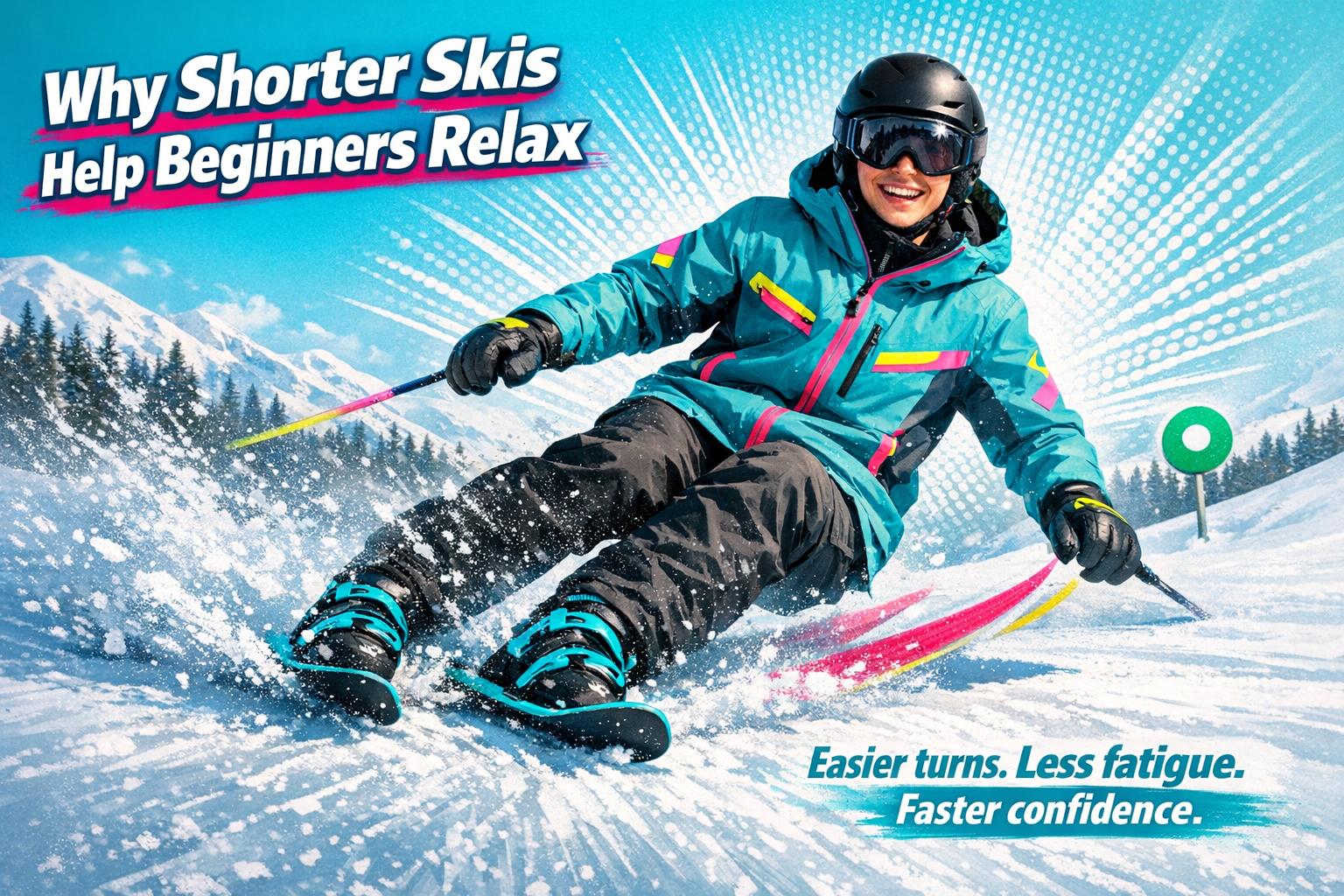
Skiing without poles can make learning to ski much easier for beginners. Why? Poles often throw off your balance, and long skis can be tough to control. Instead, shorter skis like Snowfeet® Skiblades or Skiskates simplify things. Here's why they work:
- No Poles Needed: Poles confuse beginners and can lead to bad habits like leaning backward.
- Shorter Skis = More Control: Short skis respond quickly to your movements, making turns and stops easier.
- Easier to Learn: Without the complexity of poles or long skis, you can focus on balance and steering.
- Affordable & Portable: Snowfeet® gear skips the need for bulky, expensive equipment like traditional ski boots.
For first-timers, starting with shorter skis and skipping poles can make skiing feel less overwhelming and way more fun. Ready to hit the slopes? Keep reading for tips, gear recommendations, and how to get started!
How Poles and Long Skis Get in the Way of Learning
What Poles Are Actually For in Skiing
Poles have a clear role in skiing, but they’re not essential for beginners. Advanced skiers rely on poles for rhythm, timing, and balance when navigating challenging terrain. On beginner-friendly green slopes with slower speeds, though, poles don’t add much value.
Why Beginners Struggle With Poles
The issue isn’t the poles themselves - it’s how beginners tend to use them. New skiers often jab their poles into the snow too forcefully, which pushes their weight backward and disrupts their balance. This makes it harder to steer the skis properly. With long skis, which require precise balance over their center, even a slight backward lean can cause the ski tips to chatter or skid.
Another common problem is holding the poles with stiff, extended arms. This restricts the fluid motion needed for smooth turns. Long skis, with their larger turning radius, demand precise weight shifts, so even minor mistakes can make turns feel slow and awkward. On the other hand, shorter skis like Snowfeet* Skiblades are much more forgiving. They respond quickly to small movements of the ankles and knees, making turns feel natural and easy to control.
These challenges highlight why a simpler setup, like Snowfeet* short skis, can make the learning process far less frustrating. By removing poles and replacing long skis with compact, beginner-friendly designs, new skiers can focus on developing balance and control without unnecessary complications.
When Poles Start to Make Sense
Poles become useful once skiers can confidently link turns and stop with control on green or easy blue runs. At this stage, a light pole touch can help with timing on steeper terrain, maintaining rhythm through bumps, and reducing effort on flat sections. Many ski schools in the U.S. introduce poles gradually. Beginners might first carry them without planting, then progress to gentle pole touches as their lower-body movements become more consistent. This step-by-step approach ensures that skiers master balance, edging, and smooth turns before adding the complexity of coordinated pole use - a skill that’s only relevant after the basics are well-established.
Why Short Skis Make Learning Without Poles Easier
Short Skis Give Beginners More Control
Short skis are a game-changer for beginners because they’re easier to handle. With less length to manage, you get better control right from the start. Longer skis require more precision and effort, but short skis respond almost instantly to small ankle or knee movements.
This quick response helps the skis follow your body’s lean naturally, making turns smoother and less of a battle. Plus, with shorter skis, you’re less likely to deal with common beginner headaches like crossing ski tips or catching an edge on flat terrain. This added control makes it easier to focus on improving your skills without unnecessary frustration.
Learning Faster Without Poles
When you pair short skis with the absence of poles, the learning curve gets even shorter. Without poles, your arms naturally drop by your sides, helping you settle into a balanced, athletic stance. This posture works perfectly with short skis, which are easier to pivot and steer. You can practice stopping, turning, and shifting your weight more frequently, speeding up muscle memory development.
Poles can be distracting for beginners, pulling focus away from balance and steering. That’s why many ski instructors in the U.S. start lessons without them, only introducing poles once students are comfortable with basic linked turns. It’s all about building confidence and control step by step.
Snowfeet* Products Built for Beginners
Snowfeet* products are designed to make skiing simpler and more accessible, especially for beginners. They’re lightweight, portable, and don’t require specialized ski boots, making them an easy and affordable alternative to traditional ski setups.
| Product | Length | Best For | Boot Compatibility |
|---|---|---|---|
| Mini Ski Skates | 38 cm | Maximum portability, first-time snow experience | Regular winter boots |
| Skiskates | 44 cm | Skate-like feel, quick learning curve | Winter or snowboard boots |
| Skiblades | 65 cm | More stability, ski-like experience | Snowboard or ski boots |
These products remove many barriers to skiing, especially the cost and hassle of traditional gear. A full beginner setup with skis, boots, bindings, and poles can cost anywhere from $400–$700. In contrast, Snowfeet* options are more affordable and practical.
For example, the Skiblades (starting at $635) offer a skiing experience that’s close to traditional setups but easier to control at beginner speeds. If you have an ice skating or inline skating background, the Mini Ski Skates or Skiskates might feel like second nature. Many skaters can master basic skiing techniques in just one session on a gentle green slope, thanks to the intuitive design of these products.
How to Start Skiing Without Poles Using Snowfeet*
Picking the Right Snowfeet* Product
Choosing the right Snowfeet* product depends on where you plan to ride and what kind of boots you’ll be using.
- For casual fun on backyard hills, local parks, or sledding slopes, go with the Mini Ski Skates ($250). These attach to standard winter boots, are super lightweight, and easy to carry around.
- If you’re looking for a skate-like experience on groomed terrain, the Skiskates ($575) are a great pick.
- Planning to hit a resort and ride chairlifts? The Skiblades ($635) are your best bet. At 65 cm (about 26 inches), they offer better edge control and stability at higher speeds compared to the Mini Ski Skates or Skiskates. They're also much easier to handle than traditional skis, which are usually 150–180 cm (59–71 inches) long. Just keep in mind that Skiblades require ski boots, so you’ll need to rent or bring those along.
Once you’ve got the right gear, it’s time to focus on your stance and basic skills.
Basic Stance and Techniques Without Poles
One of the great things about Snowfeet* is that they make skiing simpler - no poles required. But getting your stance right is still key.
Start on flat ground. Stand with your feet about hip-width apart, knees slightly bent, and ankles flexed so your shins lightly press against the front of your boots. Make sure your hips are centered over your feet - not leaning too far back. Keep your arms out slightly to the sides with elbows bent to help with balance.
A quick tip: if you feel like you’d fall backward when you jump, bend your knees more and shift your hips forward. Once your stance feels stable, practice short glides on a gentle slope. Push off, glide a few feet, and then step to a stop. After that, work on the wedge stop - point your toes inward, push your heels out to form a V-shape, and press the inside edges of your Snowfeet* into the snow to slow down. These two skills - gliding and stopping - are the building blocks for everything else.
When you’re comfortable with these basics, you’re ready to move on to slopes.
Safety and Progression on the Slopes
Safety first! Always wear a certified helmet, wrist guards, and knee pads. Beginners tend to use their hands to break falls, so wrist protection is especially important.
Start on a gentle slope with a long, flat run-out. Focus on mastering a straight glide and a solid stop. Once you’ve got those down, practice gentle turns by shifting your weight to your outside foot and rolling both feet onto their edges. Only move to steeper terrain after you can consistently link turns and stop with confidence.
Take it step by step, and don’t rush. Building skills gradually is the best way to stay safe and enjoy the ride.
sbb-itb-17ade95
Are Short Skis Better for Beginners?
Snowfeet* vs. Long Skis and Snowboards: A Direct Comparison
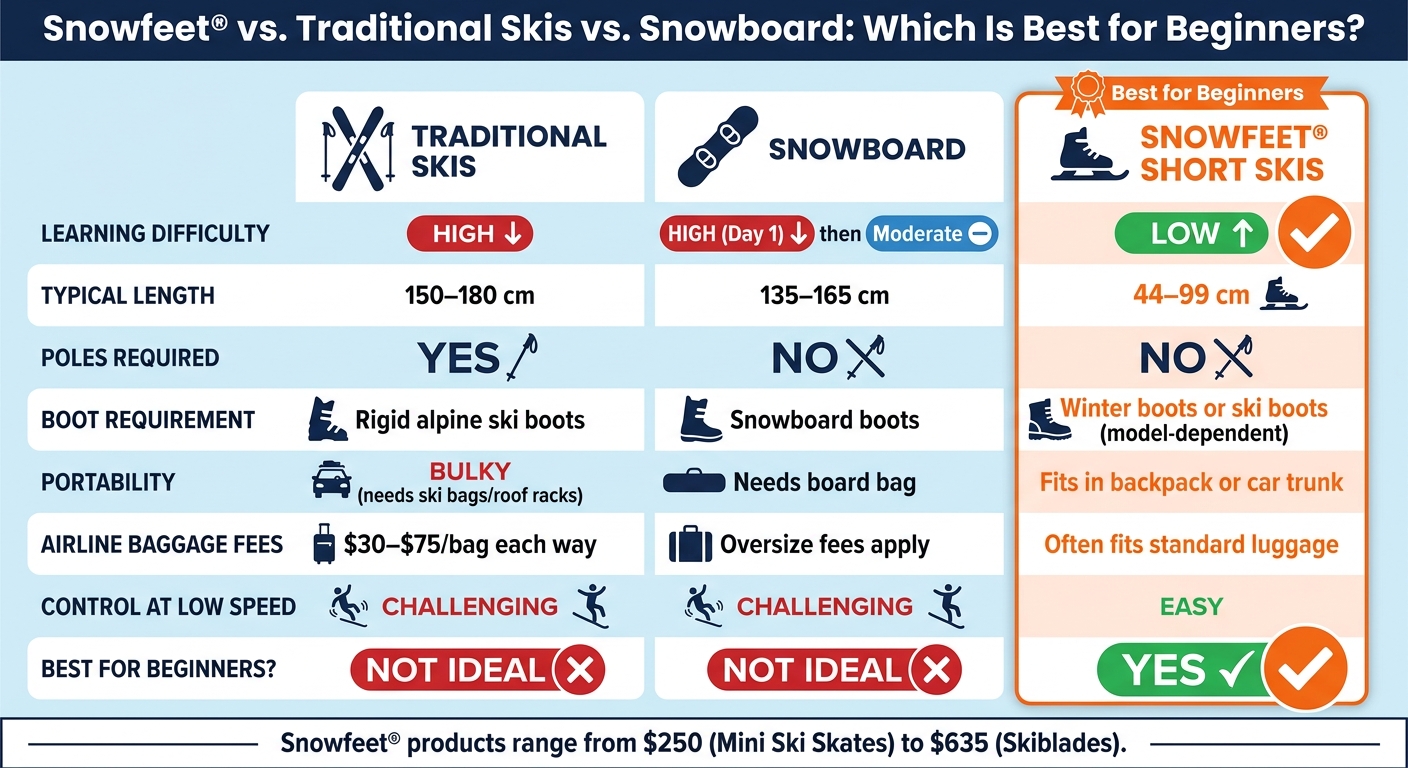
Snowfeet vs Traditional Skis vs Snowboard: Beginner Comparison
Why Snowfeet* Works Better for Beginners
Let’s break it down: Snowfeet* offers a smoother entry point for those new to the slopes compared to traditional skis or snowboards.
Traditional skis, which usually measure 150–180 cm, can be tricky for beginners to handle. The length means more edge to control and a wider turning radius, which can strain your legs and make small mistakes feel like a big deal. Snowfeet*, on the other hand, are much shorter - around 65 cm - making them easier to manage. Their compact size also gives you a tighter turning radius, which reduces the chance of errors and makes learning less intimidating.
Snowboards, while fun for many, come with their own set of challenges. Beginners often struggle with the sideways stance, which feels unnatural at first. Plus, with both feet locked onto one board, falls are common - especially on your wrists and tailbone. Snowfeet* eliminates these issues by letting your feet move independently in a forward-facing stance. This setup feels more natural, like walking or skating, and it’s easier to balance right from the start.
Another bonus? Portability. Traditional skis and snowboards require bulky gear bags and can rack up airline fees of $30–$75 per bag each way. Snowfeet*, however, fit easily in a car trunk or even a large backpack. This is a game-changer for casual skiers who only hit the slopes a few times a year.
All these factors make Snowfeet* a great choice for beginners looking for a simpler, more intuitive way to enjoy the snow. The table below lays out the key differences for an easy side-by-side comparison.
Side-by-Side Comparison Table
| Factor | Traditional Skis | Snowboard | Snowfeet* Short Skis |
|---|---|---|---|
| Learning Difficulty | High - Requires poles, edges, and weight transfer over multiple lessons | High on the first day due to sideways stance, then moderate | Low - Intuitive forward stance with quick control |
| Typical Length | 150–180 cm (adult) | 135–165 cm (adult) | 44–99 cm depending on the model |
| Poles Required | Yes | No | No |
| Boot Requirement | Rigid alpine ski boots | Snowboard boots | Winter boots or ski boots (model-dependent) |
| Portability | Bulky - Requires ski bags and roof racks | Often needs a dedicated board bag | Fits in a car trunk or backpack |
| Airline Baggage | Oversize fees ($30–$75 per bag each way) | Oversize fees apply | Often fits standard luggage |
| Control at Low Speed | Challenging - Longer edges can catch easily | More challenging - Both feet are fixed together | Easier - Short skis pivot naturally |
| Best Terrain | Groomed runs, powder, and steep slopes | Terrain parks, powder, and groomed runs | Groomed slopes, small hills, and beginner areas |
| Best for Beginners? | Not ideal without professional instruction | Not ideal due to a steep initial learning curve | Yes - Designed for a quick, fun learning experience |
Conclusion: Why Snowfeet* Is the Right Starting Point for New Skiers
Snowfeet* makes learning to ski easier and less intimidating. Most of the struggles beginners face - like awkward poles, skis that feel impossible to turn, or the fear of speeding out of control - aren’t about skill. They’re about using equipment that’s tough for beginners. By switching to shorter skis, like Snowfeet*, you can skip a lot of those early frustrations.
The beauty of Snowfeet* is its simplicity. Without poles to throw off your balance or long skis to complicate your movements, you can connect with the snow and rely on natural instincts. Many beginners find themselves linking turns within a single session - something that might take days with traditional gear.
Products like Snowfeet* Skiblades (starting at $635) and Skiskates (starting at $575) also come with practical perks. They’re lighter, easier to pack, and simpler to carry around the slopes. That convenience is a big deal when you’re still figuring out if skiing is your thing.
Snowfeet* also gives you room to grow. You can start on gentle green runs, build your confidence, and eventually move to longer skis if you want to. It’s all about making skiing feel approachable and fun from the get-go.
For your first day out, stick to an easy slope, wear a helmet, layer up for warmth, and focus on just one thing: learning to stop confidently and make a few smooth turns. Snowfeet* is the gear that turns what could be a frustrating experience into an enjoyable adventure.
FAQs
Can I use Snowfeet* at a ski resort?
Yes, most ski resorts in the U.S. allow Snowfeet* products. Thanks to their standard metal edges and proper bindings, they meet the requirements for use on groomed runs and in terrain parks. If anyone questions their use, you can point out that they’re built with the same metal edges as regular skis. It’s always smart to check the resort’s equipment policy ahead of time, but Snowfeet* are typically accepted on the slopes.
What boots do I need for Snowfeet*?
Snowfeet* works seamlessly with your regular winter boots or snowboard boots - no need to splurge on stiff, pricey ski boots. For the best ride, go for waterproof boots with sturdy soles and strong ankle support. This setup makes Snowfeet* a practical, budget-friendly, and comfy option compared to traditional ski equipment.
Are Snowfeet* safe for first-timers?
Yes, Snowfeet products are safe and great for beginners compared to traditional skis. Their short and lightweight design helps with stability by keeping your center of gravity lower, which makes it easier to regain balance if you wobble. Plus, they’re less likely to catch an edge, so the chances of falling are reduced. Thanks to their skate-like motion, beginners can pick up the basics - like turning and stopping - pretty quickly, which boosts confidence. Just remember to always wear a helmet for added safety.











留下評論
此網站已受到 hCaptcha 保護,且適用 hCaptcha 隱私政策以及服務條款。