



















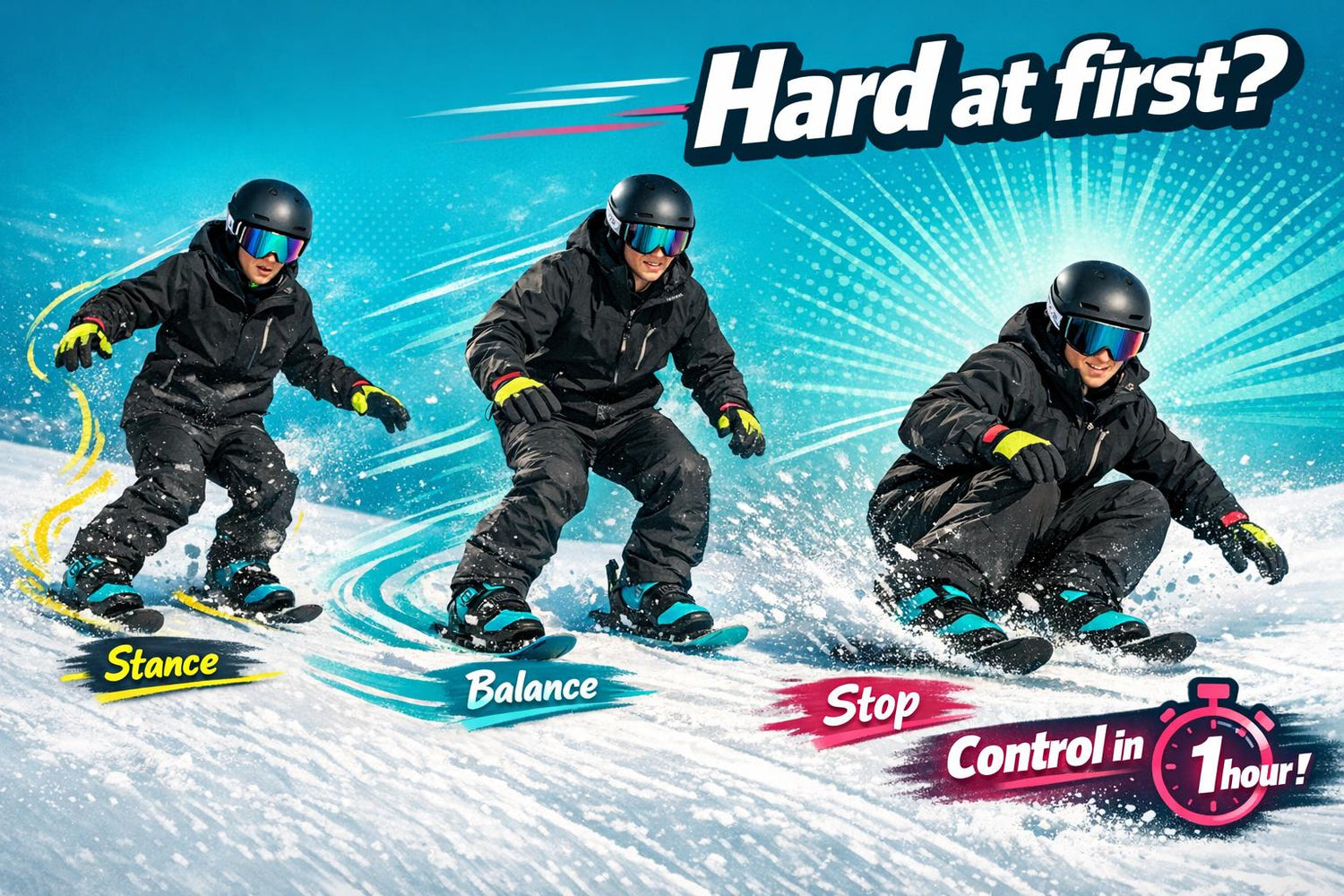
Skiskates can feel tricky at first, especially if you're used to longer skis. They’re short - just 17 inches long - so they respond quickly to even small movements. This can feel wobbly for beginners. But don’t worry! Most people get the hang of basic turns and gliding within 30–60 minutes on a gentle slope.
Here’s the deal:
- Balance matters: Keep your weight centered over your feet, not leaning too far forward or back.
- Start slow: Practice small, skating-like movements before picking up speed.
- Best terrain: Stick to groomed, flat slopes to build confidence.
Skiskates are lightweight and easy to carry, and they work with regular winter boots. If you’ve ever ice skated or rollerbladed, you’ll feel more comfortable right away. For anyone new to snow sports, they’re a fun, simple way to enjoy the slopes without bulky gear. Just follow these tips, and you’ll be cruising in no time!
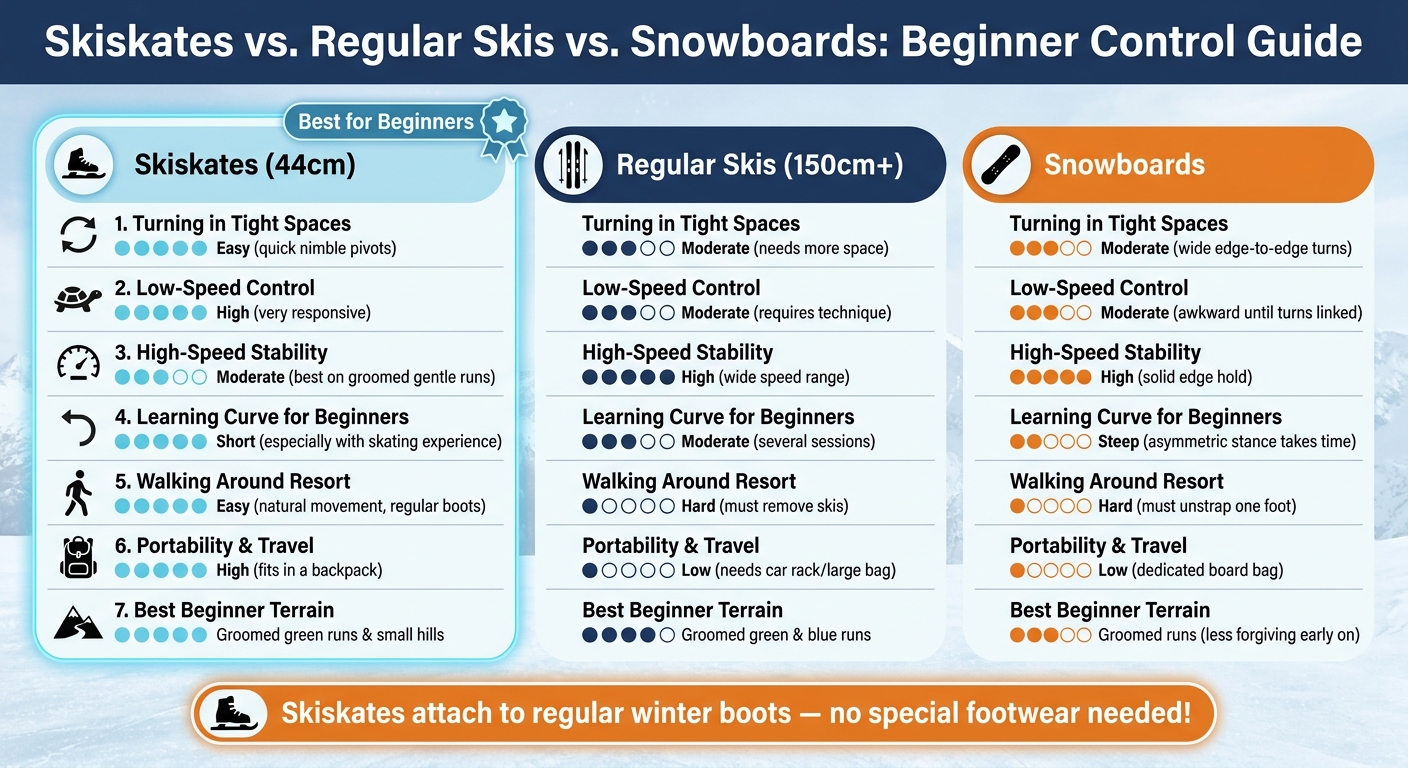
Skiskates vs. Regular Skis vs. Snowboards: Beginner Control Comparison
Snowfeet* & Skiskates Tutorial - How to Become a PRO Skiskater
What Makes Skiskates Feel Hard to Control at First?
At just 44 cm (17 inches) in length, skiskates react to even the smallest body movements, unlike traditional skis that offer more forgiveness for minor errors. Without the extra length to smooth out mistakes, balance and precise foot placement become much more critical. This quick responsiveness requires an adjustment in how you stand and move, as explained below.
Adjusting to a Skating-Style Balance
Traditional skiing relies on a wide, stable stance. Skiskates, on the other hand, work best with a narrower, side-to-side weight shift - similar to ice skating or rollerblading. If you're used to the locked-in, parallel stance of downhill skiing, this can feel a bit odd at first. However, Snowfeet* Skiskates are designed to make this adjustment more intuitive. The Snowfeet Team offers this advice:
"To maintain balance, don't spread your legs too wide, but keep them at about shoulder width. During the ride, you can place one foot in front of the other to increase stability."
This skating-style stance helps you stay nimble and better aligned with the way skiskates are built to move.
Getting Front-Back Weight Distribution Right
This is where many beginners struggle. Unlike traditional skis, leaning forward on skiskates can cause the tips to dig into the snow, throwing you off balance. To counter this, shift your weight toward the middle or back of your feet. Snowfeet* Skiskates are specifically designed to make it easier for beginners to find and maintain this balance. Here's another tip from the Snowfeet Team:
"Don't place your weight over your toes like you do when skiing, but rather distribute your weight over the middle or back of your feet to prevent falling."
Bending your knees and staying flexible helps lower your center of gravity, making it easier to respond to any shifts or slips. Once you get the hang of this, you'll find skiskates much easier to control.
Coordinating Turns and Stops on Short Skates
Turning on skiskates is all about tilting the edge of the skate and shifting your body weight. Thanks to their short length, turns are quick and highly responsive. When it comes to stopping, the hockey stop is your best bet. To pull it off, distribute your weight evenly across both feet and use the edges of the skates to slow down smoothly. The Snowfeet Team explains it like this:
"To stop, use the so-called hockey stop, as well as you do with your skis or skates. Just make sure to distribute your weight equally over both feet to stop smoothly and slowly."
With practice, you'll come to appreciate how responsive skiskates are. Many beginners actually find them easier to manage than traditional skis, making them a fantastic way to dive into winter sports.
Why Snowfeet* Skiskates Are Easier to Control
Getting the hang of skiskates can feel tricky at first, especially if you're used to longer skis. But Snowfeet* Skiskates are built to make that adjustment smoother and more intuitive.
How the 44 cm Length Makes Turning Easier
At just 44 cm, Snowfeet* Skiskates are much shorter than traditional skis, which often measure over 150 cm. This smaller size makes turning a breeze - you can pivot with a quick twist of your hips and ankles, skipping the wide, sweeping turns required with longer skis. If you've ever ice skated or rollerbladed, you'll feel right at home. The compact length means faster reactions and more control, making it easier to navigate slopes without the challenges that come with bulkier gear.
Lightweight Build for Better Handling
Thanks to their wood core and cap construction, Snowfeet* Skiskates are lightweight but still offer solid edge grip and responsiveness. This design keeps them nimble, allowing for precise movements and reducing fatigue. One user shared their experience:
"Easy to control and responsive. Pretty easy to learn. We were taking them off small jumps on the second run."
This balance of lightness and durability makes them a great choice for anyone looking to build confidence on the slopes.
Built for Fun and Easy Use at Any Skill Level
Snowfeet* Skiskates also stand out because they work with different boot styles, including both ski and snowboard boots. Unlike traditional ski boots, which can feel stiff and restrictive, these allow for more comfort and flexibility. Their compact size not only makes them easier to maneuver on the slopes but also more convenient to carry around. As the Snowfeet Team puts it:
"The learning process is super fun and fast, so you will enjoy your whole journey with skiskates."
First-Day Control Tips for Skiskates
Getting the hang of Snowfeet* Skiskates can be a blast with the right approach. Here are some handy tips to help you stay in control and make the most of your first day. Stay calm, stay focused, and enjoy the ride.
Start with a Balanced, Centered Stance
A solid stance is key when you're just starting out. Keep your feet about hip-width apart, bend your knees slightly, and stand upright. Make sure your weight is evenly distributed across both skiskates - don’t lean forward onto your toes or backward onto your heels.
Relax your shins and ankles. If you lock your legs straight, it’ll be tougher to handle bumps or shifts in the terrain. A soft, athletic stance keeps you ready to react and adjust as needed.
Practice Small Skating Movements First
Start slow. Begin with gentle side-to-side weight shifts to get a feel for how the skiskates respond. After that, try a few slow, controlled glide steps. This will help you understand their movement before you pick up speed.
Since Snowfeet* Skiskates are only 17.3 inches (44 cm) long, they’re super responsive to even the smallest shifts in your weight. Getting comfortable with this sensitivity early on will make your runs much smoother and save you a lot of frustration.
How to Do Basic Stops and Turns
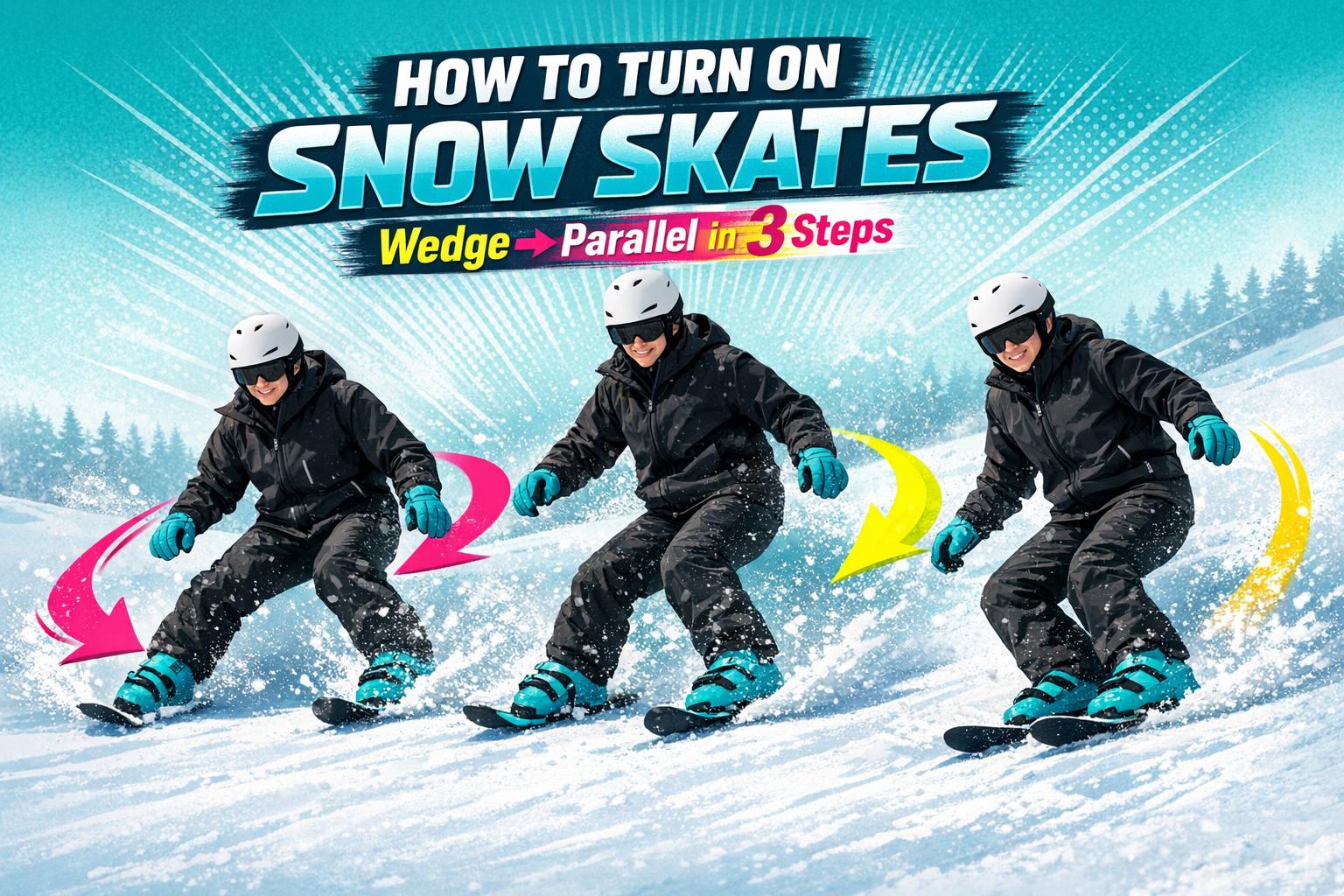
For your first day, keep it simple with basic stops and turns. To stop, angle your skates slightly outward to form a wedge shape and gradually reduce your speed. When turning, shift your weight in the direction you want to go and let your hips guide the motion. Use gentle, steady pressure on the edges of your skiskates for control.
Focus on making one clean turn at a time - left, then right - and work on linking them together as you gain confidence. These basic moves will set the stage for more advanced techniques down the line.
sbb-itb-17ade95
Common Beginner Mistakes to Avoid
Once you've got the basics of control down, it's time to steer clear of a few beginner missteps. These are common but easy to correct once you're aware of them. Let’s dive in!
Standing with Your Feet Too Wide Apart
It might feel natural to widen your stance for stability, but this can actually backfire. With Snowfeet* Skiskates being just 17.3 inches (44 cm) long, any imbalance becomes noticeable much faster than with traditional skis. A wide stance reduces snow contact, making steering awkward and tiring your legs quickly.
Instead, aim for a hip-width stance. This allows for smoother, quicker weight shifts and better control.
Leaning Too Far Forward on Your Toes
Putting too much weight on your toes shifts your center of mass forward, which can cause the tips of your skates to dig into the snow. This makes turning or slowing down way harder than it needs to be.
The fix? Bend your ankles and knees together, and avoid hinging at your waist. This keeps your weight evenly distributed over your feet. And don’t forget - choosing the right terrain plays a big role in keeping your balance.
Starting on the Wrong Terrain
Tackling steep or icy slopes right out of the gate is a recipe for frustration. When speed builds up faster than you can handle, it’s easy to panic, lean back, and lock your joints - all things that make control even tougher.
Stick to gently sloped, machine-groomed runs when you’re starting out. These let you focus on perfecting your stance and movements without worrying about runaway speed.
Best Terrain for Learning Skiskates
The slope you choose can make or break your first experience with skiskates. Picking the right terrain helps you build confidence faster and makes the whole process way more enjoyable.
Start on Groomed, Flat Slopes
The ideal spot to learn? A wide, groomed green run - the kind you'll often find in beginner areas. These slopes typically have a gentle grade of 6–25%, allowing you to glide without picking up too much speed.
Groomed snow is your best friend here. It provides consistent grip, which works perfectly with the edges of Snowfeet* Skiskates. This means you can focus on improving your stance and movements instead of dealing with unpredictable snow conditions. Look for learning areas near the base of the mountain, especially ones served by magic carpets. These zones are less crowded, have minimal slope, and give you plenty of space to practice.
Thanks to their compact 17.3-inch (44 cm) length, skiskates allow for quick, precise turns. This makes groomed terrain particularly useful since you can manage your speed with tight, controlled movements. If you’re heading out, check the resort’s daily grooming report and pick a freshly groomed run for a smooth, predictable surface. It’s the perfect setup for mastering control.
Avoid Steep or Ungroomed Terrain at First
While flat, groomed slopes are perfect for beginners, other types of terrain can make things much harder. Steep blue or black runs, for example, let you pick up speed faster than you can handle on short skiskates. And surfaces like moguls, icy patches, or ungroomed powder can throw off your balance in no time.
Here’s a quick breakdown of terrain types and their beginner-friendliness:
| Terrain Type | Good for Beginners? | Why |
|---|---|---|
| Flat learning area / magic carpet zone | Best | Low speeds, predictable grooming, and great for balance practice |
| Wide, groomed green slope | Very good | Gentle glide for practicing turns, with controlled speeds |
| Narrow or busy green run | Fair | Easy pitch, but crowds can make learning tricky |
| Steep blue or black run | No | Speeds increase too quickly for beginners to control |
| Ungroomed powder or chopped snow | No | Short skiskates can sink or catch, throwing off balance |
| Icy hardpack | No | Hard to grip edges, increasing the risk of falls |
When in doubt, stick with flatter terrain. A quieter, less steep slope is always better than a crowded beginner run where you’re dodging other skiers. Only move on to steeper or longer greens once you’re comfortable starting, turning in both directions, and stopping confidently. Snowfeet* Skiskates are designed for these conditions, making them a great tool for learning compared to traditional skis.
Snowfeet* Skiskates vs. Regular Skis and Snowboards
Snowfeet* Skiskates bring a whole new level of convenience and control to winter sports. Their small size and lightweight design make them incredibly responsive, offering a level of maneuverability that traditional skis and snowboards just can't match. This compact design isn't just about ease of use - it changes the way you experience the slopes.
Traditional skis are great for speed and wide, sweeping turns, but they can feel clunky when trying to navigate tight spaces. Snowboards, on the other hand, require you to shift your weight edge-to-edge with both feet strapped in, which can make the learning curve steeper for beginners. Snowfeet* Skiskates let each leg move independently, giving you a feeling that's much closer to walking or skating. This natural movement makes them easier to pick up, especially for anyone with skating or inline experience.
Another major plus? Snowfeet* Skiskates attach to regular winter boots, so you can leave those stiff, uncomfortable ski boots behind. This simple setup not only keeps things lightweight but also makes your day on the slopes a lot more comfortable.
Control and Maneuverability Comparison Table
| Factor | Snowfeet* Skiskates | Regular Skis | Snowboards |
|---|---|---|---|
| Turning in tight spaces | Easy - short length allows quick, nimble pivots | Moderate - longer edge requires more space to turn | Moderate - wide, edge-to-edge turns; less nimble for quick moves |
| Low-speed control | High - very responsive and maneuverable at slow speeds | Moderate - manageable but requires refined technique | Moderate - can feel awkward until turns are smoothly linked |
| High-speed stability | Moderate - best kept to low-to-mid speeds on groomed, gentle runs | High - designed for stability across a wide speed range | High - provides solid edge hold once turns are linked |
| Learning curve for beginners | Short - especially for those with skating or inline experience | Moderate - ski-specific movements take several sessions to master | Steep - asymmetric stance and edge control take more time to learn |
| Walking around the resort | Easy - allows natural movement in regular boots | Hard - often requires removing skis to walk comfortably | Hard - typically forces unstrapping one foot on flat areas |
| Portability and travel | High - compact enough to fit in a backpack; no roof rack needed | Low - bulky; usually demands car racks or large gear bags | Low - requires a dedicated board bag and extra storage space |
| Best terrain for beginners | Ideal on groomed green runs, small hills, and mellow parks | Best suited for groomed green and blue runs | Optimized for groomed runs, though less forgiving during initial learning |
This table makes it clear why Snowfeet* Skiskates are a fantastic choice for beginners or anyone looking for a playful, hassle-free way to enjoy groomed runs. They’re perfect for low-to-mid speed fun on gentle slopes, offering an easy, intuitive experience that’s hard to beat. If you’re after quick turns and maximum control in a compact package, Snowfeet* Skiskates are the way to go.
Conclusion: Why Snowfeet* Skiskates Work Well for Beginners
Feeling a bit wobbly during your first few runs? Totally normal! That initial shakiness fades quickly, thanks to the thoughtful design of Snowfeet* Skiskates. At just 44 cm long, these skiskates let you pivot much faster than traditional skis. Plus, their lightweight construction reduces leg fatigue, so you can focus on finding your balance instead of wrestling with heavy gear. If you've ever tried skating or rollerblading, you'll adjust even faster since the movements feel pretty similar.
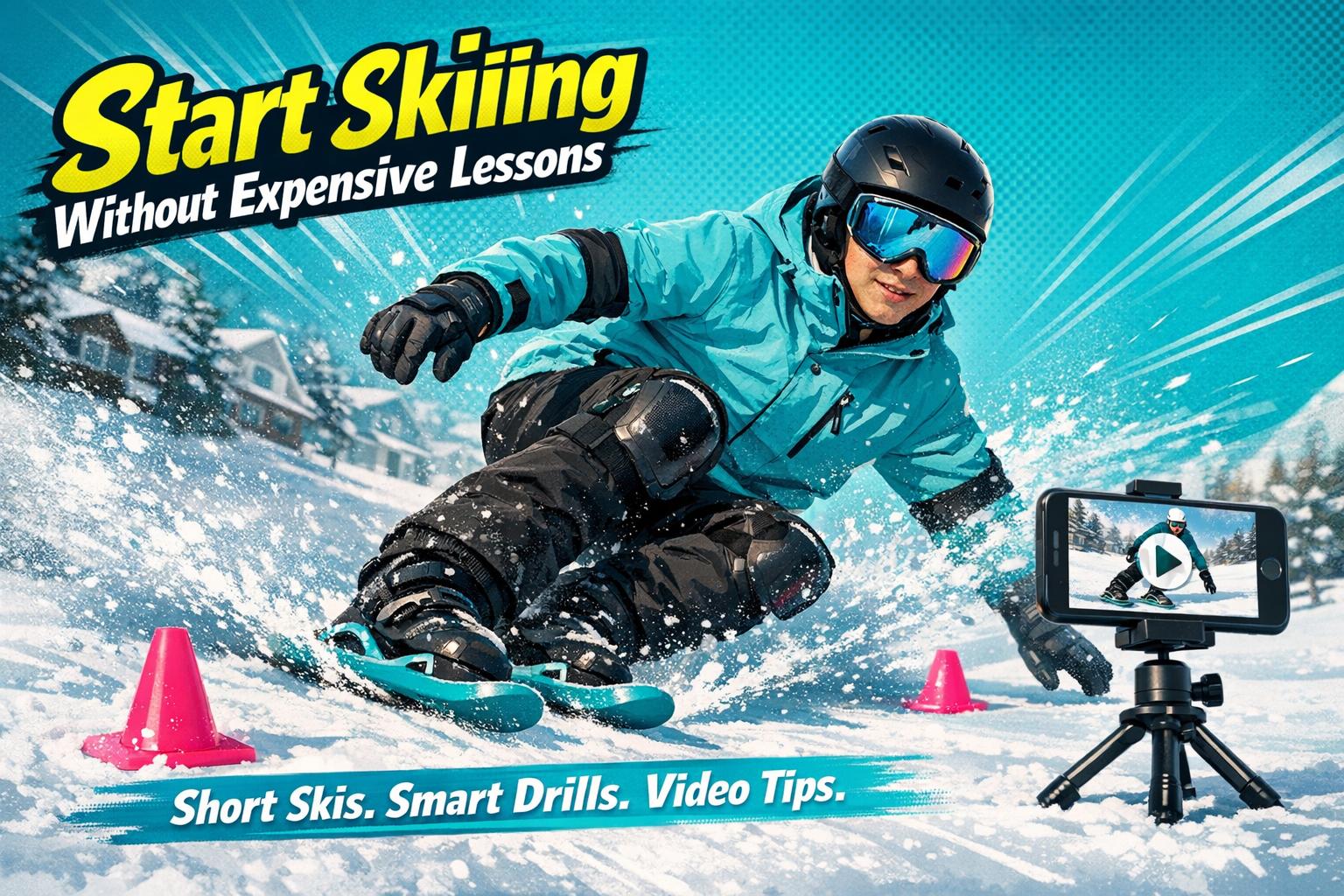
The best way to gain control? Bend your knees slightly, stay centered over your feet, make small skating-like movements, and stick to groomed green runs when you're starting out. With these simple tips, you'll build confidence in no time - no need for lengthy lessons. These basics set you up for a smooth and enjoyable experience on the slopes.
If you want a snow sport that's easy to learn, fun from the start, and perfect for a weekend getaway or resort trip, Snowfeet* Skiskates are an awesome choice. Unlike bulky skis or snowboards, they’re compact, simple, and ready to go. Just strap them onto your winter boots, find a groomed green run, and give these tips a shot - you’re already ahead of the game for your first ride.
FAQs
Do I need ski lessons to learn skiskates?
No, you don’t need ski lessons to pick up Snowfeet* Skiskates. Thanks to their compact 44 cm size, they’re much easier to handle than regular skis. Most beginners can get the hang of basic moves - like gliding, turning, and stopping - in just 1 to 3 sessions. And if you’ve ever ice skated or rollerbladed, the skating-like motion will feel natural, making the learning process even quicker.
What boots work best with Snowfeet* Skiskates?
Snowfeet* Skiskates are designed to work with your regular waterproof winter shoes or even snowboard boots - no need to invest in heavy, pricey ski boots. For the best control, it’s a good idea to wear boots with solid ankle support, which helps with precise movements. The adjustable bindings accommodate US sizes 6–13, giving you a snug yet flexible fit that makes walking and pulling off tricks a breeze.
Are skiskates safe on icy or steep runs?
Snowfeet Skiskates are perfect for having fun and enjoying easy control on groomed, beginner-friendly slopes. They provide solid edge control in these conditions but aren’t the best choice for steep or icy black diamond runs. Traditional skis offer better stability and edge grip for those challenging terrains. For beginners, Snowfeet are a fantastic option on gentle slopes. Their lightweight and portable design makes them way more convenient than lugging around heavy, traditional ski gear.











ฝากความคิดเห็น
เว็บไซต์นี้ได้รับการคุ้มครองโดย hCaptcha และมีการนำนโยบายความเป็นส่วนตัวของ hCaptcha และข้อกำหนดในการใช้บริการมาใช้