



















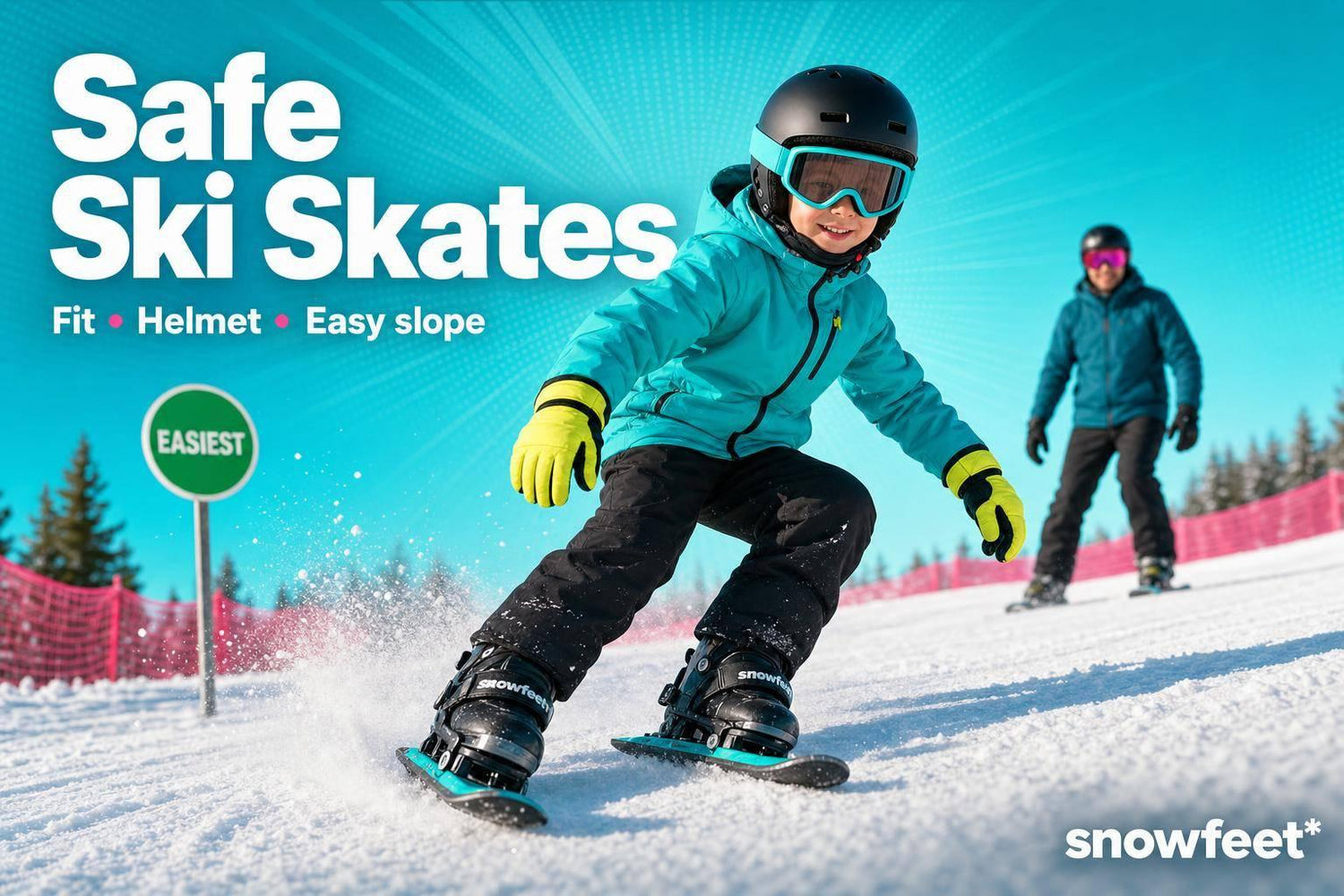
Yes - ski skates can be safe for kids if the fit is right, the hill is mellow, and you stay close. That’s the whole game.
If I were giving a parent the short version in the shop, I’d say this:
- Start small: flat snow, bunny hills, magic carpets
- Use a snug helmet: never buy one for “next year”
- Keep boot and binding fit tight: loose gear is where trouble starts
- Pick the right model for the kid: not for the Instagram photo :)
- End early when your child gets tired: a lot of falls happen late in the day
The article makes one point loud and clear: short ski gear can feel less scary for many kids than long skis, but it can also turn fast and pick up speed if a child can’t stop yet. So, safety comes down to control, not hype.
Here’s the quick take on the gear:
- MINI KIDS: best for small children, about ages 4–8, on very easy snow
- Skiskates 44 cm: best for athletic kids who like a loose, skate-like feel
- Skiblades 65 cm: best for kids who need more stability and a calmer ride
- Long kids’ skis: a better pick for ski lessons, racing paths, or faster resort skiing later on
The ultimate fun skis for kids. 🎿
Quick Comparison
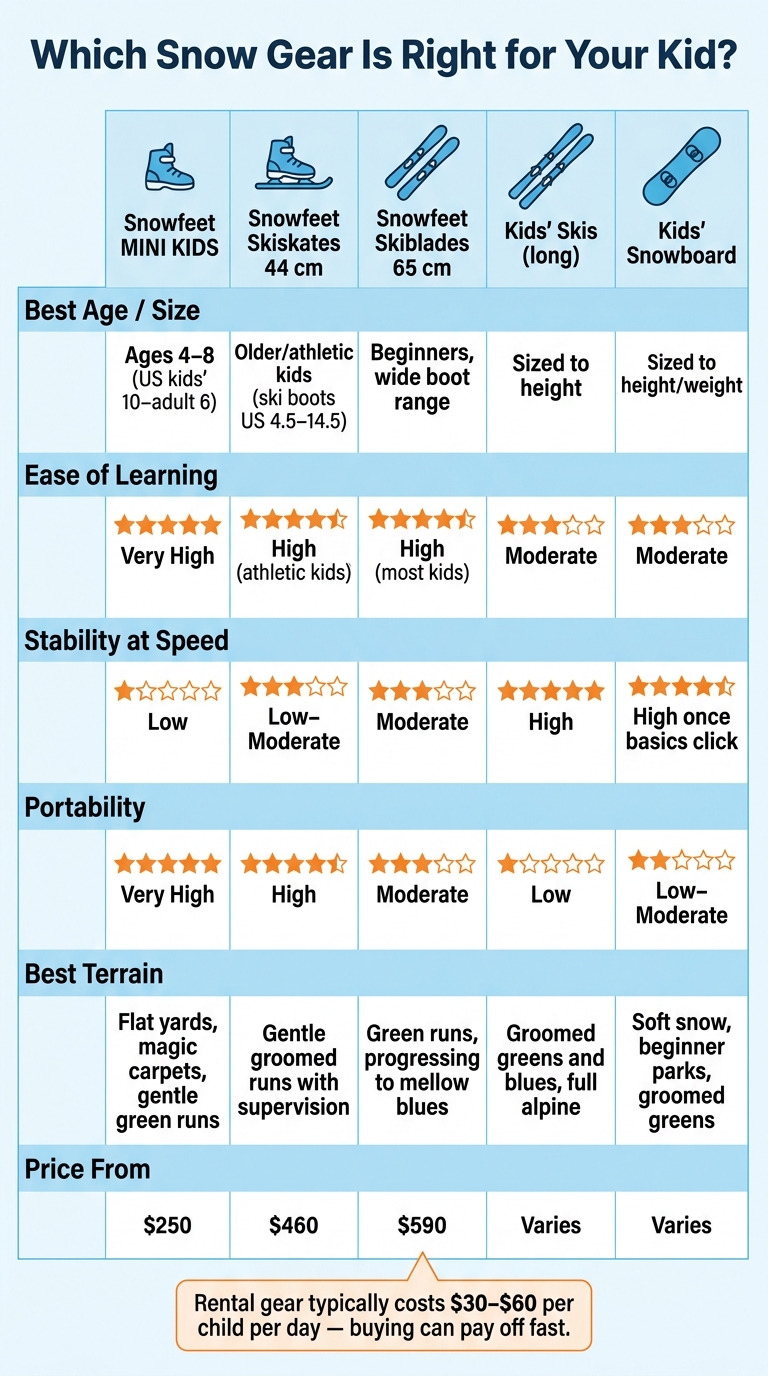
Kids' Ski Gear Comparison: Snowfeet vs. Skis vs. Snowboards
| Gear | Best for | Feel on snow | Best place to start | Price from |
|---|---|---|---|---|
| Snowfeet* MINI KIDS | Small kids, first snow days | Light, simple, easy to move | Flat areas, magic carpets, mellow green hills | $250 |
| Snowfeet* Skiskates 44 cm | Athletic, confident kids | Fast-turning, playful | Gentle groomed runs with close watch | $460 |
| Snowfeet* Skiblades 65 cm | Beginners who want more balance | More planted, calmer | Green runs, then easy blues | $590 |
| Kids’ skis | Kids in ski school or full resort skiing | More stable at speed | Groomed green and blue runs | Varies |
| Kids’ snowboards | Kids focused on boarding | Stable once basics click | Green runs, soft snow | Varies |
A few facts stand out:
- Rental gear often costs $30–$60 per child, per day
- First sessions should stay around 45–90 minutes total
- Break that into 20–30 minute chunks
- MINI KIDS fit about U.S. kids’ 10 to adult 6
So, if your child can listen, balance a bit, and ride on gentle terrain with you nearby, ski skates can be a fun and low-stress way to start. If not, slow it down. Snow will still be there tomorrow.
What Makes Ski Skates Safe or Risky for Kids
Parents often see short gear and think: that looks fast. Or twitchy. Or a little sketchy. That concern makes sense.
But in practice, the biggest safety issues usually come down to fit, terrain, and supervision. So the main thing to sort out is pretty simple: why shorter gear can help, and when it can start to work against a kid.
Why Shorter Gear Can Be Easier for Young Beginners
Short gear is lighter, easier to turn, and less intimidating for small beginners. That matters more than people think.
When a child isn’t wrestling with heavy equipment, they can put more of their attention on balance and control instead of just trying not to tip over. Models like the Snowfeet* MINI KIDS and Skiblades 65 cm are small enough that many young kids find them easier to handle than a full-length ski setup. For casual young riders, that can make them a better first step than long skis.
There’s one catch, though: that upside only works if the child can still stop and stay in control. Short gear can feel easier at first, but it’s not magic.
The Main Risks Parents Should Watch For
The biggest issue is speed on steeper terrain. If a child can’t stop with consistency, they can gain speed fast on anything beyond a mellow beginner slope.
A few other risk points matter too:
- Poorly adjusted bindings can increase injury risk in children.
- Fatigue sneaks up fast, and a lot of accidents happen later in the day when kids are tired but still want “one more run.”
- Overconfidence is common. After a few easy runs, short gear can feel simple, and kids may want to try steeper terrain before they’re ready.
- Crowded lift zones and trail intersections increase collision risk.
The good news? Those risks drop fast when the setup fits, the slope is right, and an adult is paying close attention.
Conditions That Lower Risk Right Away
Some safety steps aren’t optional. Boot and binding fit come first. The fit should be snug, adjusted the right way, and matched to your child’s weight, boot size, and skill level.
A few basics go a long way:
- Use a certified helmet every time, and make sure it fits snugly. Don’t buy one “to grow into.”
- Stick to beginner terrain, like wide, low-angle green runs, to keep speed in check and cut down on collision risk.
- Keep first sessions short so tired legs don’t turn into sloppy falls.
- Stay close in lift areas and near slope intersections. Those spots need direct adult supervision.
sbb-itb-17ade95
Choosing the Right Snowfeet* Model for Your Child
Once you know the risks and how to handle them, the next step is simple: pick the model that fits your child. It mostly comes down to three things:
- your child’s size
- how steady and coordinated they are
- which boots they’ll wear
With the safety basics in place, now you’re matching the gear to your child’s body and confidence level.
Snowfeet* MINI KIDS: Best for Small Children and First Snow Sessions
The Snowfeet* MINI KIDS are made for very small children and first-time riders. They fit U.S. kids' size 10 to adult 6, which is roughly ages 4–8.
They strap onto winter boots or kids' snowboard boots, so there’s no need for ski boots. That’s a big plus for little kids. The short, light shape also helps them move in a more natural way on snow.
At about $250, they can make more sense than renting kids' gear over and over, since daily rentals often cost $30–$60 per child, per day. If your kid is just getting started, that math adds up fast.
MINI KIDS work best in easy places like:
- flat yards
- magic carpets
- very gentle beginner hills
If your child is new to snow sports and still figuring out balance and stopping, this is the best place to start.
Snowfeet* Skiskates 44 cm vs. Skiblades 65 cm: Which One Fits Your Child?
For older kids or those with better coordination, the choice usually comes down to two models.
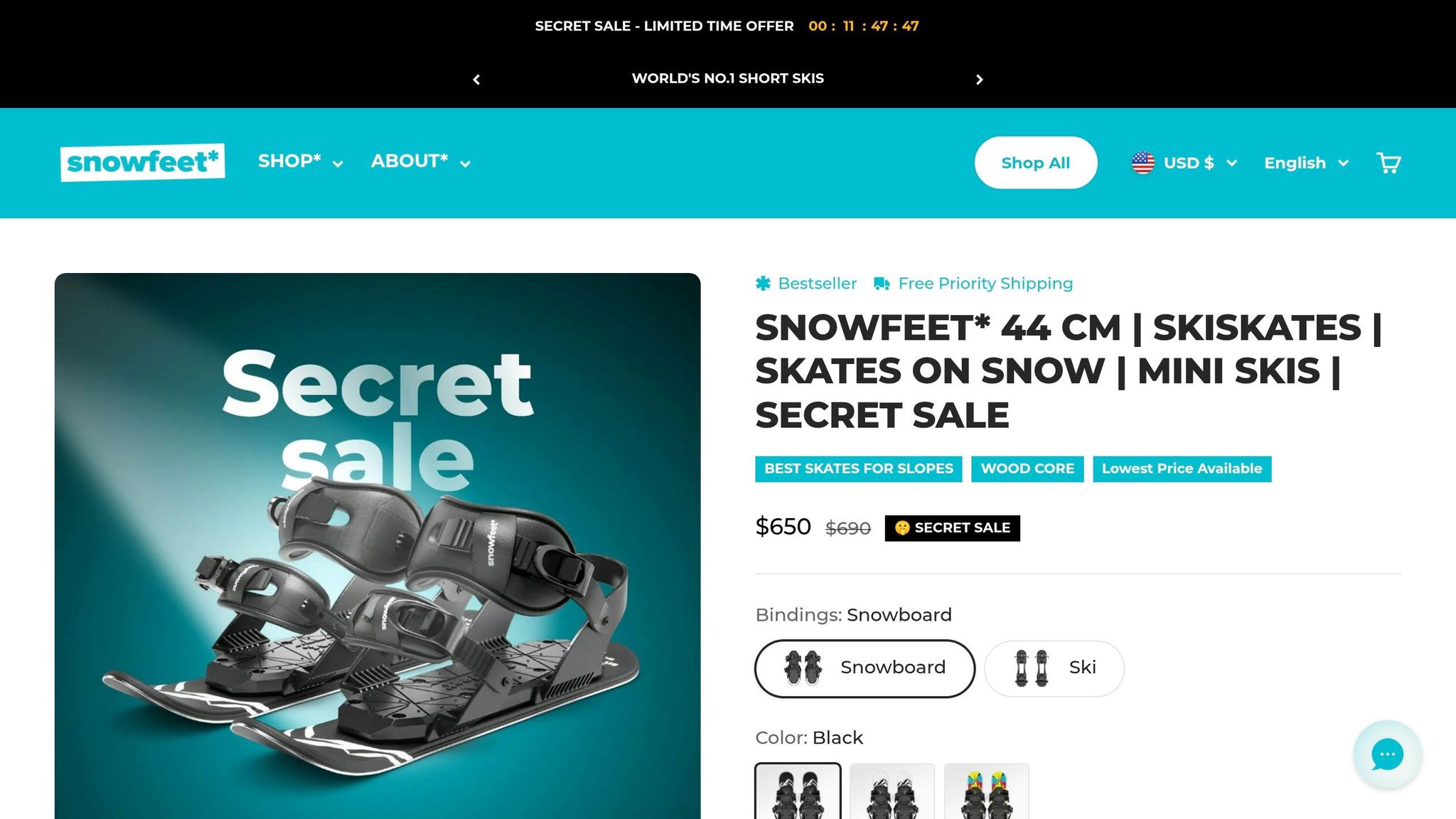
The Skiskates 44 cm start at about $460. They feel a lot like inline skates on snow: quick, playful, and easy to turn. They’re a good match for kids who already skate, inline skate, or ride scooters and like that loose, active feel. The downside? They give you less front-to-back stability, so a nervous beginner may have a tougher time.
The Skiblades 65 cm start at about $590 and measure 65 cm, or about 26 inches, long. They feel steadier when going straight and give kids a more planted ride. That makes them a better fit for children who are still building confidence or just want gear that feels easy to trust on a few snow days each year. Both models use adjustable bindings, so they fit a broad range of ski or snowboard boots.
Here’s the short version:
- Pick 44 cm for agility.
- Pick 65 cm for stability.
Comparison Table: Snowfeet* Models vs. Kids' Skis vs. Snowboards
| Gear | Size fit | Ease of learning | Stability at speed | Portability | Best terrain |
|---|---|---|---|---|---|
| Snowfeet* MINI KIDS | US kids' 10–adult 6 | Very high | Low | Very high | Flat yards, magic carpets, very gentle green runs |
| Snowfeet* Skiskates 44 cm | Ski boots approx. US 4.5–14.5; snowboard boots approx. US 6–14.5 | High for athletic kids | Low–moderate | High | Gentle blue runs with supervision |
| Snowfeet* Skiblades 65 cm | Ski or snowboard boots in a wide size range | High for most kids | Moderate | Moderate | Resort greens, progressing to mellow blues |
| Kids' skis (long) | Sized to child's height | Moderate | High | Low | Groomed greens and blues; full alpine terrain as skills grow |
| Kids' snowboards | Sized to height/weight | Moderate | High once basics click | Low–moderate | Soft snow, beginner parks, groomed greens |
At this point, fit and supervision matter more than the model itself.
Long kids' skis still make sense for racing or for kids moving deeper into alpine skiing. Once you’ve picked the model, the day-to-day feel of safety comes down to fit, terrain, and how closely the child is supervised.
Gear, Fit, Terrain, and Supervision: The Practical Rules
Once you’ve picked the right Snowfeet* model, the next big stuff is fit, terrain, and supervision. That’s what shapes how safe those first runs feel.
Helmet, Warm Layers, and Boot Fit
Set the helmet so it sits level and about two fingers above the eyebrows. Check the size chart, and make sure it doesn’t wobble or slide around. Add goggles, warm gloves or mittens, waterproof insulated pants, and layers that keep kids warm without locking them up.
Cold, wet snow can wear kids down fast. When they get chilled, coordination slips. So staying warm and dry isn’t just about comfort. It’s a safety issue too.
Boot fit works the same way: snug beats roomy. The boot should feel firm around the heel, ankle, and midfoot. The bindings should hold the boot with very little side-to-side or front-to-back movement. Snowfeet*’s adjustable bindings are only safe when the boot stays snug.
Before you head out, have your child bend forward in the boots. If the fit feels loose or shaky, the boots are too big. Simple as that.
Where Kids Should Start and What to Avoid
Start on a wide, uncrowded, well-groomed green slope with good visibility. That setup gives kids room to practice gliding, basic stopping, and easy turns without building too much speed.
This matters even more with ski skates than with long skis. Snowfeet* turn fast, which is fun, but also means mellow terrain is the smart call at first. Soft, groomed snow helps too. It softens falls better than hard-packed or icy surfaces, and short ski skates are easier to manage there.
Until your child can stop and turn with control, skip:
- Steep runs
- Terrain parks
- Icy patches
- Narrow trails
- Crowded areas
Each one adds something beginners don’t need yet: more speed, harder falls, less edge grip, or fewer ways out if things go sideways.
On beginner terrain, close supervision matters most while kids are still learning how to stop.
How Much Adult Supervision Kids Actually Need
With younger beginners, stay within arm’s reach. With older beginners, stay on the same slope and keep active watch. The main job here is to help with those first stop-and-turn tries. That’s where being close helps the most.
Keep sessions short. Aim for 45 to 90 minutes total, split into 20 to 30 minute segments with breaks for water, snacks, and warming up. Tired kids fall more, plain and simple.
Watch for signs they’re done:
- More frequent falls
- Slower reactions
- Complaints about being cold
Those are your signs to call it, not squeeze in “just one more run.” Before anyone clips in, agree on a meeting point, a simple stop signal, and which terrain is off-limits.
Use these rules for the first few sessions, then move to a simple progression plan.
Safe Progression and Final Verdict for Parents
With fit, terrain, and supervision sorted out, the next piece is progression.
A Simple First-Day to First-Season Progression Plan
Start on flat ground, not a slope.
Begin with standing, marching, and short glides. Then work on a basic stop. Once those moves feel normal, head to a very gentle bunny hill with one adult close by.
After that, keep the order simple:
- Learn shallow turns before steeper terrain
- Move to steeper terrain only after your child can stop with steady control
- Step up only after several short runs with no near-falls
Once your child can stop and turn in a safe, steady way, the next call is gear: Snowfeet* or long skis.
When to Choose Snowfeet* and When Long Skis Make More Sense
For most families, Snowfeet* makes more sense for casual use. They’re lighter, easier to carry, and less intimidating for kids.
Traditional kids' skis are a better fit for ski school, coached alpine technique, or high-speed carving. Pick based on your child’s goal, not the hype.
Key Points for Parents to Remember
Use this quick recap to match gear to your child's size and confidence.
| Factor | What to do |
|---|---|
| Helmet | Fit it snugly and level; do not size up for growth. |
| Boot fit | Snug at heel and ankle; no side-to-side movement in the binding |
| Terrain | Start on gentle, groomed beginner terrain; avoid steep, icy, crowded, or rutted runs |
| Supervision | Stay close by for younger beginners |
| Model choice | MINI KIDS for the smallest riders; Skiskates 44 cm for confident kids; Skiblades 65 cm for a stable middle ground |
MINI KIDS fit the smallest riders. Skiskates 44 cm fit confident kids who want quick turns. Skiblades 65 cm give the steadiest ride for beginners who want more stability.
For casual family use, Snowfeet* is the simpler, more practical option. Start small, watch for real control, and move up only when your child is ready.
FAQs
Do kids need lessons for ski skates?
No. Kids generally don’t need lessons for ski skates.
Snowfeet* products are made to feel natural, with movement that’s a lot like skating. Because of that, most kids get comfortable within a single day. Some even get the hang of it in as little as five minutes.
That’s a big shift from traditional skiing, where kids often need several paid lessons and more time before they feel at ease. With Snowfeet*, the learning curve feels simpler and a lot less intimidating.
How do I know if my child is ready for steeper runs?
Your child is ready for steeper terrain when they can turn and stop with control on easy, groomed slopes and aren’t still fighting for balance or fussing with their gear. With Snowfeet*, a lot of kids build that confidence faster than they do on regular skis.
Before you move up, make sure they can manage speed with a hockey stop or heel brake. And don’t rush into deep powder over 4 inches or steep runs just yet. Let them build strength and stamina on easier slopes first.
Can my child use regular winter boots with Snowfeet*?
Yes. Most Snowfeet* products work with regular winter boots, which makes them more comfortable and easier for kids to start with than heavy ski boots.
MINI KIDS and Skiskates attach right to regular winter boots or snowboard boots. For the best control, make sure the boots fit snugly around the ankle.











ฝากความคิดเห็น
เว็บไซต์นี้ได้รับการคุ้มครองโดย hCaptcha และมีการนำนโยบายความเป็นส่วนตัวของ hCaptcha และข้อกำหนดในการใช้บริการมาใช้