



















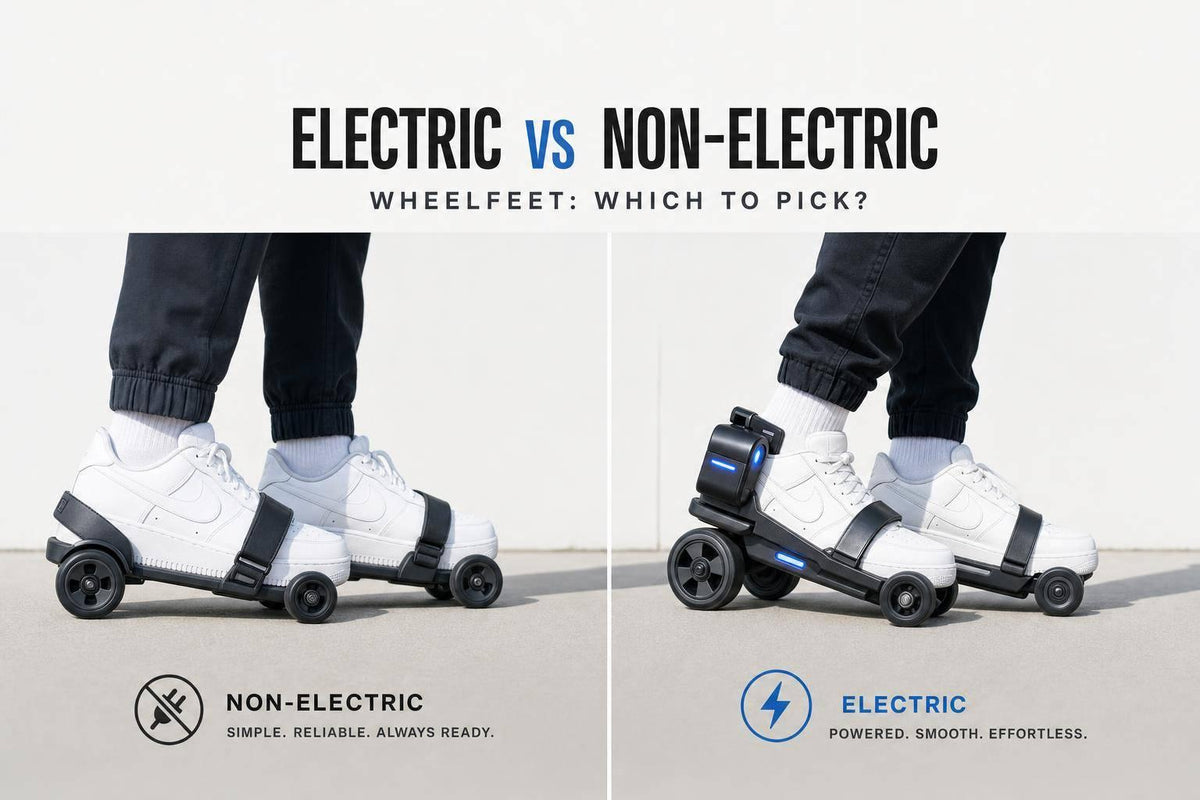
If I had to give the short answer: most people should pick non-electric Wheelfeet, while commuters and low-effort riders should look at electric.
Here’s why:
- Electric Wheelfeet cost $599–$699, go up to 15 mph, and run for about 9 miles per charge
- Non-electric Wheelfeet cost about $199, weigh less, and don’t need charging
- Electric works best for short commutes, campus rides, and smooth paths
- Non-electric works best for casual rides, travel, and skatelike control
- The big trade-offs are price, weight, effort, braking, and battery limits
So, if you want motor help and less leg work, go electric. If you want lower cost, less stuff to deal with, and a ride that feels more like skating, go non-electric.
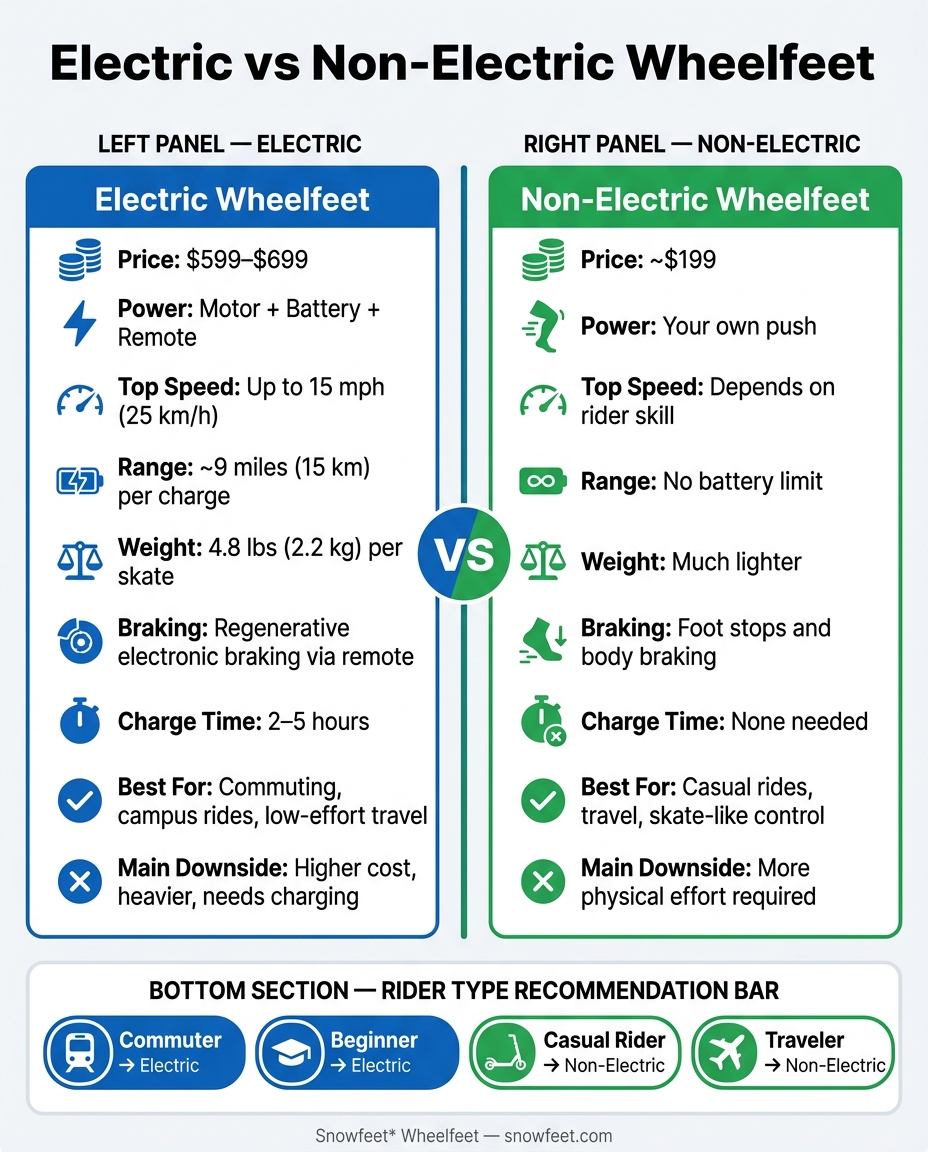
Electric vs Non-Electric Wheelfeet: Full Comparison
Wearable Skates | Roller Blades | Skate on Shoes | Wheelfeet | Non-electric
Quick Comparison
| Criteria | Electric Wheelfeet | Non-Electric Wheelfeet |
|---|---|---|
| Price | $599–$699 | About $199 |
| Power | Motor + battery + remote | Your own push |
| Top speed | Up to 15 mph | Depends on skill |
| Range | About 9 miles per charge | No battery limit |
| Weight | 4.8 lbs (2.2 kg) per skate | Lighter |
| Braking | Remote brake | Foot braking |
| Best for | Commuting, campus, low-effort riding | Casual use, travel, skate feel |
| Main downside | More weight, charging, higher cost | More physical work |
My take: if you’re buying for fun, short rides, or travel, non-electric is the easier pick. If your goal is to roll from point A to point B with less effort, electric makes more sense.
If you want a quick look at how Wheelfeet ride in motion, a YouTube search can help:
From there, I’d keep the choice simple: pick based on how often you’ll ride, how much work you want to do, and whether you want to deal with a battery at all.
Electric vs Non-Electric Wheelfeet: What Each Option Offers
Electric Wheelfeet: Key Specs and Best Uses
Electric Wheelfeet use a motor and a rechargeable battery system, all controlled with a handheld remote. The thumb throttle manages acceleration, and that same remote activates regenerative braking, which helps recharge the battery while you slow down.
That setup gives you motor assist and remote braking, but there’s a catch: more weight and the need to charge it. Still, it’s far lighter than an electric scooter, even though it weighs more than the non-electric version.
This option makes the most sense for city rides, campus trips, and short commutes. If you want to move faster than walking without doing much work, electric Wheelfeet fit the bill. The flip side is simple: you’re carrying more weight, and you’re tied to battery life.
Non-Electric Wheelfeet: How They Work and Where They Fit
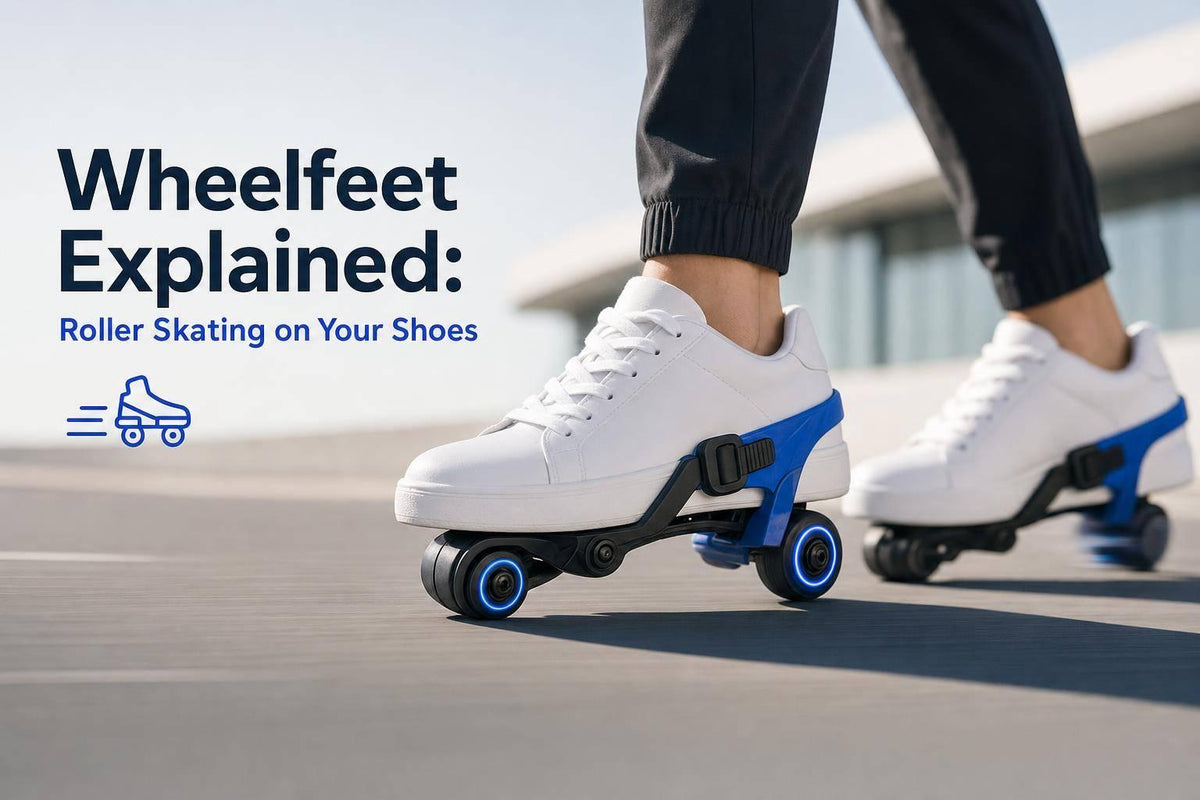
Non-electric Wheelfeet keep things simple. No motor. No battery. No remote. Just wheels and adjustable straps that attach to your regular shoes. You move them with your own effort, much like skating, and your feet handle both speed and direction.
That simple setup comes with a few nice perks:
- They’re lighter
- They’re always ready to use
- They have no range limit
- They don’t need charging or battery care
- They usually need less weather-related upkeep
For travel, casual weekend rides, or those “let’s just go” moments, that lower upkeep is a big plus. They’re also the easier choice if you want lower cost and less hassle. On top of that, the ride feels more direct and more like skating.
This is where non-electric Wheelfeet stand out. If you like a skatelike ride that feels direct, responsive, and physical, they’re a strong match. If you want the workout and like having full control over your speed and movement, this version does that well.
Those trade-offs show up most in ride feel, effort, and braking.
sbb-itb-17ade95
Ride Feel, Effort, and Control: Side by Side
Ride Feel and Learning Curve
Electric Wheelfeet feel smoother and take less work. Non-electric Wheelfeet feel more like skating in the old-school sense.
If you already skate, non-electric Wheelfeet will likely click faster. The feel is more familiar, and the movement comes from your own stride. Electric models are often easier for beginners because the motor does the pushing for you. That lets you focus more on balance first, instead of balance plus propulsion.
That gap gets even more important when you look at terrain, portability, maintenance, and cost.
Effort, Speed, and Braking
This is where the two types split in a big way:
| Feature | Electric Wheelfeet | Non-Electric Wheelfeet |
|---|---|---|
| Physical Effort | Low - motor handles propulsion | High - you power every stride |
| Top Speed | Up to 15 mph (25 km/h) | Depends on rider strength and technique |
| Braking Style | Regenerative electronic braking via remote | Foot stops and body braking |
| Learning Curve | Easier for beginners; balance-focused | Moderate; requires skating balance and technique |
So, if you want easier movement, electric makes more sense. If you want a more active ride that feels closer to skating, non-electric is the better fit. Electric stands out when you want to keep rolling without pushing every few seconds.
Terrain, Portability, Maintenance, and Cost
Where Each Type Works Best
How they feel to ride matters. But where you’ll use them matters just as much.
Electric Wheelfeet make the most sense on smooth, steady routes. Think sidewalks, bike paths, and college campuses. They do best on clean urban surfaces and should stay away from rain and rough ground. Water can damage the electronic parts.
Non-electric Wheelfeet are a better match for short rides with lots of stops. They work well in parks, plazas, and other small spaces where you’re getting on and off a lot. They’re easier to step out of, and they’re simpler to deal with on uneven pavement. For casual grab-and-go rides, that’s a big plus.
Once the surface is sorted out, the next thing people notice is weight.
Weight, Battery Limits, and Maintenance
Electric models weigh 2.2 kg (4.8 lbs) per skate, so you’re carrying more from the start . They also need charging, have a set range, and come with battery care. A full charge takes 2 to 5 hours, and you’ll get about 9 miles (15 km) per charge.
Non-electric Wheelfeet skip all of that. No charger. No battery. No electronics to keep dry. Maintenance is pretty simple:
- Clean the wheels and bearings
- Replace straps when needed
For most casual riders, that lighter setup is just easier to live with.
Price and Long-Term Value
| Factor | Electric Wheelfeet | Non-Electric Wheelfeet |
|---|---|---|
| Terrain | Smooth sidewalks, bike paths, city routes | Small spaces, parks, plazas, changing surfaces |
| Portability | Compact, but heavier because of the motor and battery | Lighter and easier to carry |
| Weight | 2.2 kg (4.8 lbs) per skate | Much lighter |
| Battery Limits | About 9 miles of range; 2–5 hours to charge | None |
| Maintenance | Charging, cleaning, and electronics to protect from water | Wheels, bearings, and straps |
| Upfront Cost | $599–$699 | About $199 |
| Ongoing Costs | Battery replacement and electronic repairs | Low-cost mechanical wear |
Snowfeet* non-electric Wheelfeet cost $199, while electric models land between $599 and $699. That’s not a small gap. Over time, electric models also cost more to own because batteries wear out and electronic repairs can show up. Non-electric models stay far cheaper to maintain, with wheels, bearings, and straps as the main parts that wear down.
Which Wheelfeet Should You Pick?
Your pick comes down to how you ride: electric if you want easy commuting, non-electric if you want something lighter, cheaper, and closer to a skate feel.
After looking at effort, portability, and upkeep, the best choice is the one that fits your day-to-day use.
Here’s the fast version:
| Rider Type | Best Pick | Why |
|---|---|---|
| Commuter | Electric | Point-to-point commuting |
| Beginner | Electric | Remote manages speed and stopping |
| Casual Rider | Non-Electric | No charging, easy grab-and-go use |
| Traveler | Non-Electric | Lighter, no battery to manage |
Pick Electric Wheelfeet for Commuting or Low-Effort Speed
Electric Wheelfeet fit best if you ride short, repeatable routes, like a 1-mile trip to transit or getting across campus. The motor does the pushing for you, and regenerative braking helps slow you down without tricky footwork.
That ease comes with a clear trade-off. You’re spending $599–$699, carrying 4.8 lbs (2.2 kg) per skate, and working around a 2–5 hour charge time. If your main goal is low-effort travel from point A to point B, that deal can make sense.
Pick Non-Electric Wheelfeet for Simplicity, Portability, and Skate Control
For a lot of people - beginners, weekend riders, and travelers - Snowfeet* non-electric Wheelfeet at $199 are the easier call. There’s nothing to charge, nothing battery-related to deal with on a flight, and no extra prep before you head out.
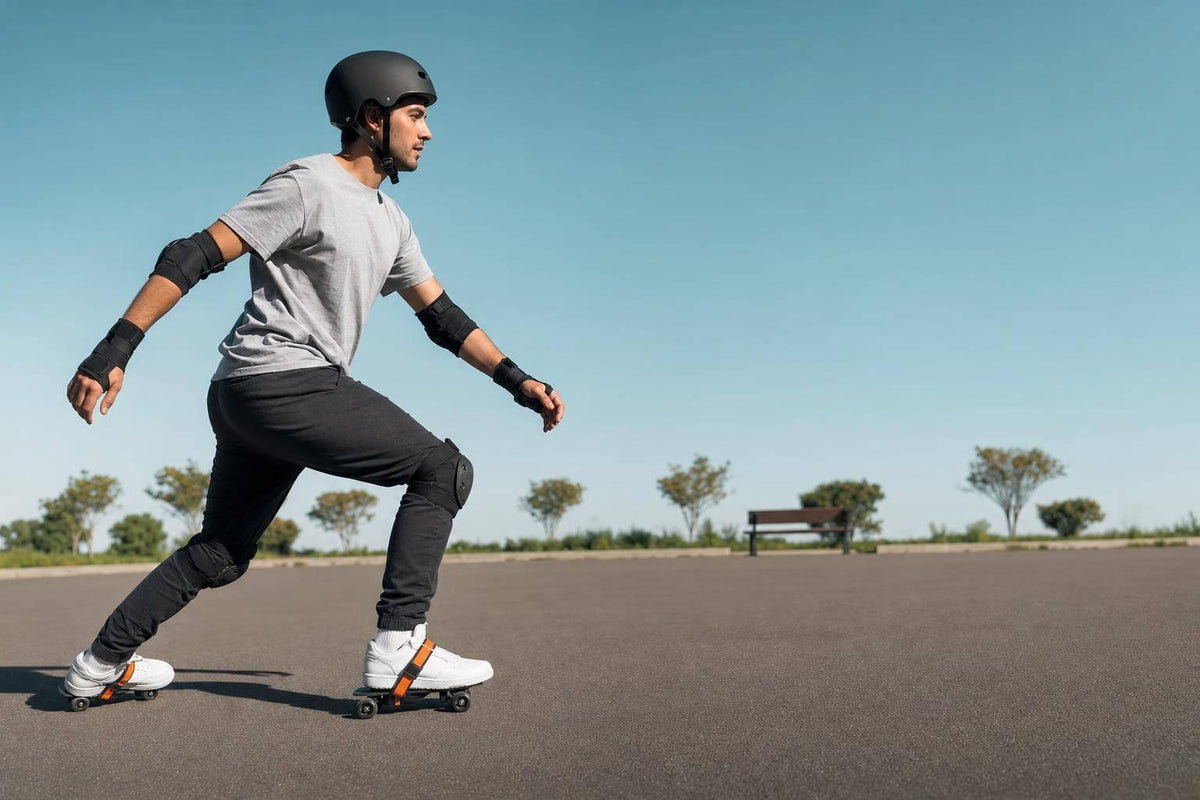
You also get a more direct skating feel, with direct control at low speeds. That makes them easy to grab and go, which, honestly, is a big plus when you don’t want your ride to feel like another device to manage.
Conclusion: The Right Pick for Most Riders
Electric Wheelfeet are a good fit for riders who want powered commuting. Snowfeet* non-electric Wheelfeet are the better default for most casual riders because they cost less, weigh less, and feel more like skating.
FAQs
Are electric Wheelfeet worth the extra cost?
It comes down to how often you ride and what kind of help you want.
At $674 vs. $199, electric Wheelfeet are a better fit for people who ride a lot, commute each day, or want extra push on hills and longer trips. If that sounds like your week, the higher price may be worth it.
If you ride now and then, the manual version is the more practical pick. It costs less, does the job, and keeps things simple. And simple matters. The electric model adds a battery, motor, and electronics, which means more upkeep over time.
Which Wheelfeet are easier for first-time riders?
For first-time riders, non-electric manual Wheelfeet are usually easier to learn on. They help you focus on the basics: balance, foot placement, and stopping. No motor. No extra stuff to manage. Just you, the wheels, and a bit of practice.
Electric models are handy, sure, but they’re tougher at the start. You also have to control acceleration, react faster, and keep a steadier stance while the motor does its thing.
Can I use Wheelfeet on rough or wet pavement?
It’s best to keep Wheelfeet off rough or wet pavement. They perform best on smooth, clean ground like paved bike paths, quiet parking lots, and well-kept sidewalks.
Their short frame doesn’t handle cracks, loose debris, or rough asphalt very well. And when the ground is wet, the chance of slipping goes up. Water can also harm the skates’ electronic parts.











Lämna en kommentar
Denna webbplats är skyddad av hCaptcha och hCaptchas integritetspolicy . Användarvillkor gäller.