




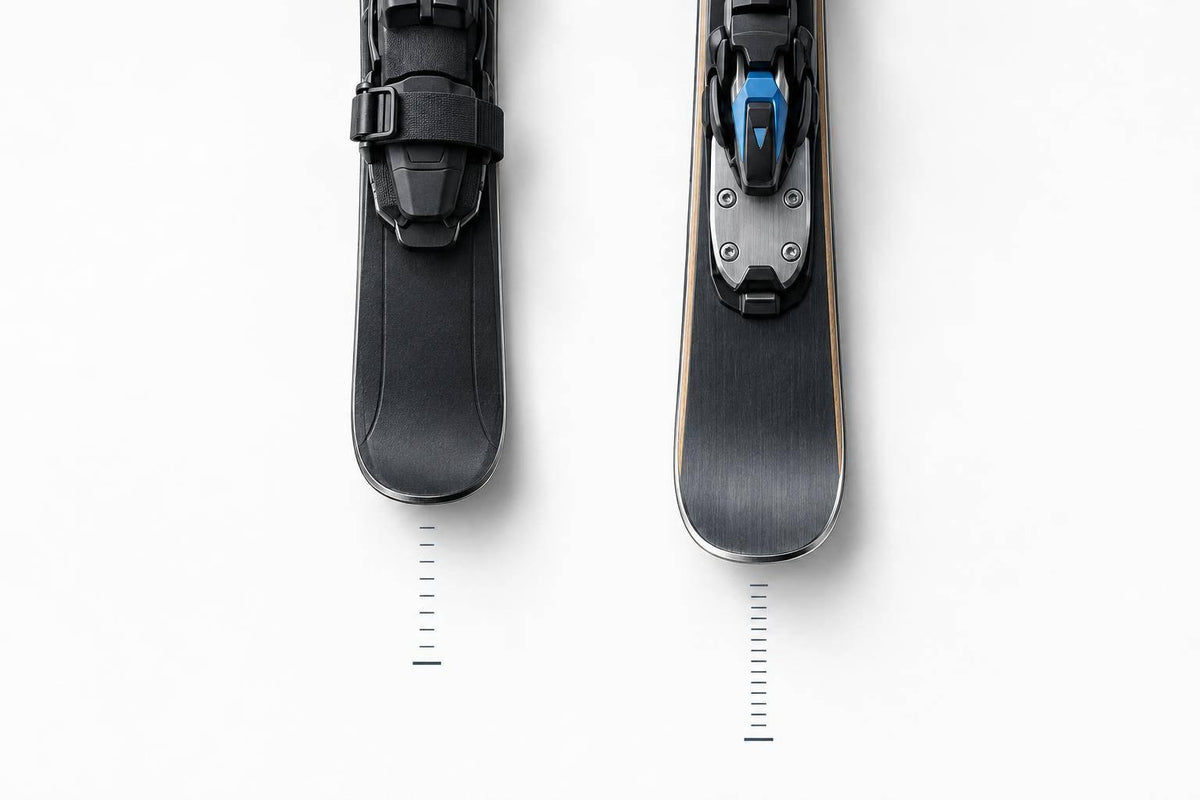
I’d pay for verified build quality, boot fit, and repair support - not a price tag. Before you buy, add up bindings, boots, setup fees, shipping, and tax. A cheap pair isn’t always the cheaper setup.
My rule: length changes the ride; construction changes quality. Check the core, base, edges, binding release, spare parts, and warranty before spending more.
Quick Comparison
| Option | Listed starting price | What I’d check or choose it for |
|---|---|---|
| Budget skiblades | Unconfirmed | Check build, included bindings, boot fit, and repair options |
| Snowfeet* 65 cm (26 in) | $590 | Tight turns and easy carrying; less stability at speed |
| Snowfeet* 99 cm (39 in) | $690 | A balance of turns, tracking, and pack size |
| Snowfeet* 120 cm (47 in) | $950 | Steadier tracking; more length and cost |
For casual resort use, I’d lean toward the 99 cm. Its listed starting price is $100 more than the 65 cm - about 17% - but that doesn’t prove better construction. Compare the same binding package first.
<u>Check the exact binding setup before ordering.</u> Non-release bindings don’t release like alpine ski bindings. I’d also confirm current prices, resort rules, and warranty terms, and have a qualified ski technician check release bindings.
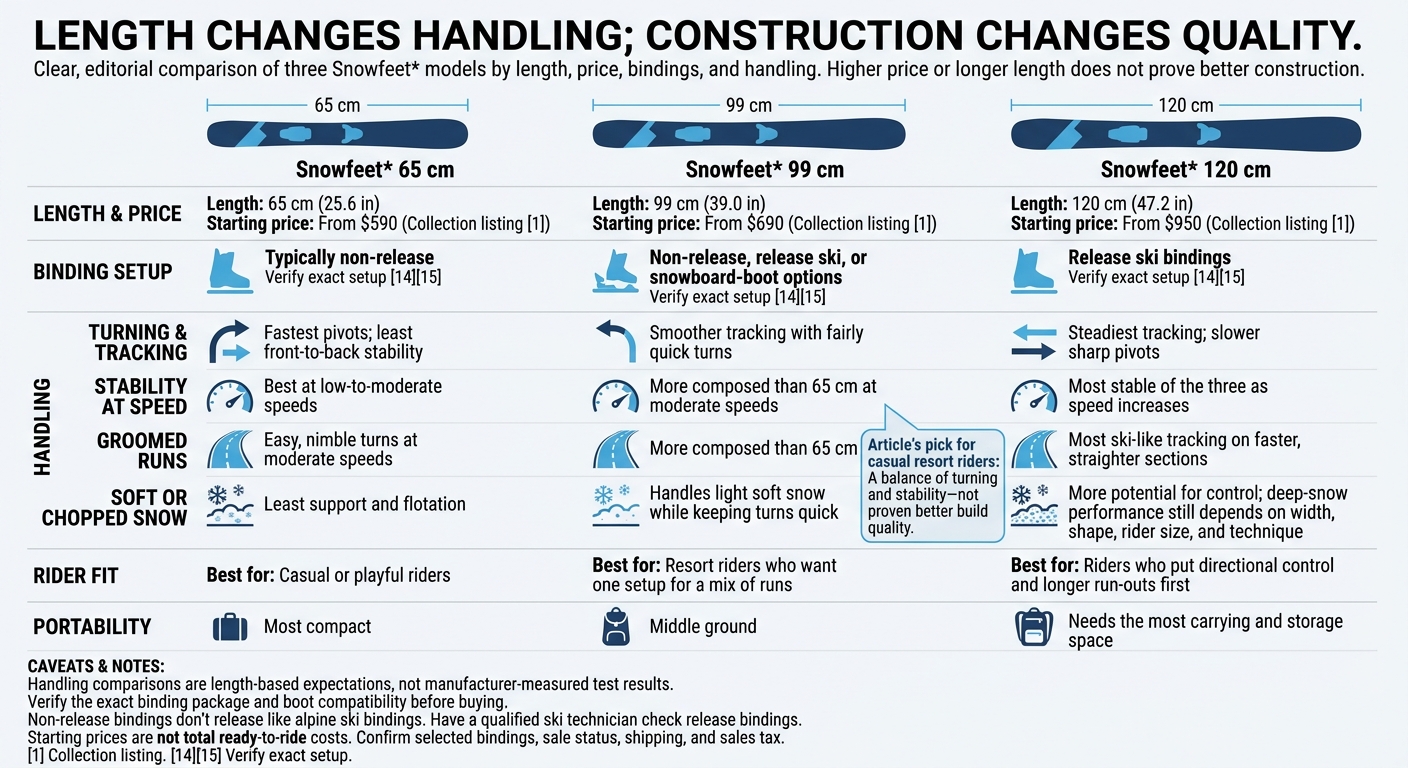
Snowfeet 65 vs 99 vs 120 cm: Price and Handling
Snowfeet* Snowblades | Skiboards | Skiblades | Short Skis - All you need to know
What Higher Prices Buy in Skiblade Quality
Once you separate price from length, focus on what the extra money buys: better construction, the right bindings, and support when parts wear out.
Construction, Edge Grip, and Wear
Pay for listed features, not a premium label. Budget-model specs aren’t provided here, so check each listing. Look at the core, cap or sandwich construction, reinforcement, base, edge material, and binding package.
The 65 cm Snowfeet* listing documents cap construction, a certified sustainable wood core, metal edges, and a graphite base.
Use those listed Snowfeet* features to compare budget models.
| Comparison point | Budget-model check | Snowfeet* documented feature | What it changes |
|---|---|---|---|
| Core and construction | Check the core and construction. | 65 cm: cap construction and a certified sustainable wood core. | May help flex stay predictable, but doesn’t prove better impact resistance or a longer lifespan. |
| Edges | Check edge coverage. | 65 cm: metal edges. | Helps with edging and stopping on firm snow. Grip still depends on sharpness, snow conditions, and technique. |
| Base | Check the material and service needs. | 65 cm: graphite base. | Can help with glide. The listing doesn’t establish wear life or say the base is sintered. |
| Binding package | Check the exact type. | Binding package: verify exact type. | Suitability depends on boot fit, adjustment, and release design. |
Flex means how a skiblade bends. Torsional stiffness means how much it twists under edge pressure. Predictable flex and enough torsional stiffness can help you maintain control. But no stiffness data is provided, so don’t judge durability by flex alone.
Check whether the base and edges can be tuned or repaired, and inspect both boards for damage. Metal edges need tuning, and graphite bases still need care.
Next, check whether the bindings match your boots and release needs.
Binding Fit, Adjustment, and Release
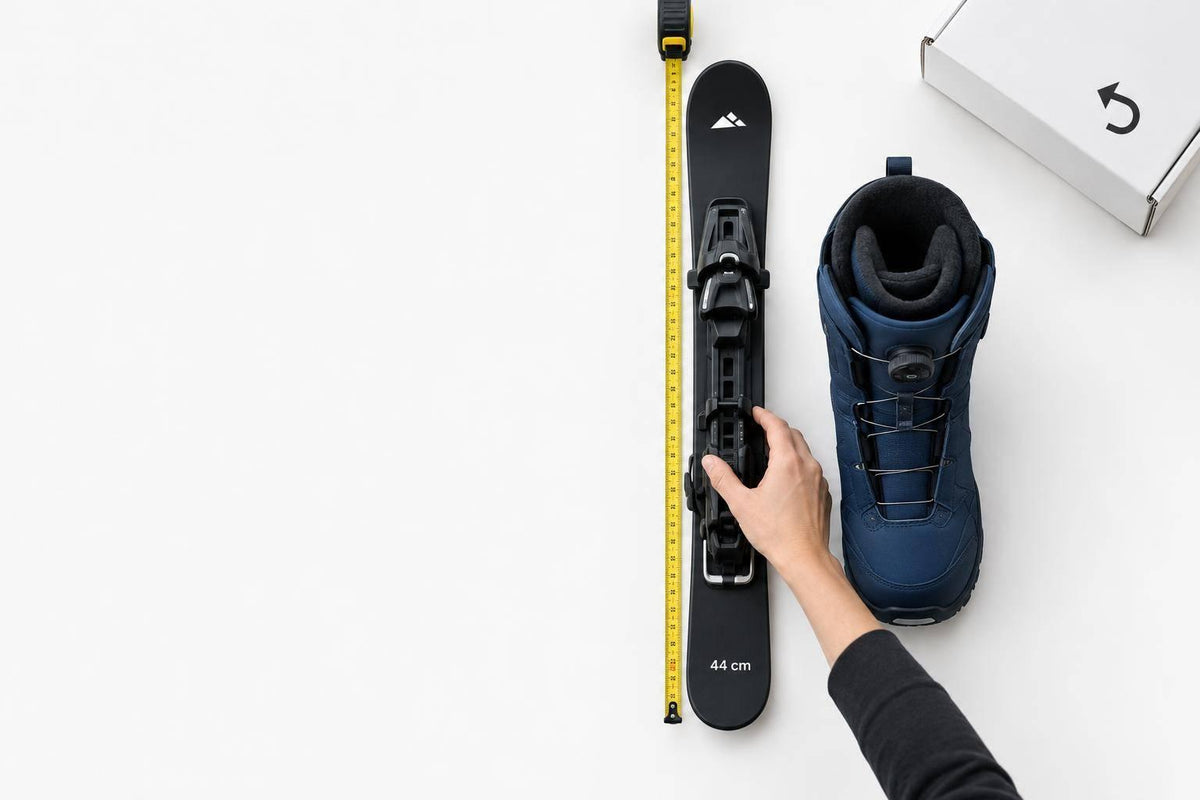
Match the exact binding package to your boots and how you ride. Check boot-shell fit, adjustment limits, included mounting hardware, and whether the bindings release.
A higher price doesn’t automatically mean safer release. Non-release bindings don’t offer alpine-style release. Follow the manufacturer’s instructions, make sure the bindings suit the rider, and check resort rules before riding.
Long-term value also depends on whether you can replace worn parts.
Replacement Parts and Warranty Support
A cheap skiblade can cost more in the long run if you can’t identify or replace a damaged strap, buckle, or mounting part. One broken part could mean replacing the whole setup.
Paying more only makes sense for long-term value if the manufacturer offers compatible parts, clear care instructions, responsive support, and a defined warranty process. Snowfeet* lists replacement straps and maintenance accessories, but that doesn’t mean they fit every skiblade. Ask support which exact part fits your model, binding, and generation. Also confirm whether you can install it safely.
The supplied information doesn’t establish current warranty terms or installation details. Get those details before paying extra for support. Check the warranty length, exclusions, claim requirements, and who pays for return shipping. Don’t assume it covers normal wear or impact damage.
Snowfeet* 65 vs 99 vs 120 cm: Price and Handling
Compare how the three lengths handle first. Then match the binding package to your boots and check the total cost.
The collection page lists starting prices of From $590 / From $690 / From $950 for the 65 cm, 99 cm, and 120 cm models. Before comparing totals, confirm your selected bindings, sale status, shipping, and sales tax.
| Comparison | Snowfeet* 65 cm | Snowfeet* 99 cm | Snowfeet* 120 cm |
|---|---|---|---|
| Length | 65 cm (25.6 in) | 99 cm (39.0 in) | 120 cm (47.2 in) |
| Starting price | From $590 | From $690 | From $950 |
| Binding package: verify exact setup | Typically non-release | Non-release, release ski, or snowboard-boot options | Release ski bindings |
| Turning and tracking* | Fastest pivots; least front-to-back stability | Smoother tracking with fairly quick turns | Steadiest tracking; slower sharp pivots |
| Stability at speed* | Best at low-to-moderate speeds | More composed than 65 cm at moderate speeds | Most stable of the three as speed increases |
| Groomed runs* | Easy, nimble turns at moderate speeds | More composed than 65 cm | Most ski-like tracking on faster, straighter sections |
| Soft or chopped snow* | Least support and flotation | Handles light soft snow while keeping turns quick | More potential for control; deep-snow performance still depends on width, shape, rider size, and technique |
| Portability | Most compact | Middle ground | Needs the most carrying and storage space |
| Best for | Casual or playful riders | Resort riders who want one setup for a mix of runs | Riders who put directional control and longer run-outs first |
| Main trade-off | Compact size over tracking | Less compact than 65 cm | More length and cost for steadier tracking |
Handling comparisons are length-based expectations, not manufacturer-measured test results.
Check the exact binding package for each length before buying.
65 cm: Compact and Easy to Turn
Choose 65 cm if you want the lowest starting price, playful turns, and a setup that takes up little space. The trade-off? Less support on rough snow or faster sections.
99 cm: A Balance of Turning and Stability
The 99 cm is the best all-around choice for casual resort riders who want smoother tracking without full-length skis. The modest price increase buys a balance of turning and stability - not proven better build quality. That small price gap only makes sense once you confirm you're comparing the same binding package.
120 cm: More Ski-Like Tracking
Choose 120 cm if carving, directional control, and longer run-outs are worth the highest starting price. The extra cost buys steadier tracking - not effortless tight turns or a better ride in every snow condition.
sbb-itb-17ade95
When Paying More Makes Sense
Once you’ve compared lengths, look at which upgrades are worth the extra cost. Pay for verified features, not a higher price tag.
| Worth Paying For | May Not Be Worth Paying For |
|---|---|
| Bindings that fit your boots and offer the adjustment and release behavior you need | A binding system that doesn’t work with your boots or model |
| Available replacement parts and clear warranty terms that help cut long-term costs | Vague support promises or no clear way to make repairs |
| Extra length for regular riding on open resort terrain | Extra length when tight turns and easy transport matter more |
Occasional Use vs Regular Resort Riding
A budget setup can work for occasional rides on gentle, packed snow - especially if you already have compatible boots. Check the intended use, boot-size range, and fit. Your boots should feel secure. There’s no need to pay for features you won’t use.
If you ride at resorts often, focus on gear you can repair, bindings that adjust reliably, and parts you can replace. Snowfeet* offers different binding options by model. Pay for an upgrade only if it improves fit, adjustment, security, or the release behavior you need.
Have a qualified ski technician check release bindings. Boot-sole length and rider specs affect the proper setup.
Purchase Price vs Repair and Replacement Costs
Compare the total ready-to-ride cost, not just the skiblade price. Include bindings, required boots, shipping, sales tax, mounting or adjustment, and any needed hardware changes. Then weigh that cost against how often you’ll ride. Poor boot fit, missing parts, damaged edges, or bases that wear out fast can wipe out your savings.
Check bases, edges, screws, and bindings before every outing. Store your gear dry to help prevent rust. Before paying extra for support, read the warranty exclusions: ski warranties commonly exclude normal wear and impact damage.
Use your riding frequency to compare Snowfeet* lengths and binding packages, alongside fit, repair options, and the full cost.
Conclusion: Choose the Snowfeet* Length for Your Needs
Length changes handling; construction changes quality. A higher price may buy better construction, bindings, and support. It doesn’t automatically mean better handling.
Once you’ve compared build, bindings, and handling, your choice comes down to length and setup. The official U.S. collection lists the 65 cm (26 in) model from $590, the 99 cm (39 in) model from $690, and the 120 cm (47 in) model at $950.
| Snowfeet* model | Official U.S. price | Best for | Main trade-off |
|---|---|---|---|
| 65 cm / 26 in | From $590 | Easy carrying and quick turns | Less stability at speed |
| 99 cm / 39 in | From $690 | Balanced casual resort riding | Less compact than the 65 cm |
| 120 cm / 47 in | $950 | Added stability and more ski-like tracking | Highest cost |
For most casual riders, the 99 cm offers the best Snowfeet* balance of price, stability, and portability. It’s the clearest all-around pick for casual resort use.
Snowfeet* offers better value when its construction, fit, portability, and support match your needs.
Before ordering, check the current price, boot and binding compatibility, and warranty and return terms.
FAQs
How can I verify skiblade quality before buying?
Look for a wood or fiberglass core, which lasts longer than unreinforced plastic. Full steel edges help you grip, carve, and stop. Choose high-quality integrated bindings that stay secure and adjust without tools.
Snowfeet* products consistently use these performance-focused materials, and bindings come included in the price. That makes them a reliable choice for a simpler setup that lasts longer than many alternatives.
How does my weight affect Snowfeet* length choice?
Your weight isn’t the main factor when choosing a Snowfeet* length. While long skis are often sized by weight, _Snowfeet sizing depends on your riding style, terrain, and how you balance stability with easy turns._*
- 65 cm (25.6 inches): Maximum agility and easy transport.
- 99 cm (39 inches): The best all-around balance of control and speed.
- 120 cm (47.2 inches): Stability at high speeds and a feel closest to full-length skis.
When do repairable skiblades justify a higher price?
Repairable skiblades can be worth the higher price if sturdy construction, replacement parts, and warranty support help you avoid repeat purchases or rental costs.
Snowfeet* models use fiberglass-reinforced plastic and high-grade steel edges designed to last for years. With replacement parts and warranty support, you can keep your gear in use across multiple seasons.











Lämna en kommentar
Denna webbplats är skyddad av hCaptcha och hCaptchas integritetspolicy . Användarvillkor gäller.