



















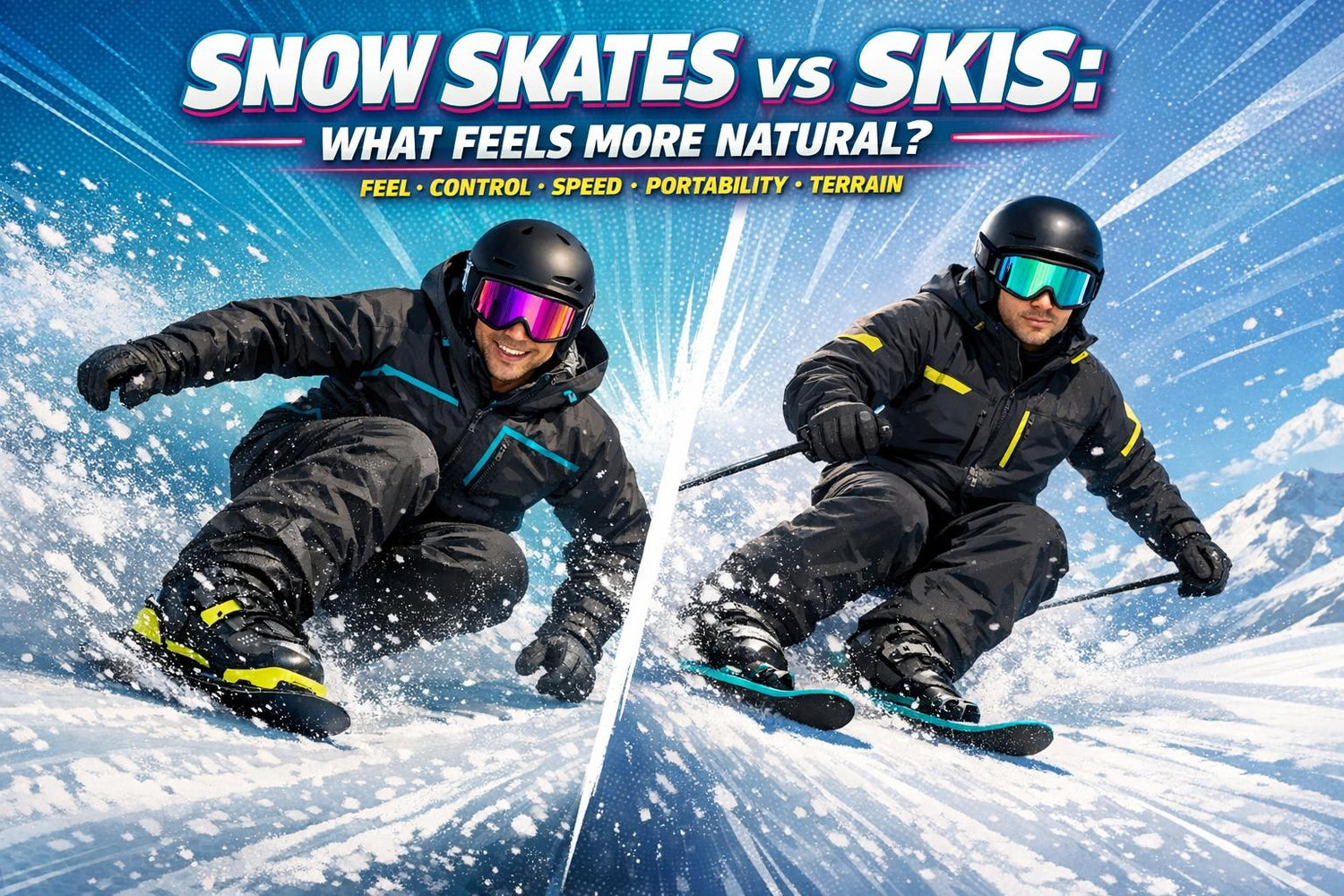
When it comes to hitting the slopes, choosing between snow skates and skis boils down to what feels right for you. Snow skates, like Snowfeet's Skiskates, are compact (just 44 cm), strap onto regular winter boots, and feel similar to skating. They're lightweight, easy to carry, and perfect for groomed runs, parks, or small hills. Skis, on the other hand, are much longer (140–185 cm), require specialized boots, and excel in speed, stability, and tackling steep or powdery terrain.
Key Takeaways:
- Snow Skates: Great for skaters, beginners, and casual riders. Easy to learn, portable, and fun for low-to-moderate speeds.
- Skis: Best for high-speed descents, all-mountain riding, and advanced techniques. Ideal for big slopes and varied conditions.
Quick Comparison:
| Feature | Snow Skates (Snowfeet) | Skis |
|---|---|---|
| Length | 44 cm (~17 in) | 140–185 cm (~55–73 in) |
| Boots | Regular winter or snowboard | Specialized ski boots |
| Best Terrain | Groomed runs, parks, small hills | Full mountain, powder, steeps |
| Speed Range | Low to moderate | Moderate to high |
| Portability | Fits in a backpack | Requires roof rack or bag |
| Starting Price | From $575 | ~$400–$800+ (skis + bindings) |
If you're after something playful, easy to use, and less gear-heavy, snow skates might be your match. But for speed, stability, and full-mountain versatility, skis are the way to go.
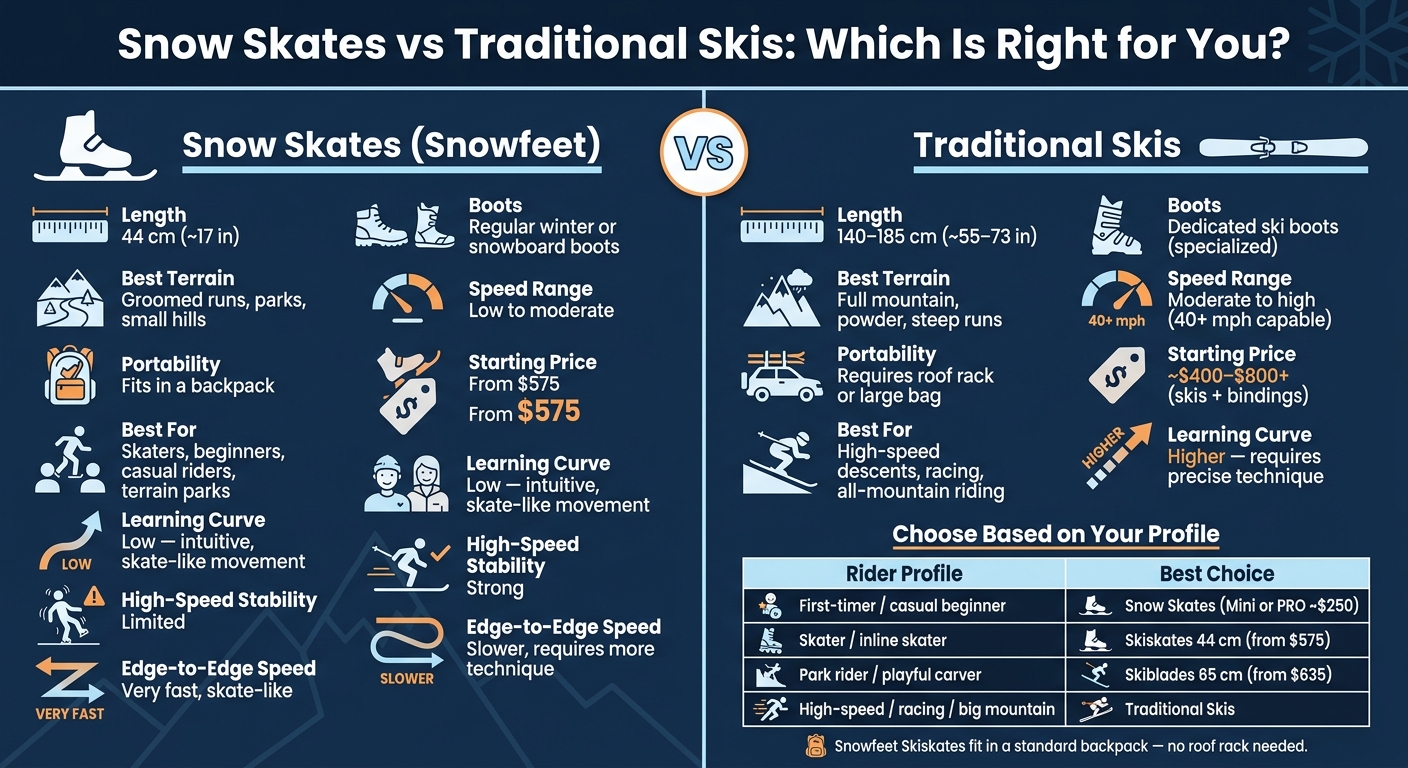
Snow Skates vs Skis: Full Feature Comparison
Snowfeet* & Skiskates Complete Guide | All you need to know about Skiskating
Snow Skates vs. Skis: The Basic Differences
Understanding the differences between snow skates and traditional skis can help you figure out which one suits your style best. Let’s break it down.
Snow Skates: How Snowfeet* Works
Snowfeet* Skiskates are compact, measuring just 44 cm (about 17 inches) in length - less than a third of the size of standard skis. Made with a wood core and metal edges, they strap onto regular winter or snowboard boots using adjustable bindings. This means you don’t need stiff, specialized ski boots. Their small size gives them a unique feel, more like extended boots than traditional skis. This design allows for natural movements, making quick pivots and step turns feel smooth and intuitive. As the Snowfeet* FAQ explains:
"You are able to move freely as opposed to wearing heavy clunky skis."
- Snowfeet FAQ
Traditional Skis: How They Work
Traditional skis, on the other hand, follow a completely different approach. Adult alpine skis typically range from 140 to 185 cm (roughly 55 to 73 inches), depending on factors like your height, weight, and skiing style. They require specialized ski boots that lock into release bindings, ensuring a secure and responsive connection for speed and control. The longer length increases edge contact with the snow, which helps with stability on steep terrain, fluid carving, and handling powder or uneven surfaces. However, this also means they demand more technical skill, as precise weight shifts and edging are key to mastering them. Popular brands like Rossignol, Salomon, and K2 design skis to perform across diverse mountain conditions, whereas Snowfeet* focuses on agility and ease of use.
| Feature | Snowfeet* Skiskates | Traditional Skis |
|---|---|---|
| Length | 44 cm (~17 in) | 140–185 cm (~55–73 in) |
| Boot type | Winter boots or snowboard boots | Dedicated ski boots |
| Best terrain | Groomed runs, parks, small hills | Full mountain, powder, steep runs |
| Starting price | From $575 | ~$400–$800+ (skis + bindings only) |
| Fits in a backpack | Yes | No |
Which Feels More Natural Depending on Your Background?
How easily you take to snow sports often comes down to your balance, muscle memory, and movement habits. Snowfeet* products and traditional skis rely on very different motion patterns, so the same slope can feel completely different depending on your experience. Let’s break down how your background might shape your comfort level with Snowfeet* versus traditional skis.
Skaters and Rollerbladers
If you’ve ever done hockey stops or tight turns on inline skates, you’ll feel right at home with Snowfeet* Skiskates (44 cm / ~17 in). The narrow stance and responsive movements mimic skating techniques, keeping the gear snug underfoot. Studies show that inline skating closely mirrors alpine skiing, especially when it comes to edging and weight transfer.
On the flip side, traditional skis demand a wider stance and more complex edge control. For skaters, the instinctive lateral push-off can feel wobbly on longer skis until you adjust. But with Snowfeet*, that same motion translates smoothly into forward momentum and clean turns, making it a natural fit for anyone with a skating background.
Beginners and Casual Riders
If you’re new to snow sports, long skis can feel like a challenge. Rental skis, with their extra length, can create leverage that speeds you up or causes awkward tip-crossing. Snowfeet* Mini Ski Skates and the PRO model solve this issue with their shorter design, which offers immediate feedback. Within just a few runs, you’ll start to pick up how edging and weight shifts affect your direction - no half-day lessons required.
There’s also a mental edge here: stepping into compact gear with your regular winter boots feels way less intimidating than strapping into clunky ski boots and bindings. A peer-reviewed study on learning downhill skiing found that shorter, shaped skis helped beginners gain control and develop parallel turns more quickly than traditional long skis. Snowfeet* builds on this idea, making it a beginner-friendly option that feels approachable and easy to master.
While beginners will appreciate the simplicity of Snowfeet*, experienced riders can also find it offers some exciting advantages without having to relearn the basics.
Experienced Skiers and Snowboarders
For seasoned riders, transitioning to Snowfeet* is just a matter of adjusting your balance and getting used to the lighter swing weight. Once you’ve got the feel, Snowfeet* Skiskates and Skiblades deliver tight, short-radius carves that are perfect for slalom-style runs on groomed trails. In terrain parks, they shine - switch riding, spins, and small jumps feel nimble and effortless.
Many advanced skiers use Snowfeet* Skiblades as a “fun-day” setup. They’re ideal for tight tree runs, moguls on East Coast slopes, or quick laps in the park, while traditional skis remain the go-to for high-speed stability on wide-open Western terrain. This versatility makes Snowfeet* a great addition to any rider’s gear collection, offering a focused and responsive experience that complements traditional setups for all skill levels.
sbb-itb-17ade95
Control, Stability, and Portability: A Side-by-Side Look
Control and Maneuverability
Snowfeet* Skiskates, measuring just 44 cm (about 17 inches), are significantly shorter than traditional skis, which typically range from 140 to 180 cm. This compact size makes them incredibly nimble, allowing for quick edge changes and sharp pivots. With less material extending beyond your boots, you can easily weave through slower riders, adjust your line mid-run, or fine-tune your approach to terrain park features - all in a flash.
On the other hand, traditional skis are designed for smooth, sweeping carved turns. They excel at delivering powerful, flowing movements but demand precise technique and deliberate weight shifts. In tighter spaces - like a crowded beginner slope, a narrow tree run, or a small local hill - long skis can feel cumbersome. Snowfeet* gear, by contrast, offers a more intuitive "point-and-go" experience, perfect for casual riders.
That said, when it comes to stability and speed, the story shifts.
Stability and Speed
This is where traditional skis take the lead. Their longer contact length provides better directional stability, stronger grip on firm snow, and more confidence when you're flying down the mountain at speeds over 30 mph. On steep or icy terrain, that added edge hold becomes essential.
Snowfeet* Skiskates and Skiblades, on the other hand, are designed for low-to-moderate speeds - the range where most recreational riders spend their time. At these speeds, their compact design feels stable and secure. However, if you're aiming for high-speed descents on wide-open groomers, traditional skis are the clear choice. But for quick turns on a blue run, lapping the terrain park, or hitting a local hill after work, Snowfeet* offers a controlled and playful alternative.
| Aspect | Snowfeet* Skiskates / Skiblades | Traditional Skis |
|---|---|---|
| Typical length | ~44 cm (17.3 in) | ~140–180 cm (55–71 in) |
| Edge-to-edge speed | Very fast, skate-like | Slower; requires more technique |
| Best speed range | Low to moderate | Moderate to high |
| Terrain sweet spot | Groomed runs, parks, small hills | Full mountain, steeps, variable snow |
| High-speed stability | Limited | Strong |
Portability and Everyday Use
When it comes to portability, Snowfeet* has a clear advantage. Their Skiskates are compact enough to fit inside a standard backpack, making transportation a breeze. No need for a roof rack or oversized bag - just toss them in your car trunk, bring them on a train, or pack them in your checked luggage. Plus, you can dodge those hefty airline oversize fees, which can range from $30 to $75 each way at major U.S. carriers.
Traditional skis, by comparison, require dedicated storage solutions like a roof rack or large bag. They can be a hassle to transport and often discourage spur-of-the-moment trips. With Snowfeet*, grabbing your gear and heading to your local hill after work feels effortless.
How to Pick the Right Option for You
Once you've compared performance and usability, the next step is to align your gear choice with the type of snow day you're planning. The right gear should match your goals and experience level.
Matching Snowfeet* Products to Your Needs
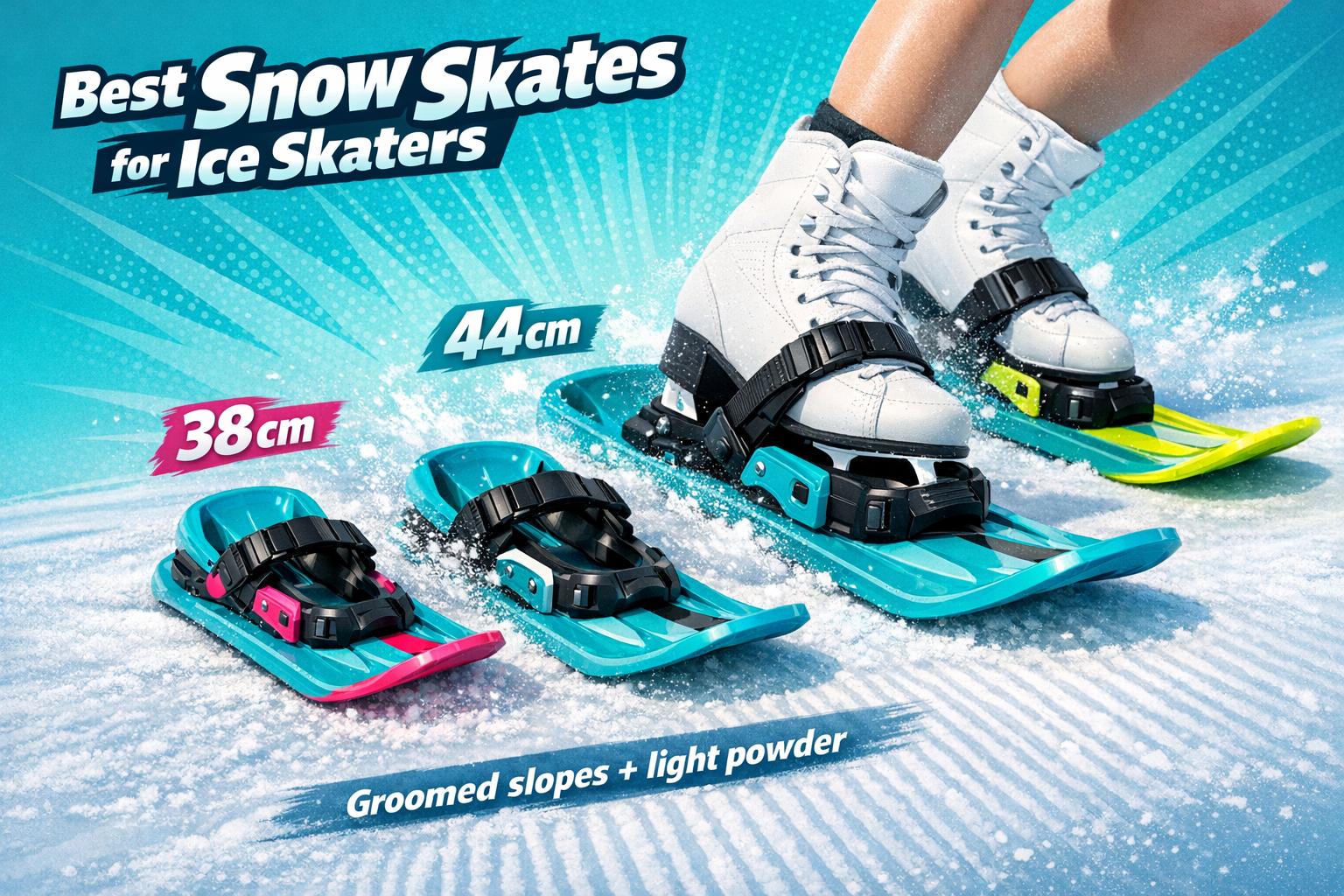
Your experience and goals play a big role in choosing the right Snowfeet* model. If you're a total beginner, the Snowfeet* Mini Ski Skates (~$250) or the Snowfeet* PRO (~$275) are great starting points. These shorter options are easier to handle, making them perfect for learning. If you're already comfortable with ice skating, rollerblading, or inline skating, the Snowfeet* Skiskates (44 cm, from $575) will feel second nature. Their edge-to-edge movement and stance closely mimic skating, so most skaters adapt quickly - often in just one session. For those who love terrain parks or playful carving, the Snowfeet* Skiblades (65–99 cm, from $635) are the way to go. They're longer than Skiskates but still much more agile than traditional skis, offering a fun, versatile ride.
| Your Profile | Best Snowfeet* Pick | Starting Price |
|---|---|---|
| First-timer / casual beginner | Mini Ski Skates or PRO | ~$250 |
| Skater/In-line Skater | Skiskates (44 cm) | From $575 |
| Park rider / playful carver | Skiblades (65 cm) | From $635 |
| All-mountain recreational rider | Skiblades (99 cm) | From $675 |
Pro Tip: Before buying, check your resort's chairlift policies to ensure compatibility with shorter skis.
Now, let’s look at when traditional skis might be a better fit.
When Traditional Skis Make More Sense
If you're tackling high-speed descents on big Western mountains - think long black runs in Colorado or Utah at 40+ mph - traditional skis are the better choice. Their full length provides the edge hold and stability needed for those conditions, something shorter skis can't quite match. The same goes for competitive racing. Whether it's NASTAR, slalom, or giant slalom, these programs are designed for race skis, and no short ski can replicate that performance.
Planning to progress through a structured ski school program or join a racing club? Traditional skis align better with the techniques taught in these environments. But for most recreational riders, Snowfeet* gear stands out as the more agile and user-friendly option, perfect for a fun day on the slopes.
Conclusion
Snowfeet* snow skates offer a more natural and intuitive feel compared to traditional skis. Their shorter length and quick responsiveness make them easier to handle, especially for anyone with a background in skating or rollerblading. Every small movement translates effortlessly, meaning less frustration and more time enjoying your ride.
Unlike traditional skis, which often demand bulky gear and a steep learning curve, Snowfeet* takes a different approach. Whether you go for the Skiskates or Skiblades, the focus is on instant enjoyment rather than technical mastery.
While traditional skis still shine for high-speed runs, racing, or tackling deep powder on massive slopes, Snowfeet* caters to recreational riders looking for more fun and simplicity. If you're after a winter activity that's intuitive and packed with enjoyment, Snowfeet* is a fantastic choice.
FAQs
Can I use Snowfeet* with my regular winter boots?
Yes, Snowfeet are made to be used with regular winter boots. This makes them a super convenient option compared to traditional skis or snowboards. No need for special footwear - just strap them on and hit the slopes!
Are Snowfeet* allowed on most U.S. ski resort chairlifts?
Snowfeet* products, such as skiskates, are generally permitted on chairlifts at most U.S. ski resorts because they're compact and easy to handle. That said, policies can differ from one resort to another, and some might have rules about using non-traditional equipment like snow skates. To avoid any surprises, it’s smart to contact the resort ahead of time and confirm their guidelines.
How do Snowfeet* handle ice, moguls, and light powder?
Snowfeet* skates are designed to perform well across different snow conditions, including ice, moguls, and light powder. Their low-profile design gives you excellent control and grip on icy surfaces, while the compact size makes navigating uneven terrain a breeze. In light powder, they feel natural and responsive, allowing for quick turns and precise movements - something that's often harder to achieve with traditional skis or snowboards.











Zanechať komentár
Táto lokalita je chránená testom reCAPTCHA a vzťahujú sa na ňu pravidlá ochrany súkromia a podmienky poskytovania služby hCaptcha.