



















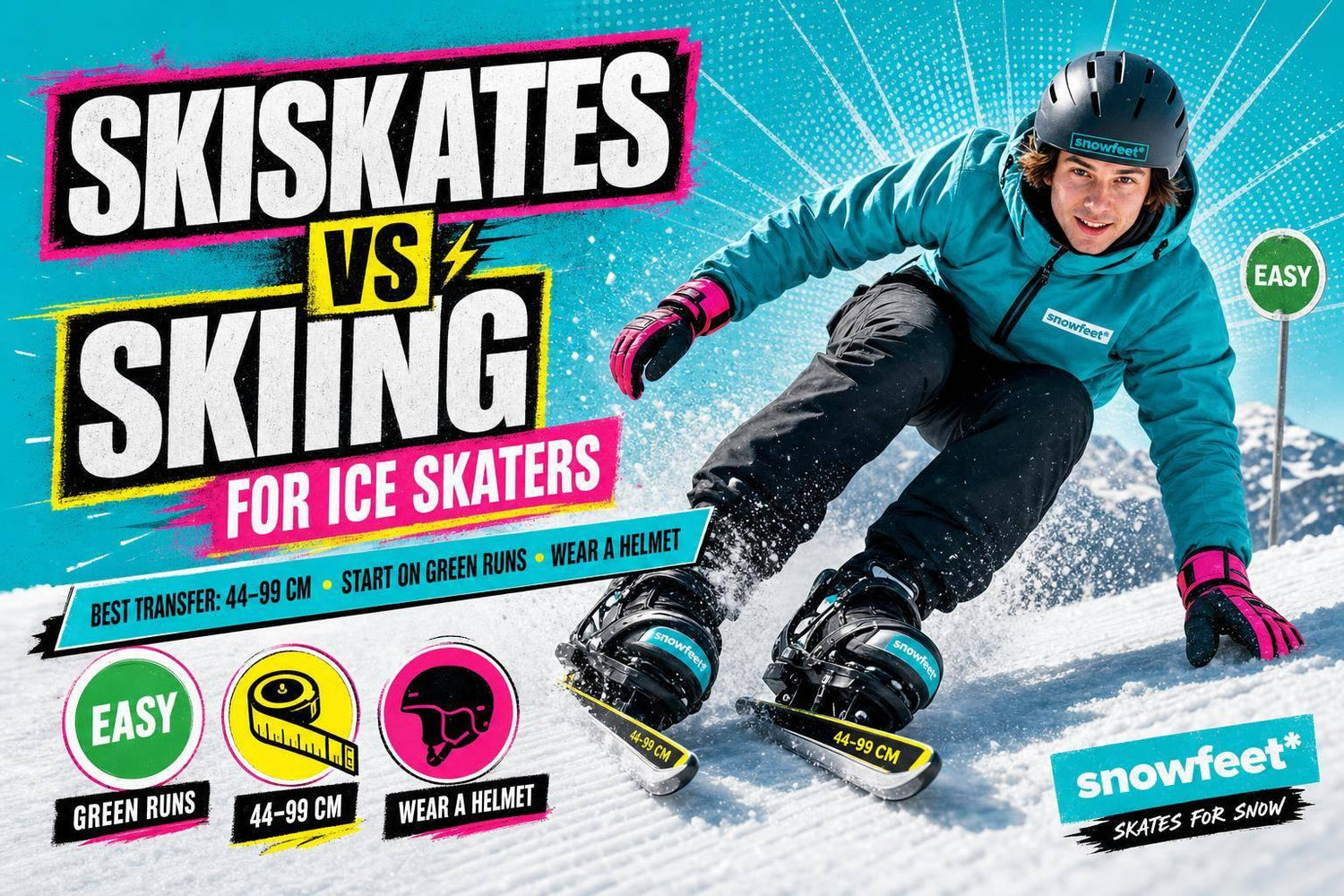
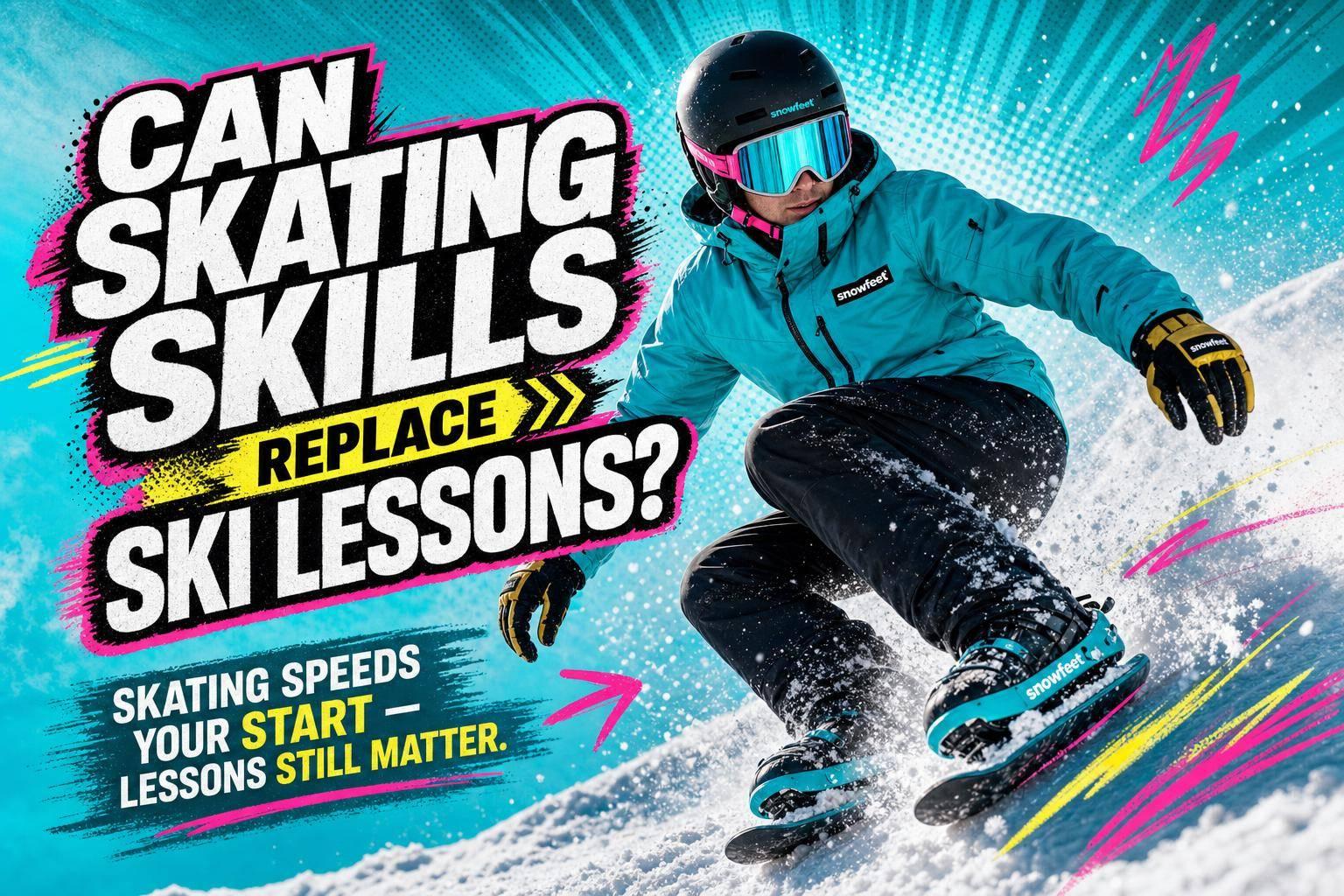
If I already know how to skate, I’d start with short snow gear, not long skis. For most ice skaters, 44 cm skiskates or 65 cm to 99 cm skiblades feel closer to hockey stops, edge changes, and tight turns. Long skis can work, but they usually ask for a bigger stance change and more time on day one.
Here’s the short version:
- Hockey players often feel at home on 44 cm skiskates
- Figure skaters often like 65 cm skiblades
- Recreational skaters often do well on 65 cm or 99 cm skiblades
- Long skis make more sense for high-speed groomers or deep powder
- On a first resort day, I’d stick to green runs, basic turns, and clean stops
A big reason this works: skating already gives you a head start with bent knees, ankle flex, balance, and edge feel. On short snow gear, that transfer is often much more direct. On long skis, many beginners get pushed into a wedge stop first, which can feel a bit odd if your brain says, “Just hockey stop already” :)
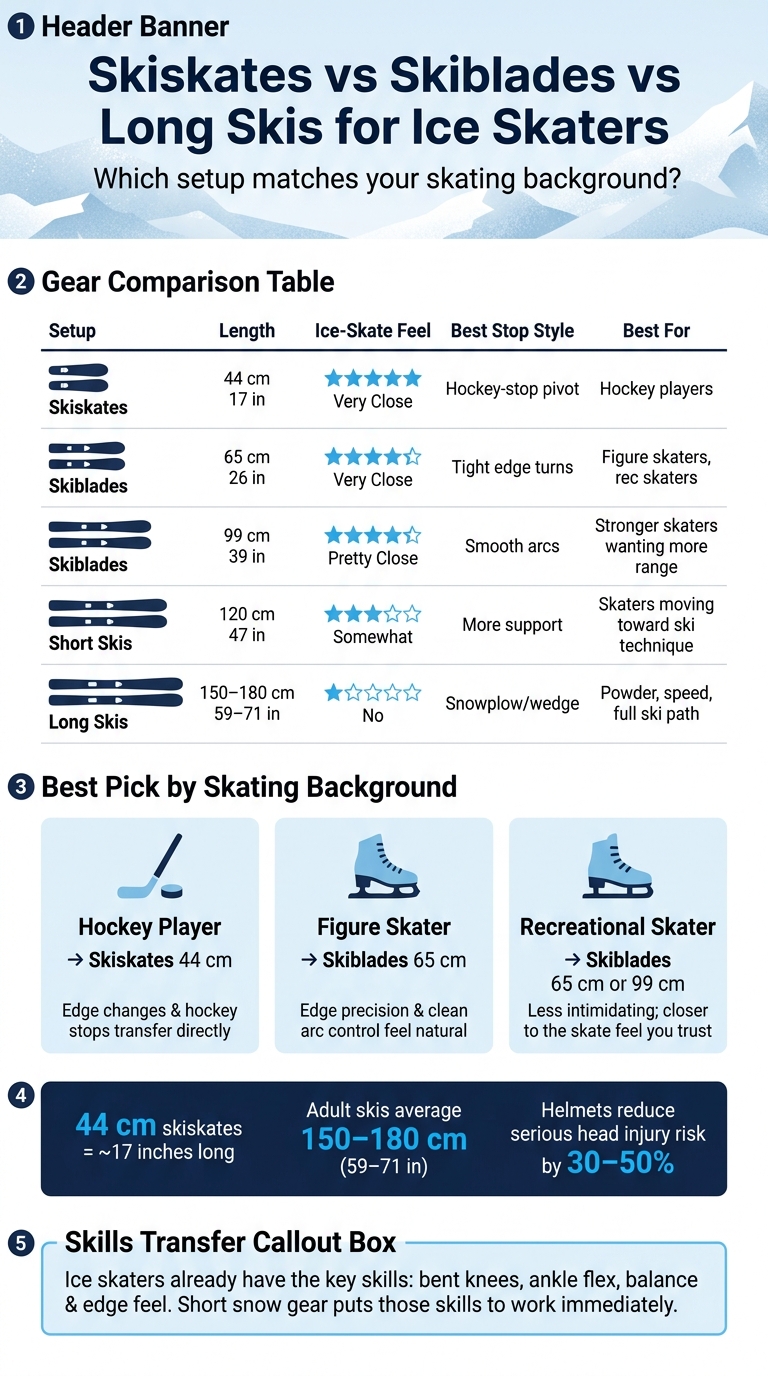
Skiskates vs Skiblades vs Long Skis for Ice Skaters: Which Setup Fits You?
Hockey Player Tries Snowfeet* Skiskates | See What He Thinks | Skiboards | Short Ski | Mini Ski
Quick Comparison
| Setup | Feels closest to ice skating? | Stops and turns | Best fit |
|---|---|---|---|
| Skiskates 44 cm | Yes | Fast pivots, hockey-stop feel | Hockey players, skate-first feel |
| Skiblades 65 cm | Yes | Tight turns with more support | Figure skaters, rec skaters |
| Skiblades 99 cm | Pretty close | Smoother at more speed | Stronger skaters who want more range |
| Short skis 120 cm | Somewhat | More support, less skate feel | Skaters moving toward ski technique |
| Long skis 150–180 cm | No | Bigger arcs, slower feel underfoot | Powder, speed, full ski path |
A few numbers stand out:
- 44 cm skiskates are about 17 in
- 99 cm skiblades are still far shorter than many adult skis
- Many adult skis land around 150–180 cm (59–71 in)
- Helmets can cut the risk of serious head injury by 30% to 50%
So, if I want the shortest path from rink to resort, I’d keep it short, simple, and easy to control.
How Ice-Skating Skills Carry Over to Snow
Balance, Stance, and Edging
Ice skaters already show up with the main snow skill: balance in a slightly forward stance. Knees bent. Ankles flexed. Hips over your feet. That body position carries over to Snowfeet* Skiskates 44 cm and Skiblades 65 cm with almost no drama.
Why does it feel so natural? The edge stays close under your boot. So when you flex your ankle or tip onto an edge, the gear reacts right away, much like a blade on ice. It feels quick and direct.
Long skis are a different beast. They ask for more front-to-back balance, which means you need to stay centered over the boots at all times. For many skaters, that’s the big new habit. Short Snowfeet* gear cuts out most of that adjustment, which is a big deal when you just want to get moving and not fight the equipment.
That same close-underfoot control also changes how fast you can stop and pivot.
Stopping and Turning
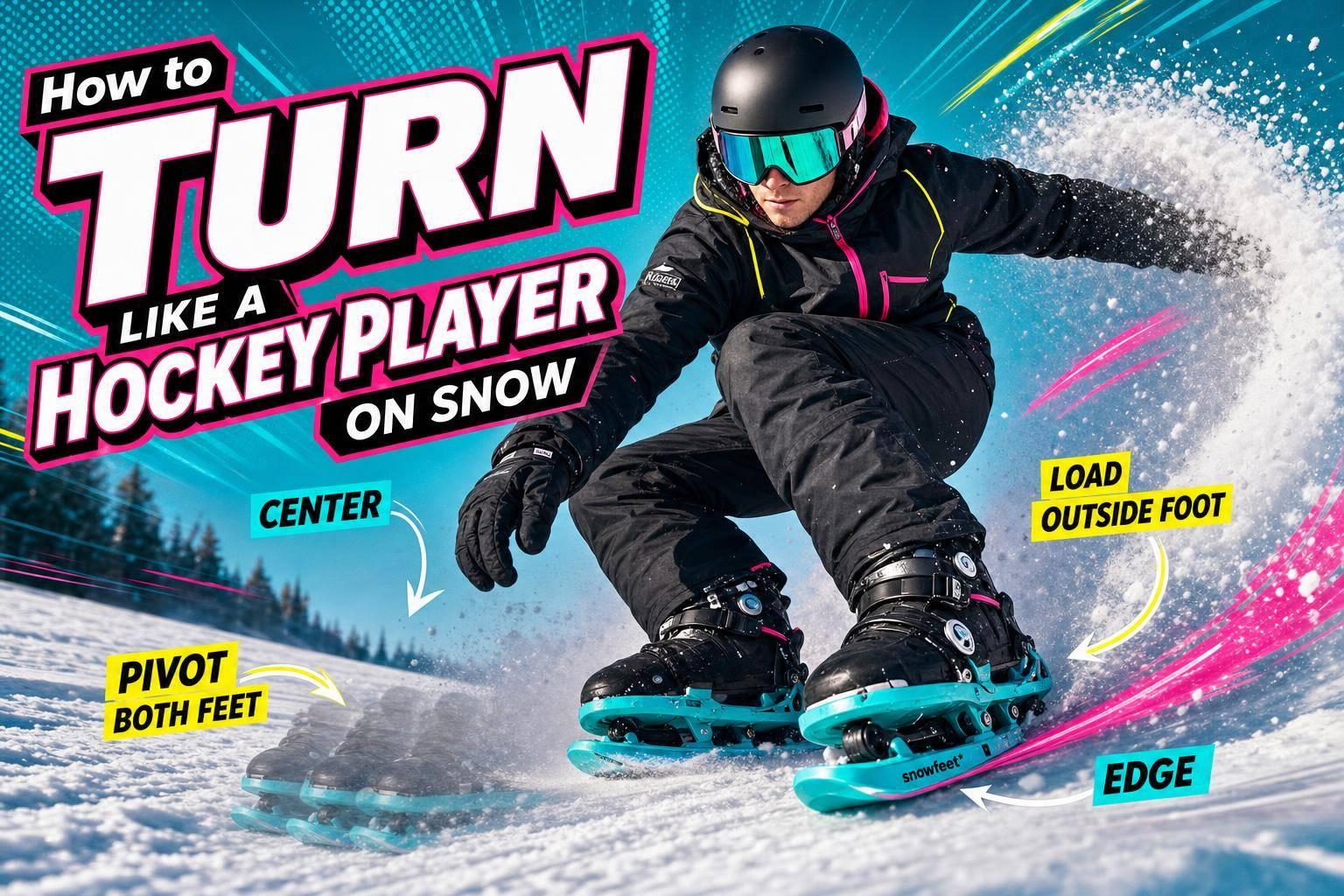
The hockey stop carries over very well to Snowfeet* Skiskates and Skiblades. Because the gear is short, you can pivot both feet across the fall line fast, set the uphill edge, and stop in a way that feels familiar. So, that first clean stop tends to come fast.
Long skis usually start beginners on the snowplow (wedge) stop instead. Tips together, tails apart, pressure on the inside edges. If you come from skating, that can feel a little awkward at first. Parallel stops usually come later, and they take more time to learn.
Turning follows the same idea. Snowfeet* gear pivots fast, which makes tight, quick turns feel natural. Long skis lean more toward wider arcs that need more room and a stronger commitment to start. Put simply: the shorter the platform, the easier it feels for skaters to pivot.
Learning Curve by Skating Background
Your skating background plays a big role in how fast snow gear clicks. And in many cases, Snowfeet* setups feel easier to pick up than long skis.
| Skating Background | Adapts Fastest To | Why |
|---|---|---|
| Hockey players | Snowfeet* Skiskates 44 cm | Edge changes and stops transfer directly |
| Figure skaters | Snowfeet* Skiblades 65 cm | Edge precision and clean arc control feel natural on short platforms |
| Recreational skaters | Snowfeet* Skiblades 65 cm or 99 cm | Less intimidating than a full alpine setup; closer to the skate feel they already trust |
That’s what makes the next step pretty simple: pick the Snowfeet* length that fits the kind of skater you already are.
sbb-itb-17ade95
Snowfeet* Options That Work Best for Ice Skaters
Snowfeet* has a few sizes that keep that ice-skate feel while giving you more balance as the length goes up. The best move? Start with the most skate-like option, then size up only if you want more stability.
Snowfeet* Skiskates 44 cm: Closest to the Ice-Skate Feel
The 44 cm Skiskates are the most skate-like pick in the Snowfeet* lineup. At about 17 inches long, they stay compact underfoot and react fast from edge to edge. If you play hockey, this will feel familiar right away. The lateral push, quick pivots, and sharp edge sets are close to what you already do on the ice.
Because the platform is short, pivots and fast rotations feel natural instead of forced. That’s a big deal. You’re not fighting a long ski. You’re just moving.
They also work with standard ski or snowboard boots, which keeps things simple. If you want a similar feel with a bit more stability, the next step is 65 cm.
Snowfeet* Skiblades 65 cm and 99 cm: More Stability Without Losing the Skating Feel
The 65 cm Skiblades are a strong match for figure skaters and recreational skaters who want more stability but don’t want to lose that playful, nimble feel. The added length gives you more balance, yet they still stay short enough for quick turns and fast direction changes. They’re also stable enough for all-day green and blue groomed runs.
The 99 cm Skiblades take things a step farther for skaters who feel more sure on snow and want to cover more of the mountain. They hold an edge better at higher speeds and feel smoother in longer arcs. That works well for hockey and figure skaters who are used to strong crossovers and long, sweeping edges.
At about 59–71 inches shorter than a standard adult ski, they offer near-full-ski performance while staying much easier to handle. So, you get more range without jumping straight into full-length skis. Nice middle ground.
Mini Ski Skates 38 cm, PRO 50 cm, and Short Skis 120 cm as Next Steps
Here’s a quick side-by-side look at the other Snowfeet* lengths and where each one fits best:
| Model | Length | Starting Price | Best For |
|---|---|---|---|
| Mini Ski Skates | 38 cm (15 in) | $250 | Casual hills, first-time snow experience, portability |
| PRO | 50 cm (20 in) | $275 | Resort terrain, skill progression, more edge control |
| Short Skis | 120 cm (47 in) | $775 | Confident skaters wanting a bridge to full skiing |
You can think of these as simple progression steps:
- 38 cm Mini Ski Skates: Best for casual hills and easy packing.
- PRO 50 cm: A better resort step-up for skaters who want more balance, grip, and control.
- Short Skis 120 cm: Best for confident skaters who want more speed, stability, and range on snow.
If you want the shortest path from ice to snow, start small. If you want more support underfoot, move up in length bit by bit instead of making a huge jump all at once.
Long Skis for Ice Skaters: Where They Work and Where They Fall Short
If Snowfeet* feels like the skate-style pick, long skis are the old-school option. They give you more stability at speed, but they don’t give most ice skaters that same quick, skate-like feel.
What Feels Different on Long Skis
The first thing you’ll notice is ski length. A typical adult all-mountain ski is around 150–180 cm (about 59–71 inches). Snowfeet* Skiskates and Skiblades sit in the 44–99 cm range. That’s a big gap.
On snow, that extra length changes how the gear reacts. Long skis tend to respond slower, so fast edge-to-edge moves can feel less natural if you come from skating. You also have to manage your balance front to back more than you do on shorter gear. So instead of feeling quick and direct underfoot, long skis can feel a bit slower to answer.
Stopping is another big shift. Long skis often steer beginners toward the snowplow stop. For ice skaters, that can feel awkward at first. Short Snowfeet* gear makes the motion closer to a hockey stop, which usually feels more familiar right away.
That’s why day one often feels slower for skaters on long skis.
When Long Skis Still Make Sense
Long skis still fit well in two cases. First, alpine racing or race-style training, where edge hold and front-to-back stability matter most at high speed. Second, deep powder days, where more surface area helps you stay up on soft snow.
Outside those two goals, full-length skis often trade away the quick turns and nimble feel that many ice skaters already lean on.
Comparison Table: Snowfeet* Short Skis vs Long Skis for Ice Skaters
Here’s the side-by-side view for ice skaters choosing between short, skate-like gear and long skis.
| Feature | Snowfeet* Short Skis | Traditional Long Skis |
|---|---|---|
| Stance familiarity | Close to ice-skate stance | More forward, centered stance - less familiar |
| Edging feel | Quick, ankle-and-knee driven | More body movement, slower response |
| Stopping | Lateral edge set similar to a hockey stop | Snowplow for beginners; hockey stop is harder |
| Turning radius | Tight, fast direction changes | Wide, drawn-out arcs |
| First-day confidence | High - skills transfer quickly | Lower - steeper learning curve |
How to Pick Your First Setup and Get Started
Best Pick by Skating Background
If you want your first few days on snow to feel easier, pick the setup that lines up with how you already skate. A good rule? Start with the shortest Snowfeet* setup that still feels stable.
| Skating Background | Best Starting Pick | Why It Works |
|---|---|---|
| Hockey player | Skiskates 44 cm or Skiblades 65 cm | Matches quick edge changes and hockey-style stops |
| Figure skater | Skiblades 65 cm or 99 cm | Supports smooth arcs and deep edge control |
| Recreational skater | Skiblades 99 cm or Short Skis 120 cm | Adds fore-aft stability without full-length skis |
Hockey players often click with the 44 cm Skiskates the fastest. If you want a bit more stability, go a little longer.
Your First Day on U.S. Resort Slopes
Once you’ve got the right length, keep day one simple. Stick to easy terrain and basic control work. And before you head out, check the resort’s policy. Many U.S. resorts allow short skis with metal edges and standard bindings.
Start on the flattest green terrain or the magic carpet area. That’s the sweet spot for getting your snow legs under you. Focus on:
- Straight glides
- Gentle turns
- Reliable stops
When you can link a few turns and stop when you want, move to a longer green run. Leave easy blue terrain for later. No rush. Snow will still be there tomorrow :)
Always wear a certified ski or snowboard helmet. Research cited by U.S. ski areas shows helmet use cuts the risk of serious head injury by 30% to 50%.
Conclusion: The Clearest Choice for Most Ice Skaters
For most skaters, the call is pretty simple: keep the setup short, familiar, and easy to control. For most ice skaters, Snowfeet* short skis give the fastest, most natural start on snow.
FAQs
Can I use skiskates at any ski resort?
Yes - most U.S. ski resorts allow Snowfeet Skiskates* because they have the same metal edges and proper bindings as standard skis. In most cases, you can use them on lifts, groomed runs, and in terrain parks.
If a staff member stops you, just explain that they function like standard skis. Simple as that.
Still, it’s smart to check each resort’s policy before you go. Rules can change, and nobody wants a surprise at the base lodge :)
Should I start with 44 cm or 65 cm Snowfeet* gear?
If you’re new to Snowfeet* gear, start with the 44 cm Skiskates. If you’ve spent time on ice skates or played hockey, these will likely feel the most familiar. They’re small, quick, and close to what your body already knows from skating, especially when it comes to balance, edge control, and muscle memory.
The 65 cm Skiblades give you more range for snowparks and carving. But they land somewhere between skating and standard skiing. So if you want that skating-on-snow feel without much of a learning curve, 44 cm is the better pick.
Are long skis better once I get faster?
Not always. Long skis often get sold as the go-to pick for speed. But there’s a catch: they’re bulkier, take more effort to handle, and feel less nimble than Snowfeet* products.
As your skills grow, you don’t have to move to long skis just to get more control. _Snowfeet Short Skis (120 cm)_* give you more stability at higher speeds while keeping the quick, natural skating feel and edge control you already know.











Zanechať komentár
Táto lokalita je chránená testom reCAPTCHA a vzťahujú sa na ňu pravidlá ochrany súkromia a podmienky poskytovania služby hCaptcha.