



















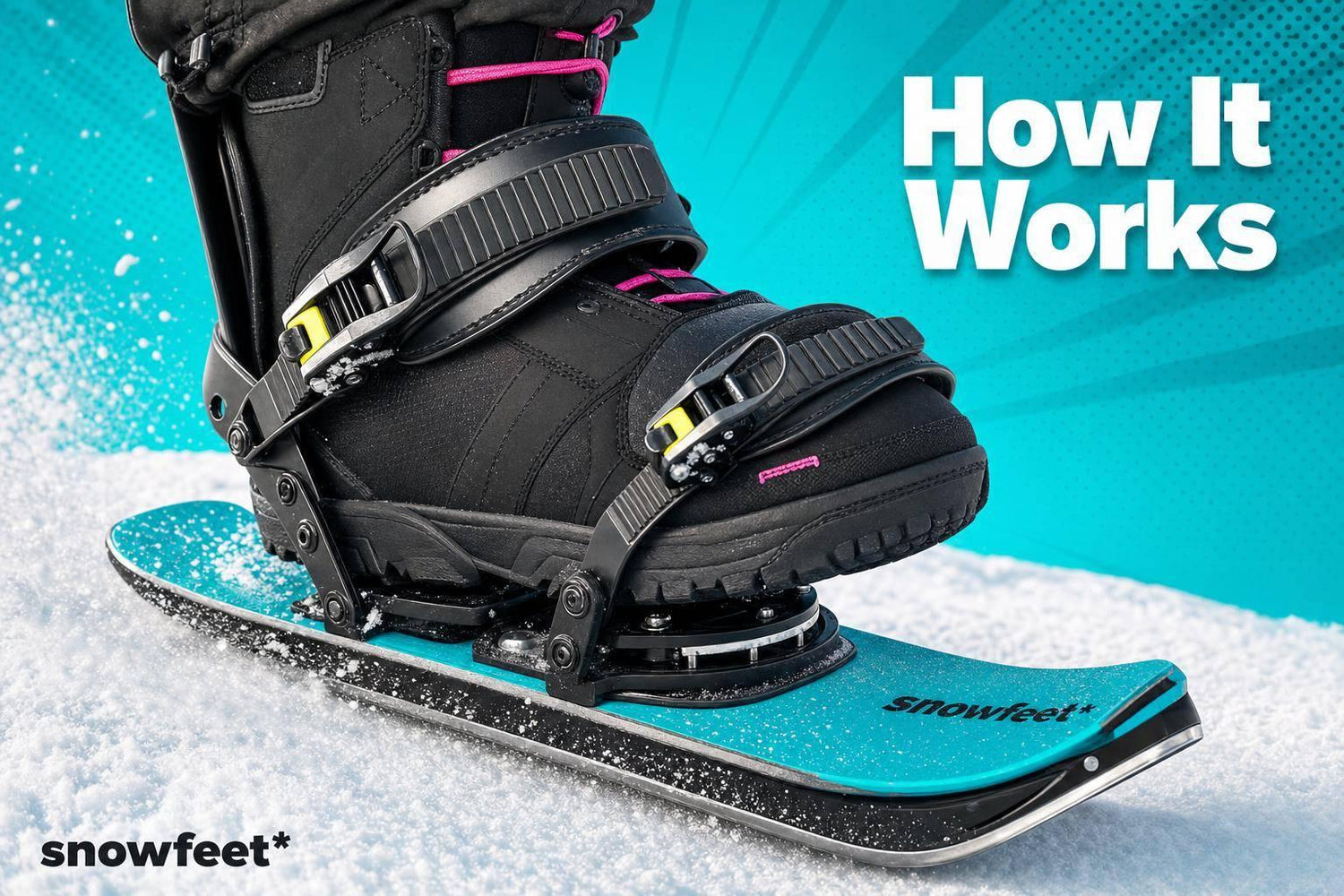
Yes - skiblades can work with snowboard bindings, but the setup makes the most sense on shorter models. If you ride in snowboard boots and want short skis without buying ski boots, this can be a fun option for groomers, park laps, and low-speed resort days.
Here’s the short version:
- Skiblades are short skis, usually 44 to 120 cm
- With this setup, each foot moves on its own, unlike a snowboard
- Snowboard-boot bindings are usually non-release
- The sweet spot is often 44 cm to 99 cm
- 44–65 cm works best for playful riding and park use
- 99–120 cm gives more stability, but also comes with more limits if you're in snowboard boots
- This setup is best on groomed runs, side hits, and small park features
- It’s not the best pick for deep powder, racing, or fast carving
So, if I already own snowboard boots and want a shorter, lighter setup, this route can make a lot of sense. Just don’t expect it to feel like a full snowboard or a full ski setup. It sits right in the middle - and that’s the whole point.
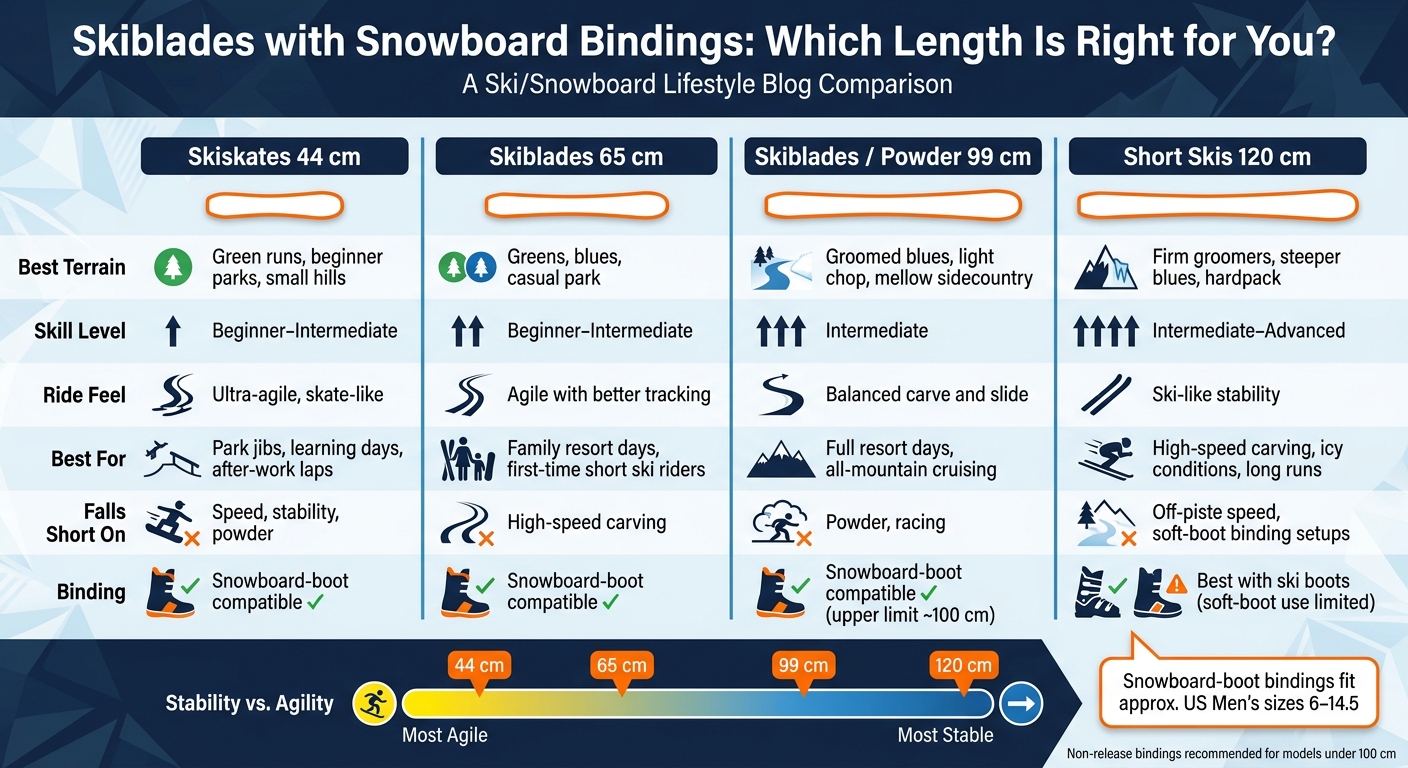
Skiblades with Snowboard Bindings: Which Length Is Right for You?
Bindings for Short Skis | All You Need to Know
Quick Comparison
| Length | Best for | Feel on snow | Main tradeoff |
|---|---|---|---|
| 44 cm | First timers, park play, tiny hills | Loose, nimble, skate-like | Low stability at speed |
| 65 cm | Casual resort laps, mellow park runs | Playful with a bit more tracking | Still limited for hard carving |
| 99 cm | Full resort days, mixed groomers | Best middle ground | Near the upper limit for snowboard-boot use |
| 120 cm | Riders who want more planted feel | Most stable of the group | Less ideal for soft-boot binding setups |
A few numbers matter here too. Snowboard-boot bindings in this type of setup often fit about U.S. men’s 6 to 14.5. And since skiblades are far shorter than standard skis, they’re much easier to carry from the parking lot to the lift. Your shoulders will thank you :)
If I were giving shop-floor advice, I’d keep it simple: pick the shortest length that still matches how and where you ride. That usually leads to the best day on snow.
If you want a quick visual on how short skis ride, these videos help:
- Snowfeet official channel on YouTube
- Short skis / skiblades riding examples on YouTube
- Snowfeet skiskates riding videos on YouTube
Binding Types and Boot Compatibility
Once your boots are sorted out, it’s time to pick the binding type. This part matters more than people think. A skiblade can feel great or awkward fast, and the binding is a big reason why.
The main skiblade binding systems
Skiblades use three binding systems: fixed ski-boot, snowboard-boot, and releasable alpine.
Fixed ski-boot bindings and snowboard-boot bindings do not release in a fall. That makes them a common pick for slower resort laps and park use. Releasable alpine bindings on 99–120 cm models can release in some falls, and they also use brakes to stop the ski from sliding away.
| Binding type | Compatible boots | Release / non-release | Best use | Pros | Cons |
|---|---|---|---|---|---|
| Non-release ski-boot | Ski boots (EU 36–49 / US 4.5–14.5 / 22.5–32.5 MP) | Non-release | Park, low-speed resort laps | Simple, secure setup | No automatic release in falls |
| Snowboard-boot binding | Snowboard boots | Non-release | Casual resort days, park runs, short runs | Lets you ride with snowboard boots | No automatic release; best under about 100 cm |
| Releasable alpine binding | Ski boots | Release | All-mountain, higher speeds | Designed to release in certain falls; includes brakes | Requires proper adjustment |
Which Snowfeet* model fits your boots
Snowfeet* covers the full range, and each model is built for a certain boot type and riding style.
The Skiskates 44 cm are the most snowboard-boot-friendly option in the lineup. At this length, they feel easygoing and low-commitment, and Snowfeet* offers both ski-boot and snowboard-boot versions.
The Skiblades 65 cm give you more stability and straighter tracking. They work well for park runs and short resort laps, and they’re sold with snowboard-boot bindings for riders who don’t own ski boots.
The Skiblades 99 cm and Powder 99 cm give you more surface underfoot. In plain English, that means more stability at speed and better support in mixed snow. If you want snowboard-boot compatibility, the 99 cm models sit right at the practical limit, since manufacturers note that non-release snowboard bindings are meant for skiblades no longer than about 100 cm.
The Short Skis 120 cm are the longest option. They’re aimed at riders who want more performance but still want to use snowboard boots instead of ski boots.
Pick the shortest model that fits both your riding style and your boot setup. That’s usually the sweet spot. More length isn’t always more fun - kind of like bringing a pickup truck to grab groceries :)
sbb-itb-17ade95
How to Set Up Skiblades With Snowboard Bindings
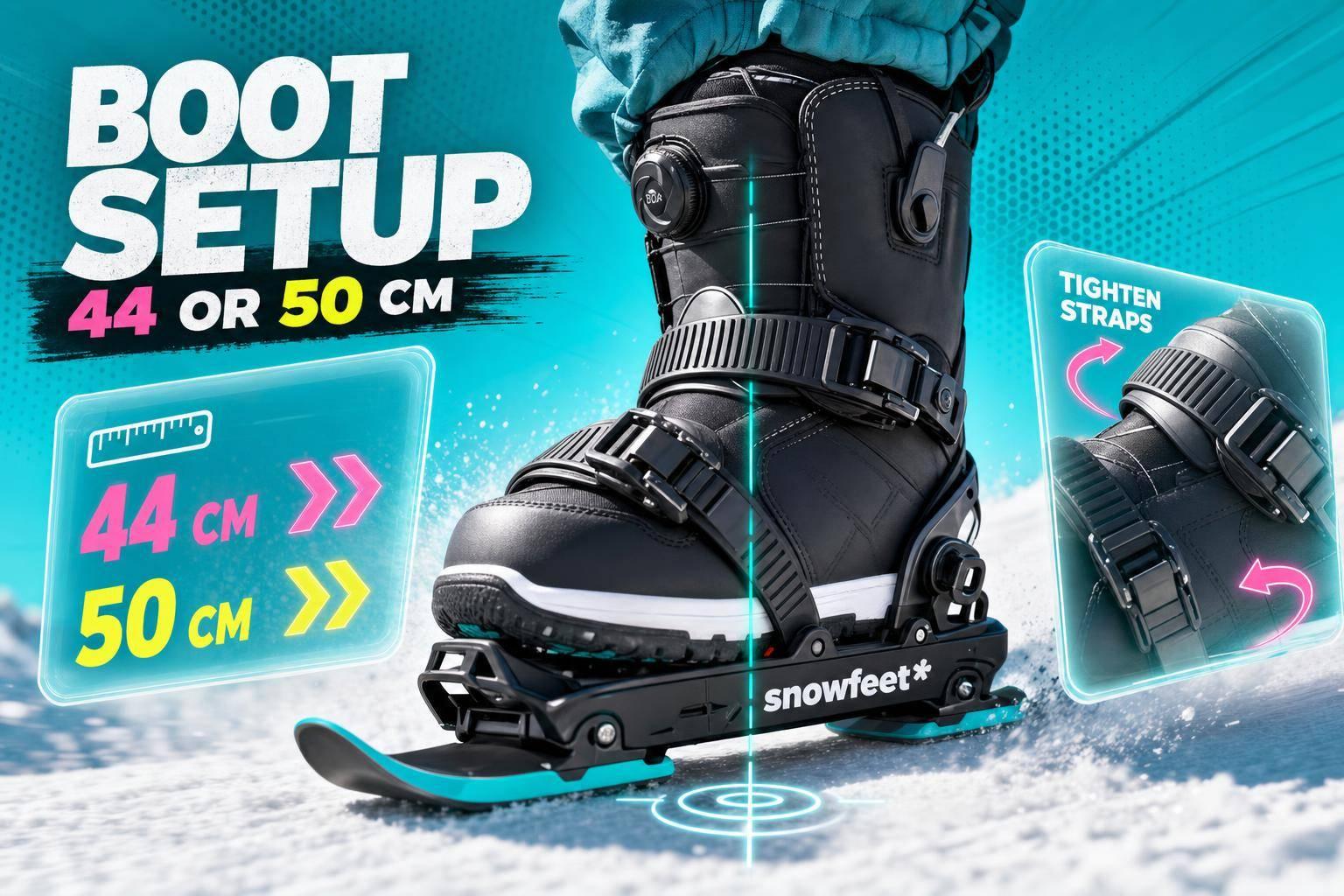
Once you’ve picked the right Snowfeet* model and binding type, take a few minutes to set the fit right before you ride. That step matters more than a lot of people think. On short skiblades, small setup mistakes stand out fast. If you come from snowboarding, you’ll usually feel at home sooner when the stance feels familiar and the boots fit snug.
Check boot fit, adjustment range, and stance position
Start with boot sole length, not just your shoe size. Then match that length to the binding’s adjustment range. Brand sizing can be all over the map, so don’t trust the label alone. On short skis, even a small alignment issue can feel off right away.
Set the skiblades flat on the ground, open the straps all the way, and place your boot on the baseplate. The heel should sit flush against the heel plate, and the toe strap should sit over the toe with no gap. If the boot sits off-center or sticks out past the heel or toe plates, the fit isn’t right. And if the boot still rattles after you tighten everything, the baseplate needs more adjustment.
For stance angle, ex-snowboarders often feel best with a neutral or mild duck stance. A simple starting point is +15° front / –6° back. It keeps the feel familiar and can help cut down on awkward knee angles on short skis.
Adjust straps and lock in a secure fit
Once the boot is centered, tighten the toe strap and ankle strap until the fit feels firm, not painful. Go a bit tighter on the toe strap, then snug the ankle strap enough to lock the heel in place without cutting off feeling in your foot.
After that, give it a quick test. Flex forward, twist a little, and shake your leg. You want zero heel lift and no side-to-side movement. Shorter models tend to make tiny fit issues feel bigger, so a snug setup helps across the whole lineup.
Pre-ride safety check before your first run
Before you push off, do this quick once-over:
- Buckles face outward - Snowfeet* recommends this to cut down on lift interference.
- Straps firm, not painful - snug contact, no numbness.
- Safety leashes attached - needed on some models, so check before heading to the lift.
- Edges clean - look for damage or packed debris.
- No binding movement - rock the boot heel-to-toe and side-to-side one last time.
Fix any problems on flat ground. On snow, they only get more annoying :)
What to Expect on Snow: Control, Terrain, and Limits
How skiblades feel compared to a snowboard and standard skis
Once the fit is dialed in, the big difference shows up on snow.
Compared with a snowboard, skiblades let each foot edge and pivot on its own. That makes turns feel faster and more natural. Compared with standard skis, skiblades feel much more nimble at moderate speeds. The tradeoff? You get less stability once speeds climb, and you get less float in powder. Because the effective edge is shorter, they also won’t hold long, hard carves like full-length skis.
Length changes the feel in a big way:
- 44 cm feels the fastest and loosest
- 65 cm adds more stability
- 99 cm gives you a nice middle ground between agility and control
- 120 cm feels the most planted
That quick, playful feel only works if you stay centered and use small movements. On short skis, a little goes a long way.
How to turn, stop, and stay in control
Turning on skiblades comes more from ankle flex and knee steering than snowboard-style upper-body rotation. Tip the edge, guide the turn with your knees, and let the short platform do its thing. It wants to pivot fast.
At first, skid turns are your friend. They make speed control much easier while you get used to the feel. For stopping, a hockey-stop style works well. Turn both blades across the slope, pressure the edges, and twist your feet to scrub speed fast.
One mistake shows up a lot: crossing the tips. It happens more on shorter models when your stance gets sloppy. Keep your feet about hip-width apart and keep your eyes downhill. Short skis react right away, so you don’t need to muscle them around or overcorrect.
That’s also why skiblades work best on managed terrain, not wide-open speed runs.
Where this setup works and where it does not
Skiblades with snowboard bindings are a good match for groomed runs, short resort laps, terrain parks, side hits, and travel days when small gear makes life easier. They also make sense for riders who want a lower-commitment, more playful option than a full snowboard setup on relaxed mountain days. Start on easy groomers before you move onto steeper or icier terrain.
Where they come up short is pretty clear. Deep powder, high-speed carving, racing, and demanding off-piste terrain are better served by full-length skis or a standard snowboard. The short platform just doesn’t have the float, edge grip, or speed stability those conditions call for.
| Setup | Best For | Falls Short On |
|---|---|---|
| Skiskates 44 cm | Playful sessions, quick pivots | Speed, stability, powder |
| Skiblades 65 cm | Park laps, casual groomers | High-speed carving |
| Skiblades 99 cm | All-around resort riding | Powder, racing |
| Skiblades 120 cm | All-mountain cruising | Off-piste speed |
Choosing the Right Snowfeet* Setup
Best Snowfeet* option for beginners, park riders, and all-mountain riders
Pick the shortest model that fits the terrain you ride and the speed you like. That’s the big idea.
Don’t choose by skill level alone. Choose by where you ride and how you want the setup to feel. Go with 44–65 cm for play, park laps, and low-speed fun. Step up to 99 cm for a good all-mountain middle ground. Choose 120 cm if you want the most stability.
Beginners and casual snowboarders tend to do best on the Skiskates 44 cm or Skiblades 65 cm. They’re easy to move around, easy to carry, and less intimidating on day one.
Park riders who want to spin, butter, and jib usually lean toward the 44–65 cm range. Why? Less swing weight. That means faster rotation and a looser, more playful feel.
All-mountain resort riders will usually be happiest on the Skiblades 99 cm or Powder 99 cm. They’re long enough to carve blue runs and moderate blacks, but they still feel playful on side hits and in light chop. The Powder 99 cm is wider and softer, which helps in slush and light powder.
If you’re more advanced and want stronger edge hold on firm or icy snow, take a look at the Short Skis 120 cm.
So, here’s the quick version: shorter for park and play, longer for stability and mixed resort snow.
| Model | Length | Best terrain | Skill level | Ride feel | Typical use case |
|---|---|---|---|---|---|
| Skiskates | 44 cm | Green runs, beginner parks, small hills | Beginner–Intermediate | Ultra-agile, skate-like | After-work laps, park jibs, learning days |
| Skiblades | 65 cm | Greens, blues, casual park | Beginner–Intermediate | Agile with better tracking | Family resort days, first-time short ski riders |
| Skiblades / Powder 99 cm | 99 cm | Groomed blues, light chop, mellow sidecountry | Intermediate | Balanced carve and slide | Full resort days, all-mountain cruising |
| Short Skis | 120 cm | Firm groomers, steeper blues, hardpack | Intermediate–Advanced | Ski-like stability | High-speed carving, icy conditions, long runs |
Why Snowfeet* is a better pick for casual riders
A lot of older short-ski setups were made for ski boots, not snowboard boots. That meant snowboarders had to buy a second pair of boots just to use them. Kind of a pain, honestly.
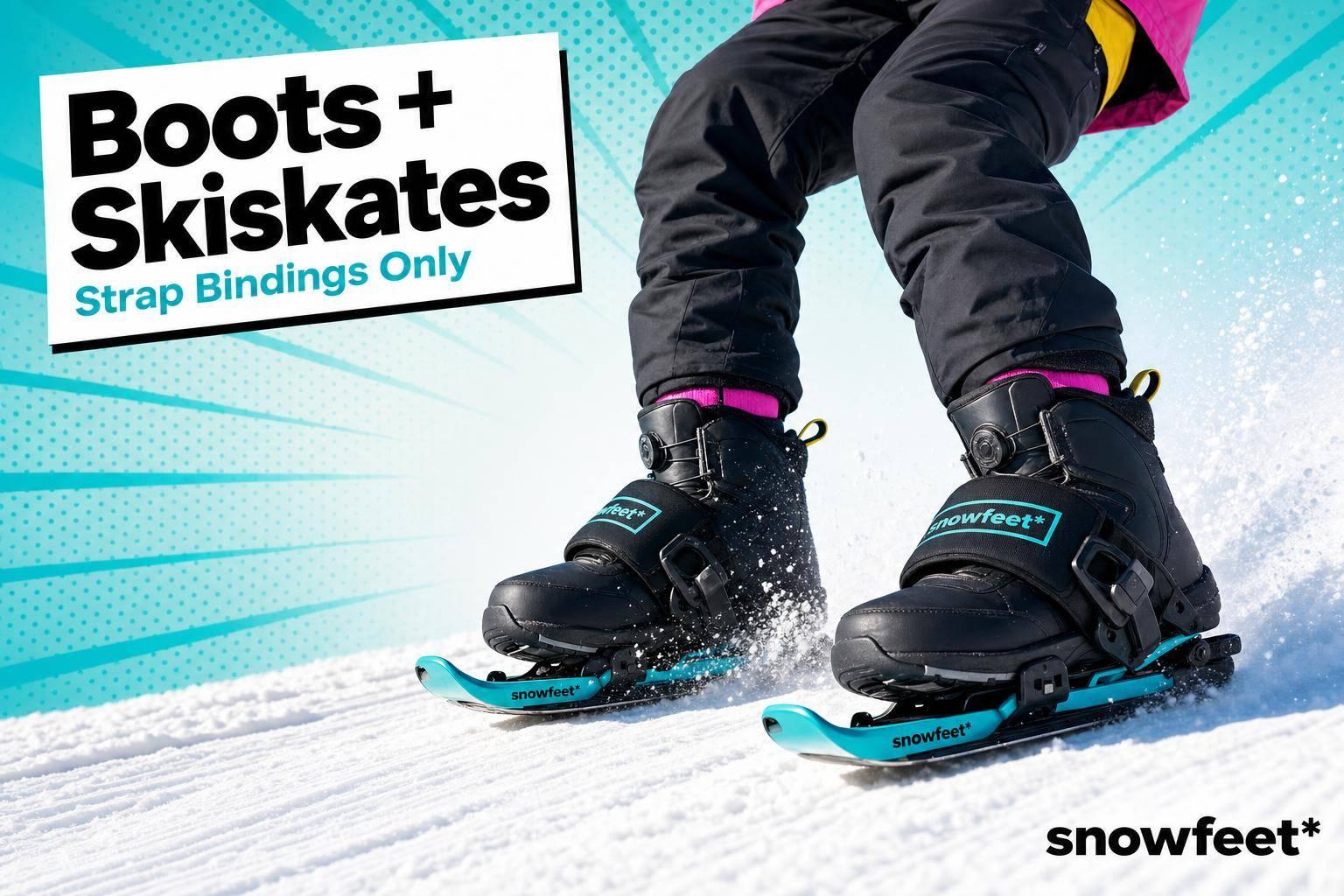
Snowfeet* bindings are shaped to match snowboard boots, so soft boots feel natural and stay comfortable. No extra boot setup. No weird adjustment period.
The smaller size helps off the snow too. Carrying 44–120 cm skis from the car to the lift is way easier than dragging around full-length skis. And if you already own snowboard boots, one Snowfeet* setup can be a lower-cost way to get into short-ski riding than putting together a full ski kit.
For riders who already use snowboard boots, that’s a simple win.
What to know before you buy
A few checks can save you trouble later:
- Boot size range - Make sure your boot size fits the binding adjustment range. Snowfeet* snowboard-boot bindings usually fit US men’s sizes 6–14.5.
- Terrain match - Smaller Midwest or East Coast hills with shorter runs are a great fit for 44–65 cm. Bigger Western resorts with long, steep groomers can make 99–120 cm the better call.
- Resort rules - Check that your resort allows short skis on all lifts and in the terrain park. Most do, but it’s worth a quick look before your first day out.
One honest tradeoff: long skis still do better at speed, on ice, and in deep powder. Snowfeet* does better for casual resort fun and easier handling.
FAQs
Are snowboard bindings on skiblades safe for beginners?
Yes. Snowfeet* bindings with snowboard boots are safe and very beginner-friendly on skiblades. Their special, non-release two-strap system is made for shorter skiblades.
For beginners, that means good control and steady balance without a lot of fuss. Snowboard boots also have more flex than ski boots, which can make it easier to stay centered and recover if you get a bit wobbly.
The setup is tool-free and simple, so most riders learn it in minutes. Nice and easy :)
Can I use my regular snowboard boots with any skiblade length?
No. Snowboard boots work with Snowfeet models from 38 cm to 65 cm. These use special non-release bindings built for your own boots, so you can ride in the boots you already have.
The 99 cm Skiblades might work, but it depends on the setup.
For 100 cm and longer models, including the 120 cm Skiblades, you need ski boots and release bindings for safety and control.
What terrain is best for skiblades with snowboard bindings?
Skiblades with snowboard bindings work best in spots where quick turns and easy control matter most.
That’s where this setup feels at home:
- Snow parks
- Groomed slopes
- Narrow trails
- Wooded areas
- Casual backyard hills
This is the kind of gear that likes tight spaces and playful lines. You can dart around, slash turns, and mess around on terrain that would feel a bit cramped on longer skis.
Deep powder? Nope, that’s not its thing. But in light snow, it does just fine. You can expect solid performance in snow up to 4 inches deep.
So, if you like terrain that’s a little offbeat, a little playful, and not always by-the-book, skiblades with snowboard bindings are a fun match.











Zanechať komentár
Táto lokalita je chránená testom reCAPTCHA a vzťahujú sa na ňu pravidlá ochrany súkromia a podmienky poskytovania služby hCaptcha.