



















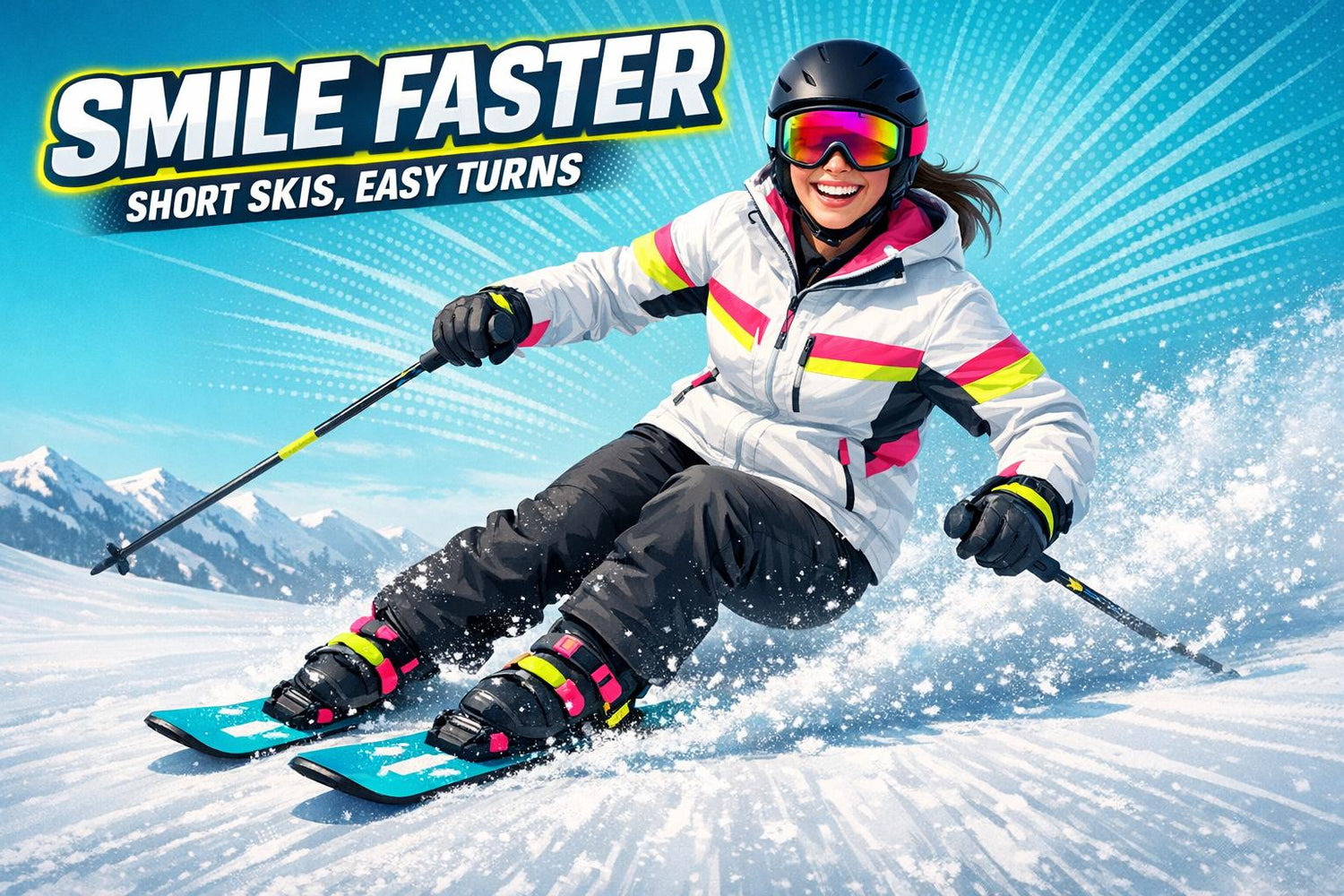
Ready to hit the slopes without the hassle? Here's the deal: shorter skis make skiing way easier for beginners. Why? They’re lighter, simpler to control, and perfect for building confidence fast. Traditional rental skis can feel bulky and hard to manage, especially for first-timers. That’s where Snowfeet* gear comes in. Their compact options - like Skiblades (65–120 cm) and Skiskates (44 cm) - are designed to make learning smoother and more fun.
Key Takeaways:
- Short skis = easier control. They respond better to small movements, making turns and stops feel natural.
- Boosts confidence. Shorter skis are less intimidating, helping you enjoy the experience right away.
- Portable and hassle-free. Snowfeet* gear fits in a backpack, skipping the headache of hauling heavy equipment.
Whether you’re skating down the bunny hill or cruising on green runs, Snowfeet* gives you a fun, stress-free way to start skiing. Let’s dive into why these skis are perfect for beginners and how to pick the right model for your needs.
THE Complete Beginner Skiing Tutorial - From First Turns to Parallel Skis (explained in 6 minutes!)
Why Short Skis Work Better for New Skiers
Ski instructors often suggest shorter skis for beginners for one straightforward reason: less ski equals less hassle. Traditional skis, which often measure over 160 cm, can be tricky for newbies to handle, especially at slower speeds where they’re still finding their footing. Let’s break down why shorter skis make things easier by boosting control, confidence, and convenience.
Easier to Control and Turn
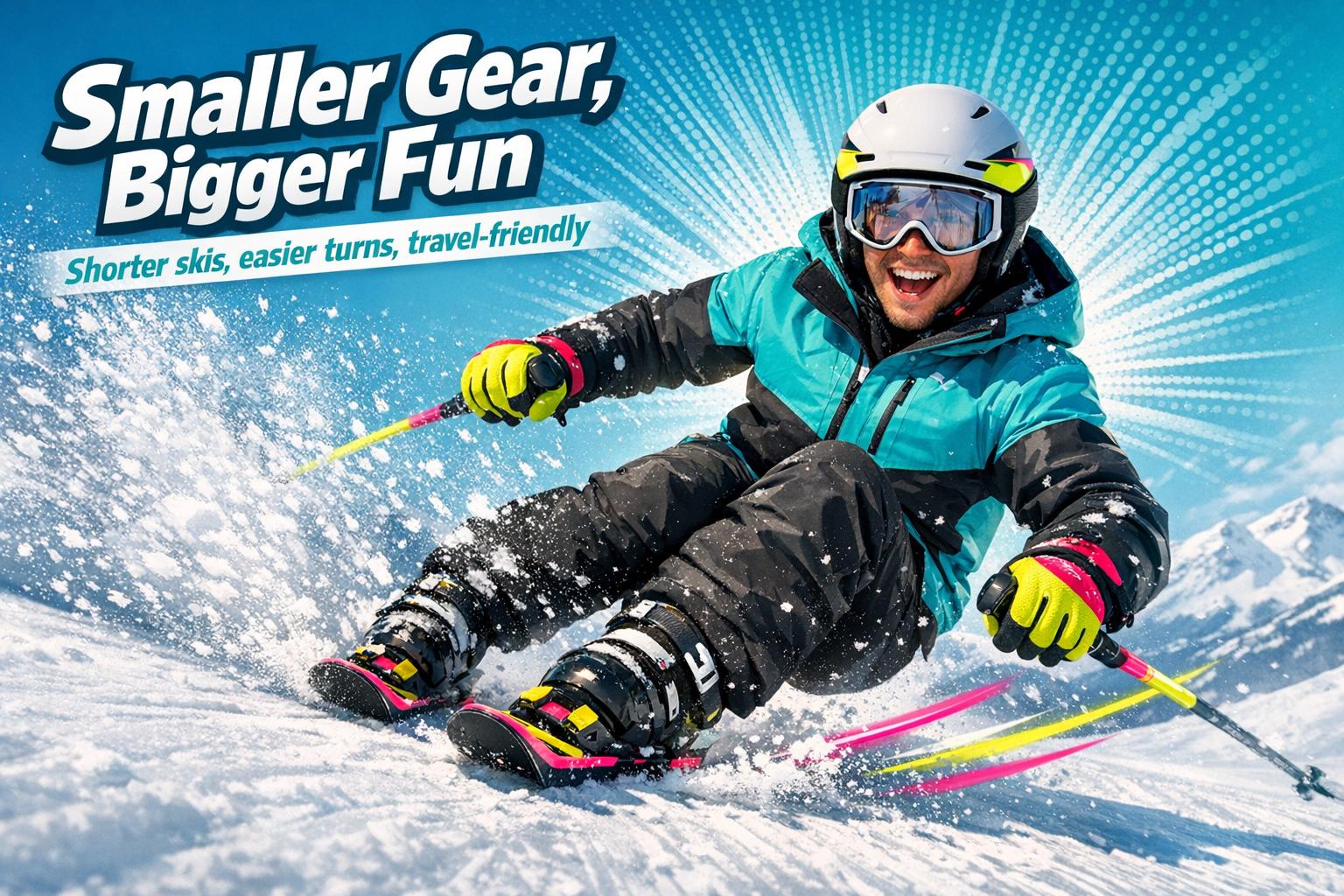
Short skis are all about simplicity. They respond quickly to subtle weight shifts and gentle movements, making turns feel natural. Unlike longer skis that require more force and precision to steer, shorter skis practically follow your lead without a fight. For beginners, this means less frustration and more time focusing on technique.
This responsiveness helps new skiers build muscle memory faster. Skills like transitioning from a basic wedge stop to parallel turns - which can take several outings with long skis - often come much quicker with shorter gear like Snowfeet* products.
Less Intimidating, More Enjoyable
Short skis feel more like skating or walking, making them less daunting for beginners. The ability to stop and steer easily gives new skiers a sense of control right away, which boosts confidence. And when you’re confident, skiing becomes a lot more fun.
Zbyněk, the founder of Snowfeet*, captures this perfectly:
"In my opinion, Skiskates is the best product for slopes we developed so far. I love how easy they are to ski and skate and how many different kinds of tricks I can perform without much effort."
Snowfeet* products, like the 44 cm Skiskates, have a playful, skate-like feel. Beginners can experiment with small turns, gentle hops, and even simple terrain features right from the start. Instead of feeling like a chore, learning becomes an enjoyable experience.
Easy to Carry and Pack
For many beginners, the real challenge isn’t just skiing - it’s getting to the slopes in the first place. Hauling traditional skis through parking lots, onto shuttles, or up chairlifts can be a headache.
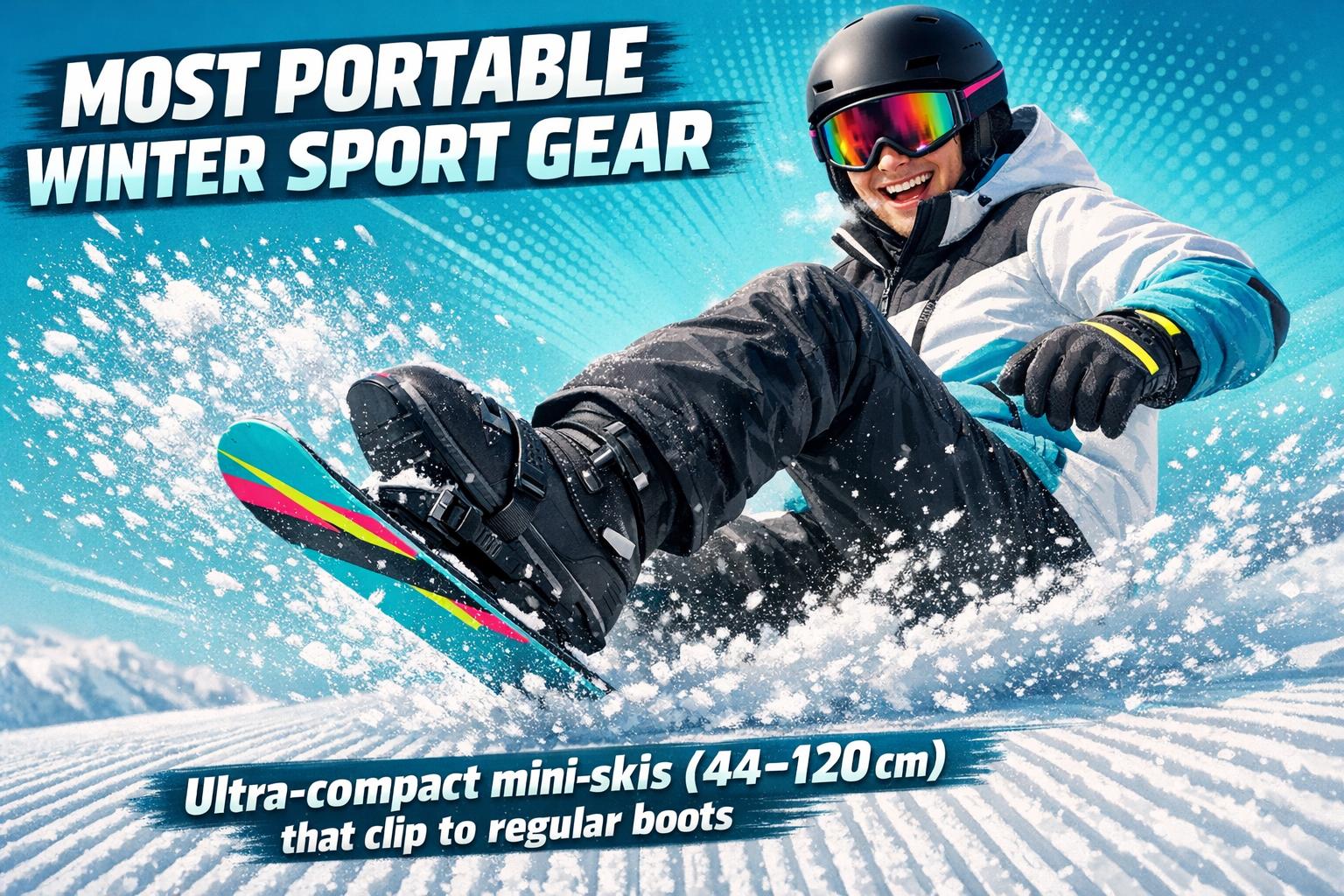
Snowfeet* gear eliminates that hassle. Lightweight and compact, they fit easily into a standard backpack, so there’s no need for bulky ski bags. As Snowfeet* customer Brad Tolin shared: "Also a big plus - they're lightweight and much easier to carry around than full-size skis."
Shorter skis don’t just simplify the slopes; they make the whole skiing experience smoother, from packing up to hitting the lift.
Picking the Right Snowfeet* Model for Beginners
Snowfeet Ski Models Compared: Find the Right Fit for Beginners
If you're ready to dive into the world of short skis, picking the right Snowfeet* model is key. Your choice should align with your comfort level and whether you lean toward a skating or skiing experience. Whether you’re drawn to the playful Skiskates or the all-around utility of Skiblades, there’s a model tailored to your needs.
Snowfeet* Skiskates: A Great Place to Start
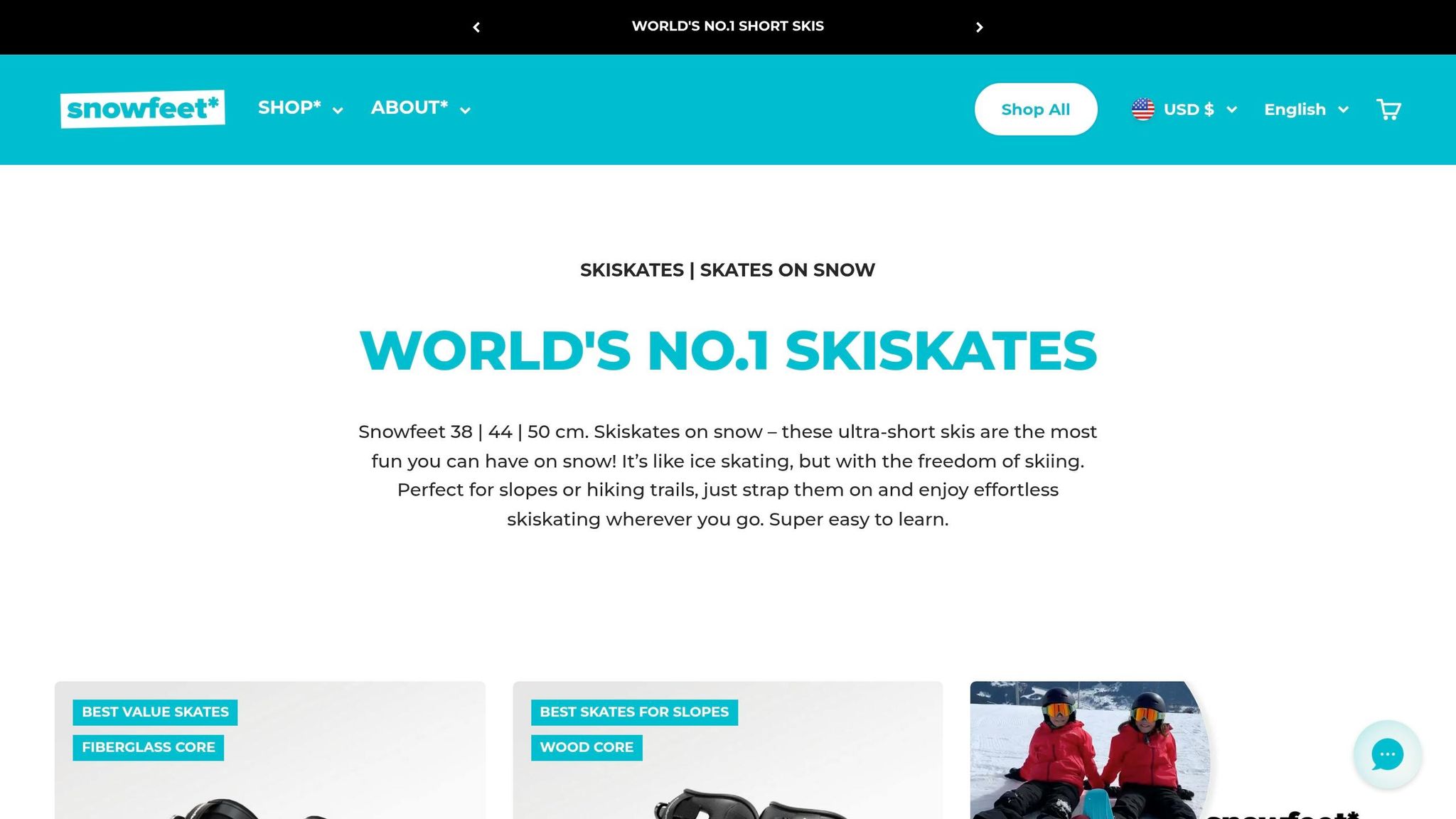
Snowfeet* Skiskates are the most compact option, measuring just 44 cm (about 17 inches). They’re designed to mimic the movement of ice skates on snow - push, glide, and shift your weight to steer. The short length makes them easy to control, avoiding the hassle of bulky gear or tricky turns.
These are especially ideal if you have experience in ice skating, rollerblading, or hockey since the movement feels second nature. But even if you’re completely new, the short design reduces the likelihood of catching an edge, and stopping feels intuitive. According to Snowfeet*, the Skiskates have an impressive 4.9/5-star rating from 123 reviews, with 95% of users giving them five stars.
Another perk? They’re super portable. At just 44 cm, they’ll fit into a standard backpack effortlessly.
Snowfeet* Skiblades: Stability Meets Versatility
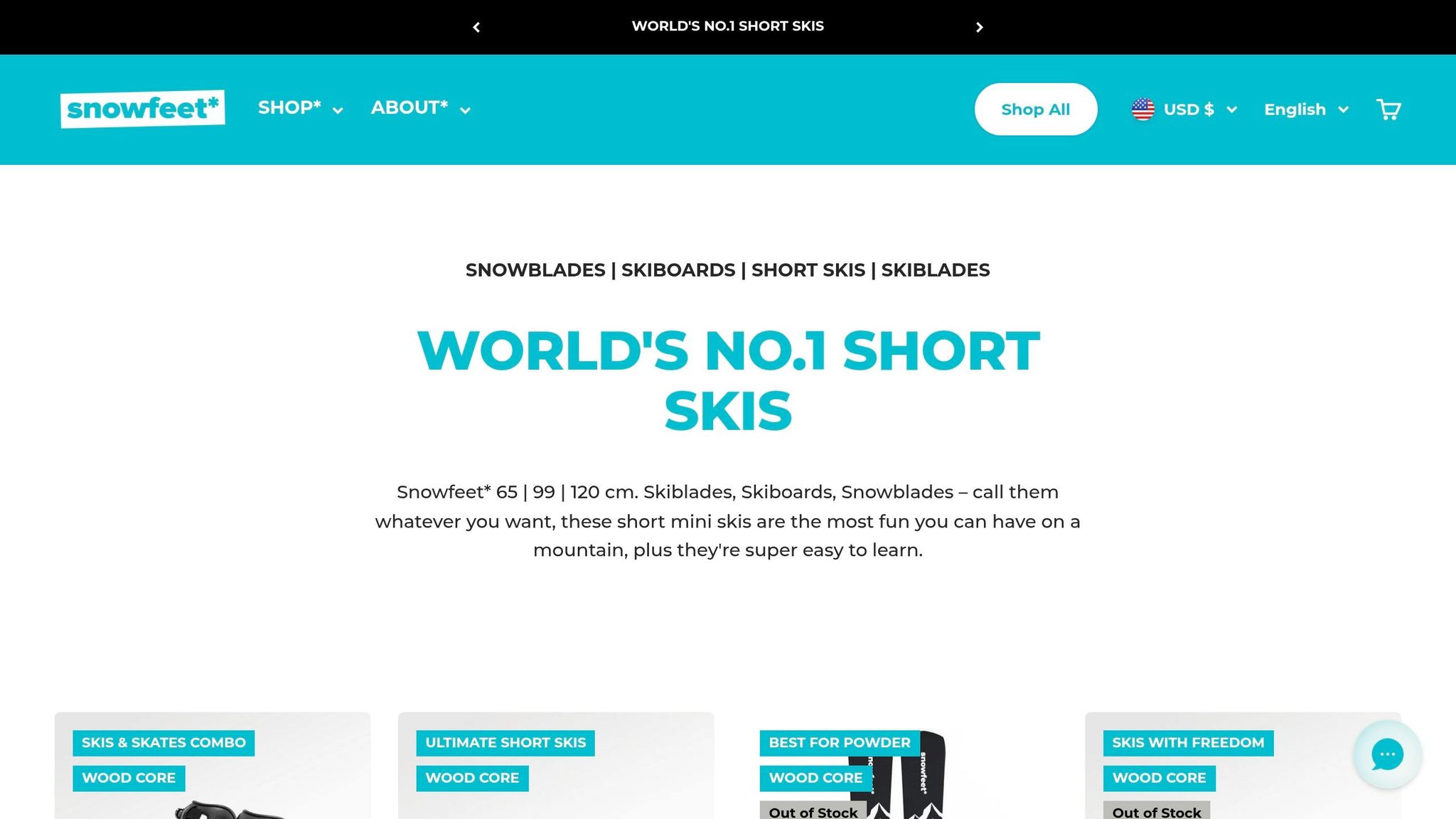
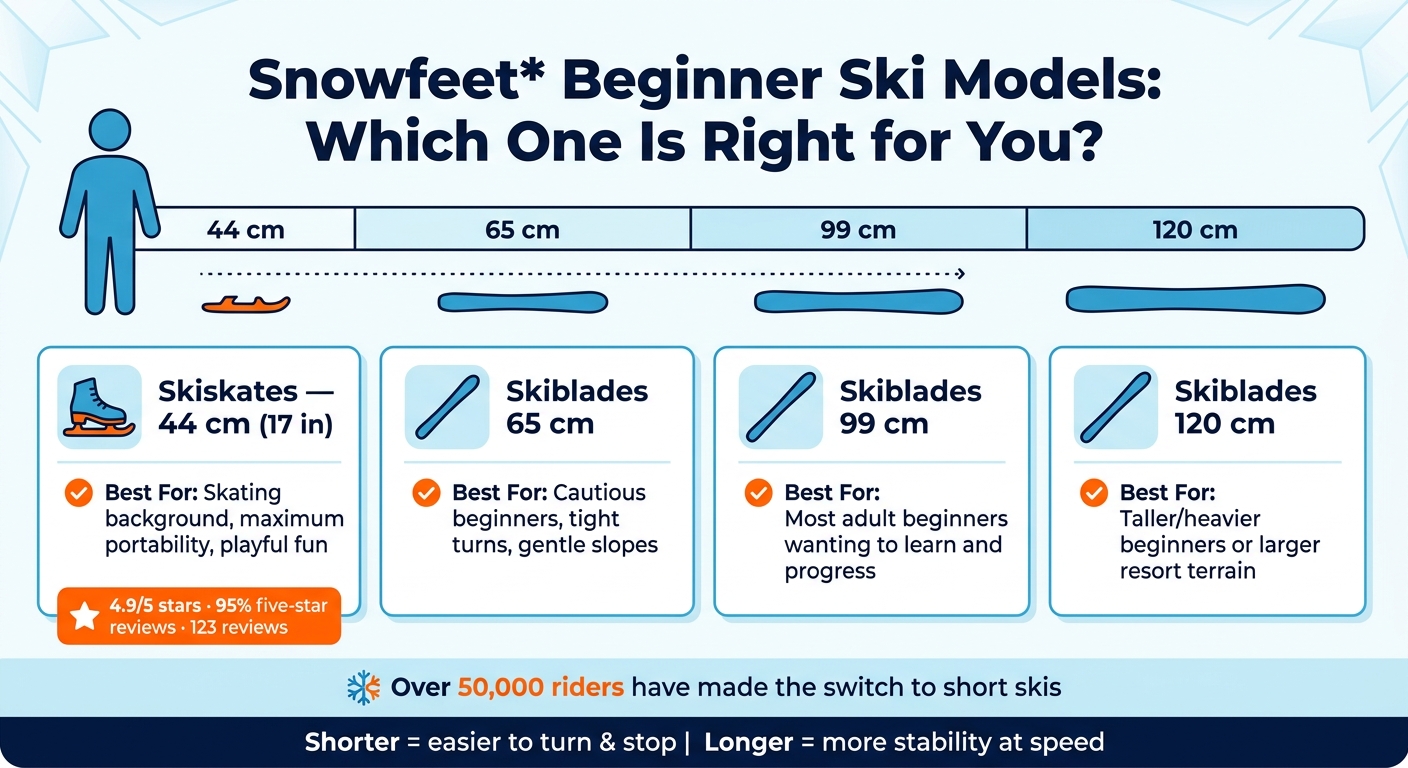
For those who want a more traditional skiing experience, Snowfeet* Skiblades are the way to go. They combine the ease of short skis with a balance of agility and stability, making them perfect for beginners who want to grow their skills. Skiblades come in three lengths - 65 cm, 99 cm, and 120 cm - each suited to different needs:
- 65 cm: Perfect for tight turns, gentle slopes, and cautious beginners.
- 99 cm: A versatile choice for most adult beginners looking to improve steadily.
- 120 cm: Best for taller or heavier beginners, or those tackling larger Western resorts with wider, longer runs.
Short skis offer a lighter, more playful experience compared to traditional long skis, which can feel heavier and harder to control.
How to Choose the Right Length
Here’s a simple rule of thumb: shorter skis are easier to turn and stop, while longer skis provide more stability at higher speeds. Use this quick guide to find your match:
| Model | Length | Best For |
|---|---|---|
| Skiskates | 44 cm | Skating background, maximum portability, playful fun |
| Skiblades | 65 cm | Cautious beginners, tight turns, gentle slopes |
| Skiblades | 99 cm | Most adult beginners wanting to learn and progress |
| Skiblades | 120 cm | Taller/heavier beginners or larger resort terrain |
If you’re looking for simple, carefree fun, the Skiskates or 65 cm Skiblades are excellent choices. But if you’re planning multiple trips or want something that’ll grow with you, the 99 cm or 120 cm Skiblades are a better long-term investment.
sbb-itb-17ade95
How to Set Up Your Snowfeet* Gear
Getting your Snowfeet* gear set up right can make all the difference between a smooth, fun day and a frustrating one. A loose binding or the wrong type of boot can quickly ruin the experience. Luckily, Snowfeet* gear is designed to be simple to set up, so you can handle it at home and avoid fumbling around in the cold.
Boot and Binding Fit
First things first - check that your boots are compatible. Snowfeet* Skiskates work with ski boots in US sizes 4.5–14.5 and snowboard boots in US sizes 6–14.5. If you're using Skiblades with universal strap bindings, they’ll fit most sturdy winter or snowboard boots. However, if the model has standard ski bindings, you'll need proper ski boots with defined toe and heel lugs. Whatever boots you choose, make sure the soles are clean, dry, and in good condition. Worn-out or cracked soles can mess with the binding's grip.
Skip the soft, low-cut fashion boots - they don’t provide enough ankle support, which is critical for controlling turns and stops. A firm ankle gives you the stability you need, especially on shorter skis.
"Skiskates are available with adjustable tool-free snowboard or ski bindings, that include safety leashes for secure attachment and anti-slippery surface for perfect grip." - Snowfeet*
This straightforward design makes setting up your gear quick and stress-free.
Setup Tips Before You Hit the Slopes
Once you’ve got the right boots and bindings, it’s time to finalize your setup. Here’s how to do it:
- Adjust your bindings at home. Place your boot into the binding so the ball of your foot is centered on the ski. Then, adjust the heel or toe piece to fit snugly.
- Tighten the straps in order, starting from the toe and working toward the ankle. The straps should feel secure but not so tight that they cause numbness or tingling. If that happens, loosen them by one click.
- Before heading up the lift, test your setup on flat snow near the lodge. Try clipping in and out of the bindings with your gloves on to make sure everything operates smoothly.
- Don’t forget to attach the safety leash to your boot. This is especially important if your bindings don’t release automatically during a fall.
- Shift your weight gently on each foot to check your balance and ensure the fit feels secure. If one side feels off, stop and recheck the adjustments to make sure both sides match.
With your Snowfeet* gear properly adjusted, you’re all set to enjoy a smooth and controlled ride, even if it’s your first time on the slopes.
Getting Started on Snow with Snowfeet*
Start on Easy Slopes
When you're just starting out, keep it simple. Choose the smallest green run at your resort or a gentle practice hill. Stick to groomed, packed snow for a smoother experience - steer clear of icy spots, deep powder, or rough terrain until you’ve got the basics down.
Before hopping on the lift, spend some time practicing on flat ground. Work on standing still, gliding, and stopping. Once you’re comfortable, move to a gentle slope to try basic S-turns. Thanks to the shorter length of Snowfeet* gear, these turns feel natural and respond quickly. This intuitive design is what makes Snowfeet* stand out compared to traditional ski gear.
"Shorter skis are easier to control, turn and stop, which makes them great for beginners. Skiblades | Snowblades | Skiboards are light and easy to ride as opposed to cumbersome, heavy and long skis." - Snowfeet*
Keep Early Sessions Short and Fun
For your first few outings, aim for sessions that last 60–90 minutes. This keeps fatigue at bay and helps you stay focused. Set a single goal for each session - whether it’s mastering a turn or just getting comfortable on the snow. Wrap things up while you’re still having fun instead of pushing through frustration or exhaustion. This approach not only keeps the experience enjoyable but also highlights the benefits of Snowfeet* gear.
Why Snowfeet* Gets You Smiling Faster
With short, focused practice sessions, Snowfeet* makes learning feel effortless. Traditional ski setups can be overwhelming for beginners - stiff rental boots, long and heavy skis, and a steep learning curve that often takes days to conquer. Snowfeet* changes the game. Most users report feeling confident after just a few runs.
Its compact design fits in a backpack, cutting out the hassle of bulky gear and long rental lines. This makes it easy to enjoy quick, low-pressure sessions that build confidence fast. Over 50,000 riders have made the switch, showing that when your gear feels manageable, you’re more likely to stay positive, come back for more, and improve steadily.
Conclusion: A Better Way for Beginners to Start Skiing
Skiing doesn’t have to mean lugging around heavy gear, waiting in long lines, or wrestling with equipment that feels impossible to control. Snowfeet* changes all that.
Shorter skis, like those from Snowfeet*, are much easier to handle. For beginners, the 44 cm Skiskates offer a skate-like experience that’s perfect for getting started. As your confidence grows, you can move up to longer options like the 65 cm, 99 cm, or 120 cm Skiblades. Each model is designed to help you feel stable and in control - something traditional long skis often struggle to offer.
Another major perk? Snowfeet* gear is compact. You can toss it in a backpack or your car’s trunk - no need for a roof rack or oversized ski bag. If you’re heading to popular spots like Colorado, Utah, or Vermont, this convenience is a game-changer. And when winter’s over, the gear stores easily in a closet instead of dominating your garage space.
But it’s not just about practicality. Snowfeet* brings a fun, playful vibe to skiing. Unlike traditional setups that can feel overly technical or intimidating, this gear feels more like skating - making it easier for beginners to enjoy themselves right away. That early sense of fun is what keeps people coming back to the slopes.
So, pick the model that suits your comfort level, plan a short session on an easy green run, and focus on having fun rather than chasing perfection. The skills will come naturally. With Snowfeet*, you’re not just buying equipment - you’re starting your skiing adventure with a smile. 😊
FAQs
Can I use Snowfeet* at any ski resort?
Yes, most ski resorts across the U.S. permit the use of Snowfeet* products. Thanks to their metal edges and reliable bindings, they align with the functional standards of traditional ski gear. If resort staff raise questions, you can point out that Snowfeet* have the same metal edges as regular skis. To avoid any issues, it’s a good idea to review the resort’s equipment policies ahead of time.
Do I need ski boots or snowboard boots?
You don’t always need ski boots to enjoy Snowfeet* gear. Many beginner options, like Skiskates and shorter Skiblades (65 cm and 99 cm), are designed to work with your regular winter shoes or snowboard boots. However, for models with ski-boot bindings - such as longer Skiblades (99 cm or 120 cm) - ski boots provide better control on the slopes. If snowboard boots are more your style, look for Snowfeet* bindings that are made specifically to pair with them.
Are short skis safe at higher speeds?
Short skis, such as Snowfeet Skiskates and Skiblades, are a great option for beginners. Their compact size makes them easier to handle, especially on gentle slopes. That said, they don’t perform as well at higher speeds or on icy terrain, where they lack the grip and stability of traditional long skis. Models like the 99 cm and 120 cm Skiblades do offer better stability, but if you’re into expert-level carving or racing aggressively, longer skis are still your best bet.











Zanechať komentár
Táto lokalita je chránená testom reCAPTCHA a vzťahujú sa na ňu pravidlá ochrany súkromia a podmienky poskytovania služby hCaptcha.