



















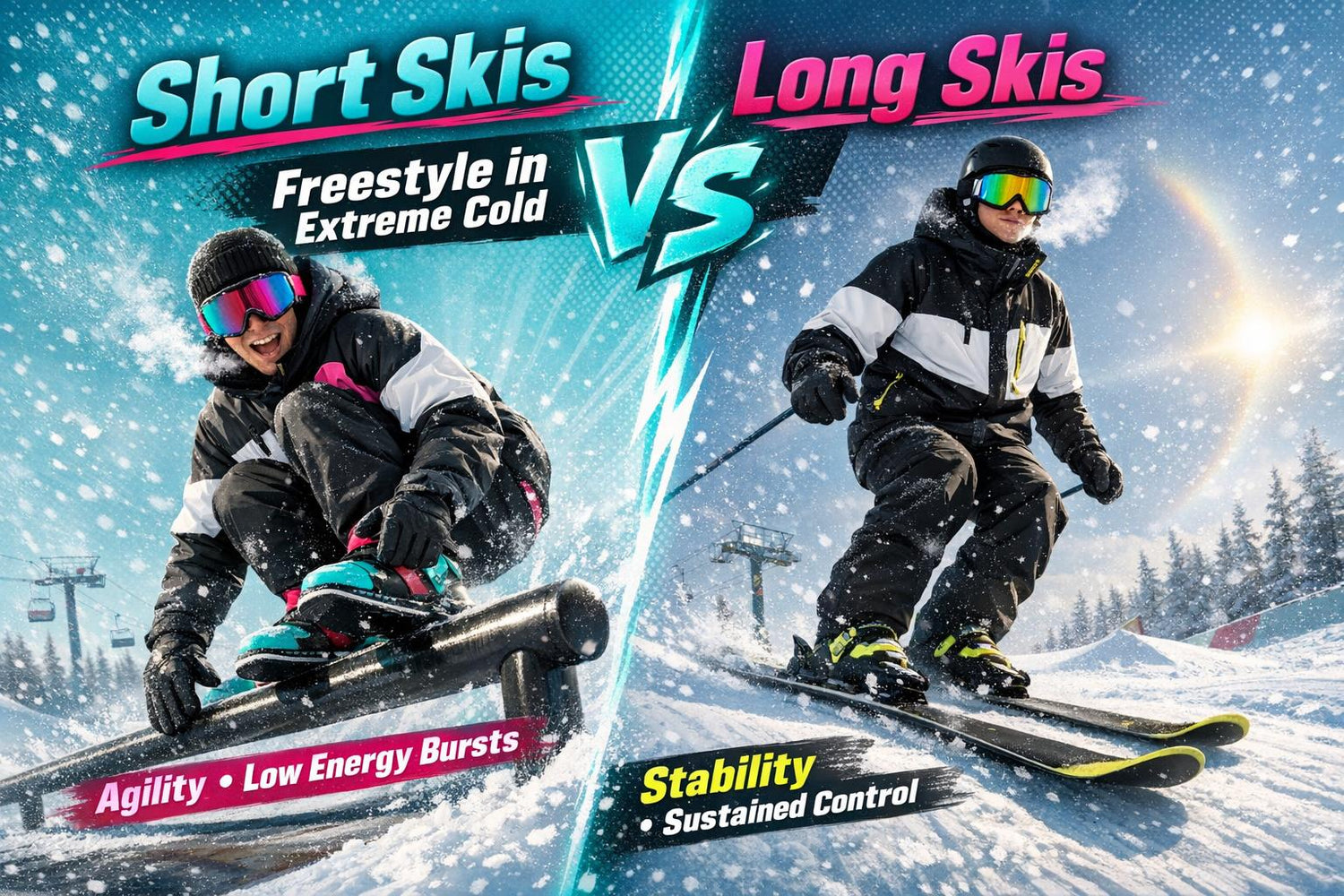
When it’s freezing out and the slopes are icy, ski length can make or break your ride. Short skis (44–120 cm) are lighter, easier to control, and excel at tricks, spins, and quick moves. Long skis (160–180 cm) offer better speed and stability but can feel heavy and less responsive in icy conditions. If you’re into freestyle skiing or just want more agility in extreme cold, short skis like Snowfeet’s 65 cm Skiblades are a solid pick. For high-speed descents or big jumps, long skis still hold their ground.
Quick Comparison
| Feature | Short Skis (44–120 cm) | Long Skis (160–180 cm) |
|---|---|---|
| Turn Radius | Tight (~4 m for 65 cm) | Wide (15–20+ m) |
| Agility | High | Lower |
| Stability at Speed | Moderate | High |
| Weight | Light (~3.79 lbs) | Heavy |
| Best For | Tricks, spins, icy slopes | Speed, big jumps |
| Cold Handling | Easier on energy | More physically demanding |
Short skis are ideal for freestyle fun and conserving energy in cold weather, while long skis are better for speed and stability. Choose based on your style and the conditions you’ll face.
Key Differences Between Short Skis and Long Skis
What Counts as a Short Ski or a Long Ski
Short skis typically range between 44 cm and 120 cm, with models like the 65 cm Skiblades and 99 cm Ultimate Short Skis designed for various terrains and skiing styles. On the other hand, long skis are usually between 160 and 180 cm, making them the go-to option for park and freestyle skiing at most resorts.
This size difference - sometimes exceeding 100 cm - has a significant impact on how skis perform, especially in extreme cold. Knowing these distinctions helps explain how each type behaves on the slopes.
How Ski Length Affects Performance
Short skis, like the 65 cm Snowfeet* Skiblades, are incredibly nimble, with a turn radius of just 4 meters. This makes them perfect for sharp, precise movements, especially in tight spaces. Long skis, while less responsive in these situations, shine in a different area: stability at high speeds. Their extra length absorbs more vibrations, making them ideal for fast, open runs.
As Snowfeet* user Brad Tolin shares:
"Only trade-off is at higher speeds, where longer skis still feel more stable - but for overall fun and maneuverability, these are hard to beat."
For freestyle skiers navigating icy slopes, the trade-off between agility and stability becomes crucial. When it comes to spinning, jumping, and quick direction changes, short skis like the Snowfeet* models excel, offering a level of control that long skis can't match.
How Extreme Cold Changes Ski Handling
Cold weather brings another layer of complexity to ski performance. When temperatures drop well below freezing, the snow hardens into a fast, compact surface. This makes edge grip and precision even more important, while the added weight of long skis can quickly sap your energy.
Short skis, such as the Snowfeet* Skiblades, are equipped with tight sidecuts and steel edges (with an edge hardness of around 48° HRC), providing dependable grip without unnecessary bulk. In contrast, long skis demand more effort in these frigid, stiff conditions. Additionally, skis with wood cores tend to handle freezing temperatures better than fiberglass ones, which need frequent waxing to maintain performance.
| Feature | Short Skis (65–120 cm) | Long Skis (160–180 cm) |
|---|---|---|
| Turn Radius | ~4 meters (65 cm model) | 15–20+ meters |
| Agility | High; quick spins, sharp edges | Lower; suited for broad, sweeping turns |
| Stability at Speed | Moderate | High |
| Weight | ~3.79 lbs (with bindings) | Heavier |
| Cold Weather Edge Grip | Steel edges, tight sidecut | Wider base, more surface contact |
| Physical Demand | Lower; easier on knees | Higher; more taxing in cold conditions |
Short skis bring agility and ease, while long skis emphasize stability and speed. However, when the mercury drops, the lightweight build and precise edges of short skis often make them the better choice for conserving energy and maintaining control.
Why Short Skis Like Snowfeet* Work Well in Extreme Cold
Better Spin Control and Agility
When the temperature dives into the extreme cold zone, snow turns hard and fast - conditions where short skis really shine. Take the 65 cm Snowfeet* Skiblades, for example. They weigh just about 5.89 lbs with snowboard bindings, making them much lighter than traditional long skis. This reduced swing weight means your legs aren’t fighting against extra inertia, which translates to smoother, more controlled spins. Plus, the 4-meter turn radius allows for quick, sharp redirection on icy terrain. Unlike long skis that need wide, committed arcs, these shorter skis give you the precision to navigate hard-packed snow effortlessly. It’s all about control and adaptability when things get icy.
A Playful, Skate-Like Feel on Snow
Short skis like Snowfeet* aren’t just about control - they’re also incredibly fun to ride. Drawing inspiration from skating, they combine asymmetric twin tips, a deep parabolic sidecut, and an intuitive feel, making tricks like butters, presses, and pivots feel smooth and natural. According to Andrew B., a verified user:
"These skiblades are so much fun and easy to control. Never going back to regular skis."
This playful design becomes a game-changer when riding in the stiff, unforgiving conditions of extreme cold.
Light, Portable, and Easy to Use in the Cold
Performance aside, Snowfeet* short skis are practical and convenient - especially in freezing conditions. Extreme cold often means dealing with stiff gear and frozen fingers, but Snowfeet* eliminates some of that hassle. Their compact size fits neatly into a backpack, so you can skip the bulk of roof racks or ski bags. Another bonus? The snowboard boot bindings. These let you use standard snowboard boots or even sturdy winter hiking boots, which are not only warmer but also more flexible and far easier to walk in than traditional ski boots. As Snowfeet* highlights:
"Snowboard bindings give you more flexibility while performing all kinds of tricks, they're super comfortable and you can walk with them anywhere without a problem."
With over 50,000 riders globally and a 4.9/5 rating from more than 5,500 verified reviews, Snowfeet* proves that less gear hassle means more time enjoying the slopes - a huge win when the cold is already testing your limits.
Where Long Skis Fall Short in Extreme Cold
Less Forgiving on Icy Landings
When the temperature drops, snow hardens into ice, creating a surface that's tough to handle - and long skis can make it even harder. Their length causes them to over-engage with the icy edge, leaving little room for quick mid-air corrections. This can turn a slightly off landing into a major issue.
Short skis, like the 65 cm Snowfeet* Skiblades, shine in these situations. They’re described as "way more forgiving than traditional skis" when it comes to landing on icy terrain. Long skis, on the other hand, lack that flexibility, making them less reliable when precision counts.
Greater Physical Demand in the Cold
Long skis are heavy, and that extra weight becomes a bigger problem in freezing weather. Cold temperatures slow down your muscles and reaction times, so the added effort to control and rotate longer skis can wear you out faster. Shorter skis, being lighter, reduce this strain and help preserve your energy in tough conditions.
While long skis might have their moments - like carving at high speeds - their physical demands in extreme cold highlight why Snowfeet* short skis are a go-to for freestyle riders. They’re easier on your body and keep you moving longer when the weather’s working against you.
When Long Skis Still Make Sense
Despite their drawbacks, long skis aren’t entirely out of the picture. For advanced riders tackling big jumps or carving at high speeds, the extra length provides more front-to-back stability. As Snowfeet* points out:
"Advanced skiers might prefer longer skis for increased speed and stability." - Snowfeet*
Even so, experienced skier Brad Tolin weighs in on the trade-offs:
"Only trade-off is at higher speeds, where longer skis still feel more stable - but for overall fun and maneuverability, these are hard to beat." - Brad Tolin
For park sessions, spins, and tricks in freezing temps, the weight and rigidity of long skis are tough to justify. Snowfeet* short skis, with their lightweight and agile design, are built to handle these challenges while keeping the fun factor high.
sbb-itb-17ade95
Short Skis vs. Long Skis
Choosing Between Short Skis and Long Skis
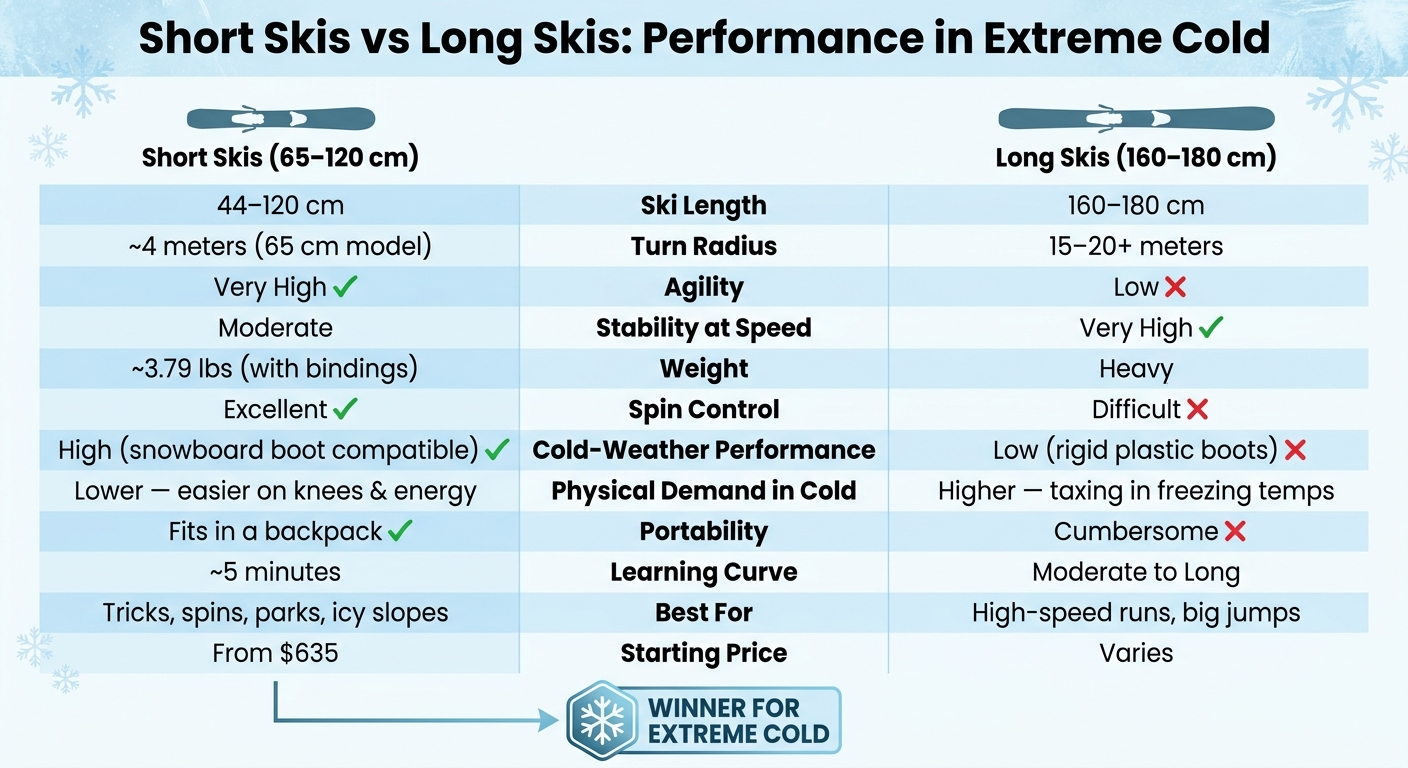
Short Skis vs Long Skis: Performance in Extreme Cold
When it comes to ski performance, picking the right length can make a world of difference. Your choice should match your riding style and the conditions you plan to tackle.
Who Should Go with Short Skis Like Snowfeet*
Short skis shine on parks, moguls, and icy slopes. Take the Snowfeet* Skiblades 65 cm, for example. Starting at $635, these are perfect for quick spins, jumps, and creative moves without the bulk of traditional skis. If you've got an ice skating or hockey background, you're in luck - Snowfeet* says skaters and inline skaters can get the hang of them in about 5 minutes.
For ultimate agility and a skating-like experience, the 65 cm model is a standout. Need a little more carving stability? The 99 cm Skiblades (starting at $675) offer a mix of traditional skiing support with the freedom of short skis. Both models work with snowboard boots, which means warmer, more flexible footwear - perfect for freezing conditions.
Short skis are also a great option for older riders or anyone dealing with knee issues. They’re lighter and easier to control, which puts less strain on your joints during extended sessions.
While short skis are all about creativity and comfort, long skis still have their place for certain types of riders.
Who Should Stick with Long Skis
If your focus is on high-speed descents or big-air competitions, long skis might be more your style. These skis, often from well-known brands, provide a solid platform and excellent edge grip for riders who prioritize speed and stability.
Take it from Brad Tolin, a verified user:
"Only trade-off is at higher speeds, where longer skis still feel more stable - but for overall fun and maneuverability, these are hard to beat." - Brad Tolin
For riders chasing speed and competitive performance, long skis are the way to go. But for most riders - especially in freezing weather where agility and comfort matter most - short skis like those from Snowfeet* offer a fantastic alternative.
Side-by-Side Comparison Table
| Feature | Snowfeet* 65 cm Skiblades | Snowfeet* 99 cm Skiblades | Traditional Long Freestyle Skis |
|---|---|---|---|
| Agility | Very High | High | Low |
| Stability | Moderate | High | Very High |
| Spin Control | Excellent | Good | Difficult |
| Cold-Weather Performance | High (snowboard boot option) | High (snowboard boot option) | Low (rigid plastic boots) |
| Learning Curve | ~5 minutes | Short | Moderate to Long |
| Portability | Fits in a backpack | Easy to carry | Cumbersome |
| Best Terrain | Parks, moguls, icy slopes | All-mountain, carving | High-speed runs, deep powder |
| Starting Price | $635 | $675 | Varies |
Conclusion: Short Skis in Extreme Cold
When temperatures plummet and snow turns icy, Snowfeet* Skiblades shine. Their compact size (65 cm and 99 cm) makes quick edge transitions easier, reducing physical effort compared to traditional long skis - a major plus when the cold takes a toll on your energy.
Comfort also plays a big role in extreme conditions. These skiblades are compatible with snowboard boots and are small enough to fit in a backpack, cutting down on gear hassles and making your time on the slopes more enjoyable:
"Snowboard bindings give you more flexibility while performing all kinds of tricks, they're super comfortable and you can walk with them anywhere without a problem, which makes the ski trip much more pleasant experience."
The 65 cm Skiblade, with its 4-meter turn radius, offers unmatched control in tight, technical terrain. This precision turns tricky runs into freestyle fun. As one happy user put it:
"These skiblades are so much fun and easy to control. Never going back to regular skis."
If agility, comfort, and performance in freezing conditions are your priorities, Snowfeet* short skis are worth a look. Prices start at $635 for the 65 cm model.
FAQs
Are short skis safe on icy slopes?
Yes, short skis are both safe and perform exceptionally well on icy slopes. Snowfeet* skiblades come equipped with high-quality metal edges that provide excellent grip on hard-packed or icy terrain. These edges give you better control compared to traditional long skis. Plus, their compact size makes them incredibly maneuverable, allowing for quick, precise turns and responsive carving. This design helps you stay stable and tackle icy patches with confidence, ensuring a smoother and safer ride.
What boots work with Snowfeet* Skiblades?
Snowfeet* Skiblades can be used with a variety of footwear, depending on the bindings you choose. The 65 cm Skiblades, for instance, are designed to work with traditional ski boots. If you opt for snowboard bindings, you can pair them with snowboard boots instead. Regular winter boots are also an option with certain binding setups, giving you plenty of flexibility.
How do I pick 65 cm vs 99 cm Skiblades?
Choosing between 65 cm and 99 cm Snowfeet Skiblades* comes down to what you want out of your ride.
The 65 cm skiblades are all about quick moves and sharp turns. They're ideal for pulling off tricks, spins, or skate-like maneuvers on groomed trails or moguls. If agility is your thing, this is the way to go.
The 99 cm skiblades, on the other hand, lean more toward stability and speed. They're great for all-mountain adventures, offering better float in moderate powder and more control on steeper slopes. Plus, they’re still easier to handle than full-length skis, giving you a nice balance of control and maneuverability.











Zanechať komentár
Táto lokalita je chránená testom reCAPTCHA a vzťahujú sa na ňu pravidlá ochrany súkromia a podmienky poskytovania služby hCaptcha.