



















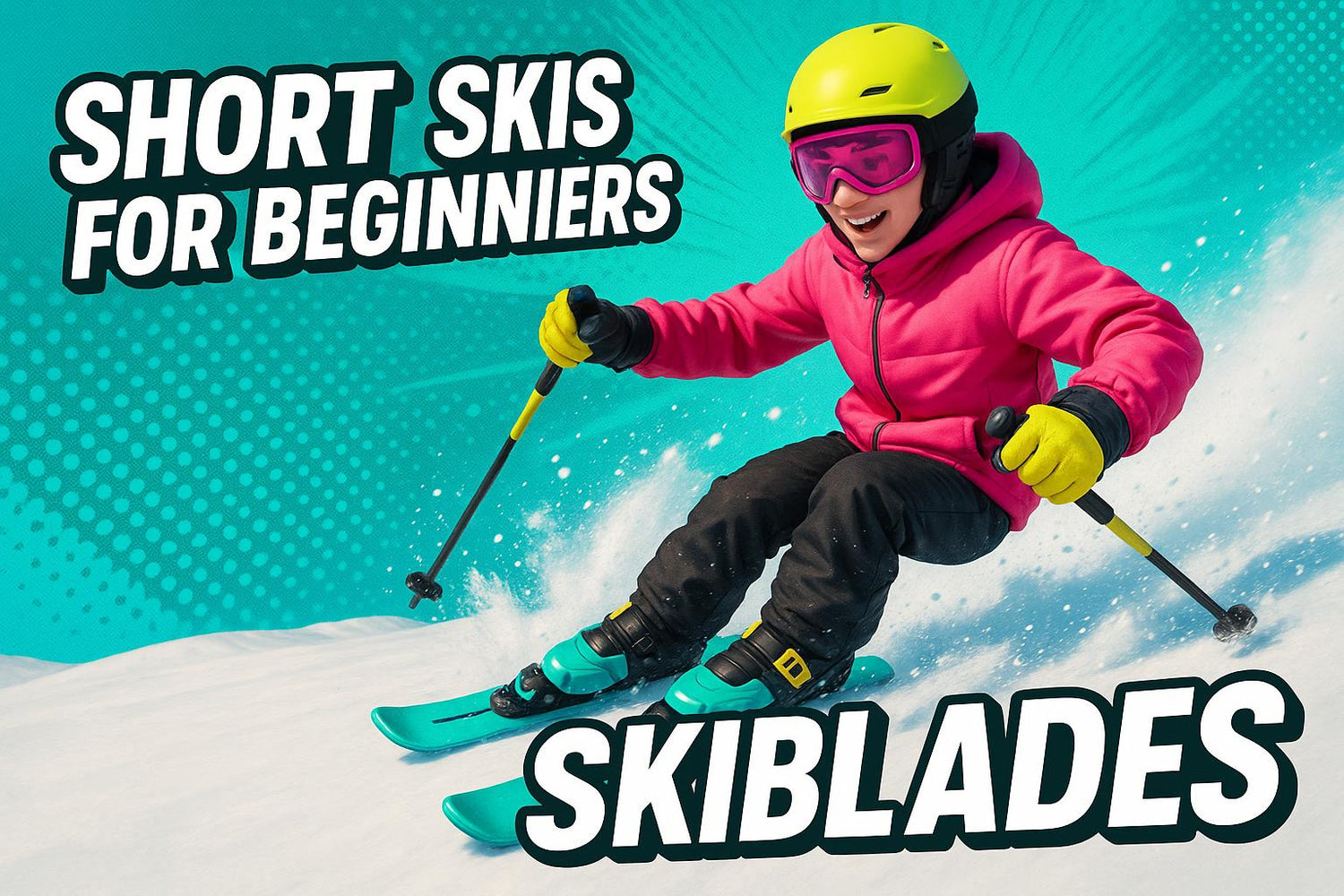
Skiblades (krátke lyže) menia spôsob, akým sa začiatočníci učia lyžovať. Tieto kompaktné lyže, s dĺžkou od 26 do 47 palcov, sú ľahšie, ľahšie ovládateľné a menej unavujúce v porovnaní s dlhšími lyžami. Pomáhajú vám učiť sa rýchlejšie, cítiť sa sebavedomejšie a užívať si lyžovanie bez boja s ťažkým vybavením. Navyše sú cenovo dostupné, prenosné a fungujú s bežnými zimnými topánkami.
Tu je dôvod, prečo skiblades získavajú na popularite:
- Rýchlejšie učenie: Ľahšie ovládateľné, najmä pre začiatočníkov.
- Ľahké a prenosné: Vážia 5–8 libier a zmestia sa do batohu.
- Dostupné: Cena začína na 635 $ v porovnaní s viac ako 800 $ za tradičné vybavenie.
- Všestranné použitie: Perfektné na upravené trate, triky a rýchle oblúky.
- Menej únavy: Vyžaduje menej úsilia, čo robí lyžovanie zábavnejším.
Ak ste nováčik v lyžovaní, skiblades sú múdra voľba, ako si užiť svahy bez strmého učebného kurzu dlhých lyží.
Sú krátke lyže lepšie pre začiatočníkov?
1. Skiblades (Krátke lyže)
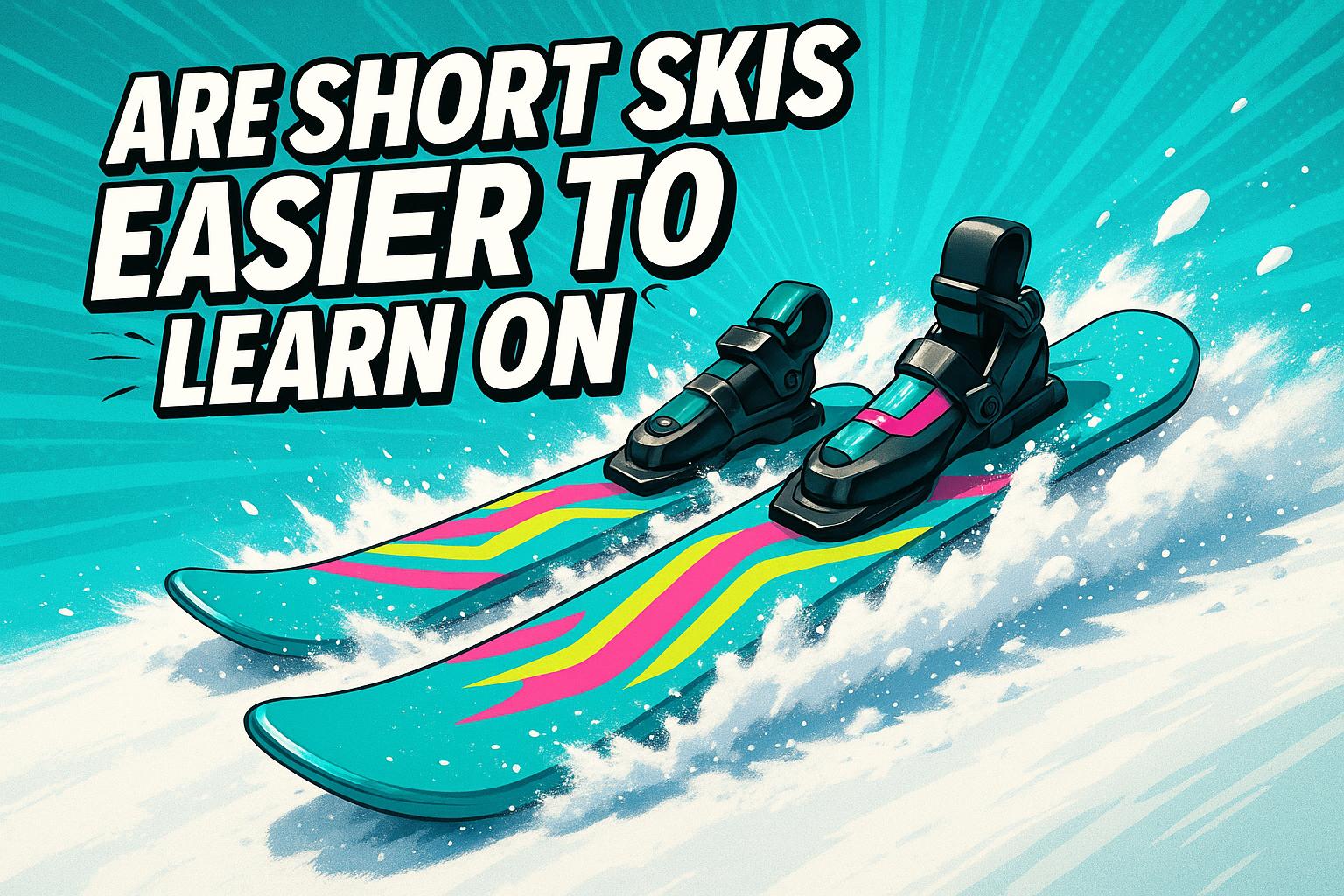
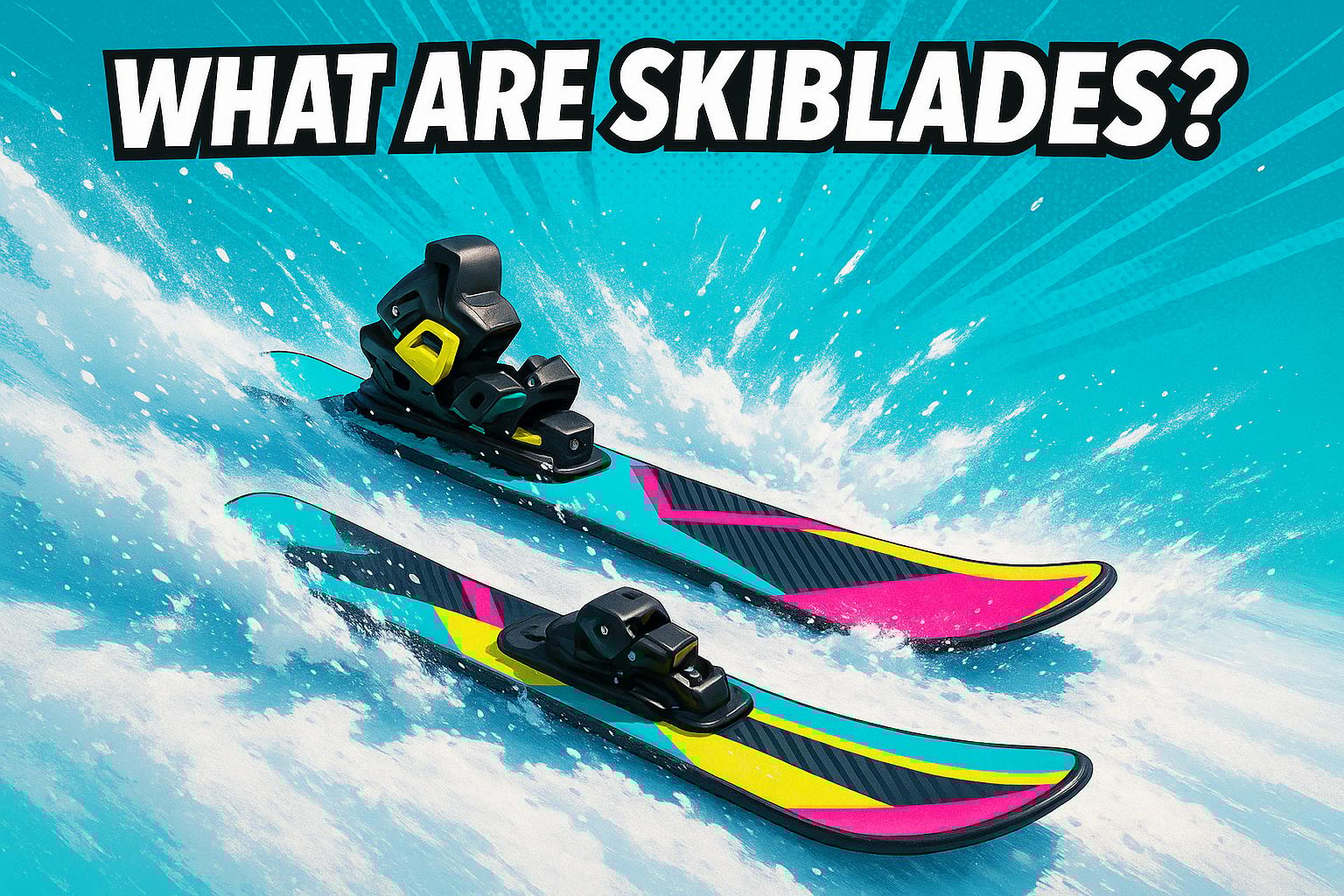
Skiblades robia lyžovanie menej zastrašujúcim pre začiatočníkov. Tieto krátke lyže, zvyčajne dlhé 26 až 47 palcov, odstraňujú zložitosť tradičných lyží, vďaka čomu sú vaše prvé dni na svahu viac o zábave a menej o boji s objemnou výbavou. Táto jednoduchosť vám pomáha rýchlejšie nadobudnúť zručnosti a užívať si proces.
Krivka učenia
Jedna z najlepších vecí na skiblades je, ako rýchlo vám pomáhajú získať sebavedomie. Dlhé lyže môžu byť náročné, pretože ich dĺžka sťažuje pocit kontroly nad špičkami a pätami. Skiblades sú naopak kompaktné, takže sa cítite viac prepojení s tým, čo sa deje pod vašimi nohami. To robí učenie prirodzeným a menej ohromujúcim.
Začiatočníkom sa ľahšie robia kontrolované oblúky so skiblades, pretože vytvárajú menší odpor povrchu. To znamená, že môžete rýchlo meniť smer a ľahko zastaviť. Snowfeet* ponúka modely v troch veľkostiach:
- 65 cm (26 palcov): Perfektné pre úplných začiatočníkov, ktorí chcú maximálnu kontrolu a rýchle oblúky.
- 99 cm (39 palcov): Ponúka väčšiu stabilitu pre tých, ktorí ovládli základy.
- 120 cm (47 palcov): Skvelý kompromis pre lyžiarov pripravených zvládnuť náročnejší terén, nachádzajúci sa medzi skiblades a tradičnými lyžami.
Obratnosť
Skiblades nie sú len skvelé na učenie - sú tiež neuveriteľne obratné. Ich kratšia dĺžka vám umožňuje rýchlo sa otočiť a zmeniť smer, čo je veľká výhoda pri navigácii na preplnených svahoch, prepletaní sa medzi tesnými stromami alebo zvládaní muld. Budete sa cítiť viac v kontrole a menej zastrašení náročnými miestami.
Ďalší bonus? Skiblades vám umožňujú používať korčuliarsky pohyb na kĺzanie po rovinatých úsekoch. Už žiadne odpínanie a nešikovné chodenie – stačí sa odraziť a kĺzať, vďaka čomu sa hora stane vaším ihriskom.
Fyzické nároky
S hmotnosťou len 5–8 libier sú skiblades oveľa ľahšie ako tradičné lyže, ktoré môžu vážiť 10–15 libier a dosahovať dĺžku až 5 stôp. Táto nižšia hmotnosť ich robí ľahšími na prenášanie, skladovanie a ovládanie.
Pretože sú menšie a ľahšie, skiblades vyžadujú menej úsilia na ovládanie. Dlhé lyže vám môžu po niekoľkých jazdách unaviť nohy, najmä ak ste začiatočník a ešte si budujete špecifické lyžiarske svaly. Skiblades vám naopak umožnia užívať si plynulejšie oblúky a zastavenia bez vyčerpania, čo ich robí ideálnymi pre začiatočníkov.
Cena a dostupnosť
Lyžovanie môže byť drahé, ale skiblades ponúkajú cenovo dostupnejšiu možnosť bez kompromisov na kvalite. Tradičná lyžiarska výbava – vrátane lyží, viazania, topánok a palíc – môže stáť od 800 do 1500 dolárov alebo viac. Snowfeet* skiblades začínajú na 635 dolároch za model 65 cm, 675 dolároch za 99 cm a 775 dolároch za 120 cm, čo z nich robí cenovo dostupnejšiu alternatívu k prémiovým značkám ako Rossignol, Atomic alebo Salomon.
Ďalšia výhoda? Skiblades fungujú s rôznou obuvou. Podľa modelu ich môžete kombinovať s bežnými zimnými topánkami, snowboardovými topánkami alebo lyžiarskymi topánkami. Táto flexibilita vám môže ušetriť 200 až 400 dolárov za špecializované lyžiarske topánky, čo je veľká výhoda, ak si šport len vyskúšate.
Požičanie výstroja v amerických strediskách zvyčajne stojí 40 až 70 dolárov za deň, čo sa rýchlo nazbiera, ak lyžujete niekoľkokrát za sezónu. Navyše, skiblades sú dostatočne kompaktné na to, aby ste ich mohli zbaliť na výlety bez toho, aby ste platili za nadrozmernú batožinu v leteckej doprave. Či už teda plánujete rýchly výlet alebo celú lyžiarsku dovolenku, uľahčujú spontánne cesty – a sú lacnejšie.
2. Tradičné dlhé lyže
Zatiaľ čo skiblades sú známe svojou jednoduchosťou, tradičné dlhé lyže môžu byť pre začiatočníkov tvrdším orieškom. Ich veľkosť a hmotnosť často robia učenie sa lyžovať náročnejším – a niekedy frustrujúcim – zážitkom.
Krivka učenia
Dlhé lyže vyžadujú viac času a úsilia, aby ste si na ne zvykli. Pre začiatočníkov môže byť zvládanie rýchlosti a udržiavanie stability ako boj do kopca, čo spomaľuje pokrok v základných technikách. Ich dĺžka a objemnosť môžu každý krok na ceste učenia spraviť namáhavým. Dokonca aj jednoduché pohyby na svahu môžu spočiatku pôsobiť ako veľké prekážky.
Obratnosť
Točiť sa s dlhými lyžami? To je tréning sám o sebe. Ich väčšia dĺžka znamená, že musíte používať viac zámerných pohybov a vyvíjať väčší tlak na kolená len na to, aby ste urobili oblúk. Táto dodatočná námaha nielenže sťažuje otáčanie, ale tiež zvyšuje pravdepodobnosť straty rovnováhy a pádu. Pre začiatočníkov to môže zjazdovky robiť viac zastrašujúcimi a menej príťažlivými.
sbb-itb-17ade95
Výhody a nevýhody
Keď sa rozhodujete medzi skiblades a tradičnými dlhými lyžami, je dobré zvážiť výhody a nevýhody oboch. Obe majú svoje prednosti, ale slúžia rôznym účelom. Tu je bližší pohľad na to, ako si stoja, nadväzujúc na predchádzajúce body o ľahkosti učenia a výkone.
Skiblades: Výhody
Skiblades robia učenie sa viac zábavné. Vďaka ich kratšej dĺžke – od 65 cm do 120 cm v modeloch Snowfeet* – sa oveľa ľahšie ovládajú, čo robí oblúky plynulejšími a pomáha začiatočníkom rýchlo získať sebavedomie.
Ďalšia veľká výhoda? Sú super prenosné. Skiblades sa zmestia do batohu alebo kufra auta a fungujú s bežnými zimnými alebo snowboardovými topánkami. To znamená, že nemusíte míňať navyše na špecializované vybavenie.
Keď už hovoríme o cene, skiblades sú rozpočtovou možnosťou. Kompletná výbava začína okolo 150 dolárov, čo je zlomok toho, čo by ste zaplatili za tradičné lyže. Začiatočnícke lyžiarske balíčky od známych značiek zvyčajne začínajú na 400 až 500 dolároch, a to ešte pred pridaním ceny topánok a viazaní. Ako to hovorí Snowfeet tím:
"V Snowfeet kladieme dôraz na cenovo dostupné vybavenie pre každého, preto sa snažíme udržať ceny naozaj nízke!" – Snowfeet tím
Skiblades: Nevýhody
Ale skiblades nie sú dokonalé. Sú skvelé na rekreačné lyžovanie a učenie základov, ale majú svoje limity. Pri veľmi vysokých rýchlostiach môže ich kratší dizajn pôsobiť menej stabilne. Tiež nie sú najlepšie do podmienok s POWDERom. A ak je vaším cieľom zvládnuť tradičné alpské pretekárske techniky, nakoniec budete potrebovať výkon plnohodnotných lyží.
Tradičné dlhé lyže: Výhody
Dlhé lyže vynikajú v určitých oblastiach. Ponúkajú vynikajúci plávajúci efekt v hlbokom POWDERi a stabilitu pri vysokých rýchlostiach na upravených zjazdovkách. Pre pokročilých lyžiarov, ktorí zvládajú náročný terén, poskytuje väčšia dĺžka výraznú výhodu.
Tradičné dlhé lyže: Nevýhody
Pre začiatočníkov však môžu byť tradičné lyže trochu problém. Sú objemné a ťažké, čo znamená, že vyžadujú viac sily a koordinácie. To môže učiaci sa proces sťažiť. Navyše často spôsobujú väčšiu záťaž na kolená a únavu, najmä u nových lyžiarov. A nezabúdajme na cenu – lyže, topánky a viazania sa zvyčajne predávajú samostatne, čo rýchlo zvyšuje náklady.
Porovnanie vedľa seba
Tu je rýchly prehľad kľúčových rozdielov:
| Vlastnosť | Skiblades (Snowfeet*) | Tradičné dlhé lyže |
|---|---|---|
| Krivka učenia | Jednoduché a rýchle – ideálne pre začiatočníkov | Strmé a náročné – vyžaduje čas na zvládnutie |
| Obratnosť | Rýchle a citlivé | Vyžaduje viac sily a vedomý pohyb |
| Fyzické nároky | Nízky náraz; šetrnejšie ku kolenám a nohám | Vyšší náraz; väčšia záťaž na kolená a únava |
| Prenositeľnosť | Kompaktné; zmestí sa do batohu alebo kufra auta | Objemné; vyžaduje špeciálnu prepravu |
| Cena (výbava) | 150 $ až 599,90 $ (viazanie v cene) | 400 $ až 2 500 $+ (lyže, topánky a viazanie sa predávajú samostatne) |
| Kompatibilita topánok | Funguje s zimnými alebo snowboardovými topánkami | Vyžaduje špecializované lyžiarske topánky |
| Stabilita rýchlosti | Menej stabilné pri veľmi vysokých rýchlostiach | Stabilnejšie pri vysokých rýchlostiach |
| Výkon v POWDERe | Obmedzené (okrem modelov POWDER) | Výborné v hlbokom snehu |
| Všestrannosť | Perfektné pre parky, upravené trate a rekreačné lyžovanie | Najlepšie pre rôznorodý terén a pokročilé techniky |
Tradičné začiatočnícke lyžiarske balíčky začínajú na 400 až 500 dolároch, pričom topánky a viazania pridávajú ďalších 200 až 300 dolárov. Špičkové expert lyže môžu ľahko prekročiť 1 000 dolárov. Naopak, Snowfeet* udržiava svoje balíčky cenovo dostupné a ponúka skvelú hodnotu so svojím Basic modelom.
Pre každého, kto práve začína a hľadá cenovo dostupný spôsob, ako vyraziť na svahy, sú skiblades fantastickou voľbou.
Záver
Ak ste nováčik v lyžovaní, skiblades sú zmenou hry. Uľahčujú učenie, robia ho zábavnejším a oveľa menej zastrašujúcim než tradičné lyže. Preč sú dni trápnych pohybov a nekonečných pádov - skiblades vám umožnia sústrediť sa na užívanie si svahov.
Pre úplných začiatočníkov sú kratšie skiblades (okolo 65 cm) ideálnym štartom. Sú veľmi ľahko ovládateľné, pomáhajú zvládnuť rýchle oblúky a zastavenia a zvyšujú vašu sebadôveru bez vyčerpania energie. To znamená menej pádov a viac času na zábavu.
Ak už máte základy zvládnuté a chcete sa pustiť do rôznorodejšieho terénu, stredne dlhé skiblades (ako modely 99 cm) predstavujú skvelý kompromis medzi stabilitou a hravosťou. A keď budete pripravení priblížiť sa k pocitu tradičného lyžovania - bez obetovania ľahkej ovládateľnosti - 120 cm Snowfeet* Short Skis sú fantastickou voľbou. Ich dizajn ich robí výnimočnou voľbou pre každého, kto chce spojiť manévrovateľnosť s nádychom klasického lyžovania.
Okrem ich všestrannosti sú skiblades jednoducho praktické. Sú ľahké a ľahko sa nosia, čo robí lyžiarske výlety menej náročnými. Navyše sú zvyčajne šetrnejšie k peňaženke, čo robí lyžovanie dostupnejším pre nováčikov.
Stručne povedané, ak chcete rýchlo vyraziť na svahy, učiť sa s istotou a vyťažiť zo svojej prvej sezóny maximum, skiblades sú tou správnou voľbou. Dlhšie lyže si nechajte na chvíľu, keď budete pripravení ponoriť sa do pokročilých techník alebo hlbokého POWDERu. Zatiaľ sú skiblades vašou vstupenkou k rýchlejšiemu učeniu, jednoduchšiemu lyžovaniu a čistej zábave na každom zjazde. Je to jednoduchá, múdra voľba pre každého, kto začína svoju lyžiarsku cestu.
Často kladené otázky
Sú skiblady pre začiatočníkov ľahšie na naučenie v porovnaní s tradičnými lyžami?
Áno, skiblady sú fantastickou voľbou pre začiatočníkov, pretože sa s nimi manipuluje oveľa ľahšie ako s tradičnými lyžami. Ich kratšia dĺžka vám dáva lepšiu kontrolu, čo uľahčuje otáčanie, zastavovanie a udržiavanie rovnováhy. To znamená, že si môžete rýchlejšie vybudovať sebavedomie a skutočne si užiť čas na svahu bez pocitu, že ste v tom príliš hlboko.
Vezmite si napríklad skiblady ako Snowfeet modely 65 cm, 99 cm a 120 cm - sú ľahké a veľmi ľahko ovládateľné. To znižuje fyzickú námahu potrebnú na ich kontrolu. Na rozdiel od tradičných lyží, ktoré môžu pôsobiť objemne a, povedzme si úprimne, trochu zastrašujúco, skiblady ponúkajú zábavnejšiu a odpúšťajúcu jazdu. Je to skvelý spôsob, ako zvládnuť základy a pritom sa skvele zabaviť.
Existujú situácie, kedy skiblady nemusia byť najlepšou voľbou na lyžovanie?
Skiblady sú skvelou voľbou pre mnohých lyžiarov, ale majú aj niekoľko nevýhod. Môžu mať problémy v hlbokom POWDER, na ľadovom alebo veľmi tvrdom snehu, alebo keď tlačíte hranice pri vysokých rýchlostiach. V týchto situáciách tradičné dlhé lyže ponúkajú lepšiu stabilitu a väčšiu plochu na zvládnutie týchto náročných podmienok.
To povedané, pre väčšinu rekreačných lyžiarov - najmä začiatočníkov - sú skiblady ako Snowfeet Skiblades skvelým spôsobom, ako sa naučiť, získať sebavedomie a jednoducho si užiť zábavu na svahu.
Môžem použiť svoje bežné zimné topánky so Snowfeet skibladami, alebo potrebujem špeciálne topánky?
Áno, môžete kombinovať lyžiarky alebo snowboardové topánky so Snowfeet skibladami, čo ich robí super flexibilnými a ľahko použiteľnými - ideálne pre začiatočníkov aj skúsených lyžiarov. Na rozdiel od tradičných lyží, ktoré často vyžadujú špecifické viazania a topánky, Snowfeet skiblady sú navrhnuté tak, aby fungovali s rôznymi druhmi obuvi, takže máte viac možností pri jazde na svahu.
Táto všestrannosť vám nielen uľahčí život - môže vám tiež ušetriť peniaze. Je pravdepodobné, že môžete použiť topánky, ktoré už vlastníte, čím znížite ďalšie výdavky. Či už skúšate lyžovanie prvýkrát alebo len chcete zábavnú, kompaktnú alternatívu k plnohodnotným lyžiam, Snowfeet skiblady vám umožnia skočiť do toho bez starostí s kúpou množstva ďalšieho vybavenia.











Zanechať komentár
Táto lokalita je chránená testom reCAPTCHA a vzťahujú sa na ňu pravidlá ochrany súkromia a podmienky poskytovania služby hCaptcha.