



















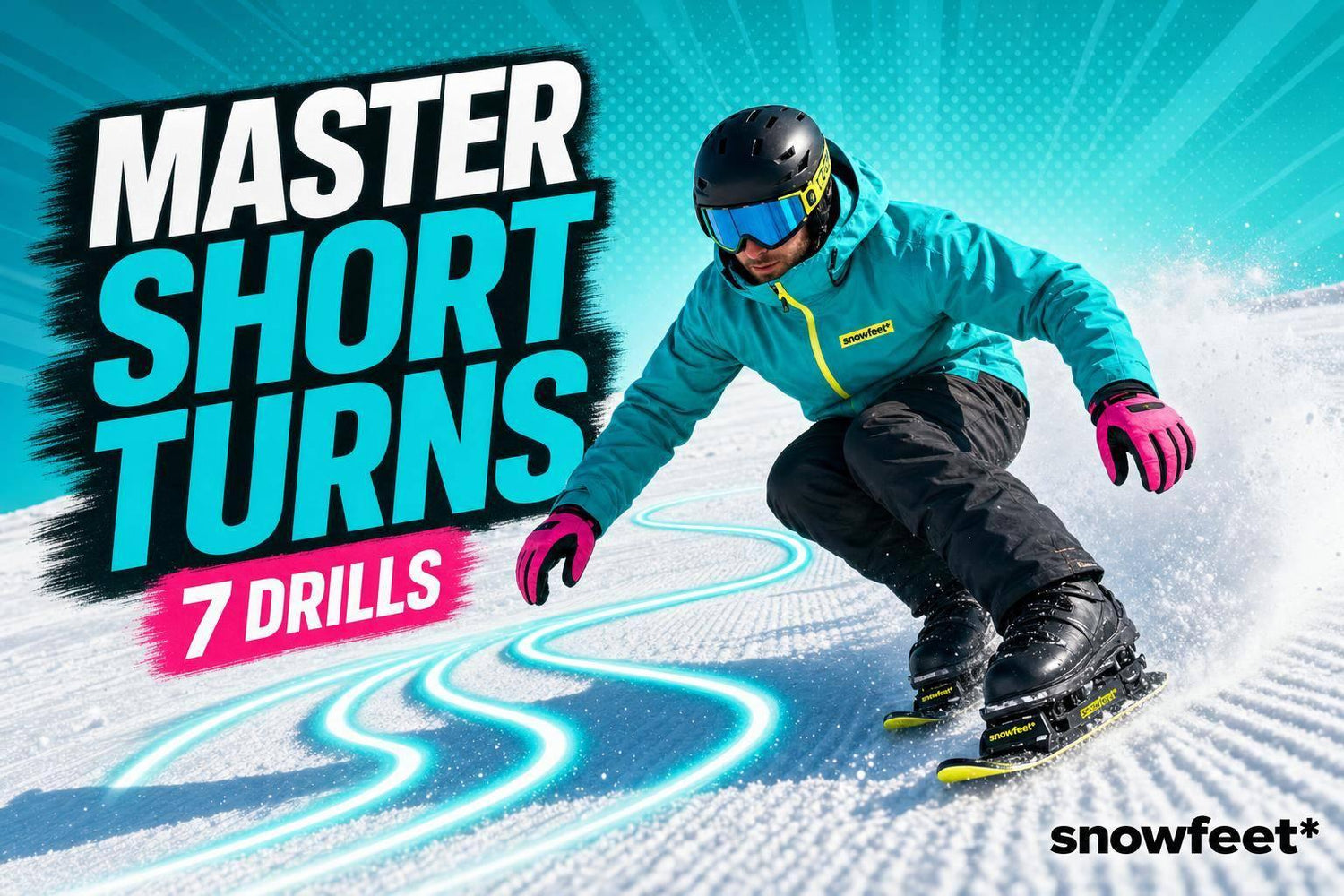
Short turns are one of those skiing skills that look simple from the chairlift and feel completely different on snow. When they click, you gain a new level of control in moguls, steeps, narrow trails, choppy snow, and changing conditions. When they don’t, turns become rushed, skiddy, upper-body heavy, and tiring.
In the video Master Short Turns: 7 Drills to Improve Skiing, a high-level instructor breaks down the most common reasons skiers struggle with short turns and shares the drills that helped him improve. What makes the lesson useful is that it goes beyond "turn quicker" or "stay forward." Instead, it isolates the mechanics that actually create a clean, snappy short turn: pressure management, leg rotation, upper-body stability, and early edge engagement.
This article turns those ideas into a structured guide. Rather than repeating the video, it adds context so you can understand why each drill works, what mistake it fixes, and how to practice it without getting overwhelmed.
Why Short Turns Are Harder Than They Look
Short turns demand more than fast feet. They require several skills to happen almost at once:
- A stable upper body
- Independent leg rotation
- Precise pressure changes from turn to turn
- Early engagement of the outside ski
- Timing that stays clean even as tempo increases
That combination is why many skiers can make medium-radius turns comfortably but fall apart when asked to shorten the turn shape.
The instructor identifies four recurring problems:
- Too much forward hinging at the waist
- Excessive upper-body rotation
- A wobbly torso and poor balance over the outside ski
- Not enough pressure or grip on the outside ski early in the turn
The drills target those flaws one by one.
sbb-itb-17ade95
Key Takeaways
- Start slow on easy terrain. Nearly every drill in the lesson becomes counterproductive if you rush it too early.
- Don’t confuse "forward" with bending at the waist. A strong, upright posture often creates better short turns than an aggressive-looking lean.
- Learn the heel-to-shin pressure shift. This transition is central to managing release and re-engagement between turns.
- Rotate the legs, not the whole body. Quick short turns come from the femurs turning in the hip sockets, while the torso stays quieter.
- Balance over the outside ski matters more than most skiers think. One-legged drills expose whether you truly own that ski.
- Keep the zipper line quiet and upright. It’s a simple visual cue for torso discipline and better alignment.
- Build edge earlier in the turn. Early edge angle gives you more control before the fall line, not after it.
- Blend carving and skidding, don’t choose one or the other. Strong short turns often start with grip and then add controlled smear.
- Increase difficulty gradually. Add speed, steepness, and tempo only after the movement pattern feels dependable.
- Video feedback helps. Several of these issues are easier to see than feel.
Drill 1: The Heel-Heavy Transition
What problem it solves
One major issue in short turns is staying too hinged forward through the entire arc. When that happens, the ski can feel overly grippy at the front, while the tails release too abruptly or wash out. It also makes it harder to release pressure smoothly at the end of the turn.
The first drill addresses this by changing where pressure lives under the foot as the turn finishes and the next one begins.
What to do
The movement pattern is:
- Finish the turn
- Let the knees move forward so pressure shifts more toward the heels
- Allow the skis to release and flatten
- Extend the legs forward and away from the body
- Feel pressure move back toward the shins as the new turn starts
The point is not to ski permanently in the backseat. It is to feel a temporary, intentional pressure shift that helps the skis release and then re-engage more effectively.
Why it works
Many skiers try to force short turns by driving the tips constantly. That can lock the ski into the old turn too long. A controlled heel-heavy moment at transition helps free the skis, then creates room to move back into shin pressure for the next turn.
This is a subtle but important distinction: good short turns are dynamic, not frozen in one stance.
Practice tip
Use wide, mellow turns first. The video emphasizes that this drill should begin on easy terrain with a slow tempo. That advice matters. If you attempt it on a steep run before you can feel the heel-to-shin shift, you’ll likely just end up backseat and defensive.
Drill 2: The 180-Degree Leg Rotation Sideslip
What problem it solves
The next issue is excessive upper-body rotation. Skiers often throw the shoulders and chest into each turn, which slows down the transition and makes short turns feel labor-intensive.
What to do
From a sideslip, rotate the skis underneath the body while keeping the torso much quieter. The skis turn significantly more than the hips, and the torso aims to remain oriented down the hill.
The instructor uses the image of the legs winding beneath a stable upper body, like stored energy.
Why it works
This drill teaches leg steering independence. In better short turns, the legs rotate beneath a stable core instead of dragging the whole body around. The primary rotators are not the shoulders; they’re the legs, especially the femurs turning in the hip sockets.
That’s a big conceptual upgrade for many intermediate skiers. If your shoulders initiate every turn, your legs never become quick and efficient.
What to feel
Focus on motion in:
- The ankles
- The knees
- Most importantly, the femurs in the hip sockets
If you feel like you’re "twisting your whole body", reset and reduce the speed.
Drill 3: Hip-Stable Short Turns
What problem it solves
Once you can isolate leg rotation in a static drill, the next step is to carry that discipline into actual short turns. Many skiers can perform a drill while standing still or side-slipping, then lose it as soon as speed enters the picture.
What to do
Make short turns on easy terrain while keeping the pelvis and torso quieter and more consistently facing down the hill. Pole position can help show whether the upper body is swinging around.
Why it works
This bridges the gap between isolated movement and skiing application. It reinforces a critical short-turn principle: the upper body provides stability while the lower body does the fast work.
The result is not just prettier skiing. It’s also more efficient. Less upper-body over-rotation means faster transitions, better rhythm, and less wasted energy.
Drill 4: One-Legged Short Turns
What problem it solves
The video then addresses a different but related issue: being too loose or unstable through the torso and not committing fully to the outside ski.
A skier can look busy and active yet still avoid true balance over the ski that matters most in the turn.
What to do
Practice short turns while standing primarily on the outside ski. To simplify the task, keep the inside ski tip in the snow while lifting its heel.
The instructor also recommends three practical cues:
- Press the toes down for better balance
- Leave the inside ski tip in contact with the snow
- Reuse the fore-aft pressure pattern from earlier drills
Why it works
One-legged skiing strips away compensation. If you rely on both skis equally or use your upper body to catch balance errors, this drill exposes it immediately.
It also teaches a key truth about short turns: real control comes from trusting and loading the outside ski early enough, not from scrambling after the fall line.
Important warning
This is one of the more demanding drills in the lesson. Keep the pitch easy, lower the speed, and don’t rush into high-tempo versions. Used well, it builds balance and discipline. Used too aggressively, it just creates survival skiing.
Drill 5: Hands-on-Hips "Hip Pedaling"
What problem it solves
Even skiers who reduce rotation can still have a torso that tips, wobbles, or collapses from side to side. The instructor uses the image of keeping the "zipper" upright to show better torso alignment.
What to do
Place your hands on your hips and make short turns while focusing on lateral pressure transfer from one outside ski to the next. The movement is described as pressing down over one hip, then the other, in a pedaling rhythm.
Why it works
This drill gives you clearer awareness of how pressure moves across the body. It also improves hip levelness and helps the skier sense whether the torso is staying organized over the legs.
A stable center doesn’t mean stiff. It means the body remains functional and stacked while pressure moves smoothly side to side.
Extra insight
This is also where video feedback becomes especially useful. Skiers often believe they are upright when they are actually folding or leaning more than they realize. A quick front-facing clip can reveal whether the "zipper" is truly stable.
Drill 6: Early Edge Angle Through Knee and Ankle Roll
What problem it solves
One of the more advanced problems discussed in the video is the inability to create enough grip high in the turn. If the ski only bites late, the top of the turn becomes a smear instead of a setup.
What to do
Finish the turn with a subtle heel-oriented release, then during transition, roll the ankles and knees down the hill to create edge angle earlier in the next turn.
The instructor explains that edge angle can be created not only by inclination or leaning, but also through how the leg is rotated and tipped.
Why it works
Early edge engagement changes the whole quality of the turn. Instead of waiting until the skis are already headed down the hill, you begin shaping the turn sooner. That improves line control and gives you more options in steeper or tighter terrain.
It also connects strongly to outside-ski pressure. The more edge angle you create early, the more skill you need in managing forward pressure so the ski remains usable rather than overly locked.
This is where technique starts to blend
A valuable idea in the video is that no skill exists alone. Better edge angle requires better pressure management. Better pressure management requires better balance. Better balance requires a quieter torso. Short turns are not one trick; they are an ecosystem.
Drill 7: Build the Short Turn from Carved Slalom Turns
What problem it solves
Many skiers think of short turns as mostly skidded. That often leads to turns that are defensive, abrupt, and disconnected from the snow. The final drill reframes the short turn as something you can build from carving.
What to do
Make several clean, slalom-style carved turns first. Then gradually blend in a small amount of rotation and controlled skid while keeping the torso disciplined and pressure moving forward enough to guide the ski.
The goal is not a pure carve and not a full pivot. It’s a blend.
Why it works
This may be the most useful conceptual drill in the whole lesson. It teaches that high-quality short turns often begin with structure and grip, then add just enough smear to control shape and speed.
The "banana track" idea in the video captures this well: the top of the turn leaves a cleaner track, then the ski begins to smudge more near and after the apex. That pattern suggests a turn with both control and adaptability.
For skiers used to either carving everything or skidding everything, this is a strong middle path.
The Real Theme of the Video: Short Turns Are About Timing, Not Tension
Although the lesson is framed around seven drills, the deeper message is about sequencing. The best short turns are not muscular or frantic. They are timed.
Notice how often the instruction returns to transitions:
- Heel to shin
- Release to re-engagement
- Stable torso to active legs
- Early edge before the apex
- Carve first, smear later
That sequencing matters more than trying to look aggressive. A skier who moves at the right time will often appear calmer and more controlled than someone putting in more effort.
For young adults, families, and recreational skiers who want a more fun and versatile way to ski tight terrain, that’s encouraging. Better short turns don’t require elite athleticism first. They require better movement patterns.
How to Practice These Drills Without Overloading Yourself
A common mistake in technical skiing improvement is trying to stack every cue at once. This video offers a lot, and that can be both helpful and overwhelming.
A smarter progression would look like this:
Day 1: Fix release and pressure flow
Start with:
- Heel-heavy transition
- Slow, wide turns
- Focus only on heel-to-shin pressure
Day 2: Quiet the upper body
Add:
- Sideslip leg rotation
- Hip-stable short turns
Ignore edge angle for now. Just separate the legs from the torso.
Day 3: Improve balance and outside-ski ownership
Work on:
- One-legged short turns
- Hands-on-hips hip pedaling
Day 4: Increase quality at the top of the turn
Then add:
- Early ankle and knee roll for edge angle
- Carve-to-short-turn blending drill
This kind of progression mirrors good coaching. It helps you build one layer at a time rather than turning every run into a mental checklist.
What Recreational Skiers Can Learn From the Friendly Competition
The video ends with a playful challenge between two strong skiers. The competition itself is lighthearted, but it reinforces something important: short turns can be judged by both quality and quantity, and those are not always the same thing.
Fast feet alone don’t guarantee good skiing. Neither does elegant form without usable tempo. Real performance sits somewhere in the balance between efficiency, rhythm, ski performance, and control.
For most skiers, that means the goal shouldn’t be "turn more times in 30 seconds." It should be:
- Can I maintain rhythm?
- Can I stay stable in my upper body?
- Can I pressure the outside ski earlier?
- Can I choose between more carve or more skid depending on terrain?
Those are the real markers of progress.
Conclusion: Better Short Turns Start with Better Fundamentals
The biggest value in this lesson is that it treats short turns as a technical skill set, not a vague style cue. The drills break the movement into trainable pieces:
- Pressure shifts under the feet
- Leg rotation independent of the torso
- Strong outside-ski balance
- Upright, disciplined upper-body posture
- Earlier edge engagement
- A smarter blend of carving and skidding
If you take one lesson from the video, let it be this: short turns improve fastest when you slow down enough to feel the mechanics. Most skiers try to force speed before they own the movements. This lesson argues for the opposite approach, and that’s what makes it practical.
Master those fundamentals on easy terrain, and short turns stop feeling like a survival move. They become a tool you can use almost anywhere on the mountain.
Source: "How to Short Turn | Best Tips to Unlock Expert Level Skiing" - Stomp It Tutorials, YouTube, Dec 4, 2025 - https://www.youtube.com/watch?v=NzyaqhzvrI4











Zanechať komentár
Táto lokalita je chránená testom reCAPTCHA a vzťahujú sa na ňu pravidlá ochrany súkromia a podmienky poskytovania služby hCaptcha.