



















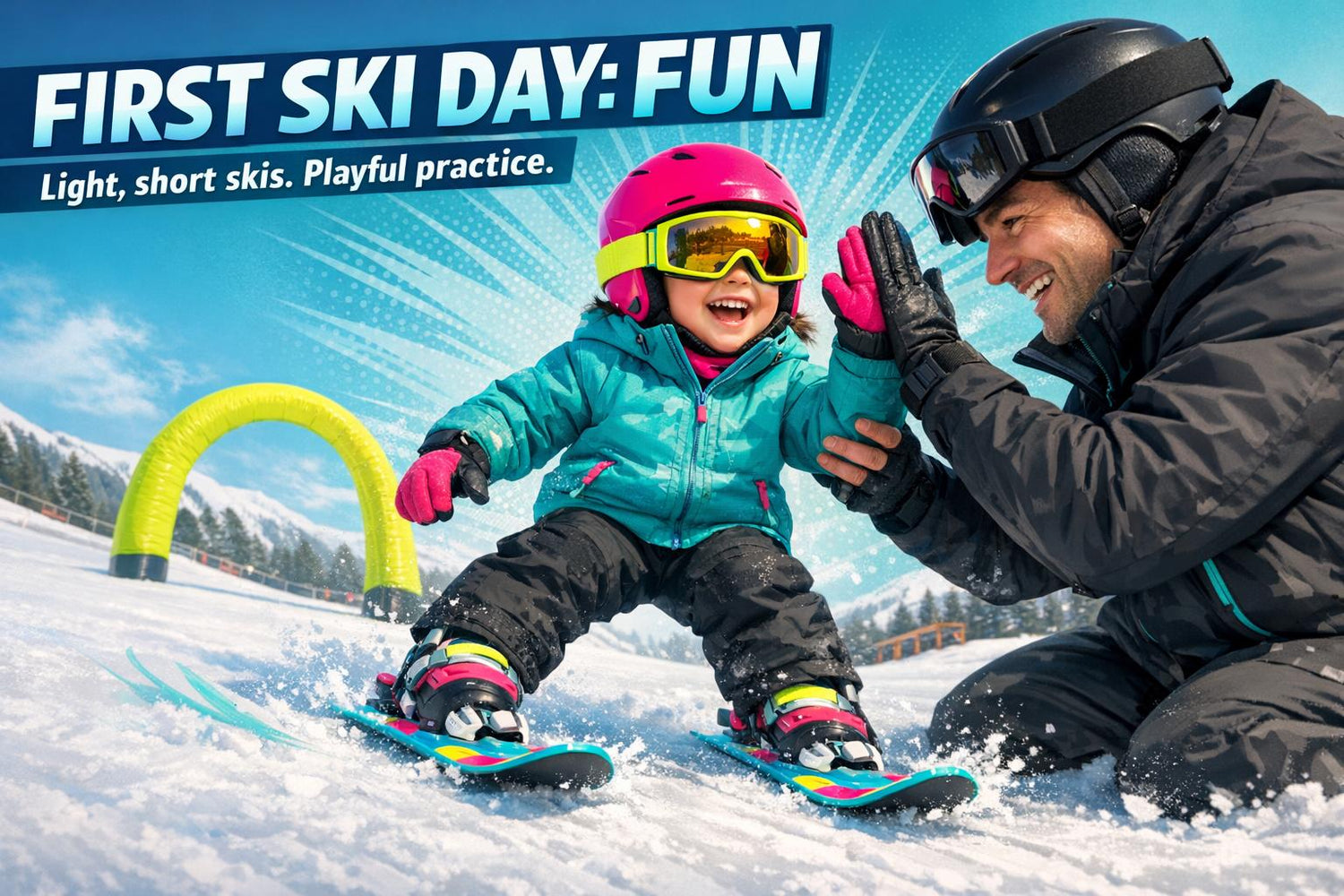
Taking your child skiing for the first time? It doesn’t have to be overwhelming - or scary. Here’s the secret: preparation, the right gear, and keeping things fun (not perfect). Kids often feel nervous about falling, going too fast, or handling clunky equipment. The solution? Lightweight, easy-to-use gear like Snowfeet Skiskates (44 cm) or Snowfeet MINI KIDS, which are designed specifically for little skiers. These make skiing feel more natural and less intimidating for beginners.
Here’s how to set your child up for success:
- Gear matters: Choose shorter, lighter equipment that’s easier to control. Snowfeet gear clips onto regular boots, skipping the hassle of stiff ski boots.
- Practice at home: Let your child try the gear indoors or on flat snow to build confidence.
- Dress smart: Use three layers - base, mid, and outer - and ensure everything fits comfortably, including helmets and goggles.
- Start slow: Begin on flat terrain before moving to gentle slopes. Use games like “Red Light, Green Light” to teach stopping and turning.
- Take breaks: Watch for signs of fatigue and keep the day short and positive.
End the day by celebrating small wins (like learning to stop) and enjoying hot cocoa. The goal isn’t perfection - it’s sparking a love for skiing. With the right approach and gear, your child will be eager to hit the slopes again. :)
How to Teach Your Kids To Ski | 3 Tips from a Mountain Ski Dad
Common First Ski Day Fears in Children
It’s perfectly normal for kids to feel nervous before hitting the slopes for the first time. The mountain can seem huge, the boots feel awkward, and there’s a lot of newness to take in. Most of these first-day jitters fall into a few common fears: falling down, going too fast, getting separated from parents, and just feeling wobbly on new equipment.
The fear of falling is probably the most common. It helps to reassure kids that falling is just part of learning. Kristina from All About Momma puts it beautifully:
"Tell them that being brave is doing something that scares you and ask if they can be brave."
Speed anxiety is another big one. It’s all about control - or the lack of it. Even gentle slopes can feel intimidating when they don’t know how to stop. Teaching kids the basics, like forming a wedge with their skis to brake, gives them a reliable tool to manage their speed. Once they feel they have a “brake,” their confidence grows. But these fears can be made worse by equipment that feels clunky or hard to handle, which brings us to why traditional ski gear can sometimes overwhelm kids.
Why Standard Ski Equipment Can Feel Overwhelming for Kids
For many kids, the equipment itself is the scariest part of skiing. Traditional skis, often scaled-down versions of adult models, can feel heavy and hard to control. And then there are the boots - stiff, uncomfortable, and tricky to walk in. For small children, even getting to the lift in those boots can feel like a workout.
Christian Aigner, a CSIA Level 4 Ski Instructor, sums it up well: "Ski boots are undoubtedly the most important piece of equipment you'll ski with, and ski boots can make or break your trip." If the boots don’t fit right or feel too rigid, kids might lose confidence before they even step onto the snow.
This is where gear like Snowfeet* Skiskates (44 cm) and Snowfeet MINI KIDS comes in. These are lightweight, compact, and designed specifically for little skiers. Instead of struggling with heavy, oversized equipment, kids get gear that works with them, not against them. It’s a game-changer for building confidence.
How Shorter, Lighter Gear Helps Kids Feel More in Control
The length and weight of skis make a huge difference in how easy they are to control. Traditional skis, which are often much longer than a child’s height, can make turning and stopping feel like a full-body effort. Shorter gear, on the other hand, responds faster. When a child shifts their weight, the skis react immediately, giving them a sense of control.
Snowfeet* products, like the 44 cm Skiskates, are designed to keep things simple. Their compact size helps maintain a lower center of gravity, so kids aren’t constantly struggling to stay balanced. With less effort spent on just staying upright, they have more energy to actually enjoy the run. And that’s the goal, right? Turning a first ski day from something they’re just trying to get through into something they can’t wait to do again. Choosing the right gear can make all the difference in creating a positive experience on the slopes.
Getting Ready at Home Before the Slopes
A little preparation at home can go a long way toward making your ski day stress-free. These steps will help your child feel confident and ready to hit the slopes.
Getting Your Child Used to Snowfeet* Gear at Home

One of the great things about Snowfeet MINI KIDS and Skiskates (44 cm) is that they clip right onto regular snow boots - no clunky ski boots required. This means your child can get familiar with them without leaving the house.
Let your child try clipping the adjustable bindings at home. Practicing on a carpeted surface is a good way to get used to the lightweight, short design that makes turning and stopping feel natural. Amy Whitley, Founding Editor of Pit Stops for Kids, puts it perfectly:
"As soon as you're used to the snub-nosed short length of the 'ski', you get the feel of it!"
While practicing, point out the metal turning edges and heel brake, so they understand how these features help with control.
How to Dress Your Child for a Cold Day on the Slopes
The right clothing can make or break a ski day. The goal? Keep your child warm, dry, and comfortable in temperatures ranging from 20°F to 35°F.
Stick to three layers:
- Base layer: Choose a moisture-wicking fabric (skip cotton).
- Mid-layer: Something warm, like fleece or wool.
- Outer layer: A waterproof and windproof shell.
When it comes to socks, one good-quality pair will do the trick. Wearing two pairs can cause bunching and cut off circulation, which is a surefire way to get cold feet. It’s also a good idea to do a full dress rehearsal at home. Have your child wear everything, including the boots they’ll use with their Snowfeet* gear, to check for any uncomfortable spots. Don’t forget to ensure their helmet and goggles fit properly. For younger kids, mittens are a better option than gloves - they’re easier to handle, and fingers stay warmer when grouped together.
Simple Exercises to Build Balance and Confidence
A few easy exercises at home can help your child feel more balanced and steady before they hit the snow. Start with simple activities like balancing on one foot or stepping side-to-side while wearing their Snowfeet* gear on carpet. These movements mimic what they’ll do when turning on the slopes.
If you have access to a backyard or park with packed snow, take advantage of it. A flat, open area is perfect for letting your child take a few gliding steps to get a feel for how the skiskates move. This low-pressure practice helps build their confidence and sets the stage for a fun day on the mountain. With a little preparation, your child will be ready to glide into their skiing adventure with ease!
Picking the Right Gear for First-Time Young Skiers
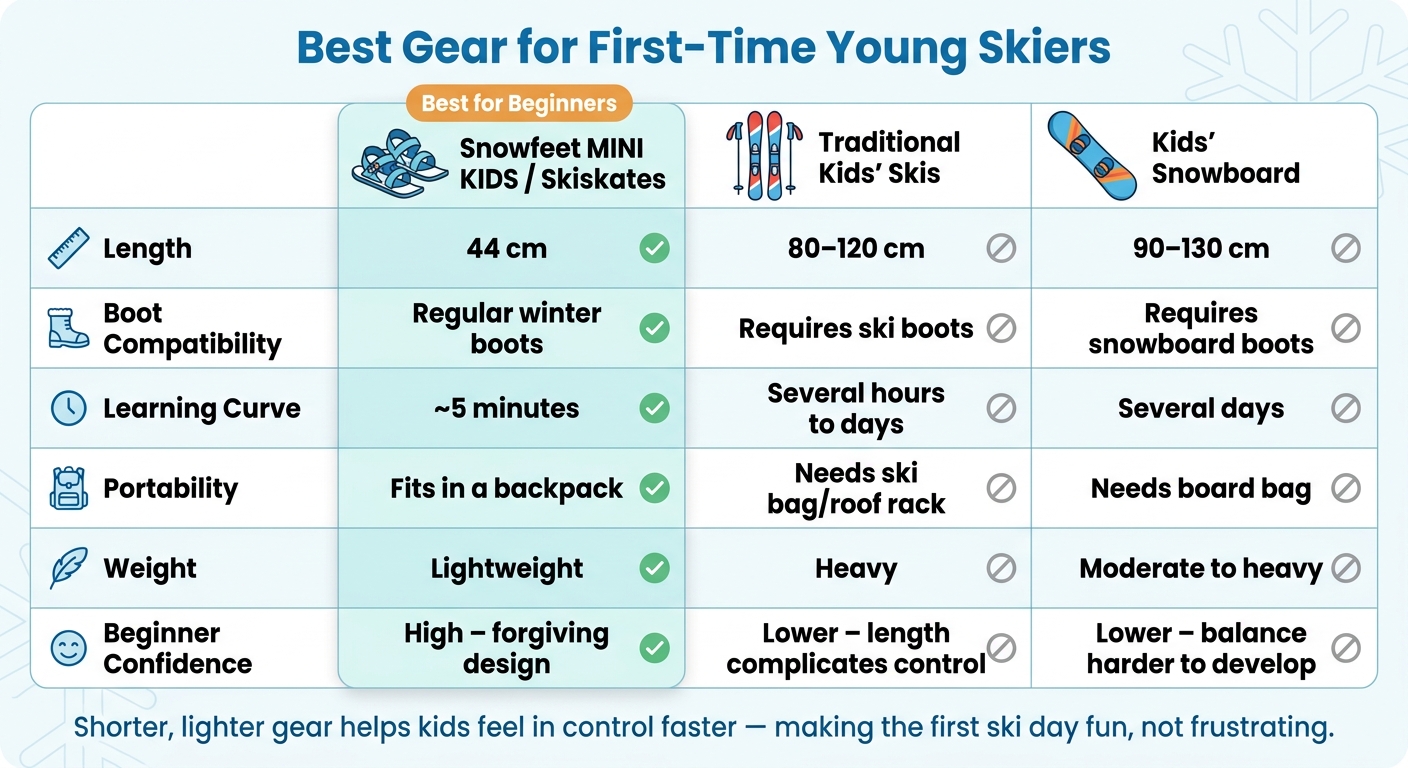
Snowfeet vs Traditional Skis vs Snowboard: Best Gear for First-Time Young Skiers
Standard skis can feel like a challenge for kids - they're heavy, stiff, and tricky to control. Starting with the right equipment can make all the difference, turning those first steps on the snow into a fun and stress-free experience. Beginner-friendly gear, like Snowfeet*, helps kids ease into skiing without the usual struggles.
What Makes Snowfeet Skiskates and MINI KIDS Great for Beginners
One big reason Snowfeet Skiskates (44 cm) and Snowfeet MINI KIDS work so well for beginners is how easy they are to learn. The movement is similar to ice skating or inline skating, so kids often pick it up in just 5 minutes. No long adjustment period. No feeling like they’re out of control.
Another bonus? These are lightweight and small enough to fit in a backpack - no need for bulky ski bags. That means less physical effort, which often translates to more confidence on the slopes.
Here’s a quick comparison of Snowfeet and traditional options:
| Feature | Snowfeet MINI KIDS / Skiskates | Traditional Skis | Snowboard |
|---|---|---|---|
| Length | 44 cm | 80–120 cm (kids) | 90–130 cm (kids) |
| Boot Compatibility | Regular winter boots | Requires ski boots | Requires snowboard boots |
| Learning Curve | About 5 minutes | Several hours to days | Several days |
| Portability | Fits in a backpack | Needs a ski bag/roof rack | Needs a board bag |
| Weight | Lightweight | Heavy | Moderate to heavy |
| Confidence for Beginners | High – forgiving design | Lower – added length complicates control | Lower – balance is harder to develop |
While brands like Rossignol and K2 make excellent kids' skis, even their smallest models require dedicated ski boots and take longer to master. For first-timers, that added complexity can quickly turn excitement into frustration.
Knowing these benefits reinforces the importance of properly fitting the gear before hitting the slopes.
How to Set Up and Fit Snowfeet* Gear Correctly
If you’re sold on Snowfeet gear, proper setup is key. Snowfeet MINI KIDS and Skiskates feature adjustable bindings that strap right onto your child's regular winter boots. This makes sizing simple and eliminates the need for specialty boots.
Here’s how to get the perfect fit:
- Start with the toe strap: Secure the binding over the toe of the boot first. Then, snugly fasten the heel strap to keep the boot from wiggling side to side.
- Check alignment: Make sure the boot sits centered on the skiskate. This ensures the heel brake and edges work as they should.
- Test on flat ground: Before heading to the slopes, let your child shuffle and glide on a flat surface (like a parking lot or near a magic carpet). If anything feels loose or uncomfortable, adjust the straps.
Once everything feels solid, your child will be ready to take on gentle slopes with confidence and ease.
sbb-itb-17ade95
How to Run a Fun and Safe First Day on the Slopes
Getting started with skiing should be a gradual, enjoyable experience. With properly fitted gear, you can plan a day that’s both fun and safe for your child. Start with flat terrain before moving on to gentle slopes.
Starting Flat Before Moving to Small Slopes
Begin on flat ground so your child can get a feel for their Snowfeet Skiskates or MINI KIDS. Encourage them to shuffle and glide, taking advantage of Snowfeet’s design that helps kids find their balance quickly.
Once they can confidently glide and stop on flat terrain, move on to the easiest beginner slope you can find. Look for one with a magic carpet lift instead of a chairlift to keep things simple. This gradual progression helps your child build confidence without feeling overwhelmed.
Using Games to Teach Turning and Stopping
Turn learning into play! Games make it easier for kids to pick up basic skills like stopping and turning. For example:
- "Red Light, Green Light": Call out "Red Light!" to encourage your child to stop quickly. This game helps them practice braking in a fun way.
- "Follow the Leader": Lead your child down a gentle path with wide turns, and have them copy your movements. It’s a simple way to teach coordination without overloading them with technique.
"The most important first skill kids should learn is how to slow down and stop." - Trent Woolsey, Founder, Launch Pad Gear
For slowing down, teach them the "pizza slice" technique. Have them bring their ski tips together and push their heels apart. This visual cue often clicks faster than a detailed explanation.
As you introduce these skills, keep an eye on how your child is doing physically and emotionally.
Knowing When to Take a Break
Kids tire out faster than adults on the slopes, so plan for regular breaks. A quick stop for water, hot chocolate, or a snack can work wonders. Watch for signs of fatigue - more frequent falls, a quieter demeanor, or sudden whining could mean it’s time to rest.
"Be mindful that a whiny/cranky child may just be overwhelmed at not being super awesome at skiing or having fallen more times than they'd like. Be willing to go with the flow." - Kat Dinsmore, Publisher, Macaroni KID
If the day isn’t going as planned, it’s okay to wrap things up early. A short, positive first experience can set the tone for many happy days on the slopes. By keeping things fun and manageable, your child will have a great introduction to skiing with Snowfeet* and look forward to coming back for more.
How to End the Day on a High Note
Wrapping up a day on the slopes the right way can make all the difference. A strong finish not only leaves everyone smiling but also builds excitement for the next trip. Take a moment to celebrate progress and reflect on the day together - it’s a great way to reinforce learning and create lasting memories.
Praising Small Wins Along the Way
Don’t wait for big milestones to celebrate - acknowledge the little victories, too. Whether it’s a clean stop, a confident glide on their Snowfeet MINI KIDS, or simply standing back up after a tumble, these small moments deserve recognition.
"Praise effort over perfection. Celebrate every controlled slide, wedge stop, or successful balance shift." - Trent Woolsey, Launch Pad Gear
Carrying a few stickers in your pocket can make these moments even more special. Hand one out right after your child masters a new skill, and consider ending the day with a fun "First Ski Day Certificate." Pair that with a warm treat like hot cocoa, and you’ve just created a memory they’ll treasure - and one that will make them eager to hit the slopes again.
"Simple things like a hot cocoa break, stickers for trying new skills, or a 'ski certificate' at the end of the day can go a long way in keeping them engaged and excited." - Trent Woolsey, Launch Pad Gear
After celebrating on the mountain, keep the good vibes going by reviewing both the day’s highlights and the condition of your gear.
Checking Gear and Talking About the Day After Skiing
Snowfeet* gear is designed to build confidence, and a quick post-ski review can reinforce that progress. Take a few minutes to check your equipment. Make sure the straps and bindings are still secure, the edges are sharp, and the base is properly waxed - these details can make a big difference, especially on icy or slushy terrain.
"Tune and test your gear! Go to the experts, make sure that you have your equipment set up correctly, the edges are sharp and the base is waxed." - Peter Novom, Manager of the Ski & Ride Program at Okemo Mountain
Finally, talk to your child about their experience. Ask if their feet were warm or if their boots felt comfortable. Addressing any little issues now ensures smoother runs next time. Plus, it’s a great opportunity to relive their favorite moments from the day - and to remind them how far they’ve come.
Conclusion: Setting Kids Up for a Lifetime on the Slopes
A successful first ski day doesn’t just happen - it’s all about preparation. The right gear, a positive mindset, and a plan focused on your child’s enjoyment are key. Lightweight, easy-to-handle options like Snowfeet MINI KIDS take away the bulk and intimidation of traditional skis, giving young beginners confidence and control from their very first glide. This thoughtful approach helps create a positive first experience on the slopes.
Beyond the gear, managing expectations is just as important. Progress isn’t always a straight line, and that’s okay. By following these practical tips, you can create a safe and supportive environment for your child to learn and grow.
"Everyone knows their own kiddo and knows when to push them a bit outside their comfort zone, but making it stressful or scary for them isn't going to make them happy to join you on the mountain." - Kat Dinsmore, Publisher, Macaroni KID Harrisburg and West Shore
Keep the focus on fun rather than flawless technique, and let your child set the pace. When you prioritize enjoyment over perfection, you reinforce the benefits of beginner-friendly gear like Snowfeet MINI KIDS. The real win? Creating a safe, fun experience that makes kids excited to come back for more. After all, it’s not about nailing every run - it’s about sparking a love for skiing that lasts a lifetime.
FAQs
What age is best for a first ski day?
The perfect age to introduce kids to skiing is usually between 3 and 5 years old. At this age, most children have developed enough coordination to pick up basic skiing skills while still having fun without getting too worn out. Using lightweight, beginner-friendly gear like Snowfeet Skiskates or Snowfeet MINI KIDS can make a big difference. These easy-to-handle options help boost confidence and keep the experience enjoyable and stress-free.
Can my child use Snowfeet with regular winter boots?
Yes, Snowfeet Mini models and Kids Skis work perfectly with regular winter boots. They're made to fit children’s shoe sizes, going up to size 6 US for Mini Kids. These lightweight, user-friendly options attach easily to standard winter footwear. This makes them a great way for kids to enjoy the slopes and build confidence - no need for traditional ski gear!
Should we book a lesson or teach them ourselves?
Professional lessons are a great option for beginners, especially kids, to learn the basics safely and correctly. That said, Snowfeet products are lightweight and simple to use, which makes them perfect for building confidence and improving control on your own. You can start practicing at your own speed and then take lessons later to refine advanced techniques. For those feeling a bit unsure, starting with a lesson can help establish a strong foundation before venturing out solo.











Zanechať komentár
Táto lokalita je chránená testom reCAPTCHA a vzťahujú sa na ňu pravidlá ochrany súkromia a podmienky poskytovania služby hCaptcha.