







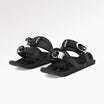












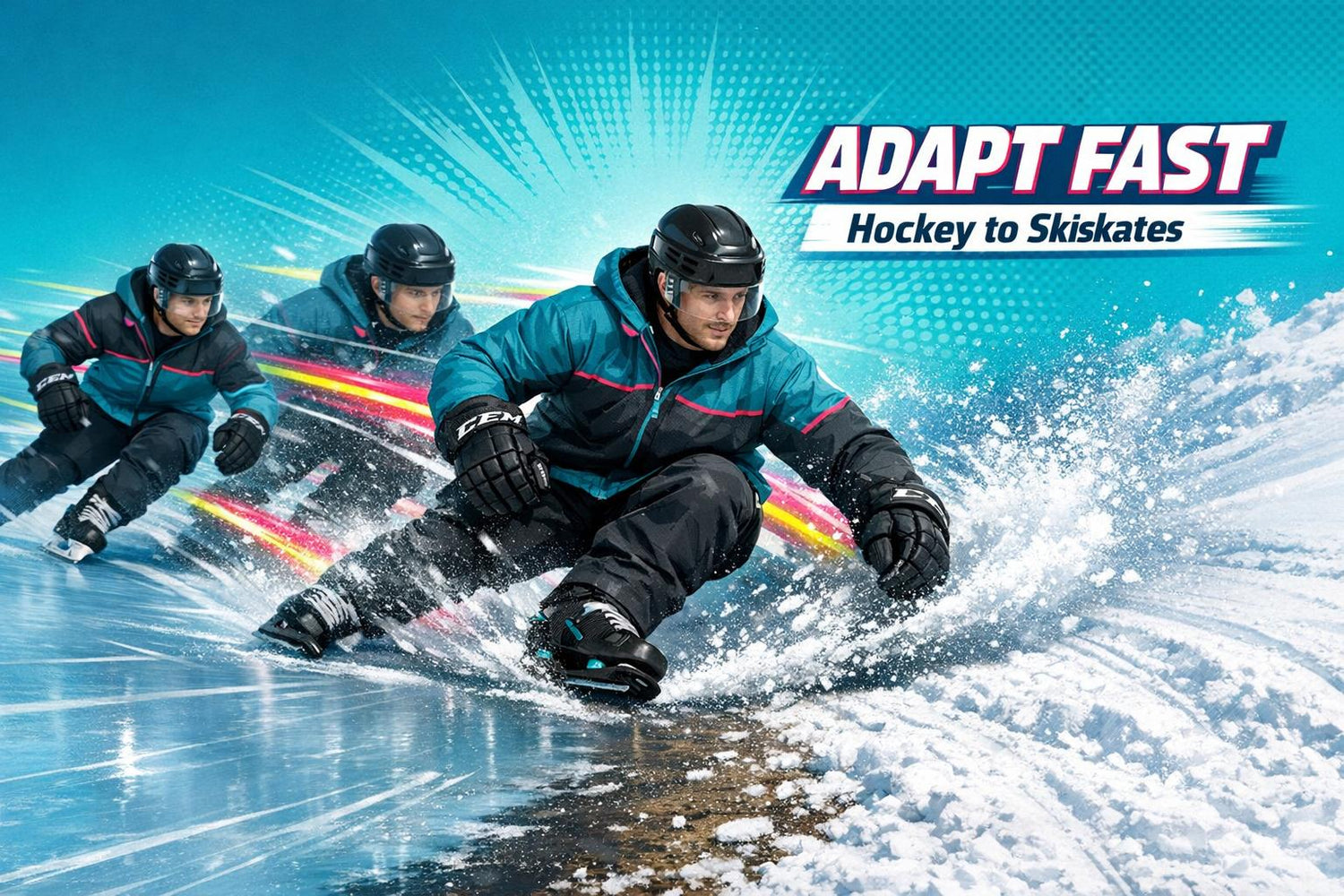
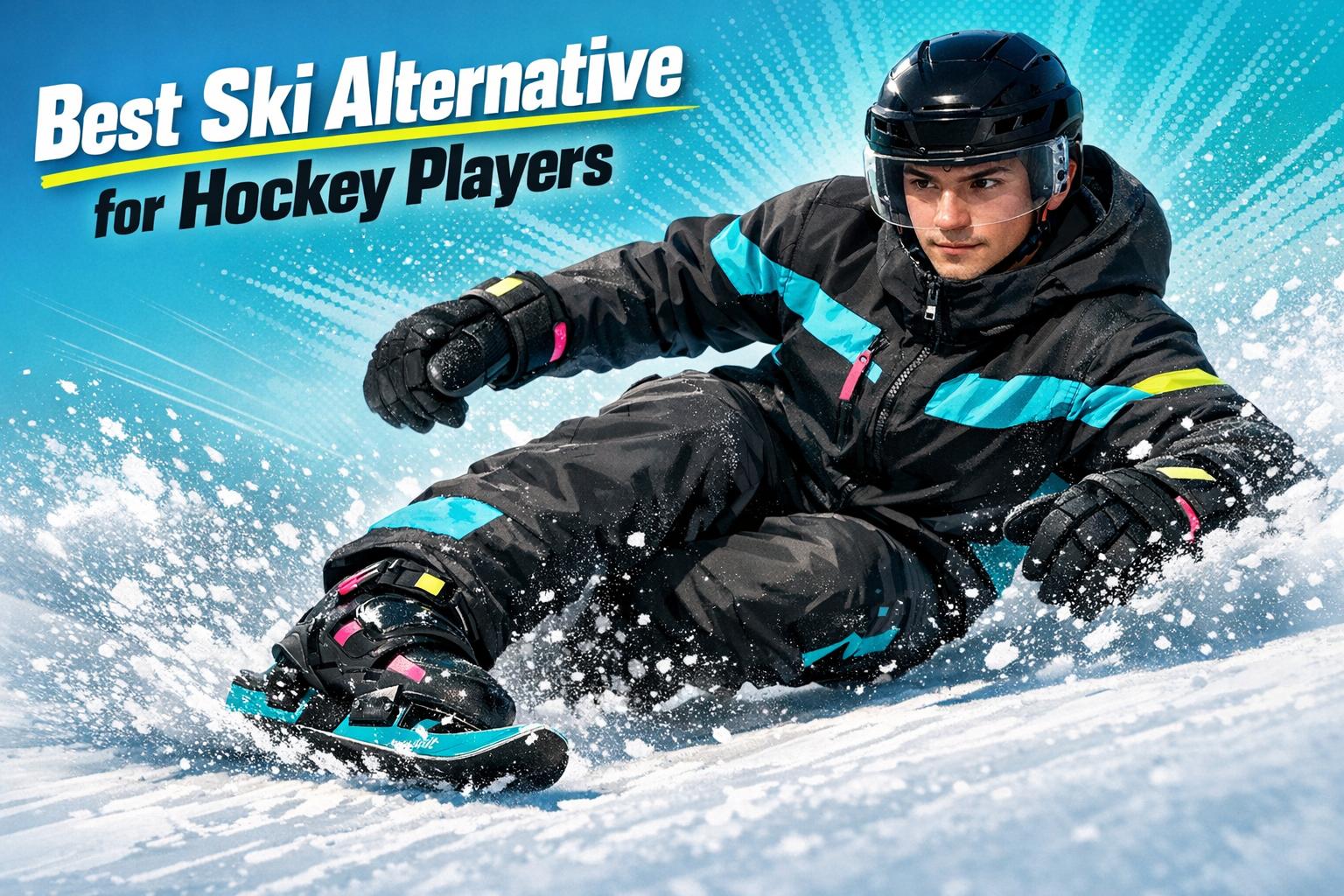
Hockey players often struggle with long skis or snowboards because the movements and gear feel so different from what they're used to. Enter Snowfeet* Skiskates - compact snow skates that feel more like hockey skates on snow. At just 17.3 inches long, they let you use the same low stance, quick footwork, and edge control you’ve mastered on the ice. Plus, they work with boots you probably already own.
Here’s why they’re a perfect fit for hockey players:
- Short Length: Easier to control, just like your hockey skates.
- Familiar Stance: Stay low and balanced, no awkward upright postures.
- Edge Control: Steel edges mimic hockey stops and turns.
- Boot Compatibility: Use snowboard or ski boots - no stiff alpine boots required.
- Quick Learning Curve: Most players feel comfortable after just a few runs.
If skiing or snowboarding has felt awkward, Snowfeet* Skiskates could be the answer. They’re designed to align with the skills and instincts you already have, making the transition from ice to snow much smoother.
Hockey players, THIS was made for you 🔥😎
Why Traditional Skis and Snowboards Feel Wrong for Hockey Players
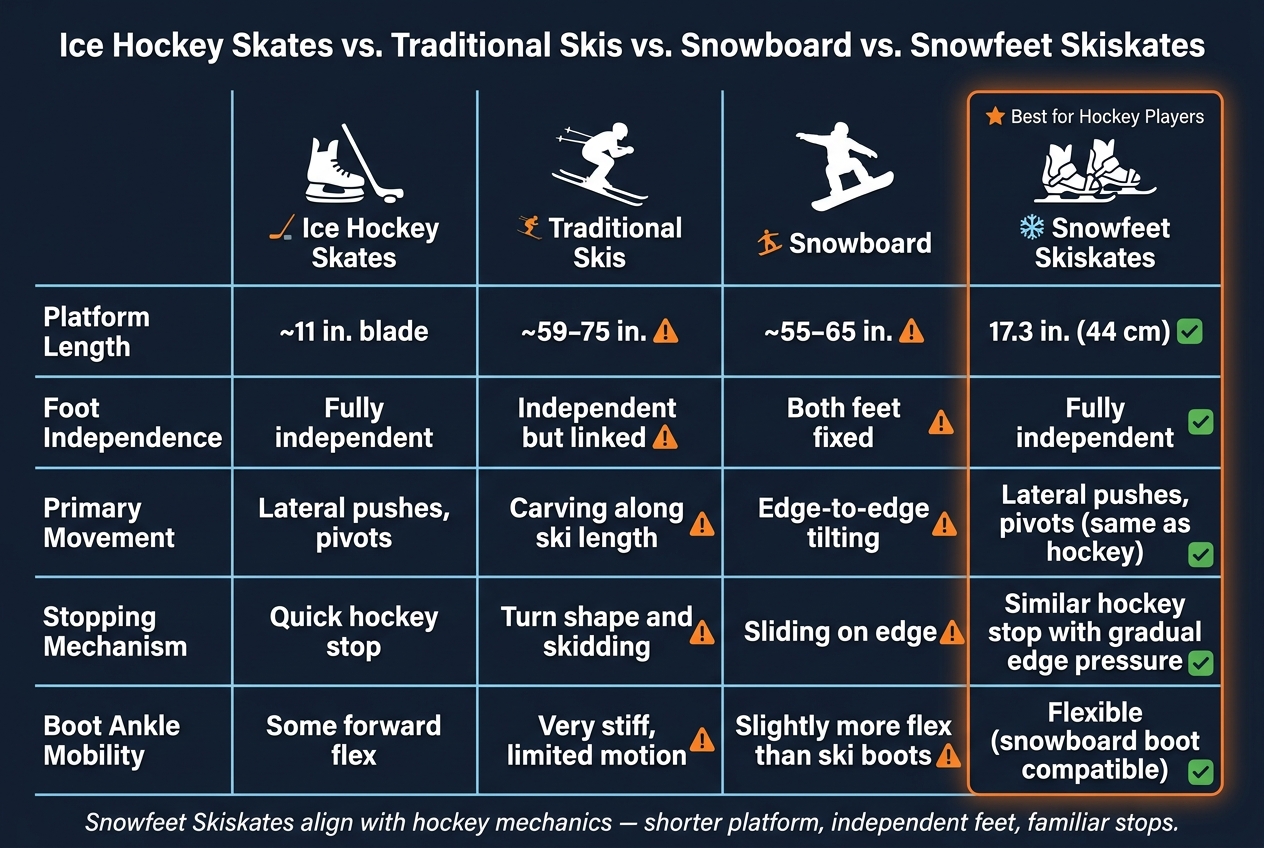
Hockey Skates vs. Traditional Skis vs. Snowfeet Skiskates: Key Differences
If you’re a hockey player trying skiing or snowboarding for the first time, chances are you’ve felt more frustration than fun. It’s not because you’re uncoordinated or lack skill - it’s the gear. Traditional equipment forces movements that go against everything your hockey training has drilled into you. Let’s break down why this happens.
How Traditional Skis Clash with Hockey Mechanics
Hockey players thrive in a low, forward-leaning stance - knees bent, hips forward, and constant lateral motion. But traditional skis demand something entirely different: an upright posture, feet locked parallel, and a downhill orientation. Oh, and those skis? They’re five to six times longer than your hockey skate blades, measuring about 150–190 cm.
This drastic difference in platform length changes everything. On the ice, your edge transitions are fast, independent, and driven by your ankles. But on skis, edge changes require slow, coordinated movements involving your hips and knees. The quick lateral moves you rely on in hockey just don’t work on long skis - they’re not built to respond that way.
Snowboards? Even trickier. With both feet fixed to a single board at an angle, you lose the neutral, forward-facing stance that hockey players are so familiar with. Plus, the lack of independent leg movement feels downright unstable for someone used to complete control over each foot.
The Steep Learning Curve of Standard Ski Gear
Now let’s talk about ski boots. They’re rigid and limit ankle movement - essentially the opposite of what hockey players are used to. For someone who relies on subtle ankle adjustments for balance and quick edge changes, it’s like strapping bricks to your feet.
And then there’s ski school. The typical progression doesn’t mesh with how hockey players naturally move. Forget crossovers, tight turns, or explosive starts - none of that is part of the beginner curriculum. Even highly skilled hockey players often need several days just to feel somewhat comfortable on skis, despite their athletic background.
Why Hockey Skills Don’t Translate to Long Skis
Hockey skating is all about creating your own speed through lateral pushes, C-cuts, and crossovers. You accelerate when you want and stop on a dime. But on long skis or snowboards, speed comes from gravity, and control means steering wide, sweeping arcs - not the sharp stops you’re used to.
This mismatch can be jarring. Try a hockey stop on skis, and you’ll likely catch an edge or skid out. That natural lateral push? It doesn’t translate to skis designed for straight-line carving. It’s no wonder hockey players often feel like they’re fighting the equipment rather than working with it.
These differences highlight why alternative options, like Snowfeet* Skiskates, can make such a difference. They’re designed to bridge the gap, aligning more closely with hockey mechanics.
| Aspect | Ice Hockey Skates | Traditional Skis | Snowboard |
|---|---|---|---|
| Platform length | ~11 in. blade | ~59–75 in. | ~55–65 in. |
| Foot independence | Fully independent | Independent but linked | Both feet fixed |
| Primary movement | Lateral pushes, pivots | Carving along ski length | Edge-to-edge tilting |
| Stopping mechanism | Quick hockey stop | Turn shape and skidding | Sliding on edge |
| Boot ankle mobility | Some forward flex | Very stiff, limited motion | Slightly more flex than ski boots |
How Hockey Skills Line Up with Snowfeet* Skiskates
Snowfeet* Skiskates take the best of your hockey skills and translate them seamlessly to the slopes. Thanks to the striking similarities in movement mechanics, hockey players will feel right at home on these compact skiskates. From stance and balance to edge control and quick footwork, here’s how your time on the ice sets you up for success with Snowfeet* Skiskates.
Stance and Balance: Instantly Familiar
Hockey players are used to a low, athletic stance - knees bent, weight forward, and a slight lean. That same posture is key when using Snowfeet* Skiskates. Measuring just 44 cm (about 17 inches) in length, these skiskates keep you centered and balanced, with your ankles, knees, and hips naturally flexed in a "ready position." It’s like lining up for a faceoff, but on snow instead of ice. Unlike traditional skis, which often require a more upright posture, Snowfeet* Skiskates reward the deep, flexible stance you’ve already mastered.
Edge Control and Stopping: A Familiar Feel
Snowfeet* Skiskates feature steel edges, similar to those on skis or snowboards, but their shorter length makes edge control feel much like using a hockey blade. To engage the edges, simply roll your ankles and tip your knees inward - just like initiating a hockey stop. The main difference? Snow has more give than ice, so you’ll want to apply edge pressure more gradually. Once you adjust to the softer surface, stopping and turning with Snowfeet* Skiskates will feel second nature, perfectly complementing your hockey instincts.
Quick Footwork and Tight Turns: A Natural Fit
If you’re used to explosive footwork on the ice, you’ll love how Snowfeet* Skiskates let you move. Their lightweight, compact design makes sharp pivots, quick strides, and lateral shuffles effortless. You can accelerate with short, choppy steps, carve tight turns using crossovers, and pivot on a dime - all without worrying about long skis getting in the way. The hip rotations and quick adjustments you’ve perfected on the blue line work just as well in the snow. The only tweak? Adjusting for the added surface friction of snow, which most hockey players pick up within a run or two.
| Skill | On Ice (Hockey) | On Snowfeet* Skiskates |
|---|---|---|
| Stance | Low, knees/hips flexed, weight forward | Same low, athletic stance |
| Edge Use | Inside/outside edges for turns and stops | Steel edges activated with similar motion |
| Stopping | Hockey stop – rotate feet, dig edges | Similar stop with gradual edge pressure |
| Tight Turns | Crossovers, pivots over 10–16 ft radius | Same moves; short length aids tight arcs |
| Quick Footwork | Choppy strides, lateral shuffles | Compact design enables identical movements |
Snowfeet* Skiskates make the transition from ice to snow surprisingly smooth, letting hockey players tap into their muscle memory and enjoy a whole new way to play.
sbb-itb-17ade95
How Snowfeet* Skiskates Fix the Problems Hockey Players Face
Traditional skis often clash with the instincts hockey players rely on. Snowfeet* Skiskates, however, offer a fresh approach, solving many of the challenges hockey players face when transitioning to the slopes.
Short and Light: Easy to Control from Day One
At just 44 cm (17 inches) long, Snowfeet* Skiskates are much smaller than standard adult skis. This compact size means they respond instantly to even the slightest shifts in your hips or knees. With no bulky tail or wide tip to wrestle with, turning becomes almost effortless. Plus, their lightweight design helps reduce fatigue, so you can spend more time on the slopes without feeling drained. Many hockey players find that the usual struggle with oversized ski gear disappears after just a couple of runs.
This streamlined design also means you can use your own boots, adding a layer of comfort and familiarity right from the start.
Works with the Boots You Already Have
One of the biggest hurdles for hockey players is dealing with traditional alpine ski boots. These boots are stiff, heavily forward-leaning, and designed for long skis, which can feel awkward and uncomfortable, especially for someone used to the freedom of a hockey skate. Snowfeet* Skiskates solve this by being compatible with snowboard boots or ski boots, depending on the binding model.
Snowboard boots, in particular, offer a great balance of support and flexibility, closely mimicking the feel of hockey skates. And since snowboard boots are easy to find at most U.S. ski resorts, you won’t need to shell out for a whole new setup. This compatibility removes one of the biggest barriers for hockey players looking to hit the slopes.
But Snowfeet* Skiskates don’t just stop at comfort - they also change how you move on the snow.
More Freedom on the Slopes
Long skis often force sweeping, wide turns that feel unnatural to hockey players. Snowfeet* Skiskates, on the other hand, allow for quick sidesteps, pivots, and shuffles, much like the movements you’d make on the ice. Their compact design makes it easier to navigate crowded slopes and execute sharp stops or tight turns - movements that hockey players already excel at. This added freedom makes the experience more engaging, letting you bring your hockey skills to the snow.
| Problem with Traditional Ski Gear | How Snowfeet* Skiskates Fix It |
|---|---|
| Long lever slows edge control | 44 cm length provides an instant, skate-like response |
| Stiff alpine boots restrict ankle movement | Compatible with flexible snowboard or ski boots |
| Unnatural wide stance for hockey players | Short length supports a narrow, hockey-ready stance |
| Slow, sweeping turns required | Compact design enables tight pivots and quick shifts |
| Heavy gear causes early fatigue | Lightweight build reduces leg strain on early runs |
Practical Tips for Hockey Players Getting Started with Snowfeet* Skiskates
Snowfeet* Skiskates are designed to make your move from ice to snow feel natural, thanks to their compact build and flexible bindings. They’re a great option for hockey players looking to bring their skills to the slopes.
Adjusting Your Body Position for Snow
Stick to your hockey stance - knees bent, hips low, and weight centered - but add a slight forward lean to handle the resistance of snow. If you’re feeling wobbly, try staggering your feet a bit to create a sturdier base. You can even use your hockey stop skills to help plant and pivot on the 44 cm Skiskates. Once you’re comfortable, you can explore which model best suits your style.
Picking the Right Snowfeet* Model
For hockey players, the 44 cm Skiskates (starting at $460) are a standout choice. These skates feature a wood core that delivers a firm, responsive feel, much like a hockey blade. They’re also lightweight and easy to carry around.
| Feature | 44 cm Skiskates | 50 cm Skiskates |
|---|---|---|
| Ideal For | Slopes & Agility | Value & Stability |
| Core Material | Wood Core | Fiberglass Core |
| Length | 44 cm (17.3 in) | 50 cm (19.7 in) |
| Price | $460 | $299 |
| Binding Options | Ski or Snowboard Boots | Ski or Snowboard Boots |
For bindings, snowboard boot options are ideal for hockey players. They offer flexibility and allow for natural ankle movement, similar to hockey skates, and fit US sizes 6–14.5. If you prefer ski boot bindings, they provide more stability but can feel a bit restrictive at first. These are available in US sizes 4.5–14.5.
Once you’ve got the right model and bindings, it’s time to hit the snow.
Starting Safe and Building Up Gradually
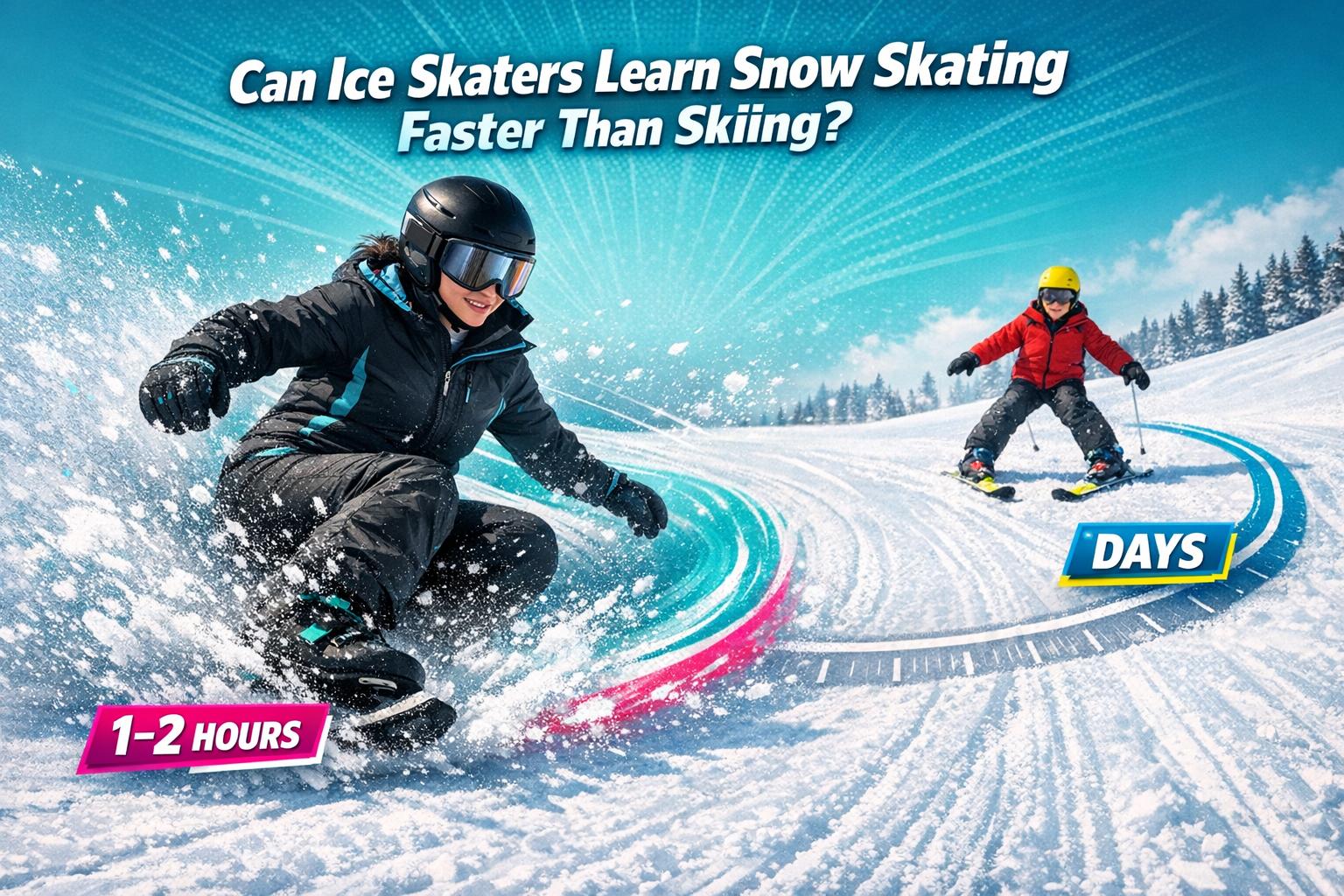
Start on groomed, packed trails. These surfaces are consistent and provide reliable feedback as you get used to the Skiskates. Avoid deep powder or icy terrain initially. Take a couple of runs on easy slopes to build confidence before tackling steeper areas. Most people find they adapt quickly - often within just one session.
Conclusion: Why Snowfeet* Skiskates Are the Right Fit for Hockey Players
Snowfeet* Skiskates are a game-changer for hockey players. Unlike skis or snowboards that demand you learn entirely new techniques, these skiskates let you bring your low stance, sharp edge control, and quick footwork from the ice straight to the snow.
At just 17 inches (44 cm) long, they’re designed for balance and control right out of the gate. That means whether you're carving turns or adjusting your stance, you’re building on the skills you’ve already mastered on the ice. It’s like skating downhill, but on snow - a smooth transition for anyone who's found long skis or snowboards awkward to handle.
And here’s the kicker: you can use your own boots. No rentals. No wasted time. Just strap in and hit the slopes. Whether you’re a weekend league player looking for a new winter thrill or a competitive skater wanting to test your agility in a fresh way, Snowfeet* Skiskates have you covered.
Curious to see how they can transform your winter adventures? Check out the Snowfeet* Skiskates lineup and find the perfect fit for your boots and style.
FAQs
Can I use my own boots with Snowfeet* Skiskates?
Yes, Snowfeet Skiskates* work with a range of boots, including snowboard boots. This setup gives you more control and comfort while skiskating. Just strap on your favorite boots, and you're ready to glide smoothly across the snow.
Are Snowfeet* Skiskates allowed at most ski resorts?
Yes, most ski resorts in the U.S. allow the use of Snowfeet* Skiskates. These are particularly ideal for groomed slopes, where they work incredibly well. Plus, with their metal ski edges, Snowfeet* Skiskates comply with standard safety regulations, which is why they’re generally welcomed at ski resorts.
What’s the safest terrain to learn on with Skiskates?
The best place to start learning Skiskates is on moderate slopes. These provide just the right amount of challenge without being overwhelming. On these slopes, you can work on maintaining a low, athletic stance while practicing balance and control. Take it slow, focus on your movements, and build your confidence before tackling steeper terrain.











Zanechať komentár
Táto lokalita je chránená testom reCAPTCHA a vzťahujú sa na ňu pravidlá ochrany súkromia a podmienky poskytovania služby hCaptcha.