



















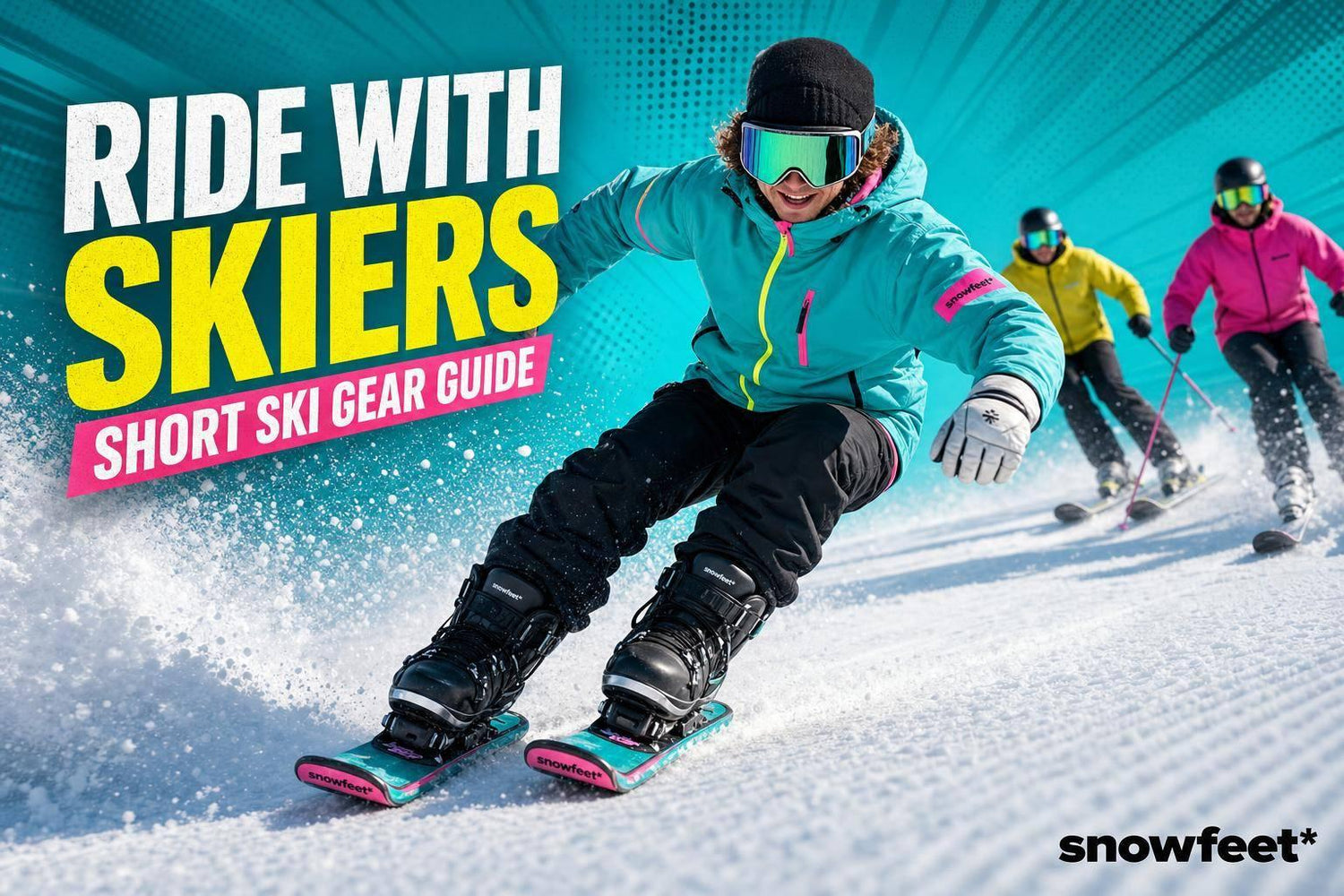
You don’t need full rental skis to ski with your friends. If you snowboard and want a simple ski-day setup, the short answer is this: pick based on your boots, your pace, and how much stability you want.
Here’s the whole article in one pass:
- 44 cm Skiskates: best for park laps, short runs, and the smallest pack size
- 50 cm PRO Ski Skates: best low-cost pick at $299 for casual blue-run cruising in snowboard boots
- 65 cm Skiblades: best all-around choice for most snowboarders
- 99 cm Skiblades: best if you want more grip and a calmer feel on longer groomers
- 120 cm Short Skis: best if your skier friends ride faster and you want the closest thing to skis
A few numbers matter fast:
- Full rental skis are often 150–180 cm (59–71 in)
- Rentals can cost $50–$70 per day
- Snowfeet* models run from $299 to $950
- Most snowboard-boot-compatible options fit U.S. sizes 6–14.5
If I had to make this simple, I’d say:
- Keep snowboard boots and want easy, short resort laps? Go 50 cm
- Want the best mix of fun and control? Go 65 cm
- Want more calm on steeper blue runs and longer laps? Go 99 cm
- Want the most ski-like ride? Go 120 cm
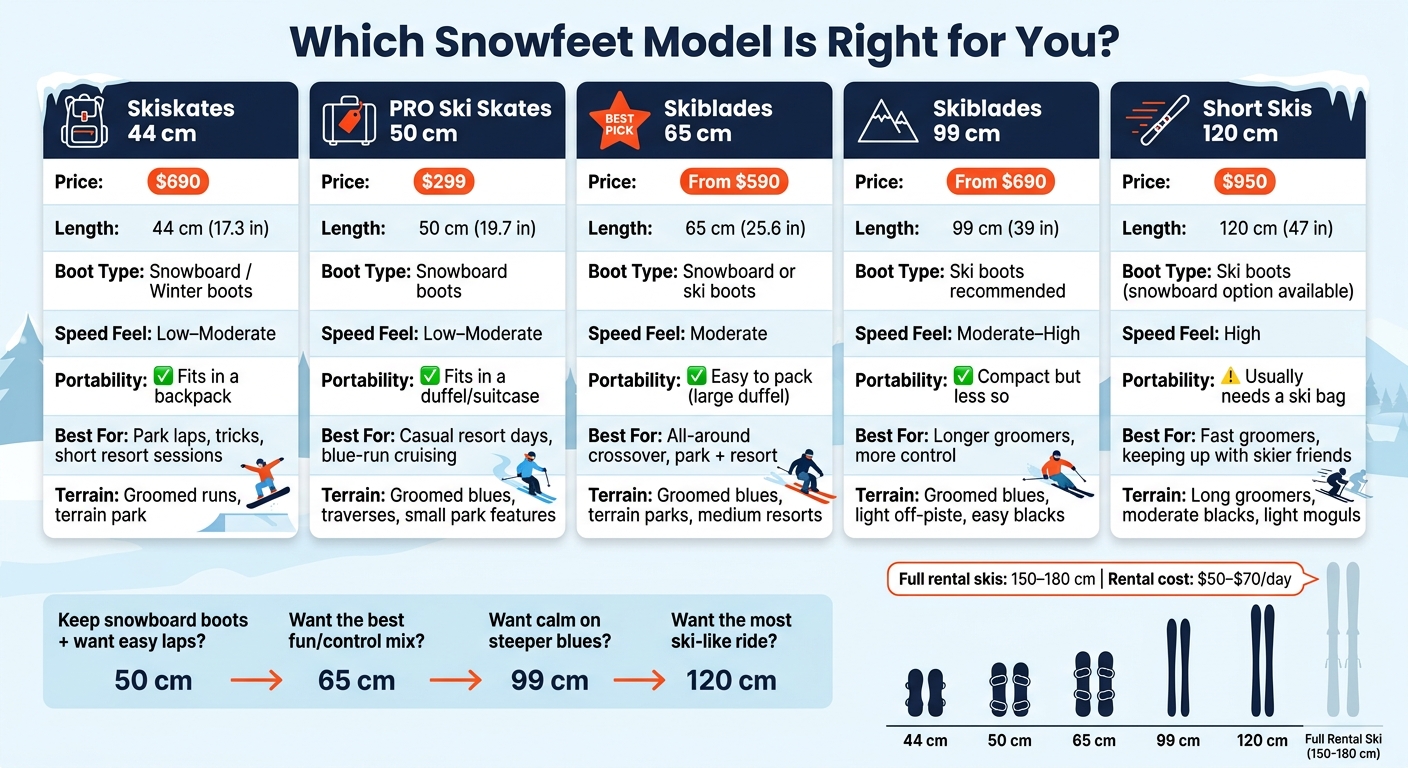
Snowfeet Short Ski & Skiblade Comparison Chart for Snowboarders
Snowboarder tries Snowfeet* | Which Snowfeet* Short Ski is the Best? | Snowblades 44, 65, 99 Review
Quick Comparison
| Model | Best For | Boot Type | Speed Feel | Pack Size | Price |
|---|---|---|---|---|---|
| 44 cm Skiskates | Park, tricks, short laps | Snowboard/winter boots | Low–moderate | Fits in a backpack | $690 |
| 50 cm PRO | Casual resort days | Snowboard boots | Low–moderate | Fits in a duffel/suitcase | $299 |
| 65 cm Skiblades | Most riders, park + resort | Snowboard or ski boots | Moderate | Easy to pack | From $590 |
| 99 cm Skiblades | Longer groomers, more control | Snowboard or ski boots* | Moderate–high | Less compact | From $690 |
| 120 cm Short Skis | Fast groomers, most ski-like feel | Ski boots* | High | Usually needs ski bag | $950 |
*Depends on binding setup.
So, if you ride with skiers a few times each season, short skis or skiblades can make more sense than renting long skis every time. You give up some top-end grip and powder float, but you get a setup that feels less awkward, packs smaller, and works better with the gear you already own.
If you want a quick visual before you buy, these videos can help:
1. Snowfeet* Skiskates 44 cm
Price: $690 | Length: 44 cm (17.3 in) | Boot fit: US men's sizes 6–14.5
The 44 cm Skiskates are the shortest pick in the Snowfeet* lineup. They’re built to feel a lot like skating on snow, which makes them a fun match for casual laps and park sessions. If you're mixing ski and snowboard days, this is the most compact crossover choice Snowfeet* makes. It’s a simple way to stay in the mix on short, laid-back resort days without jumping into full skis.
Boot Compatibility
These work with snowboard boots and firm-soled winter boots. The tool-free bindings fit U.S. men's sizes 6–14.5.
Learning Curve
If you’ve played hockey or spent time on skates, you may feel at home fast. Snowfeet* says adaptation can take as little as 5 minutes. The big thing to watch is fore-aft balance. Start on an easy groomer, get your stance dialed, then move to steeper terrain.
Speed Stability and Terrain
This 44 cm length leans hard into quick turns and easy movement, not top-end speed. On groomed blue runs, short resort laps, and terrain parks, it shines. Push the speed too far, though, and the short edge contact gives you less grip and less stability than longer options.
Best uses:
- Groomed runs
- Terrain park features
- Short resort sessions
Not the best fit for powder, icy steeps, or long, fast carving.
Portability
At 44 cm, they fit inside a standard backpack. That’s about as easy as it gets for travel on a ski trip.
Here’s how the 44 cm compares with the 50 cm PRO and a 99 cm short ski option:
| Feature | Snowfeet* 44 cm Skiskates | Snowfeet* PRO 50 cm | 99 cm Short Skis |
|---|---|---|---|
| Boot Compatibility | Snowboard + firm-soled winter boots | Snowboard + some winter boots | Typically ski boots only |
| Learning Curve | Very easy for skaters/hockey players | Very easy | Easier for skiers than first-timers |
| Speed Stability | Low - best at moderate speeds | Slightly better | High - carving-focused |
| Portability | Fits in a backpack | Still backpack-friendly | Needs a larger bag or car |
If you want a bit more stability but still want snowboard-boot compatibility, the 50 cm PRO is the next step up.
2. Snowfeet* PRO Ski Skates 50 cm
Price: $299 | Length: 50 cm (19.7 in) | Boot fit: Most soft snowboard boots
The PRO 50 cm hits a nice middle ground for snowboarders. You get more control than the 44 cm model, but you don’t have to jump all the way to ski-only gear.
Its reinforced base and metal edges help it grip better on firm snow. So if you want to ride groomed resort laps with ski friends and don’t want to switch to full skis, this is the pick. Compared with the 44 cm version, the 50 cm feels calmer on hardpack and easier to trust on blue runs.
Boot Compatibility
It uses the same snowboard-boot setup as the 44 cm model, just on a more stable platform. The bindings feel familiar if you already ride a snowboard, and they stay locked in well with soft boots.
Learning Curve
That extra length helps a lot. Turn initiation feels calmer, and the ride feels more planted, so you’re less likely to get tossed by sudden mistakes while finding your balance.
Most experienced snowboarders can make controlled turns on greens and easy blues in half a day to a full day. After a few days, many can keep up on normal blue runs.
Speed Stability and Terrain
The PRO 50 cm gives you more edge bite on firm groomers and better stability on flat cat tracks than the 44 cm. In plain terms: it holds a cleaner line when you’re crossing the hill, so you lose less speed and less elevation.
Still, let’s keep it honest. This model is built for moderate resort speeds, not fast carving on long black runs. It shines on:
- Groomed blues
- Traverses
- Short steeps
- Small park features
Here’s how the three shortest options compare when you’re trying to hang with skiers:
| Feature | 44 cm Skiskates | 50 cm PRO Ski Skates | 65 cm Skiblades |
|---|---|---|---|
| Edge Grip on Groomers | Light–moderate; very nimble but can wash out on firm snow at speed | Moderate–strong; more bite than 44 cm | Strong; closest to a real ski feel |
| Traverses & Cat Tracks | Challenging; easiest to pivot but hardest to hold a straight traverse | Manageable; holds an edge across the hill better than 44 cm | Easiest; best glide and directional stability |
| Confidence on Blue–Steeper Runs | Best for greens and mellow blues | Solid on typical blues and short steeper pitches | Highest confidence; handles occasional black pitches |
| Best for | Skate-style / Freestyle | Hybrid / Balanced resort riding | Ski-like / Versatile |
Portability
At 50 cm, it still fits in a suitcase or duffel. That makes it easy to bring on a flight or toss in the car for a road trip.
If you want more edge hold and a feel that’s closer to skis, the 65 cm Skiblades are the next move.
3. Snowfeet* Skiblades 65 cm
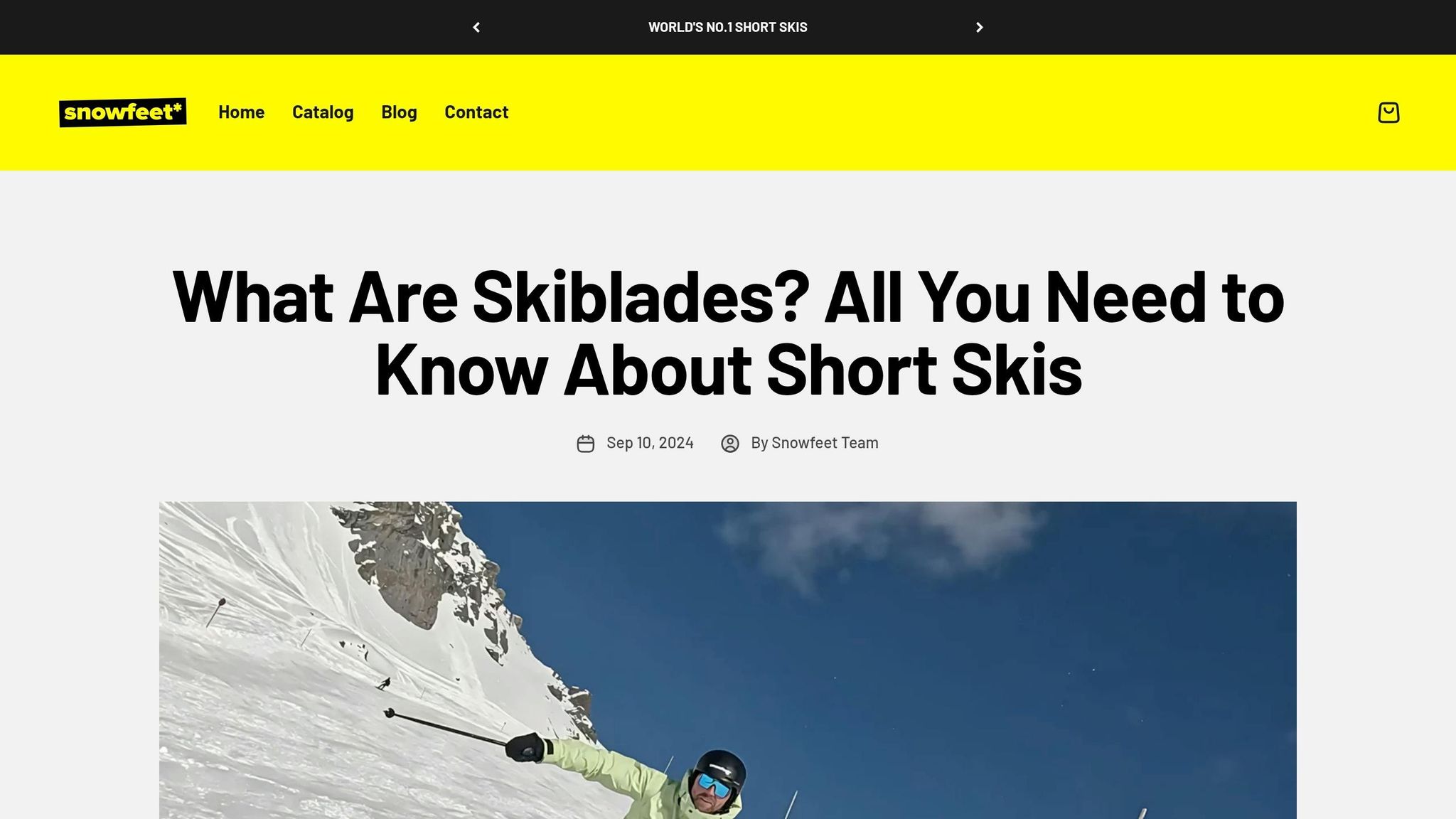
Price: From $590 | Length: 65 cm (25.6 in) | Boot fit: Snowboard boots (US sizes 6–14.5) or ski boots
The 65 cm Skiblades sit right in the sweet spot of the Snowfeet* lineup. They’re more steady than the 44 cm and 50 cm models, but still short enough to feel easygoing on groomed blue runs and laid-back resort days. If you want something that feels a lot closer to a ski day, without jumping all the way to full skis, this is where things start to click.
Boot Compatibility
These work with snowboard boots in U.S. sizes 6 to 14.5, and they also fit ski boots. Snowboard boots are the simplest option. Ski boots give you tighter, more exact edge control.
Learning Curve
Most intermediate snowboarders get the hang of 65 cm Skiblades within a run or two on green or easy blue terrain. The short length helps a lot. Turns start fast, and if you get a little off balance, recovery feels less punishing.
The biggest shift is pretty simple: you’ll be facing downhill and moving each leg on its own. For most riders, that adjustment comes faster than learning full skis.
Speed Stability and Terrain
The 65 cm length works best at moderate resort speeds on groomers and in terrain parks. It’s not built for bombing long black runs. On groomed blues, they feel quick, lively, and easy to move around.
That said, once you get onto long, steep sections or very firm snow, they start to feel a bit less planted. In those spots, they won’t feel as steady as the 99 cm or 120 cm models.
Portability
At 65 cm, they’re short enough to fit in a large duffel bag or suitcase. That alone is a big win. Carrying them around is much easier than hauling full skis through the parking lot, lodge, or airport. Nice and simple :)
Use this quick comparison to find the mix of quick handling and stability that fits your style.
| Feature | 65 cm Skiblades | 99 cm Skiblades | 120 cm Short Skis |
|---|---|---|---|
| Carving Feel | Quick and agile; fun for short carves but less stable at higher speeds | Balanced edge grip; smooth carving on blues and easy blacks | Most stable; closest to traditional skis |
| Park Suitability | Excellent for spins, butters, and quick jib approaches | Great for jumps and landings; still very park-friendly | Moderate; better for jump lines than tight rail features |
| Comfort on Longer Runs | Good for short to medium runs; more active balance required | Strong all-around comfort for half- to full-day resort riding | Best for long runs and all-day carving sessions |
If you want more stability and better comfort for longer days, the 99 cm model is the next step up.
sbb-itb-17ade95
4. Snowfeet* Skiblades 99 cm
Price: From $690 | Length: 99 cm (39 in) | Boot fit: Snowboard boots or ski boots, depending on binding setup
If the 65 cm version feels a bit too loose or toy-like, the 99 cm gives you more control without going all the way to full skis. You give up a little portability, sure, but you get better edge hold and a calmer feel once you pick up speed.
Boot Compatibility
Check the binding setup before you buy. If you ride in snowboard boots, go with soft-boot bindings. If you use ski boots, pick the ski binding setup. Simple, but worth double-checking so you don’t end up with the wrong match.
Learning Curve
That extra length helps a lot on groomers. The ride feels smoother, less twitchy, and a bit more forgiving. You also get more time to react on longer runs, which is nice when the slope gets busy or your legs start talking back :)
Speed Stability and Terrain
The 99 cm feels more planted than the 65 cm. It works best on groomed blue runs and easier black runs, where that added length helps the ski hold its line better.
The twin-tip shape also makes it a good fit for park laps, spins, and small to medium jumps. So if you want something that still feels fun and loose, but not too loose, this size hits a nice middle ground.
If you want even more stability for longer all-day runs, the 120 cm Short Skis are the next step.
5. Snowfeet* Short Skis 120 cm
Price: $950 | Length: 120 cm (47 in) | Boot fit: Ski boots (snowboard boot binding option available)
At 120 cm, this is the most ski-like Snowfeet* pick for snowboarders who want more speed, grip, and control on groomers.
If you’re trying to keep up with skier friends on blue runs and moderate black groomers, this is the Snowfeet* model that gets you closest to that feel. And if the 99 cm version still feels a bit loose, this is the next move.
Boot Compatibility
This model is built mainly for ski boots and alpine bindings. The snowboard-boot setup is there, but it makes more sense for laid-back resort days than for pushing hard.
Learning Curve
This works best for snowboarders who already link clean turns and want the most stable short-ski feel.
The good news? They’re still much shorter than full-length adult all-mountain skis. So getting into turns feels easier and less intimidating than hopping straight onto standard skis. That’s a big deal if long skis have ever felt like too much plank and not enough fun :)
Speed Stability and Terrain
On groomers, it tracks cleanly and feels planted. It also deals well with afternoon chop and stays steady on blue runs and easy black terrain.
It can also handle light moguls and trees, where the shorter turn radius helps you move around without feeling stuck on rails.
That said, deep powder and steep ice still lean toward long skis. And if your day is all about tight park tricks, the shorter Snowfeet* models make more sense.
Use the table below to match length to riding style, then move into the pros-and-cons breakdown.
Comparison Table: All Five Lengths at a Glance
| 44 cm | 50 cm | 65 cm | 99 cm | 120 cm | |
|---|---|---|---|---|---|
| Best for | Park laps, quick turns | Casual resort riding | All-around crossover riding | Stable groomers and longer runs | Fastest, most ski-like option |
| Best boot type | Snowboard/winter boots | Snowboard/winter boots | Snowboard/winter boots | Ski boots | Ski boots (snowboard option available) |
| Terrain focus | Small hills, parks, tricks | Small hills, parks | Parks, small–medium resorts | Groomed blues, light off-piste | Long groomers, moderate blacks |
| Speed comfort zone | Low–moderate | Low–moderate | Moderate | Moderate–high | High |
| Travel friendliness | ✅ Fits in a bag | ✅ Fits in a bag | ✅ Easy to pack | ✅ Compact | ⚠️ Usually needs a ski bag |
Pros and Cons by Riding Style
Pick the model based on how you ride: resort laps, park laps, travel, or faster all-day groomers. This makes it a lot easier to land on the right setup for your day on snow.
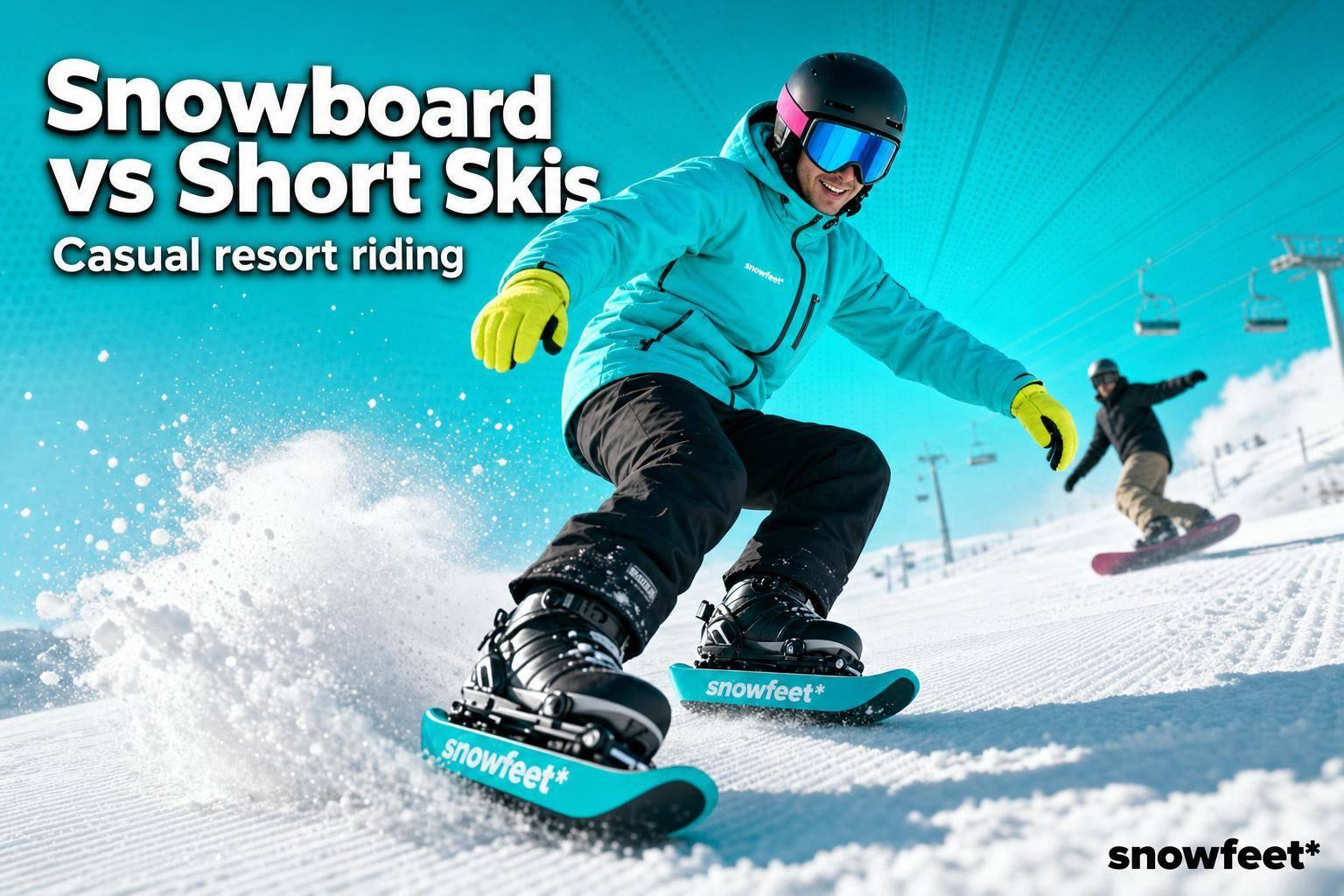
Casual resort riders will usually do best with the 65 cm Skiblades. They’re forgiving, easy to learn, and feel more like skis for laid-back all-day resort riding. The 44 cm and 50 cm models work better for short, casual laps than full resort days.
If your day is more playful than cruisy, the best pick changes.
Park-focused riders should look at the 44 cm Skiskates or 65 cm Skiblades. The 44 cm feels the most skate-like. It’s easy to spin and works well for jibbing. The 65 cm is the better park-and-resort mix, with enough tail for more stable landings and smoother transitions.
Travelers and minimalist packers have a pretty clear answer: the 44 cm or 50 cm models. They pack the smallest. The 65 cm can still fit in a larger bag, but the 99 cm and 120 cm models will usually need a ski bag.
If speed matters more than packing light, longer skis start to make more sense.
Advanced riders who want to keep up with skier friends on groomed resort days should head straight to the 120 cm Short Skis. It’s the shortest Snowfeet* model that still feels calm on faster groomers. Full-length skis still do better on true speed days, though. The 99 cm sits in a nice middle spot if you want something shorter without giving up too much control.
| Product | Best Rider Profile | Biggest Advantage | Biggest Drawback | Boot Setup |
|---|---|---|---|---|
| Skiskates 44 cm | Park riders, casual short-lappers | Ultra-portable and easy to spin | Less stable at speed | Snowboard or ski boots |
| PRO Ski Skates 50 cm | Casual resort riders | More edge control than 44 cm | Limited on steeper or icier terrain | Snowboard boots |
| Skiblades 65 cm | All-around crossover, park + resort | Quick learning curve, versatile terrain | Less stable than 99–120 cm at speed | Snowboard or ski boots |
| Skiblades 99 cm | Advanced casual riders, longer laps | Real carving feel on choppy snow | Less compact; usually needs ski boots | Ski boots recommended |
| Short Skis 120 cm | Speed-focused, advanced riders | Most ski-like stability and edge hold | Least portable; needs a ski bag | Ski boots |
Which One Should You Get?
Start with three things: boots, speed, and how easy you want them to carry. That cuts through the noise fast and gets you to the right Snowfeet* length for your ski days.
If you want to keep your snowboard boots, go with the Skiskates 44 cm for park laps, or the PRO Ski Skates 50 cm ($299) if you want a bit more stability on blue runs.
If you're fine with ski boots, then it mostly comes down to one thing: how fast your friends ski. The Skiblades 65 cm are a nice middle ground for park laps and groomer cruising. The Skiblades 99 cm do better when the pace picks up on steeper blue runs or rougher snow. And the Short Skis 120 cm feel the most like regular skis if you want long groomer turns all day.
| Product | Best For | Main Compromise | Price (USD) |
|---|---|---|---|
| Skiskates 44 cm | Park laps, snowboard boots, travel | Less stable at speed | From $690 |
| PRO Ski Skates 50 cm | Snowboard-boot riders, casual cruising | Less secure on steep, icy terrain | From $299 |
| Skiblades 65 cm | All-around resort + park mix | Less stable at higher speeds | From $590 |
| Skiblades 99 cm | Faster groomers, longer resort days | Requires ski boots; less nimble | From $690 |
| Short Skis 120 cm | All-day groomer carving, keeping up with fast skiers | Least portable and less park-style agile | $950 |
If you want the short version, here it is:
- Pick the 65 cm for playful, all-around resort use.
- Pick the 99 cm if you want more stability on faster groomer days.
- Pick the 120 cm only if speed is the top goal.
For most snowboarders riding with ski friends at a U.S. resort, Snowfeet* will handle the day just fine. Long skis start to make more sense when the whole day is about speed and long carving runs.
FAQs
Can I really use my snowboard boots with these?
Yes. Most Snowfeet models work with standard snowboard boots. So you can keep the comfort, flexibility, and familiar feel you already know - without buying ski boots.
Most bindings fit snowboard boots in US sizes 6–14.5 (EU 38–49). Just choose the snowboard boot binding option when you order.
Which length is best if I want to keep up on blue runs?
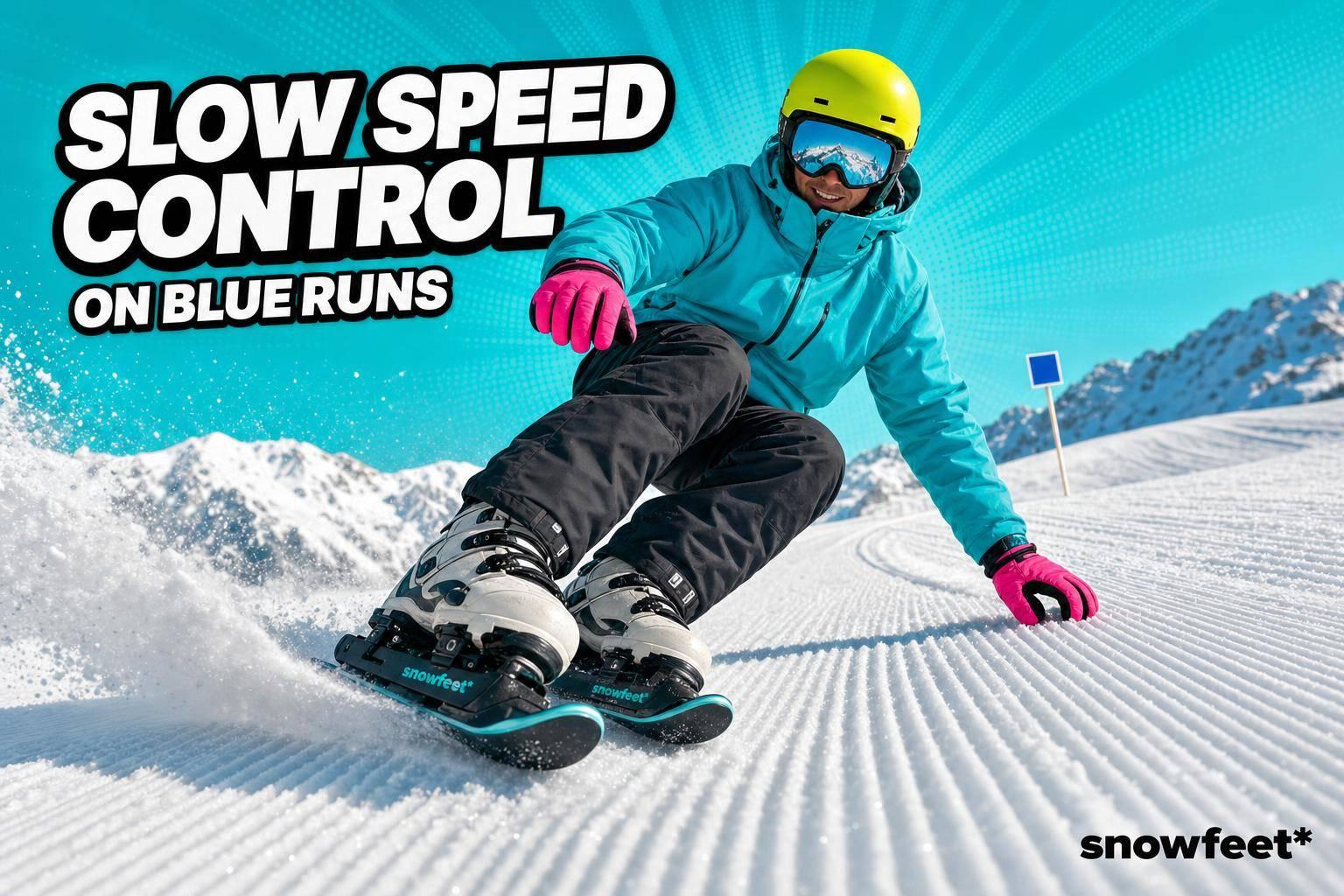
For blue runs, the Snowfeet 99 cm Skiblades are the best pick. They hit a sweet spot between stability and control, which makes them a better fit than the 65 cm model for blue runs and all-mountain riding.
You get enough edge hold to carve with confidence and cruise groomed trails without feeling twitchy. At the same time, they still feel more playful and easier to turn than long, standard skis.
When do full-length skis make more sense?
Full-length skis make more sense for seasoned skiers who like high-speed carving at 50+ mph. Snowfeet* skiblades give most recreational riders a lot of control and a stable feel, but standard skis still have the edge in harsh conditions and on long, sweeping turns.
If your main goal is top speed on wide groomers or more float in deep powder, standard skis still come out ahead.











Zanechať komentár
Táto lokalita je chránená testom reCAPTCHA a vzťahujú sa na ňu pravidlá ochrany súkromia a podmienky poskytovania služby hCaptcha.