



















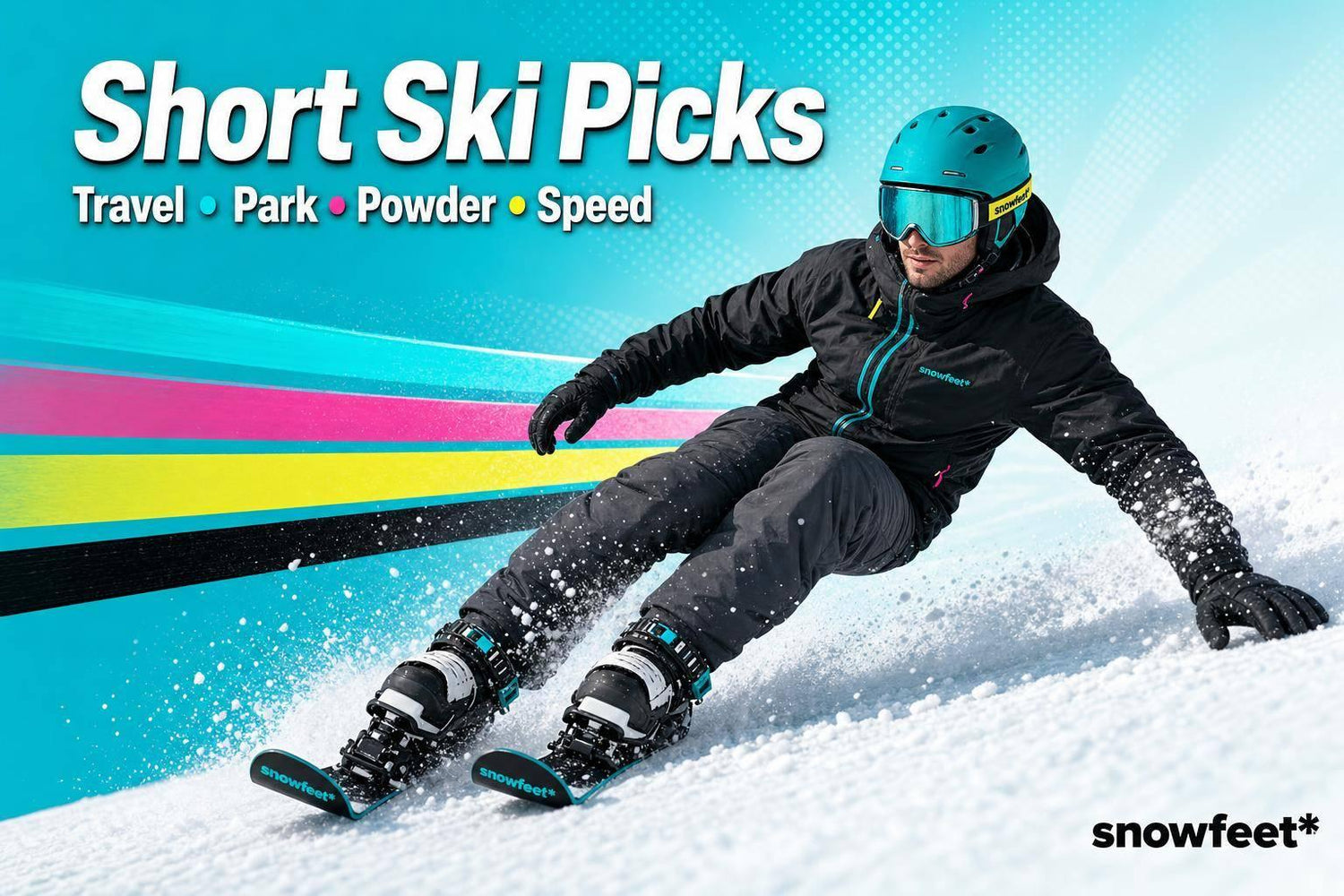
If I had to give the short answer: most men should start with the 99 cm option. It gives the best mix of control, turn ease, and all-mountain use. If you want the smallest setup, go 44 cm. If you ski soft snow a lot, go 99 cm POWDER. If you want more calm at speed, go 120 cm.
Short skis in this guide run from 17 in. to 47 in. That’s much shorter than many men’s alpine skis, which are often around 5 to 6 feet long. The upside is simple: less bulk, easier turns, and less hassle in the parking lot. The trade-off is simple too: the shorter you go, the less stable the ski feels when speed picks up.
Here’s the fast breakdown:
- 44 cm Skiskates - from $460: best for travel, tight turns, and a skate-like ride
- 65 cm Skiblades - from $590: best for beginners, park laps, and playful riding
- 99 cm Skiblades - from $690: best all-around pick for groomers, moguls, and resort days
- 99 cm POWDER - from $690: best for soft snow and off-trail days
- 120 cm Short Skis - $950: best for taller, heavier, or faster riders who want more support
A few things matter most before you buy:
- Terrain: groomers, park, powder, or mixed resort snow
- Feel: playful and loose, or calmer and more planted
- Boot setup: some models fit ski boots and snowboard boots, while the 120 cm is ski-boot only
- Snow depth: standard short skis are best in light powder, around up to 4 in. (10 cm)
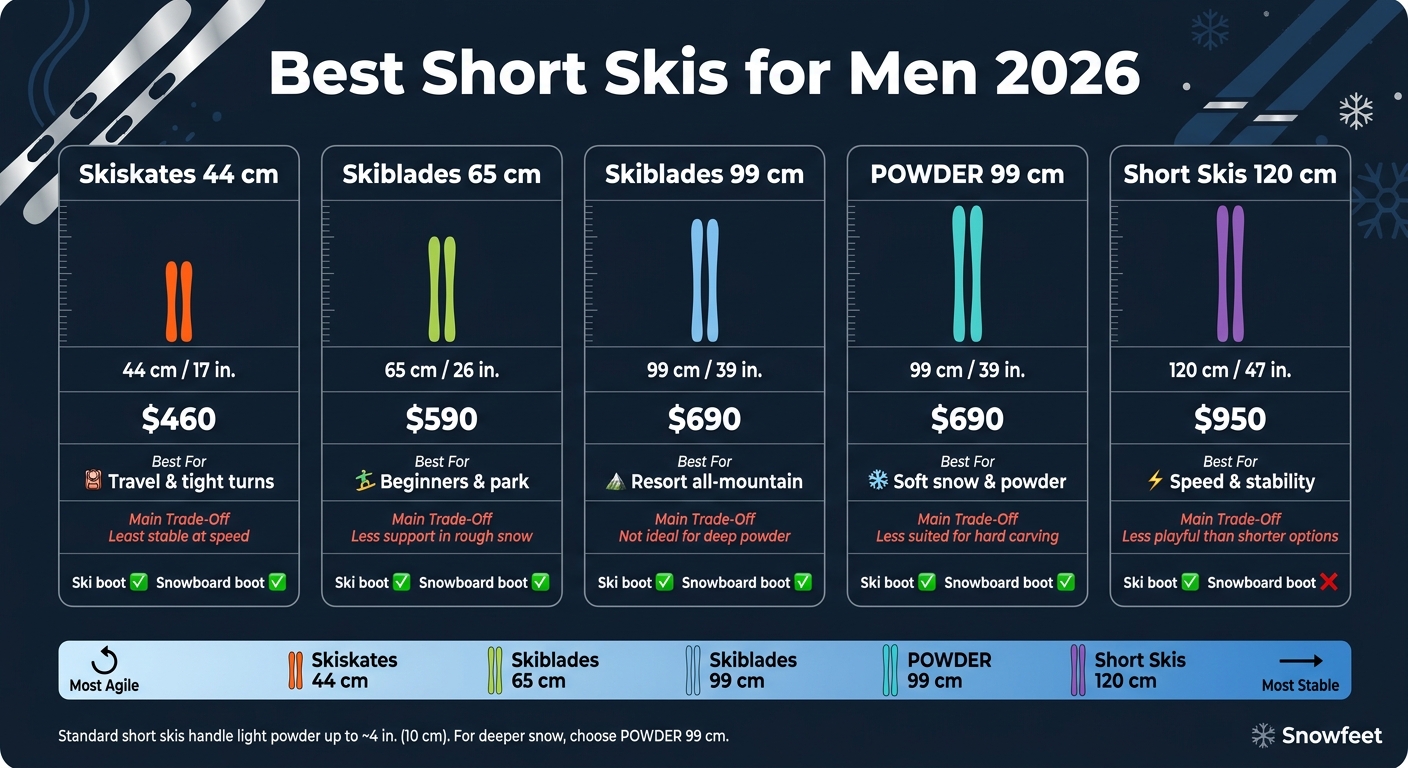
Best Short Skis for Men 2026: Quick Comparison Guide
Snowboarder tries Snowfeet* | Which Snowfeet* Short Ski is the Best? | Snowblades 44, 65, 99 Review
Quick Comparison
| Model | Length | Starting Price | Best For | Main Trade-Off |
|---|---|---|---|---|
| Skiskates | 44 cm / 17 in. | $460 | Travel, casual laps, very tight turns | Least stable at speed |
| Skiblades | 65 cm / 26 in. | $590 | Beginners, park, switch riding | Less support in rough snow |
| Skiblades | 99 cm / 39 in. | $690 | Resort all-mountain use | Not the top pick for deep powder |
| POWDER | 99 cm / 39 in. | $690 | Soft snow, chopped powder | Less suited for hard, fast carving |
| Short Skis | 120 cm / 47 in. | $950 | More speed control, more support | Less playful than shorter options |
So, if you want the plain-English version:
- Pick 44 cm if pack size matters most
- Pick 65 cm if you’re new or spend a lot of time in the park
- Pick 99 cm if you want one short ski for most resort days
- Pick 99 cm POWDER if soft snow is your main thing
- Pick 120 cm if you want the closest feel to a normal ski
If you want a quick look at how short skis ride before buying, these YouTube searches help:
I’d use this guide one way: match the ski to where you ride most, not to what sounds cool. That usually leads to the right pick the first time :)
1. Snowfeet* Skiskates 44 cm
The Skiskates are the smallest option in the Snowfeet* lineup. They feel more like snow skates than alpine skis, and they work best with a skating-style motion. If you care more about easy carrying and snappy turns than top speed or a planted ride, this is the one to look at.
Stability vs. Agility
These lean hard toward agility, not stability. They shine in tight turns, fast pivots, and playful riding. On steep slopes or icy snow, though, they give you less edge grip and less front-to-back support than longer skis. So, they fit men who want that loose, skate-like feel and don’t mind giving up some stability for easier movement.
Terrain Fit
Skiskates do best on hard snow. They’re also a blast in the park when you want something quick and playful. They can handle light powder up to about 4 in. (10 cm), but once the snow gets deeper, they start to sink and get tougher to control. For powder days, the 99 cm or 120 cm models make more sense.
Boot Compatibility
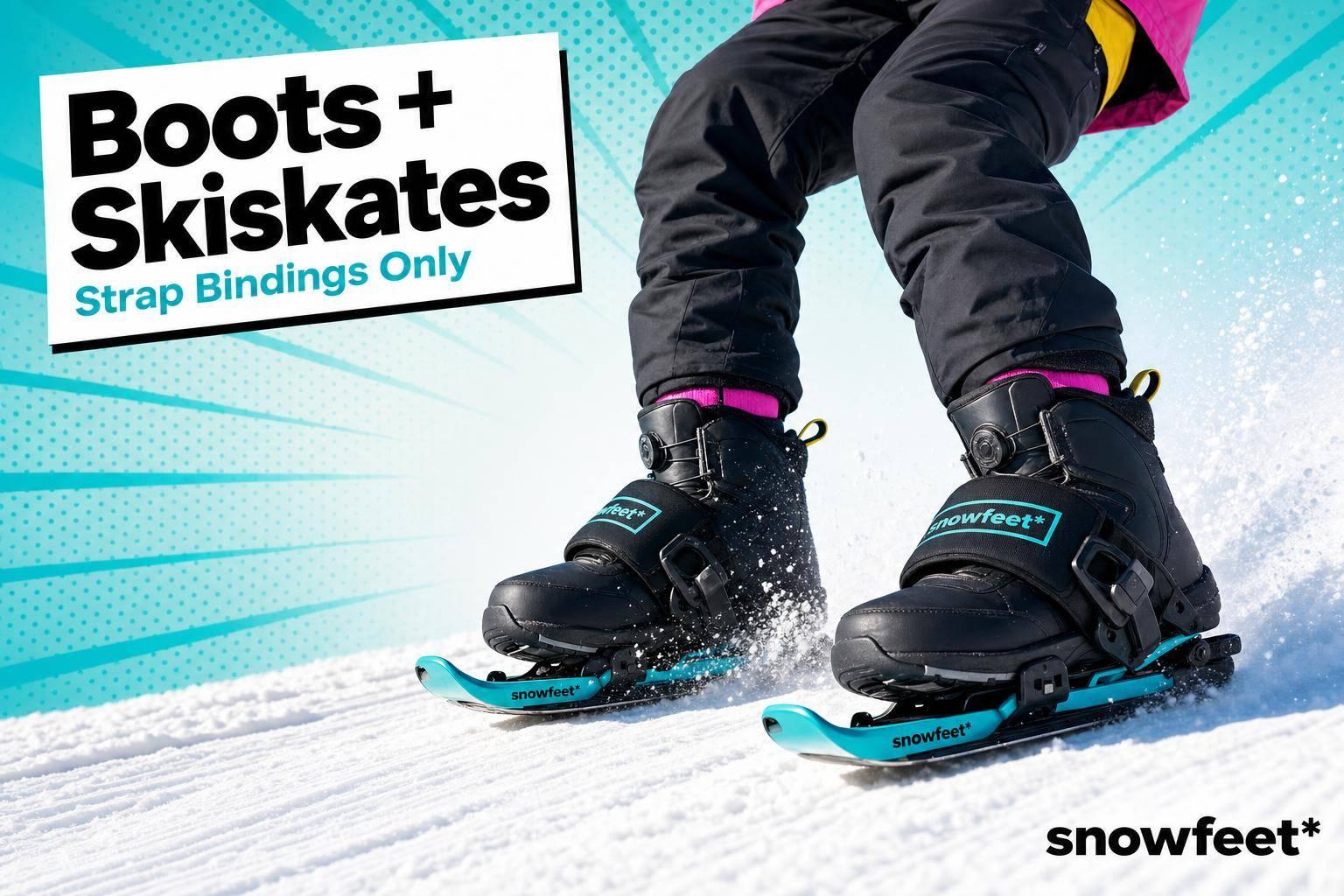
Skiskates come in ski-boot and snowboard-boot versions. Both are adjustable, tool-free, and include leashes plus anti-slip surfaces. The ski-boot bindings fit US men’s sizes 4.5–14.5. The snowboard-boot bindings fit US men’s sizes 6–14.5.
Regular winter shoes won’t work. Ski boots give you sharper edge control and better power transfer when carving. Snowboard boots feel softer and are more comfortable for walking between runs or standing in lift lines.
Portability and Price
At 44 cm, they can fit in a backpack, which makes them easy to travel with or stash at home. Pricing starts at $460, so they cost less than the 65 cm Skiblades at $590 and the 120 cm Short Skis at $950.
If you want a bit more stability but still like the short-ski vibe, the 65 cm Skiblades are the next move.
2. Snowfeet* Skiblades 65 cm
The 65 cm Skiblades are the next move up from the 44 cm Skiskates. They’re still small and easy to carry, but they feel more like skis and give you more control. For beginners and casual riders, that’s a nice sweet spot. You get a fun, playful ride without the twitchy feel that can come with shorter gear. If you want more support and range across the mountain, the 99 cm models are the next stop.
Stability vs. Agility
These lean more toward agility than stability. That’s the deal.
You can turn fast, carve with less effort, and move around with a more playful feel than on longer skis. But there’s a catch: you give up some calm at higher speeds, and they won’t feel as steady in choppy snow. The deep sidecut and twin tips also make carving and switch riding easier, which is a big plus on groomers.
Terrain Fit
This is where the 65 cm length feels right at home: groomed runs, packed snow, small jumps, and quick park laps. If your day looks like carving around the resort, hitting side hits, and messing around a bit in the park, these fit the job well.
They’re not built for steep terrain or mixed snow, though. In rough conditions or powder, they’ll start to feel out of their lane. For steeper runs, rough snow, or powder, step up to the 99 cm and 120 cm models.
Boot Compatibility
Boot options are the same as the Skiskates. You can choose ski boots or snowboard boots with adjustable, fixed bindings.
- The ski-boot version fits U.S. men’s sizes 4.5–14.5
- The snowboard-boot version fits sizes 6–14.5
Portability and Price
At 65 cm, these fit in a car trunk with no drama. They’re also much less bulky than full-length skis, so storing them between trips is pretty easy too.
Pricing starts at $590. That puts them above the Skiskates at $460, but still well below the 120 cm Short Skis at $950. If you want compact, playful skis that are easier to handle than full-size skis, this size makes a lot of sense.
Next up: the 99 cm Skiblades for riders who want more all-mountain stability.
3. Snowfeet* Skiblades 99 cm
The 99 cm Skiblades are Snowfeet's all-mountain pick. At 99 cm, or about 39 in., they stay compact and easy to move, but they feel more planted than the 65 cm model.
Stability vs. Agility
This model hits a nice middle ground. With a wood core and a short turn radius, the 99 cm version blends quick handling with a smoother feel at resort speeds. You still get that fun, short-ski vibe, just with more control than the 44 cm model.
Terrain Fit
If the 65 cm model feels a bit too twitchy, the 99 cm gives you more control without giving up the short-ski feel. For riders who want one short ski for the whole mountain, this is the most flexible option in the lineup.
For powder, the 99 cm POWDER model is the better pick. For deeper snow, move to the 99 cm POWDER model.
Boot Compatibility
If you already ski in alpine boots, the ski-binding version will feel the most natural. It gives you a more secure, precise feel on snow.
Portability and Price
They’re still much easier to pack, carry, and store than full-length skis. Price starts at $690, which is lower than the 120 cm Short Skis at $950.
sbb-itb-17ade95
4. Snowfeet* POWDER 99 cm
The Snowfeet* POWDER 99 cm has the same 39 in. length as the standard 99 cm Skiblades. But it’s built with a wider shape and twin tips, so it feels more at home in soft snow and chopped powder. If you spend more days in deeper snow, this is the better 99 cm pick.
Stability vs. Agility
The wood core helps calm down chatter and gives the ski a steadier feel in mixed snow. On powder days, that means better control when the snow starts to feel uneven under your feet.
Terrain Fit
This model shines in fresh powder. The wider shape makes turns feel easier and more natural when the snow is soft.
On very hard ice or during fast, hard carving, though, it’s not the top pick. Full-length skis still feel steadier on hard-packed runs in those cases.
Boot Compatibility
It comes with ski boot bindings or Pro ski boot bindings.
Choose the Pro version if you want a more standard release feel.
Portability and Price
At 99 cm, it fits in a short ski bag under 100 cm. That makes travel simpler and can help you avoid oversize baggage fees. Pricing starts at $690.
If you want more stability and better speed control than this model can offer, the 120 cm Short Skis are the next step up.
5. Snowfeet* Short Skis 120 cm
The Snowfeet* Short Skis 120 cm are the longest model in this lineup. On snow, they feel closer to a regular ski than the shorter Snowfeet options. But they’re still easier to turn, easier to carry, and a lot less awkward to deal with in the parking lot :) Compared with the 99 cm models, they trade a bit of quick, snappy movement for a calmer ride. If you want more confidence when the pace picks up, but you’re not ready to jump to full-length skis, this is the step-up pick.
Stability vs. Agility
That extra length helps a lot with speed stability. The ski feels more planted and less twitchy, which is great if shorter skis have ever felt a little too lively under you. It’s the closest Snowfeet option to a conventional ski while still keeping the short-ski setup.
Terrain Fit
These work best on groomers and mixed resort snow. You get enough stability to carve clean turns, but still enough agility to keep things fun and loose when you want. This is the best Snowfeet choice for riders who want one short ski for faster resort laps, not a park-first setup. If top-end stability is your main goal, though, full-length skis still win that fight.
Boot Compatibility
These come with ski-boot-only Pro release bindings. The fit covers standard alpine boots in a mondo range of about 26–36.1.
Portability and Price
At $950, this is the most expensive Snowfeet short ski. Even so, it’s still much easier to travel with and store than full-size skis.
So, the 120 cm makes sense for riders who want more speed control and a feel that’s closer to a standard ski. The trade-off is pretty simple: more stability than the shorter models, but less top-speed stability than full-length skis.
Pros and Cons by Riding Style
If you already know how you ride, this makes the choice a lot easier. Pick the length that fits your style, not just the one that looks cool on the rack.
| Model | Best for | Pros | Cons | Trade-off |
|---|---|---|---|---|
| Skiskates 44 cm | Beginners, casual riders, travelers | Easiest to learn; tool-free bindings; very compact | Least stable at higher speeds; not built for deep powder | Pure fun and simplicity vs. limited versatility |
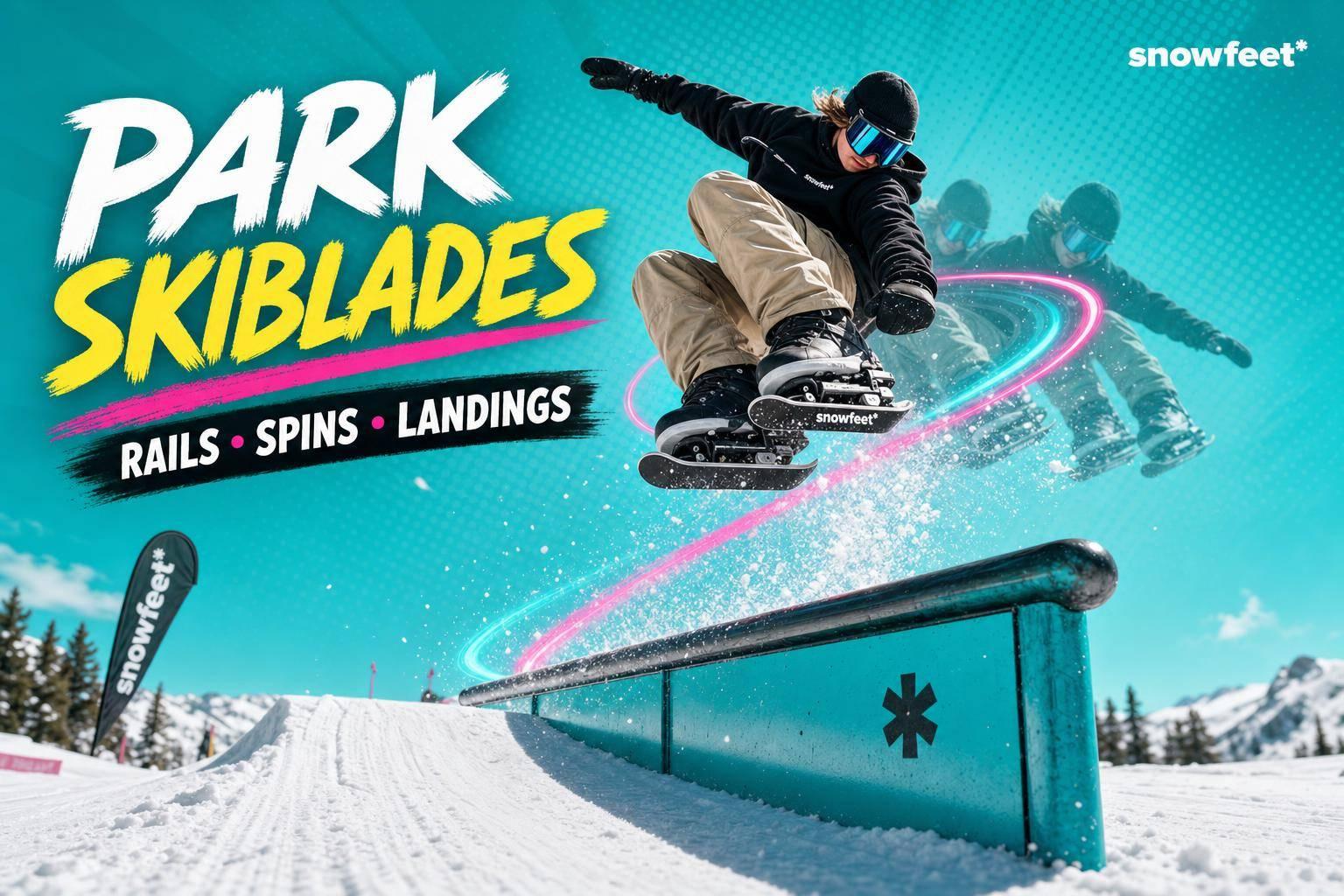
| Skiblades 65 cm | Park riders, switch skiers, trick-focused men | Quick spins, jumps, and switch riding | Short length gives less damping on big landings | Park performance vs. landing forgiveness |
| Skiblades 99 cm | Resort all-mountain riders | Responsive carving; works on groomers, park laps, moguls, and narrow trails | Better on groomed snow than deep powder | Versatility vs. soft-snow performance |
| POWDER 99 cm | Soft-snow and powder riders | Wider shape for better float in deeper snow | Less of an all-around resort choice than the standard 99 cm | Powder float vs. everyday versatility |
| Short Skis 120 cm | Riders who want more stability than the shorter models | Most stable at speed | $950; less nimble than the shorter models | Stability vs. quick, playful movement |
Here’s the simple read on it:
- Go short if you want an easy, playful ride.
- Go 99 cm if you want the best all-mountain mix.
- Go POWDER 99 cm if soft snow is your main thing.
- Go 120 cm if you want more calm and control at speed.
Standard short skis handle only light powder up to about 4 in. (10 cm). If you expect deeper snow, POWDER 99 cm is the better call.
Use this breakdown to trim down your shortlist before making the final pick.
Which Short Ski Should You Buy?
Match the ski to your terrain and speed style. If you just want the fast answer, this section makes it easy.
The 44 cm Skiskates are for men who want the smallest, easiest setup to pack. They fit ski or snowboard boots and work well for travel.
The 65 cm Skiblades are a great fit for beginners and park riders. They’re short enough for tricks, but they still feel more like skis than the 44 cm option.
The 99 cm Skiblades are the go-to pick for resort riding. They work well on groomers, moguls, and park laps.
The POWDER 99 cm makes the most sense if you spend a lot of time in soft snow and off-piste terrain.
The 120 cm model fits taller, heavier, or faster riders who want more stability at speed than the shorter options can give.
Use the table below for the quickest pick.
| Rider Type | Recommended Model | Reason | Key Trade-Off |
|---|---|---|---|
| Traveler / casual lapper | Skiskates 44 cm | Fits in a backpack; most compact option | Least stable at speed |
| Beginner / park rider | Skiblades 65 cm | Short enough for tricks; more ski-like than 44 cm | Less stable than longer models at speed |
| Resort all-mountain rider | Skiblades 99 cm | Versatile on groomers, moguls, and park laps | Not ideal for deep powder |
| Soft-snow rider | POWDER 99 cm | Wider shape for better float in deeper snow | Still a short ski; not a substitute for long powder skis at very high speeds |
| Taller / heavier / faster rider | Short Skis 120 cm | Extra length and contact area for more support and high-speed stability | Less nimble than shorter models |
Long skis still make more sense for expert big-mountain terrain, deep powder at speed, race use, and long backcountry tours. That’s what full-length gear is built for.
But for most men skiing groomed blue and black runs a few weekends each year, the 99 cm Skiblades or 120 cm Short Skis hit a sweet spot. You get an easier, more playful ride, and you don’t have to lug around a huge setup. That’s a pretty nice trade :)
FAQs
Are short skis harder to control?
No. Short skis are generally easier to control than long skis.
Snowfeet short skis work with your natural balance. That makes turns feel quicker, edge-to-edge moves smoother, and overall handling more forgiving. For beginners, that can mean less fighting with the skis and more time just having fun :)
They also make life easier in places where long skis can feel a bit clunky, like:
- Crowded slopes
- Moguls
- Tight spaces
So, if you want skis that feel simpler and less demanding, short skis are often the easier pick.
Can I use snowboard boots with these short skis?
Yes - most Snowfeet short skis work with snowboard boots because they use special bindings that hold them snugly and safely.
Here’s the simple version:
- For models under 100 cm - like the 44 cm Skiskates and 65 cm and 99 cm Skiblades - snowboard boots are a good match.
- For longer models, like the 120 cm skis, you need standard release ski bindings. So snowboard boots are best paired with the shorter models.
That’s the main split: shorter Snowfeet models work well with snowboard boots, while the longer ones are built for regular ski boots and release bindings.
How do I choose between 99 cm and 120 cm?
Pick based on what you care about more: nimble handling or more top-end speed.
The 99 cm Skiblades are the best all-around pick. They hit the sweet spot between agility and stability, which makes them a great fit for groomers, park laps, and light powder.
Go with the 120 cm model if you want more speed, longer turns, and better float in deeper snow. It feels closer to a standard ski, but it’s still easier to turn and a lot easier to carry than 150 cm+ skis.











Zanechať komentár
Táto lokalita je chránená testom reCAPTCHA a vzťahujú sa na ňu pravidlá ochrany súkromia a podmienky poskytovania služby hCaptcha.