



















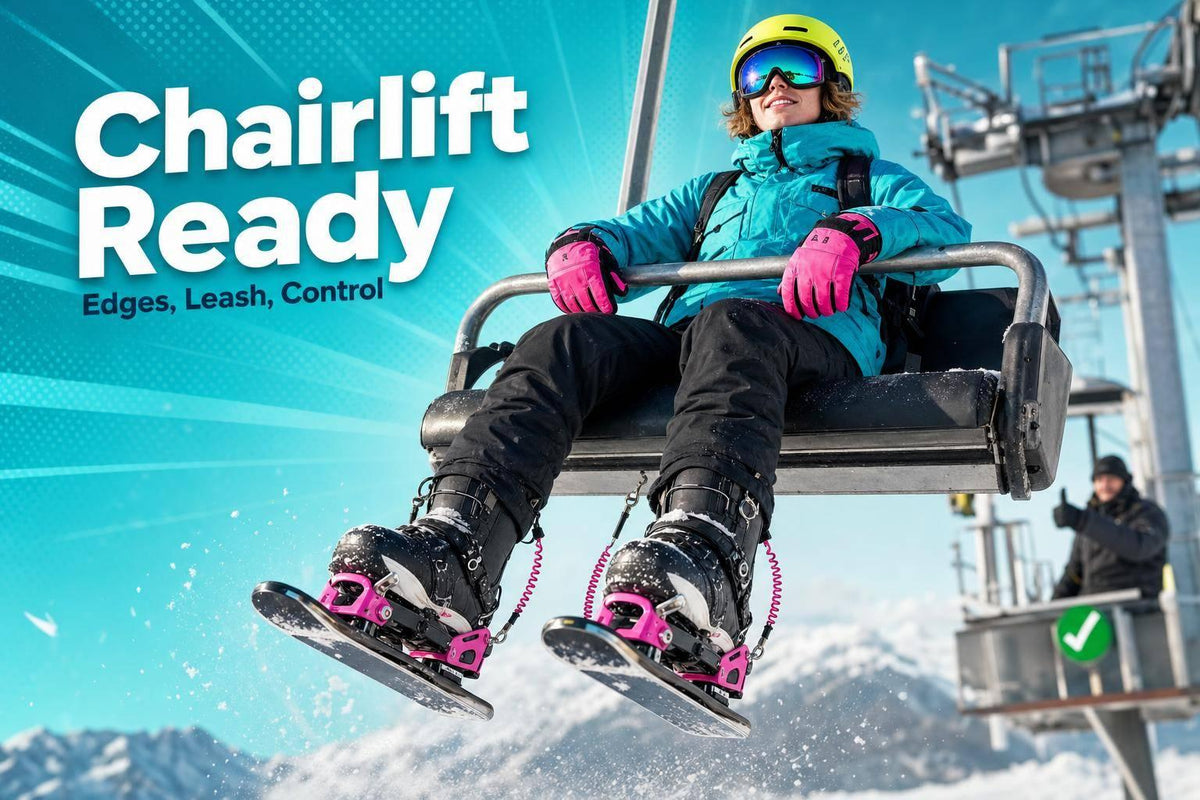
Yes - but only if the resort says yes. That’s the whole game.
If I were giving you the short shop answer, I’d say this: check the resort first, bring metal-edge skiskates, use a leash, and ask the lift crew before you load. Some U.S. ski areas allow skiskates on chairs. Some don’t. Some allow them only on certain lifts. And if the lift operator says no, that’s the end of it.
Here’s the quick version:
- Resort policy comes first
- Metal edges are often required
- A retention strap or leash may be required
- Some lifts may be off-limits
- 44 cm skiskates feel less stable on unload ramps than 65 cm skiblades
- You should be able to stop and turn on easy terrain before riding a chairlift
I’d also keep this in mind: 44 cm skiskates are easier to carry, but 65 cm skiblades tend to feel calmer at slow speeds. That matters in lift lines and at the top ramp, where a small wobble can turn into a full-on gear yard sale :)
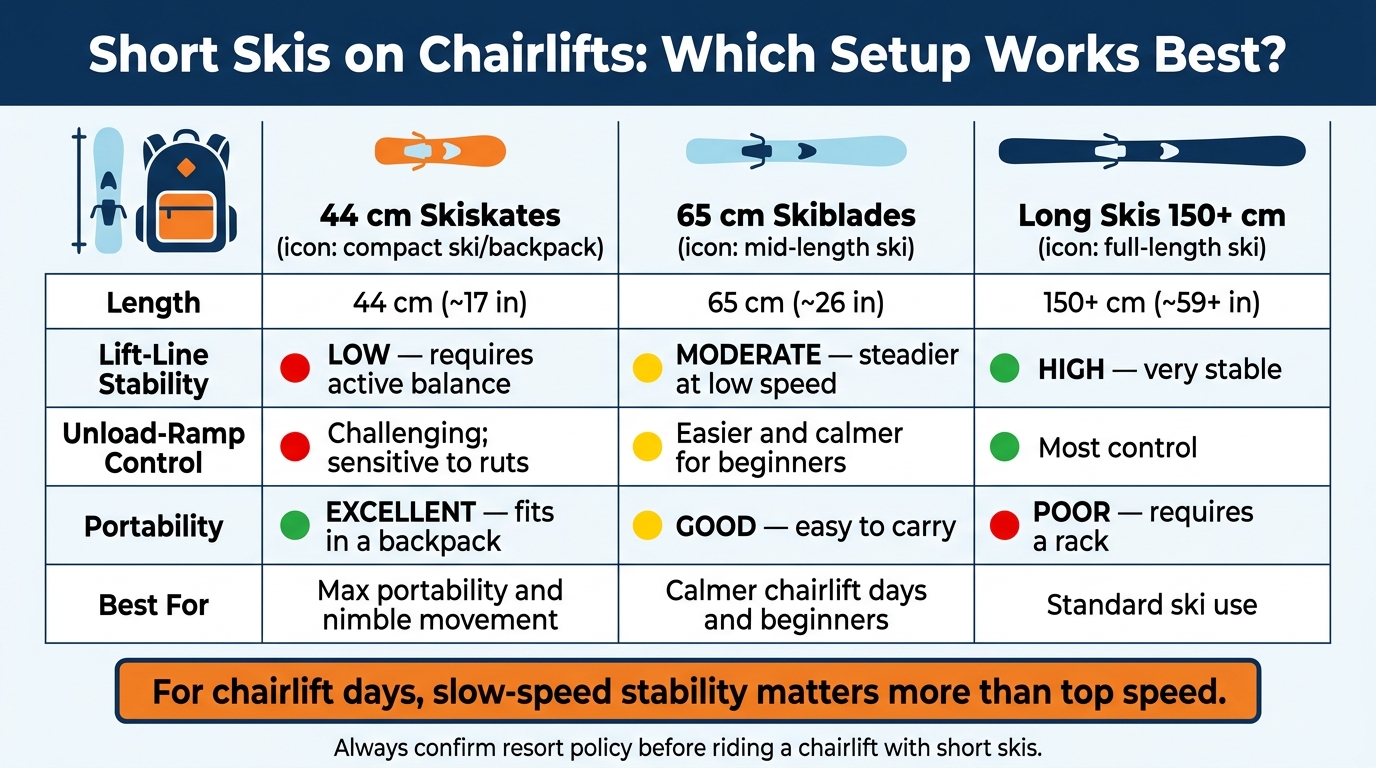
Skiskates vs Skiblades vs Long Skis: Chairlift Compatibility Compared
Snowfeet* & Skiskates Complete Guide | All you need to know about Skiskating
Quick Comparison
| Gear | Chairlift feel | Lift line balance | Portability | Best for |
|---|---|---|---|---|
| 44 cm Skiskates | More twitchy on unload | Lower | Fits in a backpack | Compact setup |
| 65 cm Skiblades | More steady | Better | Easy to carry | Chairlift days |
| Long skis (150+ cm) | Most steady | Highest | Harder to carry | Standard ski use |
So, if you want the plain answer: yes, you can ride a chairlift with skiskates at many U.S. resorts, but you need resort approval, the right gear, and enough control to load and unload without trouble.
When U.S. Resorts Allow Skiskates on Chairlifts
Some U.S. resorts allow skiskates or other short skis on chairlifts, but access can still be limited to certain lifts or runs. So, getting the green light at one mountain doesn’t mean the next resort will say yes. Each place has its own call, and that call often comes down to a few gear rules.
The Rules That Usually Matter Most
Most resort policies focus on three things. Metal edges are often required. Many resorts also want a retention strap or leash so the skiskate can’t slip away in the lift line or on the slope. Some mountains go a step further and require mounted bindings plus manager approval, which is the case at Mount Baker.
If a resort policy doesn’t name skiskates directly, ask guest services how they classify them and which lifts allow them. That small detail can make or break access. And yeah, this is where gear design starts to matter.
Why Snowfeet* Skiskates Are More Likely to Pass Resort Rules
Snowfeet* Skiskates (44 cm) have a wood core and full metal edges, which lines up better with the rules many resorts use than flatdeck or plastic-only designs. They also work with ski or snowboard boots.
But here’s the catch: better build quality doesn’t overrule resort policy. If a mountain requires mounted bindings, or just doesn’t allow skiskates at all, you can still get turned away. Before heading out, check the lift policy with the resort directly.
How to Check Lift Compatibility Before You Go
Once you’ve confirmed a resort may allow skiskates, the next step is to check whether your exact setup is okay for the lift.
Start with the resort’s Mountain Safety, Rules, or FAQ pages. Search for terms like "short skis", "skiskate", "snowskate," or "alternative equipment." If nothing comes up, don’t assume you’re good to go. Call guest services and ask to speak with ski patrol.
If the policy feels fuzzy, don’t stay stuck on the website. Pick up the phone.
Questions to Ask the Resort Directly
Keep it simple and ask straight-up:
- Are short skis with metal edges allowed on chairlifts?
- State that Snowfeet* Skiskates have metal edges.
- Is a leash or retention strap required for chairlift access?
- Are all chairlifts open, or only certain ones?
- Should you load like a skier or snowboarder, or as a pedestrian?
This part matters more than it might seem. How a resort classifies you - skier status or pedestrian status - can decide whether you’re allowed on the lift at all.
How to Avoid Confusion at the Lift Line
Even if you already got written approval, check again at the lift line. Yeah, it’s a little annoying. But written policy and what happens in line don’t always match.
Bring a short, clear description of your gear, like "short skis with metal edges and a retention strap." That helps because some lift staff may not know what skiskates are by name. It’s also smart to ask the lift supervisor before the line gets busy.
And bring a leash or retention strap. Many resorts ask for one.
One more thing: even at resorts that allow skiskates in general, some lifts may still be off-limits. So confirm which chairs are approved before you roll up to the line.
sbb-itb-17ade95
How to Load and Unload a Chairlift Safely With Short Skis
Loading and unloading skiskates is pretty simple if you stay centered and move with the chair. Go through the lift corral, glide into the loading zone, and look back over your shoulder as the chair comes in. Get your position set before it reaches you. Once you sit down, lean back so the skis stay clear of the snow.
As you come up to the unload ramp, keep your tips up so they don’t dig in or clip the edge of the ramp. Let the chair carry you forward. Don’t stand up or step off early unless the operator tells you to.
What Feels Different With 44 cm Skiskates
The main change is low-speed stability. At 44 cm, skiskates can feel a bit twitchier when you unload. Keep your weight centered over your feet. If you lean too far forward or too far back, that’s the fastest way to wobble or go down.
Point both skiskates straight downhill as you glide off the ramp. Wait on that first turn until you’ve cleared the ramp and reached flatter ground.
Common Mistakes That Lead to Falls or Denied Access
| Common Mistake | Consequence | How to Avoid |
|---|---|---|
| Standing before the chair fully clears | Fall at the top of the ramp | Stay seated until the chair has fully passed the unload point |
| Turning before the ramp ends | Fall on the unload ramp | Glide straight off and wait until you're on flat ground to turn |
| Skiskates drifting sideways | Edge catch, fall, or collision | Keep both skiskates parallel and pointed straight downhill |
| Riding the lift before you can stop and turn on gentle terrain | Unable to safely exit the ramp | Practice stopping and turning on beginner terrain first |
If you can’t stop and turn with control on gentle terrain, skip the chairlift for now. No shame in that. A few extra practice laps now can save you from a yard sale at the top :) If unload ramps still feel sketchy, 65 cm Skiblades give you a bit more stability than 44 cm Skiskates.
Snowfeet* Skiskates 44 cm vs. Snowfeet* Skiblades 65 cm for Chairlift Days
If chairlift access is allowed, the next step is simple: pick the short ski that feels easier on the lift.
Which One Feels Easier in Lift Lines and on Unload Ramps
The Snowfeet* Skiskates 44 cm are light and compact. They’re small enough to fit in a backpack, so getting through the loading area feels pretty easy. That said, they give you less fore-and-aft stability when you’re moving slow. So, in lift lines or on the unload ramp, you need to stay a bit more alert.
The Snowfeet* Skiblades 65 cm add about 8 inches of length. That extra size helps a lot on the unload ramp. They feel steadier front to back and more like regular skis at low speed. If unload ramps make you tense up a little, the 65 cm model gives you more room for error.
For chairlift days, slow-speed stability matters more than top speed. That’s the big thing here.
Comparison Table: 44 cm Skiskates, 65 cm Skiblades, and Long Skis
| Feature | 44 cm Skiskates | 65 cm Skiblades | Long Skis (150+ cm) |
|---|---|---|---|
| Length | 44 cm (~17 in) | 65 cm (~26 in) | 150+ cm (~59+ in) |
| Lift-line Stability | Low - requires active balance | Moderate - steadier at low speed | High - very stable |
| Unload-ramp Control | Challenging; sensitive to ruts | Easier and calmer for beginners | Most control |
| Learning Curve | Moderate - skate-like feel | Short - more ski-like | Standard |
| Portability | Excellent - fits in a backpack | Good - easy to carry | Poor - requires a rack |
The practical difference is pretty clear: 44 cm works best if you want max portability and fast, nimble movement. 65 cm makes more sense if you want a calmer feel on chairlift days.
Conclusion: What to Check Before Bringing Skiskates to the Lift
The call is pretty simple: skiskates work on chairlifts only if the resort allows them and your setup fits the resort’s rules.
Most resorts want a few basic things:
- Metal edges
- A leash or retention strap
- A clear way to load and unload from the lift
If you want the easiest day on the lift, go with stability over portability. Choose 65 cm Skiblades if you want more stability on lift rides. Choose 44 cm Skiskates if you want the smallest, easiest setup to carry.
So, before you head out, check the resort policy, call guest services if you need to, and confirm which lifts allow skiskates. Then pick the short ski that fits your comfort level on the lift.
FAQs
How do I know if my resort counts skiskates as skis or pedestrian gear?
Most U.S. ski resorts allow skiskates because they meet standard safety rules, including metal edges and safety leashes.
Still, don’t just assume you’re good to go. Call guest services or check the resort’s equipment rules before your trip. It takes five minutes and can save you a headache at the lift.
In many cases, resorts treat skiskates like regular skis. But some handle them a bit differently. For example, they may ask you to:
- walk on as a pedestrian
- load the lift with your skiskates attached, like a snowboarder
So, yeah, the rule is often simple, but the lift policy can vary from one mountain to the next.
Do beginners need lessons before taking a chairlift on skiskates?
No. Most beginners don’t need formal lessons before taking Snowfeet on a chairlift.
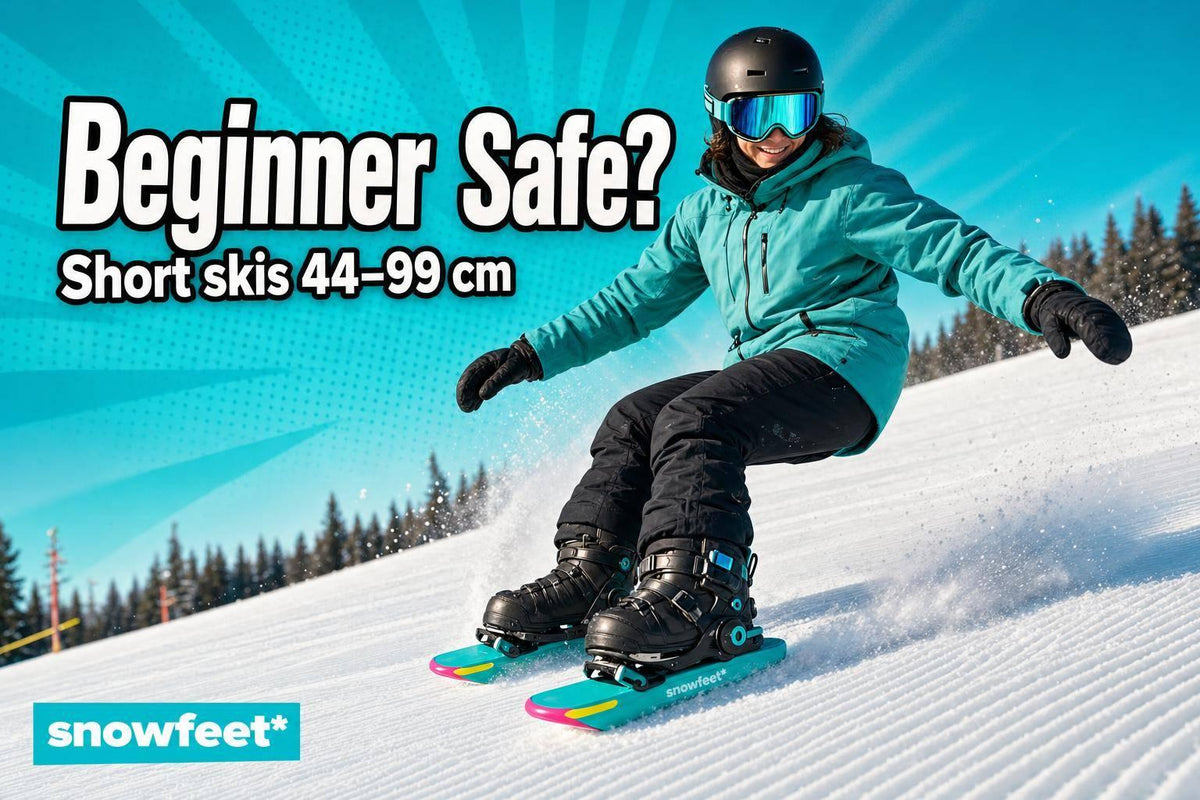
Snowfeet products are made to be easy to pick up, so most people can learn the basics in about five minutes. That’s a big part of the appeal. You’re not dealing with long, heavy skis that feel like wrestling with pool noodles on ice :)
Their compact, lightweight build also makes them easier to control than standard skis. And if you already feel good on skates or inline skates, the move to Snowfeet will probably feel pretty natural.
Should I choose 44 cm skiskates or 65 cm skiblades for lift access?
For chairlift access, both Snowfeet Skiskates (44 cm) and Snowfeet Skiblades (65 cm) usually work at most U.S. resorts if they have metal edges and safety leashes.
Go with 44 cm if you want the most agility and easy packability. Go with 65 cm if you want more stability and a feel that’s closer to skiing.
For most casual riders, the 65 cm Skiblades are the better middle ground. They tend to feel more balanced without giving up the fun part.
Always check the resort’s rules before you go.












Оставить комментарий
Этот веб-сайт защищается hCaptcha. Применяются Политика конфиденциальности и Условия использования hCaptcha.