



















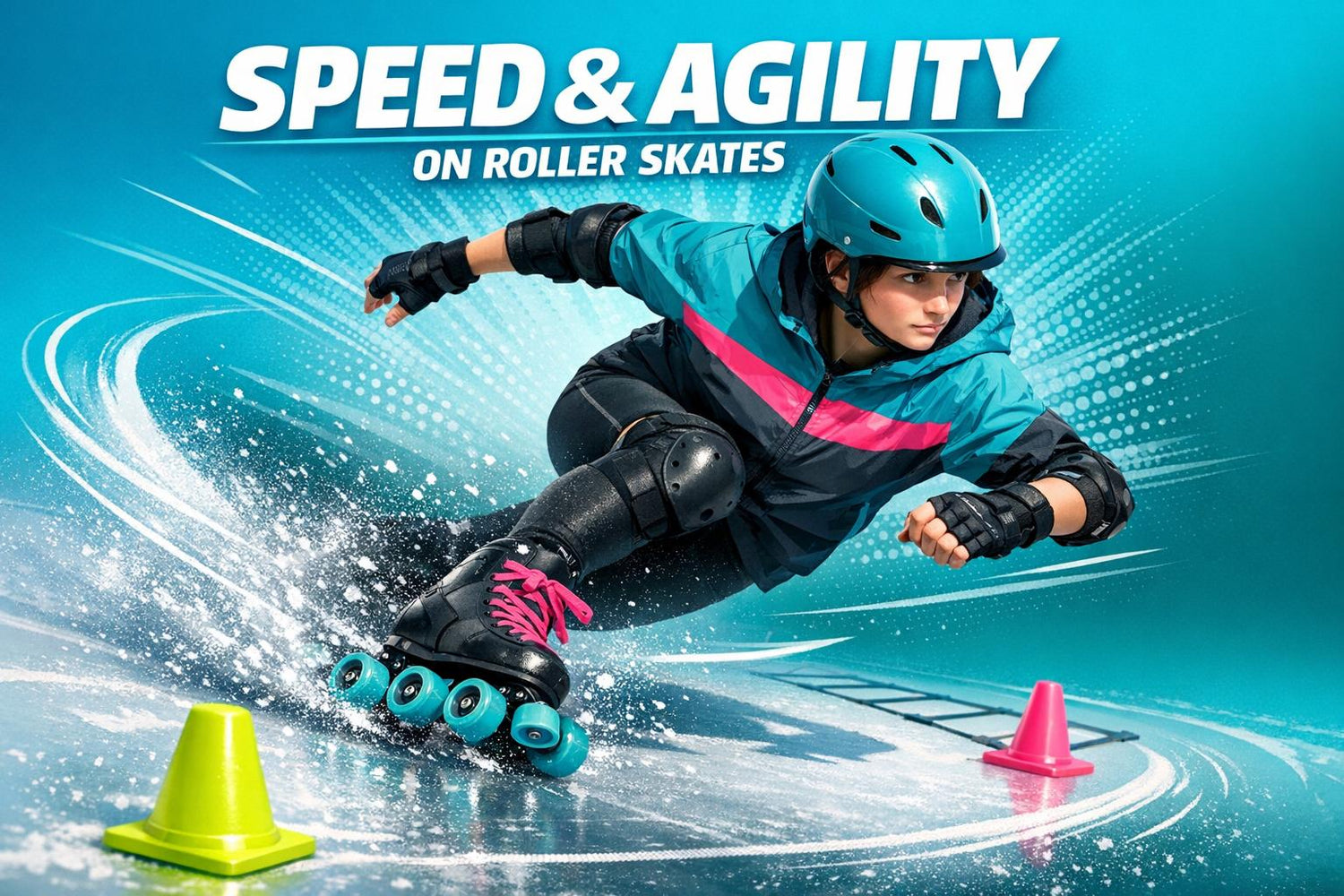
Getting better at roller skating comes down to improving two things: speed (how fast you can go and stay in control) and agility (how easily you can change direction or avoid obstacles). With the right techniques, drills, and gear, you can boost your performance and have more fun while staying safe. Here's the game plan:
- Start with safety: Gear up with a helmet, pads, and wrist guards. Practice proper stopping techniques like the T-stop.
- Master your stance: A low, balanced position with bent knees and engaged core helps with stability and quick reactions.
- Drills for balance and control: Try one-leg glides, edge control through cones, and agility ladder exercises.
- Footwork and turning: Nail your crossovers, slalom weaving, and transitions to handle sharp turns and direction changes.
- Build strength and power: Off-skate exercises like squats, lunges, and lateral hops improve your skating muscles.
- Choose the right gear: Properly fitted boots, the right wheels for your surface, and high-quality bearings make a huge difference.
Want to take your skating up a notch? Keep reading for step-by-step tips, drills, and gear advice to sharpen your skills.
Mastering Balance and Stance for Speed and Agility
The Athletic Stance: A Starting Point for Speed
Start with a low, grounded stance - knees bent, hips positioned over your skates, and chest leaning slightly forward. Keep your weight on the balls of your feet, which helps with quick reactions and smooth transitions. Extend your arms slightly for extra stability, and always keep your eyes looking ahead to anticipate any movement. Don’t forget to engage your core - it’s key to maintaining control and balance.
Balance Drills to Improve Control
Building balance is all about practice, and one-leg glides are a great place to start. Push off, lift one foot, and hold the glide for as long as possible. Begin with shorter distances, like 10 feet, and gradually extend as your strength improves. This drill not only strengthens each leg individually but also keeps your core activated while you’re in motion.
For straight-line control, try skating along a narrow path, like a strip of tape or a painted line. Focus on keeping your wheels aligned. Once you’re comfortable, raise one foot to add a layer of difficulty. Off the skates, agility ladder drills - like lateral shuffles or quick footwork steps - can sharpen your reflexes and improve the kind of balance that directly translates to skating.
| Drill | Primary Benefit | Key Technique |
|---|---|---|
| One-Leg Glides | Single-leg balance & posture | Engage your core; look forward, not down |
| Balance Beam | Straight-line stability | Keep your wheels aligned on a narrow path |
| Agility Ladder | Foot speed & reflex balance | Focus on precise, clean foot placement |
Using Edges for Sharper Turns
Edge control is what separates skaters who lose speed in corners from those who glide through effortlessly. By shifting your weight onto the inside or outside edge of your skates, you can carve through turns without braking, which helps you maintain momentum. A great way to practice is by weaving through 5–10 cones spaced about 3 feet apart. Focus on smooth transitions between edges with every pass. Always keep your knees bent - standing too tall reduces your ability to control your edges effectively.
And here’s a pro tip: check your wheels regularly for wear and tear. Flat spots can make carving much harder. Once you’ve nailed edge control, you’ll be ready to tackle more advanced turning and footwork in the next section.
Footwork and Turning Techniques for Agility
Efficient Stride Technique for Better Speed
Once you've nailed balance and stance, it's time to focus on footwork and turning techniques to level up your roller skating agility. A solid stride starts with fully extending your leg to the side with each push. That full extension gives you power and efficiency. After the push, quickly bring your foot back under your hips - this keeps your recovery smooth and avoids wasting energy on choppy movements. These basics are essential for mastering more advanced footwork drills.
"Speed is silent."
Agility Drills: Cone Weaving and Crossovers
Slalom weaving is a fantastic way to sharpen your lateral agility. All you need are a few cones set up in a zig-zag pattern. As you skate through, focus on smooth, controlled movements.
When it comes to turning power, crossovers are a game-changer. But here’s the trick: don’t just think about stepping over with one leg. The real magic happens when you engage the "cross under" motion, where your trailing leg pushes outward. To fine-tune this, try single-leg push-and-pull drills. Keep one skate planted while the other practices the crossover motion. This helps you balance the effort between both legs, making your crossovers stronger and smoother.
| Drill | Primary Focus | Setup |
|---|---|---|
| Slalom Weaving | Lateral agility & edge control | Cones in a zig-zag pattern |
| Enhanced Step Overs | Crossover power & balance | Open straight line |
| Single-Leg Push & Pull | Cross-under strength | Stationary or slow roll |
Transitions for Direction Changes
Now that your stride and balance are improving, transitions are the next step to boost agility. Start with a two-foot transition, which is a great way to practice changing directions. Glide forward with both skates on the ground, then pivot 180 degrees using your front wheels as the pivot point. It might feel a bit clunky at first, but this drill helps you develop weight-shifting skills without having to balance on one foot.
Once you’re comfortable, move on to the one-foot transition. This involves gliding forward on one foot, rotating 180 degrees, and then gliding backward on the same foot. It’s a tougher drill that challenges your ankle stability. Another useful exercise is the T-stop and turn. Here’s how it works: skate forward, brake with a T-stop, then immediately execute a 180-degree turn and push off in the opposite direction. This drill teaches quick reactions instead of just stopping and resetting.
To make your transitions even smoother, work on your hip flexibility. Off-skate exercises like squats and lateral lunges can make a big difference in your ability to pivot and turn with ease.
Building Strength, Power, and Endurance for Roller Skating
Strength Training for Skating Performance
Your skating skills are only as good as the muscles supporting them. Roller skating relies heavily on strong lower-body and core muscles, along with the often-overlooked stabilizers in your legs and hips. These smaller muscles are key to maintaining balance during long glides and sharp turns.
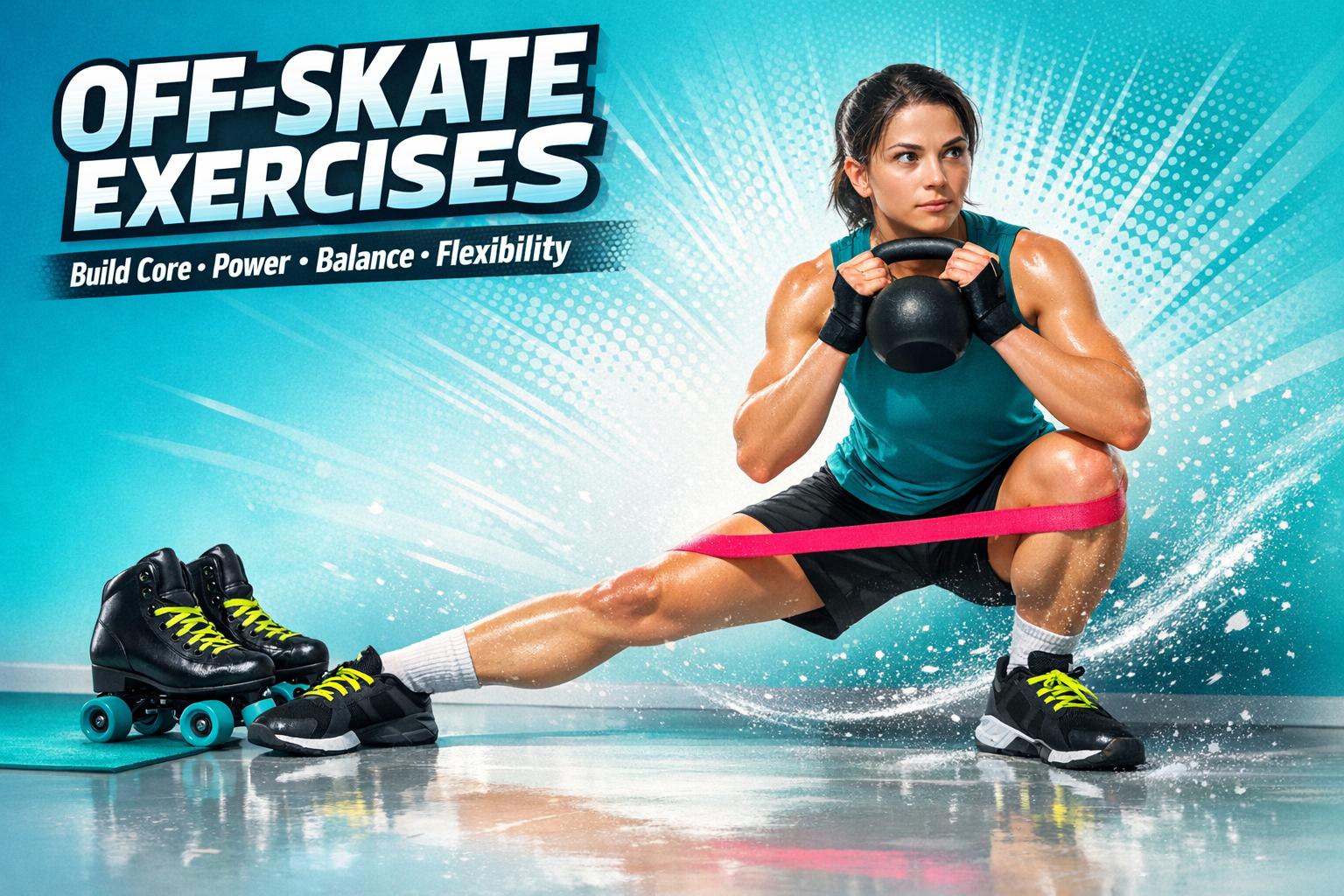
Off the skates, focus on three powerhouse exercises: squats, lunges, and planks. Squats develop quad and glute strength, giving you the power to push harder. Lunges mimic the skating motion, making them a perfect match for building functional strength. Planks, on the other hand, target your core, helping you maintain an upright posture at high speeds instead of hunching forward and losing control. Strong hip flexors also play a critical role in keeping your knees pointed outward and sustaining stride pressure.
On skates, take it up a notch with deep skating lunges. Push off one leg, bend both knees, and hold the glide. It’s tougher than it seems but incredibly effective for building lower-body endurance.
These exercises lay the groundwork for the explosive power drills that come next.
Plyometric Drills for Explosive Power
To complement your balance and footwork, add plyometric drills to your routine. These exercises ramp up the explosive power that takes your skating to the next level. A great starting point is side-to-side hops. Jump laterally from one foot to the other, landing softly and immediately pushing off again. This closely mimics the skating stride and strengthens your hips and legs for quick bursts of speed.
For an extra challenge, try lateral bounds. Push off one leg as far as you can to the side, land on the opposite foot, and hold for a moment before bounding back. This drill builds single-leg stability and power - both crucial for crossovers and sharp turns. On skates, practice jump transitions: skate forward, jump to rotate 180°, and land smoothly to continue skating. This combines explosive power with the stability needed for real-world skating moves.
Interval Training for Speed and Endurance
Once your strength and power are dialed in, it’s time to work on sustaining speed. Interval training is your go-to for improving top speed and recovery times. A simple but effective drill is speed stops and starts: skate at a moderate pace, perform a quick T-stop or plow stop, then immediately accelerate to full speed. This not only sharpens your reaction time but also builds the power needed to take off from a standstill.
For variety, train on different surfaces. Doing speed intervals on a smooth rink and then switching to rough outdoor pavement forces your body to adapt to varying resistance levels, enhancing your control. Over time, mix high-intensity bursts with steady-tempo skating - holding a challenging pace for several minutes. This combo builds the endurance you need to maintain speed and form during longer sessions.
sbb-itb-17ade95
5 Drills to Improve at Rollerskating! Challenge your skating skills!
Choosing the Right Gear for Speed and Agility
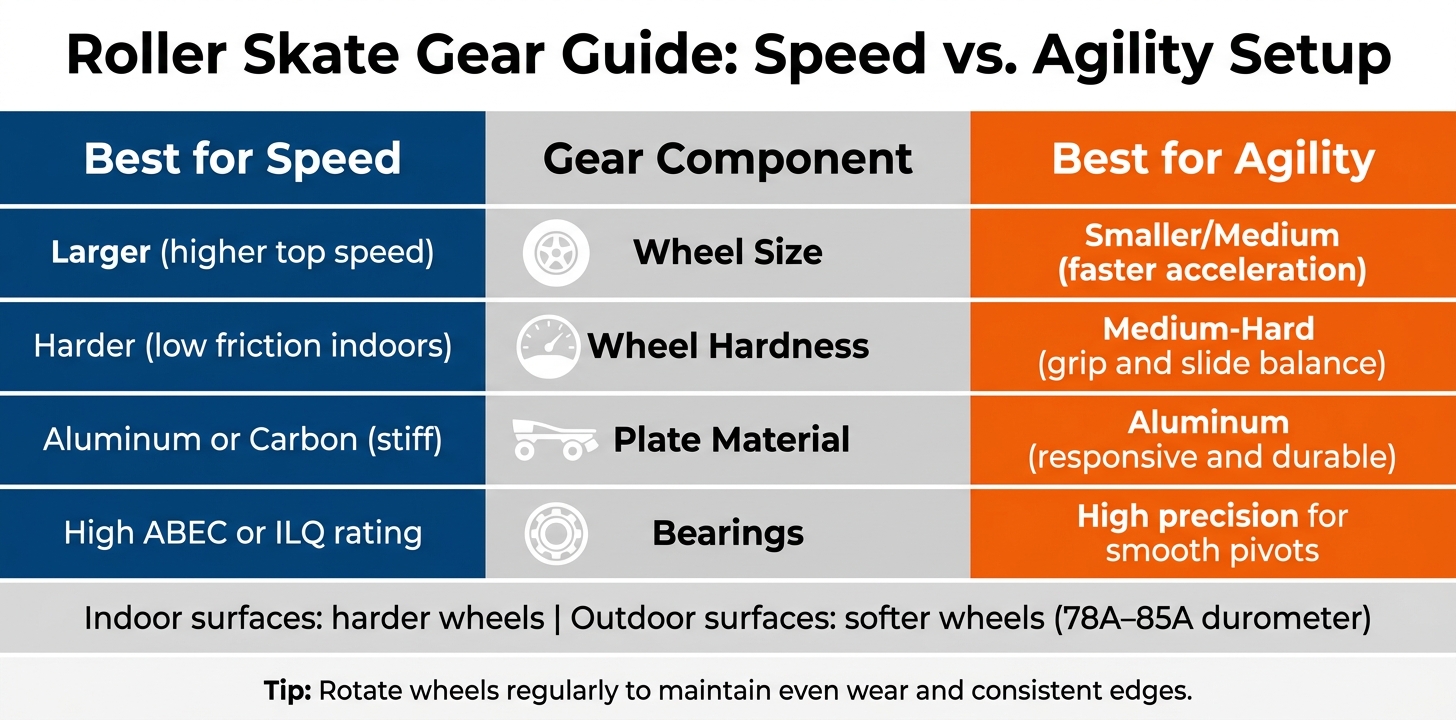
Roller Skate Gear Guide: Speed vs. Agility Setup
Improving your skating skills isn’t just about drills and technique - having the right gear can make a huge difference in your speed and agility.
Skate Fit and Support: What Matters Most
The fit of your skates can make or break your performance. If your skates are even a little too big, your heel may lift, and your foot could slide forward. This means lost power and less control on the rink. Ideally, your heel should stay locked in place, while your toes should have just enough room to wiggle.
The design and material of the skate boot also play a big role. Low-cut boots allow your ankle to flex fully during each stride, helping you move faster and more efficiently. For peak performance, look for boots with carbon fiber or fiberglass bases - these materials are lightweight and provide better energy return compared to plastic. While carbon fiber speed boots can range from $419 to over $800, entry-level options start around $100–$200.
If you want a custom fit, consider heat-moldable boots. These boots adjust to the shape of your foot, eliminating gaps that can waste energy during powerful strides.
Wheels and Bearings: Finding the Perfect Setup
Your wheel and bearing setup is just as important as your skates. The right combination depends on where you’re skating.
- Indoor surfaces: Use harder wheels for less friction.
- Outdoor surfaces: Opt for softer wheels (78A–85A durometer) to maintain grip on rough pavement.
Larger wheels help you maintain top speeds once you’re rolling, while smaller or medium-sized wheels accelerate faster from a stop - perfect for agility-focused drills.
| Component | Best for Speed | Best for Agility |
|---|---|---|
| Wheel Size | Larger (higher top speed) | Smaller/Medium (faster acceleration) |
| Wheel Hardness | Harder (low friction indoors) | Medium-Hard (grip and slide balance) |
| Plate Material | Aluminum or carbon (stiff) | Aluminum (responsive and durable) |
| Bearings | High ABEC or ILQ rating | High precision for smooth pivots |
When it comes to bearings, ABEC or ILQ-rated precision bearings are your go-to for reducing friction and ensuring a smooth roll. Don’t forget to rotate your wheels regularly - this keeps wear even and maintains consistent edges for turning.
Protective Gear and Practice Surfaces
Pushing your limits without proper protection isn’t worth the risk. At a minimum, you’ll need a CPSC or ASTM-certified helmet ($35–$100), wrist guards ($20–$45), and knee pads ($25–$60). Wrist guards are especially important for protecting your joints in case of a fall.
As for practice surfaces, smooth and flat is the way to go. Indoor rinks, tennis courts, and empty parking garages provide consistent terrain for focusing on speed and agility. Avoid rough sidewalks or wet pavement until you’ve mastered the basics - they introduce too many variables that can disrupt your practice.
With the right gear, a solid surface, and a focus on technique, you’ll be well on your way to leveling up your skating performance.
Conclusion: Steps to Faster, More Agile Skating
Getting faster and more agile on skates boils down to focusing on balance, footwork, strength, and the right gear.
Start by improving single-leg stability and mastering edge control. Pair footwork drills like slalom weaving and crossovers with off-skate exercises - think squats, hip-strengthening routines, and plyometrics. These build the explosive power and precision needed for quick changes in direction.
"Balance and agility are not just skills - they're disciplines built through practice and patience." - Skateraati Team
Stick to a weekly routine that mixes technical drills, edge control, and off-skate conditioning. This approach not only helps you avoid plateaus but also ensures steady progress. Even seasoned skaters can benefit from revisiting the basics to reinforce the stability that supports advanced techniques.
And don’t overlook your gear. The right equipment plays a huge role in your performance. Well-fitted boots, properly maintained bearings, and wheels with the right hardness make all the difference. Snowfeet* boots, for example, offer a lightweight design and excellent ankle support, often outperforming traditional ski and snowboard brands.
FAQs
How often should I practice to get faster on skates?
To get faster on skates, make regular practice your best friend. Set aside 10–15 minutes daily for balance and agility drills. Why? Because consistent effort helps build muscle memory, stability, and control - all key ingredients for speed. By focusing on exercises that boost strength and improve quick directional changes, you'll find yourself skating faster before you know it!
What wheel size and hardness should I use for my skating surface?
When choosing wheels for skating, it all comes down to where you'll be skating and what you want to achieve. For outdoor skating, go for larger wheels (around 90mm–100mm) with a medium hardness (85A–90A). This combo gives you a good balance of speed and grip on rougher surfaces. On the other hand, indoor skating calls for smaller wheels (54mm–72mm) with higher hardness (90A–101A). These are perfect for sharp turns and pulling off tricks.
If you're considering Snowfeet products, they offer a lightweight design and snug fit. This makes them a solid choice for boosting both speed and agility, offering a fresh alternative to more traditional ski and snowboard gear.
How can I stop safely at higher speeds?
To stop safely when skating at higher speeds, you’ll want to use controlled methods like the T-Stop, which helps you slow down gradually while staying in control. Practicing balance exercises - like weight shifts and smooth glides - can also make a big difference in your stopping skills. If you’re just starting out, keep these basics in mind: bend your knees slightly, focus on looking ahead (not down), and either apply pressure to your brake or drag one foot behind you for a smooth, safe stop.











Оставить комментарий
Этот веб-сайт защищается hCaptcha. Применяются Политика конфиденциальности и Условия использования hCaptcha.