
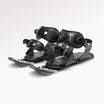
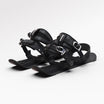
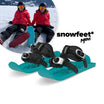
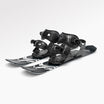
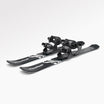
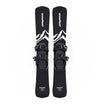
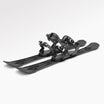
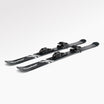
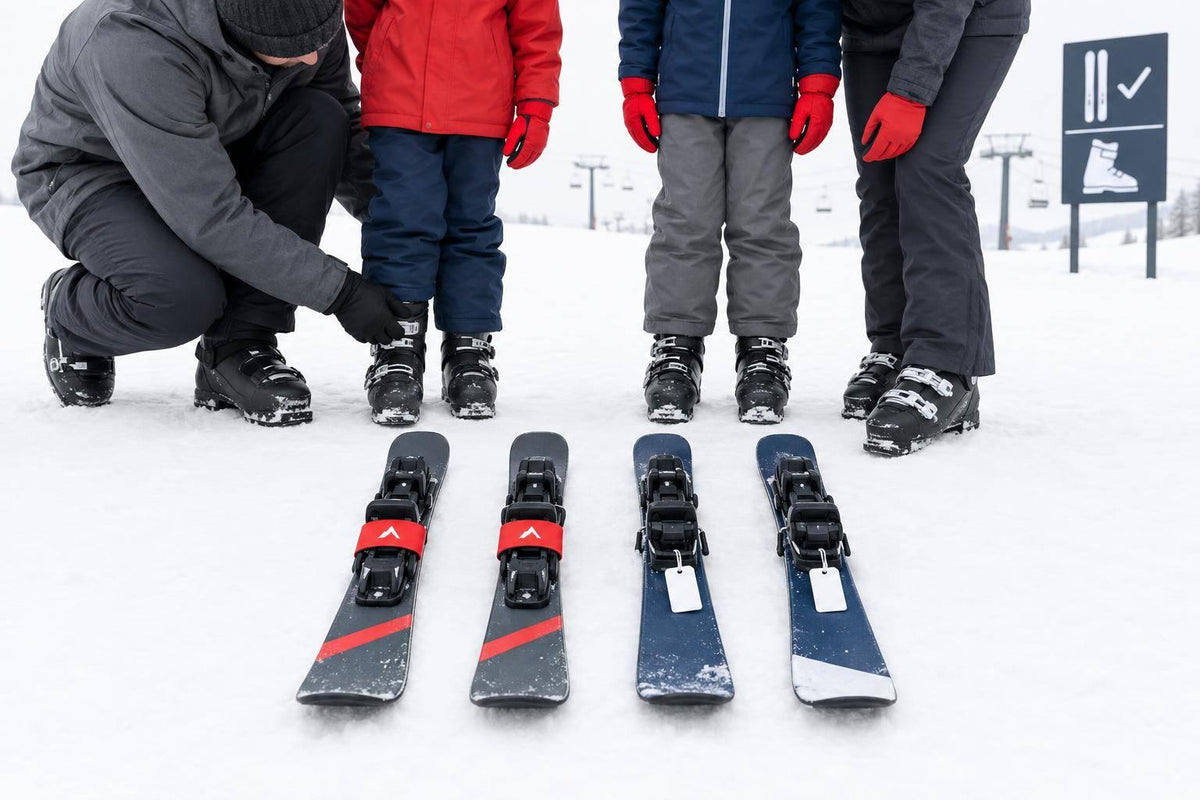
My advice: check boot fit and resort rules before you spend a dollar. Short skis can make family trips easier to pack for, but the smallest pair isn’t always the easiest to ride - or the best deal.
Here’s how I’d narrow down these four Snowfeet* options:
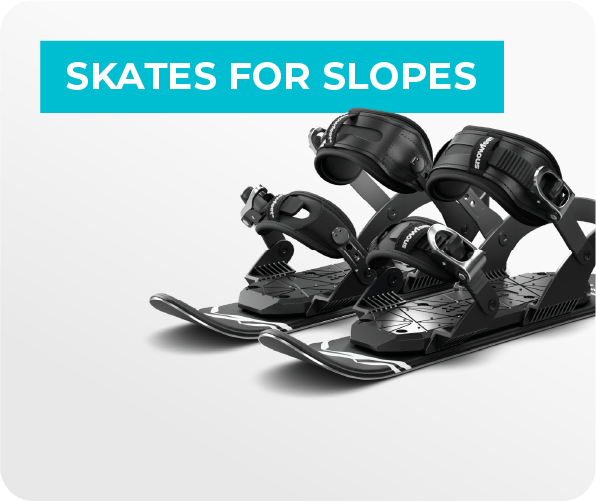
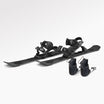
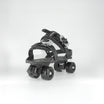
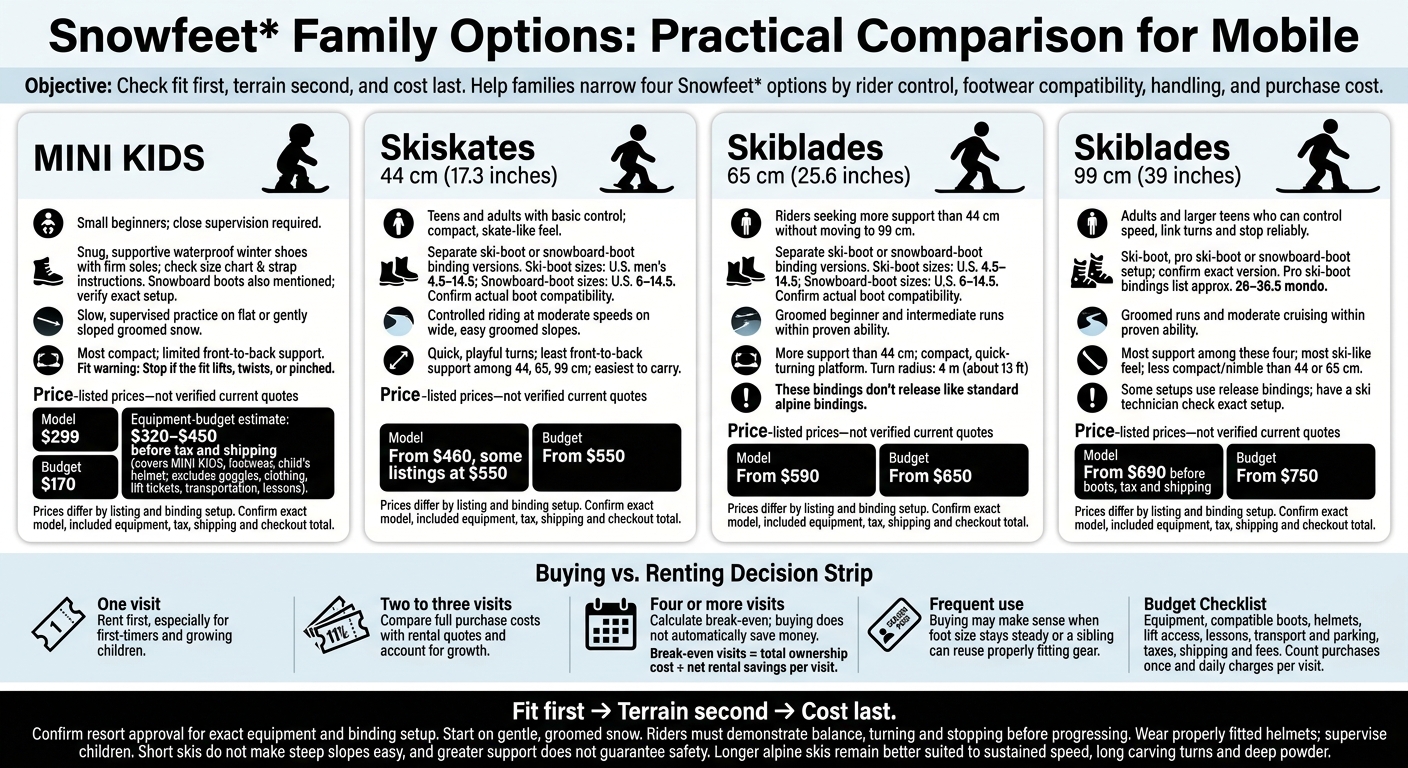
- MINI KIDS: For small feet, with snug, supportive winter shoes and close supervision on gentle snow.
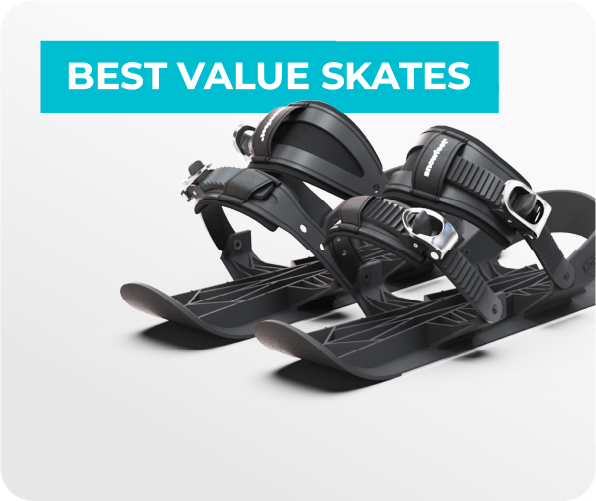
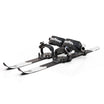
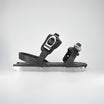
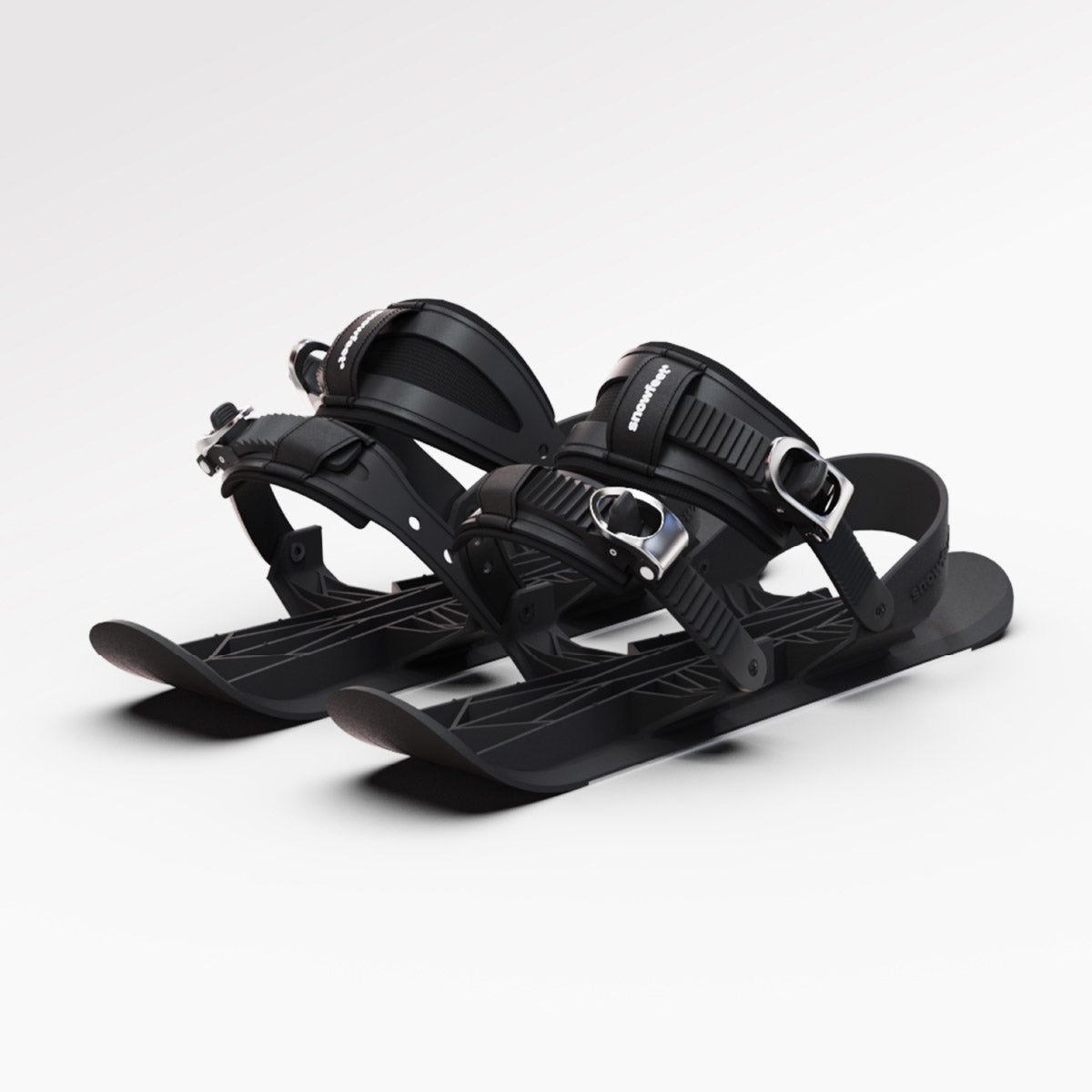
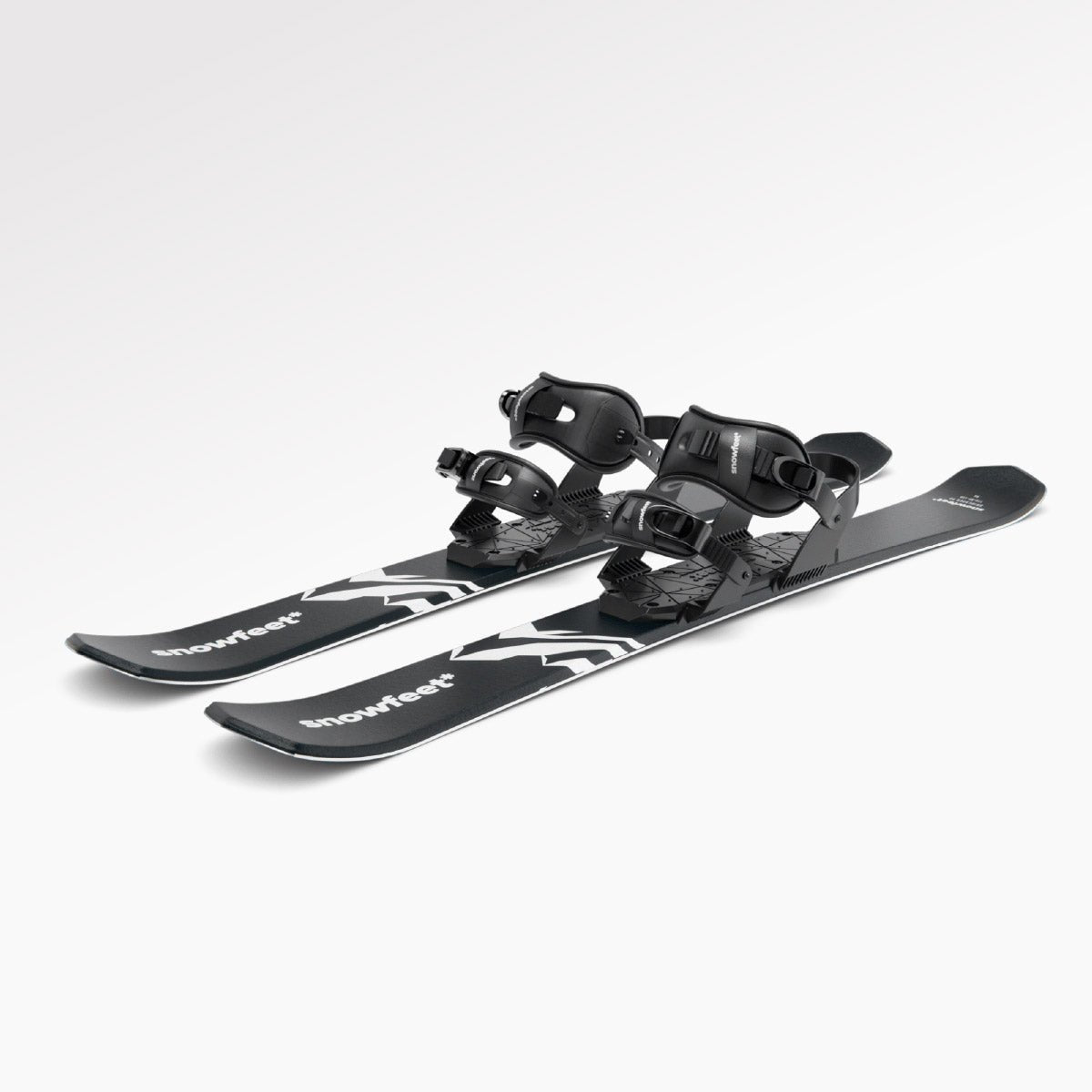
- Skiskates 44 cm (17.3 inches): A skate-like feel for riders with basic control and compatible ski or snowboard boots.
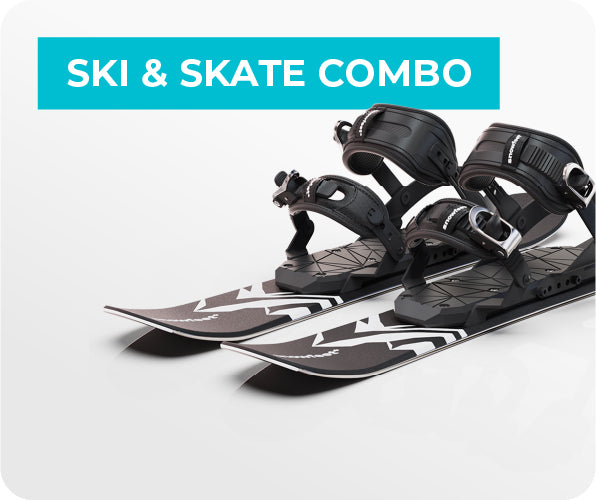
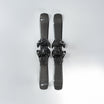
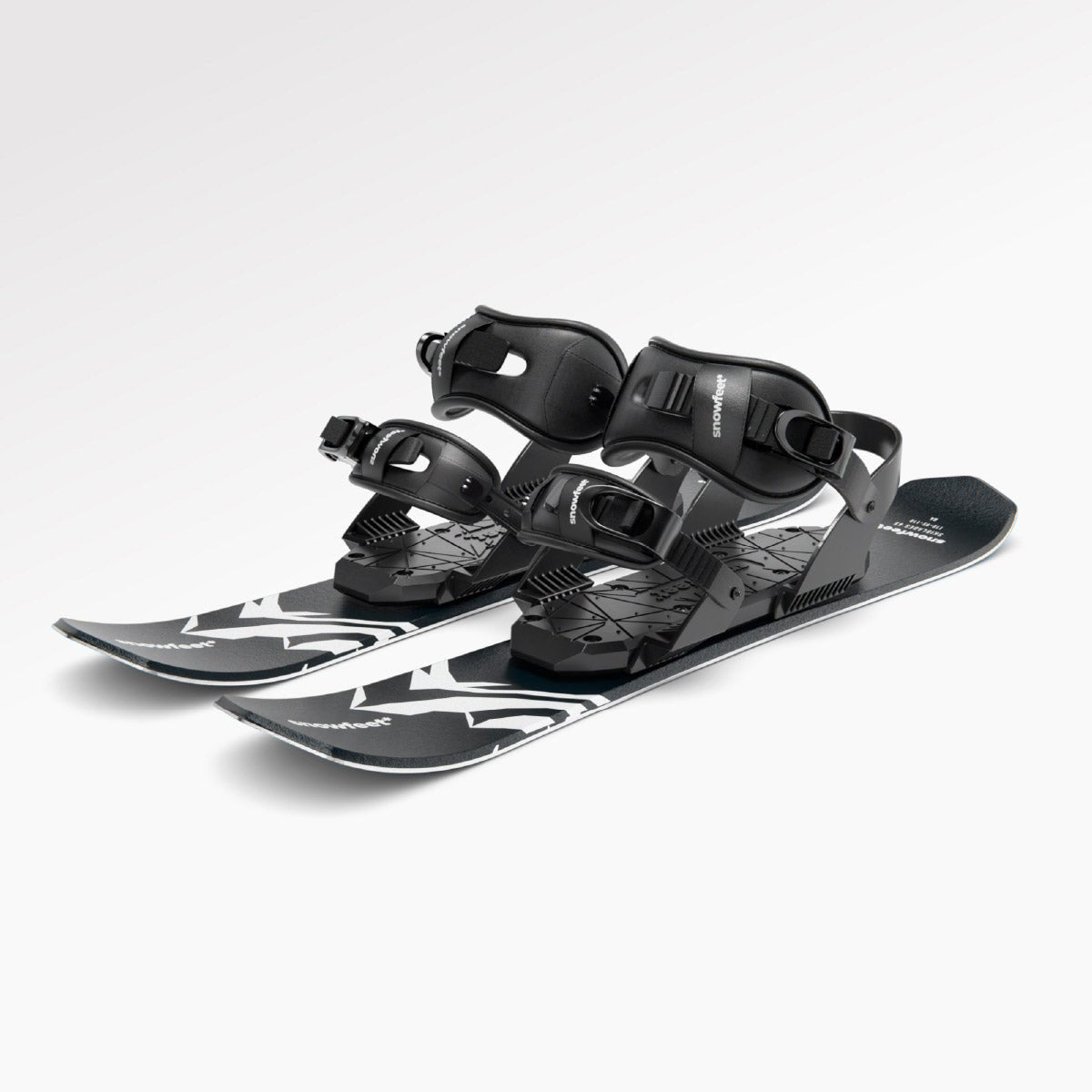
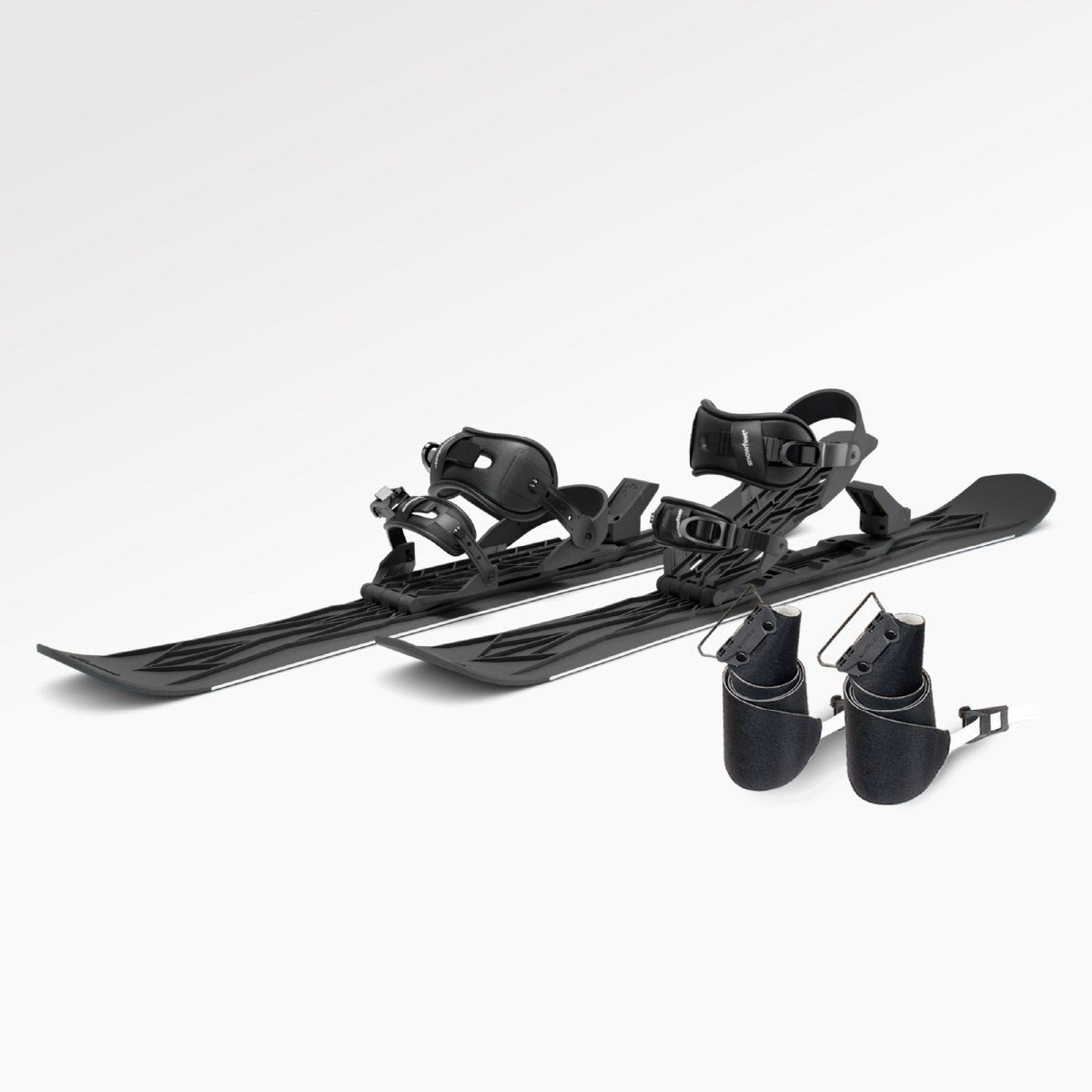
- Skiblades 65 cm (25.6 inches): More support than 44 cm, with short turns on groomed runs.
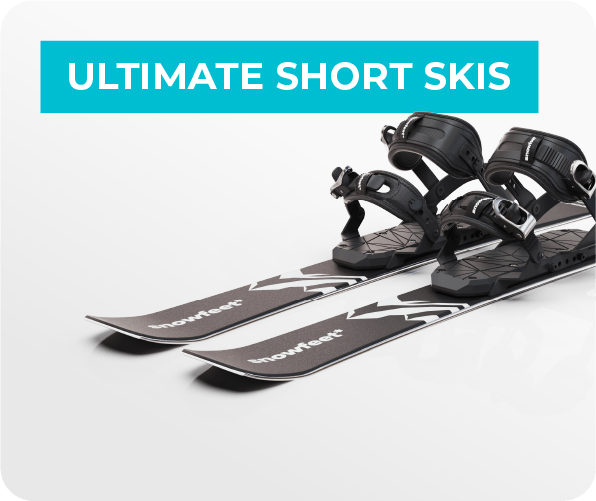
- Skiblades 99 cm (39 inches): The most ski-like feel here, for adults and larger teens who can turn and stop with control.
Quick Comparison
| Model | Main draw | Footwear check |
|---|---|---|
| MINI KIDS | Small size for supervised practice | Check shoe fit and straps |
| Skiskates 44 cm | Compact, skate-like turns | Match boots to the binding version |
| Skiblades 65 cm | More support than 44 cm | Check boot fit and non-release bindings |
| Skiblades 99 cm | Most support of these four | Confirm boot fit and exact binding setup |
For cost, I’d compare gear, boots, helmets, taxes, and shipping with rental quotes for your planned ski days. Prices in this article differ by listing, so <u>check the exact model and checkout total</u>. Keep lift tickets, lessons, and travel in the budget, too.
I’d rent for a first try or fast-growing feet. And I’d start everyone on gentle, groomed snow - short skis don’t make steep slopes easy. :)
Family Short Skis: Compare Fit, Length and Cost
Snowboarder tries Snowfeet* | Which Snowfeet* Short Ski is the Best? | Snowblades 44, 65, 99 Review
1. Snowfeet* MINI KIDS
MINI KIDS is the simplest Snowfeet option for small beginners who wear winter shoes.
Rider and Footwear Fit
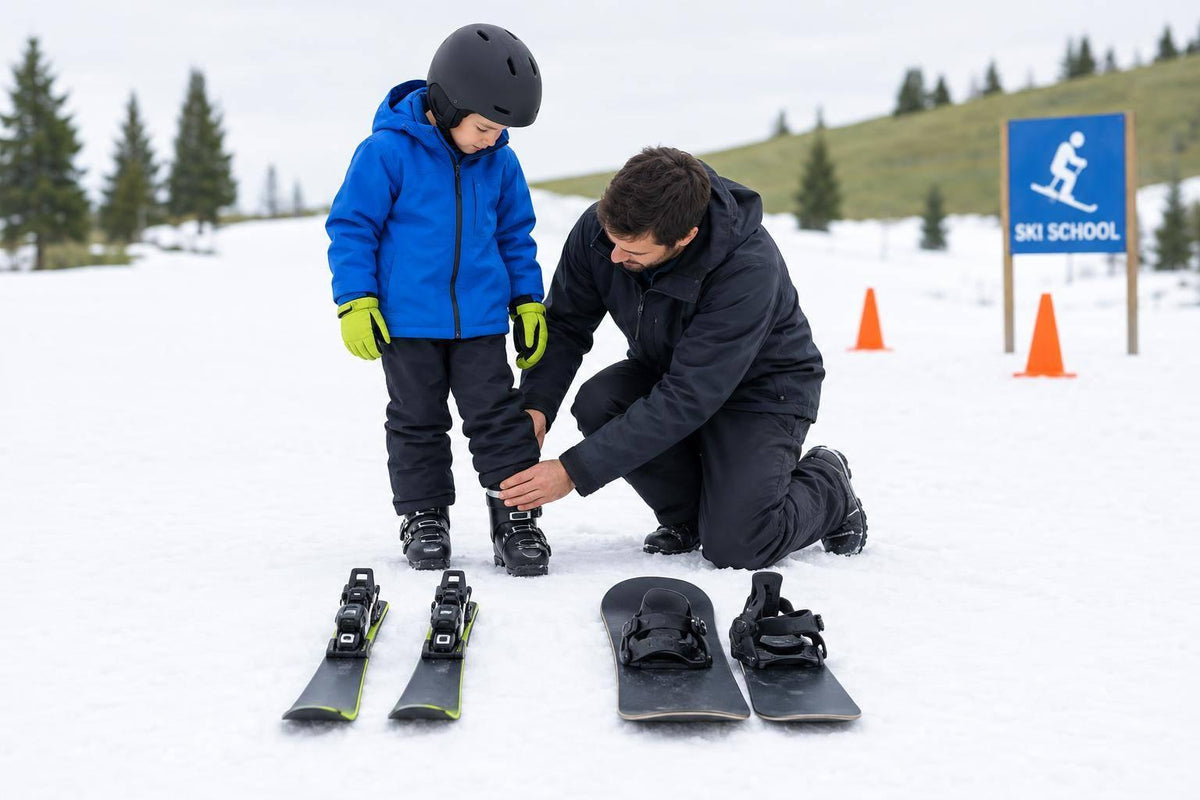
Measure your child’s foot length and check the size chart, especially near the size limits. Choose waterproof winter shoes with firm soles that hold the heels and ankles snugly. Fasten the straps as instructed. Stop if the fit lifts, twists, or pinches.
Terrain and Stability
Start on flat or gently sloped groomed snow, away from crowds and obstacles. Stay close and supervise. Before going farther, have your child show they can stop with control.
Avoid ice, steep runs, jumps, and deep snow. The small size sinks more in powder. Stop when tiredness affects your child’s balance or attention.
Family Equipment Cost
The current official listing is $299. Check the price, tax, and shipping at checkout before you buy. Compatible winter shoes take the place of ski boots, which cuts costs for repeated beginner use.
Budget about $320–$450 before tax and shipping for MINI KIDS, footwear, and a child’s helmet. Your total depends on what you already own. This budget doesn’t include goggles, clothing, lift tickets, transportation, or lessons. Choose a snow-sport helmet that fits properly.
For older kids ready for ski-boot bindings, the next step is the 44 cm (about 17.3-inch) Skiskates.
2. Snowfeet* Skiskates 44 cm
Rider and Footwear Fit
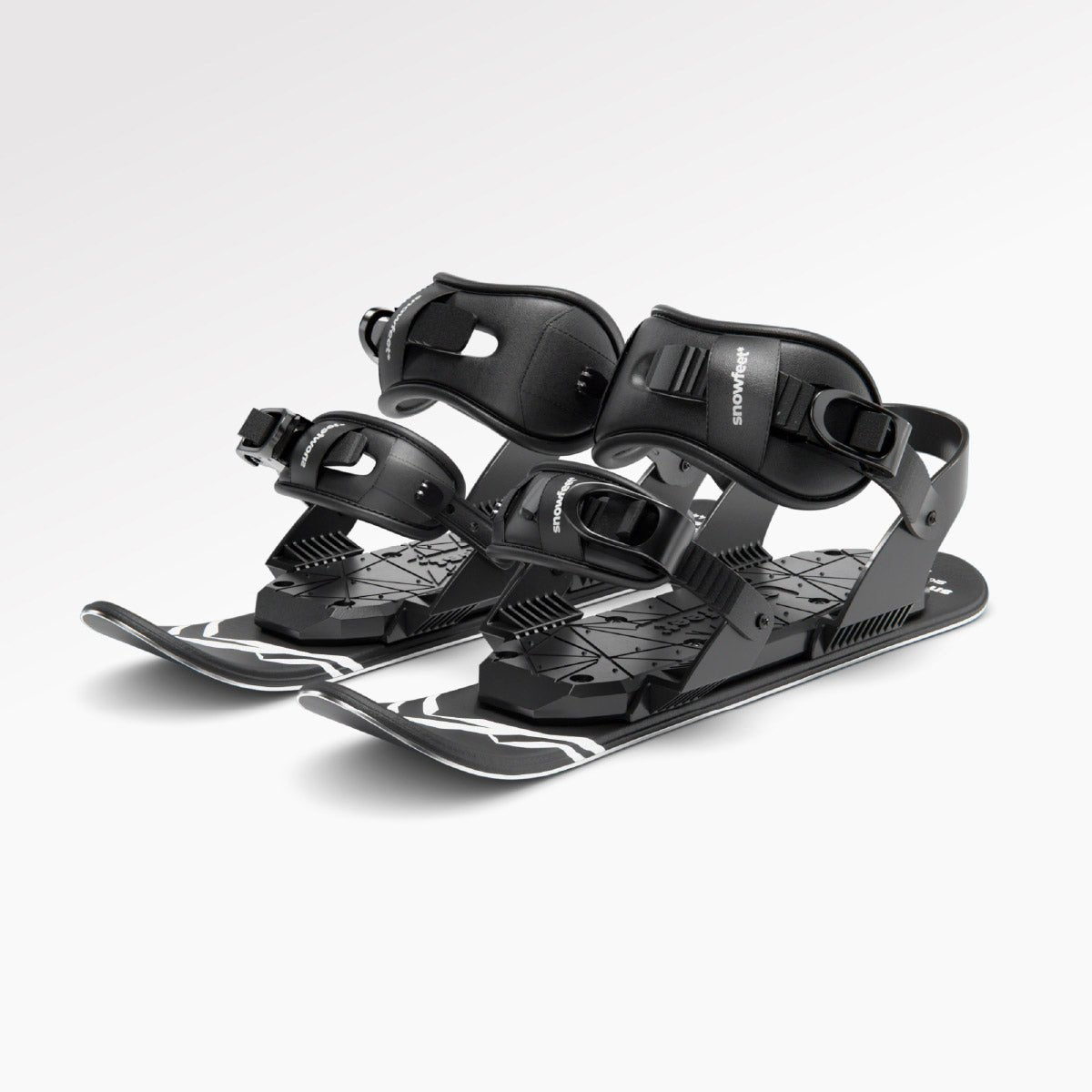
At 44 cm (about 17.3 inches), these Skiskates give teens and adults with basic control a skate-like feel. Pick the ski-boot version for U.S. men’s sizes 4.5–14.5 or the snowboard-boot version for U.S. sizes 6–14.5. Each uses a separate binding setup, so check your boot type and actual size before ordering.
Terrain and Stability
The short length makes quick turns easier and gives you less gear to carry. The tradeoff? Less stability and glide than longer skis, especially at speed or in chopped-up snow. Skiskates work best for playful riding at moderate speeds on wide, groomed slopes.
Before buying lift tickets, check the resort’s equipment, binding, and safety rules. Practice stopping and turning in a controlled area before joining other riders. Shorter gear doesn’t make tough terrain easier.
For families comparing sizes, this is the compact step up from MINI KIDS, below the longer Skiblades. It’s a playful option for teens and adults, with lower costs if you already own boots that fit the bindings.
Family Equipment Cost
Budget from $460, with some listings at $550. Check the exact binding setup, taxes, shipping, and return terms before paying.
Using compatible boots you already own can cut the upfront cost. If you don’t have them, budget for boots or boot rental, plus a helmet, lift tickets, clothing, food, and transportation. Buying can pay off when one pair serves the family over repeated outings. Renting makes sense for a first try or a growing teen.
If 44 cm feels too short, the 65 cm Skiblades offer the next step up in stability.
3. Snowfeet* Skiblades 65 cm
Rider and Footwear Fit
At 65 cm (about 25.6 inches), these Skiblades sit between 44 cm Skiskates and longer skis. Ski-boot bindings fit U.S. sizes 4.5–14.5, while snowboard-boot bindings fit U.S. sizes 6–14.5. Check that your actual boots work with the bindings before buying.
If 44 cm feels too twitchy, the 65 cm model offers more stability without stepping up to the 99 cm version.
Terrain and Stability
A 4 m (about 13 ft) turn radius makes for quick turns on groomed beginner and intermediate runs. You get more balance and edge support than with 44 cm Skiskates, but they're still compact enough to transport with ease.
These bindings don’t release like standard alpine bindings. Proper fit and resort approval matter, so check that your resort allows them before you travel. Follow the binding instructions, and check binding security and safety leashes before each ride. Wear a helmet and boots that fit properly.
That added stability is the main reason families move up from Skiskates.
Family Equipment Cost
The current listing starts at $590. Check the price for your chosen binding setup. For repeat family trips, compare the cost of owning a pair with local daily rental rates multiplied by your expected ski days.
Already have boots that fit the bindings? Buying may make sense. If fit is uncertain or your child is growing fast, rent first.
For riders who want a longer platform and more stability at moderate speeds, the 99 cm Skiblades come next.
sbb-itb-17ade95
4. Snowfeet* Skiblades 99 cm
Rider and Footwear Fit
At 99 cm (39 inches), these are the most stable, ski-like Snowfeet option here. They’re best for adults and larger teens who can control speed, link turns, and stop reliably.
Match the bindings to your boots: ski-boot, pro ski-boot, or snowboard-boot. Don’t assume winter shoes will fit. Pro ski-boot bindings list sizes of about 26–36.5 mondo, but check that your boots fit the setup you choose. Some setups use release bindings; have a ski technician check the exact setup.
The 99 cm model is a step up for the strongest rider in the family.
Terrain and Stability
The longer platform offers more edge hold and stability than the 65 cm model. It’s better for groomed runs and moderate cruising, though it won’t turn as nimbly as shorter models. Long skis are still better suited to sustained speed, long carving turns, and deep powder.
For casual family laps, 99 cm Snowfeet* offer more support while staying compact and easy to handle. You get a step up without switching to full-length skis.
If that extra stability fits your family’s needs, the next thing to check is price.
Family Equipment Cost
The listed price starts at $690 before boots, tax, and shipping. Check which bindings you’ve selected and confirm the final checkout total.
Next, compare all four models by rider fit, footwear, and terrain.
Compare Rider Fit, Footwear, and Terrain
Rider and Footwear Fit
Choose gear by footwear fit and control - not age alone. The 44, 65, and 99 cm models have adjustable bindings. Listed compatibility is about U.S. 4.5–14.5 for ski boots and U.S. 6–14.5 for snowboard boots. Check the current binding size chart; shoe size alone isn’t enough.
Use this table to compare fit and boot needs.
| Product or benchmark | Rider fit and experience | Footwear and binding setup |
|---|---|---|
| Snowfeet* MINI KIDS | Younger riders with smaller feet | Supportive waterproof winter shoes or compatible snowboard boots; follow strap-binding instructions. |
| Snowfeet* Skiskates 44 cm (17.3 in) | Riders who want the fastest response and most playful feel | Ski or snowboard boots; confirm the binding version. |
| Snowfeet* Skiblades 65 cm (25.6 in) | Riders who want more stability than 44 cm | Ski or snowboard boots; confirm the binding version. |
| Snowfeet* Skiblades 99 cm (39 in) | Riders who want a feel closer to standard short skis | Compatible ski or snowboard boots; confirm the binding version. |
| Benchmark: longer alpine skis | Sized for build, ability, and lesson goals | Compatible ski boots and professionally adjusted bindings |
| Benchmark: rental snowblades | Age limits and lesson eligibility vary by resort | Rental provider’s specified boots and bindings |
Check the current product page for any weight limits before buying.
Some setups use non-release bindings. These don’t release like standard alpine bindings, so confirm what your setup uses before buying. Don’t use sneakers, loose snow boots, or soft winter shoes when ski or snowboard boots are required. Never force a boot into a binding.
Once you’ve checked fit, compare how each length handles on snow.
Terrain and Stability
| Product or benchmark | Stability | Portability | Slope suitability |
|---|---|---|---|
| Snowfeet* MINI KIDS | Limited front-to-back support | Most compact | Slow, supervised practice on gentle groomed slopes |
| Snowfeet* Skiskates 44 cm | Least front-to-back support among the three longer models | Easiest of the three longer models to carry | Controlled riding on easy groomed terrain |
| Snowfeet* Skiblades 65 cm | More support than 44 cm | Compact | Building skills on easy groomed slopes |
| Snowfeet* Skiblades 99 cm | Most support among these four | Less compact than 44 or 65 cm | Groomed runs within proven ability |
| Benchmark: longer alpine skis | Better suited to sustained speed and long carving turns | Bulkier to transport | Better glide, flotation in soft snow, and progression through formal alpine instruction |
| Benchmark: rental snowblades | Depends on model and setup | No owned gear to transport | Resort-approved terrain; availability and lesson rules vary |
These handling differences don’t guarantee safety. Start on a wide, gentle, groomed slope with a safe runout. Avoid ice, moguls, jumps, deep powder, and narrow traverses. Each rider should show they can balance, turn, and stop before moving to harder terrain.
Confirm that the resort allows your exact setup before you travel. Inspect straps, buckles, edges, and bases. Wear properly fitted helmets, supervise children, and seek qualified instruction. Follow the NSAA’s advice: stay in control, yield to those downhill, and prevent runaway equipment.
Next, compare buying versus renting for your family budget.
Family Budget: Buying vs. Renting
Once you’ve checked the fit, compare the full cost of buying with renting.
The cheapest model is a good deal only if it fits the rider and gets enough use.
| Product | Current listed price | Main budget takeaway |
|---|---|---|
| Snowfeet* MINI KIDS | $170; skiblades.com listing | Kids may outgrow it before you get enough use |
| Snowfeet* Skiskates 44 cm | From $550; Snowfeet store | Budget for compatible boots if needed |
| Snowfeet* Skiblades 65 cm | From $650; Snowfeet store | Binding choice can change which boots you need and the total cost |
| Snowfeet* Skiblades 99 cm | From $750; Snowfeet store | Highest starting price in this group |
Use these prices to work out when buying would cost less than renting. Buy only when your expected use makes it cheaper. Get rental quotes for comparable gear, including required boots and fees.
| Expected use | Buying versus renting |
|---|---|
| One visit | Rent first, especially for first-timers and growing children |
| Two to three visits | Compare the full purchase cost with rental quotes, and account for growth |
| Four or more visits | Work out the break-even point; don’t assume buying saves money |
| Frequent use | Buying makes more sense when foot size stays steady or a sibling can reuse gear that fits |
Break-even visits = total ownership cost ÷ net rental savings per visit.
For each family member, write down the model that fits and a realistic number of ski days. Use official resort prices to fill in the costs below.
Count each purchase once and daily charges for each visit. Lessons may not include tickets or rentals. If a rental package includes boots or a helmet, don’t count those costs twice.
| Family cost | Buying total | Renting total |
|---|---|---|
| Equipment | $___ | $___ |
| Lift access | $___ | $___ |
| Footwear or boot rentals | $___ | $___ |
| Lessons | $___ | $___ |
| Transport and parking | $___ | $___ |
| Taxes, shipping, and fees | $___ | $___ |
| Total | $___ | $___ |
Trim the trip bill with verified advance-ticket discounts, weekday visits, beginner-area passes that suit your plans, shared rides, and packed food where allowed. Skip lockers you don’t need, but don’t cut corners on gear that fits properly.
Choose the Right Fit for Your Family
Use the comparison table above to narrow your options, then check boot compatibility. Choose MINI KIDS only if the boot fits securely in the binding. Once you’ve checked the fit, pick a length based on how your family rides: 44 cm feels the most like skating, 65 cm adds control, and 99 cm offers the steadiest short-ski feel. Longer skis still work best for sustained speed and long carving turns.
Before you buy or pack, check:
- Rider fit: Consider each rider’s balance, stopping skills, and need for supervision - not just age.
- Boot/binding match: Check boot length, width, and binding version. Test the fit before you leave.
- Terrain/resort rules: Plan for the least experienced rider and start on gentle, groomed snow. Check that the resort allows your exact model on lifts and in beginner areas.
- Safety gear: Pack helmets that fit well, eye protection, gloves, and warm, waterproof clothing.
As the buying-versus-renting comparison explains, buying only makes sense if the same setup can work for multiple days or multiple riders whose boots fit the bindings. Rent when kids are still growing, you won’t use the gear often, or lesson rules call for it.
Check fit first, terrain second, and cost last. Don’t buy a poor fit just to save money.
FAQs
Can my family share one pair of Snowfeet*?
Yes, family members with compatible footwear can often take turns using one pair of Snowfeet*. That can save you the cost of renting multiple sets.
Many models have adjustable bindings. Some adult models fit U.S. shoe sizes 6–13, while others fit 4.5–14.5. Siblings or adults with similar boot sizes can swap gear.
Snowfeet* are also compact and lightweight, so parents can carry them more easily than long skis.
Will ski lessons accommodate short skis?
It depends on the resort and lesson program. Snowfeet products are beginner-friendly and often easier to learn than standard skis. But check the ski school’s equipment rules before you book. Some programs require standard children’s skis for their lessons.
If formal lessons are your main goal for that first ski day, renting standard ski gear through the resort’s ski school is a reliable option.
How do I compare buying with seasonal rentals?
Start with how often you’ll ski. Rentals make sense for a one-off trip or your first time on skis. But for a family of four, daily rentals can run $130–$240 before add-ons.
Buying Snowfeet often pays for itself within 4–10 days of use. Many models work with your winter or snowboard boots, so you can skip boot-rental costs, too. You’ll also skip rental lines and have a portable setup ready for casual family outings.



Оставить комментарий
Этот веб-сайт защищается hCaptcha. Применяются Политика конфиденциальности и Условия использования hCaptcha.