




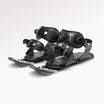
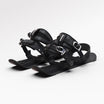
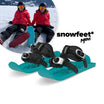
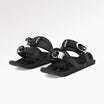
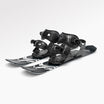
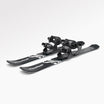
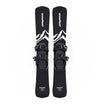
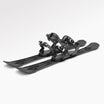
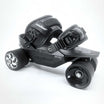
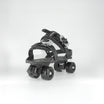
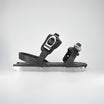
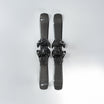
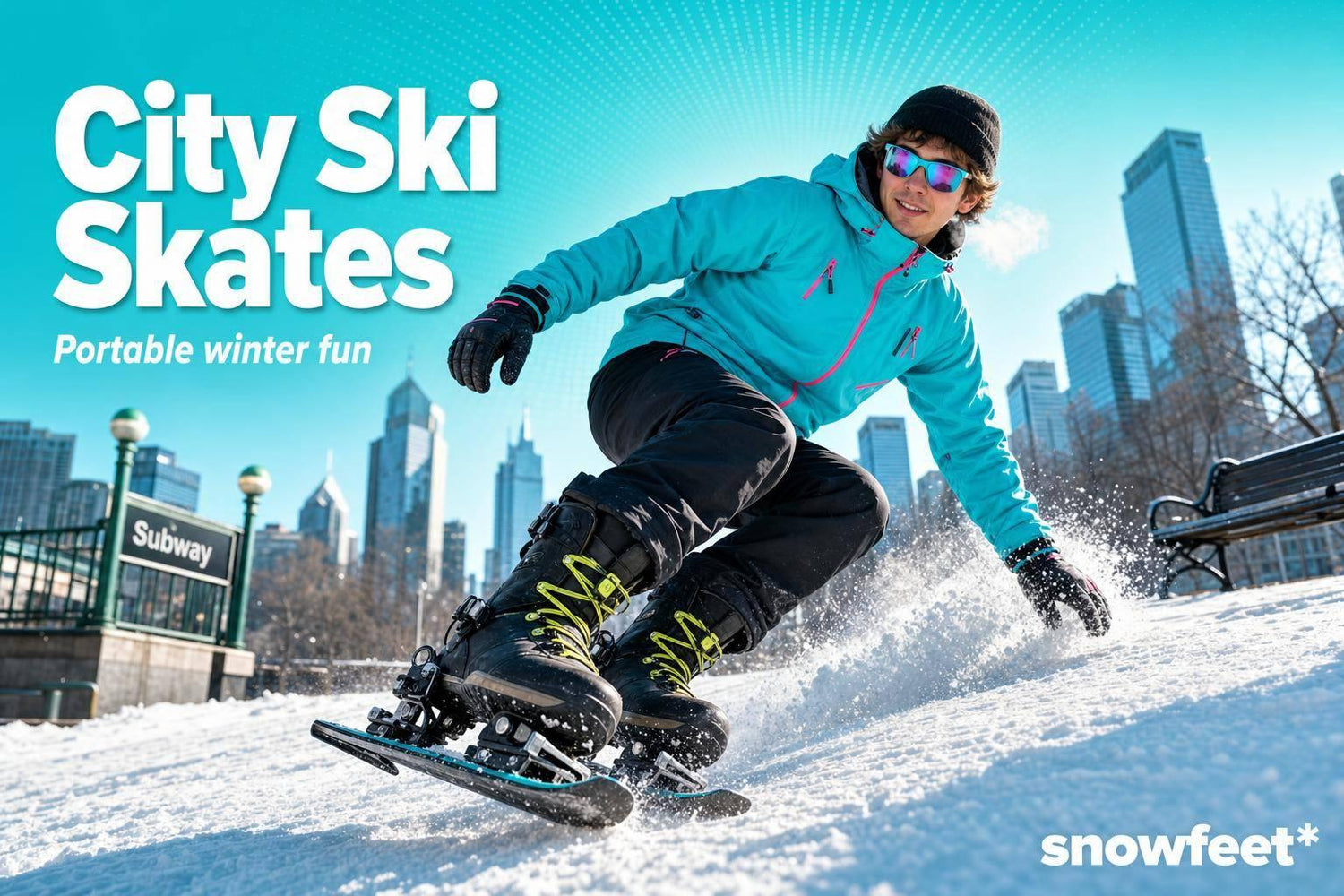
Yes - if you live in a small place, use buses or the subway, and ski a few days each season, mini ski skates can make more sense than full skis or a snowboard. You give up some speed, stability, and powder use. But you get far less gear to carry, less stuff to store, and a setup that can cost $299 to $460 instead of a full ski package.
Here’s the short version:
- Best for city life: mini ski skates
- Best for speed, carving, and powder: full skis or snowboards
- Best for casual riders: Snowfeet 38 cm
- Best for resort laps: Skiskates 44 cm
- Best middle ground: Snowfeet PRO 50 cm
One stat stands out: in the cited survey, only 11.9% of people used the bus and 9.3% used shuttles, while 64.4% used a car. That tells me one thing: if you don’t have a car, long skis are a pain.
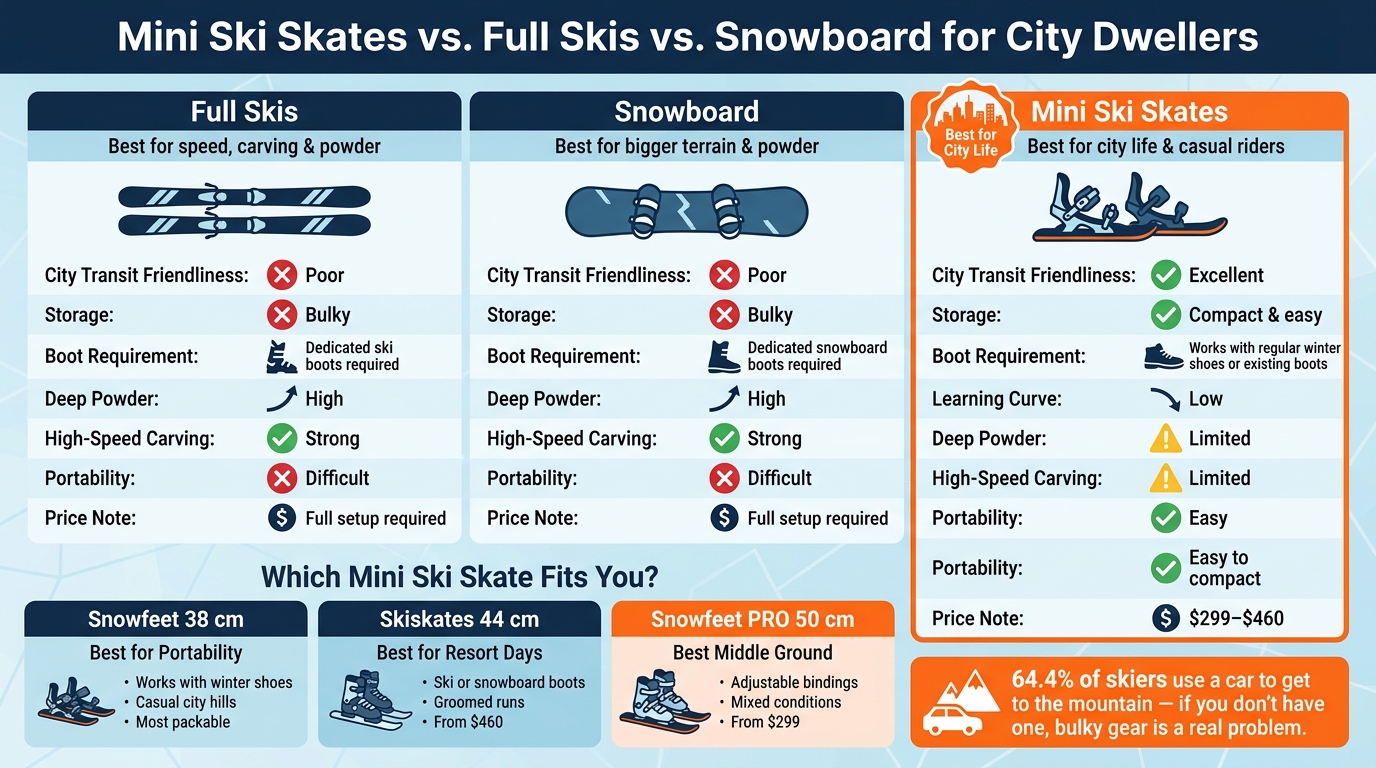
Mini Ski Skates vs. Full Skis vs. Snowboard: City Rider Comparison
Snowfeet* Review: Are Skiskates Worth It? | Mini Ski | Skates for Snow | Skating Ski | Short Ski
Quick Comparison
| Option | Best Use | Main Upside | Main Downside | Price/Setup Note |
|---|---|---|---|---|
| Full skis | Resort riding, speed, powder | Better stability and edge hold | Hard to carry and store | Need ski boots and full setup |
| Snowboard | Resort riding, powder | Strong on bigger terrain | Awkward on transit, more gear | Need snowboard boots |
| Snowfeet 38 cm | City riders, light travel, beginners | Smallest and easiest to pack | Less stable on steep or fast runs | Works with winter shoes |
| Skiskates 44 cm | Resort riders who want short-ski feel | More control on groomers | Costs more, less packable than 38 cm | Starts at $460 |
| Snowfeet PRO 50 cm | Mixed use, 5–10 resort days | Better balance of control and size | Still not for deep powder or fast charging runs | Starts at $299 |
If I had to sum it up in one line: mini ski skates are worth it when daily life matters more than top-end mountain performance. They won’t replace full skis. But for apartment living, rideshares, trains, and casual winter trips, they can be the smarter buy.
What matters most is simple:
- How often you ride
- How you get there
- Where you’ll store your gear
- Whether you already own boots
So, if your gear has to fit your life before it fits the mountain, mini ski skates are a solid pick :)
Snowfeet* vs. Full-Length Skis and Snowboards for City Use
Full-length skis and snowboards still win on speed, carving, powder, and icy steeps. Snowfeet* are not a replacement for them. That part is simple.
For city riders, the real question is different: is that extra performance worth the bulk and hassle? If your gear has to fit into normal daily life - not just sit on a ski rack - that gap starts to feel pretty big.
Portability, Storage, and Getting Around Town
Traditional skis and snowboards are bulky and awkward on buses, subways, or rideshares. Anyone who’s tried dragging long skis through a station knows the deal. It’s not fun.
Snowfeet* models are compact and easy to carry on buses, subways, and rideshares, and many work with regular winter shoes or snowboard boots. That matters when you’re hauling gear through stations, up stairwells, and into a small apartment.
And once getting around town stops being a pain, the next thing people look at is the boots - and how hard the setup is to learn.
Boot Compatibility, Learning Curve, and Total Cost
Many Snowfeet* models work with winter shoes or snowboard boots you may already own, and their shorter length makes them easier to learn. The 44 cm Skiskates also come in ski-boot or snowboard-boot versions, so you can pick the setup that fits what you already have.
Here’s the quick breakdown:
| Factor | Full-Length Skis | Snowboard | Snowfeet* (38–50 cm) |
|---|---|---|---|
| Storage and transport | Bulky | Bulky | Compact and easy to carry |
| Boot setup | Dedicated boots required | Dedicated boots required | Many models work with regular winter shoes or snowboard boots |
| Upfront gear burden | Higher | Higher | Lower for many riders |
| Learning curve | Higher | Higher | Lower |
| Deep powder | Strong | Strong | Limited |
| High-speed carving | Strong | Strong | Limited |
| City transit friendliness | Poor | Poor | Much better |
So, yeah, Snowfeet* make the commute easier. But gear that’s easy to carry still has to feel good on snow.
Speed, Stability, Fun, and Terrain Trade-Offs
On snow, the trade-off is pretty clear: longer skis and snowboards are steadier at speed and stronger in deep powder. Snowfeet* are shorter, so they feel less planted at speed and do less well in deep powder.
That’s the trade city riders are making.
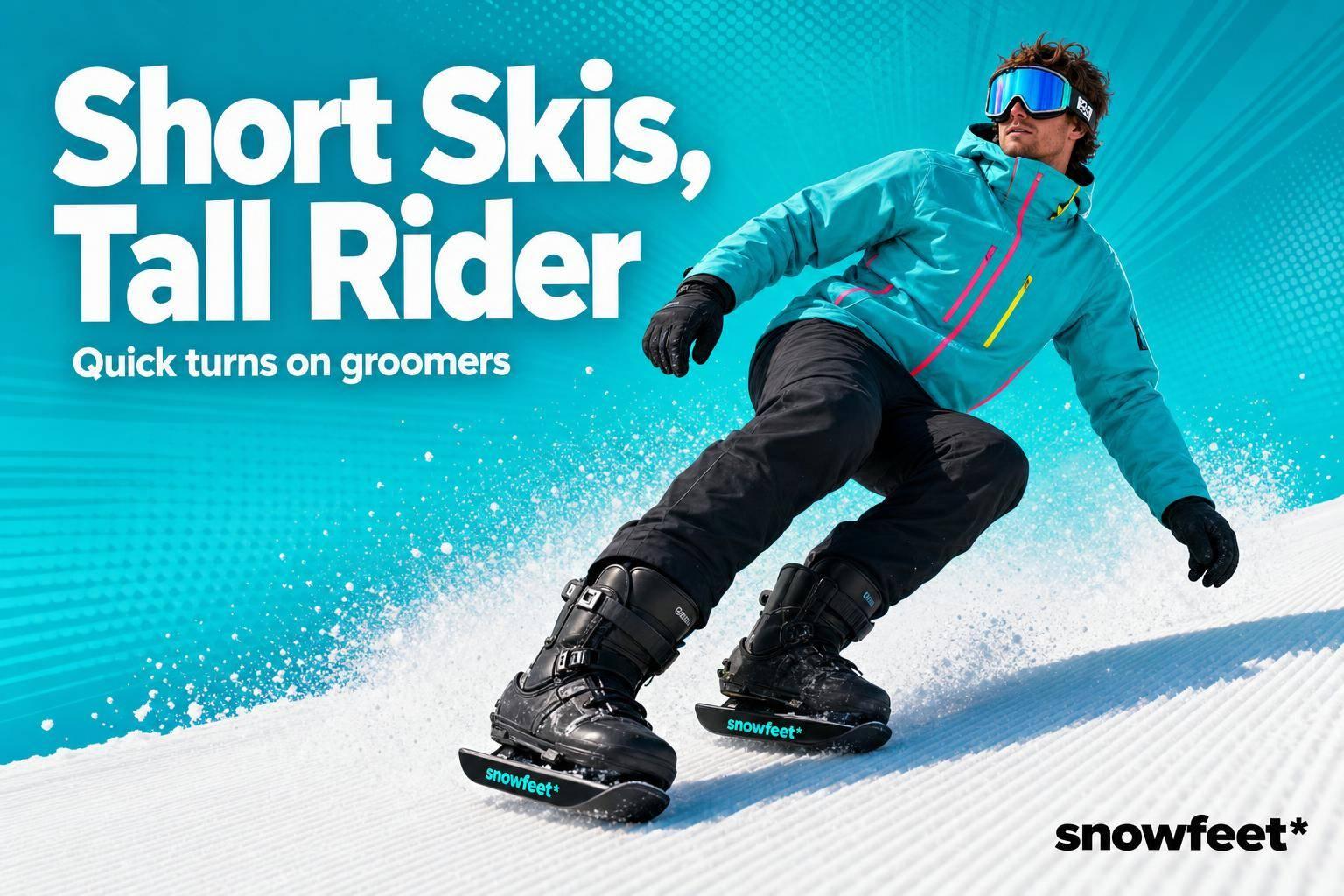
What do you get in return? Quick turns, easy transport, and casual laps on local hills or resort days. If your goal is to keep things simple and get on snow without turning the whole day into a gear mission, that trade can make a lot of sense.
sbb-itb-17ade95
Which Snowfeet* Model Fits a City Lifestyle?
If compact gear fits your city routine, the next step is picking the right Snowfeet* length. This is where things get simple: each model leans toward a different mix of pack size and on-snow control.
For city riders, the main question isn’t which model wins in every case. It’s which one fits how often you ride, where you ride, and how much gear you want to drag around. One model is easiest to pack. One feels more at home at the resort. One lands right in the middle.
| Model | Length | Best For | Boot Type |
|---|---|---|---|
| Snowfeet 38 cm | 15 in | Max portability, casual use, beginners | Regular winter shoes |
| Skiskates 44 cm | 17.3 in | Resort days, more ski-like feel | Ski boots or snowboard boots |
| Snowfeet PRO 50 cm | 19.7 in | Balance of control and compact size | Adjustable bindings |
Snowfeet 38 cm: Best for Portability
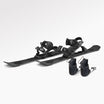
This model keeps things easy for casual city riders who don’t want to deal with ski boots. It’s small enough to carry without much hassle, and it works with regular winter shoes. That’s a big plus if you’re hopping on a train, walking a few blocks, or stuffing gear into a small apartment closet.
The trade-off is simple: you get less stability at higher speeds and on steeper groomed runs. If you think you’ll spend more time on groomed slopes and want a bit more confidence, the 44 cm is the better move.
Snowfeet* Skiskates 44 cm: Best for City Riders Who Spend Time at Resorts
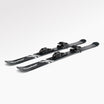
The 44 cm Skiskates are the best fit for riders who want the closest feel to short skis on groomed runs. If your idea of a good winter day includes lift tickets and clean resort laps, this is the one that makes the most sense.
They’re built for groomed resort slopes and give you more control than the smaller models. They also use a wood-core build and come in ski-boot and snowboard-boot versions. Starting at $460, they’re the resort-first option for riders who already own ski or snowboard boots.
If you want a touch more stability but still want to keep things compact, the PRO sits right nearby.
Snowfeet PRO 50 cm: Best Balance of Portability and Control
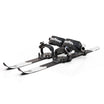
Pick the PRO if you want more stability than the 38 cm but don’t want to jump into the 44 cm setup. At 50 cm, or about 19.7 in, it handles mixed conditions better than the smaller models. That makes it a nice middle lane for riders who want one setup that can do a bit of everything.
The adjustable bindings also make fit and setup easier, which is always nice. No one wants to wrestle with gear in the cold with numb fingers :) Starting at $299, the PRO costs less than the 44 cm Skiskates. It fits riders who want one compact setup for mixed conditions.
Next: how Snowfeet* compare with other short-ski brands.
How Snowfeet* Compare With Snowblades and Other Short-Ski Brands
If long skis are the baseline, the next step is simple: which short-ski setup makes the most sense in a city?
Short skis have been around for a long time. But Snowfeet* lean into a different goal. They’re built for city riders who care more about easy carry, easy storage, and low gear hassle than top-end downhill power.
Where Other Short Skis Do Well and Where Snowfeet* Come Out Ahead
Classic snowblades make more sense for groomed resort laps. They like speed, open runs, and the kind of day where you’ve already committed to full ski gear. City riding is a different beast. You’re dealing with apartments, buses, trains, short hills, and whatever fits in your day without turning it into a full production.
That’s where portability and simple setup start to matter more than extra edge length.
| Feature | Snowfeet* | Classic Snowblades | Bigfoot / Figl Style |
|---|---|---|---|
| Best for | Urban riders, short trips, casual laps | Groomed resort runs at speed | Beginner-friendly resort riding |
| Portability | Easy to carry and store | Less convenient | Less convenient |
| Boot/setup flexibility | More flexible, with some models designed for regular winter shoes and others for ski or snowboard boots | Usually needs ski boots | Usually needs ski boots |
| Learning curve | Quick and easy | Beginner-friendly | Beginner-friendly |
| Speed and stability | Great for casual use | Stronger at higher speed | Maneuverable |
Snowfeet* cut down the amount of gear city riders need to buy, carry, and stash at home. That’s a big deal if your “gear room” is, well, a closet by the front door.
The 44 cm Skiskates fit ski boots in sizes EU 36–49 (US 4.5–14.5) and snowboard boots in sizes EU 38–49 (US 6–14.5). So if you already own boots, there’s a good chance you can use what you have instead of adding one more chunky piece of gear to your life.
The trade-off is pretty clear. If your main goal is speed and carving on long groomed runs, a classic snowblade can be the better pick. If you care more about apartment living, public transit, and keeping your setup light and simple, Snowfeet* make a lot more sense.
From here, the real choice is just picking the Snowfeet* length that fits how you like to ride.
Verdict: When Mini Ski Skates Are Worth the Money for City Dwellers
Once you stack up storage, boot fit, and what these do well on snow, the choice gets pretty clear. If you live in an apartment and only ride a few days each season, Snowfeet* mini ski skates make more sense. They’re easy to stash, easy to carry, and they work with boots many riders already have.
If you ride 10–20+ resort days a season, or spend most of your time on steep runs or in powder, don’t use Snowfeet* as your main setup.
For casual riders and weekend travelers, Snowfeet* hit a sweet spot between convenience and fun. That’s the big draw. You can toss them in a bag, head out, and skip the whole “where am I supposed to store full skis?” problem.
Best Pick by Rider Type
If Snowfeet* sound like your kind of setup, the main thing to decide is length. That’s it.
| Rider Type | Best Model | Why It Fits |
|---|---|---|
| Subway commuter, city hill rider, light-travel skier | Snowfeet* 38 cm | Lightest and easiest to pack; fits in a backpack; works well for mellow local runs |
| Weekend resort rider using rideshare or bus | Snowfeet* Skiskates 44 cm | Better edge hold on groomed blue runs; still easy to store in a small apartment; from $460 |
| City rider with 5–10 resort days who wants ski-like feel | Snowfeet* PRO 50 cm | Best mix of control and portability; from $299 |
So, the choice comes down to one honest question: how often do you ride, and how do you get there? Answer that, match it to the table, and you’ll know what makes sense without tying yourself in knots.
FAQs
Are mini ski skates allowed at most ski resorts?
Yes. Mini ski skates like Snowfeet* are usually allowed at most ski resorts. They count as sports equipment and are built for groomed runs, hardpack, and terrain parks you’ll find at resorts.
That said, it’s still smart to check your resort’s policy before you go. Rules can vary, and a quick look can save you a headache at the lift :) Their small size and growing popularity make them a practical, widely accepted option instead of standard ski gear.
Can beginners learn on mini ski skates faster than on skis?
Yes. Most beginners learn mini ski skates faster than traditional skis.
A lot of riders feel at ease on Snowfeet* in a single day. Some even say they get the hang of them in as little as five minutes.
Why does that happen? Their short, light build makes turning and stopping feel more natural than on long, heavier skis. There’s less ski to manage, which can make the first few runs feel a lot less awkward.
And if you already skate - on ice or inline skates - the learning curve can feel even shorter. The movement often clicks fast.
Which Snowfeet* model is best if I don’t own ski boots?
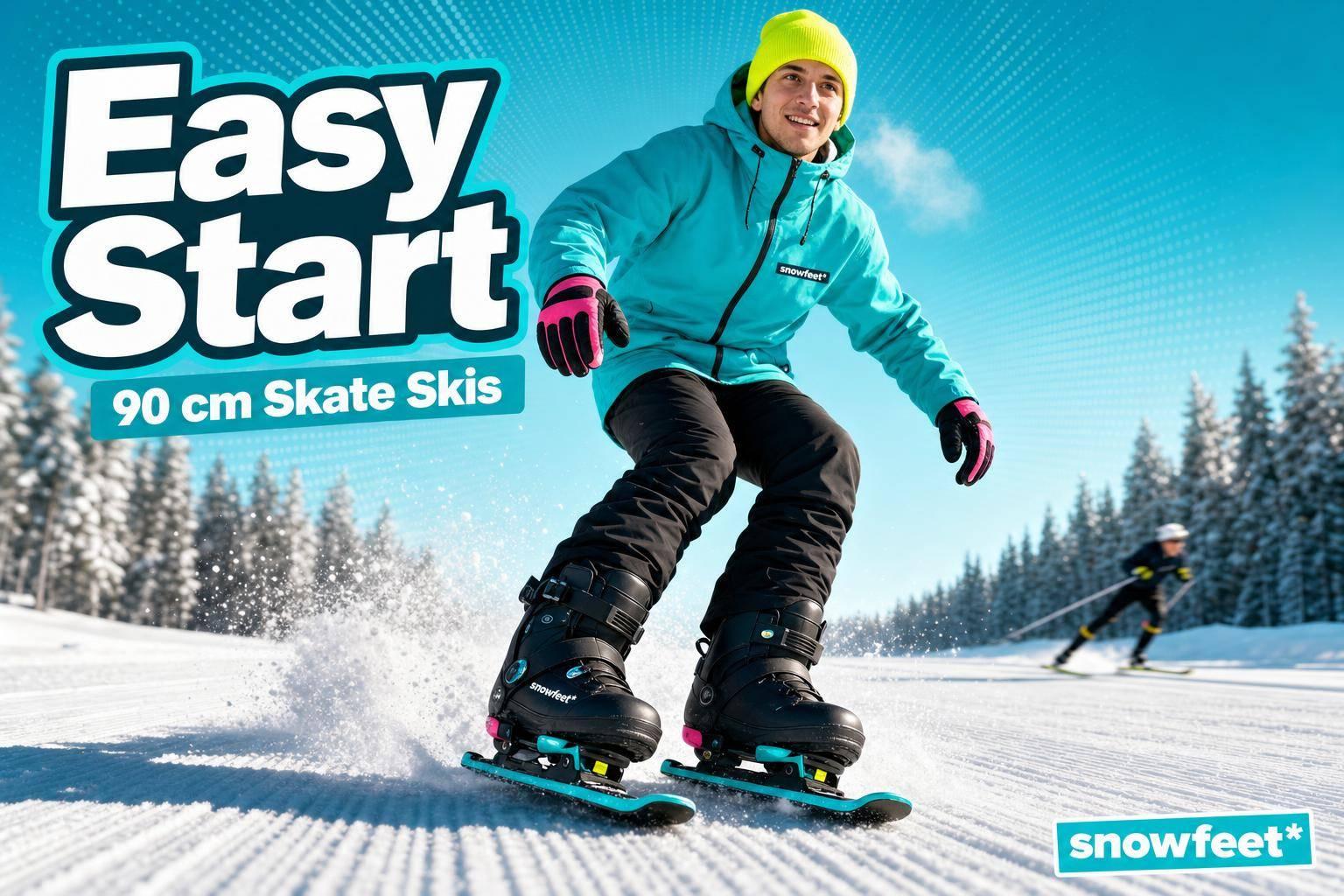
You don’t need ski boots to use Snowfeet* products. Every model works with your regular winter shoes or snowboard boots, thanks to adjustable bindings.
That’s a big win if you want to keep things simple. No stiff ski boots. No extra gear to haul around. Just strap in and go :)
If you want maximum portability, choose the 38 cm Mini Ski Skates. They’re small, light, and easy to toss in a backpack.
If you want more stability and better performance, go with the 50 cm PRO. You’ll get a steadier ride without dealing with the cost and bulk of ski boots.
Either way, you can skip the extra expense and keep your setup a lot less clunky.











Lasă un comentariu
Acest site este protejat de hCaptcha și hCaptcha. Se aplică Politica de confidențialitate și Condițiile de furnizare a serviciului.