




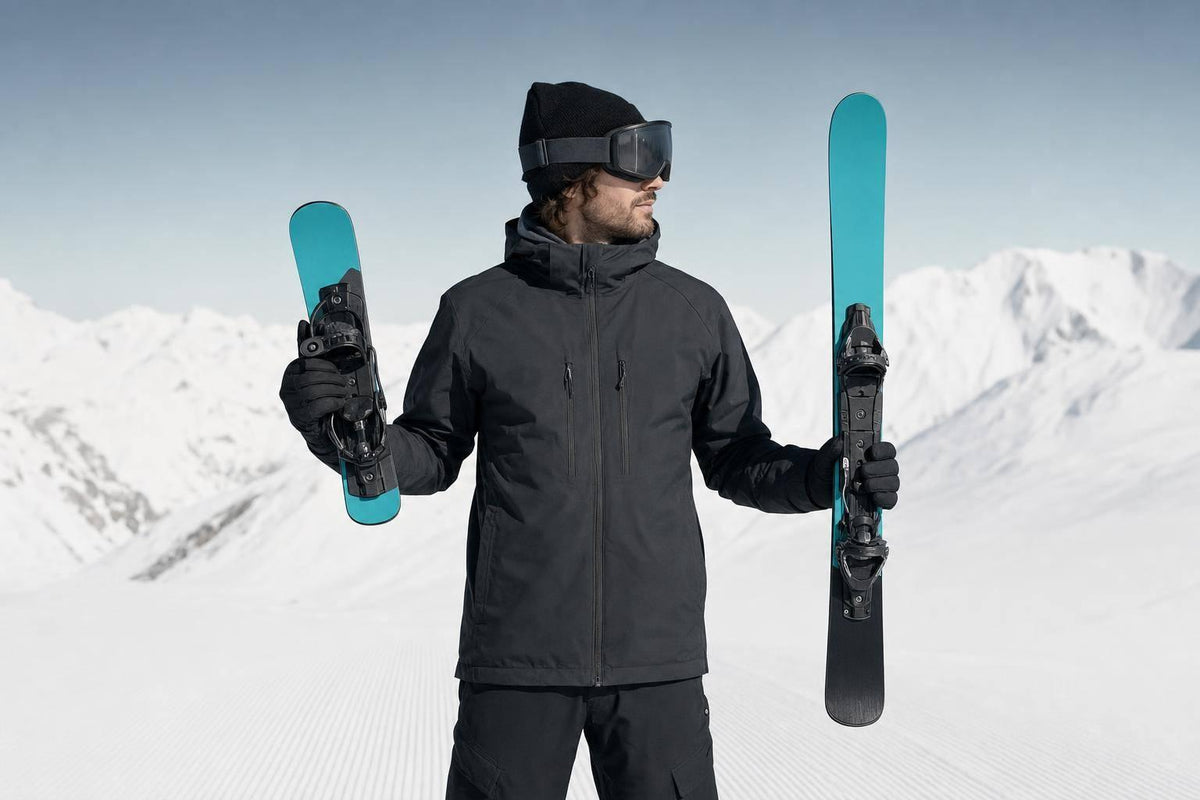
If you used to snowboard, the best pick comes down to one thing: how much stability you want. I’d keep it simple: 44 cm for tricks, 50 cm for an easy first step, 65 cm for the best mix of fun and control, and 99 cm for carving and more calm at speed.
Here’s the short answer:
- 44 cm Skiskates feel the most skate-like
- 50 cm PRO works well for mellow resort laps and soft snowboard boots
- 65 cm Skiblades hit the sweet spot for many ex-snowboarders
- 99 cm Skiblades feel closest to skis, with more grip and smoother turns
One big thing to know: these work best on groomed snow. The shorter models are more fun for spins, side hits, and tight turns, but they get less steady as speed goes up. The longer models give you more support, but they lose some of that loose, playful feel.
Snowboarder tries Snowfeet* | Which Snowfeet* Short Ski is the Best? | Snowblades 44, 65, 99 Review
Quick Comparison
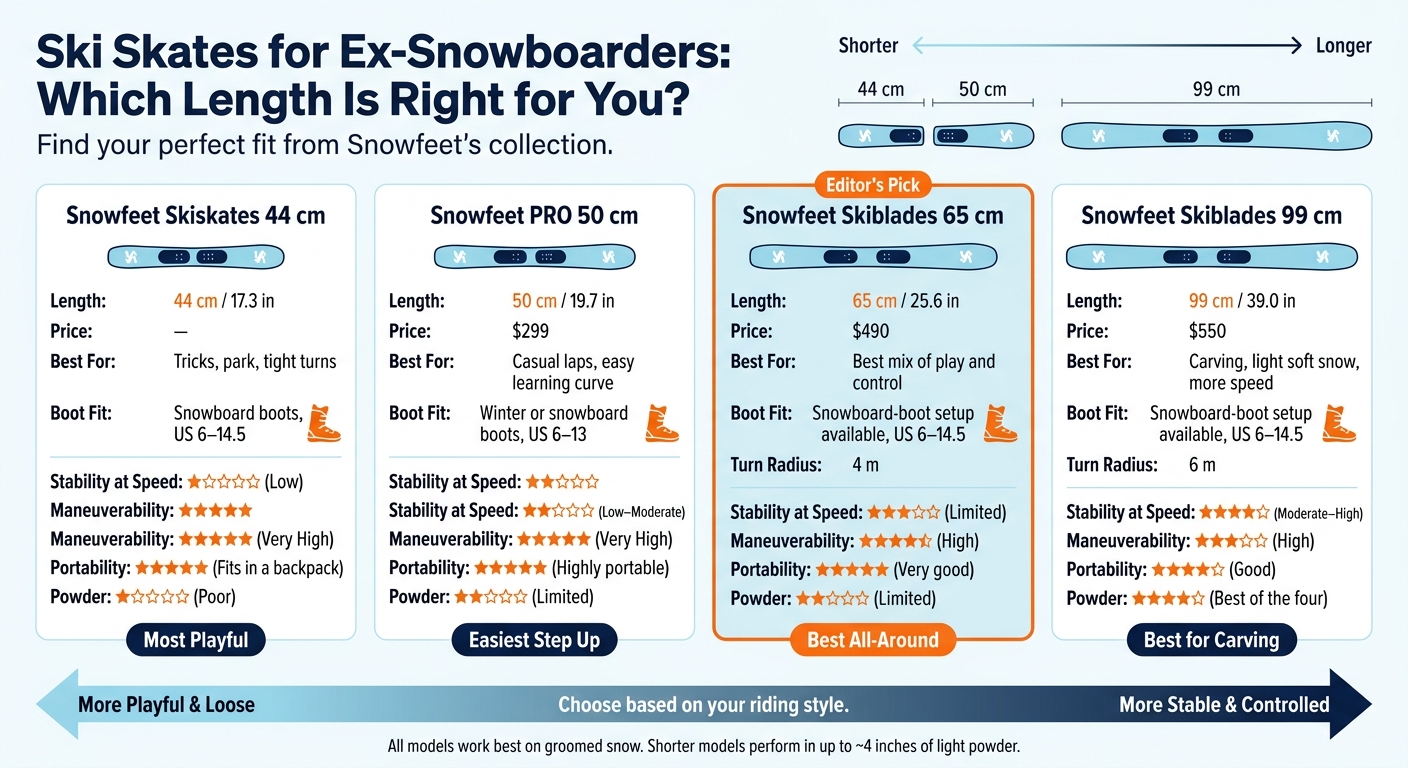
Ski Skates for Ex-Snowboarders: Which Length Is Right for You?
| Model | Length | Best Match | Boot Fit | Price |
|---|---|---|---|---|
| Snowfeet* Skiskates | 44 cm / 17.3 in | Tricks, park, tight turns | Snowboard boots, about US 6–14.5 | - |
| Snowfeet PRO | 50 cm / 19.7 in | Casual laps, easy learning curve | Winter boots or snowboard boots, about US 6–13 | $299 |
| Snowfeet* Skiblades | 65 cm / 25.6 in | Best mix of play and control | Snowboard-boot setup available, about US 6–14.5 | $490 |
| Snowfeet* Skiblades | 99 cm / 39.0 in | Carving, light soft snow, more speed | Snowboard-boot setup available, about US 6–14.5 | $550 |
What stood out to me most is this: the 65 cm and 99 cm options make the switch from snowboarding feel less awkward, while the 44 cm and 50 cm keep more of that loose, mess-around feeling. Not deep-powder tools. Not straight-line missiles. Just fun, short skis for riders who want a snowboard-style vibe with two edges under them :)
A few fast facts from the article:
- 44 cm is short enough to fit in a backpack
- 65 cm has a 4 m turn radius
- 99 cm has a 6 m turn radius
- Snowfeet says shorter models are best in up to about 4 inches of light powder
- The price range in this lineup runs from $299 to about $550
If you want a quick watch before you buy, I’d also check a few short YouTube reviews and on-snow clips:
So, if I had to give the fast shop-owner answer: go 50 cm if you want easy, 65 cm if you want the best all-around pick, and 99 cm if you want more calm and cleaner carving.
1. Snowfeet* Skiskates 44 cm
At 44 cm (17.3 in), the Skiskates are the most skate-like pick in the lineup. They’re short, quick, and easy to pivot, which makes them a blast on groomed runs, in the park, and on short, playful descents.
The bindings are tool-free, non-release bindings made for snowboard boots. They fit about US 6–14.5 (EU 38–49). Setup is simple, which is always nice when you just want to click in and go. They also come with safety leashes and an anti-slip surface to help keep things secure while you ride.
Now for the trade-off: stability. At 44 cm, they feel less steady at higher speeds than longer skis. So, these aren’t the pick for bombing wide-open groomers. They shine more on controlled runs, slower laps, and quick-turn terrain. For ex-snowboarders, that’s a big part of the appeal. They feel playful, loose, and easy to throw around.
For your first session, keep it mellow. Start on a gentle groomed run and work on gliding and wide turns before you try hard sideways stops. To slow down, turn them sideways across the slope and press evenly on both edges. Short skis can feel a bit wild at first, but once they click, they’re a ton of fun.
One more nice perk: at 17.3 in long, they’re small enough to fit in a backpack.
If you want a bit more stability but still want that snowboard-like feel, the 50 cm Snowfeet PRO is the next step up.
2. Snowfeet PRO 50 cm
At 50 cm (about 20 in), the PRO sits right in the middle. It feels more stable than the 44 cm Skiskates, but it’s still short enough for quick turns and easy travel. Think of it as the link between a skate-like feel and the control you get from short skis. For ex-snowboarders, this is the easiest next step after the 44 cm Skiskates.
The PRO fits winter boots and snowboard boots in about US men’s 6–13 (EU 38–47) with adjustable bindings. One small catch: bulky snowboard boots, mainly in US 12–13, may not work with every strap setup. In practice, soft snowboard boots tend to work best here. They give you more ankle movement, which helps for tricks and park laps.
At about 0.9 lb per pair, the PRO is light and easy to throw in a bag. Price starts at $299.
This model does its best work on park laps, side hits, and mellow groomers. That makes it a strong pick for riders who want some snowboard-like freedom without giving up all resort control. Just don’t expect full-ski calm at high speed. Keep it to controlled runs and it’s a lot more fun.
If you want more room to carve and a smoother ride, move up to the 65 cm Skiblades.
3. Snowfeet* Skiblades 65 cm
If the 50 cm PRO feels a bit too loose, the 65 cm Snowfeet* Skiblades give you more control without giving up that quick, snowboard-like feel. At 65 cm (about 26 in), they sit right between the PRO and the 99 cm model.
On snow, they feel more planted than the 50 cm version, but they still move fast from edge to edge. The 4 m turning radius keeps turns tight and snappy, which makes them a fun fit for riders who like fast direction changes on groomers.
At checkout, you can pick either the snowboard-boot or ski-boot version. The snowboard-boot setup fits U.S. sizes 6–14.5 and will feel like the more natural choice for ex-snowboarders.
These skiblades are a good match for:
- Groomed runs
- Small jumps
- Easy resort laps
Price: $490.
If you want more stability at speed and smoother carving, the 99 cm Skiblades are the next step.
sbb-itb-17ade95
4. Snowfeet* Skiblades 99 cm
At 99 cm (about 39 in), this is the most ski-like Snowfeet* model in this lineup. It feels more planted, more steady at speed, and easier to trust when you're cruising around the resort. That added length gives it a calmer ride, which is why it makes sense for riders stepping up from the shorter versions.
The 6 m turning radius pushes this model toward smooth carved turns instead of super-tight pivots. So if your main goal is carving clean arcs on groomers - and tricks matter less - this is the one to grab.
The snowboard-boot version is a natural match for former snowboarders. It fits U.S. sizes 6–14.5, so a lot of riders can just use the soft boots they already have. It works best on groomed beginner and intermediate runs. Once speeds get very high, or the snow turns icy and chopped up, full-length skis still have the edge.
The standard 99 cm Skiblades cost about $550, depending on the binding package. There’s also a powder version, but the standard model is the better call for groomed resort laps. That’s why it serves as the benchmark for the side-by-side comparison below.
Side-by-Side Comparison
Now that each model is clear, here’s the fastest way to compare them side by side.
| Category | Skiskates 44 cm (17.3 in) | PRO 50 cm (19.7 in) | Skiblades 65 cm (25.6 in) | Skiblades 99 cm (39.0 in) |
|---|---|---|---|---|
| Best use | Maximum playfulness, tight turns, quick spins on groomers | Best for short, playful laps with snowboard boots | Terrain parks, tricks, sharp turns, playful groomers | Best for the smoothest transition to short skis, carving, and light powder |
| Snowboard-boot fit | Yes - U.S. men's 6–14.5 | Yes - U.S. sizes 6–13 (bulky boots may not fit) | Yes - snowboard-boot configuration available | Yes - snowboard-boot configuration available |
| Maneuverability | Very high | Very high | High | High |
| Stability at speed | Low | Low to moderate | Limited | Moderate to high |
| Powder suitability | Poor | Limited | Limited | Best of the four (still not a powder ski) |
| Portability | Excellent - fits in a backpack | Excellent - highly portable | Very good - compact for car or resort transport | Good - much easier to transport than traditional skis |
| Main limitation | Least stable at speed; limited flotation | Bulky boots can interfere with the strap system | Less stable at high speed than the 99 cm model | Less nimble for very tight tricks; least portable of the four |
The choice mostly comes down to feel. That’s the part specs can’t fully show.
- 44 cm: backpackable, most ski-skate-like - best for quick spins and park play
- 50 cm: easiest soft step up from snowboarding
- 65 cm: best balance of tricks and control
- 99 cm: best for carving and stability
If you want the loosest, most playful ride, go shorter. If you want more control and a smoother ride, go longer. Simple as that :)
Next, the pros and cons make the trade-offs even clearer.
Pros and Cons of Each Model
For former snowboarders, the main call is pretty simple: how much playfulness do you want to keep, and how much stability do you want to add?
That’s the trade-off. Some models feel loose, quick, and skate-like. Others give you more grip, calm, and confidence when the run gets faster or the snow gets messy.
Here’s the fastest way to compare them for ex-snowboarders: playfulness, control, and stability.
| Product | Biggest Pros | Main Cons | Best For |
|---|---|---|---|
| Snowfeet Skiskates 44 cm* (17.3 in) | Most compact; quickest pivot; most skate-like feel | Least stable at speed; less float in rough or deep snow | Experienced or adventurous ex-snowboarders who want maximum maneuverability and tricks |
| Snowfeet PRO 50 cm (19.7 in) | Lowest price; easiest soft transition from snowboarding; compact | Less stable than the longer models; weaker in deep snow | Beginners and casual riders who want a simple, portable first step |
| Snowfeet Skiblades 65 cm* (25.6 in) | Best balance of snowboard-like freedom and ski-like control; good for groomers, moguls, and parks | Less compact; still not as stable as the 99 cm model | Riders who want terrain-park play and quick turns with more confidence on groomed runs |
| Snowfeet Skiblades 99 cm* (39.0 in) | Most stable; best carving control; best light-powder performance of the four | Slower to pivot; feels less like a skate and more like a ski; harder to carry | Riders who prioritize carving, stability, and occasional soft or uneven snow |
If you want the short version, it goes like this:
- 44 cm feels the most like messing around on snow with total freedom, but it asks more from you when speed picks up.
- 50 cm is the easy on-ramp for riders who want a low-cost, low-fuss switch from snowboarding.
- 65 cm hits the sweet spot for a lot of people. You still get that loose, fun feel, but with more control on groomers.
- 99 cm is the calmest and most planted option, especially if carving matters more to you than quick spins and tiny movements.
These trade-offs lead into the final pick.
Use this breakdown to choose the model that fits your speed, terrain, and boot setup.
Safety note: Wear an ASTM F2040-certified helmet, use a properly fitted binding setup, and start on gentle groomers.
Conclusion
Here’s the short version. Pick based on how you want the ride to feel:
- 44 cm for max play
- 50 cm for park laps
- 65 cm for the best all-around balance
- 99 cm for the most stability
The trade-off is pretty simple. These are made for groomers first. All four work best on groomed snow, and the shortest models do best only in shallow powder. If you’re heading into deep powder, fast downhill runs, or steep terrain, full-length skis still come out ahead. Check the exact binding version and the boot-size chart before you buy.
For most ex-snowboarders, Snowfeet* is the easiest and most fun move from snowboard control to skiing. If you want the closest thing to snowboard-style flow on snow, Snowfeet* is the clear choice.
FAQs
Do I need ski lessons first?
No. Most snowboarders can start on short skis or skiskates like 44 cm, 50 cm, or 65 cm and pick up the basics fast - often in 5 minutes or after 1 to 2 sessions - without lessons.
The big changes are pretty simple:
- You switch to a forward-facing stance
- You stop like you would on skis, usually with a snowplow
Yeah, it can feel a little awkward at first. That’s normal. But for most riders, it clicks fast.
Snowfeet* also works with snowboard boots, which makes the move over feel a lot easier.
Can I use my current snowboard boots?
Yes - most Snowfeet products work with your current snowboard boots, so you can skip ski boots.
The 44 cm Skiskates, 50 cm PRO, and 65 cm Skiblades come with adjustable, tool-free bindings. That makes setup pretty easy.
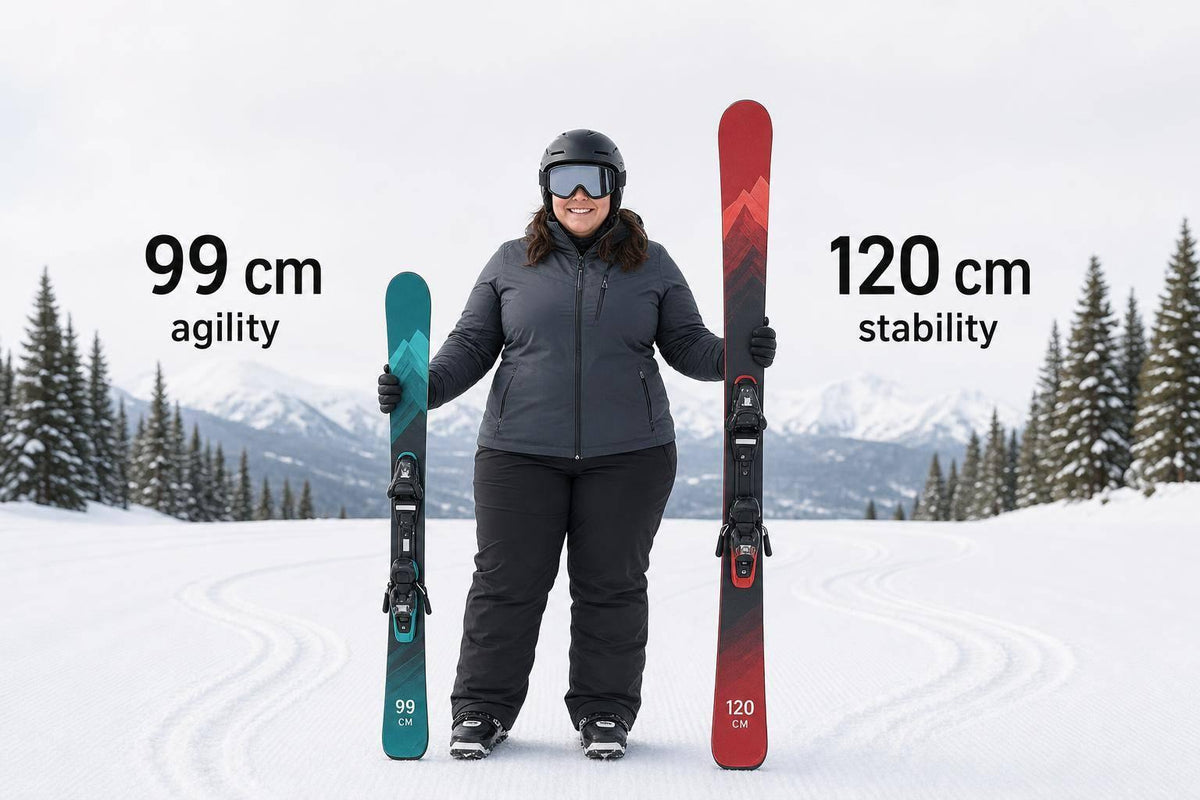
The 99 cm and 120 cm models usually come with standard ski bindings. But you can also get bindings that work with snowboard boots.
One thing matters here: your boots should fit snugly and sit centered in the binding. If they’re loose or off-center, the ride can feel awkward fast.
Which length feels closest to snowboarding?
For ex-snowboarders, the 65 cm Snowfeet Skiblades are the best match. They hit a nice middle ground: playful and easy to throw around, but still stable enough for solid, confident carving.
That’s why they tend to feel like the most natural switch for riders who are used to snowboard-style edge control.
The 44 cm Skiskates feel faster underfoot and more skate-like. On the other end, the 99 cm and 120 cm options give you more stability when you pick up speed. But if you want a ride that feels familiar, surfy, and controlled, 65 cm is the sweet spot.












Lasă un comentariu
Acest site este protejat de hCaptcha și hCaptcha. Se aplică Politica de confidențialitate și Condițiile de furnizare a serviciului.