



















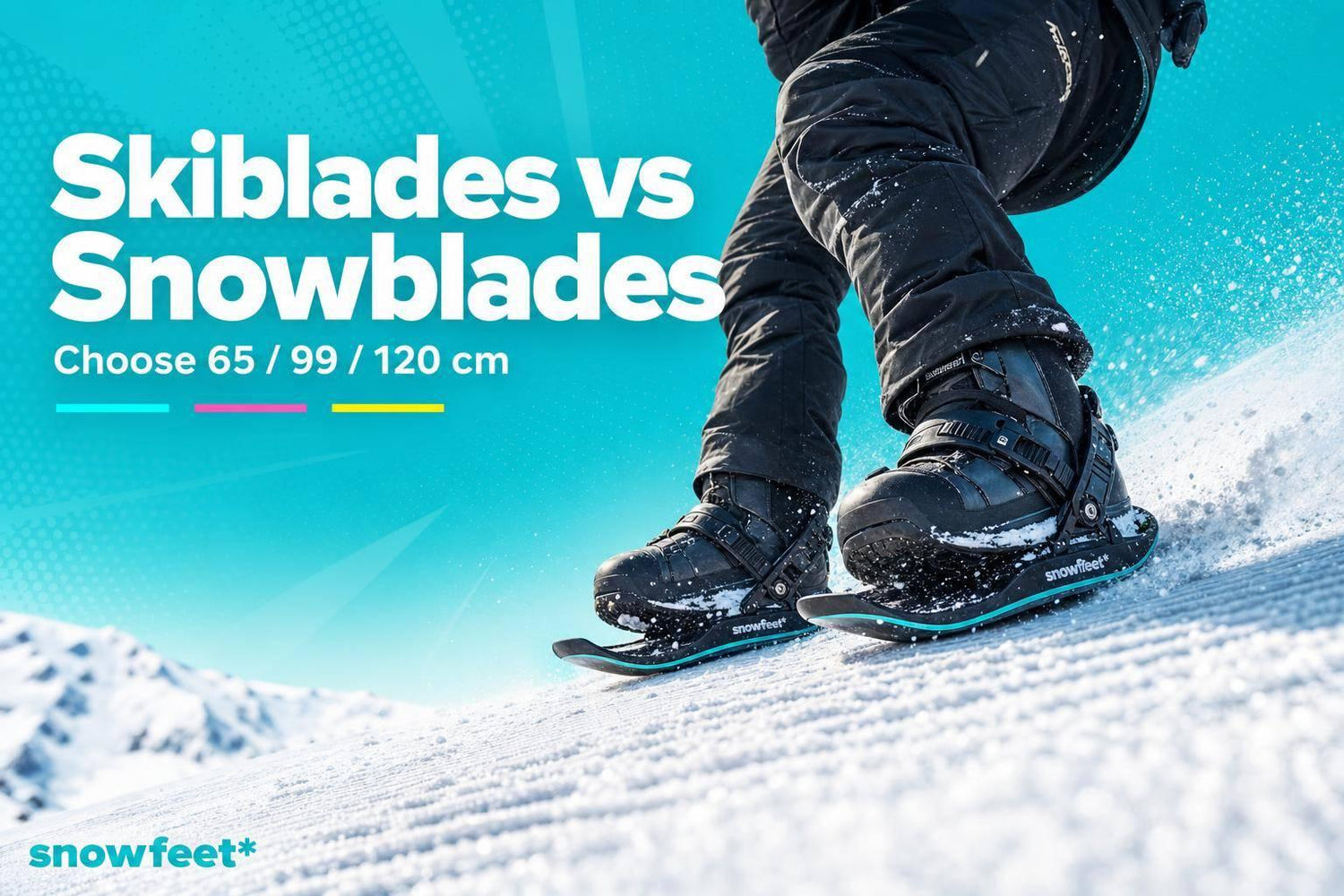
Yes - skiblades and snowblades mean the same type of short ski. For most U.S. riders, the name is just a search term. What matters is length, bindings, boots, terrain, and speed.
If I were helping you in a ski shop, I’d say it like this:
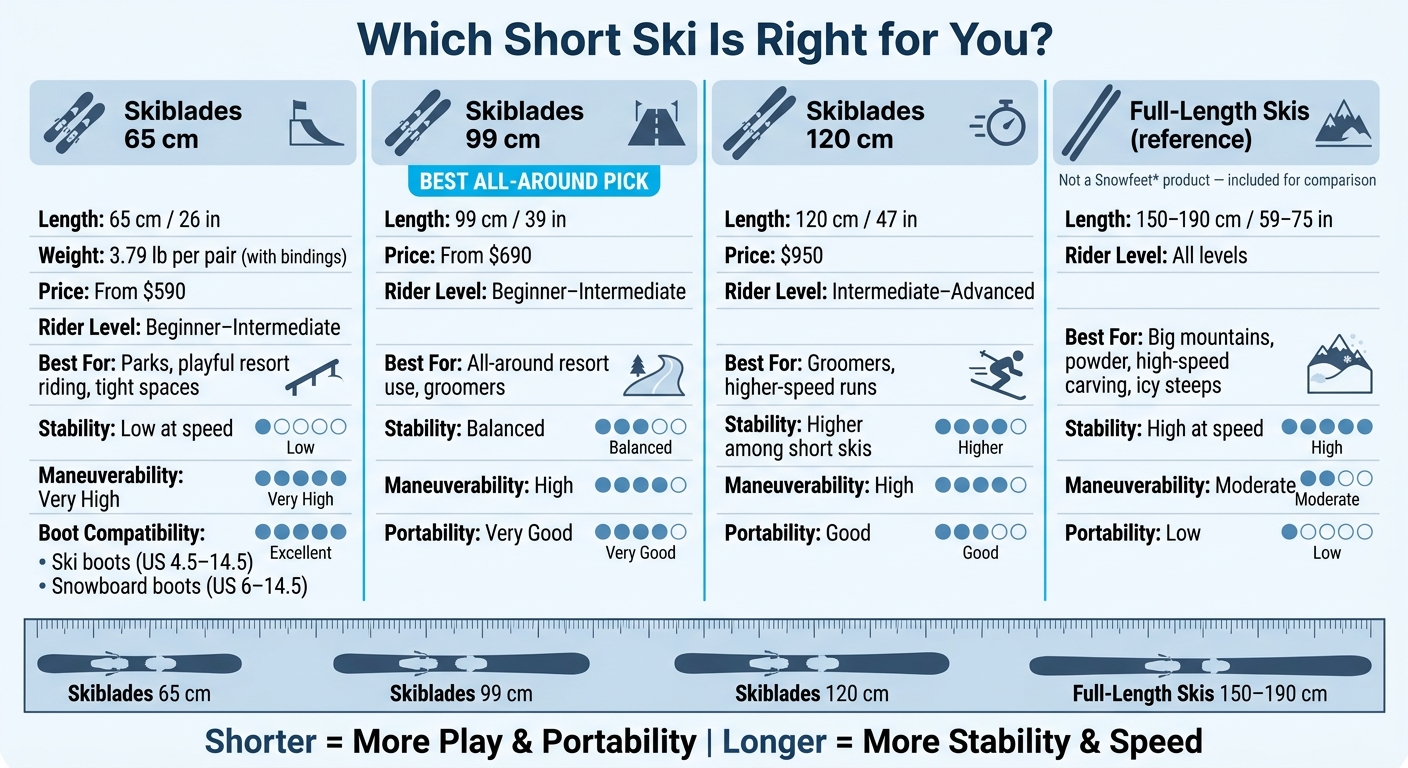
- 65 cm / 26 in = most playful, easiest to pack, least steady at speed
- 99 cm / 39 in = best middle ground for most resort riders
- 120 cm / 47 in = closest feel to a regular ski, with more edge hold and calm at speed
- Full-length skis (about 150–190 cm / 59–75 in) still do better in powder, icy steeps, and fast carving
- If you buy used or older gear, the exact name can matter more because old models may have different bindings and flex
So, no, you’re not picking between two separate gear types. You’re picking which short ski setup fits how you ride. And that’s a much better question :)
Quick Comparison
| Term | What it usually means | Common length | What I’d focus on |
|---|---|---|---|
| Skiblades | Short skis | 65–120 cm | Length and binding setup |
| Snowblades | Same category | 65–120 cm | Often just a brand/history label |
| Skiboards | Same category | 65–120 cm | More formal umbrella term |
| Full-length skis | Standard alpine skis | 150–190 cm | Best for speed, powder, and steeps |
A few numbers stand out. The article centers on short skis from 65 cm to 120 cm, with one 120 cm model listed at $950 and a 65 cm pair listed at 3.79 lb per pair with bindings in one spot. That tells me the big pitch here is simple: small gear, easy travel, fast turns.
If you want a short answer before reading the rest: most casual resort riders will land on 99 cm, playful riders may like 65 cm, and stronger skiers who want a more ski-like ride should look at 120 cm.
Helpful watch if you want to see short skis in action:
Skiblades vs Snowblades: Short Ski Size Comparison Guide
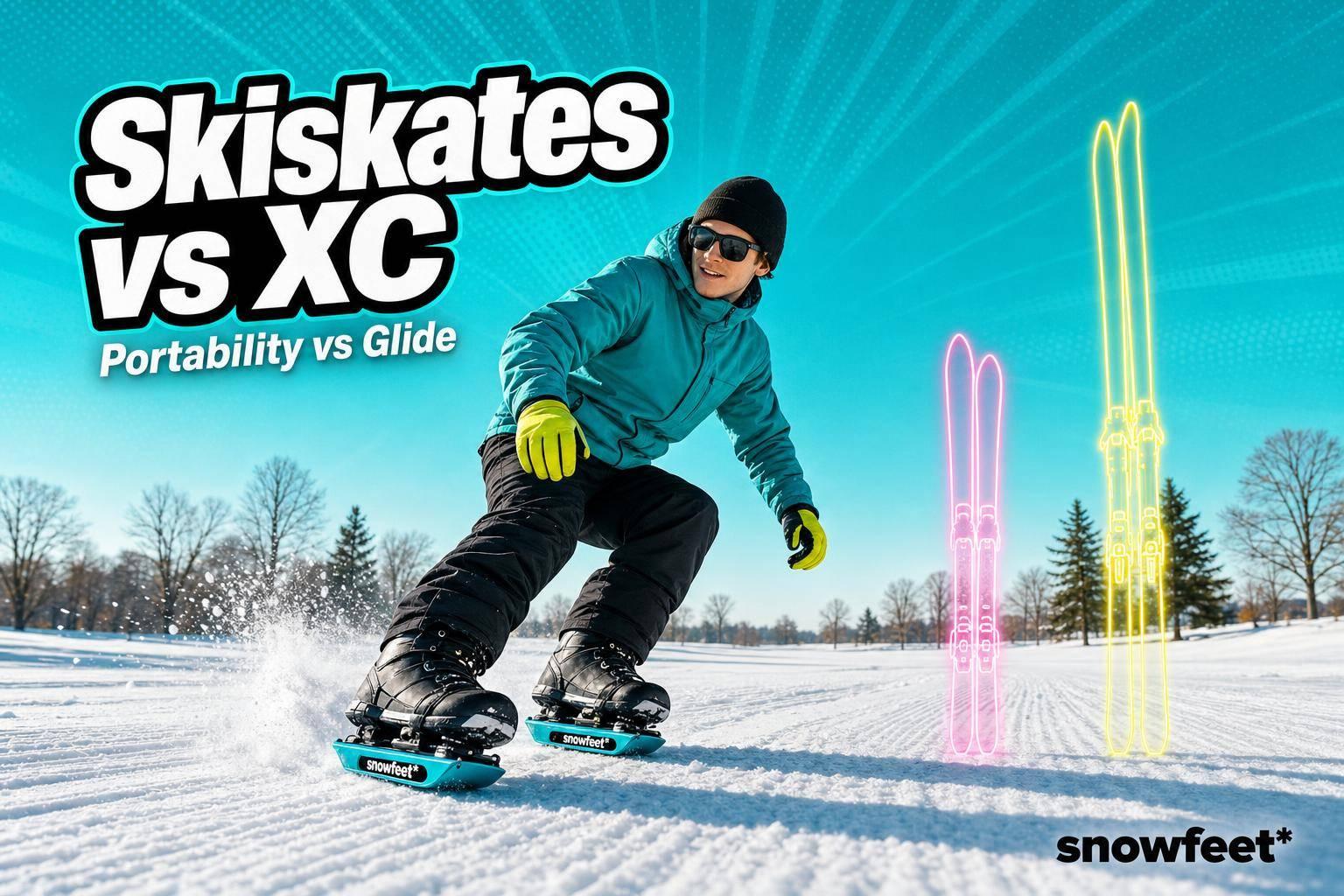
Snowboarder tries Snowfeet* | Which Snowfeet* Short Ski is the Best? | Snowblades 44, 65, 99 Review
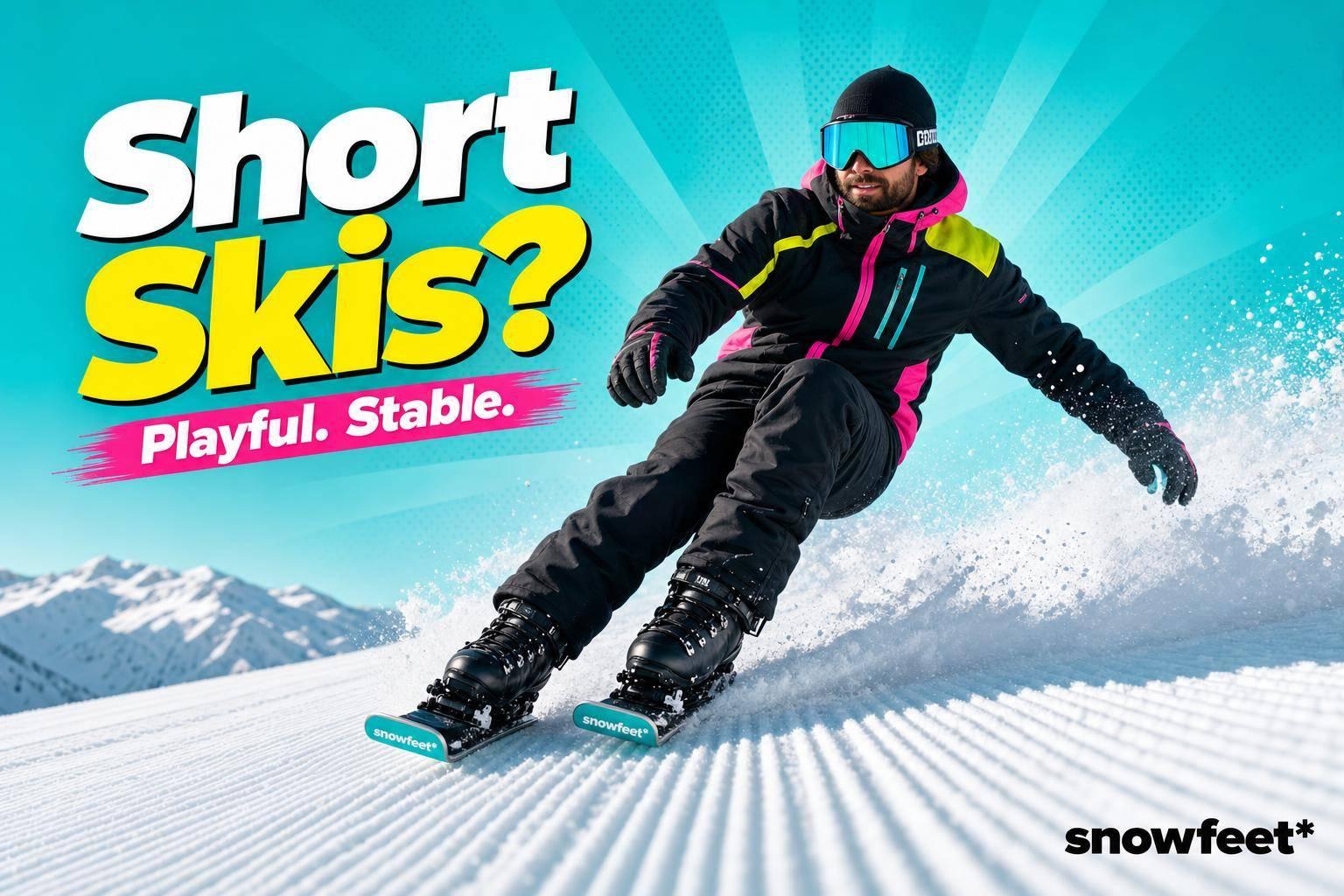
Skiblades vs Snowblades: Same Category, Different Names
These names usually point to the same short-ski category: twin-tip skis that are about 65 to 120 cm long. The overlap comes from branding, region, and product history, not from some strict tech rule. Snowfeet* uses the skiblade label for its 65 cm, 99 cm, and 120 cm models. So for most shoppers, the name matters less than the length, binding setup, and how the ski feels on snow.
| Term | Typical Length | Common Use | Notes on Naming |
|---|---|---|---|
| Skiblades | ~65–120 cm | General short-ski riding | Common casual term; often linked to the skate-like feel of short skis |
| Snowblades | ~65–120 cm | Same category | Salomon's brand name for the category in the late 1990s |
| Skiboards | ~65–120 cm | Same category | Formal umbrella term established in the late 1990s |
| Short skis | ~65–120 cm | General term | General term used across North America |
| Other ultra-short models | under ~70 cm | Specialized niche | Outside this article's main focus |
The names changed over time because the category moved through different brands and different eras. Same family, different stickers on the box :)
Where the Names Came From
Skiboards became the formal label in 1998 for short skis with snowboard-style construction: twin tips, wider platforms, and edge-carving ability. Big ski brands like Atomic, Elan, Blizzard, Fischer, Dynastar, and Salomon picked up the term too.
Snowblades became Salomon's brand name for the category in the late 1990s. Skiblades is the more casual nickname, and a lot of riders tie it to the skate-like feel of these skis.
When the Terms Are Interchangeable and When Branding Matters
In day-to-day use, most shoppers treat these terms as the same thing. There isn't an official cutoff that neatly separates a "true" skiboard from a skiblade or snowblade.
Where the name starts to matter more is with used or vintage gear. Older branded models often had differences in construction, flex, and bindings. If you're shopping secondhand, the exact model name can give you a better read on how the ski turns, how stiff it feels, and whether the bindings fit your boots.
For new gear, the bigger deal is the ski's length and setup, not the label in the product title. That's where the actual ride differences start to show up.
How Short Skis Compare in Design and Feel
Short skis turn faster and feel more nimble. Full-length skis feel steadier when you're moving fast or skiing through chopped-up snow. That’s the big split. It’s also why Snowfeet* short skis tend to feel easier for casual riders and for tight terrain. You notice it most in where you ski and how you set your gear up.
Short Skis vs Full-Length Skis
Adult alpine skis usually fall in the 150–190 cm range. That puts Snowfeet* 65 cm, 99 cm, and 120 cm models way on the short end. And that shorter length changes a lot on snow: faster edge-to-edge movement, tighter turns, and less hassle when you’re carrying them to the lift.
On groomers, crowded slopes, and smaller resorts, short skis make a lot of sense. You can change direction fast, slip through busy areas, and try spins or switch riding without needing a big sweeping turn. It feels a bit like driving a small hatchback in a packed city lot instead of steering a long truck.
On steep Western groomers or powder days, though, full-length skis still win. More ski on the snow means smoother tracking and better float when the snow gets soft.
| Product Type | Typical Length | Stability | Maneuverability | Best Terrain |
|---|---|---|---|---|
| Full-length skis | 150–190 cm | High at speed | Moderate | Big mountains, powder, high-speed groomers |
| Snowfeet* Skiblades 65 cm | 65 cm (26 in) | Low at speed | Very high | Parks, casual laps, tight spaces |
| Snowfeet* Skiblades 99 cm | 99 cm | Balanced | High | All-around resort use, learning basic skiing |
| Snowfeet* Skiblades 120 cm | 120 cm | Higher among short skis | High | Groomers, confident beginners, all-around resort use |
One more practical perk: the Snowfeet* 65 cm pair weighs just 3.79 lbs per pair with ski bindings. That makes packing, carrying, and travel a whole lot easier.
Bindings, Boots, and Setup Options
Once you know how a short ski rides, the next thing to sort out is your boots and bindings. This part matters a lot. If the setup doesn’t match your style, the whole ride can feel off.
The main binding choices are:
- Release bindings, which can pop free in a hard fall, much like a standard alpine setup
- Non-release bindings, which stay fixed and are simpler and lighter, often better for slower, casual riding
- Snowfeet*-specific systems, which give you more boot options
Snowfeet* models are made to work with standard ski boots, snowboard boots, or sturdy winter shoes, depending on the model. The 65 cm Skiblades, for example, fit ski boots sized EU 36–49 (US 4.5–14.5) and snowboard boots sized EU 38–49 (US 6–14.5).
That boot range is a big plus. If you snowboard and already own boots, you may not need to buy another setup. And if you’re a casual rider who doesn’t want to spend extra money on ski boots, you can still get out on the snow.
Lighter setups tend to work best for beginners and travelers. Release bindings are a better match for skiers who want a more standard resort feel. If you ski faster at resorts, release bindings with ski boots are the safer, more familiar option. If your plan is park laps, light travel, or just keeping things simple, Snowfeet* options that work with snowboard boots or winter shoes are easier to pack and easier to live with.
From there, it comes down to how you ride, your skill level, and the kind of mountain you ski most.
sbb-itb-17ade95
Best Snowfeet* Options by Riding Style, Skill Level, and Terrain
Now that the basics are out of the way, the main choice is length. And Snowfeet* keeps this pretty simple: each size lines up with a different type of rider and terrain. So, yeah, length is the big decision here.
Snowfeet* Skiblades 65 cm, 99 cm, and 120 cm: What Each One Is For
The 65 cm model is the most playful of the bunch. It’s built for quick turns, park laps, and easy travel. At about 5 lb per pair, it’s also the easiest to carry around. The catch? It gives you less stability once speeds climb, so it’s a better match for riders who want agility and fun more than all-out charging on a steep groomer.
The 99 cm model is the sweet spot for most casual riders. It’s long enough to feel steady across all-around resort terrain, but still short enough to stay nimble and easy to control.
The 120 cm model feels the most like a regular ski. You get better edge hold and more confidence on faster runs, while still keeping a setup that’s shorter and easier to pack than full-length skis. If you’re coming over from alpine skis, this is the one that will feel most familiar.
Now let’s match each one to the way you ride.
| Model | Rider Level | Main Terrain | Portability | Approx. Price (USD) |
|---|---|---|---|---|
| Skiblades 65 cm | Beginner–Intermediate | Parks, playful resort riding, tight spaces | Excellent | From $590 |
| Skiblades 99 cm | Beginner–Intermediate | All-around resort, groomers | Very good | From $690 |
| Skiblades 120 cm | Intermediate–Advanced | Groomers, higher-speed runs | Good | $950 |
Note: The 65 cm model weighs about 5 lb per pair and fits ski boots in US sizes 4.5–14.5. Prices are approximate and can vary by retailer, configuration, and seasonal promotions.
How Snowfeet* Compares to Full-Length Skis and Older Short-Ski Products
Compared with older short-ski designs, Snowfeet* keeps that playful feel but makes the setup lighter and simpler. Older short skis were chasing the same idea, but Snowfeet* makes them easier to pack and easier to deal with day to day. Full-length skis still do better on steep, fast terrain and in deep powder. But for casual resort laps, travel, and plain old convenience, Snowfeet* short skis are just easier to live with.
Simple Buying Guide for U.S. Riders
Here’s the easy rule: shorter for play and portability, longer for stability and speed.
Beginners and families will usually get the most from the 65 cm or 99 cm models. Both are easier to turn, handle, and carry than full-length skis. If you want one pick that works in more places, the 99 cm is the safer all-around choice.
Intermediate riders who spend time on groomers and mixed resort terrain should look at the 99 cm or 120 cm. Go with the 99 cm if quick handling matters more. Pick the 120 cm if you want more stability and a ride that feels closer to a regular ski.
Advanced riders who want more speed, more carving confidence, or a more ski-like feel should head straight to the 120 cm for resort use.
For most casual U.S. resort riders, the 99 cm model will be the best fit. It gives you the broadest mix of portability, ease of use, and range without pulling too far in either direction. In the end, it comes down to your skill level, the terrain you like, and how much portability matters to you.
Conclusion: Pick the Right Short Ski, Not Just the Right Name
Now that the naming mess is out of the way, the next step is simple: pick the short ski length that matches how you ride.
The name doesn’t change the category. Skiblades, snowblades, and skiboards all refer to the same short-ski type. In most cases, the label is more about branding history than a big product difference. So when you shop, use the name as a search term, not as the thing that makes your choice.
What should guide your pick? Focus on:
- Length
- Bindings
- Terrain
- Skill level
- Portability
Here’s the short version.
Key Takeaways
The names are interchangeable; use the label as a search term, not a decision rule.
Long skis still beat short skis in deep powder, icy steeps, and high-speed carving. If that’s your normal setup, it makes sense to keep a pair of full-length skis around or rent them for those days.
Snowfeet* covers most casual resort riders. The 65 cm works best for beginners and playful park riding. The 99 cm is the best all-around pick for intermediate riders on groomed terrain. The 120 cm fits stronger riders who want a more ski-like feel without the bulk. All three are compact, but for most casual riders, the 99 cm hits the sweet spot.
FAQs
Are skiblades easier to learn on than regular skis?
Yes. Skiblades are usually easier to learn on than regular skis.
The main reason is simple: they’re shorter and lighter. That makes them feel less intimidating and a lot easier to control, especially on your first day out.
Most riders get comfortable on Snowfeet skiblades within a day. Some even pick up the basics in as little as five minutes. Because the design is so compact, beginners can focus on balance and smooth, quick turns right from the first run.
It’s a bit like learning in a smaller, friendlier sandbox instead of jumping straight into the deep end :)
Can I use snowboard boots with skiblades?
Yes. Most skiblades work with snowboard boots, but it depends on the model and the binding setup.
Snowfeet* skiblades are built for flexibility. They may work with snowboard boots, ski boots, or even regular winter shoes, depending on the model. In general, models under 100 cm give you the most options.
If you want a more secure and comfy fit, Snowfeet* also offers snowboard bindings made for that setup.
Which skiblade length is best for me?
The best length comes down to how you ride and where you ride.
- 65 cm: best for agility, terrain parks, quick moves, and a skate-like feel
- 99 cm: the best all-around pick for groomed trails, parks, and light powder
- 120 cm: best for more stability and carving while still feeling compact; ski boots are required











Zostaw komentarz
Ta strona jest chroniona przez hCaptcha i obowiązują na niej Polityka prywatności i Warunki korzystania z usługi serwisu hCaptcha.