
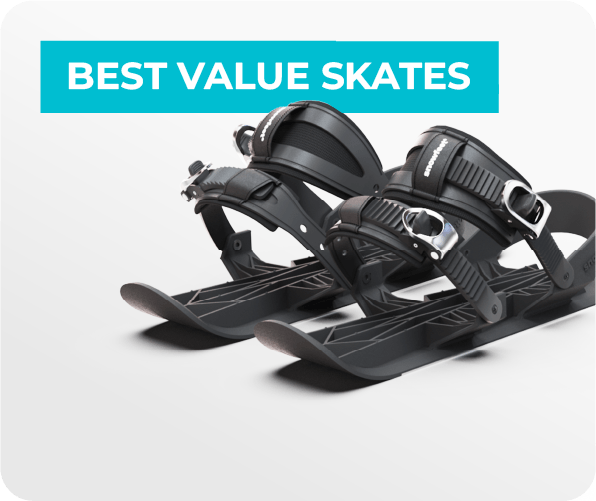
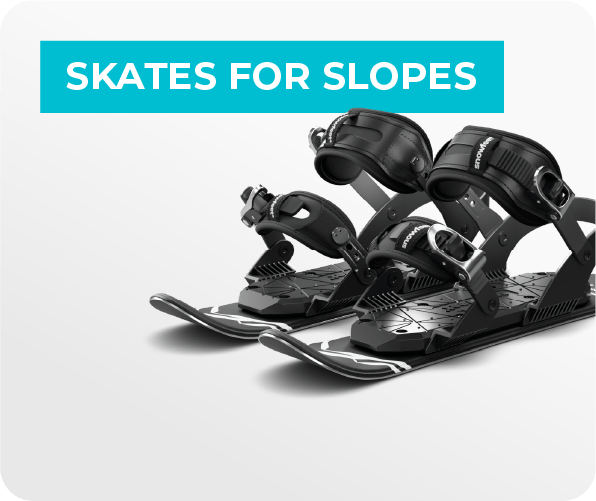
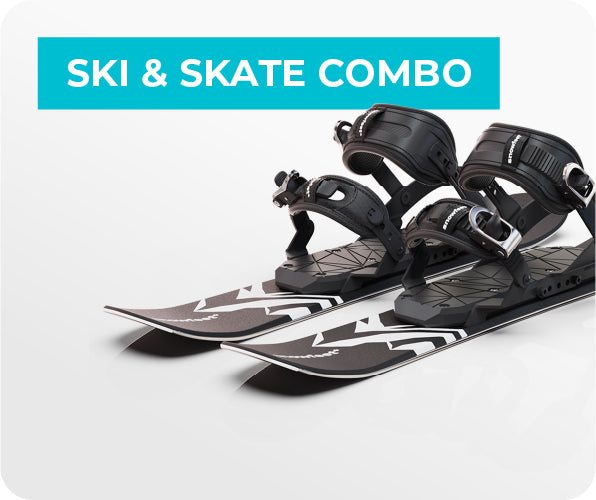
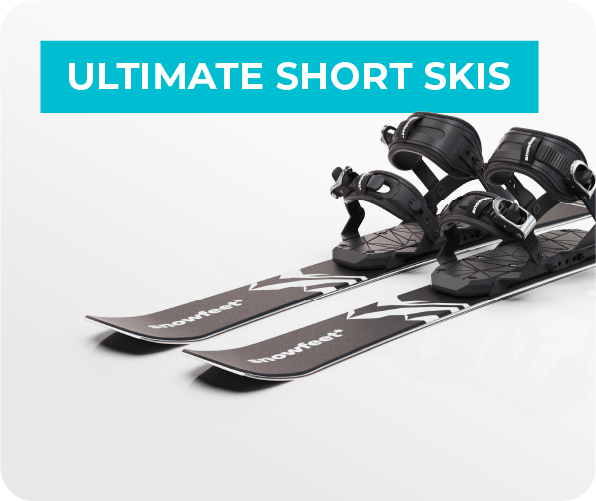
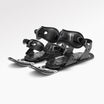
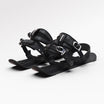
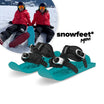
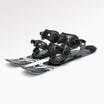
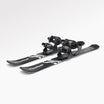
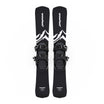
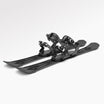
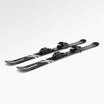
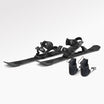
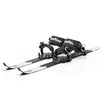
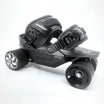
I’d start with 99 cm skiblades for a tween who can link turns and stop with control. But I’d check their size, skill, and boot fit first - not just their age. For sustained high speeds, I’d choose longer, standard skis.
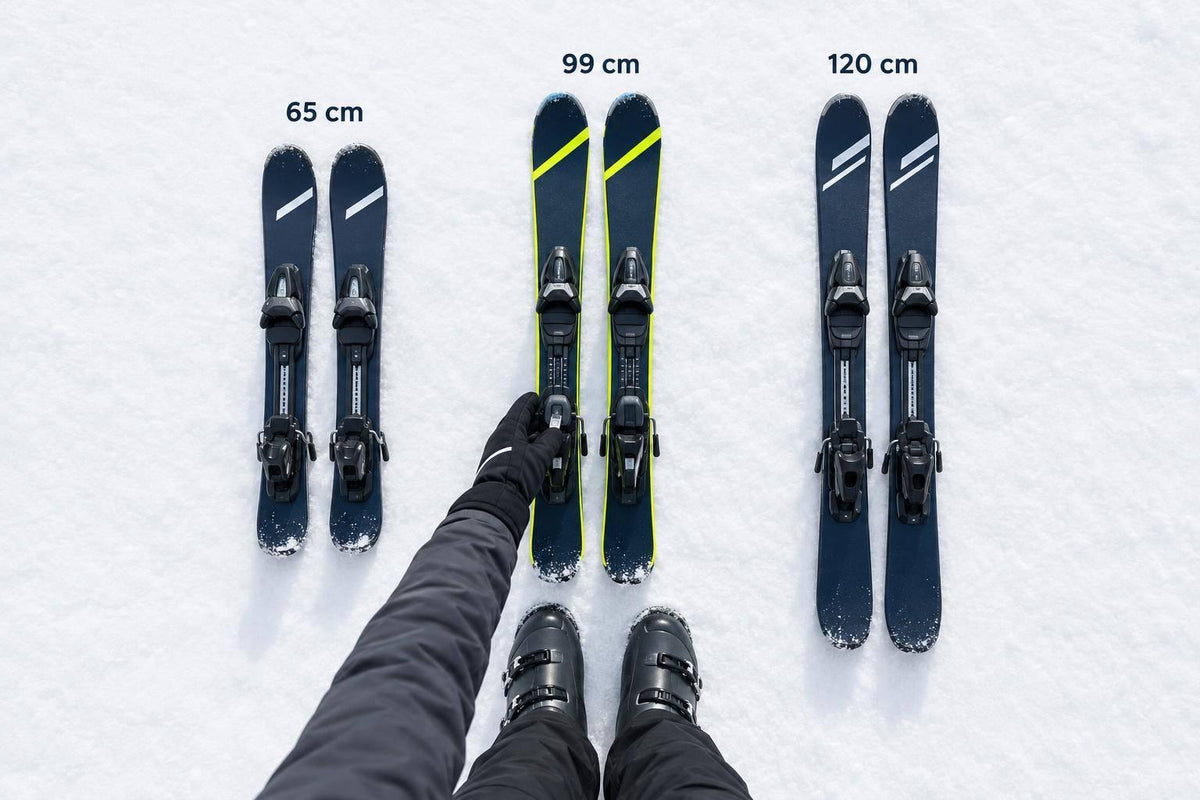
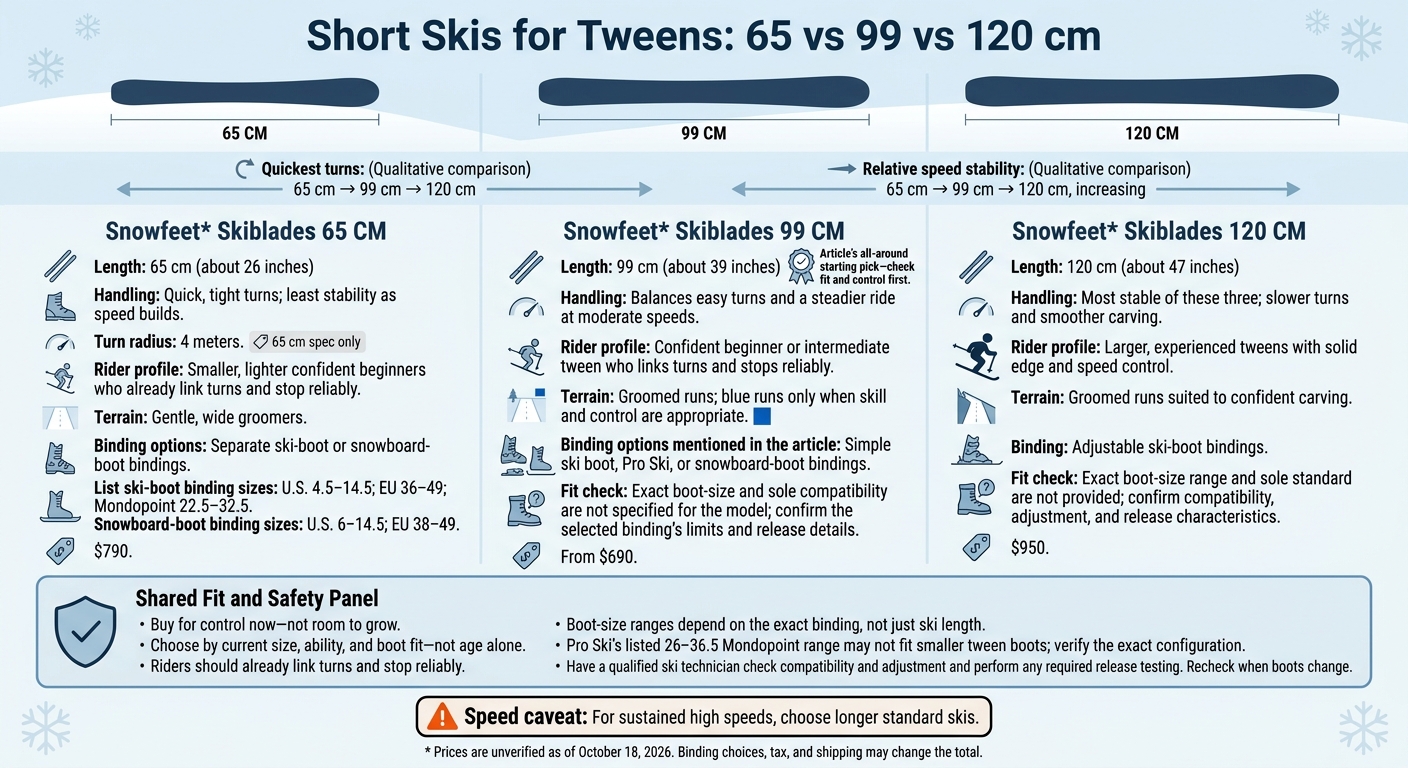
Here’s how I’d compare the three Snowfeet* lengths:
- 65 cm (26 inches): Tight turns for smaller, lighter riders, with less support as speed builds.
- 99 cm (39 inches): A middle ground for easy turns and a steadier ride.
- 120 cm (47 inches): More support for larger, experienced tweens who want to carve.
Quick Comparison
| Model | Main tradeoff | Boot check | Listed price* |
|---|---|---|---|
| 65 cm | Tight turns; least speed stability | Ski- or snowboard-boot binding fit | $790 |
| 99 cm | Balances turns and stability | Exact binding’s size and release details | From $690 |
| 120 cm | Most stable of these three; slower turns | Ski-boot fit and binding adjustment | $950 |
Prices are unverified as of October 18, 2026; binding choices, tax, and shipping may change the total.
My rule? <u>Buy for control now, not room to grow.</u> Keep these picks on groomed runs suited to your tween’s skill, and have a qualified ski technician check the boots and bindings before that first lap.
Short Skis for Tweens: 65 vs 99 vs 120 cm
1. Snowfeet* Skiblades 65 CM
Turning and speed stability
At 65 cm (about 26 inches), these skiblades are short and light to swing, making them easy to pivot. The 4-meter turn radius helps with quick, tight turns, too.
Compared with longer models, the 65 cm version turns faster but offers less front-to-back support as speed builds. Stick to short, controlled turns rather than fast, deep carving.
Rider size and ability
These work best for a smaller or lighter confident beginner who can already link turns and stop on their own on wide, groomed green runs.
For taller, heavier, or more aggressive riders, consider a longer Snowfeet* model - or standard skis - for more support. Don’t use age alone to choose a size.
Boot and binding compatibility
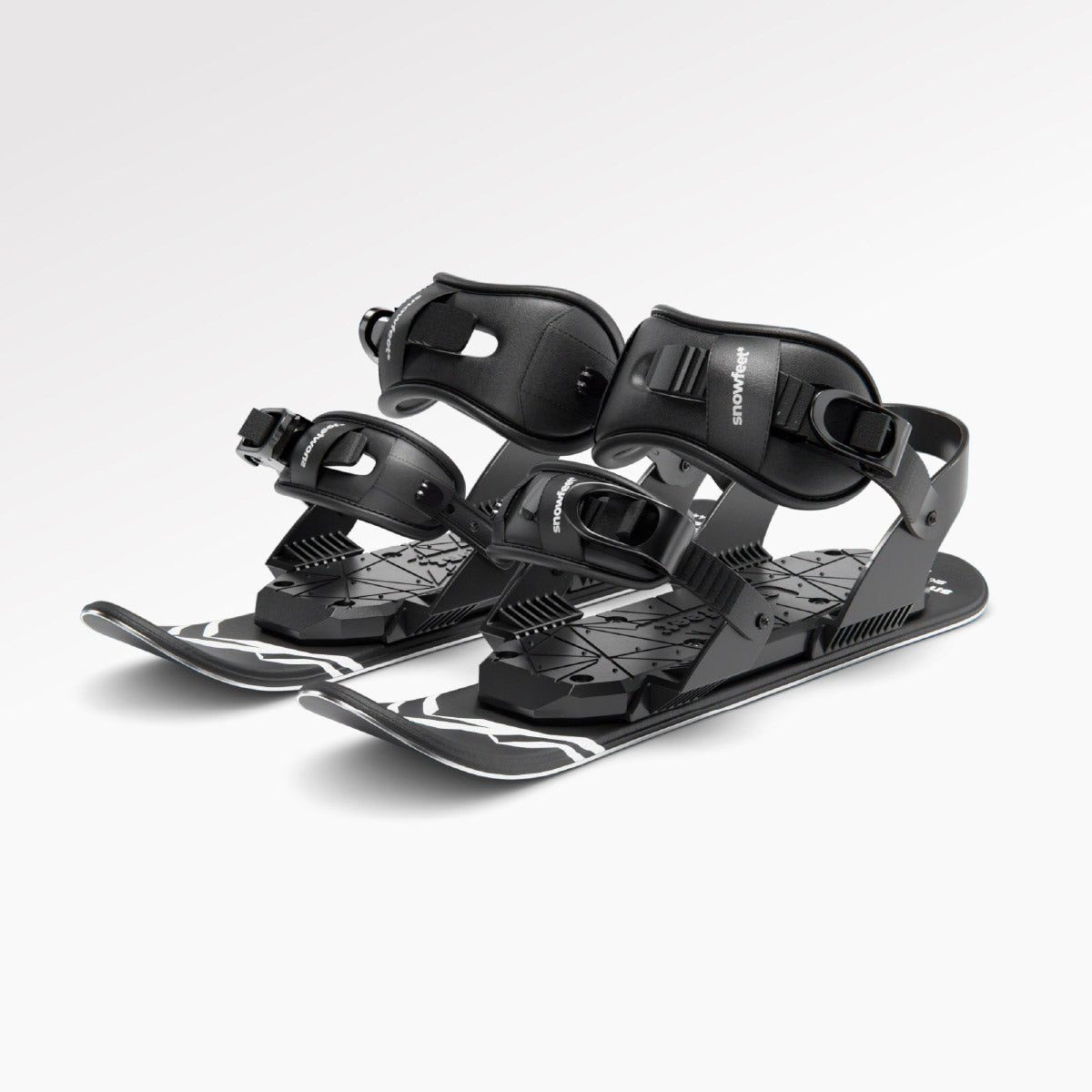
Fit matters as much as length. The listing offers separate binding options:
- Ski-boot bindings: U.S. 4.5–14.5; EU 36–49; Mondopoint 22.5–32.5.
- Snowboard-boot bindings: U.S. 6–14.5; EU 38–49.
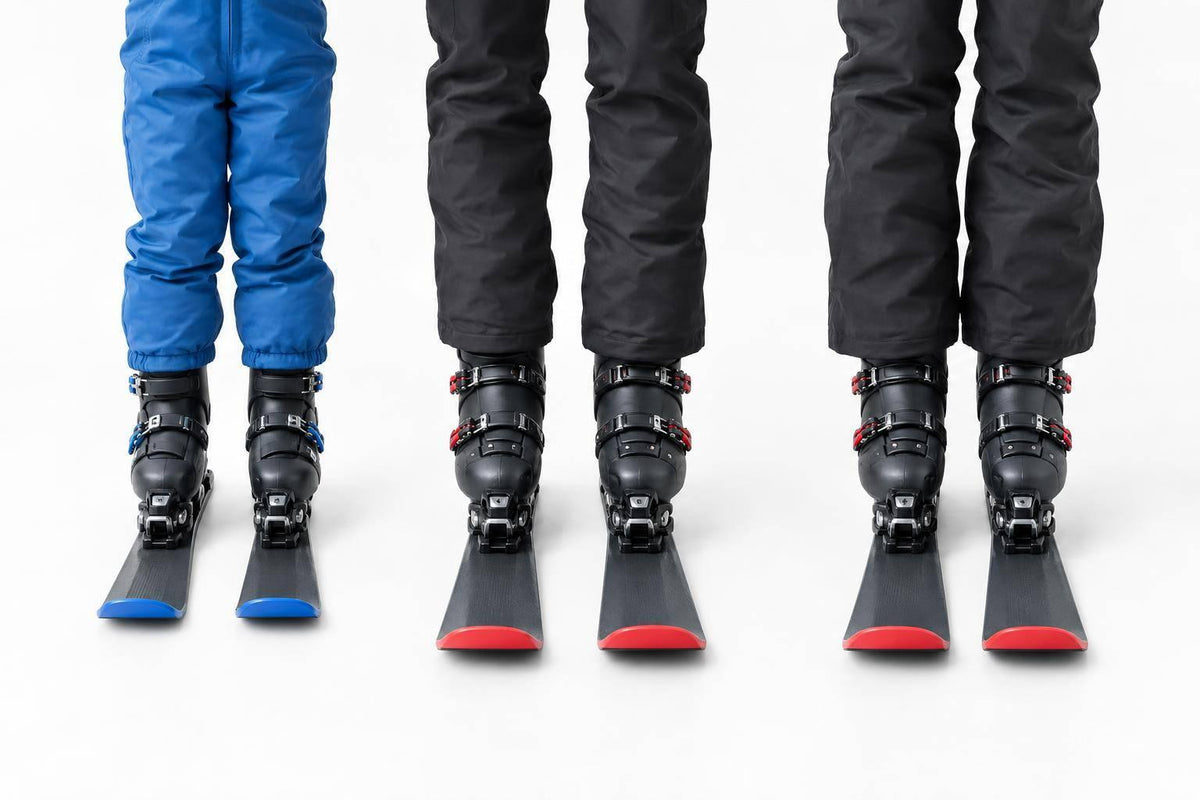
Match the binding to the actual boot, not the rider’s shoe size. If your tween already has properly fitting alpine ski boots, the ski-boot version is the better choice. These bindings don’t replace a shop-set alpine binding.
Price
The listed sale price is $790 for the configuration shown. Check the selected bindings and checkout total before ordering.
If your tween wants a bit more stability without giving up much agility, the 99 cm model is the next step.
2. Snowfeet* Skiblades 99 CM
Turning and speed stability
The 99 cm model sits between the other two sizes for groomed runs and controlled speed. It’s steadier than the 65 cm model and easier to handle than the 120 cm option. It links turns well, though long skis still have the edge for sustained high-speed stability.
Rider size and ability
This model best suits a confident beginner or intermediate tween who links turns and stops reliably. It offers more speed while keeping quick handling, plus room to try carving or basic tricks.
There are no fixed height or weight limits listed. Choose based on your tween’s build, proven control, and boot fit - not age alone.
Boot and binding compatibility
The listing doesn’t specify exact boot sizes or sole types. Fit matters just as much as length, so check with Snowfeet* that your tween’s boots work with your chosen bindings before ordering. This is especially important for snowboard boots.
Price
The listed U.S. price starts at $690.
The 120 cm model comes next, with more support and a smoother feel.
3. Snowfeet* Skiblades 120 CM
Turning and speed stability
The 120 cm model is the most stable of the three on groomed runs. It supports carving, though it turns more slowly than the 65 cm and 99 cm models. Think controlled carving and a lively ride - not maximum speed.
That added stability matters most for bigger tweens who can already control their speed on groomed terrain.
Rider size and ability
This length suits larger, more experienced tweens with solid edge control. They should already feel comfortable turning and stopping on gentle slopes. Next, check that the bindings fit your child’s boots.
Boot and binding compatibility
Snowfeet* lists adjustable bindings for ski boots but doesn’t give an exact boot-size range or sole standard. Confirm compatibility with your tween’s boots before buying. Then, weigh the price.
Price
Listed price: $950.
Snowboarder tries Snowfeet* | Which Snowfeet* Short Ski is the Best? | Snowblades 44, 65, 99 Review
sbb-itb-17ade95
Turning, Speed Control, and Terrain
Quick turns and a steady ride are different strengths. Here’s how each length handles groomed snow, from the fastest turns to the most stable ride.
| Model | Handling and speed stability | Best terrain |
|---|---|---|
| Snowfeet* 65 CM | Fastest turns; least stable as speed builds | Gentle, wide groomers |
| Snowfeet* 99 CM | Balances easy turns with a steadier ride at moderate speeds | Groomed blue runs once riders can stop reliably and link turns |
| Snowfeet* 120 CM | Smoother carving; most stable of the three | Groomed runs for more experienced tweens who carve with confidence |
Standard long skis stay more stable at sustained high speeds. But for most casual tweens on groomed runs, Snowfeet* is easier to handle. Next, check boot fit and price.
Sizing, Boot Fit, and Price Checks
Check fit, binding type, and price before you buy. Match the ski, binding, and boot to your tween’s current setup. A compatible setup with the right adjustments helps them control their Snowfeet* on groomed runs.
| Model | Binding to confirm | Boot fit to confirm | Listed price |
|---|---|---|---|
| Snowfeet* Skiblades 65 cm | Ski-boot or snowboard-boot bindings | Exact binding’s size limits and boot shell fit | $790 |
| Snowfeet* Skiblades 99 cm | Simple ski boot, Pro Ski, or snowboard-boot bindings | Size limits and release characteristics | $690 |
| Snowfeet* Skiblades 120 cm | Supplied ski-boot binding model | Compatibility, adjustment, and release characteristics | $950 |
Prices remain unverified as of October 18, 2026. Confirm the price for your chosen setup, plus tax and shipping, before checkout.
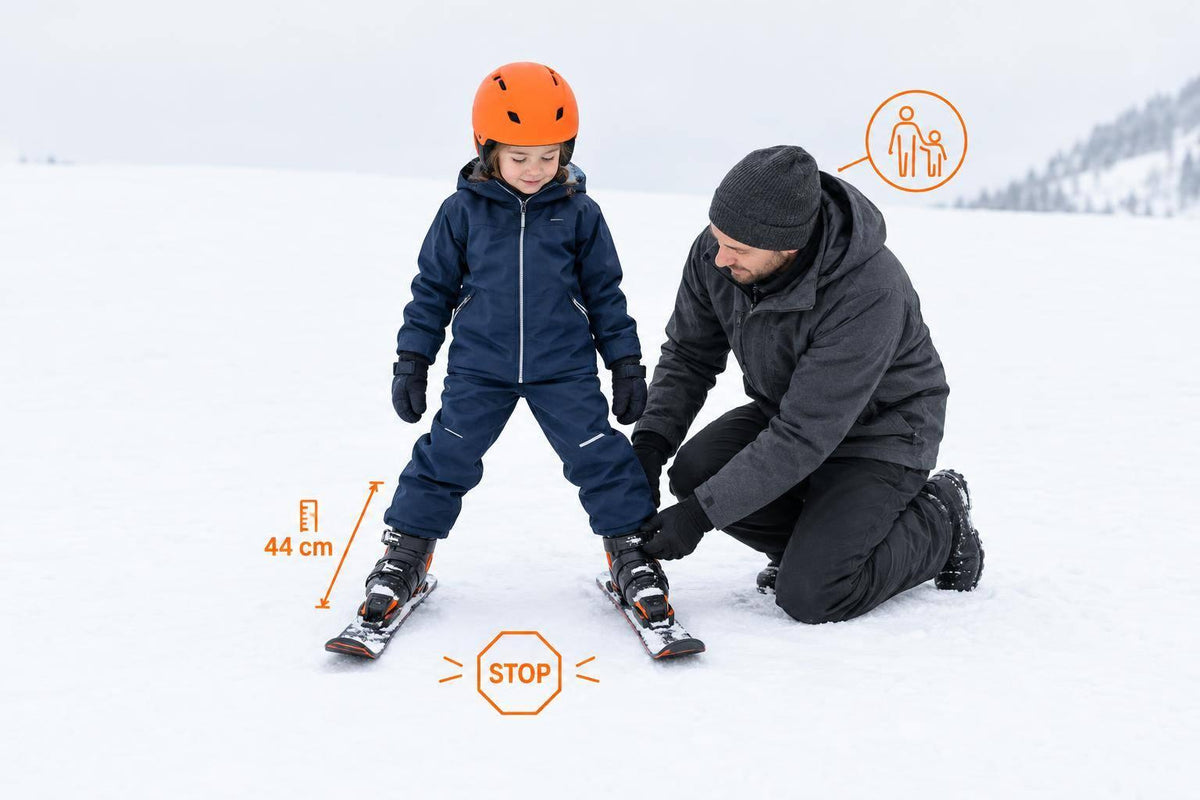
Boot-size ranges depend on the binding - not just the ski. Check the exact binding model before buying. Pro Ski’s listed range of 26–36.5 Mondopoint may not fit smaller tween boots. Have a qualified ski technician check compatibility and adjustment, and perform any required release testing. Recheck the setup whenever boots change.
With fit and price checked, compare lengths based on how fast your tween wants to ski and how much control they need on groomed runs.
Which Length Fits Your Tween?
Once you’ve checked fit and price, choose a length based on your tween’s control.
99 cm (about 39 inches) is the best all-around choice for most active tweens. The 65 cm option suits the smallest riders who want short, quick turns. The 120 cm option suits larger riders with more experience.
Buy for current control, not future size. Your tween should already hold a balanced stance, link turns, and stop reliably.
| Tween profile | Recommended option | Why it fits |
|---|---|---|
| Smaller, confident beginner | Snowfeet* Skiblades 65 CM (about 26 inches) | Quick, short turns, but less front-to-back stability. |
| Active tween with the right fit | Snowfeet* Skiblades 99 CM (about 39 inches) | Easy to turn, with more stability when carving. |
| Larger, experienced tween | Snowfeet* Skiblades 120 CM (about 47 inches) | The most stability of these three lengths, with a carving feel closer to longer skis. |
| Very experienced rider chasing sustained speed | Longer skis | Better stability at sustained high speeds. |
Before buying any length, confirm your tween’s current size, boot compatibility, and stopping control. For most casual riders, Snowfeet* is the better fit; longer skis have the edge only for sustained high-speed stability.
FAQs
How can I tell if my tween is ready for longer skiblades?
Your tween may be ready to move up when they can stop and turn with confidence on shorter skiblades, but those blades feel twitchy or unstable at higher speeds on groomed runs.
Choose 99 cm Snowfeet Skiblades* (about 39 inches) as they work toward intermediate resort terrain. For a more planted, ski-like feel when carving at higher speeds, choose the 120 cm model (about 47 inches). Both balance edge hold and control for tweens moving beyond entry-level play.
What should I ask a ski technician about binding release?
Ask the technician if your chosen Snowfeet model has non-release bindings, which don’t release during a fall. Have them check that your boots fit the bindings and show you how to secure them.
Check the resort’s rules for leashes or brakes, too - requirements vary by mountain. Some short skis need professional adjustment, while Snowfeet products are designed for easy setup with a range of options.
Can my tween try Snowfeet* before buying?
The provided information doesn’t confirm whether Snowfeet* offers a try-before-you-buy program or rentals. To see how they ride, watch demo videos on the Snowfeet website or YouTube channel. You’ll find basics, skiskate riding, and terrain park clips to help you get a feel for the experience and choose the right length before you buy.


Zostaw komentarz
Ta strona jest chroniona przez hCaptcha i obowiązują na niej Polityka prywatności i Warunki korzystania z usługi serwisu hCaptcha.