



















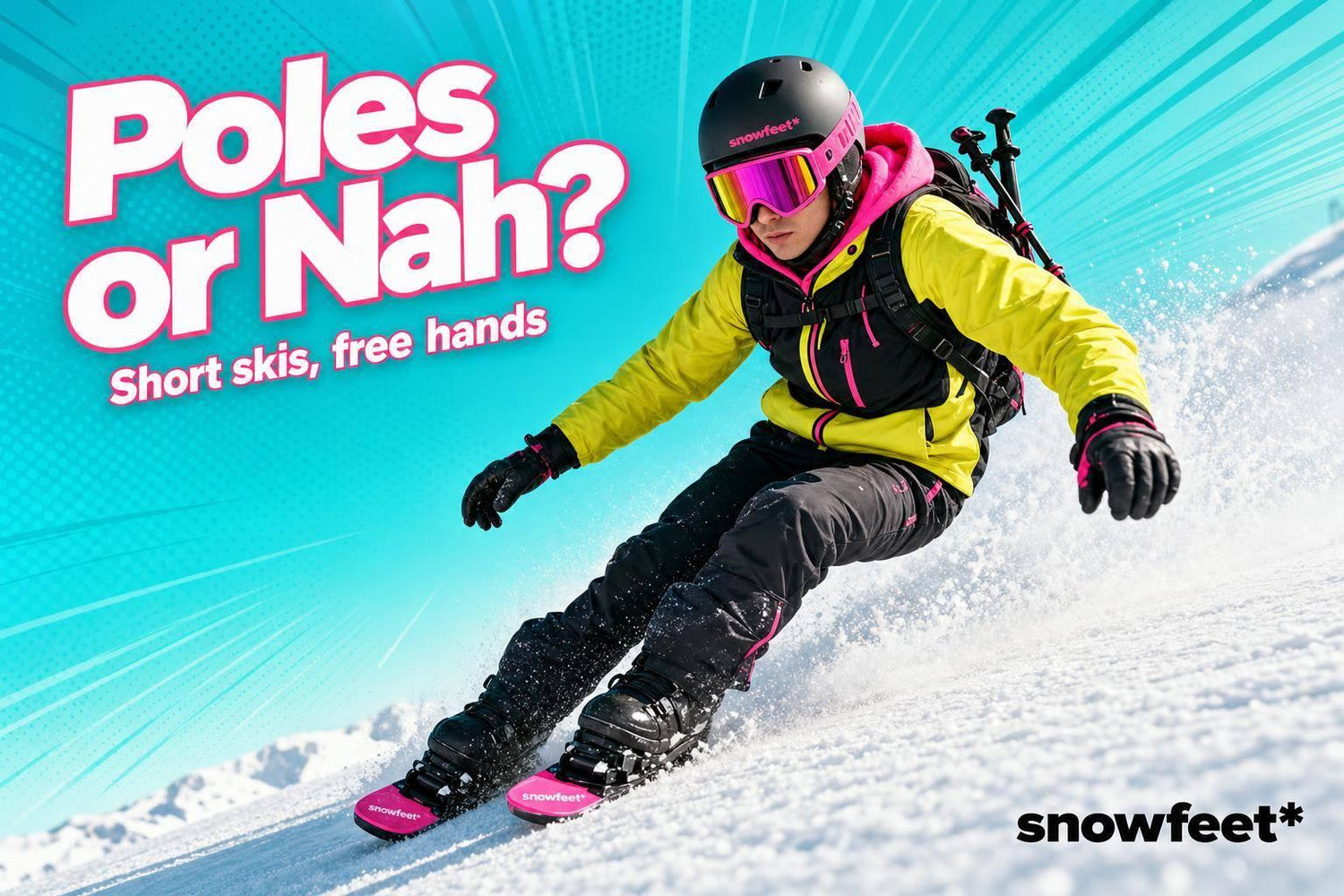
For most short-ski riders, no - you don’t need poles. If you’re on very short skis like 17-inch (44 cm) skiskates or 26-inch (65 cm) skiblades, poles often feel like extra stuff to carry. But if you ride longer short skis, hit steep groomers, cross flat runouts, or use Nordic-style gear, poles can help.
Here’s the short version:
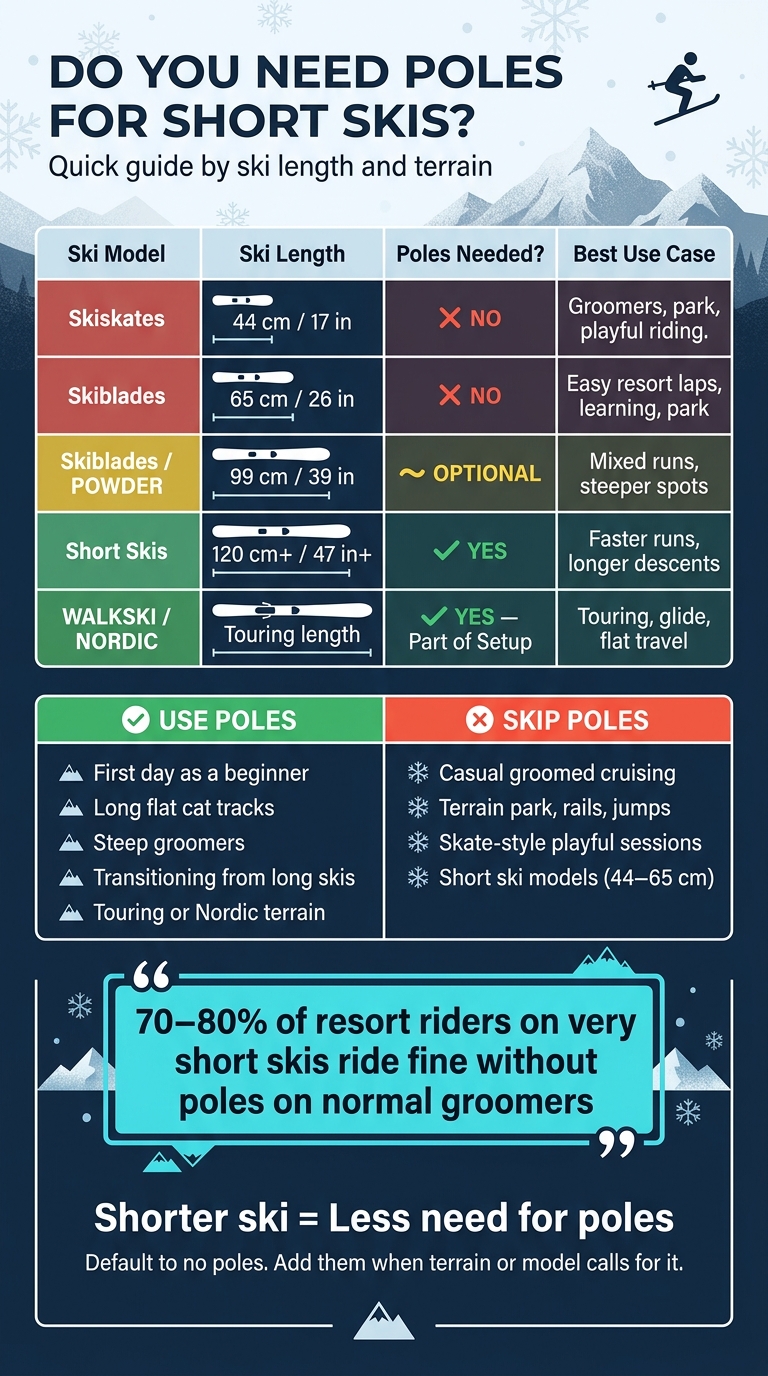
- 44 cm / 17 in and 65 cm / 26 in: usually no poles
- 99 cm / 39 in: poles are optional
- 120 cm+ / 47 in+: poles are more useful
- WALKSKI and NORDIC: poles are part of the setup
- Park laps: skip them
- Flat sections and cat tracks: bring them if you hate the awkward shuffle :)
I’d keep it simple: if your day is mostly groomed runs and playful turns, start without poles. If you know you’ll hit long traverses, steeper pitches, or touring terrain, pack them.
About 70% to 80% of resort riders on very short skis will be fine without poles on normal groomers, while poles make more sense as ski length goes up and terrain gets tougher. That’s the whole call in one line: shorter ski = less need for poles.
If you want a fast visual, here it is:
| Ski type | Pole call | Best fit |
|---|---|---|
| 44 cm skiskates | No for most riders | Groomers, park, playful riding |
| 65 cm skiblades | No for most riders | Easy resort laps, learning, park |
| 99 cm skiblades | Maybe | Mixed runs, steeper spots |
| 120 cm+ short skis | Yes, for many riders | Faster runs, longer descents |
| WALKSKI / NORDIC | Yes | Touring, glide, flat travel |
If you want to see short skis in action, these YouTube searches help:
So, that’s the clean answer: most riders can skip poles on short skis, but longer models and flatter or steeper terrain change the math.
Short Ski Poles Guide: Which Snowfeet Model Needs Poles?
Snowboarder tries Snowfeet* | Which Snowfeet* Short Ski is the Best? | Snowblades 44, 65, 99 Review

What Ski Poles Actually Do
Poles are optional. Use them when they help with balance, timing, or a quick push.
Balance, Rhythm, and Timing in Turns
On the slope, a pole’s main job is pretty simple: it helps keep your hands forward and your weight centered. Keep your hands in front of you and a bit apart. That small setup puts you in a more athletic stance, which matters a lot on steeper terrain where it’s easy to drift into the back seat.
For skiers who learned the old-school way, a light pole touch can help cue the next turn. It gives the run a nice rhythm. On Snowfeet* Skiskates and Skiblades, though, fast edge changes matter more than timing from the poles. With the 99 cm or 120 cm models, that rhythm can still feel familiar and useful, especially if you’re used to carving on longer skis.
On Snowfeet* gear, poles do less for turn timing than a centered stance and fast edge changes. That’s the big thing.
Pushing on Flat Sections and Getting Back Up
Flat sections are where poles earn their keep. Cat tracks, lift exits, and long runouts can slow short skis down fast. Poles let you push and glide instead of doing that awkward shuffle we’ve all done at some point :)
They also help after a fall. When the slope is slick and you’re trying to stand back up, having something to push against saves energy and, honestly, saves a little dignity too. So, poles are practical. Just not a must-have.
They’re also handy for small jobs that come up all day:
- Knocking snow or ice off your boot soles before stepping into bindings
- Checking an unfamiliar patch of snow
- Steadying yourself while you adjust gear on a mild slope
That’s why poles matter in some spots and barely matter in others.
When to Use Poles and When to Leave Them Behind
With short skis, poles are a maybe, not a must. It comes down to the terrain, your skill level, and how you like to ride.
Use Poles for Beginners, Flat Sections, and Steeper Runs
If it’s your first day on snow, poles can help with balance while you figure out how short skis feel and react.
They also make a big difference on long cat tracks and flat runouts. Short skis tend to lose speed fast on flat sections. Without poles, you can end up doing that awkward side-to-side skate and wasting leg energy. A few pushes with both poles keep things smooth and save your legs for the fun part.
Poles can also help if you’re moving over from long skis and still lean on pole plants to time your turns. On steeper groomers, a light pole plant before the turn can make that switch feel less weird while you learn to drive turns more with your legs.
Skip Poles for Groomed Cruising, Park Laps, and Casual Riding
For most Snowfeet* riders on groomed runs, poles just get in the way. Ditching them makes the ride feel more like skating and less cluttered.
In the terrain park, going without poles is usually the smart call. They can catch on rails and boxes, get in the way during grabs and spins, and make crashes messier than they need to be. Riding without poles also helps you build better core and lower-body balance, which pays off all over the mountain.
Here’s the quick cheat sheet:
| Situation | Poles? |
|---|---|
| Complete beginner, first day on snow | Use poles |
| Long flat cat tracks or lift runouts | Use poles |
| Steep groomers | Use poles |
| Transitioning from long skis, relying on pole-plant rhythm | Use poles |
| Mixed groomer day with occasional flat sections | Optional |
| Casual groomed cruising, green/easy blue runs | Skip poles |
| Terrain park, rails, jumps, tricks | Skip poles |
| Skate-style Snowfeet* sessions, playful riding | Skip poles |
Match that rule to your Snowfeet* model in the next section.
sbb-itb-17ade95
Pole Setup by Snowfeet* Model
Pole choice depends on the Snowfeet* model. Simple as that. What works on a 44 cm setup won’t feel the same on a 120 cm+ pair.
Snowfeet* Skiskates 44 cm and Snowfeet* Skiblades 65 cm
On these smaller models, poles are usually not needed. The whole point of the ride is balance, quick moves, and that free, playful feel. You’re not lugging around extra gear if you don’t have to, which is nice :)
That said, poles can still help in a few cases:
- learning the basics
- getting back up after a slip
- moving through long flat sections
Snowfeet* Skiblades 99 cm and Snowfeet* POWDER 99 cm
At 99 cm, poles are still optional. But now they start to make more sense, especially when the terrain gets steeper, the speed picks up, or the snow gets a bit messy.
On the Snowfeet* POWDER 99 cm, a pole plant can help with turn timing in deeper snow when the surface feels grabby. Handy on those days. Not a must, though.
Snowfeet* Short Skis 120 cm+, WALKSKI, and NORDIC
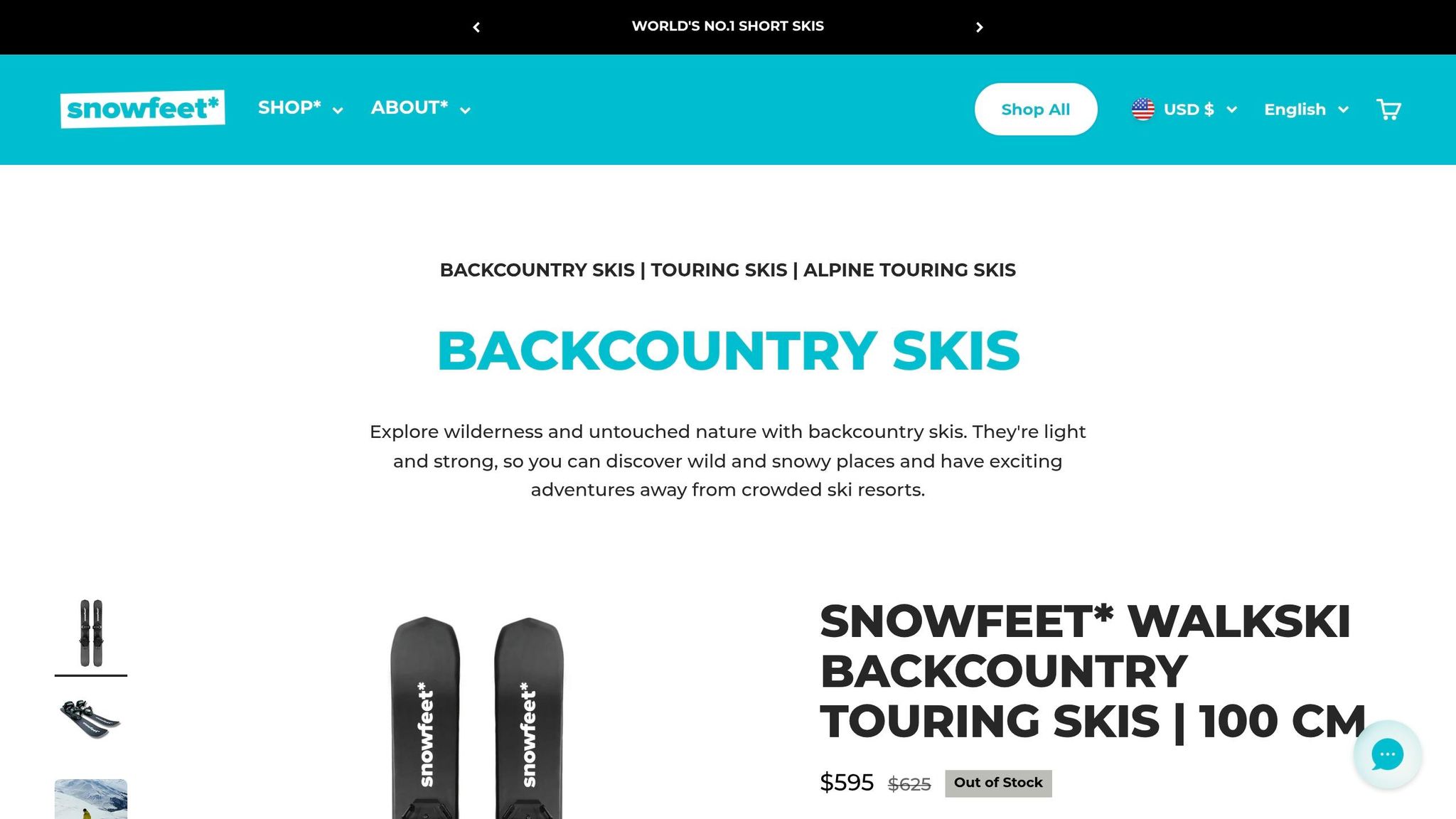
Once you go past 99 cm, poles become more useful. On Snowfeet* Short Skis 120 cm+, they work more like they do on alpine skis. They help on longer descents and at higher speeds.
For WALKSKI and NORDIC, poles are part of the setup, not an extra.
- WALKSKI uses poles for touring stability
- NORDIC uses poles for propulsion and rhythm
Use the table below to match pole use to each Snowfeet* model.
| Snowfeet* Model | Poles Needed? | Best Use Case |
|---|---|---|
| Snowfeet* Skiskates 44 cm | Usually not | Groomed runs, park laps, casual skating |
| Snowfeet* Skiblades 65 cm | Usually not | Groomed cruising, terrain park, beginner learning |
| Snowfeet* Skiblades 99 cm / POWDER 99 cm | Optional | Casual runs; more useful on steeper or choppy terrain |
| Snowfeet* Short Skis 120 cm+ | Recommended | Higher speeds, steeper runs, mixed conditions |
| WALKSKI | Recommended | Backcountry touring, uphill travel, efficient movement |
| NORDIC | Recommended | Cross-country propulsion, flat terrain |
Conclusion: A Simple Framework for Deciding on Poles
Once you’ve got the model-by-model breakdown in your head, the choice is pretty simple: model, terrain, skill level. That’s usually enough to sort it out.
Shorter Snowfeet* models usually don’t need poles. Mid-length models put poles in the maybe category. And once you get into 120 cm+ models or Nordic/touring setups, poles start to make a lot more sense.
For most resort riders, there’s one easy default: on a normal groomed resort day, start without poles. Snowfeet* gear is made for agility and freedom, and most riders feel more playful and less boxed in without them. You can spin, shift your weight, and move your arms in a natural way.
The Default for Most Riders: No Poles Unless the Day Calls for Them
Bring poles when flat traverses, steeper terrain, or touring make them useful. In those moments, having poles with you as a backup is a smart move. You get the option without committing to them all day.
So, the rule of thumb is simple: default to no poles, then add them when the model or terrain calls for it. That keeps Snowfeet* riding light, agile, and fun.
FAQs
Should I carry poles just in case?
For most riders, especially beginners, poles aren’t needed and can even get in the way with short skis like Snowfeet. In many cases, it’s better to skip them at first. That helps you focus on front-to-back balance, build confidence, and learn control faster.
Snowfeet don’t ride like long, classic skis. They’re built for agility, playfulness, and a skating-like feel. So bringing poles “just in case” often means more bulky gear and less freedom on the snow.
What pole length works best for short skis?
With short skis and Snowfeet gear, there isn’t one perfect pole length. Why? Because poles often aren’t needed for the casual, playful style Snowfeet is made for.
If you want a bit more stability or need help pushing along, adjustable poles are your best bet. They’re simple, practical, and easy to tweak.
A lot of riders, especially beginners, say they feel more natural and more confident without poles. Sometimes less gear just makes the ride more fun :)
Can I learn short skis faster without poles?
Yes - when you’re just getting started with Snowfeet, it often helps to skip the poles.
Why? Because it lets you focus on the big thing first: front-to-back balance. That’s the part that helps most beginners feel steady and in control.
Snowfeet are compact and sit low to the ground, so they feel more natural right away. Turning tends to feel quick and direct. So instead of worrying about what your poles are doing, you can put your attention where it matters most - weight distribution, stopping, and basic turns.
It’s a bit like learning to ride a bike without extra stuff in your hands. Fewer moving parts. Less to think about. More confidence :)











Zostaw komentarz
Ta strona jest chroniona przez hCaptcha i obowiązują na niej Polityka prywatności i Warunki korzystania z usługi serwisu hCaptcha.