



















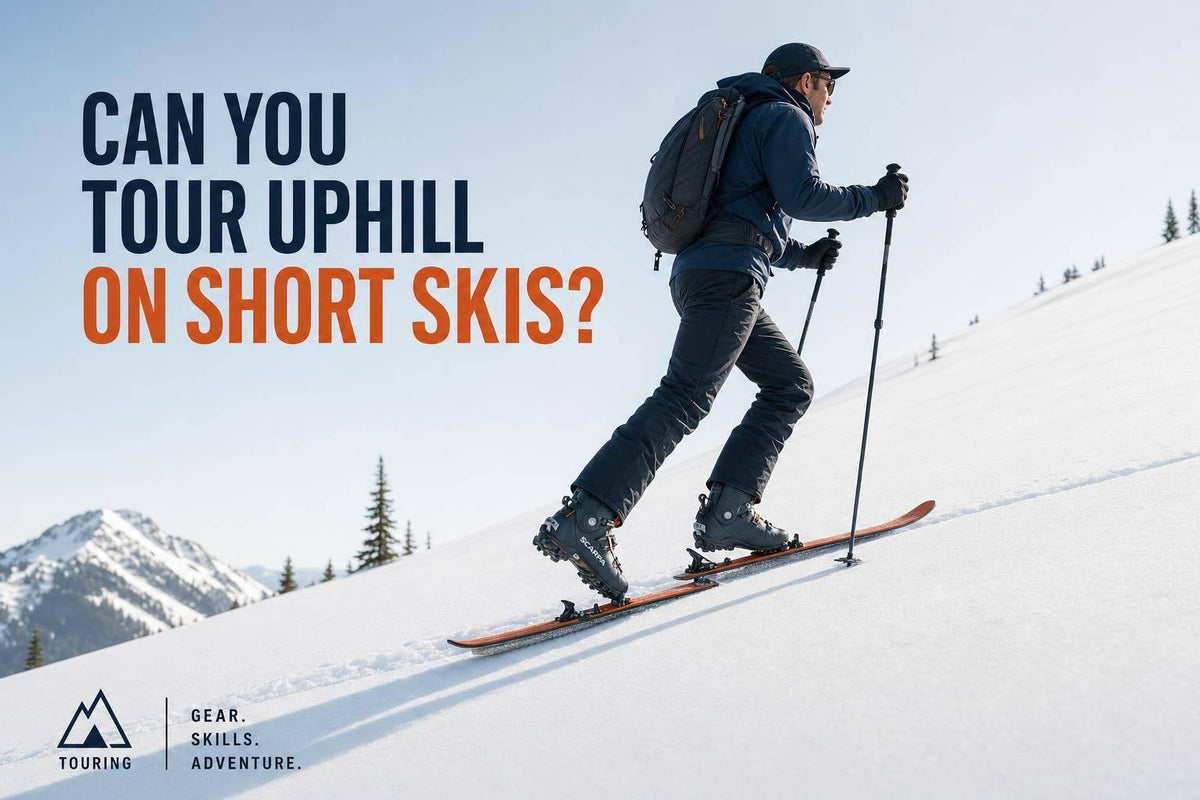
Yes - but only if the short skis are made for touring. If they have a free-heel walk mode, climbing skins, and the right bindings, they can work well on mellow slopes, short tours, and hut approaches.
Here’s the short version:
- Touring short skis can climb.
- Resort skiblades usually can’t climb well.
- The sweet spot is mellow terrain: about 10–25°
- Best day length: about 500–2,000 vertical feet
- Best users: beginners, casual tourers, and winter hikers
- Main trade-off: easy to carry uphill, less float in deep snow
- Typical price gap: about $690–$750 vs. around $2,200 for a full touring setup
If I were putting it simply in the shop, I’d say this: short skis are fine for uphill travel when the gear is built for uphill travel. If not, you’re just fighting your setup, and that gets old fast.
A few things matter most:
- Skins: no grip, no climb
- Bindings: your heel needs to lift
- Boots: match them to the tour, not just the parking lot
- Terrain: short, mellow, firmer routes are where short touring skis make sense
For me, the line is pretty clear. If you want deep powder, long days, or steep lines, full-length touring skis still make more sense. But if you want a small setup that’s easy to pack, easy to turn, and less of a hassle on short outings, short touring skis can do the job just fine :)
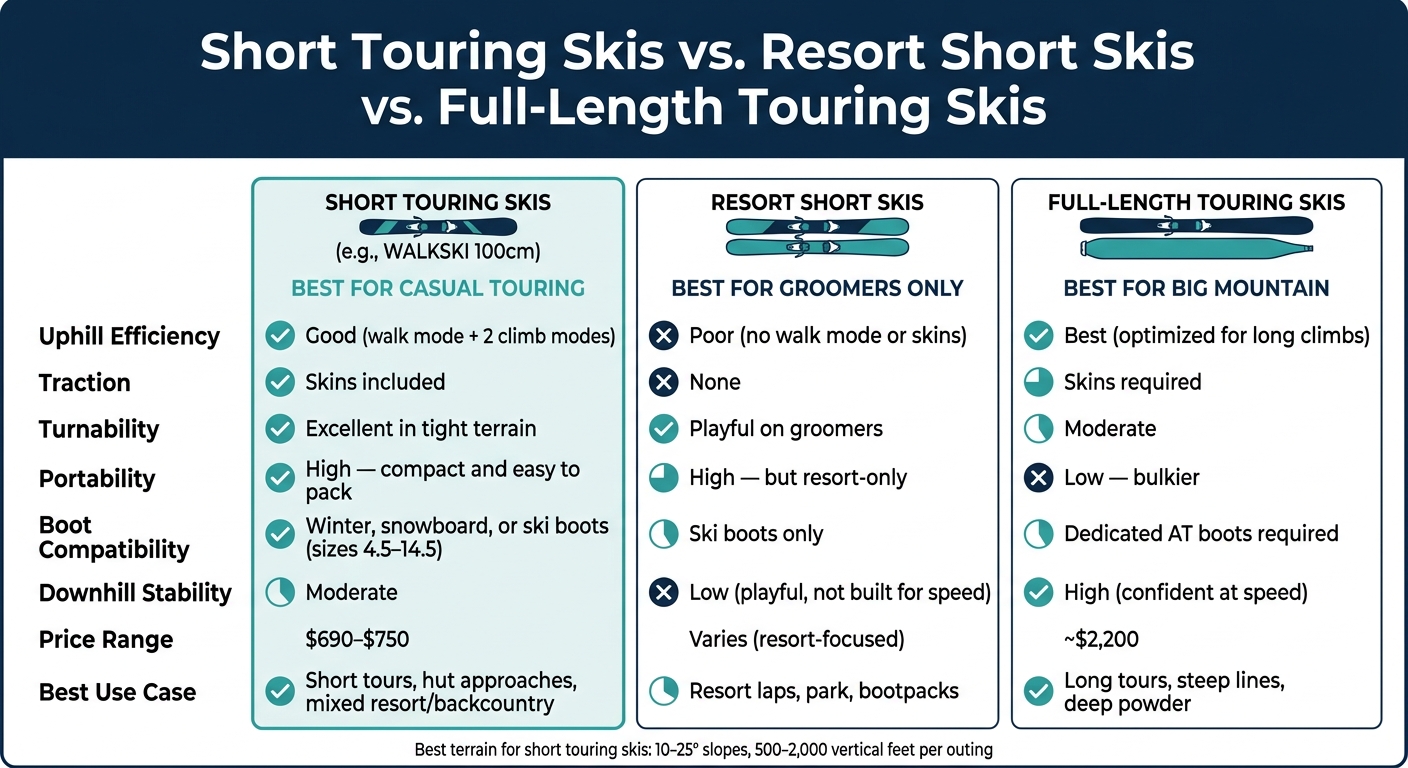
Short Touring Skis vs. Resort Short Skis vs. Full-Length Touring Skis: Which Is Right for You?
Snowfeet* WALKSKI Backcountry Touring Skis | 100 CM
Quick Comparison
| Option | Uphill Use | Best Terrain | Main Upside | Main Downside |
|---|---|---|---|---|
| Short touring skis | Good | Mellow, firm, short tours | Light, compact, easy to handle | Less float in deep snow |
| Resort short skis | Poor | Groomers, resort laps | Fun on-piste | No walk mode, no skin setup |
| Full-length touring skis | Best | Long tours, steep lines, deep snow | Better glide, float, and downhill control | More gear, more bulk |
So, if you’re asking whether short skis can tour uphill, my answer is simple: yes, if they’re touring short skis - no, if they’re just resort toys with a short length.
If you want a quick visual on short touring ski setups, these can help:
- Backcountry skiing basics on YouTube
- How climbing skins work on YouTube
- Kick turns for beginners on YouTube
When Short Skis Work Well on the Climb
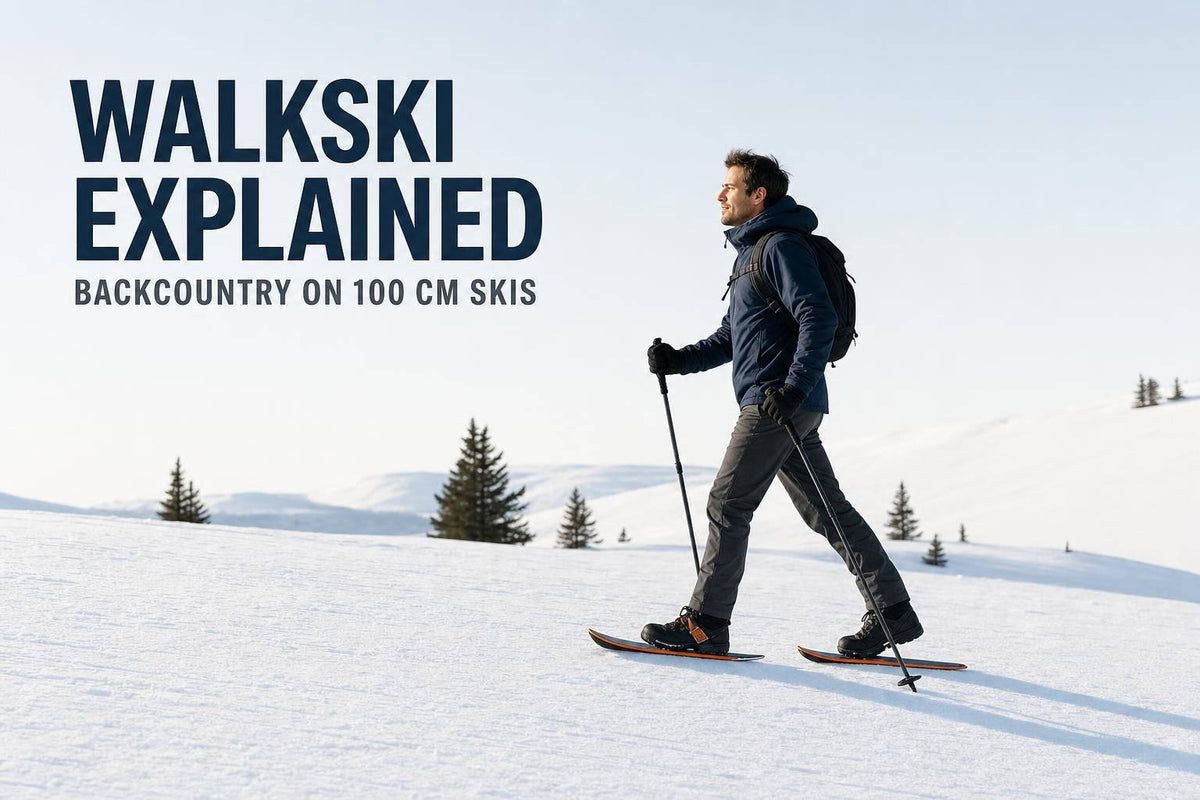
Short touring skis like Snowfeet* WALKSKI shine on the climb when the tour is short, the terrain is mellow, and you care about carrying less stuff. They make a lot of sense for short tours, hut approaches, and low-angle laps. On rolling terrain and forest roads, where you're always shifting your stride and changing direction, the lower swing weight and shorter length can feel like a gift. But here's the catch: they only work well if the setup is made for climbing.
A good range is 10–25° and about 500–2,000 vertical feet per outing. Go past that into steeper ground or all-day missions, and the downsides hit harder. You get less float, trail breaking takes more work, and glide drops off. That adds up fast, and, well, your legs will let you know.
Best For: Casual Tourers, Beginners, and Riders Who Want a Portable Setup
Short skis can be a great pick for beginners on the climb. Kick turns and sidehills tend to feel easier, which helps a lot if you're new, smaller, or hauling more than one setup. They also feel steadier on a sidehill because there’s less tail hanging behind your heel to snag or hook.
Snowfeet* WALKSKI weighs 6.9 lb per pair, so it’s easy to strap to a pack and simple to stash in a small hut. That’s a nice perk when you don’t want your gear fighting you before the tour even starts.
The next thing to check is simple: do the bindings and skins match the climb?
Best Conditions: Mellow Slopes, Firmer Snow, and Short-to-Moderate Days
Short touring skis grip well on packed trails, groomed approaches, and shallow fresh snow. They do best in existing skin tracks. In those conditions, short skis stay on line well, and their smaller surface area matters less because you're not out front doing the hard work of breaking trail.
Deep powder is where things get tougher. Less surface area means more sinking, more work with each step, and slower travel. On days like that, it helps to pick lower-angle lines or let a partner on longer skis break trail first. No shame in that. Smart is smart :)
Short skis stay quick and easy uphill, but they give up float and stability in deep, steep, or fast terrain. That trade-off is exactly why skins, bindings, and boot fit can make or break how well short skis climb.
sbb-itb-17ade95
What Setup You Need to Tour Uphill on Short Skis
Short skis can work uphill, but they still need the same core gear as full-length touring skis. You need traction, bindings that let your heel move, and boots that fit the kind of tour you plan to do. Miss one of those, and the climb gets awkward fast.
Skins and Traction Matter More Than Ski Length
For climbing, skins do the heavy lifting. Ski length matters less than people think. If your skins slip, it doesn’t matter whether your skis are 100 cm or 180 cm - you’re going to have a bad time.
The skins should cover most of the ski and lock in at both the tip and tail. That secure fit matters. A lot of resort short skis don’t have a solid way to mount skins, which is a deal-breaker for uphill travel. WALKSKI does. Snowfeet* WALKSKI Backcountry Touring 100 cm is built with a skin-compatible base designed so skins cover most of the contact length.
Once grip is sorted out, the next thing that tends to hold people back is heel movement.
Bindings and Boots Must Match the Touring Goal
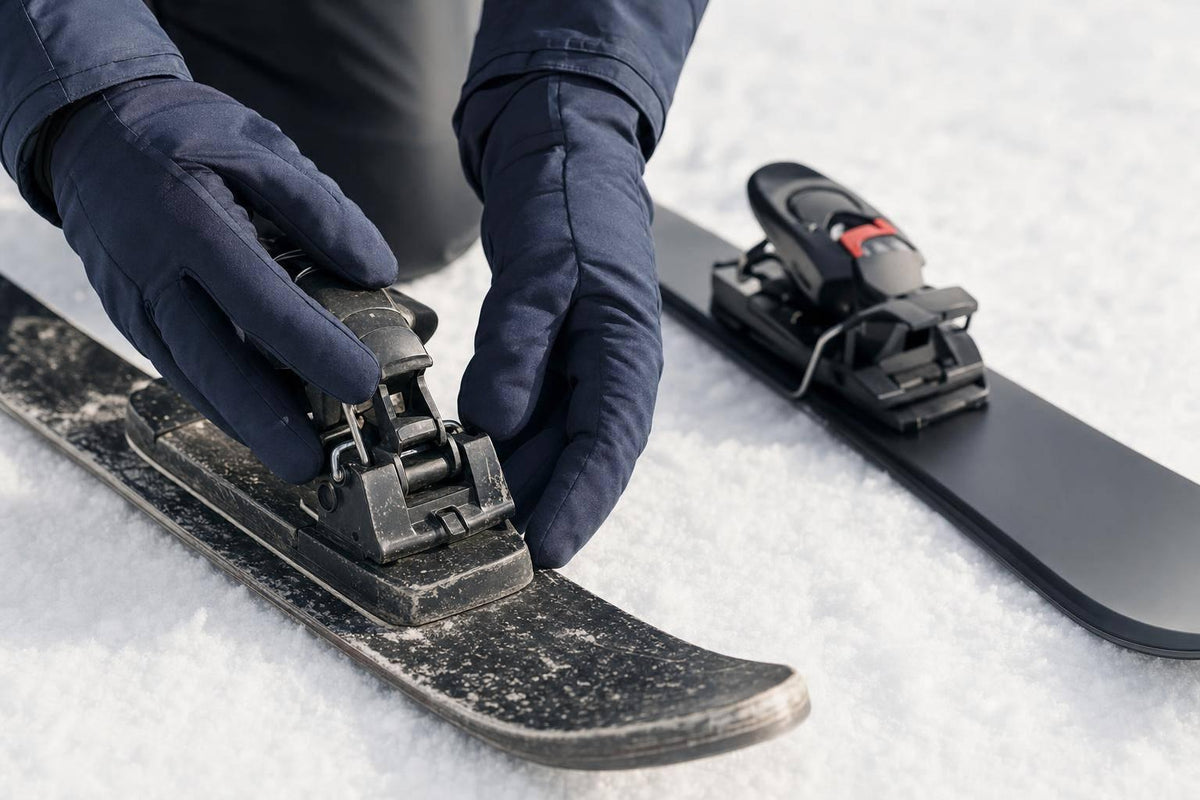
A free-heel touring binding lets your heel lift as you walk, which gives you a more natural stride. It also uses heel risers for steeper sections. That combo makes climbing smoother and less tiring. Without it, uphill travel on short skis feels clunky, and yeah, your legs will let you know.
Boots should match the tour itself. Think about how far you’re climbing and how much control you want on the way down, not just what feels comfy in the parking lot.
Here’s the simple breakdown:
- Touring ski boots give the best control for long climbs
- Snowboard boots work well for casual tours
- Winter boots are fine for short, mellow approaches
- Downhill ski boots are a poor pick for uphill travel
WALKSKI fits snowboard boots, winter boots, and ski boots in US sizes 4.5–14.5, so a lot of riders can get out touring without buying a separate boot setup.
Snowfeet* WALKSKI vs. Resort Short Skis vs. Full-Length Touring Skis
Once your setup is dialed in, the next step is simple: pick the ski that matches the climb. And on snow, these three options feel very different.
| Feature | Snowfeet* WALKSKI | Resort Short Skis | Full-Length Touring Skis |
|---|---|---|---|
| Uphill Efficiency | Good - walk mode plus two climb modes | Poor - no walk mode or skins | Best - optimized for long climbs |
| Traction | Skins included | None | Skins required |
| Turnability | Excellent in tight terrain | Playful on groomers | Moderate - less pivoty, more predictable |
| Portability | High - compact and easy to pack | High - compact, but mostly resort-only | Low - bulkier to carry |
| Boot Flexibility | Winter, snowboard, or ski boots | Ski boots only | Dedicated AT boots required |
| Downhill Stability | Moderate | Low - playful, but not built for speed | High - confident at speed |
| Best Use Case | Casual touring, mixed resort/backcountry days, and short-to-moderate climbs | Resort laps, park, and short bootpacks | Big-mountain lines, deep powder, and long tours |
WALKSKI has one big edge: it’s made for going uphill. That gives it a clear lead over resort short skis on any climb. Resort short skis are fun, no doubt, but without walk mode or skins, they hit a wall fast once the slope points up.
Full-length touring skis still take the lead for long tours, steep terrain, and deep powder. That’s their home turf. But for short tours, tighter terrain, and days that mix resort laps with sidecountry or light backcountry travel, WALKSKI makes more sense.
That’s the trade-off, plain and simple. It usually comes down to one thing: are short skis enough for what you want to do today?
Conclusion: When Short Skis Are the Right Call
Short skis can work for uphill travel, but only if the setup is right. You need touring-capable bindings with a free-heel walk mode, climbing skins that fit well, and boots that let you move with a natural stride. Miss any one of those, and you’re not looking at touring gear. You’re just making the uphill harder than it needs to be.
Snowfeet* WALKSKI Backcountry Touring 100 cm is a strong fit for mellow-to-moderate climbs on packed, compacted, or lightly covered stable snow. It also makes more sense if you’re new to touring, packing light, or using winter boots or snowboard boots instead of dedicated AT boots. And the price matters. At $690–$750, it comes in well below a typical $2,200 touring setup, which makes it a smart buy for casual use.
That changes when the route gets longer, steeper, or more technical. On long climbs, steep lines, deep snow, or exposed terrain, full-length touring skis still do the better job. No sugarcoating there.
So the choice is pretty straightforward. A lot of casual tourers don’t need full-length skis for mellow days. If your tours are short, the terrain is forgiving, and you want something that fits in your trunk and works with the boots you already own, WALKSKI is the smarter portable choice.
FAQs
Are short touring skis safe for beginners?
Yes. Short touring skis like the Snowfeet WALKSKI can be a safe, great pick for beginners. Their compact 100 cm length makes them easier to turn and control than long skis, which can help new users feel more at ease.
They also work with standard winter boots or snowboard boots, which cuts down on cost and setup hassle. Even then, beginners should still use proper navigation, carry key safety gear, and stick to suitable, well-planned routes.
How do short skis handle icy or uneven skin tracks?
Short skis like the Snowfeet WALKSKI can do well on icy or rough skin tracks if you set them up right and use solid technique.
At 100 cm, these skis put your weight over a smaller patch of snow. That helps the skins press in deeper, which can give you better traction. Think of it like hiking in boots with a firm tread instead of sliding around in socks.
On slick tracks, trim your skins so 5 to 7 mm of metal edge stays exposed. That gives you a bit more edge contact when the surface gets hard or choppy.
A couple more things help too:
- Nylon skins tend to grip better in firm conditions
- Built-in heel risers can cut down on slipping and make climbing feel more steady
So, yeah, short skis aren’t just for mellow snow. With the right setup, they can hold their own when the track gets icy or uneven.
Can I use regular winter boots with touring short skis?
Yes. Touring short skis like the Snowfeet WALKSKI use a universal free-heel binding, so you don’t need special alpine touring boots.
They work with:
- insulated winter boots
- sturdy hiking boots
- snowboard boots
For the best control and comfort, go with boots that have good ankle support. The setup fits US sizes 6–14.5 and boot sole lengths from 9.5 to 15 inches.











Zostaw komentarz
Ta strona jest chroniona przez hCaptcha i obowiązują na niej Polityka prywatności i Warunki korzystania z usługi serwisu hCaptcha.