



















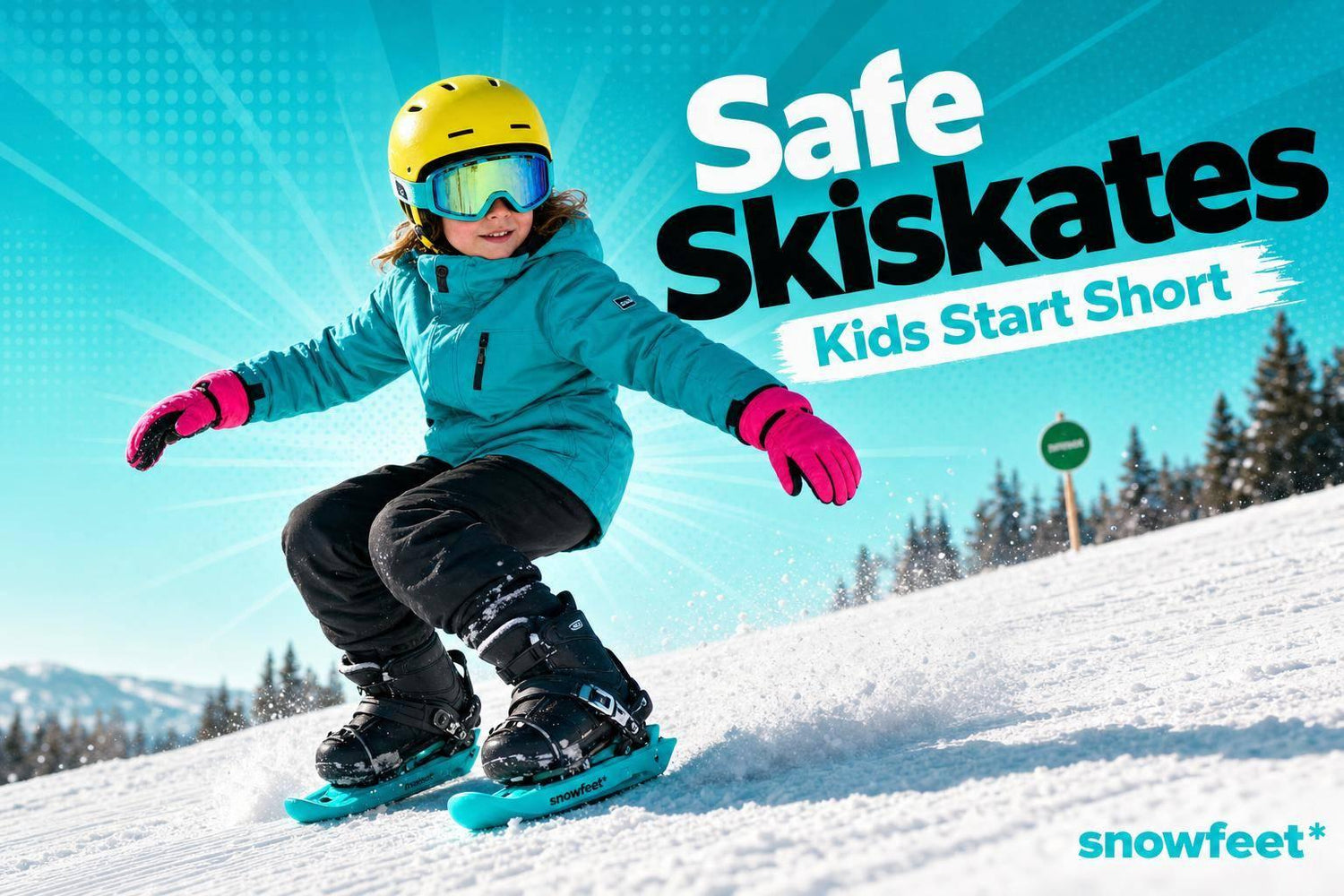
Yes - if your child already has basic control on snow. I’d keep it simple: if they can balance, stop on a gentle green slope, follow directions, and wear gear that fits, skiskates can be a safe pick. If not, the risk jumps fast.
Here’s the short version:
- Not for a first day on snow
- Best on gentle, open green runs
- A ski or snowboard helmet is a must
- Boot and binding fit matter a lot
- Ice, steep slopes, parks, and crowded areas are the big problems
- For small or new riders, MINI KIDS is the safest place to start
A few numbers stand out. Studies in kids found icy snow was linked to 40%–51.5% of injuries, and 58% of accidents involved crashes into fixed objects like trees, posts, and lift towers. So, yeah, terrain choice is a big deal.
If I were helping a parent at the shop, I’d use this quick checklist:
- Can your child stand on one foot for 5–10 seconds?
- Can they stop on a mellow slope without panic?
- Do the boots feel snug, with very little heel lift?
- Do they have a helmet made for snow sports?
- Will they ride with an adult, on uncrowded beginner terrain?
If you can answer yes across the board, you’re in decent shape. If not, I’d wait or start with a shorter, easier setup. Better a fun first day than a yard sale halfway down the hill :)
Quick Comparison
| Model | Best for | Terrain | Feel |
|---|---|---|---|
| MINI KIDS | Small kids and first-timers | Learning areas, magic carpet slopes | Easiest to control |
| Skiskates 44 cm | Kids with balance and stopping skills | Open green runs | More reactive |
| Skiblades 65 cm | Confident young skiers | Green to easy blue groomers | More stable |
So, the safest choice comes down to control, fit, and terrain - not age alone.
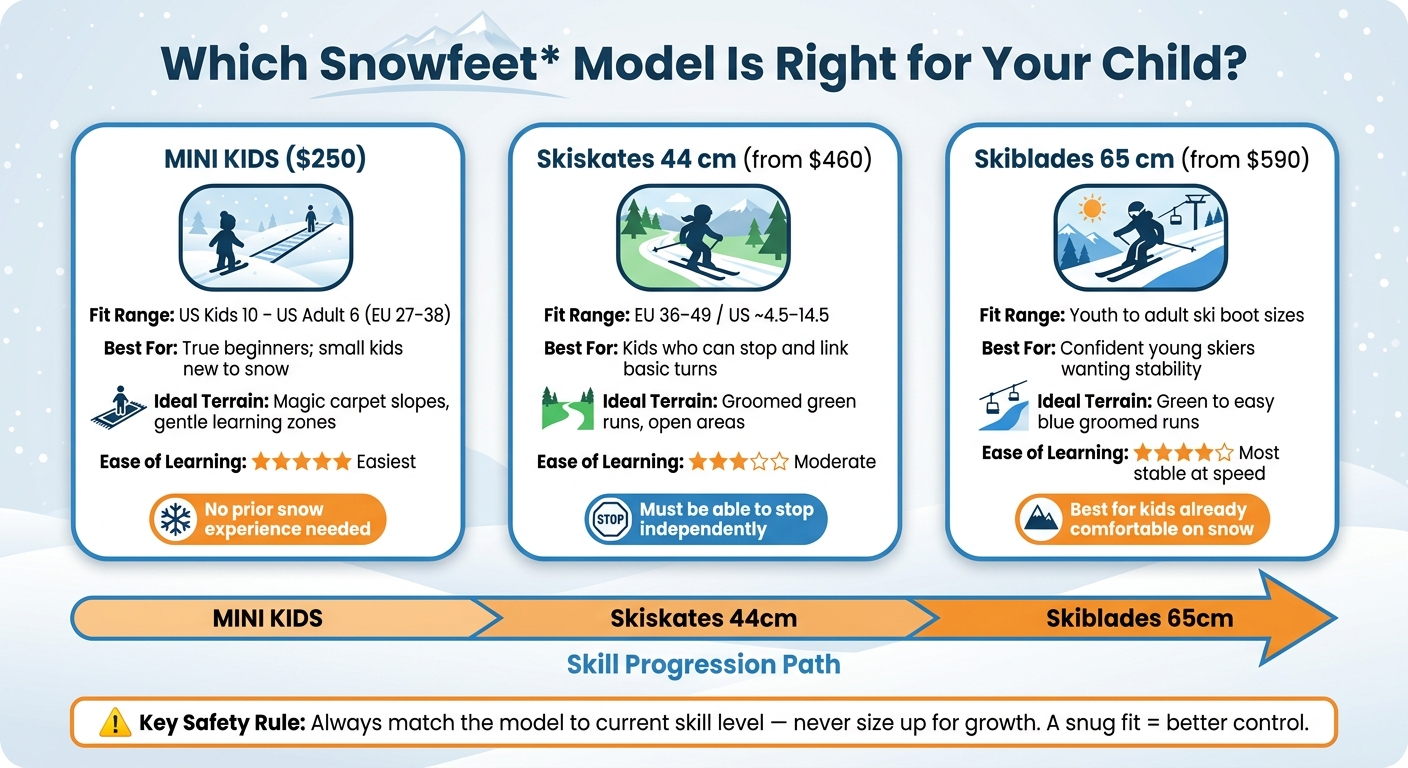
Snowfeet Kids Model Comparison: MINI KIDS vs Skiskates 44cm vs Skiblades 65cm
The ultimate fun skis for kids. 🎿
When Skiskates Are a Good Fit for Kids
Skiskates make the most sense for kids who can balance, follow simple directions, and stay calm once things speed up a bit. Readiness matters more than age.
Readiness Signs Matter More Than Age
Skiskates respond fast. That means balance and the ability to recover matter most. Good, practical signs include being able to stand on one foot for 5–10 seconds, squat down and get back up with no trouble, and handle about an hour of active play.
Those signs tell you more than age ever will. If a child can’t do those basics yet, start with MINI KIDS instead.
Past time with skiing, skating, skateboarding, or snowboarding also helps. Kids who’ve tried sliding sports often already get the basics. They know how to shift balance, notice edges, bend their knees, and look ahead without going stiff.
When to Start With a Different Option First
Sometimes the answer is simple: not yet. If a child gets nervous about speed, can’t slow down on mellow terrain, or freezes when they feel off balance, skiskates are too much for now. The same goes for children under 3 years. Snowfeet's guidance says skiskates are not suitable for them.
For those kids, Snowfeet* MINI KIDS is the better first step. It’s easier to control, so they can work on basic movement without having to react to sudden speed. That helps them build control first, then move up later.
Even if a child seems ready, stick to gentle terrain. That’s the smart move. Speed and ice are where things get dicey fast.
What Makes Skiskates Safer or Riskier for Kids
Terrain matters just as much as the gear. A kid might have decent balance and know how to stop, but the hill can still make things easy or sketchy in a hurry. So, once those basic skills are there, terrain becomes the next big safety check.
Gentle, Open Terrain Lowers Risk
At U.S. ski areas, green runs are the best place to start. They’re wide, mellow, and easy to read. That gives kids room to turn, slow down, and think without feeling rushed. Small practice hills or beginner zones near the base can work too, as long as the snow is smooth and the area is clear of trees, rocks, fences, and hidden drop-offs.
A simple rule helps here: pick runs where an adult can slide straight and stop without picking up much speed. If that sounds too fast for a child, it’s too much hill.
Skip spots like:
- Narrow cat tracks
- Trail merges
- Areas near lift lines
Those places get tight fast. People bunch up, speeds vary, and a child has less time to react. Collision risk is highest at slope intersections. And, yeah, busy slopes make that worse. Fewer riders usually means fewer chances for someone to cut across your path.
Steep Slopes, Ice, and Speed Are the Main Hazards
This is where things can go sideways. Skiskates are short, which is part of why they feel fun and easy at slow speeds. But that short length also means less edge touching the snow. As the slope gets steeper or speed goes up, stability drops fast.
On steep terrain, kids can gain speed before they’re ready for it. On hard or icy snow, edges don’t grip as well, and a tiny mistake can turn into a long slide.
A pediatric skiing review found that icy conditions were linked to the highest injury prevalence, at 40% to 51.5% of injuries - higher than powder (29.7%) or wet snow (16.8%). Another study of children and adolescents found that 58% of accidents involved collisions with stationary objects like trees, posts, and lift structures. That’s a big deal. It’s one more reason to keep kids well away from tree lines, fences, lift towers, and other fixed hazards.
Terrain parks, jumps, rails, and half-pipes are higher-risk features and should be avoided. Moguls are also too much for most kids on skiskates unless they already have strong edge control and can stop on command.
A good gut-check is simple: can the child stop, steer, and avoid obstacles on that exact run? If not, the terrain is doing too much. The run should feel easy enough that they can focus on balance and stopping, not survival mode.
After terrain, boot fit, bindings, and helmet are the next controls that matter.
sbb-itb-17ade95
Boot Fit, Helmet, and Protective Gear
Loose boots or sloppy binding fit can make stopping and steering feel unpredictable. A snug, secure fit is the base of control on skiskates. Once you’ve picked the right hill, fit is the next thing to dial in.
Picking the Right Snowfeet* Size and Boot Setup
Snowfeet* sizing is pretty simple once you know your child’s current U.S. shoe size. Snowfeet* MINI KIDS is made for U.S. kids’ sizes 1–5. It gives younger riders a lighter, shorter platform that’s easier to handle at beginner speeds.
For bigger kids and tweens with shoe sizes around 6 US and up, and who already have basic skiing, skating, or snowboarding skills, Skiskates 44 cm or Skiblades 65 cm make more sense.
Don’t size up for growth. It sounds smart at first, but oversized bindings can cut control in a big way. Seattle Children's notes that boots that are too big are just as much of a problem as boots that are too small - both can reduce control and cause discomfort. A boot that fits right now is safer than one with extra room to “grow into.”
Some Snowfeet* models work with regular winter boots. For first-timers, firm waterproof winter boots are often the best call. Ski-boot-compatible models fit older kids and riders with more time on snow.
Before you head out, do a quick fit check:
- Put the boot in the binding and tighten the straps.
- Check for side-to-side movement.
- Have your child bend their knees. The heel should lift no more than about 1/4 inch.
- Tuck in any loose strap ends so nothing drags in the snow.
After fit, helmet and pads come next.
Helmet and Pads for Younger or Beginning Riders
A certified ski or snowboard helmet is required. Bike helmets aren’t made for snow-sport impacts or cold-weather falls. Look for helmets that meet ASTM F2040, Snell RS-98, or S-98 standards. The helmet should sit level on the head, the chin strap should be snug with one finger of space under it, and there should be no gap between the goggles and helmet brim.
For younger or beginner riders, add wrist guards, knee pads, and elbow pads, most of all on firm snow or ice. Wrist guards matter a lot here. Research shows they can cut wrist injury risk by a lot in snow sports. One pediatric review found a relative risk of 0.23 for wrist injury and 0.29 for wrist fracture when guards were worn.
Many U.S. ski shops and sporting goods stores sell youth-sized snow wrist guards. It’s worth asking staff to help with fit before you buy. A guard that shifts around is about as helpful as a mitten with holes in it.
With fit and protection handled, the next move is matching the right Snowfeet* model to your child’s size and skill: MINI KIDS, Skiskates 44 cm, or Skiblades 65 cm.
Which Snowfeet* Model Is Right for Your Child
For kids, the safest pick is the one they can control with ease on the gentlest terrain.
Snowfeet* MINI KIDS vs. Skiskates 44 cm vs. Skiblades 65 cm
Match the model to your child’s boot size, skill, and the kind of slope they’ll ride. Here’s a quick guide to help you line up the right Snowfeet* model with your child’s size and control level.
| Model | Fit Range | Best For | Ideal Terrain | Ease of Learning |
|---|---|---|---|---|
| MINI KIDS ($250) | US Kids 10 – US Adult 6 (EU 27–38) | True beginners; easiest for small kids | Gentle learning zones, magic-carpet slopes | Easiest - short, light, slow-speed friendly |
| Skiskates 44 cm (from $460) | EU 36–49 / US ~4.5–14.5 (ski or snowboard boots) | Kids with solid balance who can stop and turn | Groomed green runs, open areas | Moderate - more responsive, exposes poor balance faster |
| Skiblades 65 cm (from $590) | Youth to adult ski boot sizes | Confident young skiers wanting more stability | Green to easy blue groomed runs | Most stable at moderate speeds once skills are there |
The short version: the smaller and less experienced the rider, the shorter the model should be.
MINI KIDS are the clearest place to start for small children. The short platform makes balancing and steering easier, and falls usually feel less scary. That matters a lot when a kid is still getting used to sliding on snow.
Skiskates 44 cm fit kids who can already link basic turns and stop on their own. They give more glide and a snappier feel than MINI KIDS. That sounds fun - and it is - but they also punish shaky balance a bit faster. They’re best on mellow green runs with room to move.
Skiblades 65 cm feel the most like skis out of these three. At 65 cm, or about 25.6 inches, they track straighter and feel more steady in gentle carved turns. For a confident kid riding at moderate speeds, that can be a sweet spot. Full-length skis still do better at high speeds, but Skiblades 65 cm make more sense for relaxed family laps on groomed terrain.
Conclusion: Control, Fit, and Terrain Determine the Safest Choice
Kids can use skiskates safely when the setup is right: basic balance and stopping ability, a helmet that fits well, protective gear, gentle uncrowded snow, and a close adult nearby.
The takeaway is simple: start with the model your child can fit and control most easily. For most families, that means MINI KIDS for younger or newer riders, Skiskates 44 cm once balance is solid, and Skiblades 65 cm as the next move for kids who already feel at home on snow. If your child is between sizes or still unsure, go shorter and easier. That’s usually the safer bet :)
FAQs
How do I know if my child is ready for skiskates?
Your child is probably ready if they can balance well and control their edges. That’s even more true if they’ve done ice skating, inline skating, or hockey. Skiskates turn and move more easily than standard skis, so kids with skating-style skills often pick them up faster.
For safety, keep it simple:
- Pick a model that fits their skill level
- Use a helmet
- Make sure they wear supportive boots
- Start on gentle, groomed slopes
Snowfeet* MINI KIDS works well for smaller feet. The 50 cm PRO gives beginners a bit more stability.
What gear does my child need for skiskates?
Your child needs waterproof boots with solid ankle support. Sturdy winter boots can work, but snowboard boots are the better pick if you can get them. They fit more snugly and give your child better control.
A helmet is a must.
Depending on the terrain, a safety leash can help keep the skiskates attached. Also, make sure the bindings are set to your child’s boot size so the fit feels secure, snug, and free of extra wiggle.
Which Snowfeet* model is safest for beginners?
For beginners, the safest Snowfeet* picks are the Mini Ski Skates (38 cm) and PRO (50 cm). Because they’re shorter, they tend to feel easier to control at lower speeds. That gives new riders a better shot at building balance and confidence without feeling like the skis are running away from them.
The 65 cm Skiblades are also a good pick for beginners. Their wider base gives you more stability, which can feel a lot less twitchy on snow. The trade-off? They don’t feel quite as skate-like.
A smart place to start is on groomed, gentle slopes. Stick with easy terrain until turning and stopping feel comfortable. That’s the sweet spot - calm, controlled, and way more fun :)











Zostaw komentarz
Ta strona jest chroniona przez hCaptcha i obowiązują na niej Polityka prywatności i Warunki korzystania z usługi serwisu hCaptcha.