



















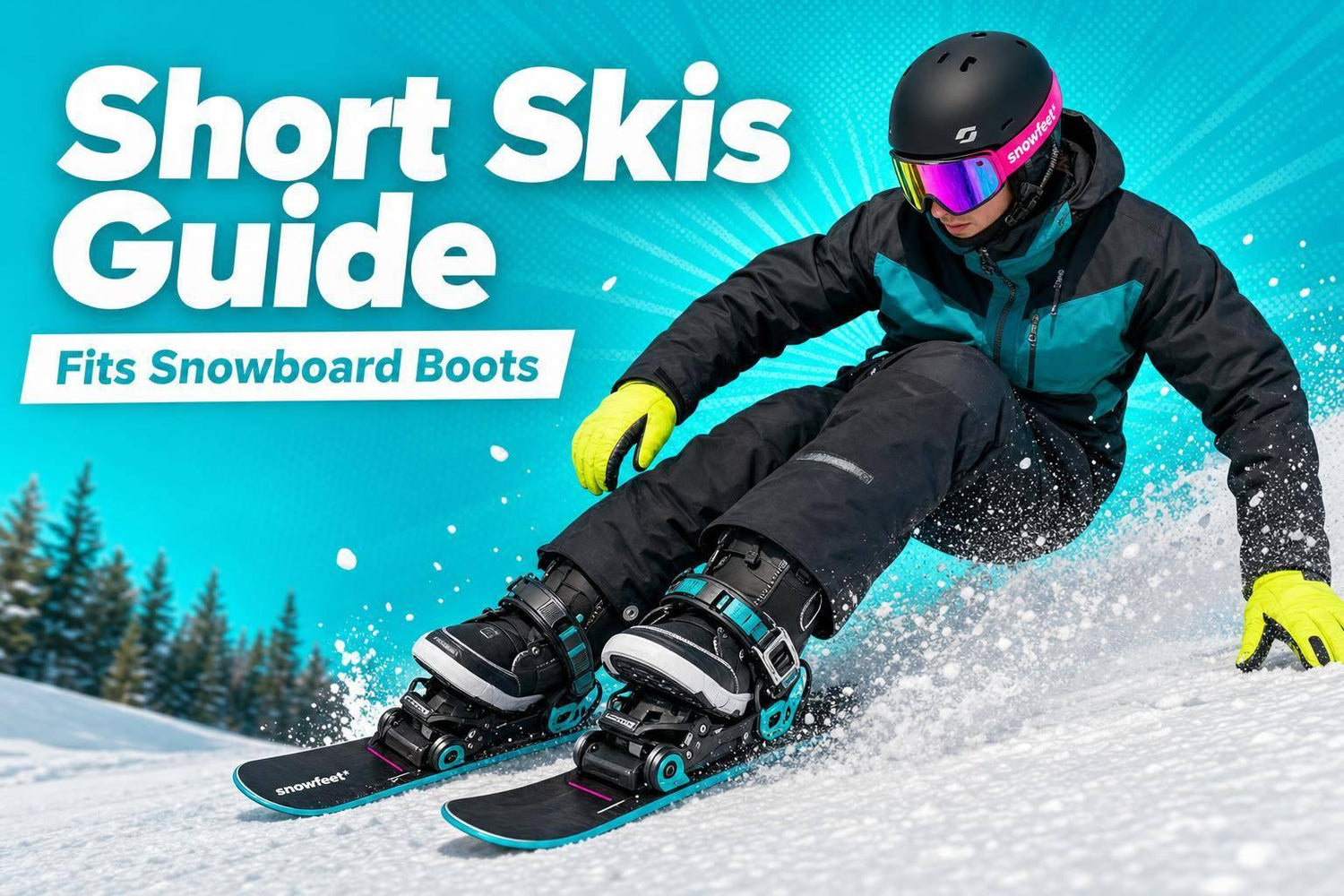
If you want short skis that fit snowboard boots in 2026, the safe pick is the Snowfeet* 99 cm. It gives the best mix of control, pack size, and resort use for most riders.
Here’s the short answer:
- Best overall: Snowfeet* Skiblades 99 cm - best balance for most riders
- Best for travel and tricks: Snowfeet* Skiskates 44 cm
- Best for first-timers: Snowfeet* Skiblades 65 cm
- Best for soft snow: Snowfeet* POWDER 99 cm
- Best for the most stable ride: Snowfeet* Short Skis 120 cm
- Best for top speed, but not snowboard boots: Long skis 160–170 cm
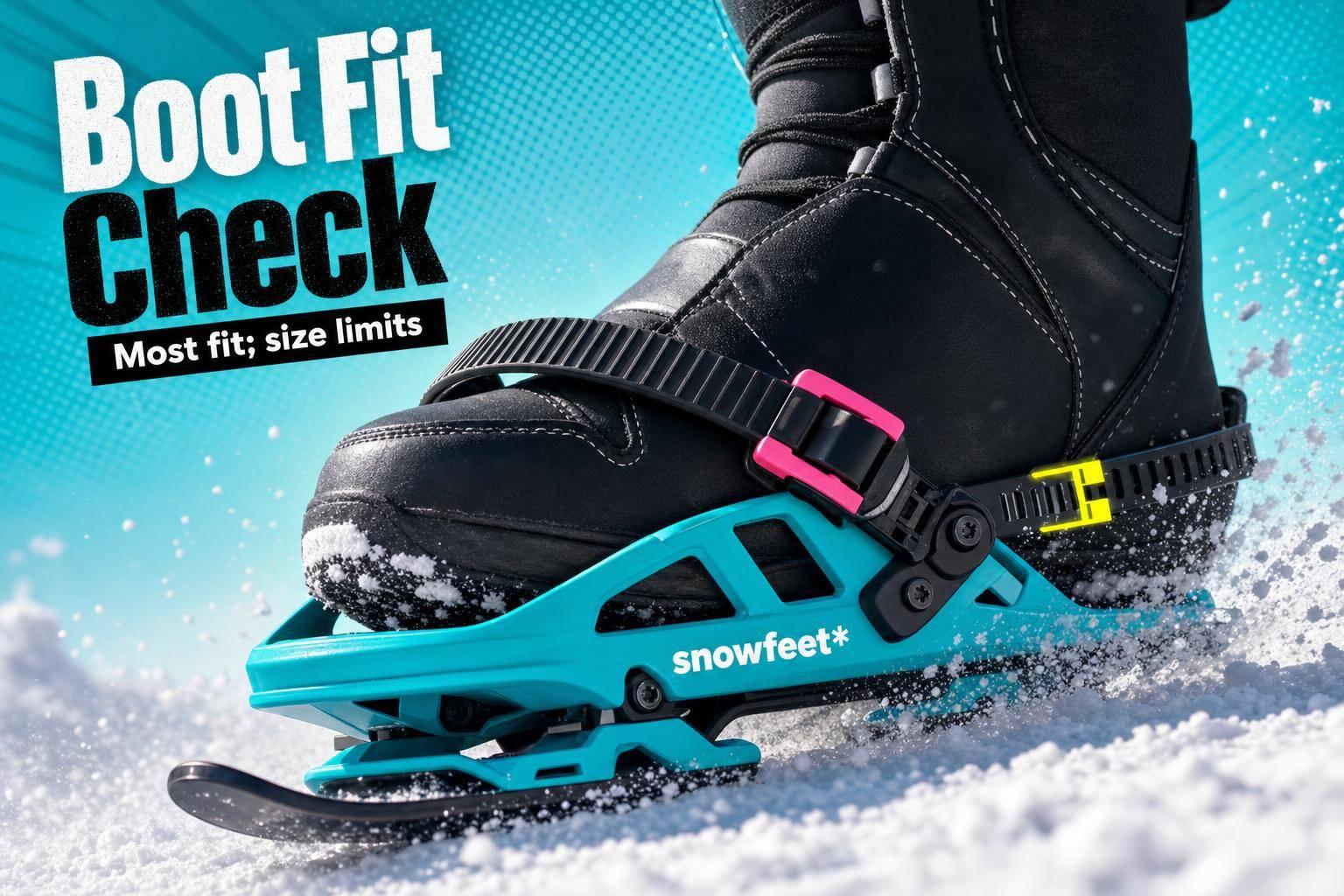
One thing matters most: not every short ski works well with snowboard boots. In this group, the Snowfeet* snowboard-binding models are built for boot sizes US 6 to 14.5, and the line runs from 17 in. (44 cm) up to 47 in. (120 cm). Prices in this guide range from $590 to $950.
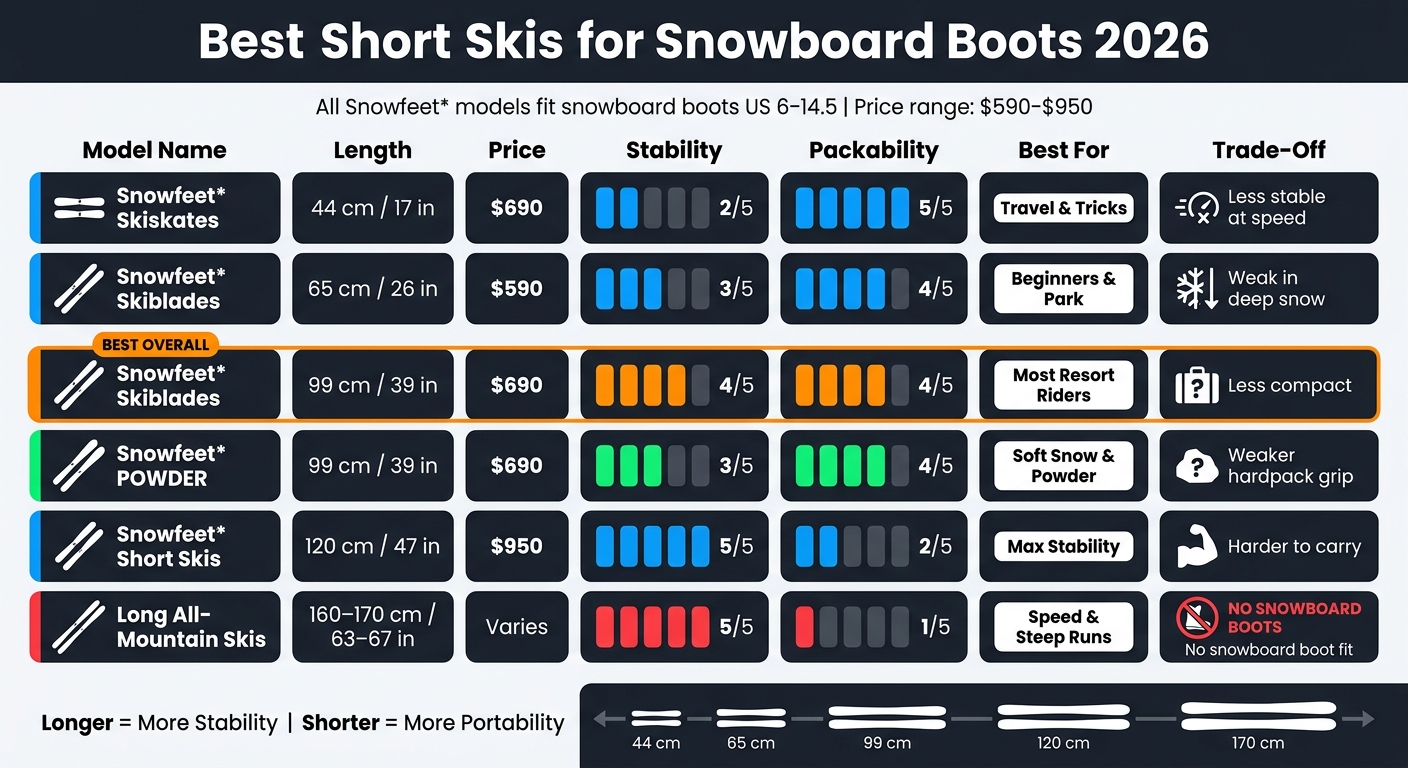
Best Short Skis for Snowboard Boots 2026: Side-by-Side Comparison
Snowboarder tries Snowfeet* | Which Snowfeet* Short Ski is the Best? | Snowblades 44, 65, 99 Review
Quick Comparison
| Model | Length | Best For | Main Trade-Off | Price |
|---|---|---|---|---|
| Snowfeet* Skiskates | 44 cm / 17 in. | Travel, park, tight turns | Less calm at speed | $690 |
| Snowfeet* Skiblades | 65 cm / 26 in. | Beginners, playful resort use | Not great in deep snow | $590 |
| Snowfeet* Skiblades | 99 cm / 39 in. | Most riders, groomers, mixed days | Less compact than shorter models | $690 |
| Snowfeet* Short Skis | 120 cm / 47 in. | More ski-like ride, more stability | Harder to carry | $950 |
| Snowfeet* POWDER | 99 cm / 39 in. | Soft snow | Weaker grip on hardpack | $690 |
| Long all-mountain skis | 160–170 cm / 63–67 in. | Speed, steep runs, deep snow | Usually need ski boots | Varies |
So, if you already own snowboard boots and don’t want a big ski setup, I’d start with the 99 cm. It’s the middle ground that makes the most sense for the most people. And if you want a setup so small it can disappear into a backpack… well, the 44 cm is the little chaos goblin of the bunch :)
1. Snowfeet* Skiskates 44 cm
At 17 inches (44 cm) long, the Snowfeet* Skiskates are the smallest model in the lineup. And yeah, they feel a lot more like skates than full skis. That means the learning curve is short and the ride feels quick and playful.
If you want to use them with snowboard boots, go with the snowboard-binding version. It fits US sizes 6 to 14.5 and comes with safety leashes.
These work best on:
- groomed runs
- terrain parks
- moguls
- narrow trails
Their short shape makes fast turns feel easy, almost like dodging through a crowded lift line, but way more fun. The metal edges help them hold on hardpack, so you’re not sliding all over the place when conditions get firm.
There is a catch, of course. You give up some stability at higher speeds, and powder isn’t their strong suit. Snowfeet* says most riders can learn them in about 5 minutes, which is pretty wild. Still, if you want more calm at speed, longer skis have the edge. If you want to keep the snowboard-boot setup but get a bit more stability, the 65 cm Skiblades are the next move. If your goal is better speed control and more all-around resort use, step up to the 120 cm Short Skis.
The Skiskates 44 cm cost about $690. They’re also small enough to fit in a backpack, which is a nice perk if you hate hauling bulky gear around. For riders who want portable, playful ski-skates made for snowboard boots, this is the one to look at. Best for people who care more about portability, quick learning, and nimble control than flat-out speed.
2. Snowfeet* Skiblades 65 cm
At 65 cm (26 inches), these land right between the 44 cm Skiskates and the 99 cm Skiblades. That sweet-spot length gives you more front-to-back stability than the 44 cm model, but it still feels quick and easy to turn. So you get more control without giving up that fun, playful ride. That’s why the 65 cm is the natural next move for riders stepping up from the 44 cm.
Go with the snowboard-binding version. It fits US sizes 6 to 14.5 and comes with safety leashes.
On snow, the 65 cm blades feel steadier than the 44 cm, especially on groomed blue and black runs. They do well on:
- Groomed slopes
- Moguls
- Snow parks
They also come with full metal steel edges, which help with control. That said, they start to feel less steady at higher speeds, and they’re not great in deep powder.
Best for park laps, resort cruising, and riders who want to move up from the 44 cm without jumping straight to a longer setup. Starts at $590. If you want more speed and a more planted feel, the 99 cm model is the next step.
3. Snowfeet* Skiblades 99 cm
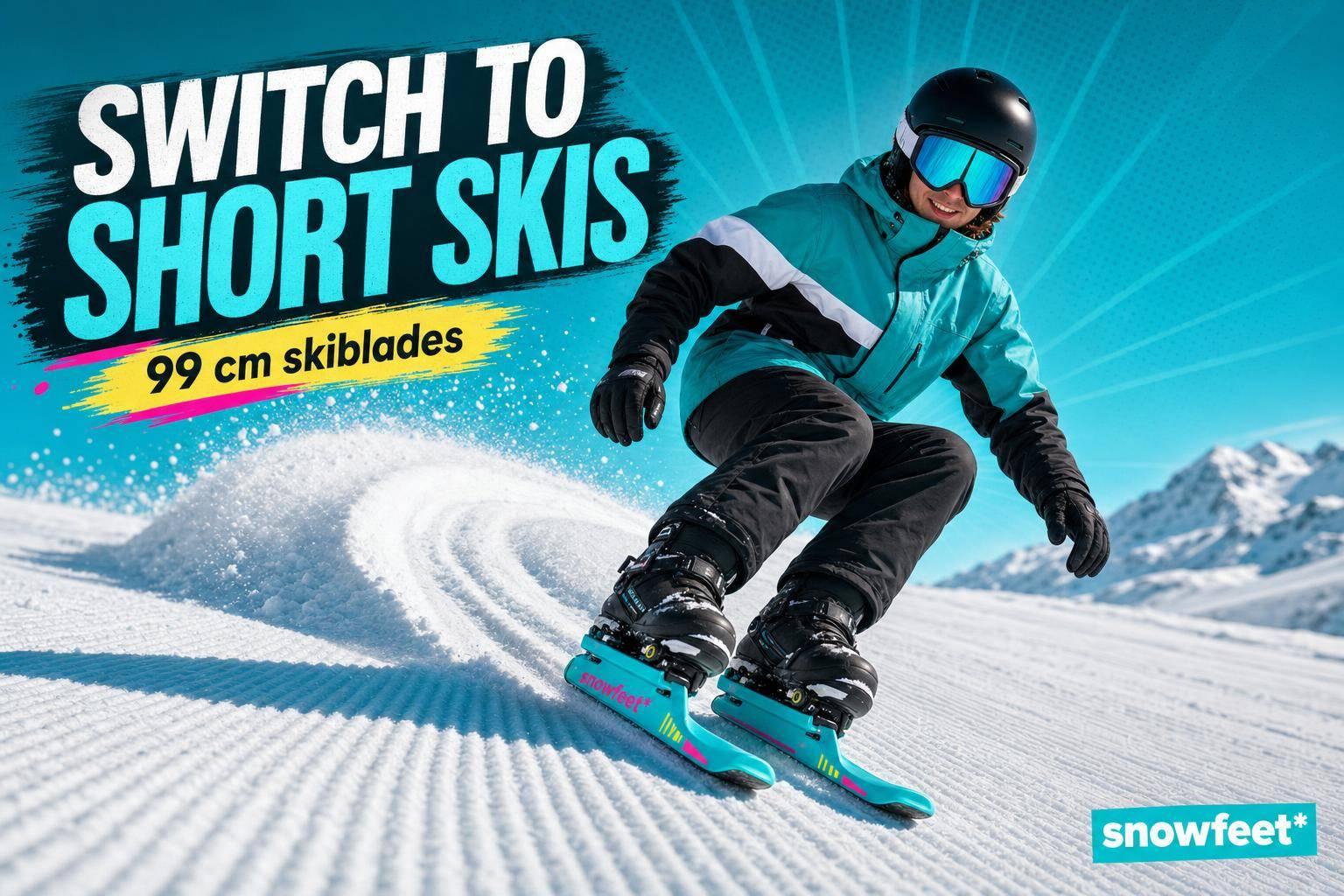
At 39 in (99 cm), these skiblades hit a sweet spot for riders who want more stability than the 44 cm or 65 cm models, but don't want to jump straight to a full ski setup.
They’re long enough to carve with better control on groomed runs. At the same time, they still feel quick and easy to move around. That’s the big draw here. You keep the snowboard-boot setup, but get the extra stability that a lot of casual resort riders are after. If the 44 cm and 65 cm versions feel a bit too short, this is the natural next step.
Use the snowboard-binding version (US 6–14.5). The wood core gives the ski more stiffness and a steadier feel, but it’s still easy to learn on.
The 99 cm works well on:
- Groomed runs
- Moguls
- Softer snow
That range is a step up from the 44 cm or 65 cm models. It sits right between playful short blades and steadier short skis. The trade-off is simple: once speeds get high, longer skis still feel more planted. For day-to-day resort riding, though, the 99 cm is the most flexible Snowfeet* option.
It also packs down much easier than full skis, which makes travel a lot less of a hassle. From $690.
| 65 cm Skiblades | 99 cm Skiblades | 120 cm Short Skis | |
|---|---|---|---|
| Stability | Moderate | High | Higher |
| Terrain range | Groomed, parks | Groomed, moguls, soft snow | High-speed carving |
| Packability | Very compact | Easy to travel with | Less convenient |
| Best for | Park laps, casual cruising | Most resort riders | Advanced riders |
If you want more speed stability and a more planted feel, move up to the 120 cm Short Skis.
4. Snowfeet* Short Skis 120 cm
If the 99 cm model feels a bit loose, the 120 cm version gives you the most stable ride in the Snowfeet lineup. At 47 in (120 cm), it’s the longest Snowfeet option that works with snowboard boots. That added length makes it feel more like a regular ski. You give up some portability, but you get better speed control in return.
The parabolic shape and narrow 3.1-inch waist help it carve fast and clean on groomed slopes. It fits snowboard boots in EU 38–49 / US 6–14.5. On groomed snow, it stays light, comfy, and easy to steer.
This model makes a lot of sense for:
- Snowboarders moving over to skis
- Beginners who want more stability
- Casual resort riders who care more about control than easy packing
It gives you that more ski-like feel without making you swap boots. That’s a pretty nice deal. Still, it’s not the best pick for deep powder or hard ice, where long skis do a better job.
The main downside is portability. The 120 cm is still easier to carry than full-length skis, but it’s the least pack-friendly Snowfeet option for snowboard boots. At $950, it sits at the top end of the Snowfeet range for riders who want the most stability possible with snowboard boots.
Here’s the side-by-side view with the 99 cm model.
| 99 cm Skiblades | 120 cm Short Skis | |
|---|---|---|
| Stability at speed | High | Highest |
| Carving | Smooth, easy | Most ski-like |
| Packability | Easy to travel with | Less portable |
| Best for | Most resort riders | Riders who want maximum stability |
sbb-itb-17ade95
5. Snowfeet* POWDER 99 cm
If the standard 99 cm is your go-to for groomers, the POWDER 99 cm is the soft-snow version. Same 99 cm base idea, but built to float better when the snow gets deep.
It uses a wider platform, which helps it stay up in powder. And yep, you can feel that on snow. The POWDER 99 cm gives up some hardpack grip in exchange for more float, so it makes more sense for ungroomed terrain and fresh snow.
The boot setup stays nice and simple. The POWDER 99 cm works with Snowfeet* snowboard bindings for snowboard boots.
That said, there’s a clear trade-off. On hardpack, it won’t hold as well as the standard 99 cm. So if you spend most of your time on groomed slopes, stick with the standard model. If soft snow is where you like to ride, this is the better match.
| Standard 99 cm Skiblades | POWDER 99 cm | |
|---|---|---|
| Flotation in soft snow | Medium | High |
| Edge grip on hardpack | High | Medium |
| Best terrain | Groomed runs, parks, carving | Soft snow, ungroomed terrain |
| Boot compatibility | Snowboard boots | Snowboard boots |
| Price | From $690 | From $690 |
If you want more all-around stability after this, the next step is the 120 cm Short Skis.
6. Long All-Mountain Skis (160–170 cm)
Snowfeet stands out for portability and the fact that you can use snowboard boots. But when the goal is raw speed and stability in powder, long skis still lead the pack. Long all-mountain skis are the go-to pick for top speed and a steadier ride on steep terrain and in deep powder.
At 160–170 cm, you get more edge contact with the snow. That means a more planted feel when you're moving fast. Shorter skis are fun and nimble, but they can’t fully match that locked-in feel.
There’s a catch, though. These skis usually don’t work with snowboard boots. Standard all-mountain skis are made for ski boots, and once you’re in the 160–170 cm range, you’re almost always dealing with a ski-boot setup.
They’re also a pain to carry and stash. Long skis take up more room, feel clumsier in tight spots, and can be harder to handle on crowded runs. Great when you open things up. Less fun when you’re squeezing through a busy lift line.
| Feature | Long All-Mountain Skis (160–170 cm) | Snowfeet* Short Skis/Skiblades |
|---|---|---|
| Speed | High | Moderate |
| Stability at Speed | High | Lower |
| Snowboard Boot Compatible | No | Yes on Snowfeet snowboard-binding models |
| Portability | Difficult | Easy |
| Best Terrain | Powder, steep slopes | Groomed trails, snow parks |
If maximum speed and a more planted ride are what you want, long skis make a lot of sense. But if you’re a snowboarder who wants to ski without buying new boots or lugging around a ski bag, short skis with snowboard-boot bindings are the more practical, fun-first move. And if you still want a shorter setup that works with snowboard boots, the next section looks at other skiboards and skiblades worth a look.
7. Other Short Skiboards/Skiblades That Work With Snowboard Boots
If long skis are the go-to for speed, this is the short-ski side of the story.
Yes, there are other short skiboards out there that can work with snowboard boots. But most of them use older strap-style bindings. And that’s where things start to get a little clunky. Some setups can fit snowboard boots, but the fit is hit or miss, and control can feel uneven.
A lot of these options feel patched together. Snowfeet*, on the other hand, is made for snowboard boots from the start. You get tool-free adjustment and a broader size range built right in. It’s not an add-on or a workaround.
That matters most if you’re a casual rider who just wants to get on snow and ride without messing around with tiny adjustments. The upside is pretty simple:
- Less setup
- Fewer fit problems
- More time riding
For most riders, boot compatibility made for snowboard boots is what separates a fun, usable setup from something that feels like a gimmick.
| Feature | Snowfeet* Skiblades | Generic skiboards |
|---|---|---|
| Snowboard Boot Fit | Purpose-built bindings for snowboard boots | Often strap-based or retrofit setups |
| Binding Quality | Tool-free, adjustable, leash included | Varies; often basic strap systems |
| Control with Snowboard Boots | Better control and less hassle | Results are inconsistent |
Once boot fit is out of the way, the next move is picking the right length for how you ride.
Pros and Cons of Each Option
Here’s the short version of the trade-offs that matter most.
These are the real give-and-take points behind each Snowfeet option.
| Model | Pros | Cons | Best For | Not Ideal For |
|---|---|---|---|---|
| Skiskates 44 cm | Super easy to pack; quickest turn response | Can feel shaky at speed; struggles most in powder | Travelers, park riders | High-speed carvers, powder chasers |
| Skiblades 65 cm | More control than 44 cm; still playful | Less stable than 99 cm; weak in deep snow | Snowboarders trying skis for the first time | Hard carving, fast open runs |
| Skiblades 99 cm | Best mix of control and stability; works well on groomers and light powder | Less packable than shorter models | All-around resort riders, mixed-terrain days | Max portability, very fast skiing |
| POWDER 99 cm | Wider waist helps with float; smoother feel in soft snow | Slower on hardpack; slower edge-to-edge than the standard 99 cm | Powder days, tree runs, soft-snow riders | Icy hardpack, groomed racing runs |
| Short Skis 120 cm | Feels closest to skis; best if you want a more ski-like setup; stable at moderate-to-high speed | Harder to pack; works best for riders open to a ski-boot setup | Riders who want the most stability and a ski feel | Snowboard-boot users, travelers who want compact gear |
| Long all-mountain skis (160–170 cm) | Most stable at speed; best edge hold on icy steeps | Not built around snowboard boots; bulky | Advanced skiers in ski boots | Riders set on snowboard boots |
| Other short skiboards/skiblades | Tight turning radius; some can work with snowboard-boot-compatible bindings | Binding quality can be hit or miss; many need retrofit setups | Casual resort riders open to other options | Riders who want reliable, purpose-built snowboard-boot compatibility |
Next, the final pick narrows this down to the best buy for snowboard-boot riders in 2026.
Final Pick: Which One Should You Buy in 2026?
After looking at length, stability, and how easy each option is to carry, Snowfeet* Skiblades 99 cm come out on top. They’re the best all-around pick for most riders.
If you already know how and where you ride, your runner-up pick is pretty simple:
| Your Priority | Best Pick |
|---|---|
| Park, tricks, or most portable travel | Skiskates 44 cm |
| Beginner-friendly and playful | Skiblades 65 cm |
| More ski-like feel | Short Skis 120 cm |
| Soft snow and powder days | POWDER 99 cm |
| Traditional ski feel over portability | Long all-mountain skis 160–170 cm |
Here’s the short version:
- 44 cm Skiskates: best for tricks and travel.
- 120 cm Short Skis: best for riders who want the most ski-like stability.
- POWDER 99 cm: best for soft snow.
So, if you want the safest bet, go with Snowfeet* Skiblades 99 cm. If packing light matters most, pick 44 cm. If you want more stability underfoot, go with 120 cm. And if you ride soft snow a lot, POWDER 99 cm is the move. For snowboard-boot riders, Snowfeet* offers the cleanest setup in this category.
FAQs
How do I choose the right length for my riding style?
Choose based on how you like to ride and where you plan to ride, not your height or weight.
Shorter models feel more playful and easy to flick around. Longer models feel more stable when you pick up speed or ride tougher terrain.
- 44 cm: the most agile, almost skate-like
- 50 cm PRO or 65 cm: a solid middle ground for all-around riding
- 99 cm: best for speed, carving, and bigger features
And one more thing: make sure your snowboard boots fit snugly and sit centered in the bindings. That small setup detail makes a big difference in control.
Are short skis with snowboard bindings easy for snowboarders to learn?
Yes. Short skis with snowboard bindings are a smooth way for snowboarders to get started. You can use your current snowboard boots, which means you skip that awkward switch into stiff ski boots.
That alone makes the first few runs feel a lot less weird.
A lot of riders pick up the basics in as little as five minutes. And stuff like edge control and reading terrain tends to carry over in a pretty natural way. Snowfeet* does well here, with dedicated bindings that give you a secure, responsive, and stable fit.
Can I use these short skis in powder, or are they mainly for groomers?
Snowfeet short skis are built mostly for groomed runs, terrain parks, and easy resort laps where quick, playful turns are the whole point. On smooth slopes, they feel nimble and fun. They can be a great alternative to longer skis or a snowboard if you want something light and easy to move around in.
That said, they’re not made for deep powder. Most models work best on groomed trails. Some options, like the 99 cm Skiblades, can manage light powder up to about 4 inches, but they don’t have the surface area or float that long skis have.











Zostaw komentarz
Ta strona jest chroniona przez hCaptcha i obowiązują na niej Polityka prywatności i Warunki korzystania z usługi serwisu hCaptcha.